
Worried about unexpected vet bills?
Pet insurance can cover thousands in unexpected vet costs. Get a free quote from Lemonade in under 2 minutes.
Get My Free Quote →Sponsored · Opens Lemonade.com
There’s something almost mystical about walking through a place where ancient footsteps still echo. Across the United States, certain cities haven’t just grown alongside history. They’ve woven themselves into its fabric, protecting and celebrating indigenous heritage that predates European exploration by centuries. These aren’t museum pieces behind glass. They’re living communities where ancient traditions breathe alongside modern life.
While most American cities rush forward, erasing their past for parking lots and shopping centers, a handful have made different choices. They’ve recognized that some stories are too precious to bulldoze. In these places, thousand year old pueblos cast shadows on paved roads, cliff dwellings nestle against canyon walls, and Native American ceremonies still mark the changing seasons. Let’s explore eight remarkable cities where the ancient and contemporary dance together in surprising harmony.
Taos, New Mexico – Where Time Stands Still in Adobe Walls
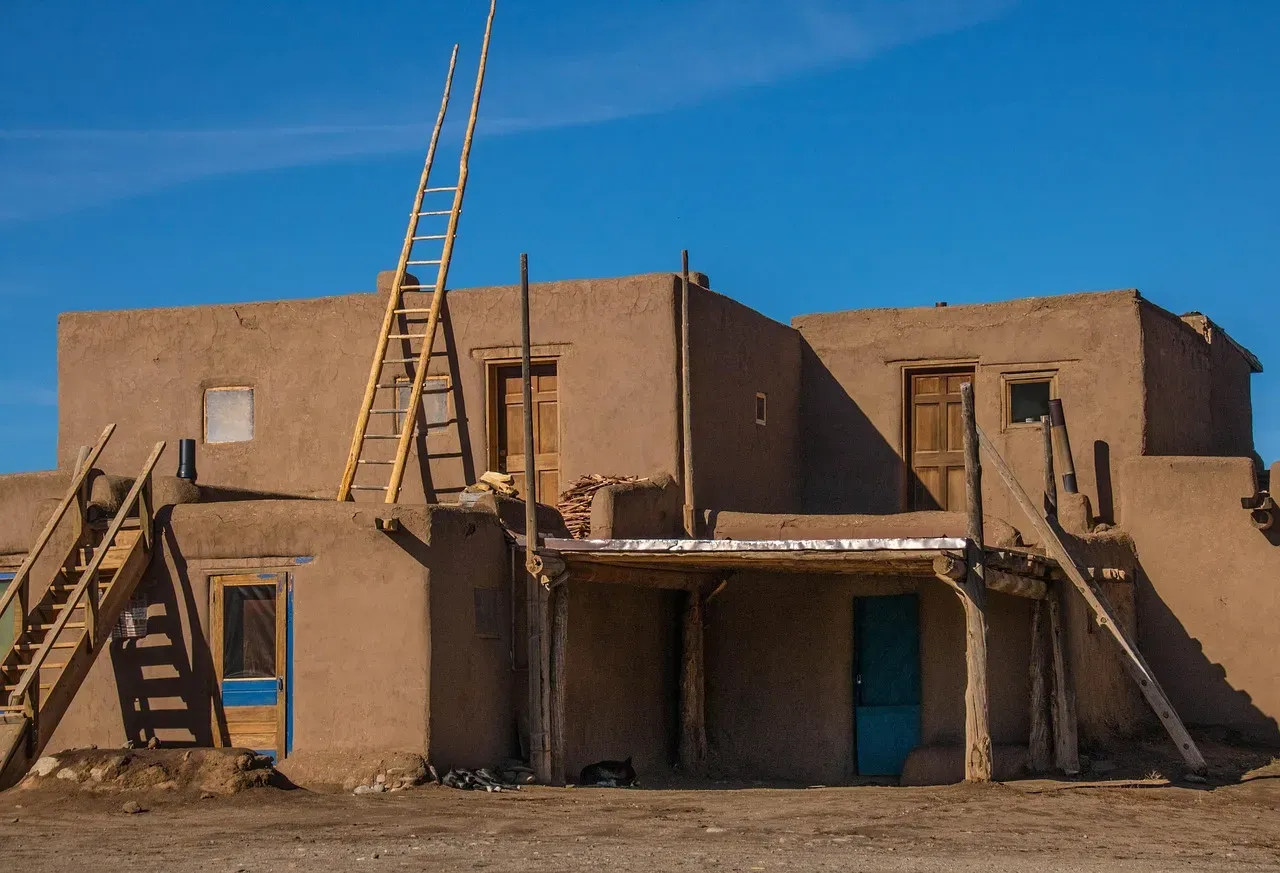
The multistory adobe buildings, located 3 miles northeast of Taos Plaza, have been continuously inhabited for over 1000 years. This isn’t some reconstructed historical site. Real families still call these structures home, maintaining traditions their ancestors established centuries before Columbus set sail.
It is the only World Heritage Site in the United States cited for the significance of its traditional Native American living culture. Walking through Taos Pueblo feels like stepping through a portal where past and present blur beautifully. The massive adobe structures rise from the earth like natural formations.
Each year, the walls are still refinished with a new coat of adobe plaster as part of a village ceremony. The dedication to traditional building methods runs deep here. Taos Pueblo is made entirely of adobe – earth mixed with water and straw then either poured into forms or made into sun-dried bricks. Many of the walls are several feet thick.
The city of Taos embraces this heritage rather than treating it as a curiosity. One of a group of settlements established in the late 13th and early 14th centuries in the valleys of the Rio Grande, Taos has survived for hundreds of years with its cultural integrity intact while simultaneously borrowing from Spanish and Anglo-American cultures over centuries of contact. It’s a masterclass in preservation without isolation.
Honestly, standing before these structures makes you reconsider what permanence means. Modern buildings crumble after decades, yet these mud and straw walls have weathered a millennium.
Santa Fe, New Mexico – America’s Oldest Capital Honors Its Indigenous Soul
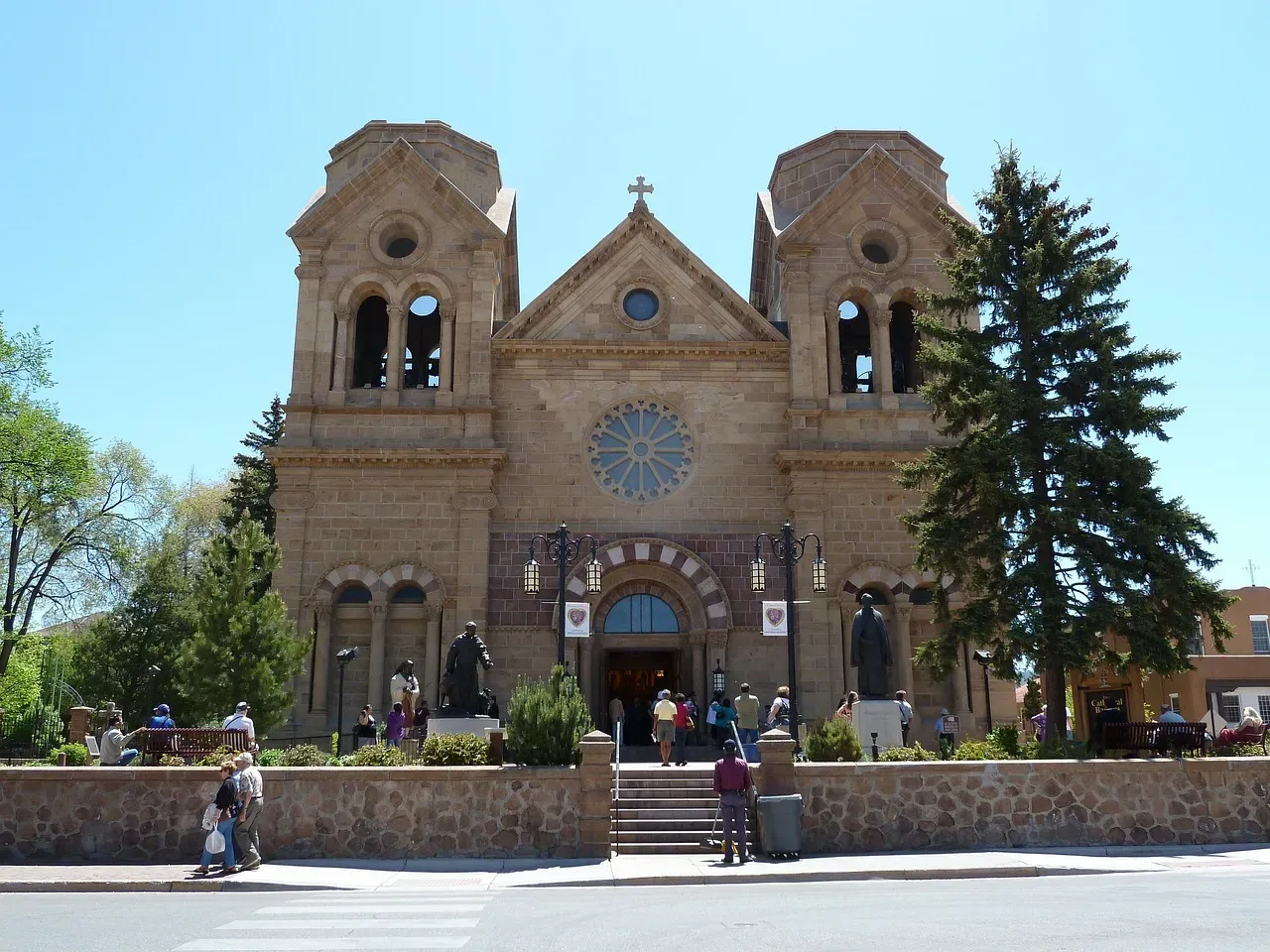
Santa Fe stands out as the only oldest city that is also a state capital, located at a striking elevation of 6,998 feet above sea level, making it the highest elevation oldest city in the U.S. The city’s Spanish colonial architecture gets plenty of attention, but its Native American roots run far deeper.
Today, the Indigenous community in Santa Fe is thriving, and efforts to preserve and celebrate their culture can be seen throughout the city. From the Santa Fe Indian Market to museums and cultural centers, there are countless opportunities to learn about and support the Indigenous peoples of Santa Fe. The city doesn’t just acknowledge this heritage in dusty museums.
The Pueblo peoples have a long and rich history in the Santa Fe area, with many communities that have been continuously inhabited for centuries. These communities include the Taos Pueblo, the Santo Domingo Pueblo, the Acoma Pueblo, the Zuni Pueblo, and many others. Santa Fe serves as a gateway to understanding these diverse indigenous cultures.
The relationship between the city and surrounding pueblos tells a complex story of resistance and resilience. In 1680, under the Pueblo leader Popé, the tribes banded together and launched a coordinated attack against the Spanish settlers in the area. The Spanish were driven out of Santa Fe, and the Pueblo people regained control of the land. That victory still resonates in the pride evident throughout the region.
Albuquerque, New Mexico – A Metropolitan Gateway to Ancient Worlds
With 19 pueblos in New Mexico – most within an hour’s drive of Albuquerque – no other city in America offers so varied an opportunity to experience the living culture and rich history of America’s first inhabitants. Albuquerque understands its unique position as a modern city surrounded by ancient communities.
And the Indian Pueblo Cultural Center in Albuquerque is dedicated to sharing the history, culture, and art of these indigenous people. The center’s primary permanent exhibit is titled “We are of This Place,” and it tells the story of the Pueblo people. This isn’t token representation. It’s a serious commitment to education and cultural preservation.
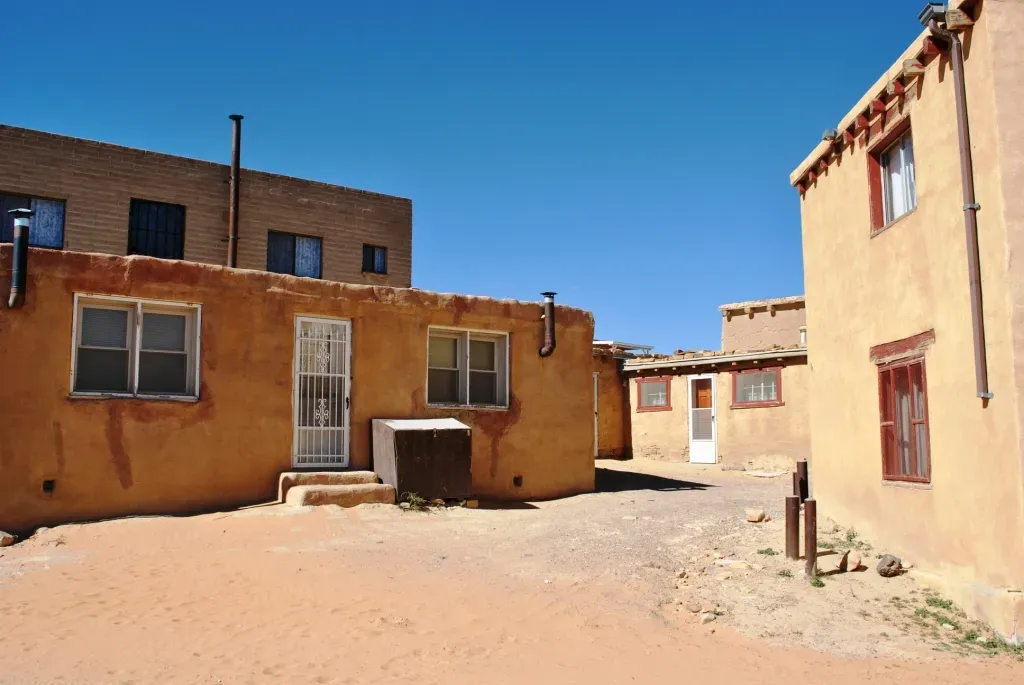
The city’s connection to Acoma Pueblo particularly stands out. Fifty miles west of Albuquerque, Acoma Pueblo is impressively situated atop a 365-foot sandstone mesa. Although most present-day Acomas have residences in nearby villages, several families still occupy the old homes on the mesa (known as “Sky City”).
The delicately decorated pottery of Acoma is among the most prized of Indian crafts. Many fine pieces are for sale in the Visitors Center at the base of the mesa, which also houses a museum, a restaurant and the information center where tours of the pueblo are arranged. The economic relationship benefits both communities while preserving traditional arts.
Acoma Pueblo Area – Sky City Touches Heaven and History
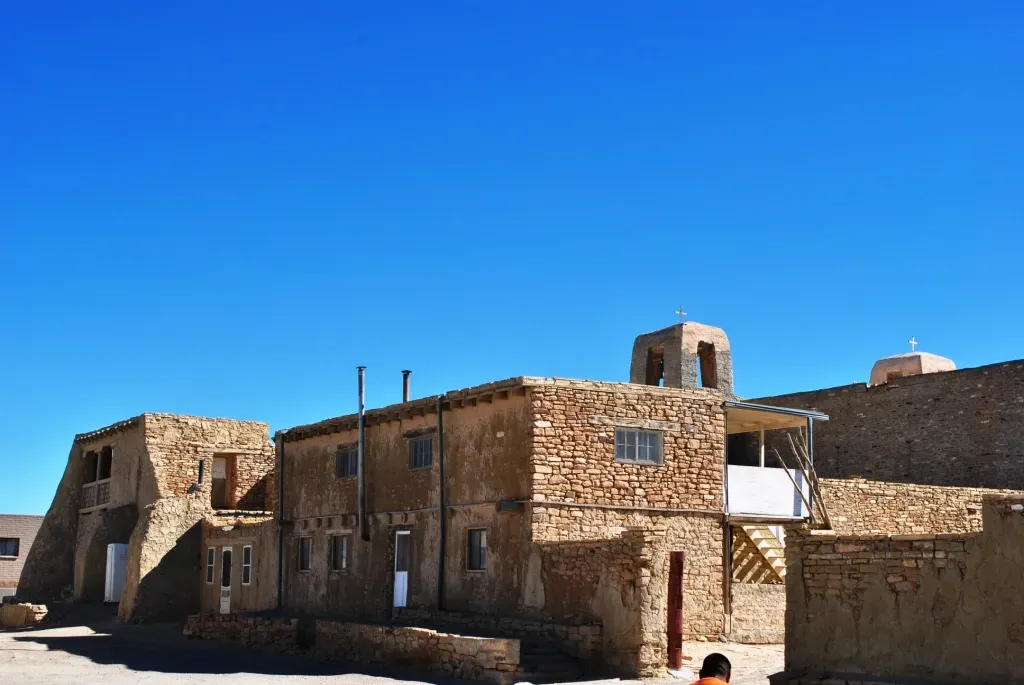
Acoma Pueblo is regarded as the oldest continuously inhabited community in the United States. The sheer audacity of building a village on a mesa that rises hundreds of feet from the desert floor still astonishes visitors today.
Believed to be the oldest continuously inhabited city in the present United States, the pueblo was built between 1100 and 1250 A.D. Think about that timeline for a moment. While Europe struggled through the Dark Ages, sophisticated communities thrived atop this seemingly inhospitable rock.
Known as Acoma Rock, the craggy, flat-topped mountain is home to Acoma, a National Historic Landmark, and one of the oldest continuously occupied communities in what is now the United States. The pueblo’s lofty, isolated location made it virtually impenetrable throughout the precontact period, which allowed the village and its people to flourish and develop distinct cultural traditions – many of which the Acoma community still honors today.
Much of Acoma’s old pueblo character is intact with its flat-topped, adobe buildings laid out in what is believed to be a largely original streetscape. The Mission San Esteban del Rey is still one of the most striking features of Acoma. The church is the oldest Spanish mission in New Mexico and one of the finest examples of early Spanish-Pueblo architecture in the Southwest. The layers of history coexist remarkably well.
Modern access makes visiting easier than the hand-carved staircase ancient residents used. A vehicular road now connects Acoma to the desert below, making the treacherous toehold system obsolete and the community more accessible.
Durango, Colorado – Gateway to Mesa Verde’s Cliff Dwelling Mysteries
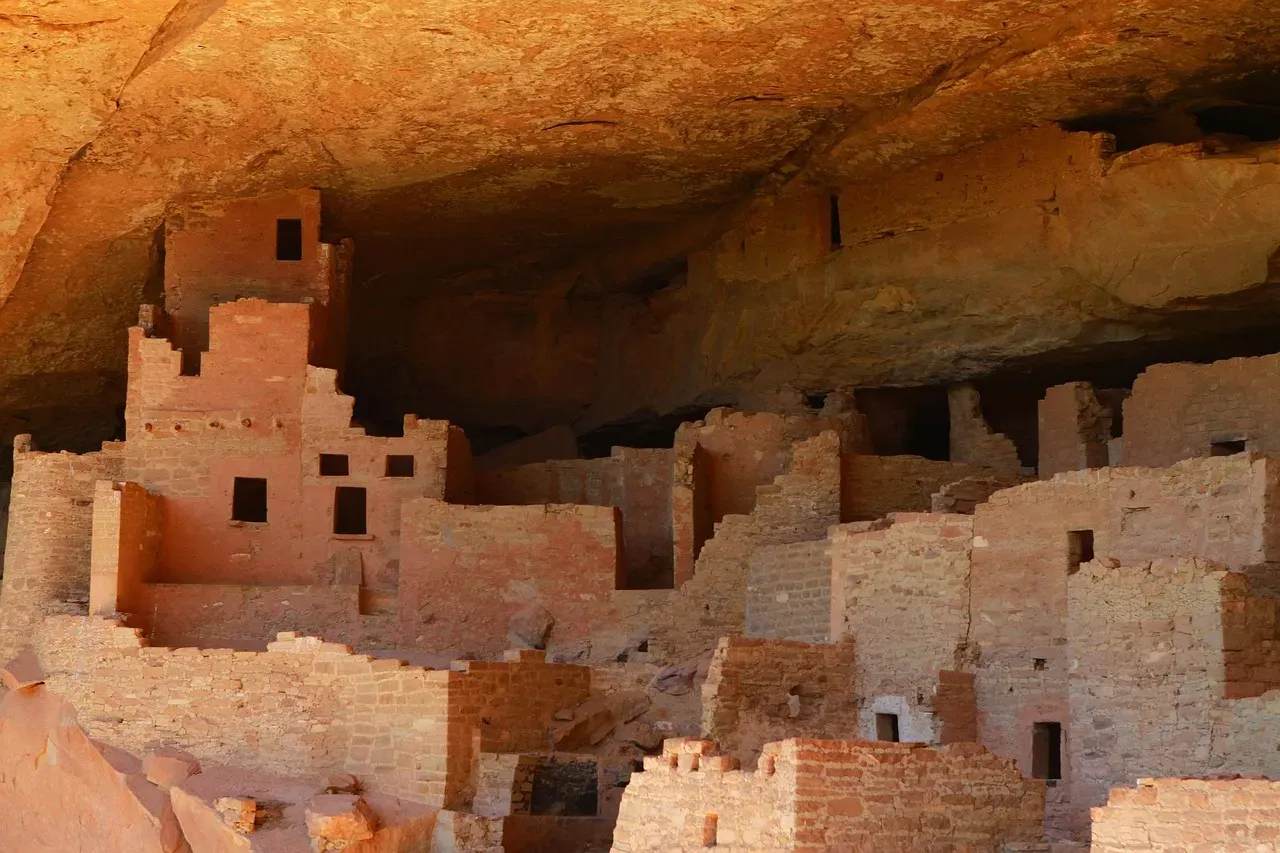
Durango, Colorado sits in close proximity to several incredible Native American historic sites. These sites, former homes of the Ancestral Puebloans, contain some of the best preserved ruins and ancient artifacts in the Four Corners region. The city has built its identity around being a responsible steward of these treasures.
Established in 1906, Mesa Verde National Park protects over 4,700 archaeological sites built by the Ancestral Pueblo people. The park’s archaeological program promotes preservation and research to expand understanding of prehistoric life while safeguarding these cultural treasures for future generations. It’s hard to grasp that scale until you’re actually there.
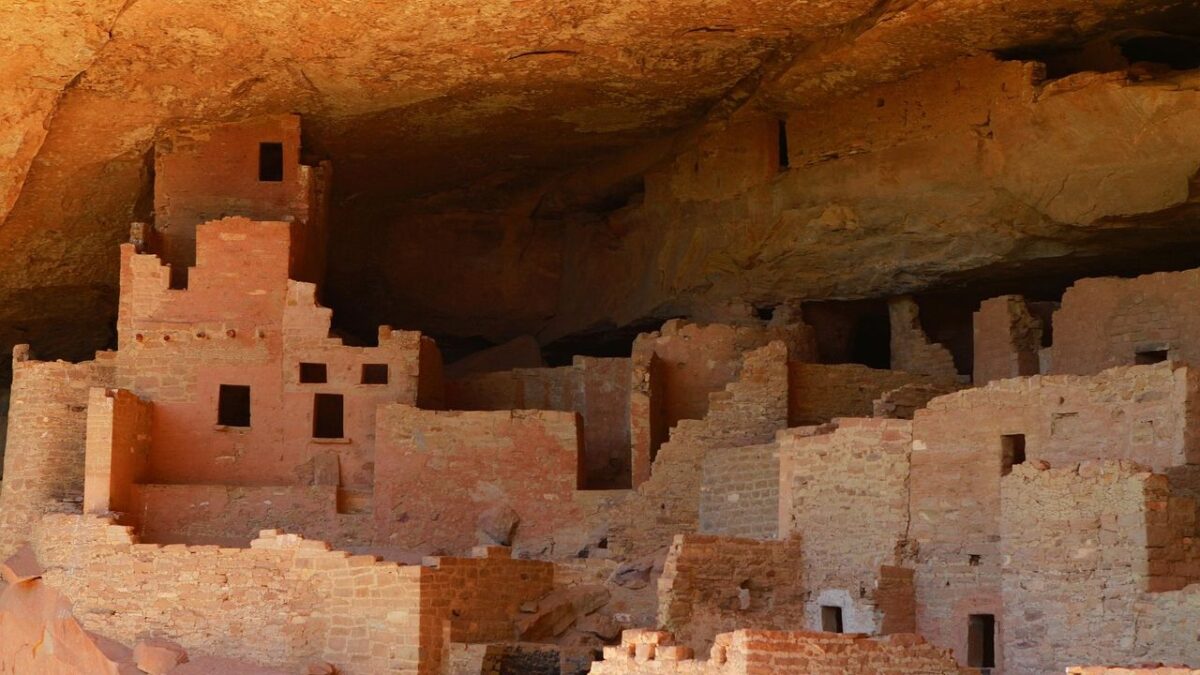
Some 600 cliff dwellings built of sandstone and mud mortar have been recorded within Mesa Verde National Park – including the famous multi-storey Cliff Palace, Balcony House, and Square Tower House – and an additional 4,300 archaeological sites have been discovered. Each dwelling tells stories of adaptation, community, and architectural brilliance.
It’s fascinating to imagine what life was like for the Ancestral Pueblo people who lived here for more than 700 years. Learn more about the history of this ancient civilization when you visit the Mesa Verde Museum. Durango serves as the comfortable modern base for these time-traveling explorations.
Sedona, Arizona – Red Rocks Shelter Ancient Sinagua Secrets
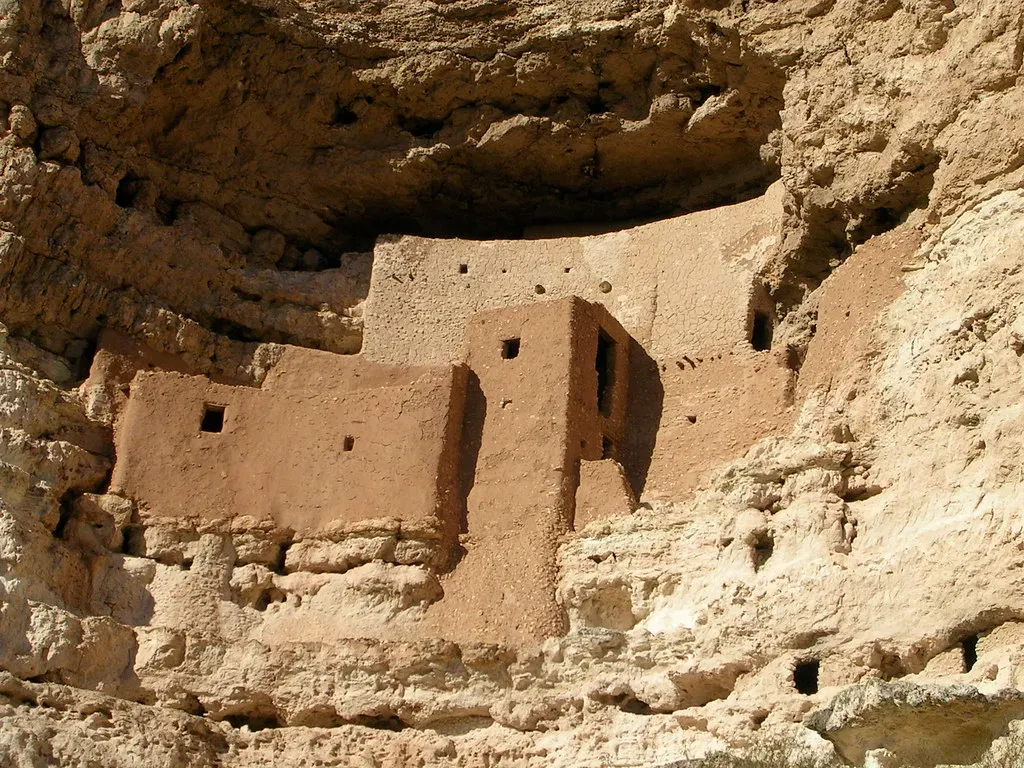
Meaning “without water”, the Sinagua lived in the Sedona Verde Valley from around 600 AD to 1400 AD. They were originally hunter/gathers and by 800 AD had switched to agriculture, creating irrigation systems that still work to this day. It was during this time that they built the adobe structures you can still visit today. The engineering sophistication challenges assumptions about “primitive” societies.
The dwellings near Sedona are up to 800 years old. The Sinagua strategically chose to build on hills, near water sources, and on the sides of canyon walls. Every location was carefully selected for survival and defense.
We recommend making the Palatki Heritage Site one of your first stops in Sedona. You have to purchase a $1 permit to visit, but it reserves your spot in a small group for a ranger-led tour. When you reach the dwellings, you’ll learn about the history of the Sinagua, their dwellings, artifacts, and see petroglyphs made between 1150 and 1350 AD.
Now the area is home to 22 Native American Tribes. The Navajo Nation, just to the North of Sedona, is the largest, and the Yavapai Apache Nation is the closest to Sedona. Modern Sedona recognizes these continuing connections to the land. The city’s famous vortexes and spiritual tourism industry actually align with indigenous understandings of the landscape’s sacred power.
Flagstaff, Arizona – Where Mountain Pueblos Meet Modern Science
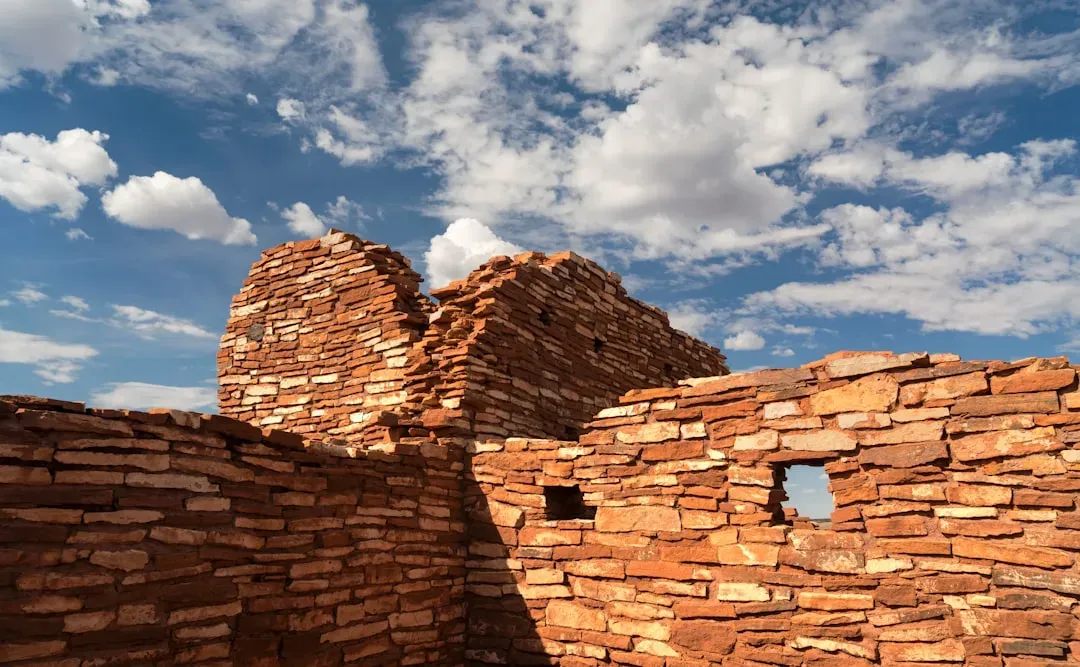
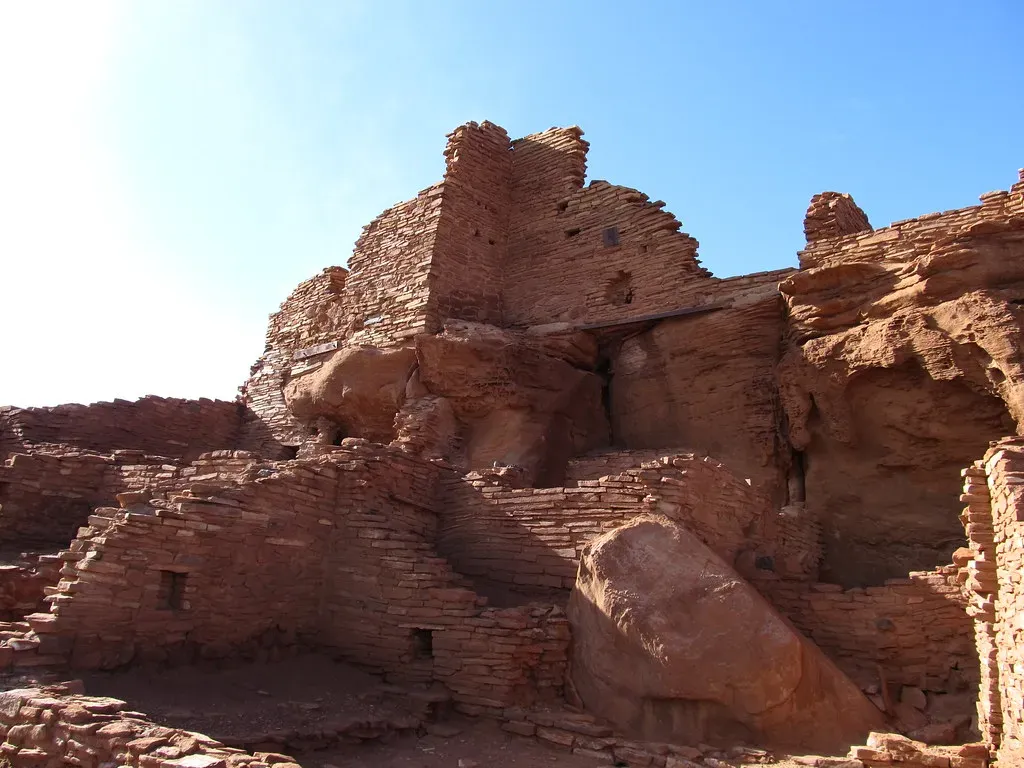
Flagstaff is in the heart of the Colorado Plateau, a region known for its rich Native American history. Evidence of the earliest native cultures in the Flagstaff area can be found in the cliff dwellings of Walnut Canyon National Monument and the rock-walled pueblos of Wupatki National Monument where the ancient Sinagua and Anasazi tribes inhabited more than 800 years ago.
The Wupatki National Monument is a United States National Monument located in north-central Arizona, near Flagstaff. Rich in Native American archaeological sites, the monument is administered by the National Park Service in close conjunction with the nearby Sunset Crater Volcano National Monument. The volcanic landscape adds dramatic context to human resilience.
In all, over 2,700 archeological sites have been cataloged at Wupatki National Monument. That number still grows as new discoveries emerge from the desert. Here, ancient pueblos built over 800 years ago rise gracefully from the rugged landscape, standing as enduring reminders of the ingenuity and resilience of the ancestral Puebloan peoples. Wupatki serves as a living connection to the Indigenous peoples who continue to care for this region as their homelands, including the Hopi, Zuni, Navajo, and other tribes.
Walnut Canyon National Monument features a collection of single-story cliff dwellings built high on a canyon wall. The monument provides well preserved evidence of how the Sinagua Indians lived more than seven centuries ago. They constructed 300 rooms in the shelter of the canyon walls and thrived in the canyon for about 150 years. Flagstaff takes its role as guardian seriously, balancing tourism with preservation.
Phoenix, Arizona – Desert Metropolis Built on Hohokam Innovation
Phoenix might seem like the least likely city on this list, given its sprawling modernity and explosive growth. Unfortunately, due to poorly-planned archaeological diggings before rapid commercial building construction many of the ancient Indian community sites around the Phoenix have been destroyed or permanently covered by modern day construction. Much of the irrigation canals found in the area follow the same paths of irrigation networks that were hand-dug by prehistoric Indian civilizations.
Located in downtown Phoenix, near the Sky Harbor International Airport, the Pueblo Grande is a very educational museum that preserves the remnants of an ancient Hohokam Indian Village. There is an interpretive trail on which you will discover some of the last Hohokam irrigation canals that remained intact. The exhibits are very informative and the entire site is quite easy to explore.
Casa Grande Ruins are just southeast of Phoenix. This national monument preserves a group of Hohokam structures abandoned in the mid 1400’s. The Hohokam people turned an inhospitable desert into productive farmland through engineering genius that modern Phoenix still depends upon.
The irony isn’t lost on anyone. A city that destroyed much of its indigenous heritage now markets itself partly on what little remains. Still, Pueblo Grande represents genuine effort to acknowledge debts the modern city owes to those who understood this landscape first. It’s imperfect preservation, but it matters.
Conclusion
These eight cities prove that honoring ancient American roots isn’t incompatible with modern life. In fact, communities that embrace their indigenous heritage often develop deeper character and stronger identities. From Taos Pueblo’s thousand-year-old adobe walls to Phoenix’s preserved Hohokam irrigation systems, these places remind us that American history didn’t begin with European arrival.
The real beauty lies in how these cities balance preservation with progress. They’ve learned that some things shouldn’t be sacrificed for strip malls or parking structures. Walking through cliff dwellings at Mesa Verde or standing atop Acoma’s Sky City connects visitors to human stories that span millennia.
Perhaps most importantly, these aren’t dead monuments. Indigenous communities continue living, working, and celebrating in many of these places, maintaining cultural threads that have survived colonization, forced assimilation, and modernization. Their persistence deserves more than tourism dollars. It deserves respect, protection, and genuine partnership in shaping these cities’ futures. What surprised you most about these ancient connections still thriving in modern America?
Worried about unexpected vet bills?
Pet insurance can cover thousands in unexpected vet costs. Get a free quote from Lemonade in under 2 minutes.
Get My Free Quote →Sponsored · Opens Lemonade.com

- 14 Quiet Signs Your Dog Is Getting Ready to Say Goodbye – Most Owners Miss Them Completely - June 9, 2026
- 15 Dog Breeds Known for Their Exceptional Loyalty and Devotion - June 9, 2026
- 14 Garden Mistakes That Drive Hummingbirds Away for Good – Most Gardeners Don’t Realize Until It’s Too Late - June 9, 2026