


Asteroids have long been a subject of fascination and fear. These celestial bodies, often seen in movies as planet-destroying threats, are real entities that orbit our sun. While most asteroids reside in the asteroid belt between Mars and Jupiter, some follow paths that bring them alarmingly close to Earth. The idea of an asteroid impact can be daunting, but understanding these near-Earth objects brings a mix of awe and awareness. Here, we delve into ten asteroids that have had heart-stoppingly close encounters with our planet.
The 2019 OK Asteroid A Surprise Visitor

In July 2019, Earth had an unexpected visitor. The asteroid known as 2019 OK came closer to our planet than the moon. This space rock, estimated to be about 100 meters wide, was discovered just a day before its near-miss. Imagine a bus-sized rock hurtling through space, only to be spotted when it’s almost at your doorstep. Scientists were taken aback by its sudden appearance, highlighting the unpredictable nature of space objects. Such surprises emphasize the importance of continuous monitoring of the cosmos.
Asteroid 2004 FH A Close Shave

Asteroid 2004 FH made headlines when it whizzed by Earth in March 2004. This asteroid was roughly the size of a small building, about 30 meters in diameter. It passed at a distance of only 43,000 kilometers, which, in cosmic terms, is like threading a needle. This close encounter was a stark reminder of the many space rocks that lurk in the shadows, often unnoticed until they’re alarmingly close. Fortunately, 2004 FH posed no threat, but its proximity was a wake-up call for astronomers worldwide.
The 2018 GE3 Asteroid A Cosmic Wake-Up Call

April 2018 saw the near passage of 2018 GE3, an asteroid estimated to be three to six times the size of the Chelyabinsk meteor, which caused significant damage in Russia in 2013. This asteroid passed at about half the distance from Earth to the moon. The thought of such a large object coming so close is both thrilling and terrifying. Its approach underscored the importance of having robust detection systems in place to identify potentially hazardous objects in time.
Asteroid Apophis The Potential Doomsday Rock

Named after the Egyptian god of chaos, Apophis is one asteroid that has captured the imagination of scientists and the public alike. Initially, there were concerns about a possible collision in 2029, but further observations ruled that out. However, Apophis will come closer to Earth than some of our satellites. The rock is approximately 370 meters wide, and its close approach will be a significant event for observational astronomy. While it won’t impact Earth, its passage will provide valuable data for researchers.
2011 AG5 A Calculated Threat

In January 2011, astronomers discovered 2011 AG5, an asteroid that initially had a small chance of impacting Earth in 2040. This discovery sparked a flurry of calculations and observations. Eventually, it was determined that the asteroid posed no real threat, but this incident highlighted the meticulous work scientists do to ensure our planet’s safety. The possibility of impact, however slim, serves as a reminder of the delicate dance we perform with these celestial neighbors.
The Chelyabinsk Meteor A Sobering Event

While technically a meteor, the Chelyabinsk event of 2013 deserves mention. A 20-meter space rock entered Earth’s atmosphere over Russia, exploding with the force of 500 kilotons of TNT. The explosion injured over 1,500 people, mostly from shattered glass, and served as a stark reminder of the potential dangers posed by even small space objects. This event was a catalyst for increased efforts in asteroid detection and monitoring, proving that even smaller rocks can have significant consequences.
Asteroid 2012 DA14 A Record-Setting Flyby

The year 2013 was notable for another reason: the close encounter with asteroid 2012 DA14. This 40-meter object passed just 27,700 kilometers from Earth, closer than many of our geosynchronous satellites. Its path was well-documented, allowing astronomers to observe and learn from its trajectory. The close shave underscored the importance of international collaboration in monitoring near-Earth objects, as these space rocks know no borders and pose a potential threat to all.
Asteroid 2005 YU55 A Near-Earth Giant

In November 2011, asteroid 2005 YU55, a 400-meter-wide behemoth, passed within the moon’s orbit. This marked the closest approach of such a large object in decades. Its passage offered a unique opportunity for radar observations, allowing scientists to study its surface and composition in detail. Events like this highlight how much we still have to learn about these ancient space travelers and the importance of preparedness.
The 2019 AE3 Asteroid A Silent Intruder

Asteroid 2019 AE3 slipped past Earth in January 2019, barely noticed by most. At just 15 meters in diameter, it’s a reminder that not all space rocks are towering giants. Its passage, though harmless, underscores the vast number of small space objects that pass by unnoticed. These smaller asteroids may not pose the same threat as their larger counterparts, but their sheer number means that constant vigilance is essential.
Asteroid 2012 TC4 A Close Encounter

In October 2017, asteroid 2012 TC4 came closer to Earth than many of our satellites. Measuring between 12 and 27 meters, it passed at a distance of about 44,000 kilometers. This flyby was used as a test for Earth’s planetary defense systems, showcasing the importance of preparedness. The asteroid’s approach was a successful demonstration of our ability to track and predict near-Earth object paths, a crucial step in ensuring our planet’s safety.
Asteroid 2011 UW158 A Precious Visitor

While the approach of asteroid 2011 UW158 in July 2015 did not pose a threat, its composition sparked interest. This space rock is believed to be rich in platinum, valued at billions of dollars. Its close approach was a reminder of the potential resources lying in space. While mining asteroids is still a science fiction concept, the allure of such wealth could one day drive technological advancements and exploration efforts.
The 2013 ET Asteroid A Minor Disturbance

Asteroid 2013 ET made its way past Earth in March 2013, coming within 950,000 kilometers. Although this distance seems vast, in cosmic terms, it’s a mere hop away. Measuring 100 meters wide, this asteroid was large enough to cause significant damage if it had entered Earth’s atmosphere. Its approach was a testament to the importance of diligent space monitoring and the potential threats that loom beyond our atmosphere.
The 2020 SW Asteroid A Nighttime Visitor

In September 2020, asteroid 2020 SW passed just 22,000 kilometers from Earth, closer than most satellites. This encounter went largely unnoticed by the public, but astronomers were keenly aware of its proximity. Such close flybys are more common than many realize, underscoring the need for continual observation and preparedness. While 2020 SW posed no threat, its passage was a reminder of the dynamic and ever-changing nature of our solar neighborhood.
Asteroid 2013 TX68 A Mysterious Approach

Asteroid 2013 TX68 has been a source of intrigue since its discovery. Its path is difficult to predict due to its irregular orbit, but it came within a safe distance of Earth in 2016. This uncertainty highlights the challenges faced by astronomers in tracking and predicting asteroid paths. The rock’s erratic journey serves as a reminder of the unpredictability of space and the importance of constant vigilance.
The 2017 AG13 Asteroid A Stealthy Pass

In January 2017, asteroid 2017 AG13 passed between Earth and the moon, a mere 192,000 kilometers away. This small asteroid, about 15 meters wide, was discovered just days before its closest approach. Its stealthy passage emphasizes the need for improved detection systems to spot such objects earlier. While it posed no threat, its sudden appearance was a wake-up call for astronomers and space agencies around the world.
Asteroid 2001 FO32 A Recent Close Call

In March 2021, asteroid 2001 FO32 made its closest approach to Earth. This 900-meter behemoth passed at a safe distance but was the largest asteroid to come so close that year. Its passage provided a unique opportunity for study and observation, reinforcing the importance of monitoring large space rocks. Events like this remind us of the vastness of our solar system and the many wonders and challenges it holds.
Conclusion
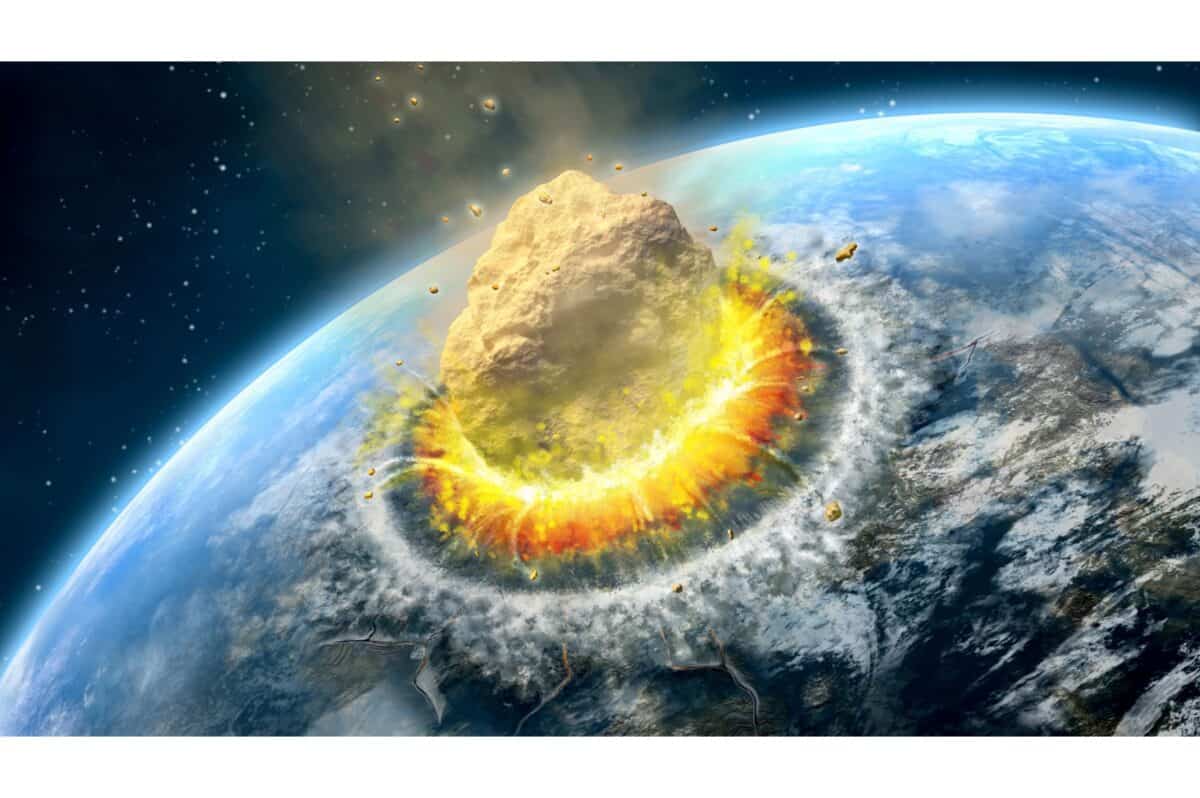
Asteroids, with their unpredictable paths and potential for impact, have been both a source of fear and fascination. While the chances of a catastrophic collision are slim, these close encounters remind us of the need for vigilance and preparedness. Each near-miss offers valuable insights into the nature of these celestial neighbors, helping us to better understand and navigate the cosmic dance of our universe.

As a little kid, I fell in love with nature, wildlife, and animals. Living in the USA, South Africa, Italy, China and Germany gave me the opportunity to discover the world's Wildlife. My favorite animals are Mountain Gorillas, Siberian Tigers, and Great White Sharks.
I'm a certified PADI Open Water Diver, went to Everest Base Camp and Trekked Gorillas in Uganda. I hold a Master of Science in Economics and Finance.
Please send any feedback to feedback@animalsaroundtheglobe.com
- 14 Most Curious Animal Adaptations Found in the U.S. - July 18, 2026
- 10 Dogs That Love the Beach And 2 That Hate the Sand - July 18, 2026
- 10 Creatures With Bio-Luminescent Powers - July 18, 2026