

The United States is home to some of the most incredible wildlife on Earth. From towering mountain peaks to sprawling deserts and dense forests, this country offers amazing opportunities to see unique animals in their natural habitat. Whether you’re a seasoned wildlife watcher or just someone who loves cool creatures, these ten fascinating animals showcase America’s incredible biodiversity. Each one has its own story, special adaptations, and reasons why they’re absolutely worth seeing.
American Bison – The Mighty Thunder of the Plains

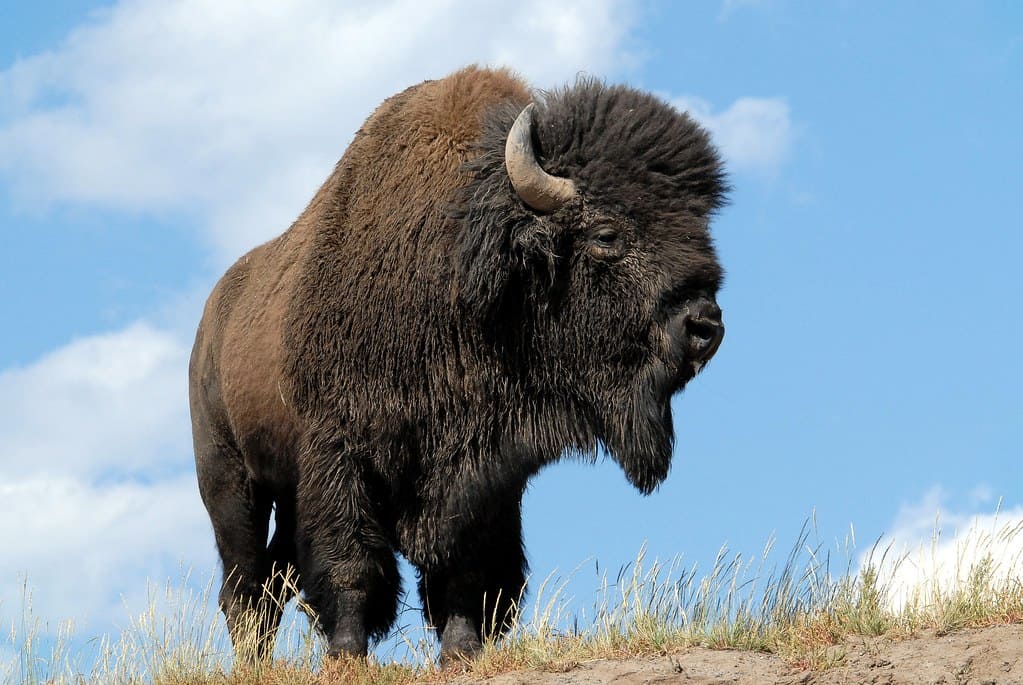
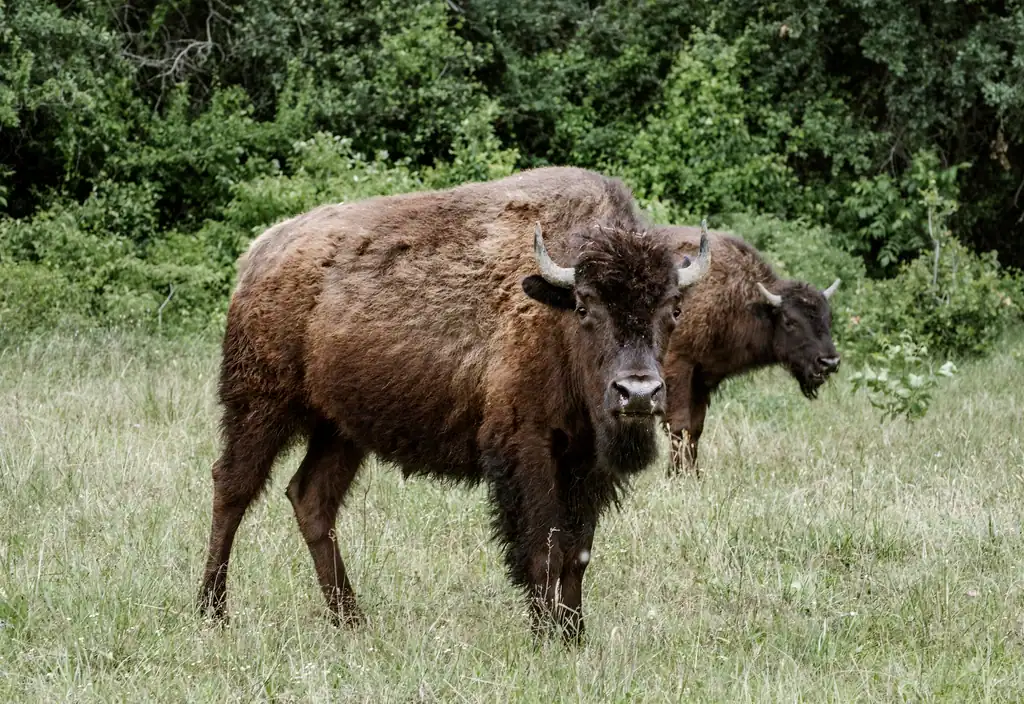
Imagine witnessing a massive animal that weighs up to 2,000 pounds gracefully moving across the prairie like it owns the place – because it does. The largest land animal in North America, the American bison (Bison bison) stands up to 2 metres (6 feet) tall and weighs up to 900 kilograms (2,000 pounds). Characterized by its massive size, shaggy brown coat, and distinctive hump, the bison once roamed these plains in the millions. Endurance and resilience are hallmarks of this species, which is capable of withstanding harsh weather conditions ranging from scorching summers to frigid winters. These incredible animals nearly went extinct but have made one of the most remarkable comeback stories in conservation history. Perhaps the most iconic mammal in the history of our young country—bison have made an astonishing species-wide comeback over the last century, with the help of the formerly named National Bison Range. President Theodore Roosevelt signed legislation authorizing the purchase of lands for bison conservation in 1908—the first time Congress had ever put tax revenue toward purchasing land for wildlife conservation. Today, you can see these giants in Yellowstone National Park, where “Yellowstone is a must-see destination for megafauna, like elk and bison. It’s just an incredible experience to see a bison in the wild,” says Todd Walton of Yellowstone National Park Lodges, which offers a Wake Up to Wildlife guided tour from mid-May to early October.
Alligator Snapping Turtle – The Ancient River Dragon

Picture a creature that looks like it crawled straight out of prehistoric times and into your local river. The alligator snapping turtle (Macrochelys temminckii) is the largest freshwater turtle in North America. They are native to the US Southeast. They are known for their large, menacingly spiky shells, reminiscent of dinosaurs like the Ankylosaurus. Their jaws are powerful, known to bite through the handle of a wooden broom. These living fossils have an absolutely brilliant hunting strategy – they lie perfectly still underwater with their mouths open, wiggling a pink, worm-like appendage on their tongue to lure fish straight into their trap. Their diet is mostly carnivorous and consists of fish, mollusks, amphibians, and carrion. The alligator snapping turtle is the largest freshwater turtle in North America. Male alligator snapping turtles can reach lengths of 29 inches (73.7 centimeters) and 249 pounds (112.9 kilograms), while females can reach lengths of 22 inches (55.9 centimeters) and 62 pounds (28.1 kilograms) Unfortunately, Listed as vulnerable, the alligator snapping turtle faces threats including habitat alteration, trapping for its meat, pollution, and pesticides. Alligator snapping turtles are classed as vulnerable on the IUCN Red List. Threats to their survival include habitat alteration, trapping for its meat, pollution, and pesticide use.
Black-Footed Ferret – The Masked Bandit’s Amazing Return
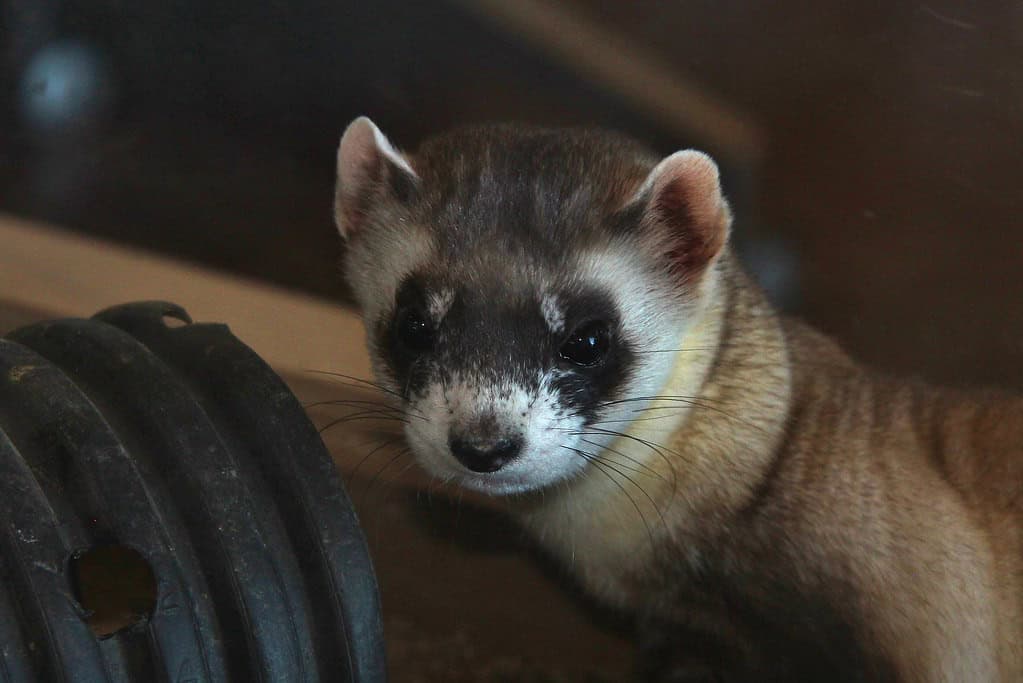
Here’s a story that’ll blow your mind – this little guy was actually declared extinct in 1980, but is now making one of the most incredible comebacks in wildlife history. Shep was a ranch dog on a farm in Meeteetse, Wyoming who killed a Black-Footed Ferret and brought it to his owners in 1981. Shep’s owners took the ferret to a local taxidermist, who informed them of the importance of Shep’s discovery. A small relic population of 130 ferrets was discovered on the Wyoming farm and was monitored closely by wildlife biologists. The black-footed ferret (Mustela nigripes), also known as the American polecat or prairie dog hunter, is a species of mustelid native to central North America. What makes these critters absolutely fascinating is their specialized lifestyle – Prairie dogs make up a whopping 90% of a Black-Footed Ferret’s diet (with the remaining 10% made up of prey like squirrels, mice, and other rodents). One ferret eats a prairie dog about every three days. One Black-Footed Ferret can easily eat around 100 prairie dogs a year, and the average ferret family requires at least 250. These nocturnal hunters are like tiny ninjas, Ferrets sleep up to 21 hours per day and wake up at night to hunt, eat, and tend to their young. As mentioned before, the black-footed ferret is the most endangered mammal in North America, and the Badlands has the largest population of ferrets on the continent.
Mountain Goat – The Cliff-Hanging Acrobats

Think you’re good at rock climbing? These guys would put any human mountaineer to shame. Perhaps the most iconic animal to see here is the mountain goat, clinging to a cliff near Logan Pass. With two layers of wool on their coat and cloven hooves designed for steep slopes, they’re ideally suited to this rocky terrain. Fun Fact: Both male and female mountain goats start growing horns at the age of two and each ring can be counted like a tree to determine their age. The mountain goat (Oreamnos americanus), also known as the Rocky Mountain goat, is a large-hoofed mammal found only in North America. Despite its vernacular name, it is not a member of Capra, the genus of true goats. It resides at high elevations and is a sure-footed climber, often resting on rocky cliffs that predators cannot reach. Mountain goats are expert mountaineers. They can scale seemingly sheer cliffs and perform acrobatic moves on narrow ledges. Unfortunately, these mad skills don’t apply to safely crossing a busy national highway. What’s really cool is that In spring and summer, mountain goats in Mount Revelstoke and Glacier national parks sometimes descend to areas along the Trans-Canada Highway to feed on fresh vegetation along the side of the road and to lick salt off the shoulder and road surfaces.
American Pika – The Tiny High-Altitude Preppers
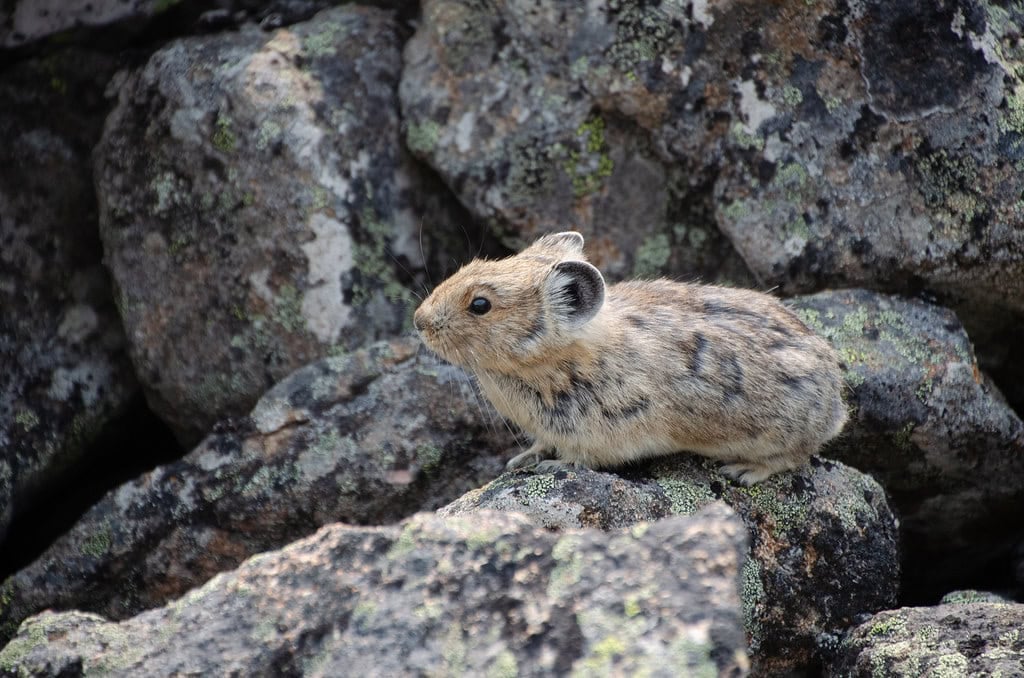
Meet one of the cutest and most industrious little critters in the American wilderness. Take the potato-sized, furry, North American pika (Ochotona princeps) for instance, found among talus slopes in the park. These adorable relatives of rabbits live in some of the most extreme conditions on the continent, making their homes in rocky alpine areas where few other mammals dare to venture. Fun Fact: Pikas are planners. Because they don’t hibernate, they contribute to a ‘haypile’ underground, like preppers with a bunker, and use that dried vegetation to eat during winter. Pikas rely on vegetation found near talus slopes year-round. During summer, they eat the plants directly, but they also collect and store plants that will provide much needed sustenance during the long alpine winter. It’s tough to spot these adorable and tiny mammals who live in the alpine zone. But you can often hear them! They have distinctive high calls or whistles that can echo through the peaks. Unfortunately, Due to their vulnerability to high temperatures, increasingly isolated populations, and low reproductive rates, scientists are concerned about how climate change will affect the North American pika.
Gila Monster – The Desert’s Venomous Beauty
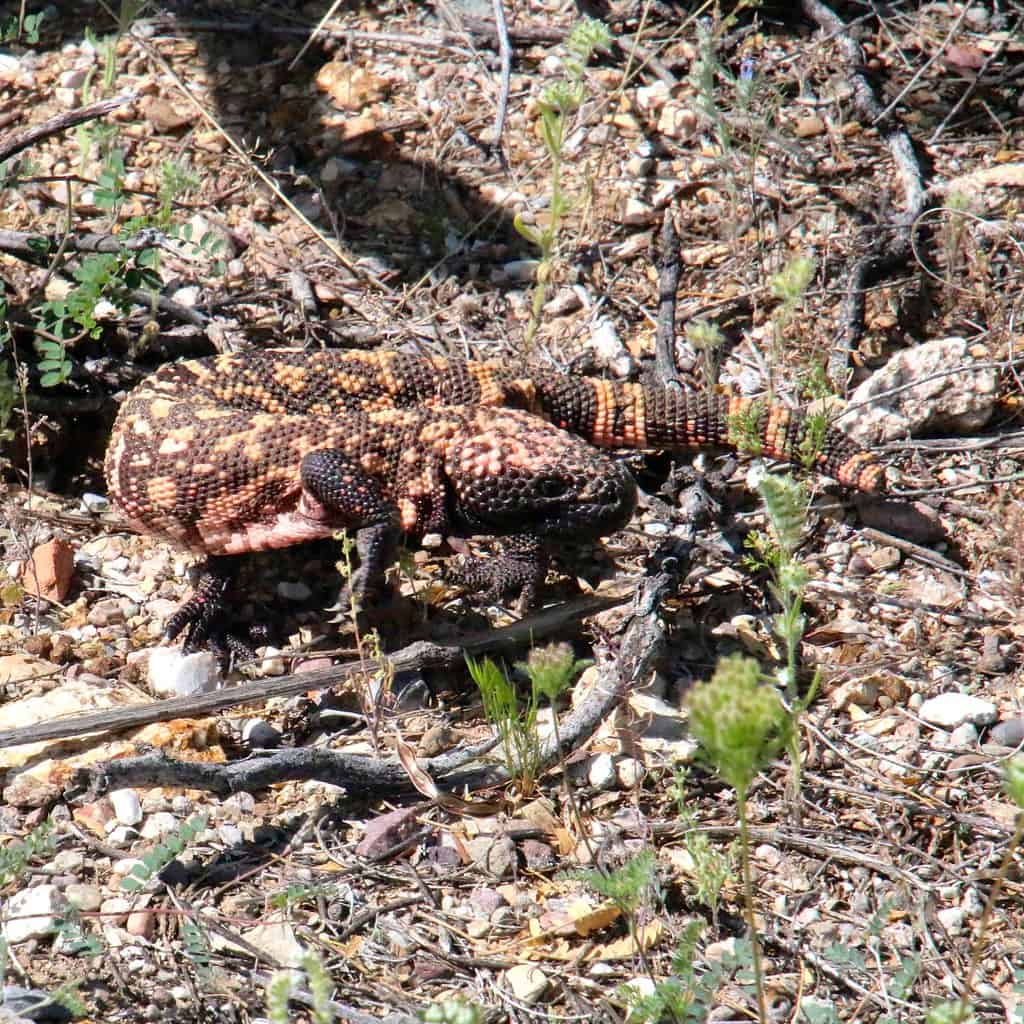
Don’t let the name fool you – this isn’t actually a monster, but it is one of only two venomous lizards in the world, and it’s absolutely fascinating. Arizona’s unique wildlife includes the Gila monster (one of only two venomous lizards in the world), javelinas (collared peccaries that resemble but aren’t actually pigs), and the endangered Sonoran pronghorn. These incredible creatures are found in the southwestern United States, particularly in Arizona and New Mexico, where they’ve adapted to life in harsh desert conditions. The Gila monster has near threatened status on the IUCN Red List. It faces the illegal wildlife trade, habitat loss, and road traffic, as it is often struck by vehicles. What makes them truly remarkable is how they’ve mastered desert survival – they can store fat in their thick tails and go months without eating during the cooler winter months. Their venom isn’t usually dangerous to humans, but their bite is incredibly strong and they don’t let go easily once they clamp down. These slow-moving but stunning lizards are covered in beautiful bead-like scales in patterns of orange, pink, and black that make them look like living jewelry against the desert landscape.
Ringtail – The Secret Acrobat of the Southwest

Here’s an animal that most people have never heard of, but it’s so cool it’s actually Arizona’s state mammal. Not to be confused with the ringtail lemur, the ringtail (Bassariscus astutus) is a species in the raccoon family. Its range spans all the way from Louisiana and Arkansas to California and southern Oregon in the US and as far south as Oaxaca in Mexico. The state mammal of Arizona, the ringtail is known by many names—such as the ring-tailed cat, miner’s cat, civet cat, and cacomistle. Despite these nicknames, it’s not actually a cat. A fun fact is that its scientific name means ‘clever little fox’ in Latin. The ringtail has dark brown to black fur with pale underparts. Its face is similar in shape to a fox’s, and it has long whiskers and black fur around its eyes. These incredible climbers can rotate their hind feet 180 degrees, allowing them to climb down vertical rock faces headfirst like a spider. Ringtails can survive for abnormally long periods of time without drinking water (getting it instead from the food they consume)—they have the most concentrated urine of any mammal studied. This adaptation allows ringtails to conserve water. They’re nocturnal and incredibly agile, earning them the nickname “miner’s cat” because gold prospectors appreciated having them around to control rodent populations in mining camps.
California Sea Lion – The Ocean’s Playful Performers

If you’ve ever wondered what pure joy looks like in animal form, watch a California sea lion playing in the surf. California sea lions play in the safety of shallow water off the coast of Santa Barbara Island, part of the Channel Islands National Park. These incredibly intelligent marine mammals are found along the Pacific coast from British Columbia down to Mexico, but some of the best viewing opportunities are in California’s coastal waters and islands. Other animals in the islands include the California sea lion, California moray, bald eagle, Channel Islands spotted skunk and the non-native Catalina Island bison herd. What makes sea lions absolutely captivating is their intelligence and playfulness – they’re incredibly social animals that seem to genuinely enjoy interacting with each other and their environment. Sea lions are noisy—but how many sounds can they make? Quench your curiosity in this virtual keeper talk with American Trail keeper Sydney Lenz! They’re amazing swimmers, capable of reaching speeds up to 25 mph underwater, and can dive to depths of over 900 feet. On land, despite their bulk, they’re surprisingly agile and can even “walk” on their flippers, unlike true seals which can only flop around.
Bighorn Sheep – The Mountain Marathon Champions

These magnificent animals are the ultimate mountain athletes, capable of navigating terrain that would challenge even the most experienced rock climbers. One of the other major Badlands National Park wildlife species is the bighorn sheep. In the mid-60s to the 80s, 13 bighorn sheep roamed free in the park. What’s truly incredible about bighorn sheep is their ability to run at speeds up to 30 mph on rocky terrain and leap up to 20 feet between ledges. The males, called rams, are famous for their spectacular head-butting battles during mating season, where they charge at each other at full speed with a crack that can be heard for miles. The population was quite small growing only to about 20 sheep because they hit a genetic bottleneck – meaning they didn’t have enough genetic diversity. However, they eventually moved past the bottleneck in the late 90s. The population grew but were hit by a strain of Pasteurella which killed some of the sheep. Their curved horns continue growing throughout their lives, and you can actually tell a ram’s age by counting the annual growth rings on his horns, much like counting tree rings. This means that grazers like bison, bighorn sheep, and pronghorn all benefit from a prairie dog’s clipping of the grass around its town. They have incredible eyesight that’s about six times better than humans, which helps them spot predators and navigate treacherous mountain terrain.
Manatee – The Gentle Giants of Florida Waters

Swimming alongside a manatee is like encountering a real-life mermaid – these gentle giants move through the water with such grace that it’s easy to see how sailors once mistook them for mythical sea creatures. In the warm coastal waters of the southeastern United States, the manatee, or sea cow, can often be seen slowly gliding through the water. Resembling a mythical creature with its paddle-shaped flippers and whiskered face, manatees are cherished for their curious and gentle nature. These herbivorous mammals face threats from boat collisions and habitat degradation, driving conservation initiatives to create protected waterways and educate boaters on safe practices. In Central Florida, Silver Springs State Park caters to nature lovers, especially during manatee season from mid-November to late March. The park’s crystal-clear, spring-fed waters allow visitors to quietly and respectfully observe these gentle sea cows, free from motorized disturbances as gas- and electric-powered boats are prohibited. An easy paddle in a canoe or kayak gets you up close to manatees. These amazing creatures can weigh up to 1,200 pounds and grow up to 13 feet long, yet they’re completely vegetarian, spending most of their day peacefully grazing on seagrass. They’re incredibly intelligent and curious, often approaching snorkelers and kayakers with genuine interest. Despite their size, manatees are surprisingly agile in the water, able to swim upside down, do barrel rolls, and even “stand” on their tails in shallow water.
Conclusion
America’s wildlife is nothing short of spectacular, and these ten incredible animals represent just a small sample of the amazing creatures you can encounter across the United States. From the thundering herds of bison in Yellowstone to the gentle manatees in Florida’s crystal-clear springs, each animal offers its own unique window into the natural world. What makes these encounters even more special is knowing that many of these species have overcome incredible challenges – some, like the black-footed ferret and American bison, have literally come back from the brink of extinction through dedicated conservation efforts. Whether you’re planning your next wildlife adventure or simply dreaming about the wild places that still exist, remember that these animals need our continued protection and respect. The next time you have the chance to see any of these amazing creatures in their natural habitat, take a moment to appreciate not just their beauty and behavior, but the incredible ecosystems that support them. After all, isn’t it amazing that we share our country with such extraordinary neighbors?

As a little kid, I fell in love with nature, wildlife, and animals. Living in the USA, South Africa, Italy, China and Germany gave me the opportunity to discover the world's Wildlife. My favorite animals are Mountain Gorillas, Siberian Tigers, and Great White Sharks.
I'm a certified PADI Open Water Diver, went to Everest Base Camp and Trekked Gorillas in Uganda. I hold a Master of Science in Economics and Finance.
Please send any feedback to feedback@animalsaroundtheglobe.com
- 11 Most Endangered Insects Buzzing in America Today - July 22, 2026
- 10 Most Frequently Googled Animal Birth Facts - July 22, 2026
- 10 Incredible Migration Journeys in the Animal Kingdom - July 22, 2026