
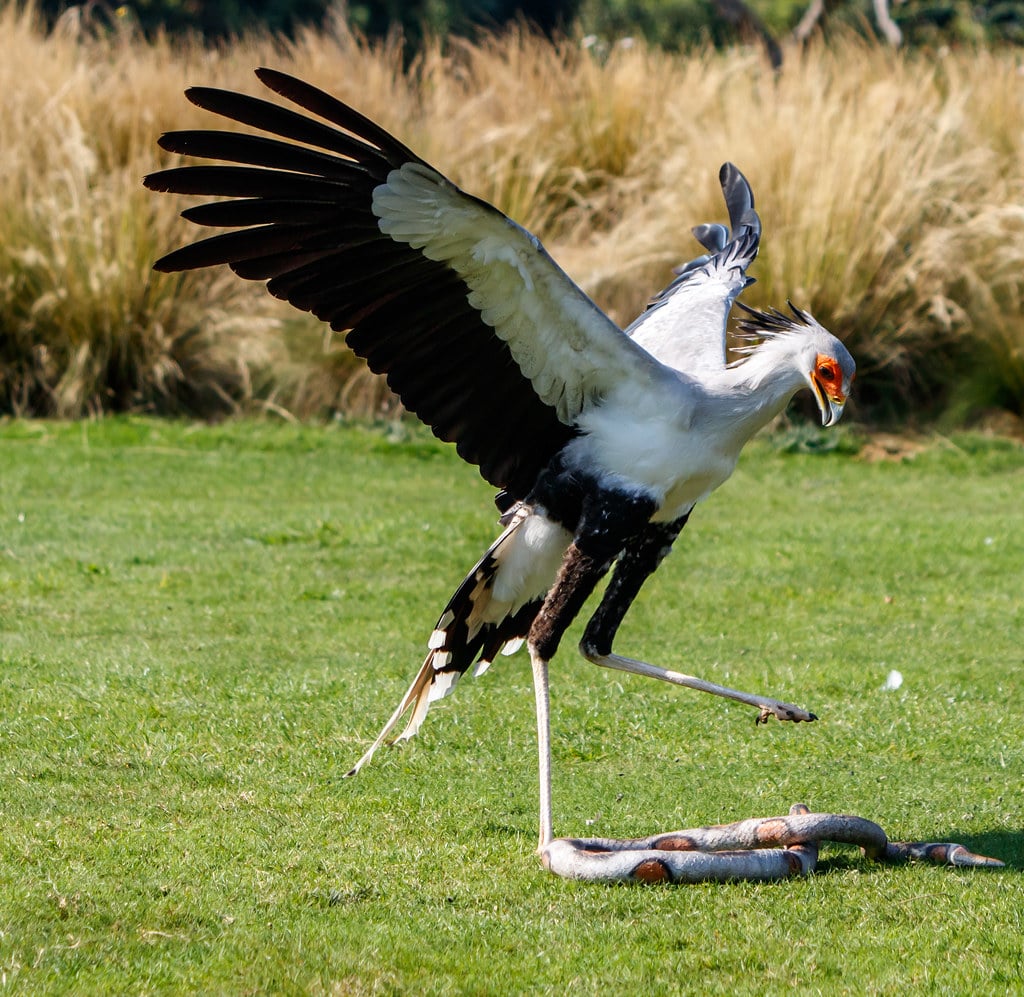
Picture a bird that looks like an eagle that borrowed a pair of stilts. It stalks across the African grassland with a calm, almost businesslike stride, and then it stomps something to death. That something is often a snake, and sometimes a very venomous one.
Most hunters rely on speed, claws or a sharp beak. The secretary bird relies on its legs, and the reasons go deeper than they first appear. Anatomy, behavior and habitat all play a part, and some of the details are stranger than the reputation.
It Is a Raptor That Decided to Walk
🔥 Would you like to save this?
We'll email this post to you, so you can come back to it later!
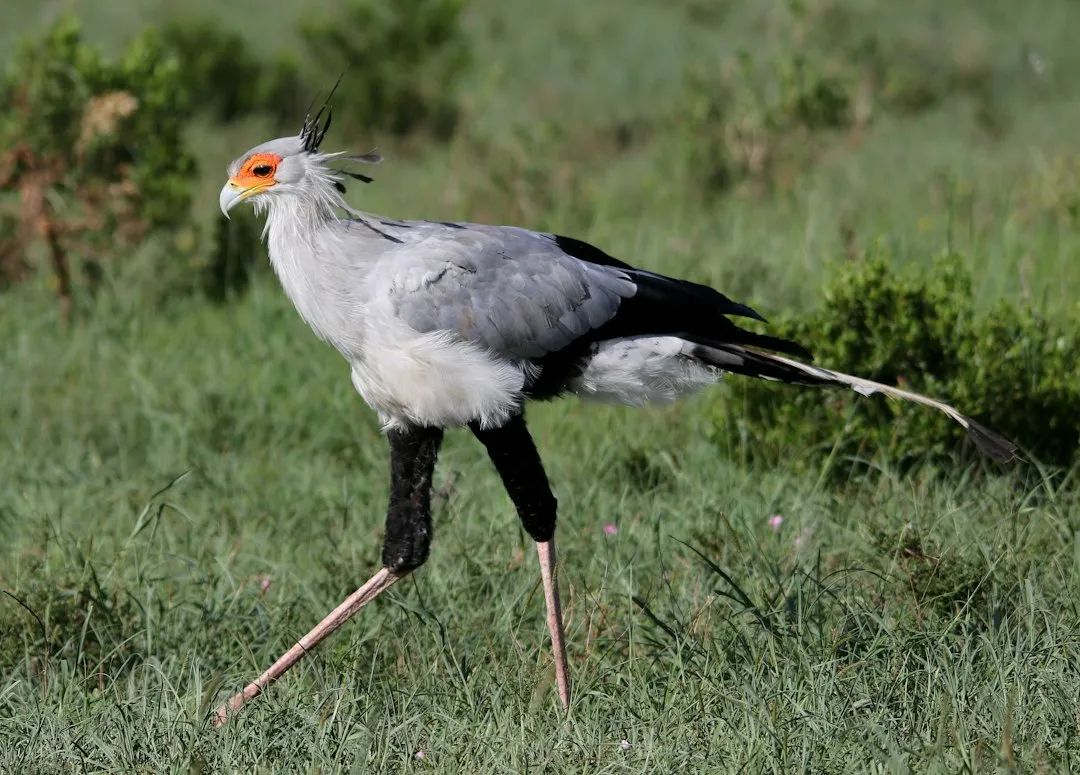
The secretary bird, Sagittarius serpentarius, is a bird of prey. It belongs to its own family, Sagittariidae, and it is the only living species in it. That makes it a evolutionary loner, and not a close relative of any familiar eagle or hawk.
It lives in open savanna and grassland across Africa south of the Sahara. Although it can fly well, it spends most of its day on foot, and that habit shapes nearly everything about its body.
Think of it as a raptor that traded the sky for the ground. A walking hunter in tall grass needs height to spot prey, strong limbs to chase it and a way to deal with animals that fight back.
Those Legs Are Built Like Hunting Tools
🔥 Would you like to save this?
We'll email this post to you, so you can come back to it later!
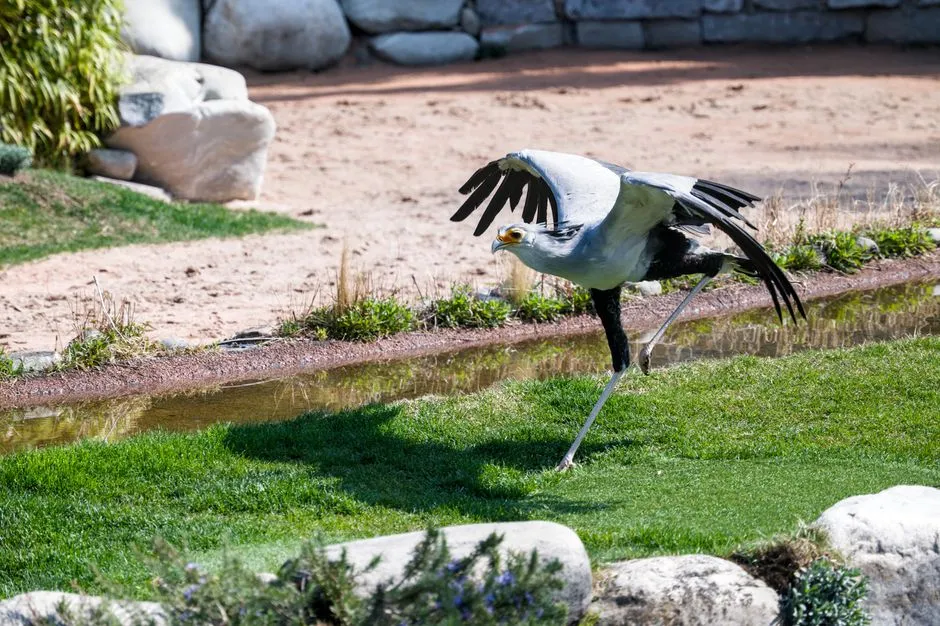
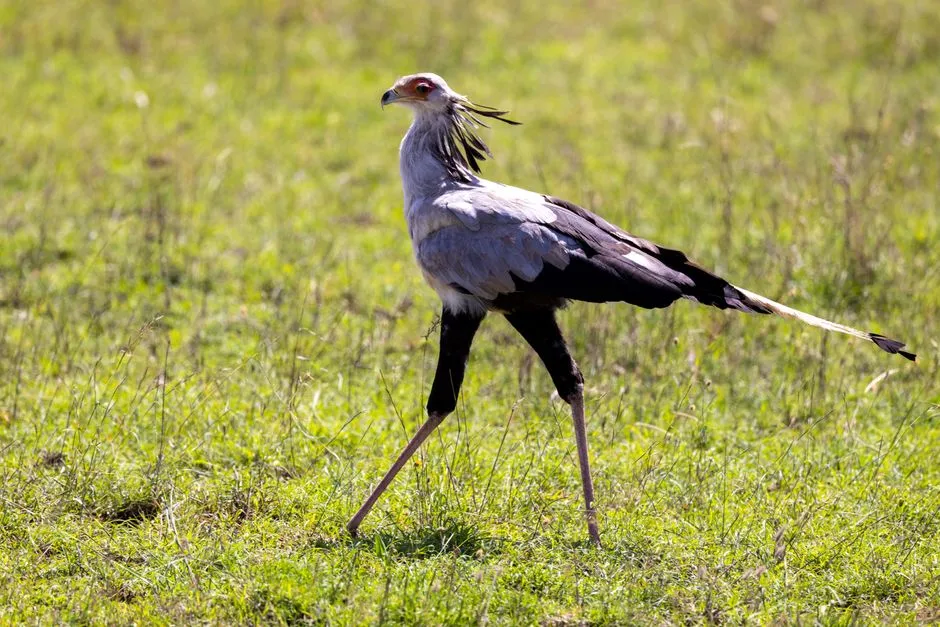
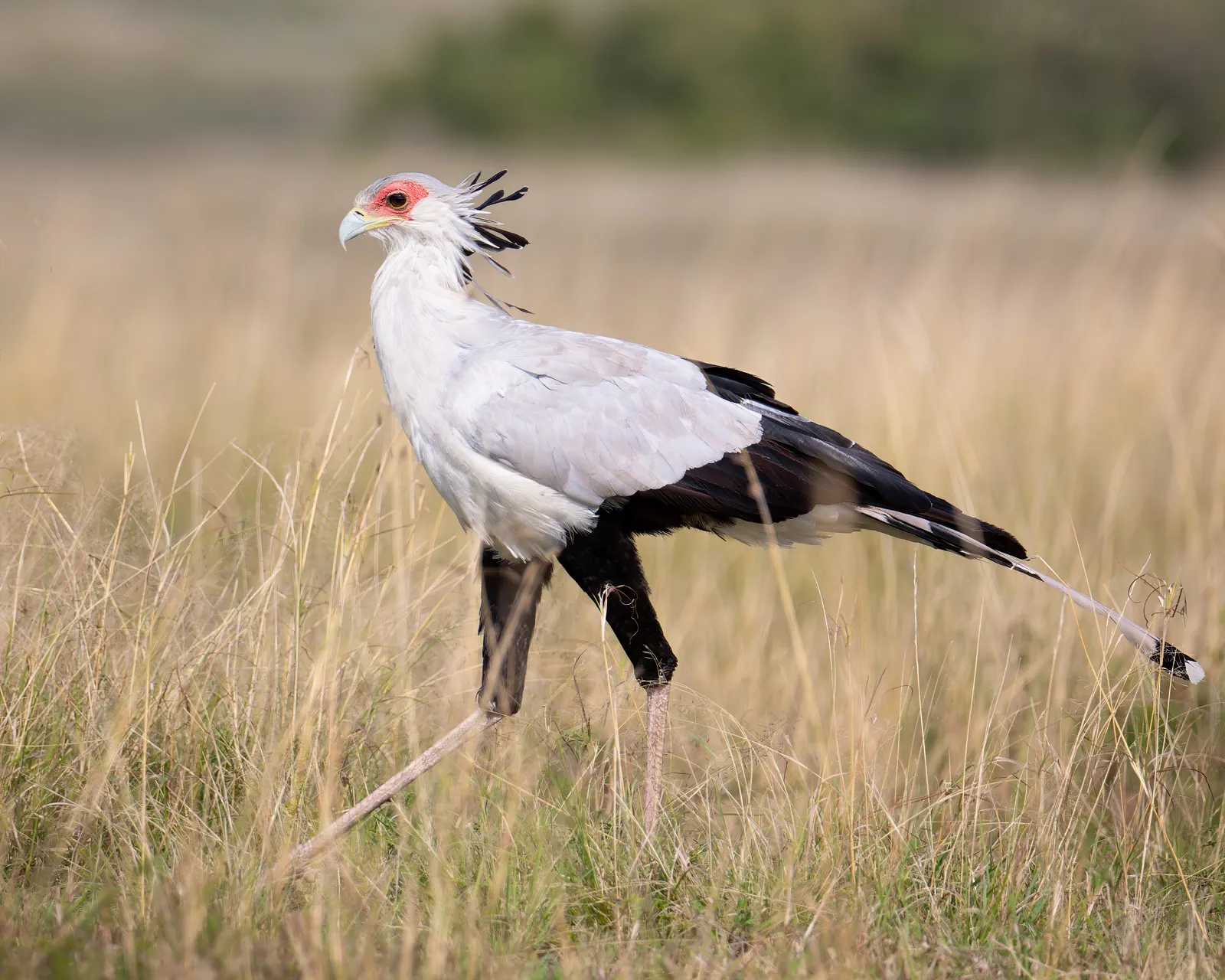
An adult stands about four feet tall, and much of that height is leg. It has one of the longest leg to body ratios of any bird of prey. The extra length lets it see over grass and strike from a safe distance.
The toes are short and stubby compared with an eagle’s, so they aren’t made for gripping and carrying prey. They work more like blunt hammers. The lower legs are also covered in tough scales, which likely help against bites.
Quick features worth remembering:
- Height of roughly four feet, with a wingspan around six feet
- Short, blunt toes suited to striking instead of carrying
- Scaly lower legs that offer some protection
The Kick Is Faster Than a Snake Can React
🔥 Would you like to save this?
We'll email this post to you, so you can come back to it later!
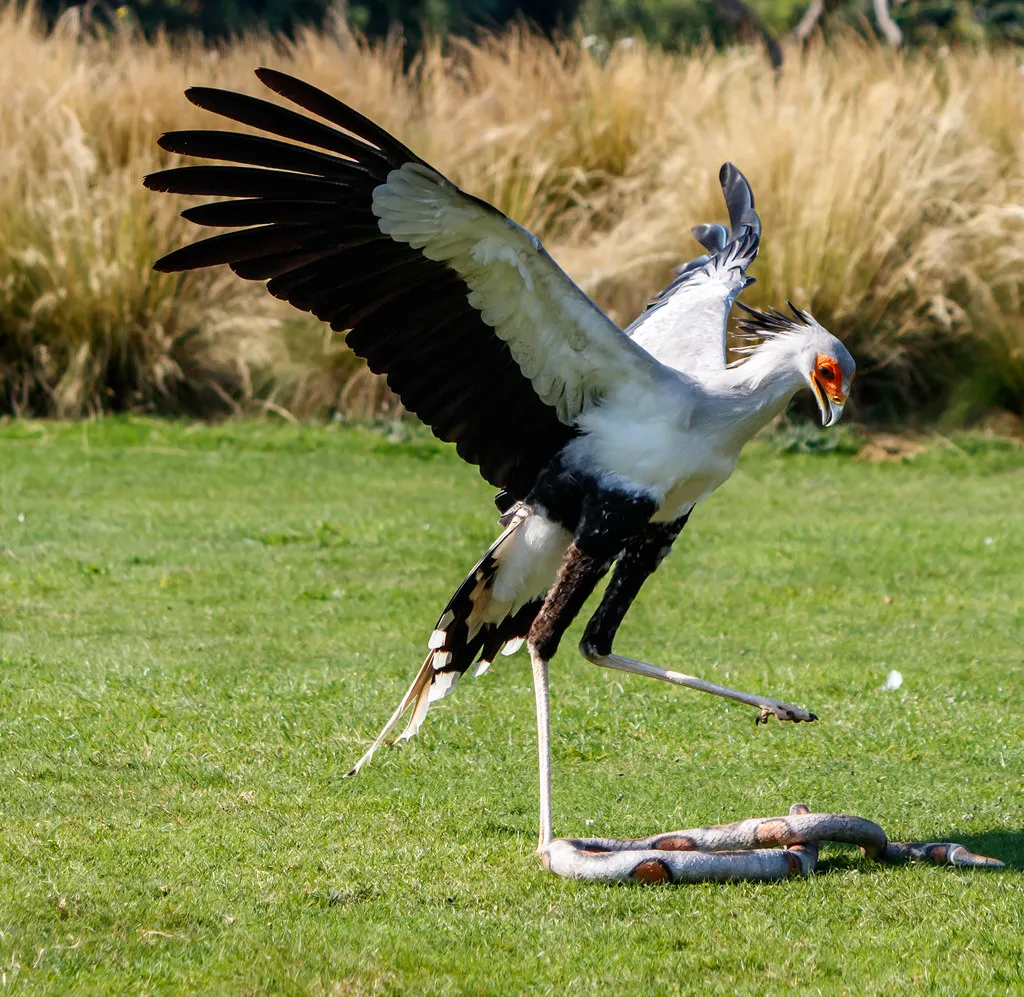
Researchers who studied captive secretary birds kicking a rubber snake model measured the strike with force sensors. The kick landed with a force of about five times the bird’s own body weight. Contact lasted only a tiny fraction of a second, far shorter than a tenth of a second.
That speed matters. A snake’s best defense is a fast, accurate bite, and a bird that finishes the job almost instantly leaves little time for one.
The same study suggested the bird adjusts its kick, since it can deliver strikes with precise timing. It isn’t flailing. It is aiming a blow at the head or body of the animal in front of it.
Stomping Finishes What the Kick Starts
🔥 Would you like to save this?
We'll email this post to you, so you can come back to it later!
A secretary bird rarely relies on a single blow. After the first kick, it often stomps on the prey repeatedly, pinning it against the ground. With a small snake or lizard, this can be over quickly.
With larger or more dangerous prey, the bird may strike several times and keep its body well back from the head. It also hops and shifts position, keeping the snake off balance. Observers often describe the movement as a kind of dance, though it is entirely practical.
Once the prey is subdued, the bird usually swallows it whole, or tears it apart if it is too big. Smaller animals go down in one piece, which is fast and efficient.
Wings Act as a Shield
🔥 Would you like to save this?
We'll email this post to you, so you can come back to it later!
The legs do the damage, yet the wings help keep the bird safe. When facing a snake, a secretary bird can spread its wings and hold them forward. This draws the snake’s attention toward the feathers and away from the bird’s body.
It’s a clever trick for a hunter whose prey can fight back. A bite to a wing is a lot less dangerous than a bite to the leg or face.
Between its scaled legs, its wing display and its distance from the target, the bird stacks several small advantages. No single one is a guarantee, and snakebites on these birds are not unheard of, but together they tilt the odds heavily in its favor.
Snakes Are Only Part of the Menu
🔥 Would you like to save this?
We'll email this post to you, so you can come back to it later!
The title gets the headline right, though it can give the wrong impression. Secretary birds are generalists. They eat insects such as grasshoppers and beetles, plus lizards, rodents, small mammals, eggs and young birds.
Snakes are certainly on the list, including venomous species, and the bird has a long reputation as a snake killer. Still, scientists often point out that snakes make up only a portion of its diet, and the exact share varies with place and season.
A summary of what it eats:
- Insects, especially grasshoppers and locusts when plentiful
- Reptiles, from small lizards to snakes
- Rodents and other small mammals
- Eggs and nestlings of ground nesting birds
It Walks Miles Every Day to Find Dinner
🔥 Would you like to save this?
We'll email this post to you, so you can come back to it later!
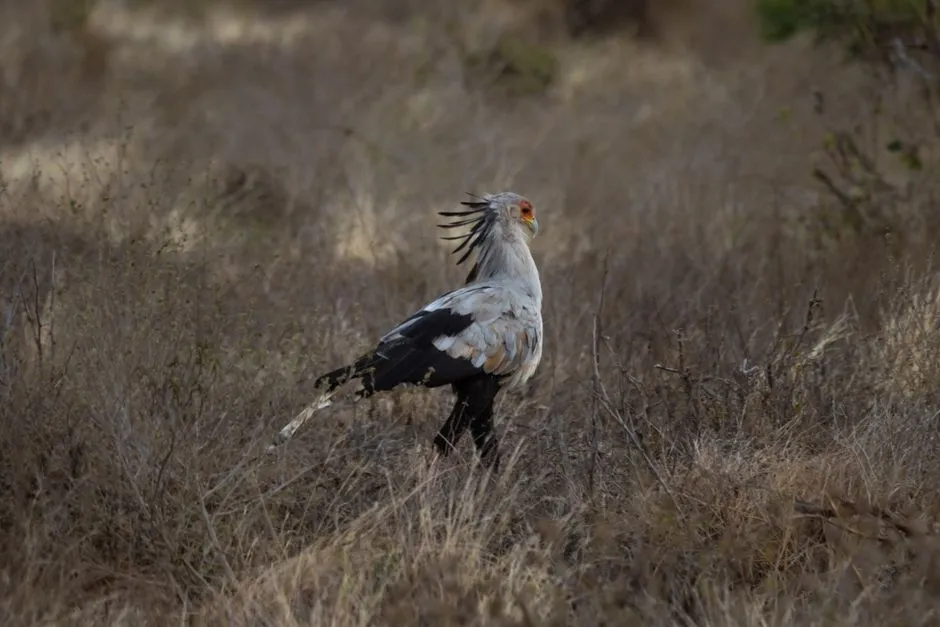
Foraging is a long walk. A secretary bird may cover many kilometers daily, moving steadily through the grass and scanning for movement. Reports often cite distances of up to roughly twenty miles in a day.
It stamps its feet at times to flush out hidden animals, which then dart into the open. That stamping looks odd, but it turns a patient search into a quick chase.
Pairs often hunt in the same area, and this daily walking explains the long legs once more. They aren’t only for kicking. They are the engine of a lifestyle built around covering ground.
The Name Has Two Competing Stories
🔥 Would you like to save this?
We'll email this post to you, so you can come back to it later!
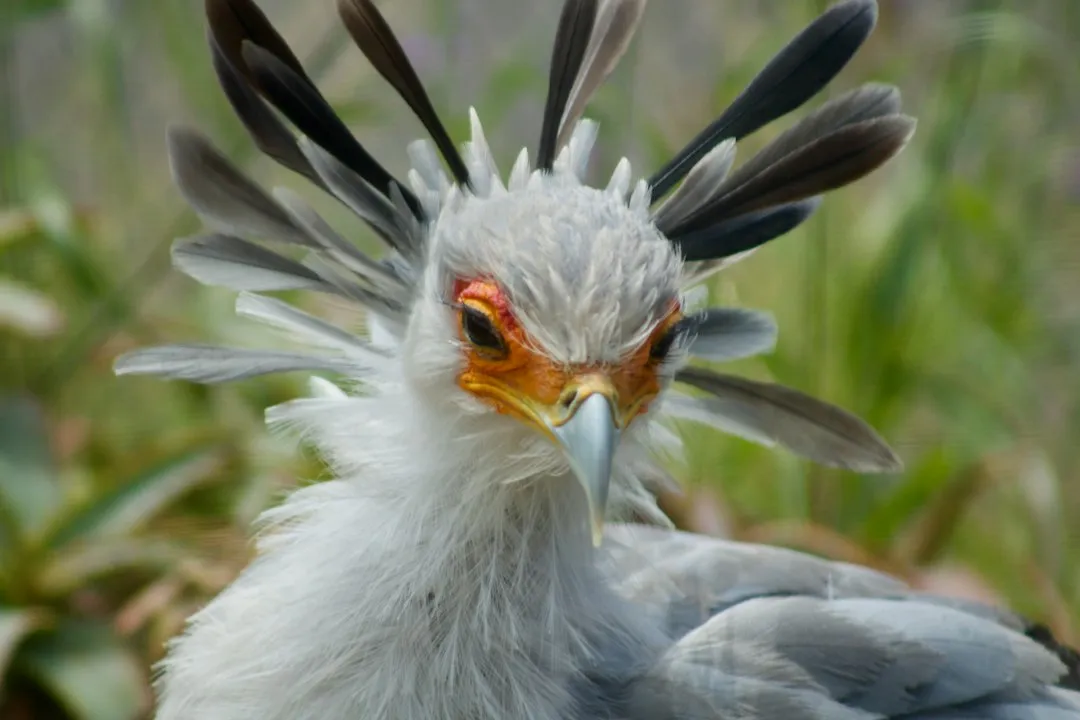
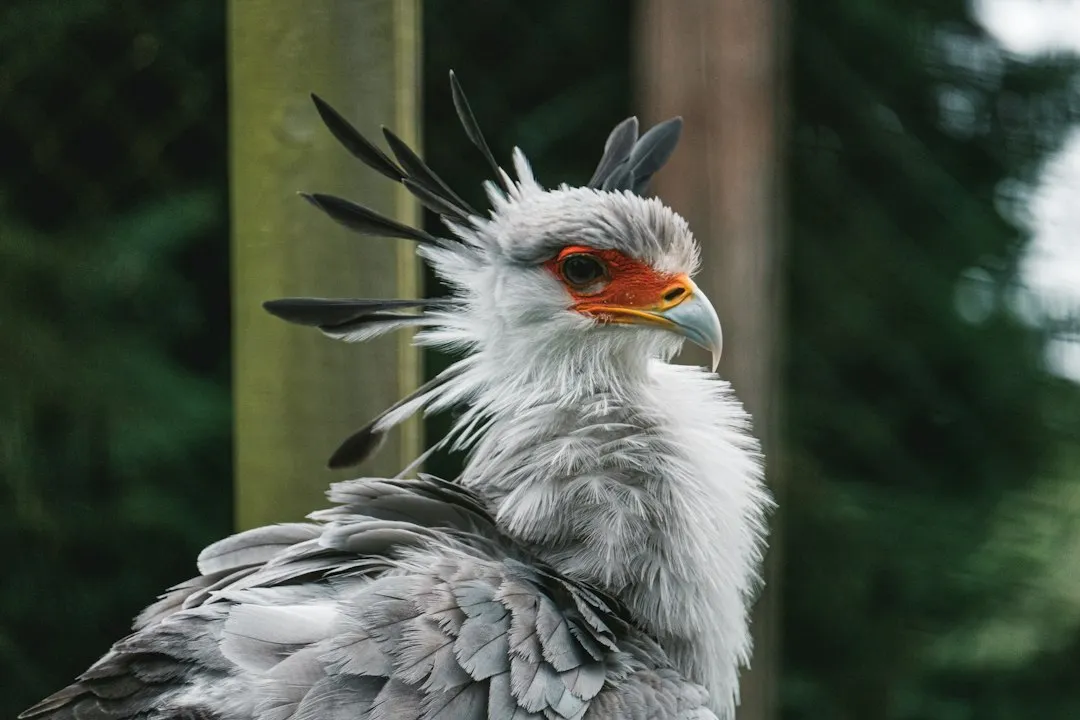
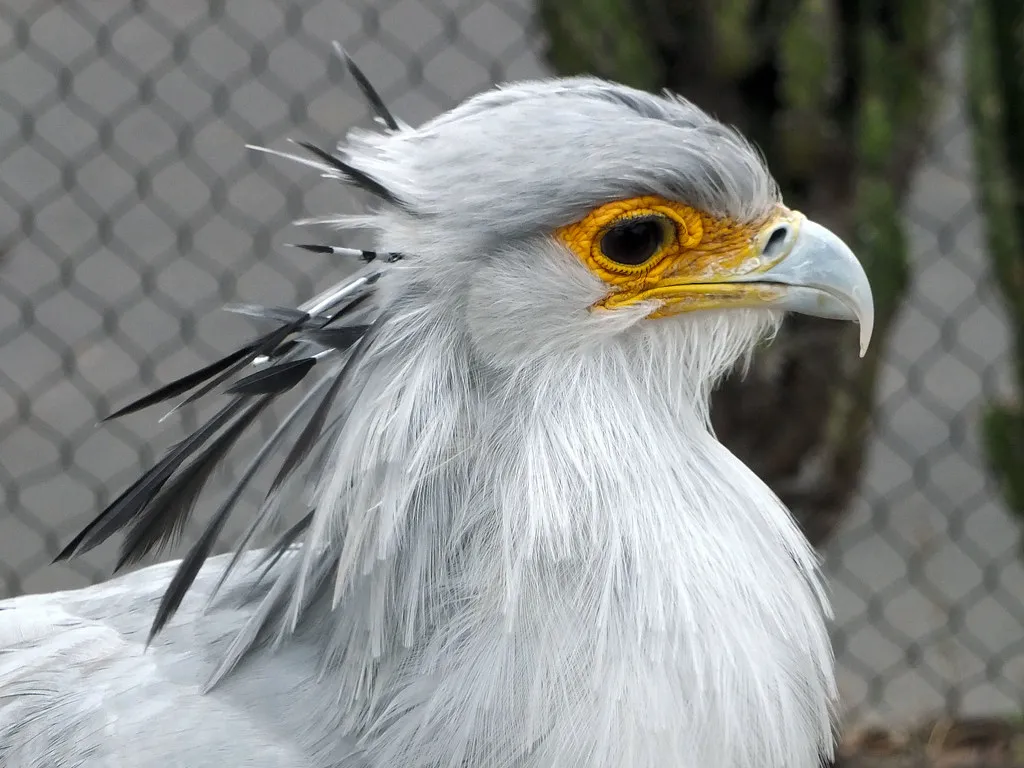
The crest of long feathers at the back of the head is the usual explanation for the name. Supposedly, it looked like quill pens tucked behind a clerk’s ear, which is where the idea of a secretary comes from.
Another theory says the name comes from an Arabic phrase meaning hunter bird, which later got garbled in European languages. Historians of language haven’t settled the matter, so it’s safest to say that both stories are in circulation.
Either way, the name stuck. It gives a fierce hunter an oddly office-ready identity, which is part of why people remember it.
Nests Sit High in the Trees
🔥 Would you like to save this?
We'll email this post to you, so you can come back to it later!
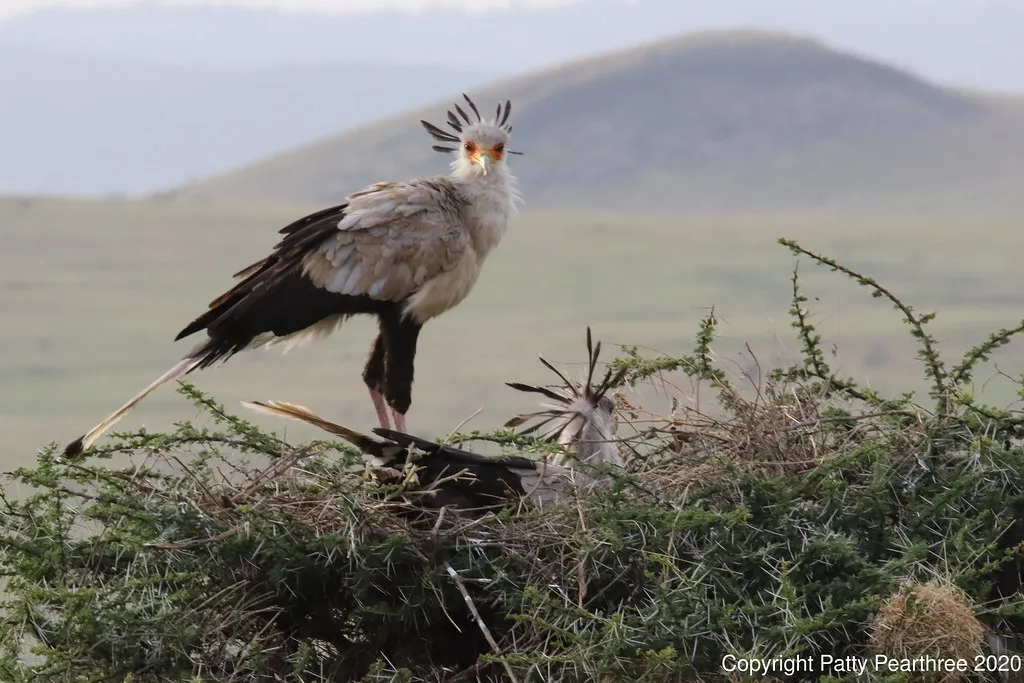
For a bird that spends its days on the ground, the nesting habits are surprising. Secretary birds build a large, flat platform of sticks, often at the top of a thorny acacia tree. The nest can be quite wide, and pairs may return to it in later seasons.
The female typically lays a small clutch of eggs, and the chicks stay in the nest for a long time while the parents bring food. Young birds can end up on the ground before they’re fully ready, which is a known risk.
Roosting in trees also helps adults at night, keeping them away from ground predators. It’s a reminder that the bird’s life isn’t entirely earthbound.
Its Future Is Less Secure Than Its Reputation
🔥 Would you like to save this?
We'll email this post to you, so you can come back to it later!
Such a confident hunter might seem safe, but the species is in trouble. The IUCN Red List moved it to the Endangered category in 2020, after evidence showed its numbers falling across its range.
Threats include habitat loss from farming and development, overgrazing, fires, collisions with vehicles and power lines, and disturbance near nests. Because the bird needs large areas of open grassland, shrinking habitat hits it hard.
Conservation groups work on protecting grasslands and raising local awareness. The details of population trends differ by region, so it’s wise to check current figures before quoting precise numbers.
Final Thoughts
🔥 Would you like to save this?
We'll email this post to you, so you can come back to it later!
I think the secretary bird deserves more credit than its snake slaying fame gives it. The kick is impressive, but the real story is how every part of the bird, from the stilted legs to the wing shield, fits together into one coherent way of making a living.
It’s also a little embarrassing that such a distinctive animal is now Endangered. We love the legend of the snake killer, yet the grasslands that keep it alive get far less attention. If this bird has taught us anything, it’s that the most remarkable hunters still need somewhere to walk.

- 7 Everyday Habits That Can Make Your Senior Dog Happier - November 5, 2026
- 10 Enigmatic Structures That Continue to Puzzle Scientists Today - November 5, 2026
- 10 Strange Ruins in the Americas That Challenge What We Know About Early History - November 5, 2026