
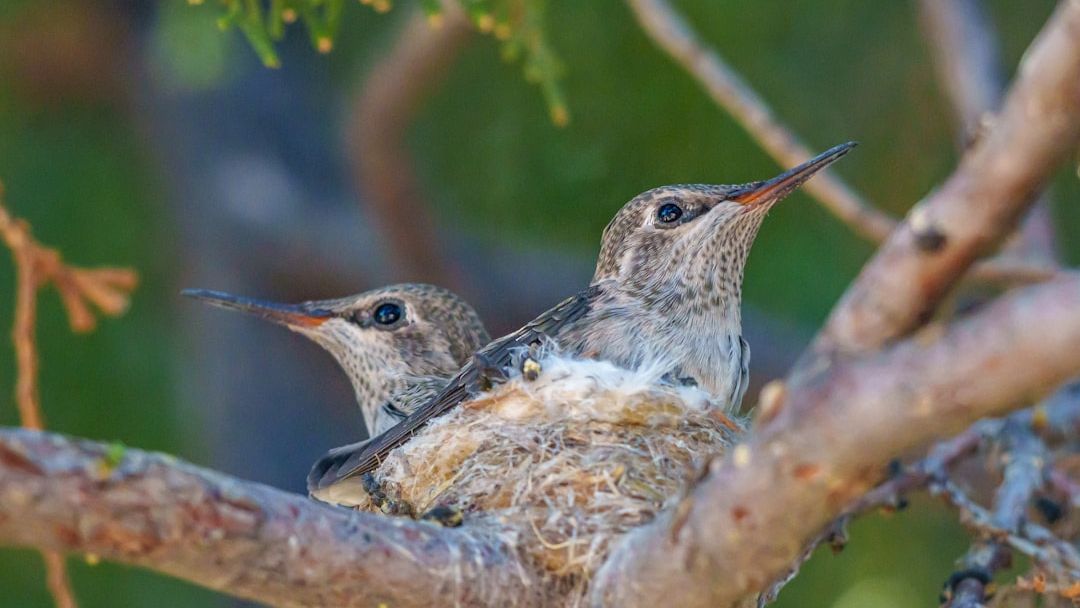
There’s something almost unreal about a hummingbird. You spot one for a second or two, hovering at a flower like a tiny jewel suspended in time, and then it’s gone. Most people catch the obvious things – the blur of wings, the flash of color, the incredible speed. What they miss are the stranger, quieter details hiding behind the spectacle.
Hummingbirds are arguably the most extraordinary birds on Earth, and the deeper you look, the weirder and more wonderful the story gets. From heartbeats that defy belief to memory sharp enough to track thousands of flowers, here are ten things about hummingbirds that most people walk right past.
#1: Their Wings Don’t Flap – They Rotate
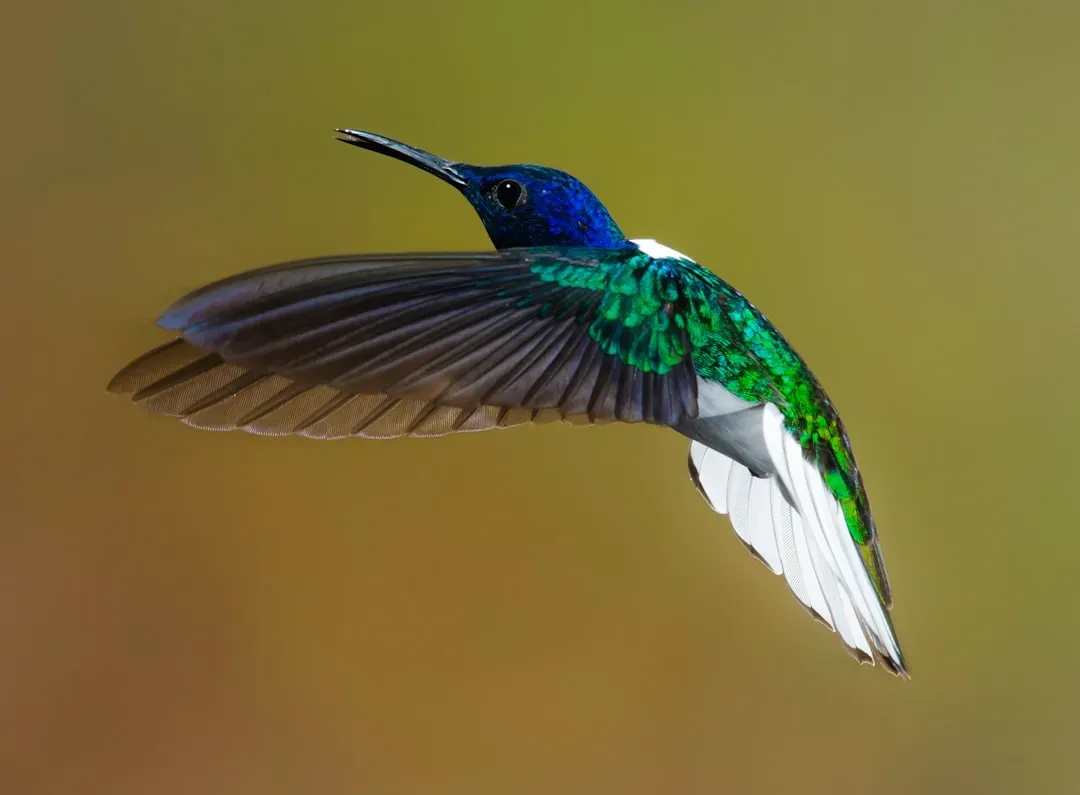
Most people assume hummingbirds simply flap their wings very fast, the way other birds do, just at a much higher rate. That’s not quite right. With their iridescent colors and relatively short wings, hummingbirds beat their wings as fast as 80 times per second – but they do not flap their wings at all. Instead, they rotate them in a figure eight.
Their wings move in a figure eight pattern, providing lift on both the up stroke and the down stroke, giving them the ability to hover. That double-lift mechanism is what makes sustained hovering possible – no other bird can manage it for any real length of time. It’s a completely different engineering solution to flight, which is part of why researchers continue studying them.
Researchers study their flight mechanics to understand aerodynamics better, which has applications beyond biology, including in engineering and robotics. Every time a hummingbird pauses at a flower, it’s performing a feat of physics that humans are still trying to fully replicate.
#2: Their Hearts Beat Over a Thousand Times Per Minute
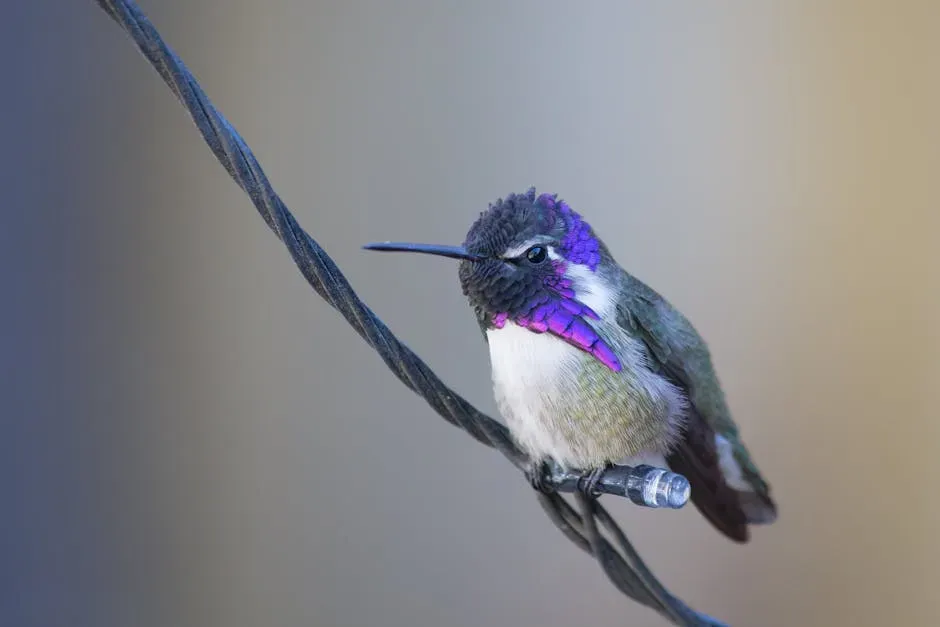
A hummingbird’s heart beats up to 1,260 times per minute. For comparison, a resting human heart beats somewhere between 60 and 100 times per minute. That gap is almost incomprehensible when you hold it in your mind for a moment.
Here’s what that looks like in practice: hummingbirds have a heart rate that can reach up to 1,200 beats per minute. It’s as if their hearts are playing a continuous symphony of vitality, fueling their incredible energy and agility. Even when they’re resting quietly on a branch, their entire physiology is running at a pace our own bodies simply aren’t built for.
Hummingbirds have the highest metabolism of any bird species, and they consume large amounts of nectar daily – equivalent to around half of their body weight – just to fuel their energy demands. When you watch one feed, you’re watching a creature in a constant, delicate race against its own energy needs.
#3: They’re the Only Birds That Can Fly Backwards
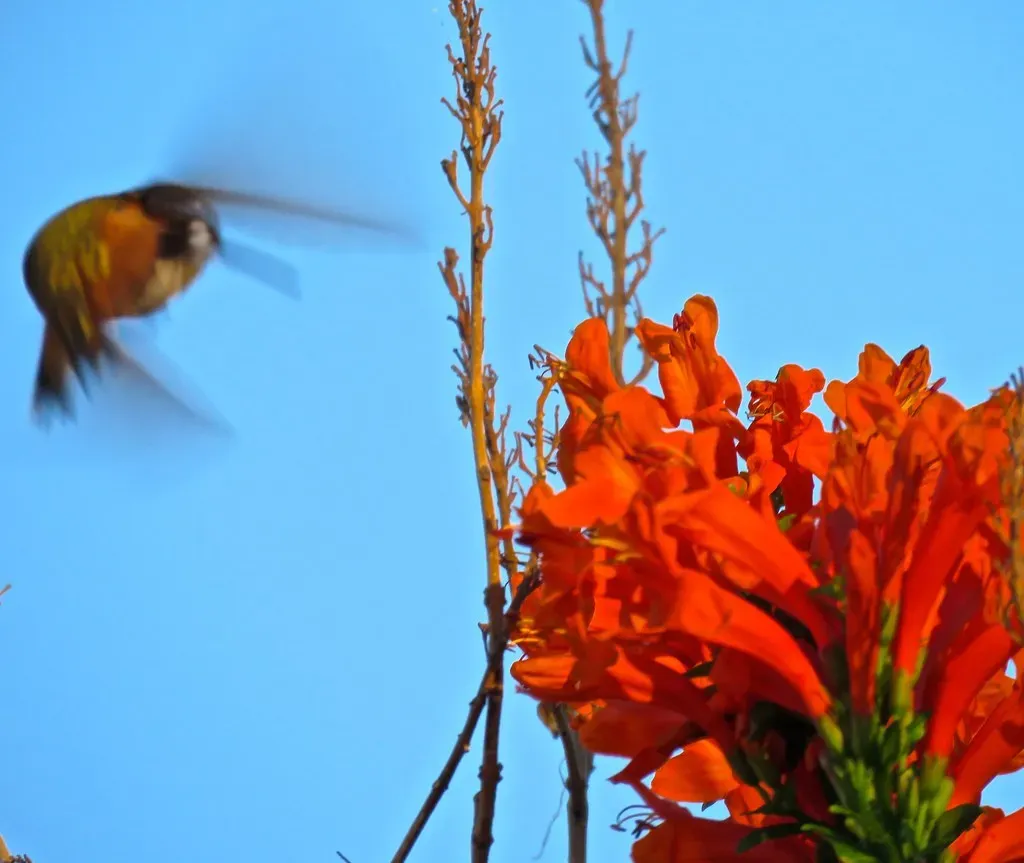
Hummingbirds are the only birds that can fly backwards. Their unique ball-and-socket joint at the shoulder allows them to maneuver with precision, hovering in place and even flying upside down. Other birds simply don’t have that joint structure, which is why none of them can match this level of aerial control.
What’s easy to miss while watching a hummingbird dart around a feeder is just how deliberate each movement is. The bird isn’t moving randomly. It’s making constant micro-adjustments, reading wind, distance, and nectar availability all at once. Hummingbirds are the only birds capable of hovering for extended periods, thanks precisely to this unique ball-and-socket joint at the shoulder.
#4: Their Diet Is Mostly Insects, Not Nectar
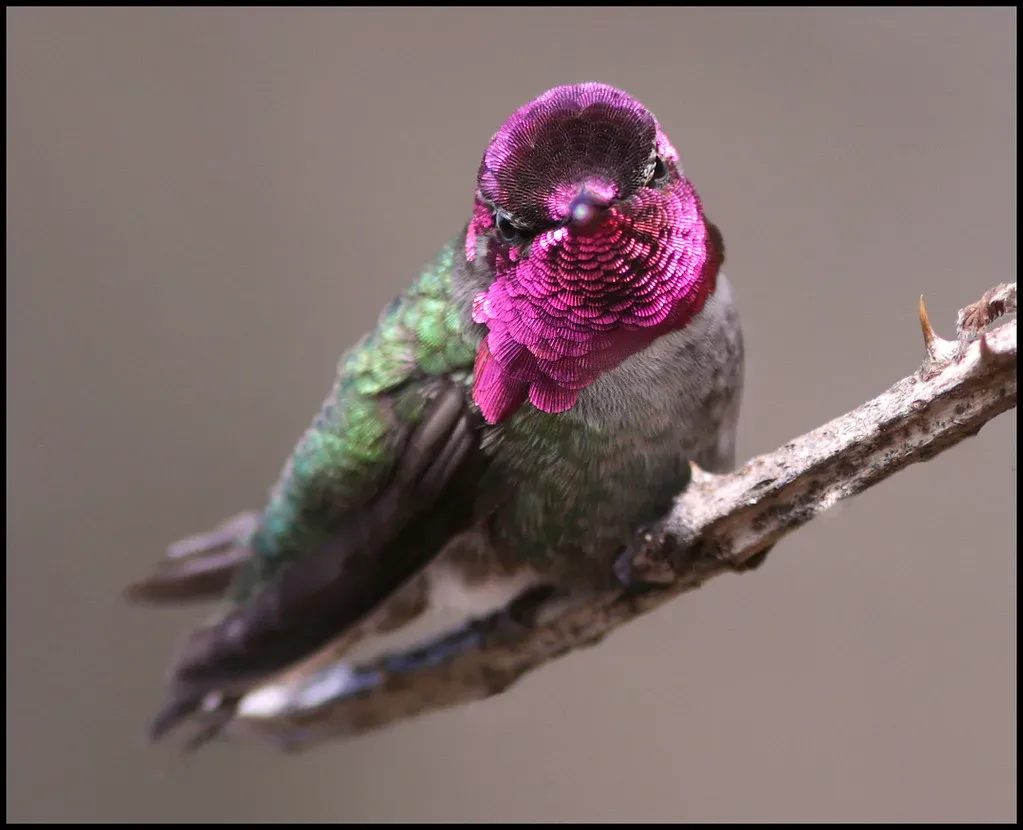
Almost everyone pictures hummingbirds hovering over flowers, drinking nectar. That image is accurate, but incomplete. We know hummingbirds as nectar-drinkers visiting flowers and feeders to fuel up, but nectar can only go so far nutritionally. It’s high in sugar but low in protein and fats, which is why many hummingbirds also eat protein-packed insects, especially when growing up.
In fact, according to researcher Doug Tallamy, nectar only makes up roughly a fifth of what hummingbirds eat, with insects accounting for the other four-fifths. That changes the picture considerably. They also eat tree sap and small insects when flowers are hard to find in the wild. The dazzling little bird at your garden feeder is also a skilled insect hunter – most people never realize it.
#5: They Have a Photographic Memory for Food Sources
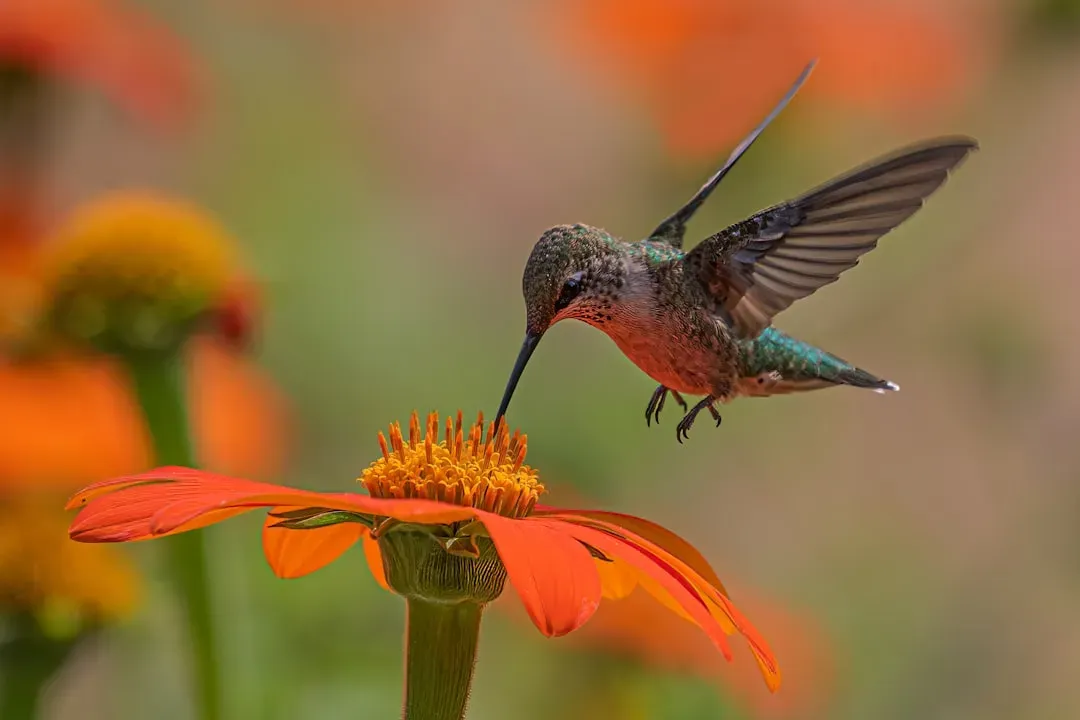
While many of us struggle to remember what we ate last week, hummingbirds can recall massive amounts of information about their food sources. Not only can hummingbirds remember the locations of flowers they have visited, but also the nectar quality, the nectar content of each individual flower, and even the nectar refilling rate. That’s a level of spatial and nutritional memory that puts most animals to shame.
Hummingbirds have a great memory – they remember every flower and feeder they’ve been to, and how long it will take a flower to refill. For a creature that burns energy this fast, knowing precisely when a food source will be ready again isn’t a luxury. It’s survival. Their excellent memory extends to remembering the locations of individual flowers and feeders, as well as the timing of when they were last visited.
#6: They Enter a Near-Death State Every Night
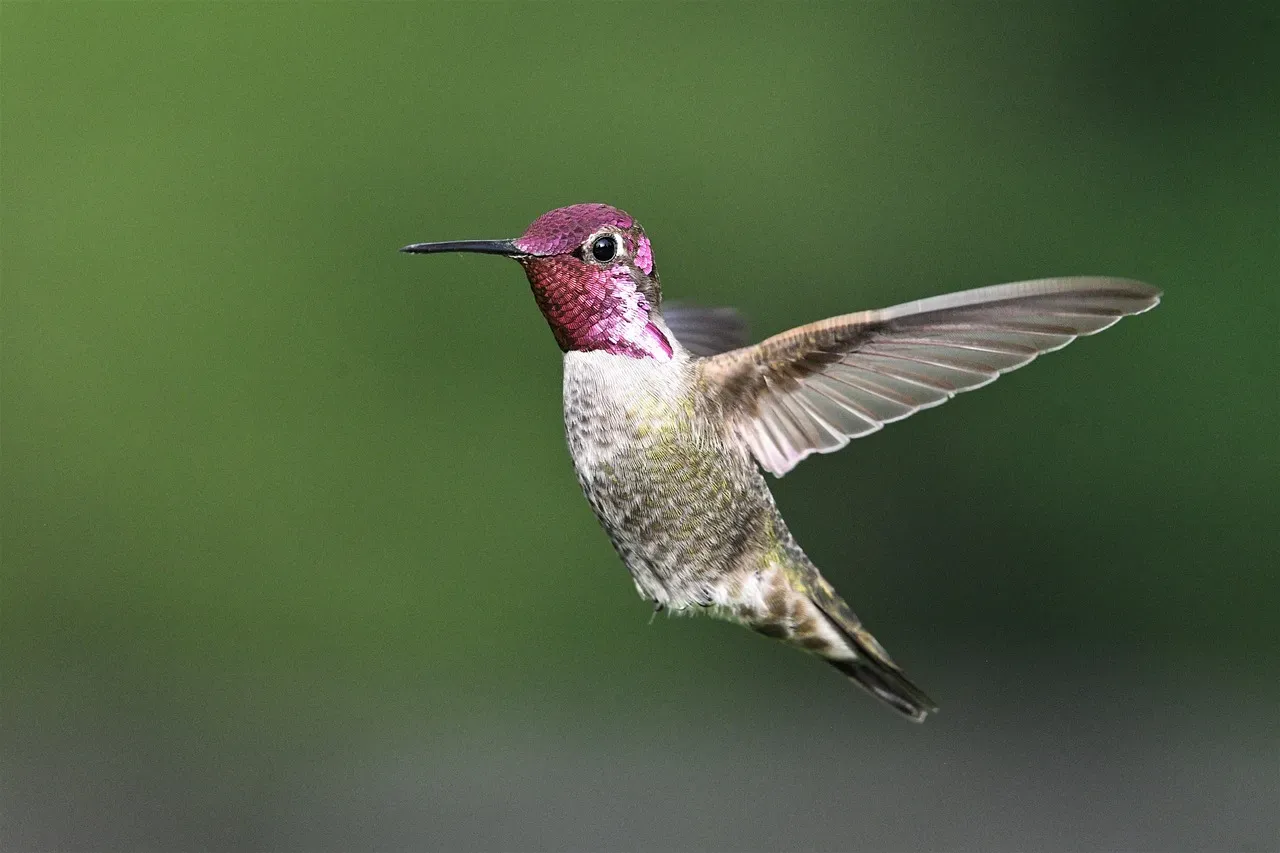
Each evening, when a hummingbird settles in to roost, something remarkable happens inside its body. When food is scarce or they are fatigued, hummingbirds go into a hibernation-like state known as torpor to conserve energy. During torpor, their already extraordinary physiology essentially powers down to a fraction of its normal operation.
To conserve energy during cold nights or when food is scarce, hummingbirds can enter a state of torpor similar to hibernation. Their heart rate, body temperature, and metabolism slow down dramatically, allowing them to survive until conditions improve. A torpid hummingbird can appear lifeless, and people who find one in this state sometimes believe the bird has died. It hasn’t. It’s just waiting.
Their unique physiology, such as their ability to enter torpor during cold nights or when food is scarce, provides scientists with valuable insights into metabolic processes and adaptations in wildlife. It’s one of the more striking examples of how these tiny birds have evolved solutions that larger animals simply don’t need.
#7: Their Bills Are Flexible, Not Fixed Like Straws
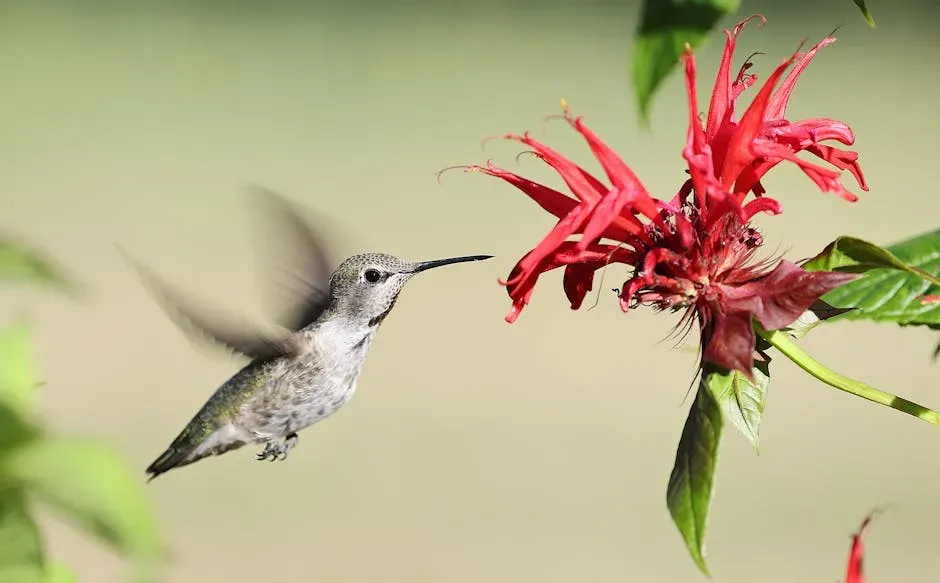
The slender bill of a hummingbird looks like a fixed, rigid tool – a precision instrument for reaching into flowers. Recent research upends that assumption entirely. Hummingbird bills look a little like drinking straws, and the frenetic speed at which they extract nectar may reinforce that impression – but new research shows just how little that comparison holds.
A drinking hummingbird rapidly opens and shuts different parts of its bill simultaneously, engaging in an intricate and highly coordinated dance with its tongue to draw up nectar at lightning speeds. To human eyes, these movements are barely perceptible – but for hummingbirds, they’re a lifeline. The bill isn’t a passive tube. It’s an active, flexible feeding tool, and only high-speed cameras have made this visible to researchers.
#8: They Can See Colors Humans Cannot
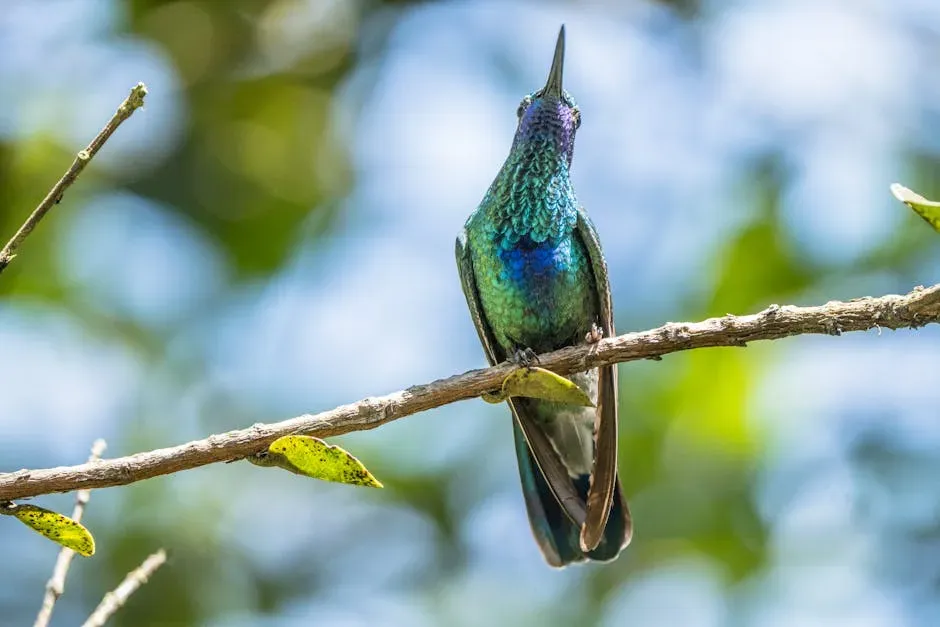
Hummingbirds don’t see the world the way we do. They have superb visual acuity, seeing color even better than humans, with their vision extending into the ultraviolet spectrum. Their eyes are also adapted to see warm shades better than cooler shades. A flower that looks plain and unremarkable to us may appear vivid and unmistakable to a passing hummingbird.
This ability to easily pick out orange, yellow, and red flowers amid a sea of cool green led to the long-held assumption that they prefer red over other colors. Scientists have since learned that the richness of the nectar matters more than the color of its source – the birds are quick learners, and it is nourishment they are after. Color is a signal, not a preference. They’ll follow the nectar wherever it leads.
#9: Some Hummingbird Chicks Mimic Poisonous Caterpillars
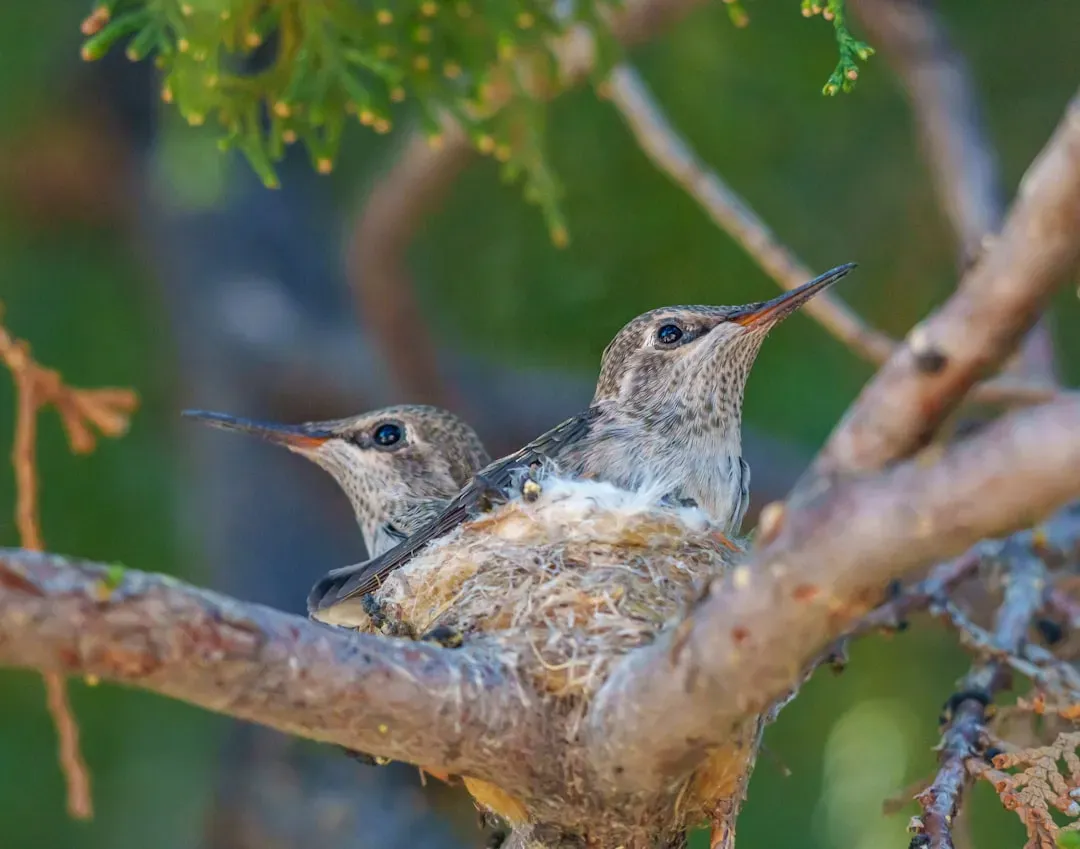
This one is genuinely strange, and it was only documented for the first time in recent years. When researchers Jay Falk and Scott Taylor first saw a white-necked Jacobin hummingbird chick in Panama’s dense rainforest, they didn’t know what they were looking at. The day-old bird, smaller than a pinky finger, had brown fuzz all over its body. When they walked closer to the nest, the chick began twitching and shaking its head – a behavior they had never seen in birds before. It turns out the hummingbird may fend off predators by mimicking a poisonous caterpillar that lives in the same region.
In a paper published in March 2025 in the journal Ecology, Taylor and his team described this unusual mimicry behavior for the first time in hummingbirds. The fact that it took this long to discover speaks to how little we still know about what happens inside hummingbird nests. The nest itself, smaller than a researcher’s palm, was made of plant parts to blend in perfectly with the surrounding environment. Even the nest is a disguise.
#10: They Migrate Alone – and Some Travel Thousands of Miles
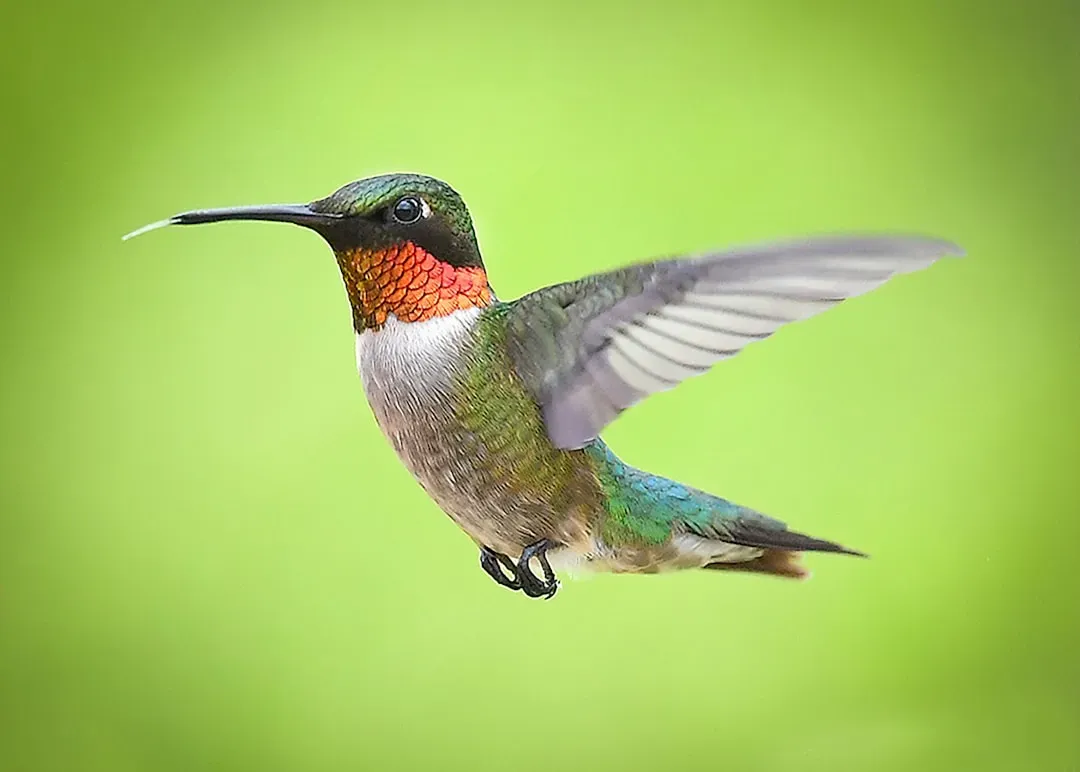
They are the smallest migrating birds, and they don’t migrate in flocks like other species – they typically travel alone for up to 500 miles at a time. That kind of solitary endurance, in a creature that weighs less than two pennies, is genuinely hard to process. There are no companions along for the journey, no group warmth at night.
Some hummingbirds will travel over 2,000 miles twice a year during their migration. To prepare for this, when it’s time to migrate, hummers pack on extra body mass for the long trip – sometimes doubling their weight. A bird that spends most of its life burning energy at an almost reckless rate must suddenly become an efficient long-distance traveler. Research confirms they perform one of the longest migrations relative to body size of any animal on Earth.
A Final Thought
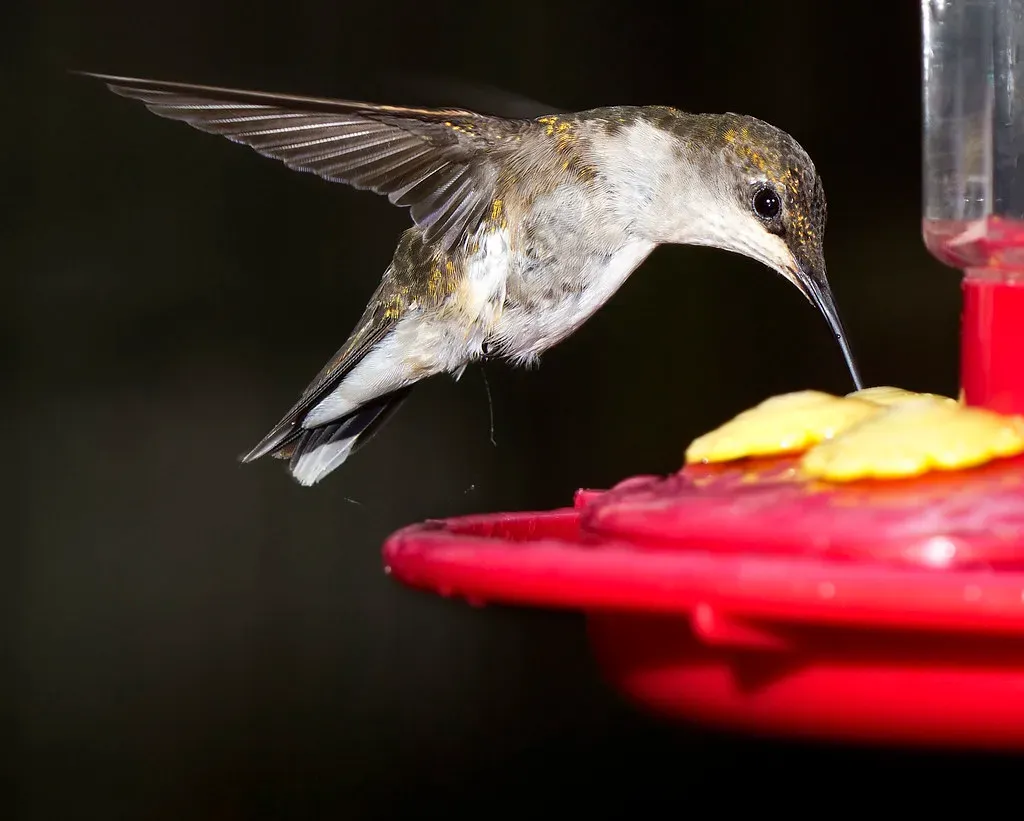
Hummingbirds are one of those rare creatures that reward closer attention at every level. The more you learn, the more the simple blur at the feeder transforms into something genuinely complex – a bird running on an extraordinary biological engine, navigating the world through ultraviolet light, remembering thousands of flowers, and sleeping in a state that mimics death every single night.
Most of it happens too fast to see. That might be exactly why these birds have fascinated naturalists, researchers, and backyard observers alike for so long. Some of the most remarkable things on Earth don’t slow down for anyone.

- 7 Native American Spirit Animals and What They Mean for Your Zodiac Sign - July 11, 2026
- This One Simple Trick Can Add Years to Your Beloved Cat’s Life - July 11, 2026
- Why Are Mountain Lions Being Spotted Near Boulder Trails? - July 11, 2026