

There’s something almost otherworldly about a hummingbird. One moment it’s hovering perfectly still in front of a flower, wings a blur of invisible motion, and the next it’s gone. These tiny birds have a way of stopping people in their tracks, even those who’ve seen them hundreds of times. They’re so small, so fast, and so structurally unusual that they barely seem bound by the same rules as other living things.
What’s remarkable is how much biology, engineering, and sheer biological audacity is packed into a creature that weighs less than a couple of pennies. From a heartbeat that sounds more like a machine than a living animal, to a memory that would put most people to shame, hummingbirds are genuinely extraordinary. Here are ten facts that make these birds some of the most compelling creatures on the planet.
They Are the Only Birds That Can Truly Fly Backwards
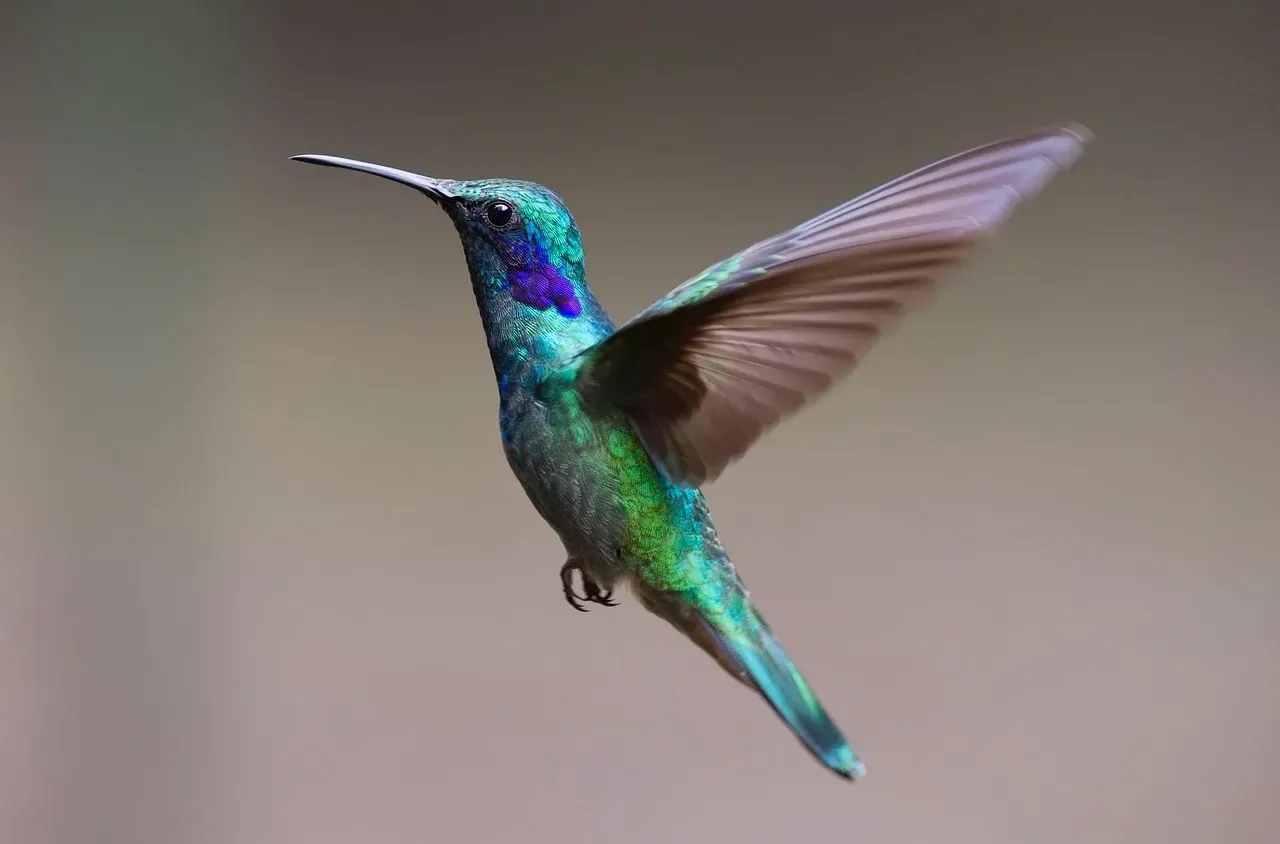
Most birds are built for forward momentum. Their wings, bones, and musculature are designed to push them in one direction with efficiency. Hummingbirds rewrote that design entirely.
Hummingbirds and swifts are able to stroke with power on both the down and upbeat of a wing flap, and their power combined with small size allows tremendous agility. They are, in fact, the only vertebrates capable of sustained hovering and can fly backward and upside down as well.
Most birds can only move forward while flying, but hummingbirds have a ball-and-socket joint that allows them to fly backward with ease, a unique trait in the bird world. This agility is particularly useful when navigating dense foliage or backing away from predators while feeding.
Their Hearts Beat at a Speed That Defies Belief
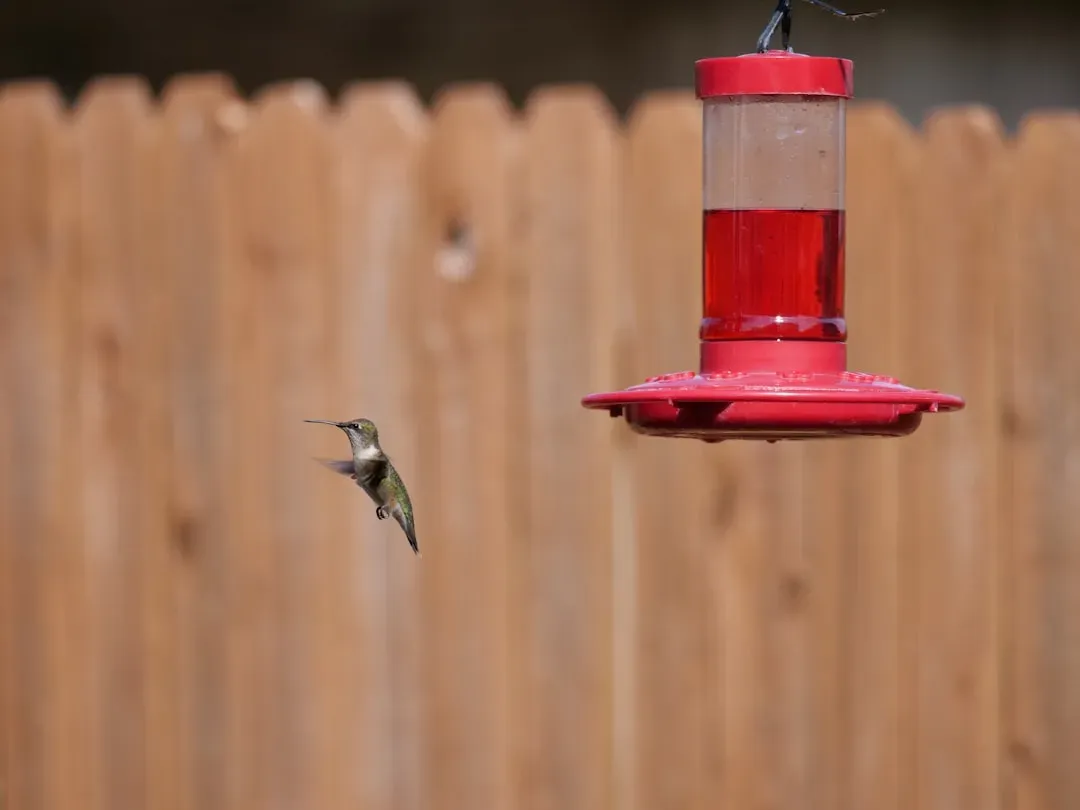
Numbers only tell part of the story here, but the numbers are genuinely staggering. A hummingbird’s cardiovascular system operates at a pace that’s difficult to even visualize.
A ruby-throated hummingbird’s heart beats from 225 times per minute when the bird is at rest to more than 1,200 times per minute when it is flying. For context, a typical human heart beats somewhere between 60 and 100 times per minute at rest.
Hummingbirds have the largest hearts relative to body size in the entire animal kingdom. Their hearts account for as much as 2.5 percent of their body weight. During torpor at night, that same heart can slow to a crawl, which is a survival trick covered a little further on.
They Possess the Fastest Metabolism of Any Bird on Earth
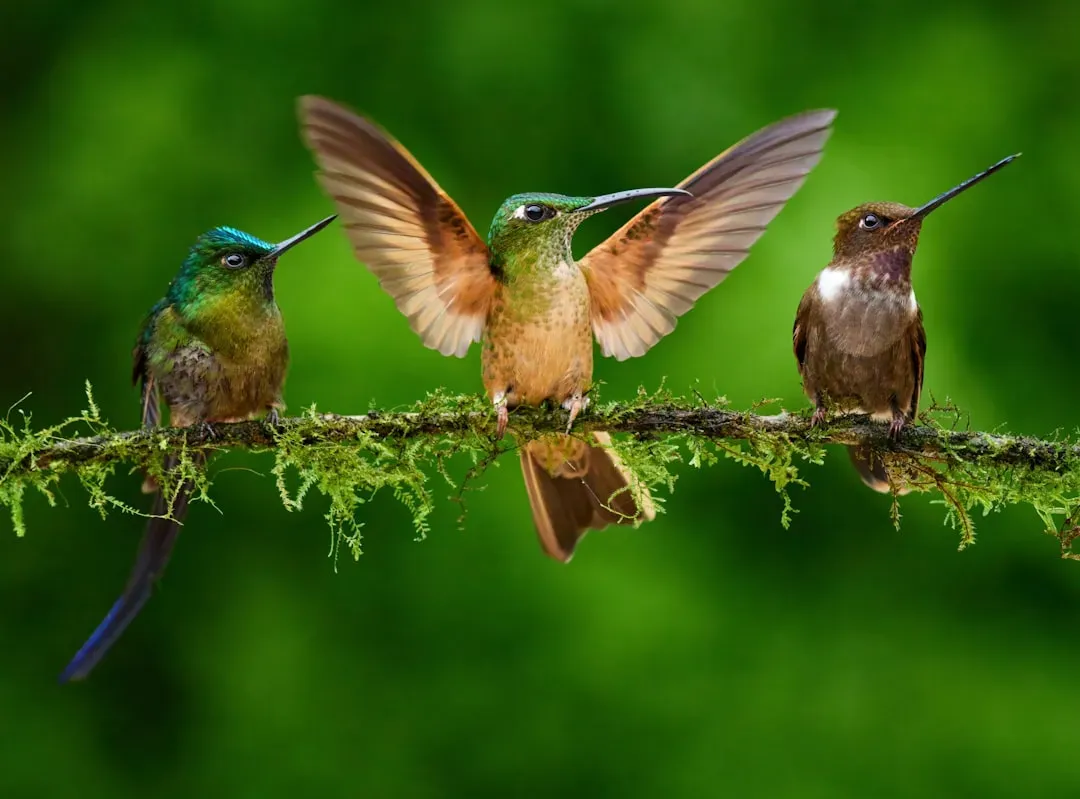
The Journey North research team at the University of Wisconsin-Madison reports that ruby-throated hummingbirds have the fastest metabolisms not only in the bird world, but also in the whole of the animal kingdom. That’s a remarkable claim, and the biology backs it up.
To process that high volume of sugar, hummingbirds have evolved a metabolism 77 times faster than a human’s, made possible by hyper-efficient enzymes. Their digestion is just as impressive, because they eat so much, hummingbirds also have to digest quickly and can move a spider through their system in less than 15 minutes, 70 times faster than human digestion.
They slurp down so much sugar that their blood sugar levels are high enough to kill or seriously hurt a human. Yet they show none of the biological consequences. Researchers at Johns Hopkins Medicine have studied this phenomenon as a potential window into human metabolic disease.
They Enter a Nightly Mini-Hibernation Just to Stay Alive

Burning through energy at such a furious pace creates an obvious problem: what happens at night, when a hummingbird can’t feed? The answer is one of the more striking adaptations in the animal kingdom.
The metabolism of hummingbirds can slow at night or at any time when food is not readily available, and the birds enter a deep-sleep state known as torpor to prevent energy reserves from falling to a critical level.
During torpor, the bird’s body temperature can fall by nearly 50 degrees Fahrenheit from its normal active temperature of about 105 degrees. This physiological shutdown causes the heart rate to slow by over 90 percent from its active state, dropping to a range of 50 to 180 beats per minute. In fact, they’ll usually hang upside down in trees while sleeping, and some may even stop breathing for short periods to conserve energy.
Their Wings Move in a Figure-Eight Pattern Unlike Any Other Bird

The hum you hear when a hummingbird passes isn’t just wing speed. It’s a product of a completely different flight mechanics, one that sets hummingbirds apart from every other bird on the planet.
Hummingbirds don’t fly like other birds. Their wings move in a figure-eight pattern that generates lift on both the downstroke and the upstroke, allowing them to hover in place to feed from flowers and feeders, fly backward, sideways, and straight up or down, and make sudden stops and sharp direction changes in the air.
A hummingbird’s wings can beat up to 80 times per second, depending on the species. Wings beat about 70 times per second in direct flight and more than 200 times per second while diving. That’s the kind of speed your eyes simply can’t follow.
Their Feathers Don’t Contain Pigment – They Refract Light

That iridescent shimmer that makes a hummingbird look like a living jewel isn’t produced the same way most bird colors are. There’s no pigment involved, which is what makes the effect so visually striking.
Hummingbirds don’t have pigment-based coloration like other birds. Instead, the microscopic structure of their feathers refracts light, producing dazzling, ever-changing colors. This structural coloration means that their feathers can appear to change hues depending on the angle of light, making them some of the most visually stunning birds in nature.
Males, and occasionally females, often have a colorful gorget made of small, stiff, highly reflective colored feathers on the throat and upper chest. These shiny feathers and others around the head may look sooty black until a hummingbird turns its head to catch the sun and display the intense, metallic spectral color. The effect is genuinely dramatic in person.
They Have Extraordinary Memories That Rival Far Larger Animals
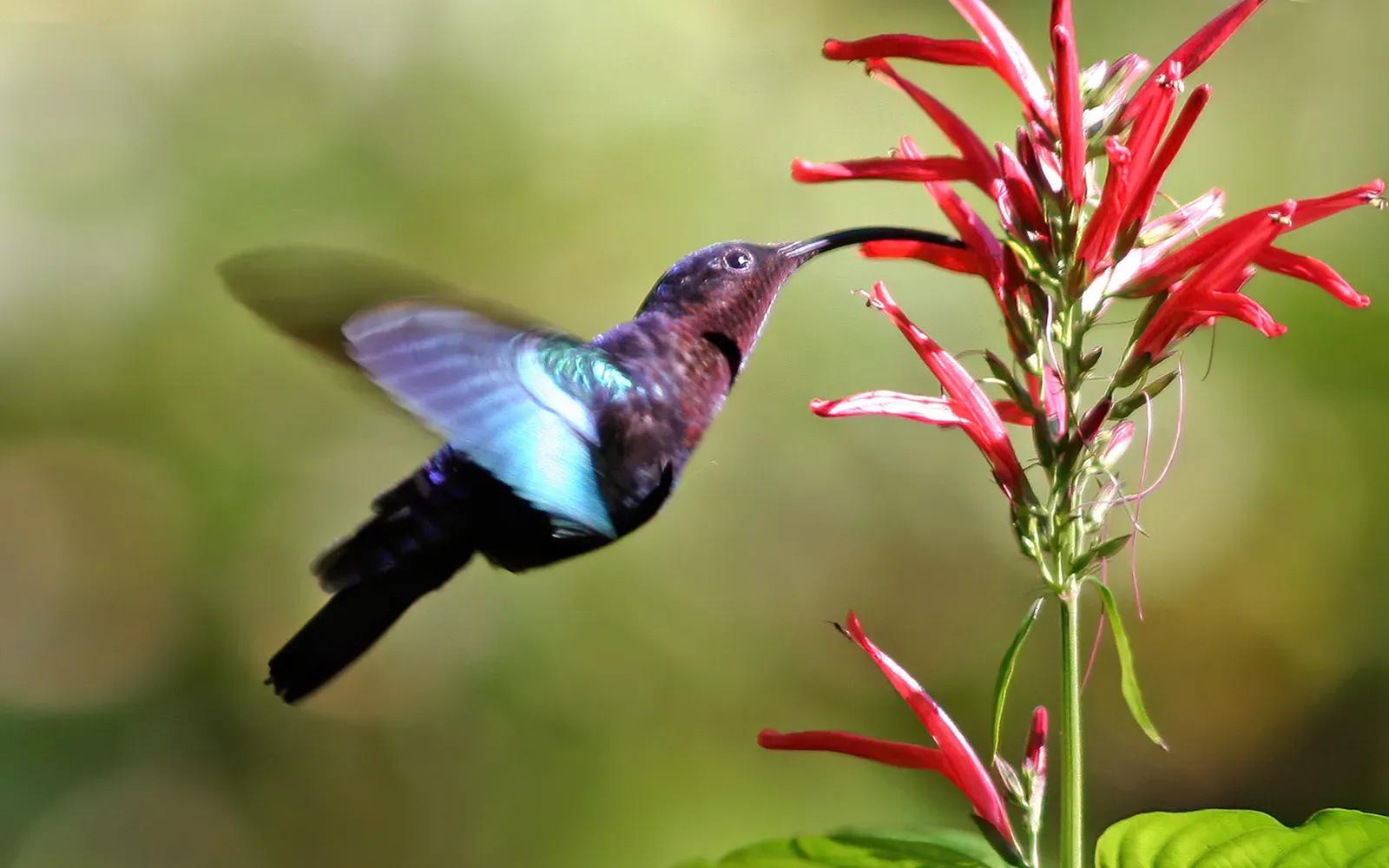
Given the size of a hummingbird’s brain, the cognitive capacity it contains is genuinely surprising. These birds aren’t simply operating on instinct when they navigate from flower to flower.
Hummingbirds can remember the locations of flowers they have visited, the nectar quality, the nectar content of each individual flower, and even the nectar refilling rate, which helps them avoid revisiting empty flowers and wasting a trip.
This amazing memory is in part due to their very large hippocampus, the part of the brain that deals with memory. When compared as a percentage of their brain volume, a hummingbird’s hippocampus is two to five times larger than many other songbirds. Studies suggest that their brain-to-body size ratio is among the largest in the avian kingdom, giving them extraordinary cognitive abilities, including the ability to recognize human faces and recall feeder locations over long periods.
They Are Fiercely and Relentlessly Territorial
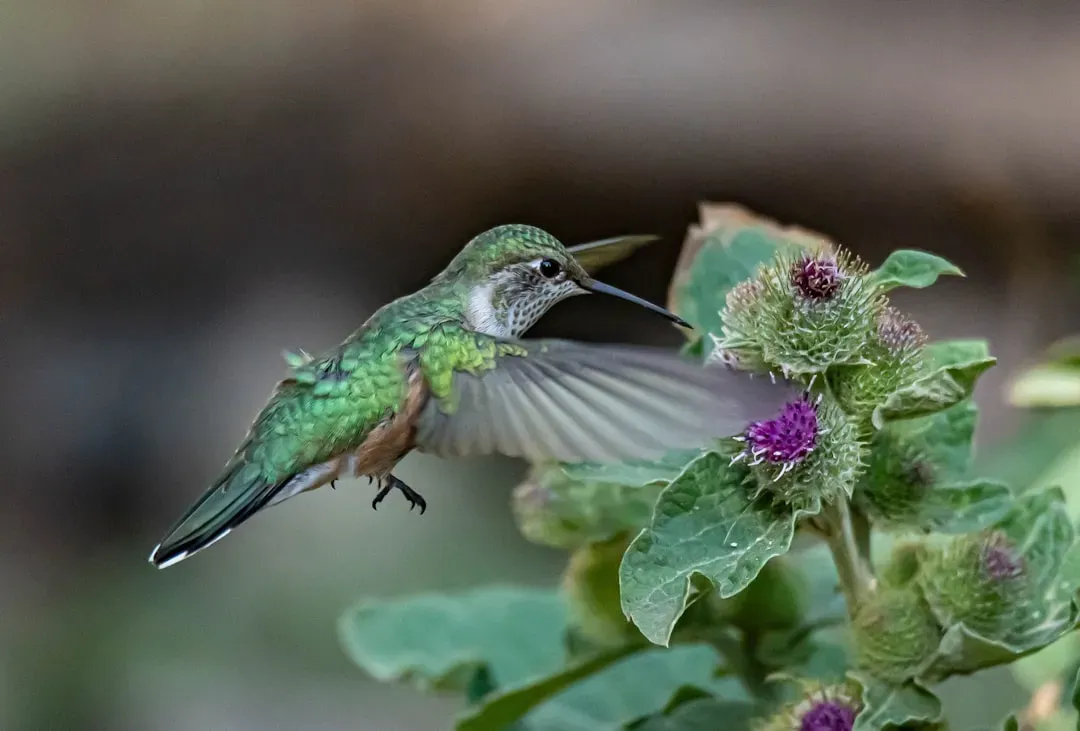
Small doesn’t mean timid. Anyone who has watched hummingbirds at a feeder knows that these birds argue constantly, chase each other in high-speed loops, and seem remarkably unafraid of things much bigger than themselves.
Hummingbirds are small but extremely territorial, especially around rich food sources like feeders and dense flower patches. A single dominant bird may patrol a feeder and chase others away.
They will defend their feeding territories against much larger birds and even chase off other hummingbirds to protect their food sources. Males, in particular, engage in dramatic aerial battles, diving and chirping loudly to establish dominance over prime feeding areas. Some species, like the Rufous Hummingbird, are especially known for their bold and confrontational behavior.
They Are Remarkably Small Solo Migrants

Migration usually conjures images of large flocks moving south in tight formation. Hummingbirds do it entirely differently, and the distances involved are genuinely hard to believe given their size.
They are the smallest migrating bird, and they don’t migrate in flocks like other species. They typically travel alone for up to 500 miles at a time. The Ruby-throated Hummingbird, for example, migrates from North America to Central America, often crossing the Gulf of Mexico in a single, non-stop flight.
Even more remarkable is the migratory flight of the Rufous Hummingbird. These little birds travel over 3,700 miles on their journey from Mexico to Alaska. When it’s time to migrate, hummers pack on the grams for the long trip, sometimes doubling their weight. That stored fat is their only fuel across open water.
Their Nests Are Tiny Masterpieces Built Entirely by the Female

A hummingbird nest is one of those things that’s hard to believe until you see one. It’s not just small – it’s structurally clever in a way that seems almost intentional.
A hummingbird nest is a tiny masterpiece, usually no larger than a golf ball. The female does all the nest building, incubation, and chick care. It’s made from plant down, moss, and fibers, held together with spider silk, and has flexible walls that can stretch as the chicks grow.
The average number of eggs laid by female hummingbirds is only two, and these eggs compare in size to a jellybean or a coffee bean. Two very small eggs hatch in about 14 days, and the young fledge in 3 weeks. From jellybean-sized egg to independent flight in roughly five weeks. That’s a remarkable timeline.
Conclusion: Small Bird, Enormous Story
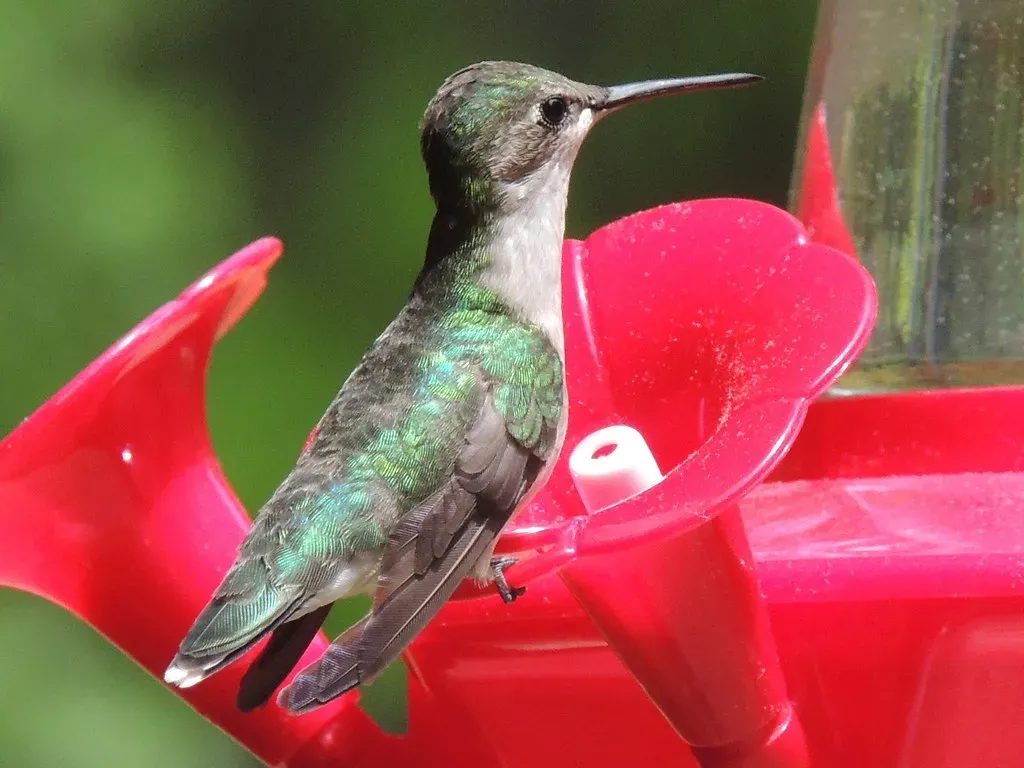
Hummingbirds occupy a strange and wonderful position in the natural world. They’re simultaneously fragile and tenacious, tiny and bold, built for speed yet precise enough to hover at a single bloom. Their biology pushes the boundaries of what seems physically possible for a living creature.
What makes them especially worth paying attention to is how much they reveal about adaptation. Every extraordinary trait, from the racing heart to the elastic nest, exists because it solves a real problem. Nothing about a hummingbird is accidental.
The next time one appears in a garden or outside a window, it’s worth pausing for a moment. That tiny hovering creature is running one of the most complex and efficient biological systems on earth. It just happens to be about the size of your thumb.

- 17 Cat Breeds Shelters Are Quietly Overwhelmed With That Almost Nobody Seems to Want Anymore - August 13, 2026
- What Hummingbirds Do Before They Vanish for Winter Will Surprise You 18 Behaviours Gardeners Miss - August 13, 2026
- Which Creature Mirrors Your Zodiac Sign’s Silent Strength - August 13, 2026