
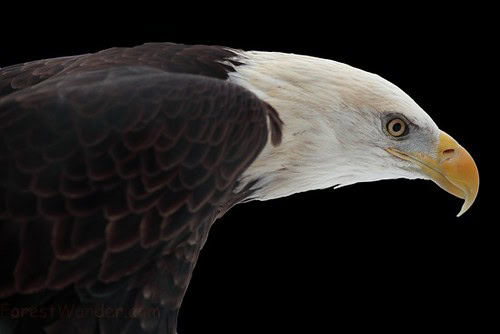
The majestic bald eagle, America’s national symbol, soars through our collective imagination wrapped in both patriotic pride and misconceptions. With their impressive seven-foot wingspan and distinctive white-feathered heads, these raptors have inspired countless legends and falsehoods. Wildlife biologists and ornithologists have spent decades studying these magnificent birds, separating fact from fiction. In this comprehensive exploration, we’ll examine ten common myths about bald eagles that science has debunked, while confirming four popular beliefs that research has validated. Whether you’re a bird enthusiast, wildlife conservationist, or simply curious about America’s national bird, this evidence-based guide will deepen your understanding of these remarkable predators.
Myth #1: Bald Eagles Are Actually Bald

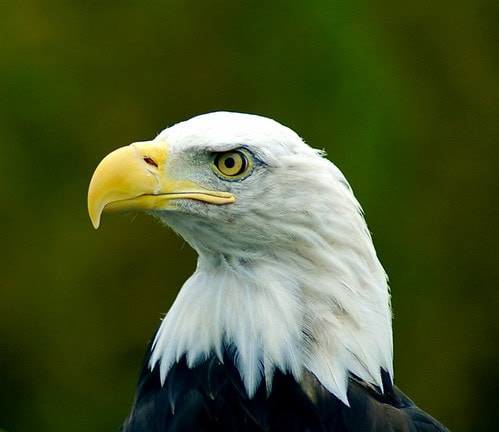
Despite their name, bald eagles (Haliaeetus leucocephalus) are not bald at all. The name “bald” derives from an older meaning of the word that referred to something white rather than lacking hair or feathers. The adult bald eagle’s head is completely covered with gleaming white feathers that contrast dramatically with its dark brown body and wings, creating the appearance that gave rise to its name centuries ago.
This misconception persists partly because of the literal modern interpretation of the word “bald.” The scientific name offers more clarity: “Haliaeetus” means sea eagle, while “leucocephalus” translates to white head. Juvenile bald eagles don’t develop their characteristic white head and tail feathers until they reach maturity at around four to five years of age. Until then, young eagles have mostly brown plumage with mottled white patterns, making them easily mistakable for golden eagles by casual observers.
Myth #2: Bald Eagles Have a Piercing Screech
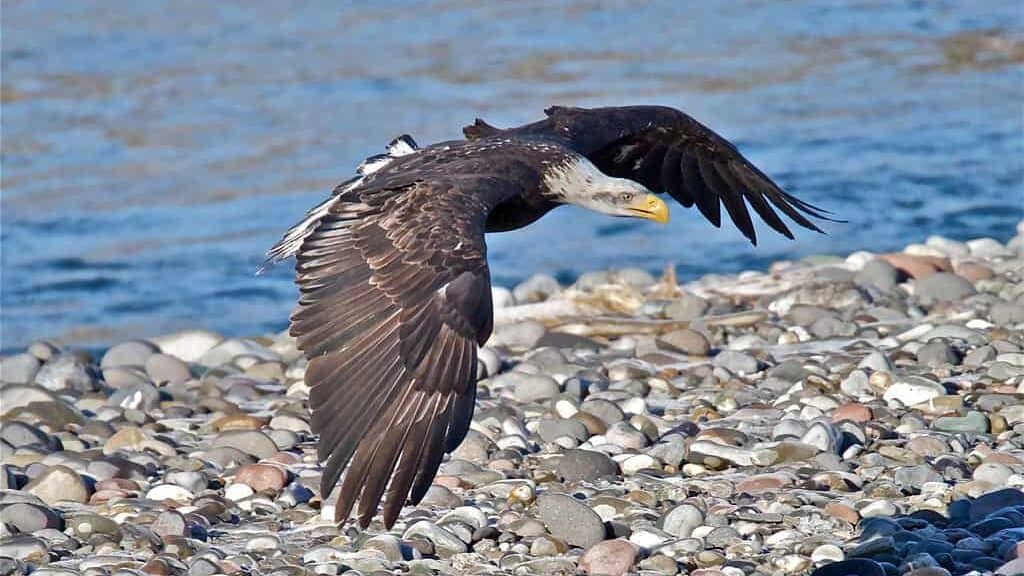
Hollywood has perpetuated the myth that bald eagles emit a powerful, piercing screech. In reality, the intimidating screech often attributed to bald eagles in movies and television actually belongs to the red-tailed hawk. Sound engineers in the film industry frequently substitute the red-tailed hawk’s call because it sounds more impressive and aligns better with the bald eagle’s fierce appearance.
The actual vocalization of a bald eagle is a series of high-pitched twittering or chirping sounds that some describe as surprisingly weak for such a formidable bird. Their most common call is a sequence of short, clear notes that sound like “kee-kee-kee” or a soft chattering. While not as dramatic as portrayed in media, these calls serve important functions in territorial defense and communication between mating pairs. During courtship displays, pairs may call in unison with the female’s voice typically pitched slightly lower than the male’s.
Myth #3: Bald Eagles Mate for Life Without Exception

While bald eagles are often celebrated as symbols of lifelong monogamy, the reality is more nuanced. Ornithologists have documented that while bald eagles do form long-term pair bonds and typically remain with the same mate for many breeding seasons, they don’t necessarily mate for life without exception. If one partner dies or disappears, the surviving eagle will seek a new mate. Additionally, researchers have documented cases of “divorce” among bald eagles, though this behavior is relatively uncommon.
Studies in the Chesapeake Bay region have shown that approximately 15% of bald eagle pairs separate and find new mates even when both original partners remain alive. These separations typically occur after unsuccessful breeding attempts or when more favorable territory becomes available. Despite these exceptions, bald eagles remain among the most monogamous bird species, with pairs typically maintaining their bond for many years and cooperatively raising their young, reinforcing their status as symbols of fidelity even if the “till death do us part” narrative is somewhat romanticized.
Myth #4: Bald Eagles Only Eat Fish
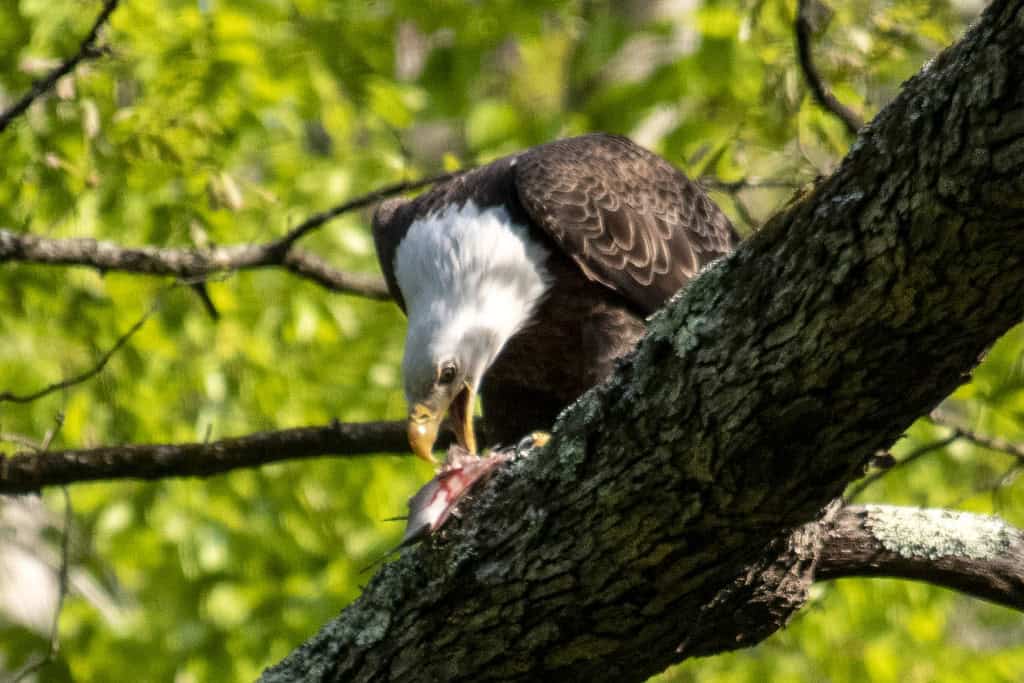
Many people believe bald eagles subsist exclusively on fish, but their diet is actually much more diverse and opportunistic. While fish do constitute a significant portion of their diet in coastal and lake regions—often making up 60-90% of their food intake in these areas—bald eagles are adaptable and opportunistic predators. Research has documented them consuming over 400 different species of prey animals across North America.
Beyond fish, bald eagles regularly hunt waterfowl, small mammals like rabbits and muskrats, and reptiles. They’re also efficient scavengers that readily feed on carrion (dead animals), including road-killed deer and other large mammals. During winter when lakes freeze over, eagle populations may shift their diet dramatically toward carrion and waterfowl. In some locations, bald eagles have been observed stealing food from other predators like osprey and otters, a behavior known as kleptoparasitism. This dietary flexibility has helped the species recover from near-extinction and adapt to varied habitats across North America.
Myth #5: Bald Eagles Can’t Swim

Contrary to popular belief, bald eagles are capable swimmers. While they don’t typically choose to enter water, they have developed swimming abilities that prove useful when hunting particularly large fish. When a bald eagle catches a fish too heavy to lift out of the water, it may use its wings to “row” itself to shore with powerful, breast-stroke-like movements while gripping the fish in its talons. This unexpected behavior has been documented numerous times by researchers and wildlife photographers.
Eagle swimming capabilities aren’t limited to adults. Young eaglets that fall from nests before they can fly have been observed swimming to shore. Their hollow bones and air sacs provide natural buoyancy, while their waterproof feathers offer protection from cold water. Though swimming requires significant energy expenditure and leaves eagles temporarily vulnerable to predators, this adaptation demonstrates their remarkable versatility. Nevertheless, eagles avoid swimming when possible, preferring to carry prey that weighs less than about four pounds—roughly half their body weight—which they can lift directly from the water’s surface.
Myth #6: Bald Eagles Have Poor Eyesight
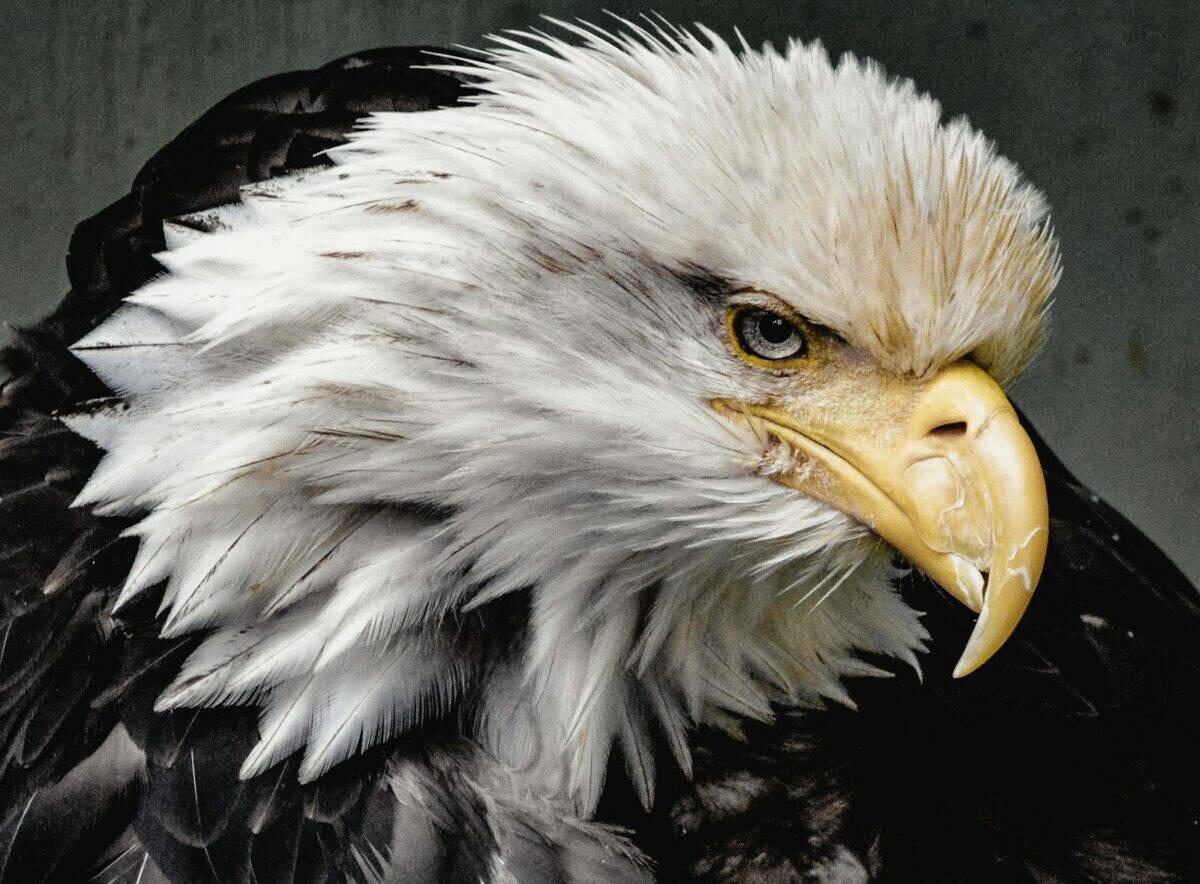
Contrary to misconceptions about eagles having poor vision, bald eagles possess some of the most acute eyesight in the animal kingdom. Their visual acuity is estimated to be 4 to 8 times stronger than that of humans. This exceptional vision enables them to spot a rabbit-sized animal from over a mile away when soaring at altitude. The myth may stem from confusion with the expression “eagle-eyed,” which correctly acknowledges their remarkable visual capabilities.
The bald eagle’s visual superiority comes from several adaptations. Their eyes are disproportionately large relative to their head size and contain more light-sensitive cells (photoreceptors) than human eyes. Eagles also possess a higher density of these cells, particularly in a region called the fovea, which gives them extraordinary central vision. Additionally, they have two foveae in each eye—one for forward vision and another for side vision—allowing them to see clearly in multiple directions simultaneously. Their eyes also contain special oils that filter light and enhance contrast, enabling them to spot prey even when looking into water with glare from the sun.
Myth #7: Bald Eagles Reject Their Young If Humans Touch Them
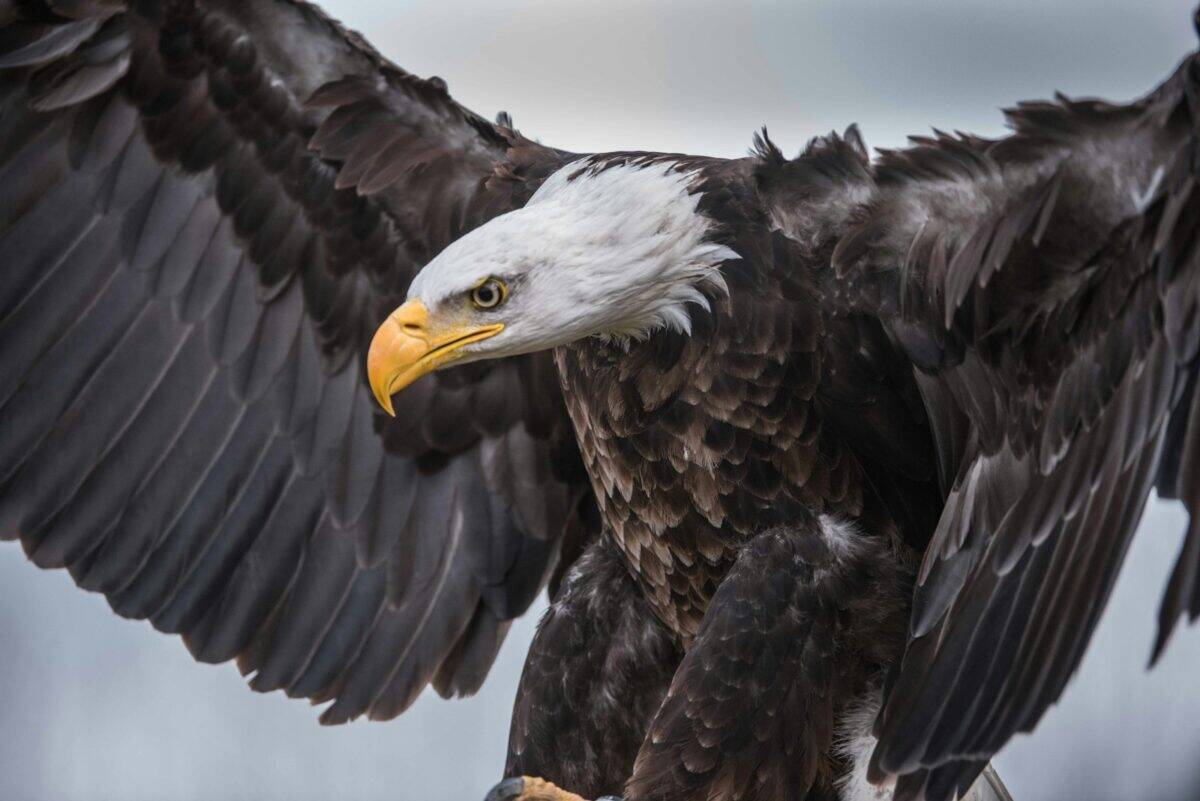
A persistent wildlife myth suggests that bald eagles will abandon or reject their young if they detect human scent on them. This misconception applies to many bird species but is particularly unfounded for bald eagles. Ornithologists and wildlife rehabilitators confirm that birds, including eagles, have a relatively poor sense of smell compared to mammals. Bald eagles primarily rely on their exceptional vision rather than olfactory cues when identifying their offspring.
Research on eagle parental behavior demonstrates their strong attachment to their young. Bald eagles invest considerable energy in raising their eaglets, typically producing 1-3 chicks per year and caring for them for 10-12 weeks after hatching. Wildlife biologists who band eagle chicks for tracking studies routinely handle young eagles, and parents almost invariably continue care after researchers leave. However, while the scent myth is false, human disturbance near nests can cause stress and temporary abandonment, which is why federal laws protect eagle nests from human interference. The best practice remains to avoid handling any wild animals without professional guidance.
Myth #8: Bald Eagles Have Declined Due to Climate Change
While climate change poses serious threats to many bird species, the historical decline of bald eagles was primarily caused by human persecution and DDT poisoning, not climate change. In the mid-20th century, bald eagle populations plummeted primarily due to widespread use of the pesticide DDT, which accumulated in aquatic food chains and caused eagles to lay eggs with shells too thin to support embryonic development. The species was further threatened by habitat loss and direct hunting.
The bald eagle’s remarkable recovery represents one of America’s greatest conservation successes. After DDT was banned in 1972 and the species received protection under the Endangered Species Act, populations rebounded dramatically from fewer than 500 nesting pairs in the lower 48 states to over 71,400 nesting pairs and an estimated 316,700 individual birds today. While climate change may present future challenges through altered prey availability and habitat disruption, the current eagle population trend demonstrates resilience. However, scientists caution that continued monitoring is essential as climate impacts intensify, particularly in coastal habitats vulnerable to sea-level rise and in northern regions experiencing rapid warming.
Myth #9: Bald Eagles Are Endangered

Despite lingering public perception, bald eagles are no longer classified as endangered. After decades of protection and conservation efforts, the species was removed from the federal endangered species list in 2007. At their population low point in the 1960s, fewer than 500 breeding pairs remained in the contiguous United States. Today, biologists estimate over 316,700 individual bald eagles now inhabit the United States and Canada, representing one of wildlife conservation’s greatest success stories.
Although no longer endangered, bald eagles remain protected under multiple federal laws. The Bald and Golden Eagle Protection Act prohibits anyone from harming or disturbing eagles, their nests, or eggs without a permit, with violations punishable by substantial fines and potential imprisonment. The Migratory Bird Treaty Act provides additional protection. These legal safeguards, combined with ongoing habitat conservation efforts, have allowed populations to continue expanding into former ranges. Nevertheless, bald eagles still face threats from lead poisoning (primarily from consuming animals shot with lead ammunition), habitat loss, collisions with vehicles and power lines, and environmental contaminants, requiring continued conservation vigilance despite their recovered status.
Myth #10: Bald Eagles Are Uniquely American

While the bald eagle serves as the national symbol of the United States, appearing on the Great Seal, currency, and numerous official emblems, it is not exclusively an American bird as many believe. Bald eagles are native to both the United States and Canada, with significant populations thriving across Canadian provinces, particularly in British Columbia where some of the largest concentrations exist. During winter, some Canadian eagles migrate south into the United States, while others remain year-round residents in Canada.
The range of bald eagles extends beyond the 49th parallel, spanning most of North America wherever suitable habitat exists near large bodies of open water with abundant food supplies and old-growth trees for nesting. Small populations have even been documented in northern Mexico, particularly around the Sea of Cortez. The species’ scientific classification recognizes two subspecies: the northern bald eagle (found in Alaska and Canada) tends to be slightly larger than the southern bald eagle (found in the contiguous United States). While deeply embedded in American cultural identity, the bald eagle’s natural distribution transcends political boundaries throughout the North American continent.
Truth #1: Bald Eagles Build Enormous Nests
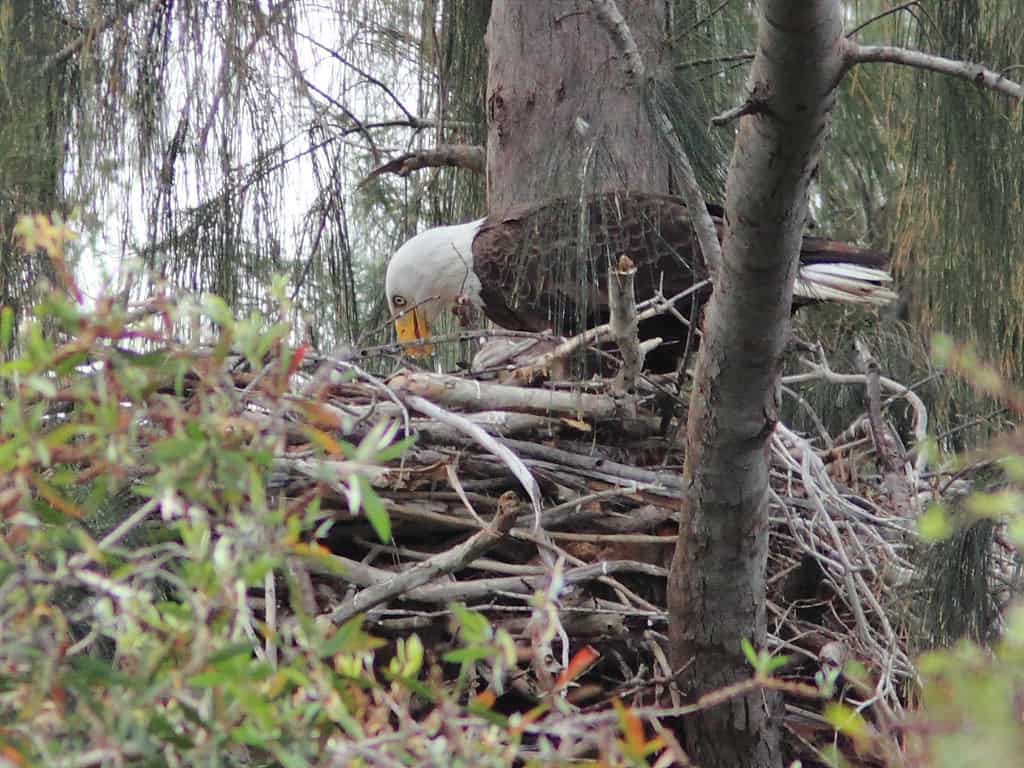
One commonly held belief about bald eagles that is absolutely true concerns their impressive nest-building capabilities. Bald eagles construct some of the largest nests of any bird in North America, creating structures that can reach truly monumental proportions. A typical eagle nest measures about 5-6 feet in diameter and 2-4 feet deep when first built. However, since eagle pairs return to the same nest year after year, adding new materials each breeding season, these structures can grow enormously over time.
The largest documented bald eagle nest, observed in St. Petersburg, Florida, measured 9.5 feet in diameter, 20 feet deep, and weighed over two tons—more than a small car! Constructed primarily from large sticks and branches, these nests are lined with softer materials like grass, moss, and feathers. Both male and female eagles participate in nest building and maintenance. The investment in these enormous structures pays off—some eagle nests have remained in continuous use for over 30 years, becoming multi-generational landmarks that symbolize the species’ commitment to territorial fidelity and their ecological role as apex predators requiring stable, mature ecosystems.
Truth #2: Bald Eagles Perform Spectacular Aerial Courtship Displays
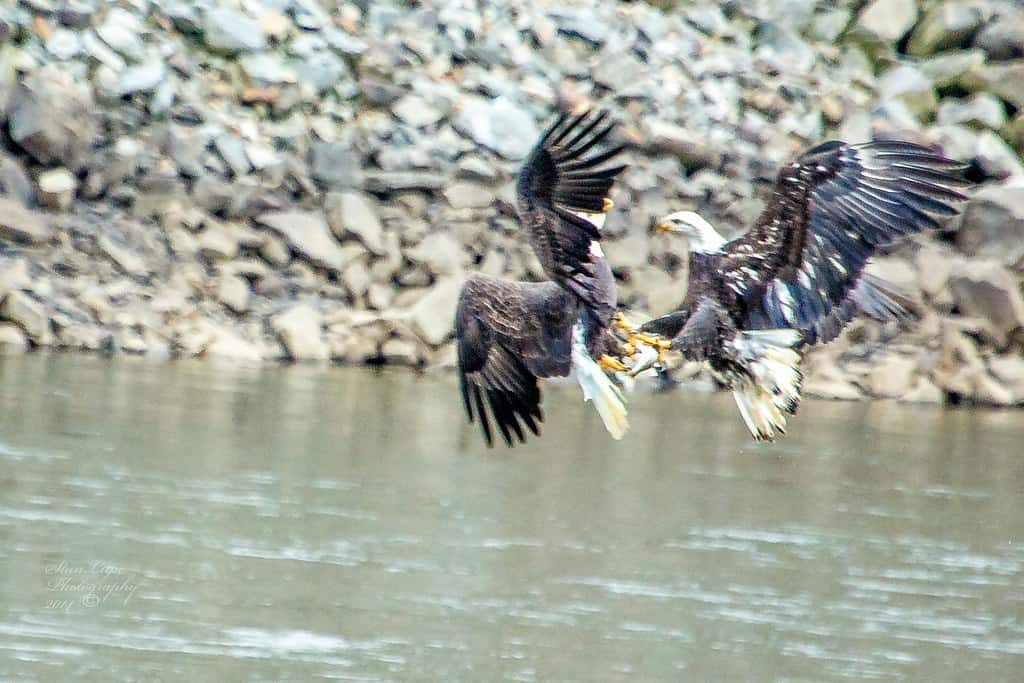
The breathtaking aerial courtship displays of bald eagles are not myth but well-documented behavior confirmed by ornithologists. During courtship, typically occurring in late winter or early spring before nesting season, pairs engage in a dramatic ritual known as “cartwheeling.” This spectacular performance involves two eagles flying to great heights, locking talons in mid-air, and then spinning downward in a free-falling spiral, sometimes rotating several times before separating just before reaching the ground.
Beyond the famous cartwheeling behavior, bald eagle courtship includes other impressive aerial displays. Males perform steep dives and climbs to demonstrate strength and flying skill. Pairs engage in chase sequences, with the male typically pursuing the female through complex flight patterns. These displays serve multiple biological purposes—they strengthen pair bonds, synchronize the breeding cycle between mates, establish territory boundaries, and allow potential partners to evaluate each other’s fitness. Researchers have documented that eagles that perform more elaborate courtship flights often produce more offspring, suggesting these displays honestly advertise genetic quality. This impressive behavior can often be observed at eagle gathering sites during winter months when breeding season approaches.
Truth #3: Bald Eagles Can Live Several Decades

Reports of bald eagles’ exceptional longevity are indeed factual. In the wild, bald eagles typically live 20-30 years, significantly longer than many other bird species. The oldest confirmed wild bald eagle, identified through its leg band, was at least 38 years old when found in New York in 2015. This remarkable lifespan exceeds that of most predatory birds and allows individual eagles to potentially produce offspring for over two decades once they reach sexual maturity around age 4-5.
In captivity, where eagles are protected from natural threats like predation, disease, and food shortages, they can live even longer. The oldest documented captive bald eagle survived to 50 years of age. This exceptional longevity results from several biological adaptations, including relatively large body size (which generally correlates with longer lifespan in birds), strong immune systems, and limited predation pressure as adults. Banding studies have revealed that eagle mortality is highest in the first year of life, with survival rates improving dramatically once birds reach adulthood. Their long lifespan contributes to their cultural significance as symbols of endurance and has important implications for conservation, as it means individual breeding pairs can contribute to population recovery over many years.
Truth #4: Bald Eagles Have Recovered from Near-Extinction

The dramatic recovery of bald eagle populations represents one of North America’s greatest wildlife conservation successes and confirms the popular narrative of their comeback from the brink of extinction. In 1963, the National Audubon Society estimated only 417 breeding pairs remained in the contiguous United States. The primary threat came from dichlorodiphenyltrichloroethane (DDT), a widely used pesticide that accumulated in aquatic food chains. When eagles consumed contaminated fish, the chemical interfered with calcium metabolism, resulting in eggs with shells too thin to support embryonic development.
Following the 1972 ban on DDT and protection under the Endangered Species Act, bald eagle populations began a remarkable recovery. Reintroduction programs, habitat protection efforts, and reduced environmental contaminants allowed numbers to steadily increase. By 2007, when the species was removed from the endangered species list, the population had grown to approximately 9,789 breeding pairs. The most recent comprehensive survey in 2020 estimated 71,400 nesting pairs and a total population of 316,700 individuals across the United States and Canada. This recovery demonstrates how coordinated conservation efforts, strong environmental policies, and public awareness can reverse even severe population declines.
The bald eagle’s resurgence stands as a powerful example of resilience in nature when human activities shift from exploitation to protection. It highlights the importance of long-term commitment, science-based decision-making, and collaboration among government agencies, conservation organizations, and local communities. This success story continues to inspire similar recovery initiatives for other threatened species, proving that with sustained effort, extinction is not inevitable.

- The Forgotten Lake Where Flamingos Nest in the U.S. - July 10, 2026
- This U.S. Forest Is Home to the Largest Herd of Wild Elk - July 10, 2026
- The Most Dangerous Lake in the World—And Why It Can Kill Instantly - July 10, 2026