
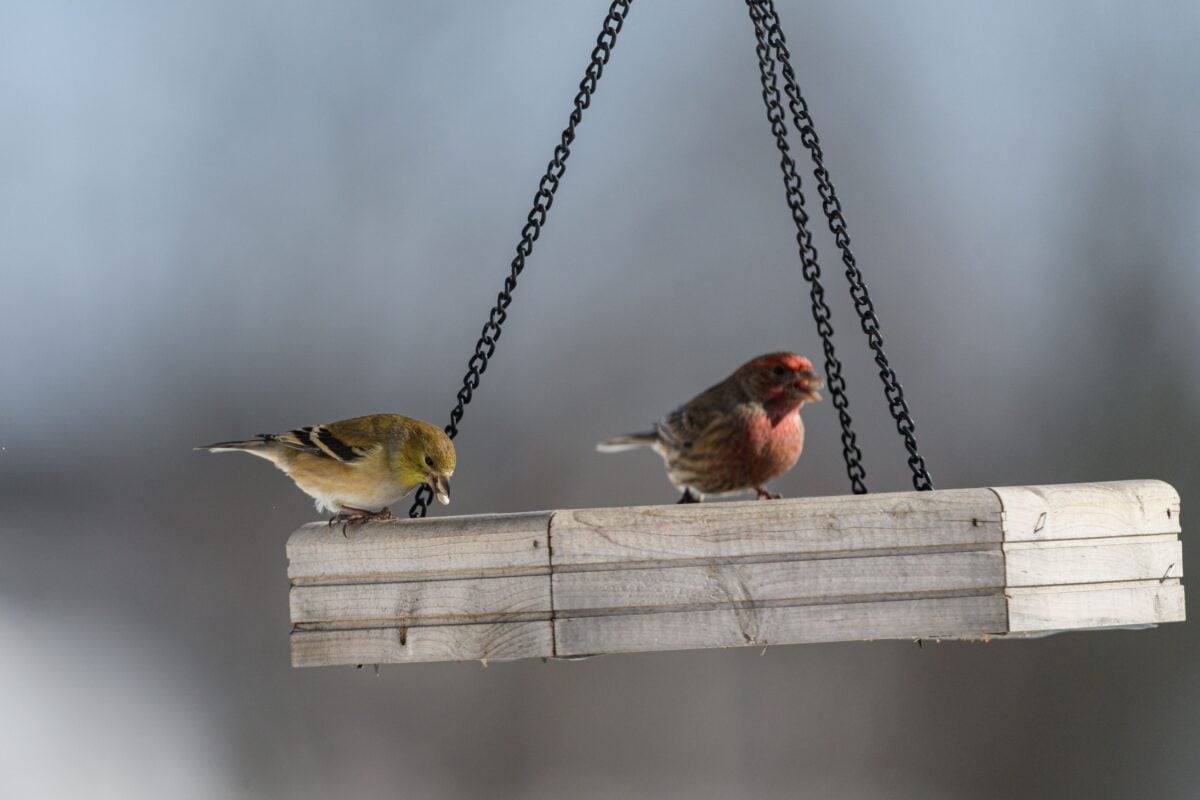
Most people think a bird feeder just adds a little entertainment to the backyard. A few chickadees, maybe a cardinal, a coffee on the porch. But by October, that one small patch of ground has often become the most influential spot in the whole garden.
Spilled seed, concentrated droppings, nervous wings and hungry hawks all pile up in one place, and the effects spread well beyond the feeder pole. Some changes are lovely, some are annoying, and a few are genuinely surprising. Let’s count them down, starting with the one hiding right under your feet.
#10 – Bird Droppings Start Rewriting Your Soil Chemistry
🔥 Would you like to save this?
We'll email this post to you, so you can come back to it later!
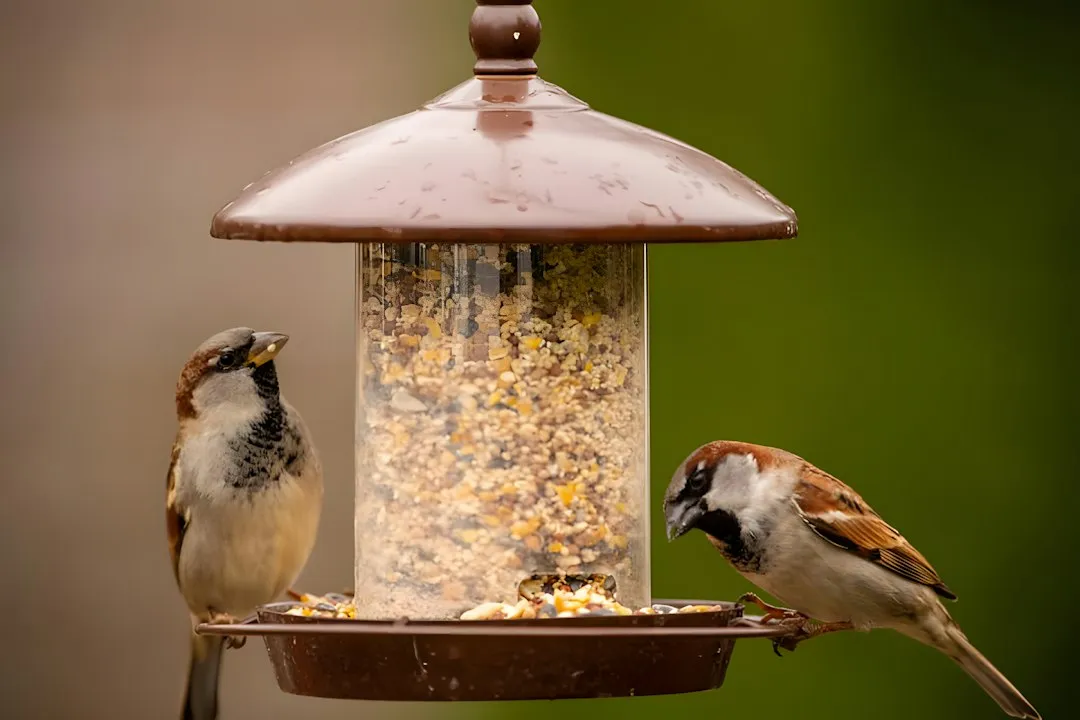
A feeder area does more than attract birds. It delivers a steady rain of nitrogen- and phosphorus-rich waste to one small patch of ground. In a wild setting, birds scatter their droppings across a huge territory. At a feeder, hundreds of visits a week land in the same few square feet.
By October, after a summer and early fall of that traffic, the soil under and around the feeder is often noticeably different from the beds nearby. Microbial activity tends to pick up where fresh organic matter keeps arriving, and the grass or plants there can look greener and lusher. Sandy or compacted soils, which start out low in fertility, usually show the contrast most.
The catch is that concentrated waste can be too much of a good thing. Fresh droppings are “hot,” much like raw manure, and heavy deposits can scorch tender roots. Add the decaying hulls and spilled seed, and you get a patch of ground that behaves nothing like the rest of the garden.
- Droppings and seed debris create a localized fertility hot spot rather than an even spread.
- Phosphorus tends to cling to soil particles, so it stays put more than many people expect.
- A basic soil test of the feeder zone versus a nearby bed is the only way to know what you actually have.
The Science Behind This: Bird waste delivers nutrients in small, repeated doses that soil microbes can process gradually. That is one reason beds near a feeder sometimes green up early in spring without any added fertilizer. Just don’t plant your most delicate seedlings right under the perch.
#9 – Insect Populations Shift in Ways That Defy Pest-Control Expectations
🔥 Would you like to save this?
We'll email this post to you, so you can come back to it later!
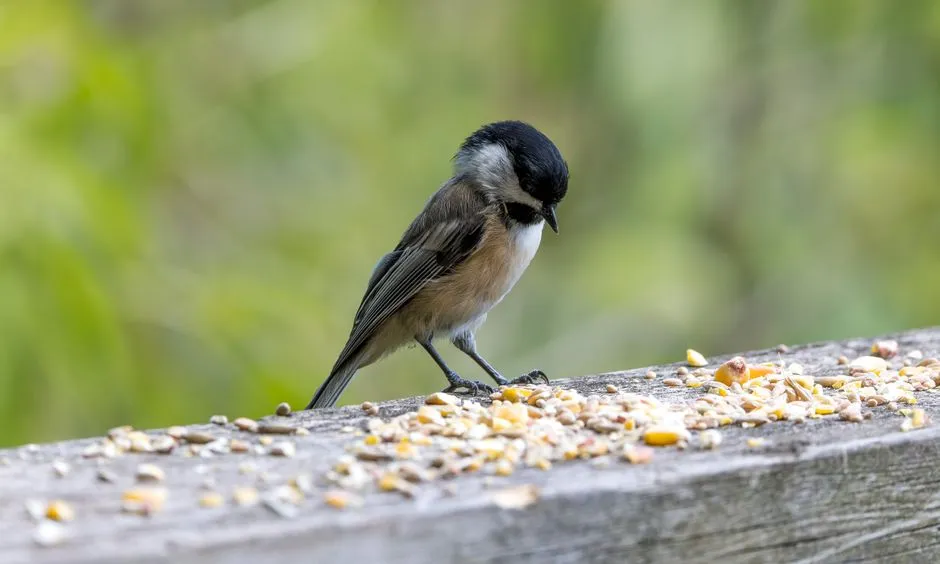
Plenty of feeder visitors are not only seed eaters. Chickadees, titmice, nuthatches and woodpeckers all hunt insects, and a feeder gives them a reason to hang around your yard all season. While they’re there, they work the nearby shrubs and tree bark like a roving cleanup crew.
In fall and winter, that hunting gets very specific. Chickadees and nuthatches pick insect eggs, pupae and sleeping spiders out of bark crevices and twig joints. That is exactly the stuff that would hatch into next spring’s pest problems. You never see the work, but you may notice fewer chewed leaves a season later.
To be fair, feeders do not turn birds into a pest-control service. Birds still eat mostly seed at the feeder, and they hunt insects where the food is best. The honest effect is that a feeder keeps insect-eating birds in your yard and gives them more chances to find a meal on your plants.
- Insect-eaters stay close to the feeder zone, so the nearest shrubs and trees get the most attention.
- Overwintering eggs and pupae on bark are prime targets in fall.
- Small urban yards, where the feeder is a big share of the habitat, tend to notice the effect most.
Did You Know: Entomologist Doug Tallamy has noted that a single pair of Carolina chickadees needs roughly 6,000 to 9,000 caterpillars to raise one clutch of chicks. Birds that nest nearby and know your yard are working hard on your behalf.
#8 – Volunteer Plants Appear in Strange, Oddly Specific Patterns
🔥 Would you like to save this?
We'll email this post to you, so you can come back to it later!
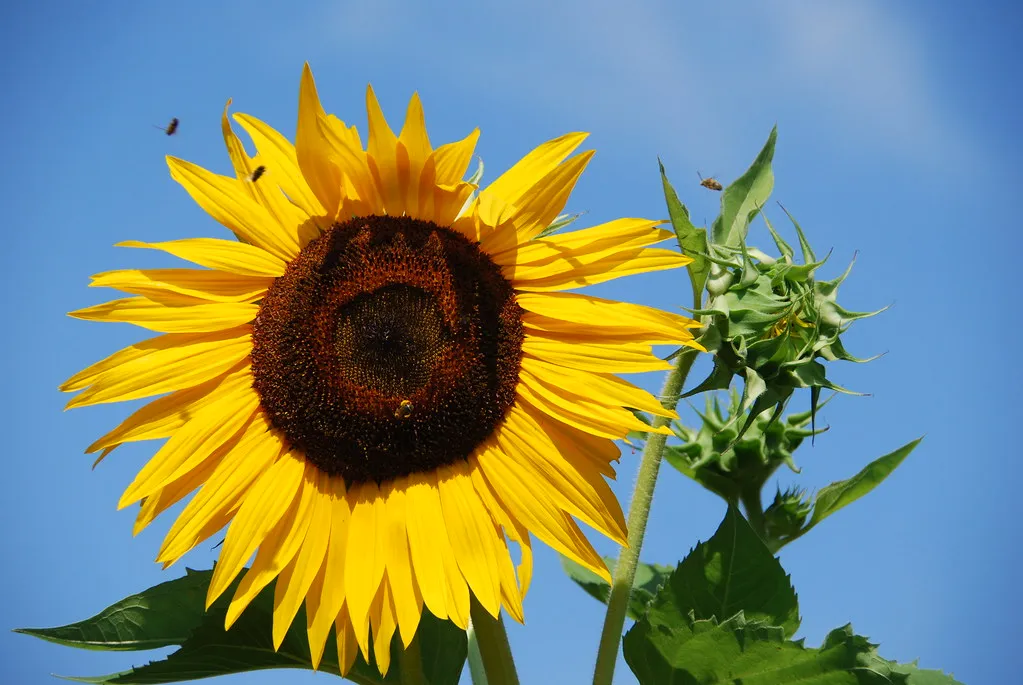
One October morning you spot a sunflower where you never planted one. Then a patch of grassy sprouts. Then something you cannot identify at all. Welcome to the volunteer parade, courtesy of the feeder.
Spilled sunflower, millet, milo and cracked corn all germinate if they stay moist and uneaten. Birds also carry seeds on their feet and feathers, and they pass others through their droppings. The result is a cluster of surprise seedlings within a few yards of the feeder, usually fanning out in the direction birds fly in and out.
Some of these volunteers are gifts. Sunflowers and native composites can become late-season pollinator food and winter seed heads for the very birds that planted them. Others become pushy weeds that need to be pulled before they set seed again.
There is a twist, too. Black oil sunflower hulls are widely reported to release compounds that can inhibit growth of some plants beneath them, which is one reason ground under a feeder often goes bare rather than lush.
Insider Tip: Mark feeder-adjacent beds with landscape flags in September. That way you can identify and protect desirable seedlings before October cleanup turns everything into “weeds.”
Quick Compare: Keep, Pull or Move?
- Keep: sunflowers, asters and other native composites that feed pollinators now and finches later.
- Pull: grassy sprouts from millet, milo and cracked corn that crowd out your real plantings.
- Move: any promising seedling in a trampled or bare spot, while it is still small.
#7 – Your Lawn Develops Bald Spots and Crunchy Patches
🔥 Would you like to save this?
We'll email this post to you, so you can come back to it later!
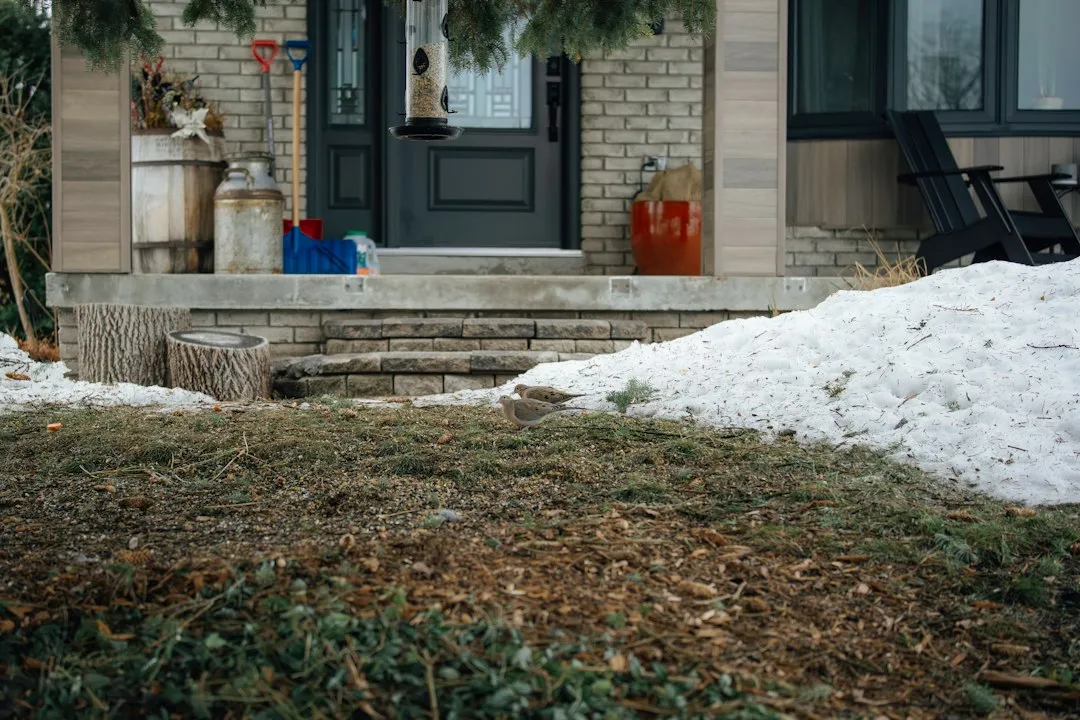
Look straight down beneath a heavily used feeder and you will often see a stressed circle. The grass thins, the soil turns hard or bare, and a layer of hulls builds up like confetti after a party. It looks like a lawn problem, but it is really a feeder problem.
Three things are working together here. Hull litter smothers grass blades and blocks light. Concentrated droppings can burn the turf. And ground-feeding birds such as juncos, sparrows and towhees scratch and peck at the surface, loosening the soil and stirring it up.
October makes it worse. Juncos and white-throated sparrows arrive in many regions, ground-feeding flocks grow, and the same patch of lawn takes a beating day after day. By the time the leaves fall, the circle can be visibly worn.
- Switch to hulled or no-mess seed blends under feeders if the lawn matters to you.
- Use a seed tray or catcher to keep hulls off the ground.
- Move the feeder a few feet every month or two so the wear is spread out.
Some gardeners go the other way and embrace it, replacing that patch with mulch, stone or low native groundcover that can handle the traffic. A feeder zone that looks intentional beats a lawn that looks like it lost a fight.
#6 – Rodents Quietly Move In Once the Nights Cool
🔥 Would you like to save this?
We'll email this post to you, so you can come back to it later!
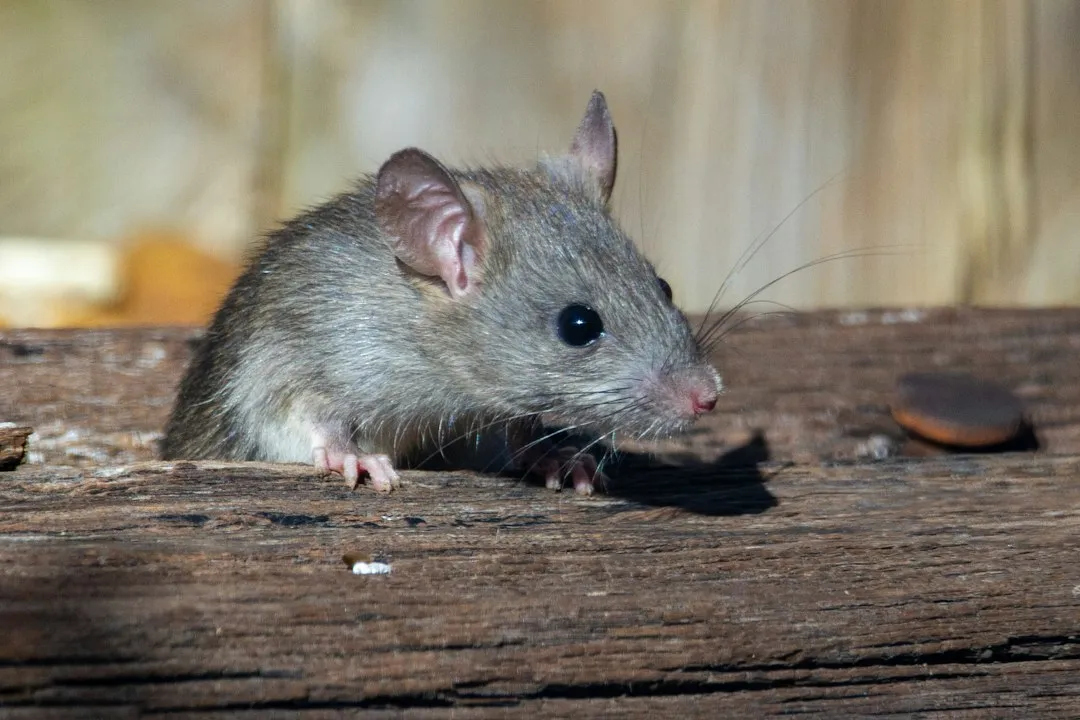
Spilled seed is a free buffet for more than birds. Mice, rats, chipmunks and squirrels all find it, and October is when they care most. As nights cool, many of them are stocking up for winter.
The pattern is usually nocturnal, so you may never see it. The first sign is often a flattened trail through mulch, a burrow hole near a foundation or a feeder that empties overnight. Chipmunks and squirrels are more obvious, hauling seed away by the cheekful to hide it elsewhere in the garden.
The garden pays in small ways. Bulbs can get dug up, stored seed gets scattered and the resulting tunnels disturb roots. It is rarely catastrophic, but it is a very real side effect of a messy feeder area.
- Rake or sweep up spilled seed and hulls every few days.
- Choose feeders that limit spillage, and use catch trays.
- Bring feeders in at night if rodents are becoming a problem.
- Keep a little distance between the feeder and sheds, woodpiles and the house.
The upside is a bit of wildlife drama, since rodents attract their own predators. Which brings us to the visitors nobody puts on the welcome mat.
#5 – Hawks Learn Your Yard Is a Dependable Lunch Counter
🔥 Would you like to save this?
We'll email this post to you, so you can come back to it later!
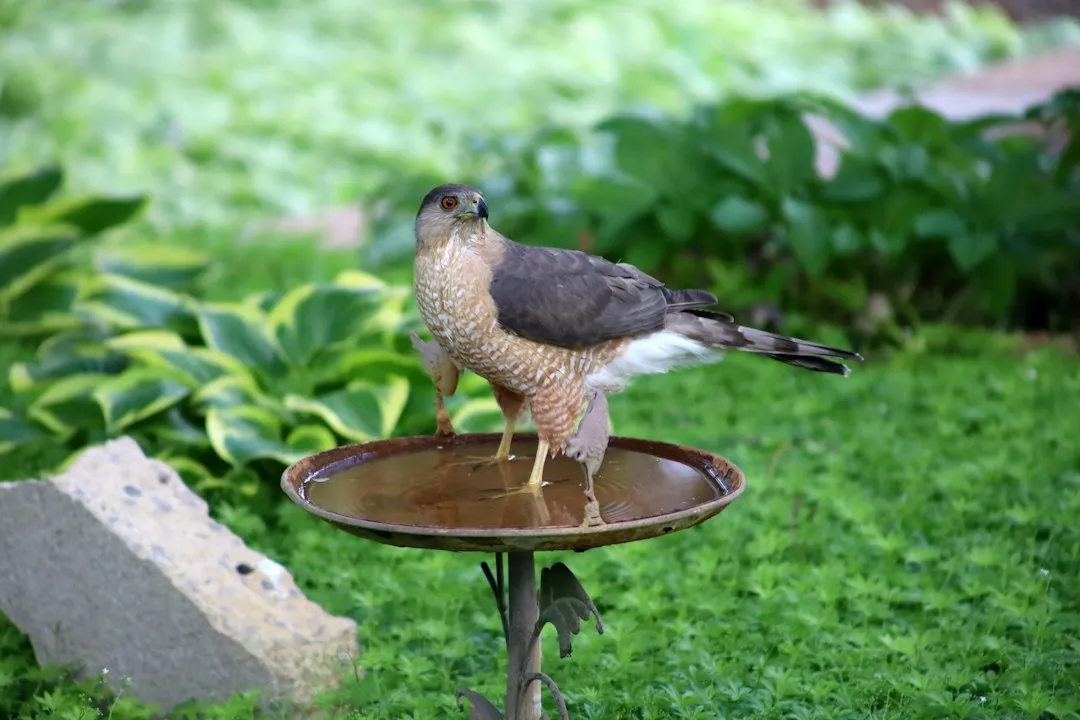
A feeder crowd is a moving crowd of small, busy, distracted birds. To a Cooper’s hawk or a sharp-shinned hawk, that is basically a vending machine. Fall migration brings these hunters through in numbers, and a busy feeder gets noticed quickly.
The signature moment is sudden silence. One second the yard is loud with chatter, the next every bird vanishes and the feeder swings in an empty yard. A pile of feathers on the lawn tells the rest of the story.
It is hard to watch, but it is natural, and a healthy garden has predators in it. The more useful question is how to give small birds a fair chance. Cover makes a huge difference, since birds that can dive into dense shrubs or evergreens within a few feet survive far more attacks than birds caught in the open.
- Place feeders near shrubs, brush piles or evergreens that offer quick escape cover.
- Avoid long open sightlines that give hawks a clear approach.
- If a hawk becomes a repeat visitor, pause feeding for a week or two so it moves on.
Cats are the other predator that feeders unintentionally invite. Keeping cats indoors protects birds far better than any feeder placement trick.
Fast Facts: The Feeder Hawks
- Sharp-shinned hawks are the smaller of the pair, roughly blue-jay-sized, while Cooper’s hawks are noticeably bigger.
- Both are built for fast, twisting chases through trees and shrubs, not open-sky pursuit.
- They strike from cover, which is why a sudden hush often comes before the attack.
- A one- to two-week feeding pause is usually enough to send a repeat visitor elsewhere.
#4 – Window Strikes Spike During Migration Season
🔥 Would you like to save this?
We'll email this post to you, so you can come back to it later!
This is the change nobody wants to talk about. Feeders near windows can lead to birds hitting the glass, and October’s migration traffic makes it a more common risk. Birds see reflected sky and trees, not a solid barrier.
The counterintuitive part is distance. Cornell Lab of Ornithology advice is to place feeders either very close to a window, within about 3 feet, or farther away, more than 30 feet. At close range a startled bird cannot build up enough speed to be seriously hurt. At long range it has time to see the glass for what it is.
The worst spot is in the middle, where birds fleeing a hawk can hit full speed before they reach the pane. A feeder that looked perfectly placed for viewing can quietly become a hazard.
- Put feeders within 3 feet of the glass or more than 30 feet away.
- Add window decals, exterior screens or tape patterns to break up reflections.
- Check the base of windows each morning during migration for stunned birds.
It is a small fix that changes how the whole feeder area works. And it protects the birds you are trying to enjoy.
#3 – Disease Risk Quietly Builds Where Birds Crowd Together

🔥 Would you like to save this?
We'll email this post to you, so you can come back to it later!
Any place where many birds feed together is a place where germs can spread. Shared perches, wet seed and piles of droppings all help pathogens move from bird to bird. By October, with big flocks and damp weather, the risk is at its highest.
House finch eye disease, which causes swollen, crusty eyes, is one well-known example, and salmonella and trichomonosis have also been tied to feeders. A sick bird at a feeder can leave behind enough contamination to affect others later. Dirty feeders are the usual culprit, not the feeding itself.
Worth Knowing: Who Gets Sick From What
- House finch eye disease is caused by a bacterium, Mycoplasma gallisepticum, and spreads easily on shared perches.
- Trichomonosis is caused by a microscopic parasite and hits doves, pigeons and finches especially hard.
- Salmonella outbreaks at feeders are often linked to pine siskins and goldfinches in cold months.
- Damp, clumpy seed can grow mold, so tossing it costs far less than treating the problem later.
The good news is that prevention is straightforward. Regular cleaning breaks the cycle, and it takes only a few minutes. Wildlife health groups commonly suggest soaking feeders in a solution of about one part bleach to nine parts water, then rinsing well and letting them dry completely.
- Clean feeders about every two weeks, and more often in wet weather.
- Rake up old seed and hulls beneath them.
- If you see visibly sick birds, take the feeders down for a week or two.
A clean feeder area is not about perfection. It is about keeping your small crowd healthy.
#2 – The Whole Bird Community Reorganizes Around the Feeder
🔥 Would you like to save this?
We'll email this post to you, so you can come back to it later!
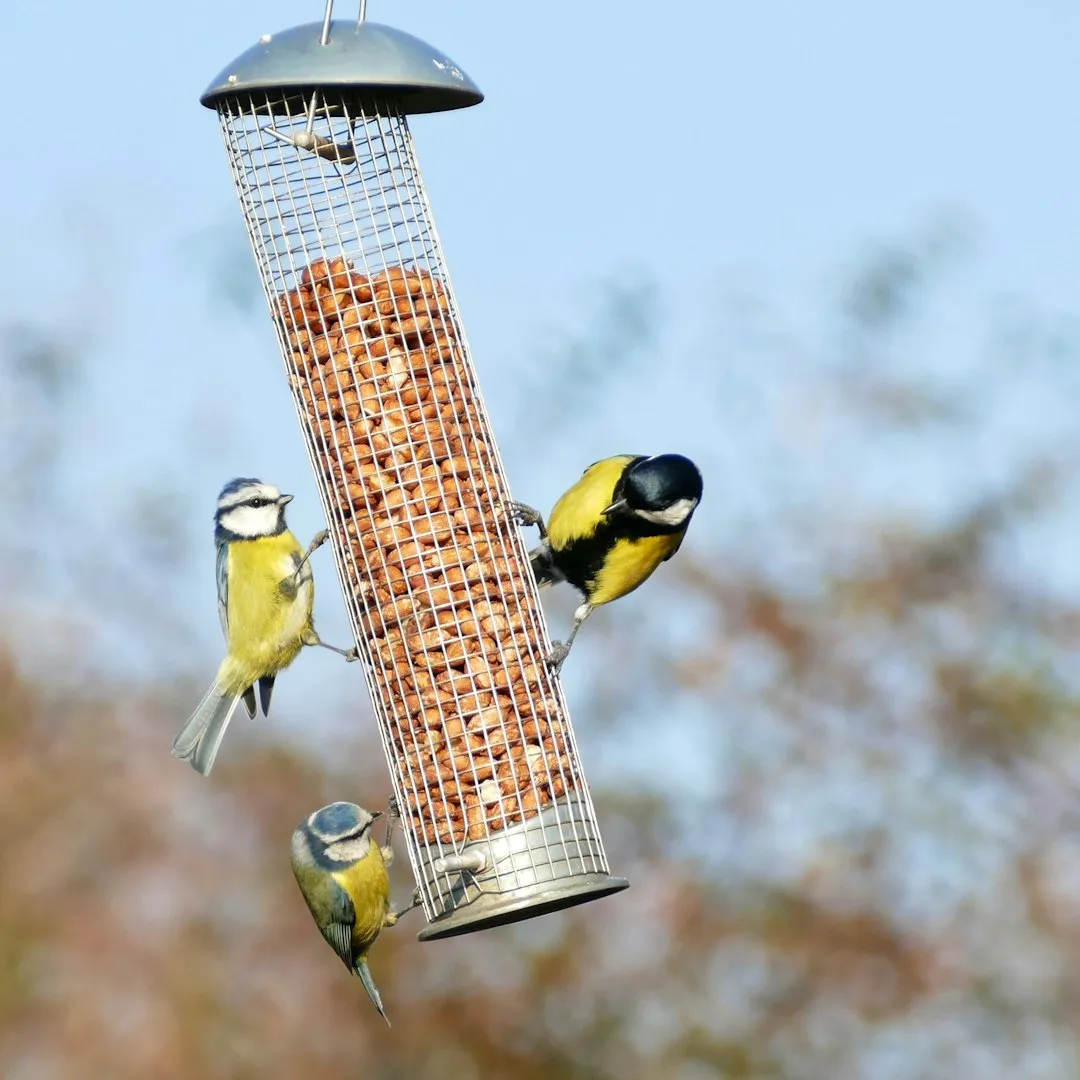
By October, a feeder is no longer just a snack stop. It becomes a social hub with a pecking order, a schedule and a seasonal cast of characters. Resident chickadees and titmice form mixed flocks that move through the yard together, often led by the boldest birds.
Migrants add new chapters. Juncos, white-throated sparrows and other seed-eating travelers arrive depending on your region, and some stay for the winter. The feeder area becomes a stage where each species has its own style. Some grab one seed and flee, others settle in and sit.
Chickadees have a particular trick that changes the yard in subtle ways. They carry seeds off and cache them in bark crevices, hiding spots that become little pantries around the garden. Some of those hidden seeds are forgotten and end up sprouting later.
- Different species feed at different heights, so a mix of feeders gives more birds a spot.
- Flocks move on a rhythm, so the feeder is busiest in the early morning and just before dusk.
- Dominant birds shape who gets to eat and when.
The garden stops being a backdrop and starts feeling like a living neighborhood with its own politics.
#1 – You Start Gardening for the Birds Without Even Noticing
🔥 Would you like to save this?
We'll email this post to you, so you can come back to it later!
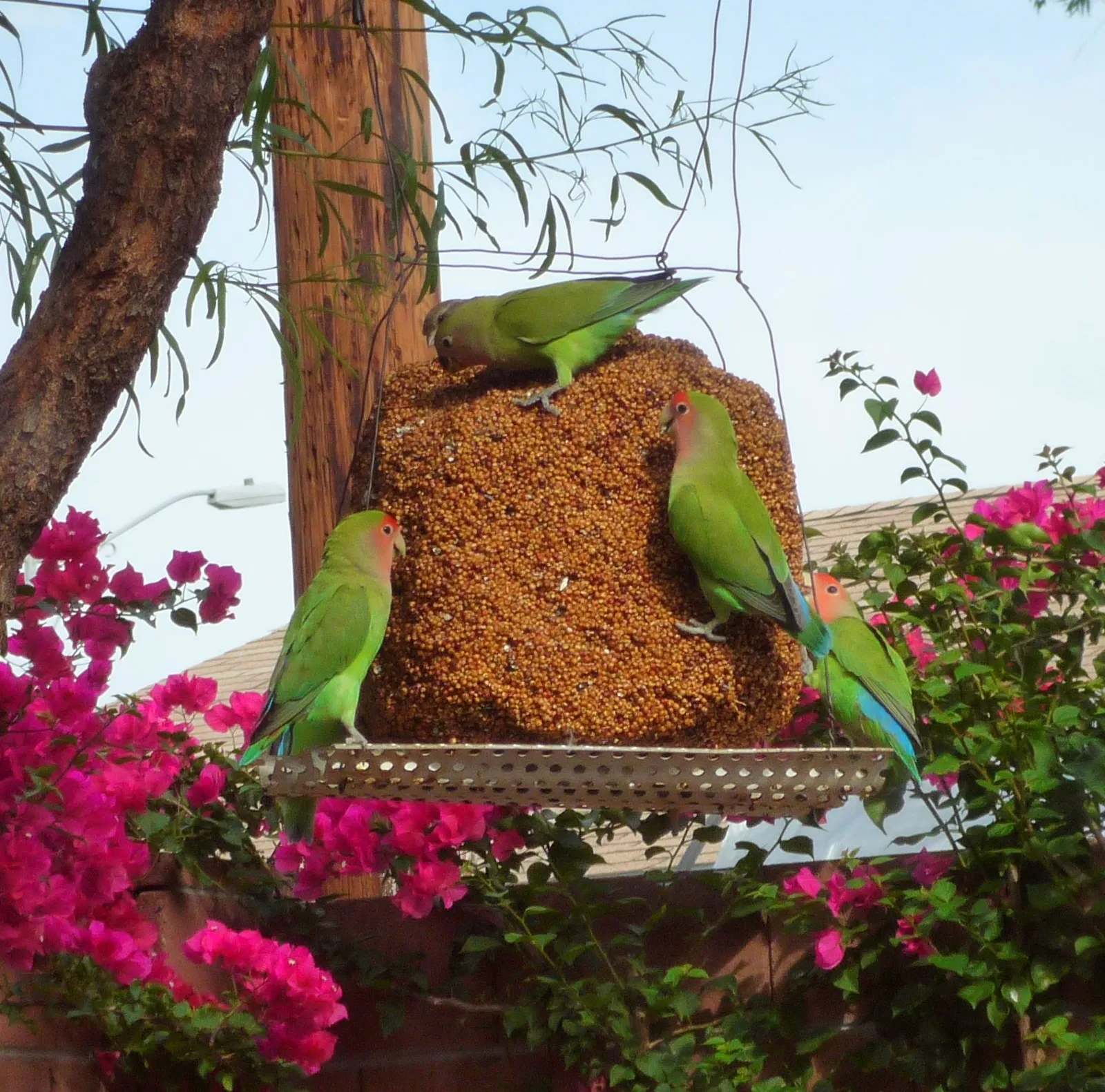
This is the biggest change of all, and it happens to you, not the soil. Once the feeder is up, the garden starts to look different through your eyes. Suddenly you notice which shrubs hold berries, which seed heads are still standing and where the birds perch to wait their turn.
Gardeners who started with a single feeder often find themselves leaving stems standing in the fall instead of cutting everything back. They add a shallow water source, a brush pile or a native shrub with berries. The feeder becomes the gateway to a much larger habitat project.
That shift is good for the birds and often good for the garden. Seed heads, leaf litter and native plants support insects, which in turn feed the birds you wanted to see in the first place. A feeder alone is a snack. A garden built around it is a home.
- Leave some coneflower, aster and sunflower heads standing for winter seed.
- Add native shrubs and trees that offer berries and cover.
- Provide fresh water, which many birds need even in cold weather.
Here’s my honest take: a feeder is not a harmless decoration. It is a small ecosystem engine that makes your yard messier, livelier and more dangerous in ways you do not expect. If you are going to put one up, commit to the whole package: clean it, place it wisely and plant for the birds it brings. Done halfway, a feeder is a mess with wings. Done well, it is the best thing that can happen to a garden by October.

- 12 Surprising Facts About North American Mountain Lions You Never Knew - November 5, 2026
- Wild Salmon Populations Are Rebounding in the Pacific Northwest, A Sign of Healthier Rivers - November 5, 2026
- 8 Fascinating Facts About Owls You Never Knew - November 5, 2026