
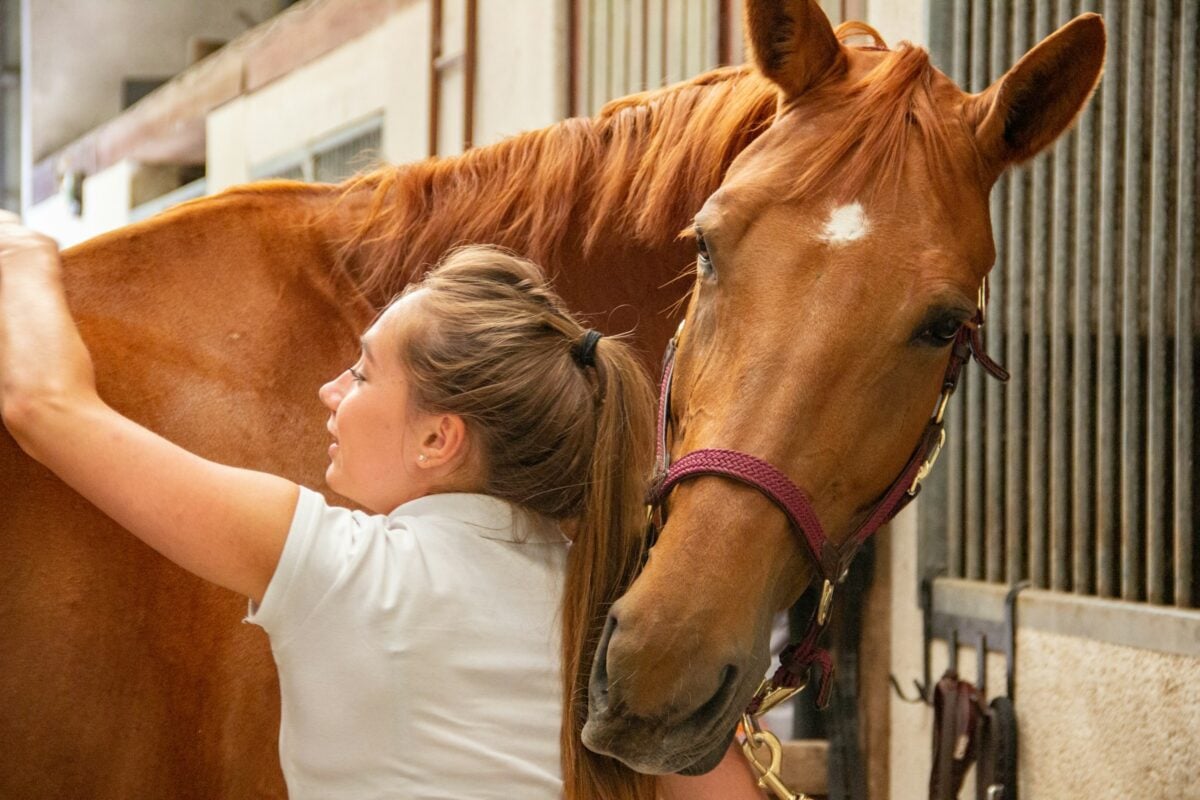
Picture the classic barn greeting: a loud nicker, a quick trot to the gate, a head swinging over the stall door the second your car pulls in. It feels like love. Often, though, it is the sound of a horse who has learned that your arrival means dinner.
Real attachment is usually much quieter, and it tends to hide in plain sight. It shows up in an ear, an eyelid, a breath, or a small decision about where to stand. Here are ten signs that horse people often write off as quirks, starting with the most overlooked and building to the one that stops many owners cold.
#10 – The Single Ear That Never Leaves You
🔥 Would you like to save this?
We'll email this post to you, so you can come back to it later!
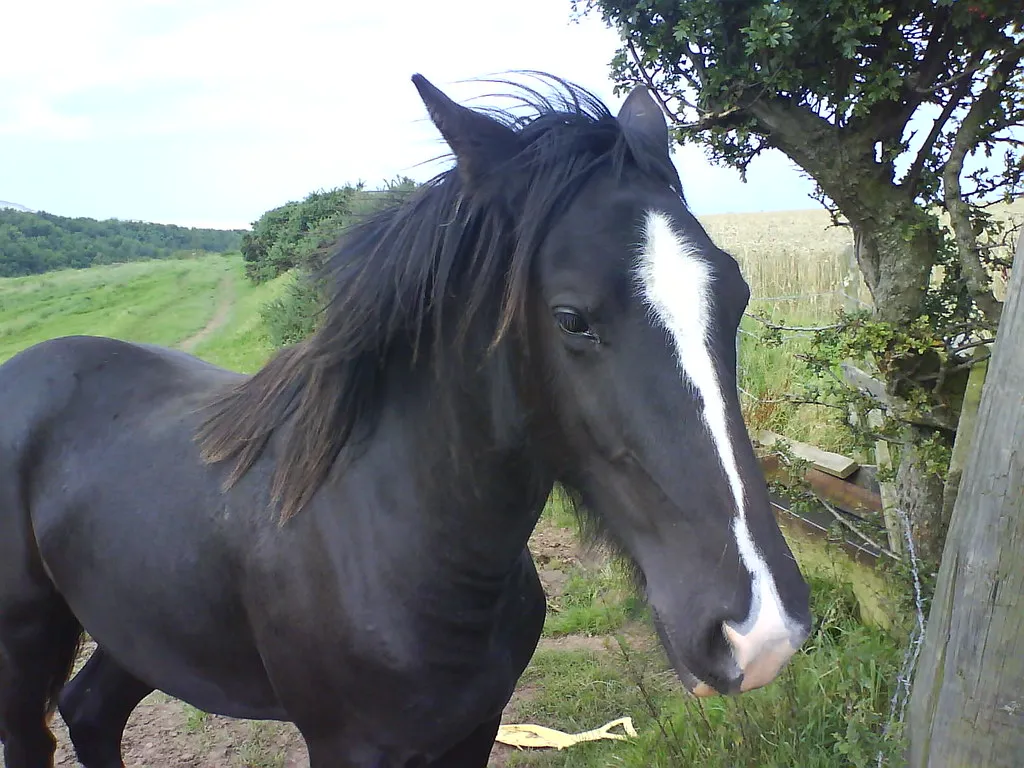
Most owners watch for the obvious ear signals: both ears pricked forward means interest, both pinned back means trouble. They miss the subtler version. A horse with a real bond often keeps one ear softly tilted toward its person while the rest of its body looks busy with grazing, dozing, or watching the barn cat.
The ear flicks your way when you shift your weight or speak, then drifts back to neutral without any tension. There is no stiffness in the neck and no tight look around the eye. It is attention without alarm.
This stands out because horses are prey animals, and their ears are constantly sweeping for information. When one ear stays tuned to a single human across distance and distraction, that person has become part of the horse’s background sense of security. You are no longer an event. You are part of the landscape it feels safe in.
You can check this yourself without any special equipment:
- Watch during busy barn hours, when several people are moving around.
- Notice whether the ear resets toward you after every interruption.
- Compare how the horse reacts when someone else walks by.
The telling detail is how selective it is. Other handlers usually get the standard scanning pattern. Only one person gets the ear that keeps coming back.
#9 – The Sleepy Eye That Softens Only for You
🔥 Would you like to save this?
We'll email this post to you, so you can come back to it later!
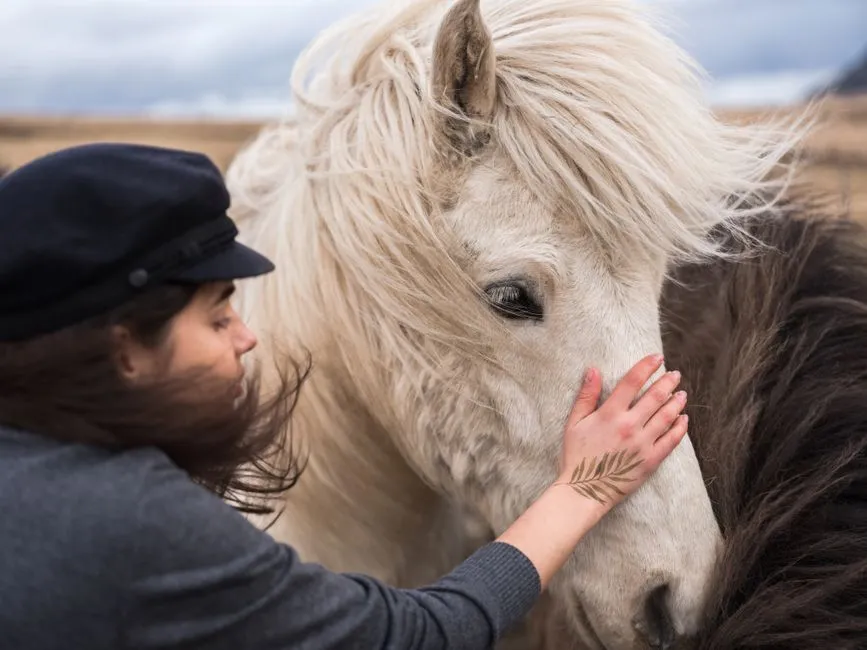
A tense horse has a wide, hard eye, sometimes with the white showing. A relaxed horse looks different. The upper lid droops slightly, the lower lid loosens, and the whole face takes on a heavy-lidded, almost drowsy look. Equine behavior researchers generally treat that soft expression as a sign of low arousal.
Owners often mistake it for boredom or tiredness. But if that expression appears mainly when one specific person walks up, it points to something else. The horse is lowering its guard around you in a way it may not for other handlers.
Fast Facts
- A horse’s eye is among the largest of any land mammal, so small changes in the lids are easy to see once you know to look.
- Horses can see across a very wide arc, roughly 350 degrees, with blind spots directly in front and behind.
- Soft signs: a drooping upper lid, a loose lower lid, and a calm, heavy-lidded look.
- Tension signs: a wide, hard eye, sometimes with the white showing.
It often shows up first during long grooming sessions. The horse stops bracing and starts leaning into the rhythm of the brush. Many riders credit that to good training, but training alone does not explain why the softness is stronger with one person than another.
Here is the part many owners only notice in hindsight: the expression can change when that person leaves the area. The eye brightens, the head comes up, and the horse goes back to scanning. The softness was never about the grooming. It was about who was holding the brush.
#8 – The Micro-Whicker You Almost Miss
🔥 Would you like to save this?
We'll email this post to you, so you can come back to it later!
Loud whinnies usually mean one of two things: separation panic or food. The signal of deeper attachment is much smaller. It is a short, low, almost closed-mouth rumble that sounds more like a rough exhale than a call.
Horses use nickers and whickers in familiar, friendly contexts, such as greeting companions or anticipating something good. The version that signals a bond often comes the moment the horse recognizes your footsteps or your vehicle, sometimes before you are even in sight.
It is quiet enough that barn staff and family members walk right past it. Owners who start listening for it often realize it has been happening for months. They just filed it under background noise.
Context is the whole key. A horse that nickers at everyone is usually announcing its presence or its hunger. The bonded version is directed at one person, comes with an immediate turn toward the sound of you, and happens with no bucket, no hay, and no treat in sight.
#7 – Mirroring Your Pace Without Any Cue
🔥 Would you like to save this?
We'll email this post to you, so you can come back to it later!
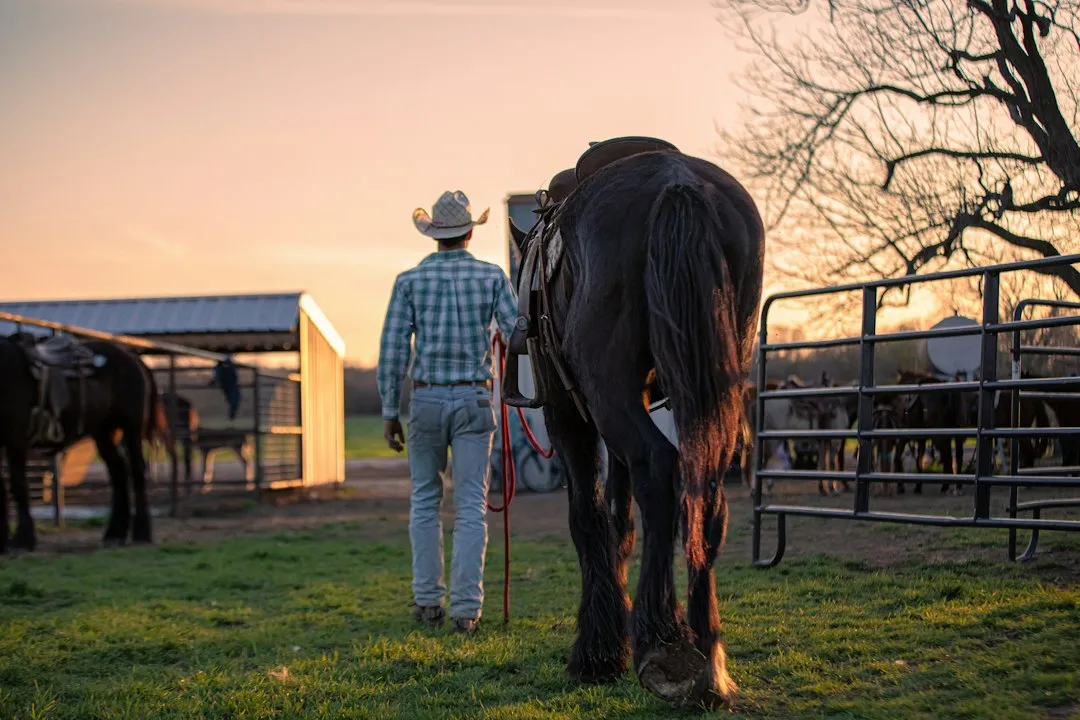
Horses that are close to each other tend to match their movements. They walk at the same speed, stop at the same moment, and drift in the same direction. A horse that does this with a person has put that person into its own herd rhythm.
You see it when you slow down and the horse shortens its stride. You pause halfway down the aisle and the horse stops too, with no rope pressure and no verbal command. Even small changes in direction or posture can get matched.
Most people read this as good manners or treat-seeking. But treat-seeking looks pushy and focused on your pockets. Mirroring looks calm, loose, and weirdly effortless, because nothing is being paid for it.
It is easiest to spot when you lead a horse without a halter or let it loose in a round pen. A horse that chooses to stay aligned with you instead of drifting toward the fence or another horse is making a social choice. It will even give up a patch of good grass to do it.
#6 – Interrupting a Full Hay Net to Check On You
🔥 Would you like to save this?
We'll email this post to you, so you can come back to it later!
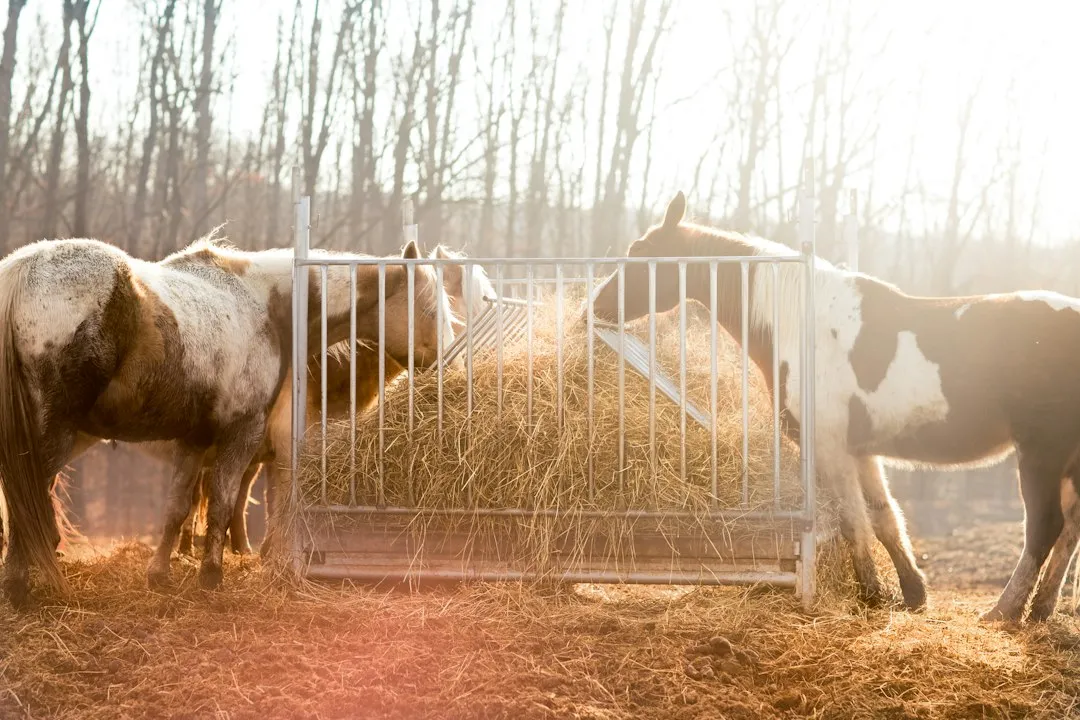
For a horse, food is survival. These animals are built to eat for much of the day, so walking away from a full hay net is not a small thing. When a horse does it the moment you appear, even briefly, its priorities have shifted.
The pattern is usually simple. The horse walks over, orients toward you, sniffs or stands close, and may then go back to eating. The return to the hay is not the point. The interruption is.
Owners often shrug this off as coincidence or a so-so appetite. In a bonded horse it repeats reliably, and it usually happens with one person more than anyone else. The horse is trading calories for proximity, which is not a trade prey animals make lightly.
It tends to get stronger during mild stress, like a new horse in the barn or a change in routine. Your presence becomes a reference point the horse checks before it settles again. A few signs help separate attachment from plain curiosity:
- The horse goes back to eating only after confirming you are there.
- It repeats the check-in several times in one session.
- Other people entering the same space do not cause the interruption.
#5 – Freezing Instead of Flinching When You’re Vulnerable
🔥 Would you like to save this?
We'll email this post to you, so you can come back to it later!
Handling legs and feet puts horse and handler in a risky position. If a loud noise goes off while you are bent over a hoof, most horses will shift, jump, or pull away. A horse with a strong bond sometimes does the opposite and goes unnaturally still.
It can look like the horse is putting your safety ahead of its own reaction. Many people call that stoicism or good training. But if it happens mainly with one handler, something more personal may be going on. The horse has learned to trust that particular person’s judgment in a tense moment.
One caution is worth knowing. Stillness is not always trust. A horse that has shut down from fear also freezes, but the two look very different.
Quick Compare
- Trusting stillness: relaxed breathing, a loose lower lip, and a gentle eye.
- Fear shutdown: stiff body, held breath, and a hard eye.
- Best test: does the horse soften and stay calm as the startling thing continues?
Trainers say the bonded version tends to develop after months of consistent, low-pressure handling. The detail that gives it away is how long the horse holds still. It stays calm even while the startling thing keeps happening in the background.
#4 – Offering the Guarded Side Without Tension
🔥 Would you like to save this?
We'll email this post to you, so you can come back to it later!
Many horses are touchier on one side. It might be an old injury, a sore spot, or just a habit of protecting a sensitive area. Letting someone touch that side is a bigger deal than it looks.
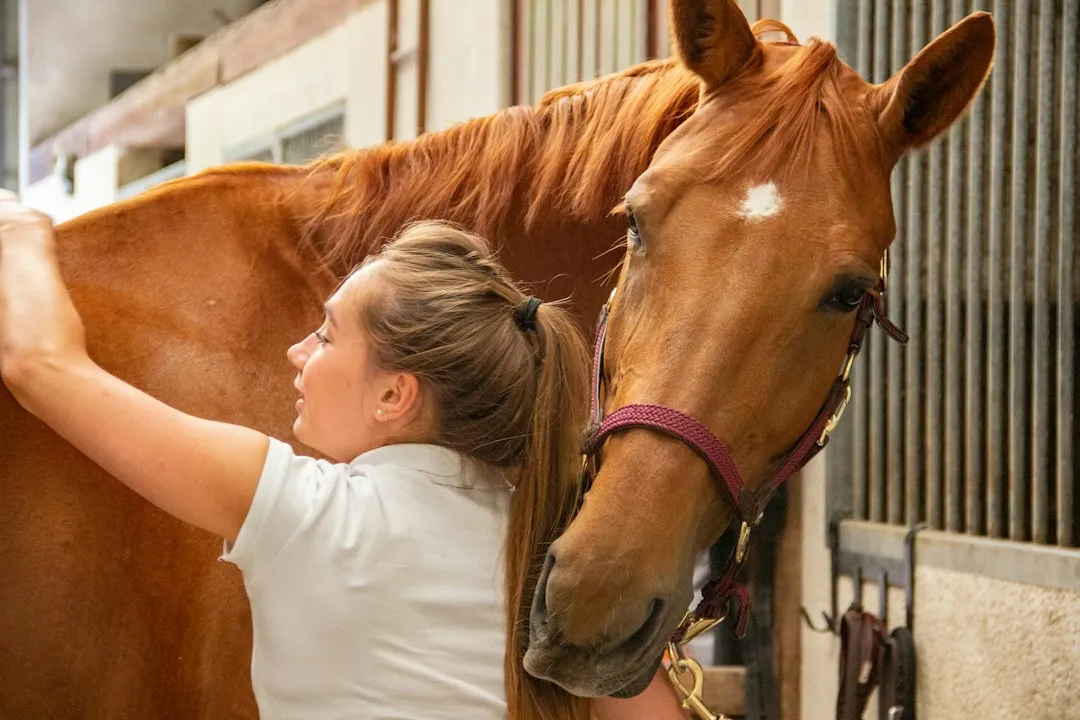
A bonded horse may angle its body so one person can reach that side first, with no bracing, tail swishing, or pinned ears. The posture stays soft the whole way through. It is a quiet way of saying, you can be here.
Owners often assume that once basic handling is accepted, every side of the horse is equal. But a horse that exposes its guarded side to one person and not to others has sorted that person into a different category. That person has been judged safe enough to be near a weak spot.
You can spot it most easily while grooming or tacking up, when the horse could easily swing away. Instead, it leans slightly into the contact. This is different from simple habit, because the relaxation comes faster and goes deeper with the person it trusts.
#3 – The Shared Sigh That Matches Your Rhythm
🔥 Would you like to save this?
We'll email this post to you, so you can come back to it later!
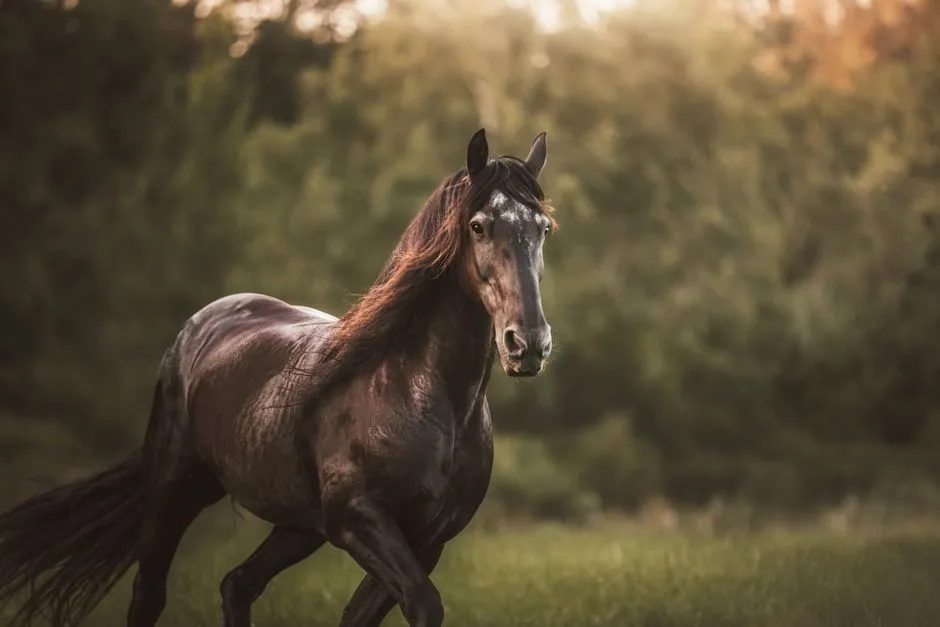
Sometimes during a quiet moment, a bonded horse will let out a long breath at almost the same time you do. The sigh is audible, often paired with a slight lowering of the head and softening of the lips. Nobody prompted it, and it feels strangely conversational.
It is easy to miss because it looks like ordinary relaxation. But many horse people describe the sense that the horse is settling alongside them rather than just calming down on its own. Scientists are still studying how closely horses and humans sync up physiologically, so it is best to treat this as an observation, not a measured fact.
Worth Knowing
- The sigh usually comes with a lowered head and soft lips.
- It most often appears during grooming or while you stand together after a ride.
- Human-horse synchrony is still being studied, so enjoy it without over-claiming.
It tends to happen when other people nearby do not seem to get the same response. Owners often describe it as the moment they realized the horse was not just tolerating them.
Long-term owners also report that the horse starts these moments itself after you have been away for a day or more. It walks over, drops its head, and waits. It is hard to read that as anything but reconnecting.
#2 – Reciprocal Grooming With Precise Nibbles
🔥 Would you like to save this?
We'll email this post to you, so you can come back to it later!
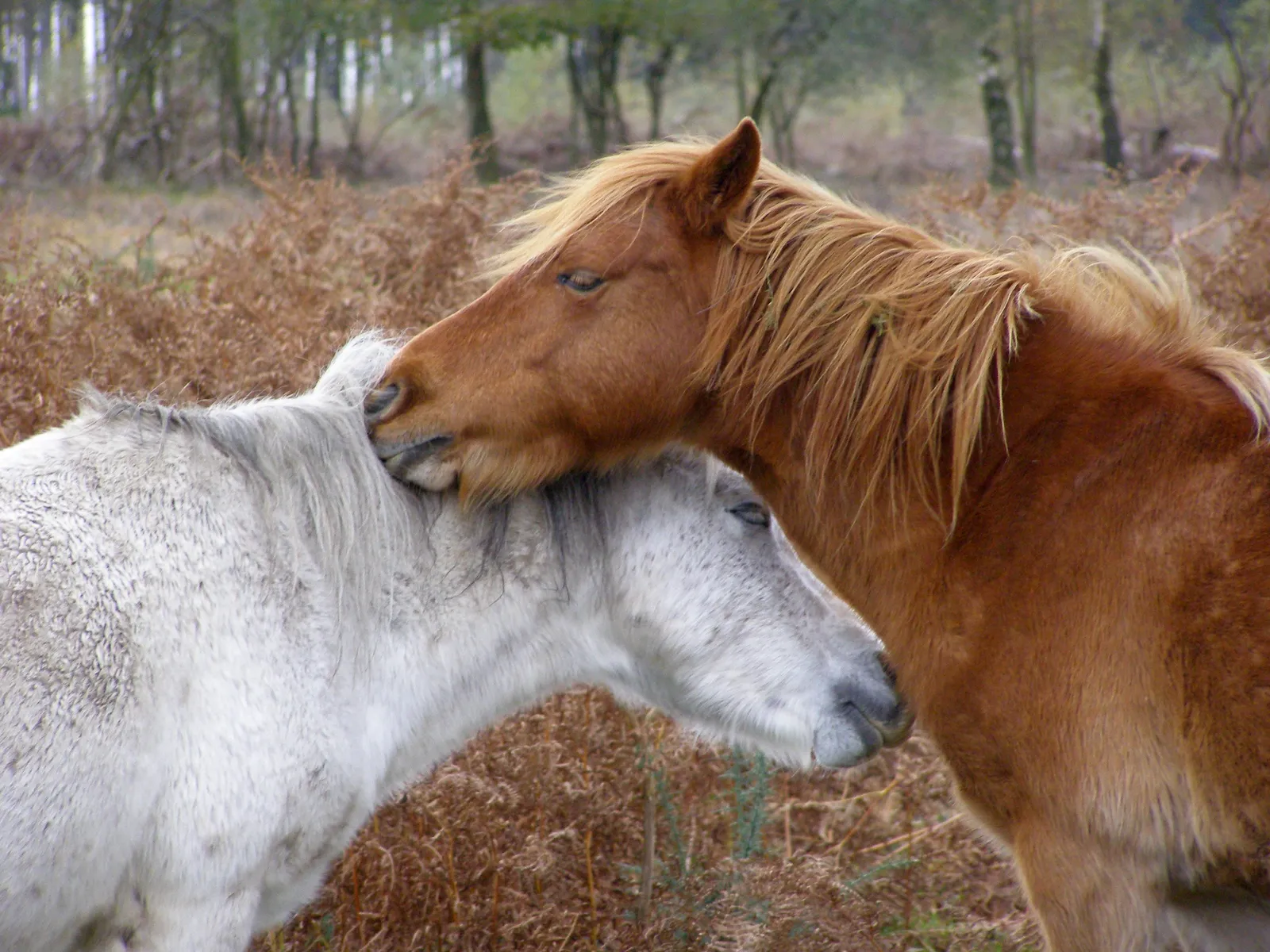
Horses that like each other groom each other, usually at the withers, neck, and shoulders. These are spots they cannot reach themselves. This mutual grooming, called allogrooming, is typically reserved for preferred herdmates.
When a horse starts offering light, rhythmic nibbles or scratches in those exact spots on its person, it is extending a herd behavior to a human. It is not just tolerating touch. It is joining in.
This usually starts small. You might notice a single gentle nibble on your shoulder while you groom, then the same thing again next session. It rarely happens with barn staff or occasional handlers.
Here is the honest and slightly unpopular truth: many cuddly horses are really just mouthy. The attachment version is slower and more deliberate, and it comes with soft eyes and a relaxed face. It is also worth discouraging real nipping, since even a well-meant nibble from a 1,000-pound animal can hurt.
- Bonded grooming is rhythmic and aimed at the withers, neck, or shoulder.
- Pushy mouthing is random, fast, and usually pocket-focused.
- Soft eyes and a loose lip point to the real thing.
#1 – Consistently Choosing You Over Both Herd and Food
🔥 Would you like to save this?
We'll email this post to you, so you can come back to it later!
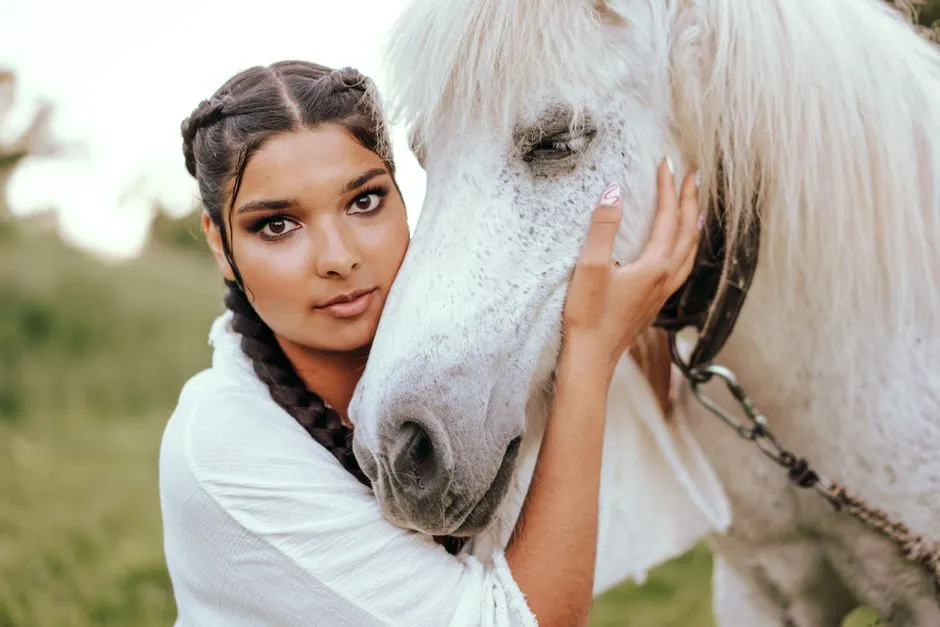
This is the sign that trainers tend to rank highest, and it is the one owners notice last. The horse leaves its herd, stops eating, or walks across a large field when you appear, and it does so without being called and without being offered anything. It simply comes and stands near you.
It does not demand attention. It does not paw, shove, or beg. It just chooses to be close, which is remarkable in an animal built to find safety in numbers and calories.
Researchers have adapted attachment-style tests for horses, and the results suggest horses can tell familiar handlers from strangers and may seek out people they know. Scientists remain careful about claiming it works exactly like dog or child attachment, but the everyday pattern is hard to ignore. Because it can look like plain friendliness, many owners go years without recognizing it.
What separates attachment from habit is consistency. It happens in summer and in storms, with fresh grass nearby and with other horses calling from the fence. And many owners say the clearest proof comes when they are gone for a while: the horse seems visibly flat and quiet until they return.
At a Glance
- Real attachment: voluntary, calm, and consistent across weather and distractions.
- Habit or hunger: loud, pushy, and tied to food or routine.
- The giveaway: the horse comes to you when nothing is on offer.
So here is the opinionated part. We have spent too long treating the loud greeting as the gold standard. A horse that screams for you at feeding time may simply be hungry, while the one that quietly keeps one ear on you has made a far bigger statement.
Attachment in horses is measured in what they give up: food, herd, and the instinct to run. If you want to know whether your horse loves you, stop listening for the nicker and start watching what it does when nothing is on offer. That is where the truth has been all along.

- 7 Everyday Habits That Can Make Your Senior Dog Happier - November 5, 2026
- 10 Enigmatic Structures That Continue to Puzzle Scientists Today - November 5, 2026
- 10 Strange Ruins in the Americas That Challenge What We Know About Early History - November 5, 2026