


The majestic bald eagle, America’s national bird, is an awe-inspiring sight soaring across North American skies. With their impressive seven-foot wingspan and distinctive white head and tail feathers, these remarkable raptors command attention wherever they appear. As apex predators with highly specialized hunting behaviors, bald eagles are attracted to specific environmental conditions and food sources while being repelled by others. Understanding what draws these magnificent birds to certain areas—and what sends them fleeing—provides fascinating insights into their behavior and can help conservation efforts. Whether you’re hoping to spot these iconic birds in the wild or simply curious about their habits, this comprehensive guide reveals the key factors that attract and repel bald eagles.
Fish The Bald Eagle’s Preferred Prey
Fish constitute approximately 60-90% of the bald eagle’s diet, making them the most powerful attractant for these birds. Bald eagles have evolved specialized hunting techniques for catching fish, including their remarkable ability to spot fish from great heights and then swoop down to snatch them from the water’s surface with their powerful talons. Their preference is for larger fish species weighing 1-3 pounds that swim near the water’s surface, making them easier to catch.
Lakes, rivers, and coastal areas with abundant fish populations naturally attract bald eagles. They are particularly drawn to areas with clear water visibility and where fish are concentrated, such as below dams, at the mouths of spawning streams, or in shallow waters where fish are more accessible. Research has shown that eagles can detect fish movement from nearly a mile away, explaining why they’re commonly spotted perched in tall trees overlooking productive fishing waters. During fish spawning seasons, when numerous fish gather in specific locations, eagle concentrations can increase dramatically in these areas.
Carrion Nature’s Free Buffet

Despite their reputation as fierce hunters, bald eagles are also opportunistic scavengers that readily feed on carrion (dead animals). This behavior is especially prevalent during winter months when fishing becomes difficult due to ice cover, or during periods of food scarcity. Roadkill, dead livestock, and winter-killed animals are particularly attractive to hungry eagles. In fact, wildlife researchers have observed that in some regions during winter, carrion may constitute up to 50% of a bald eagle’s diet.
The eagles’ keen eyesight allows them to spot carrion from great distances, and they’ll often congregate in large numbers around abundant food sources like salmon runs after spawning or areas with high concentrations of waterfowl mortality. This scavenging behavior has led to one of the most famous bald eagle gatherings in North America—the annual congregation of hundreds of eagles along the Chilkat River in Alaska, where late-running salmon provide an accessible food source when most other rivers have frozen. This adaptability as both hunter and scavenger has been crucial to the bald eagle’s survival and recovery as a species.
Waterside Habitats Prime Real Estate

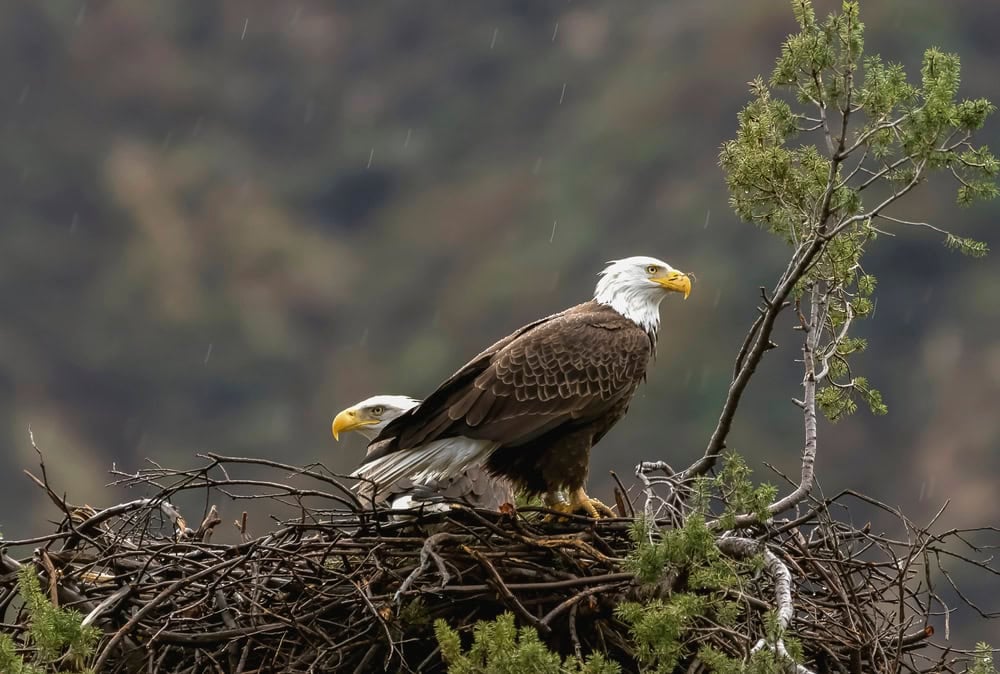
Bald eagles have a strong affinity for habitats adjacent to large bodies of water, including lakes, rivers, marshes, reservoirs, and coastal areas. These waterside locations not only provide their primary food source—fish—but also offer ideal perching and nesting sites. Studies have shown that approximately 75% of bald eagle nests are located within one mile of water. The presence of mature trees near water is particularly attractive, as these provide both hunting perches and potential nesting sites.
The most desirable eagle habitats feature a combination of shallow water for hunting, tall trees for perching and nesting, and relatively low human disturbance. In coastal areas, eagles are often attracted to estuaries where rivers meet the sea, as these productive ecosystems support abundant fish populations. During migration and winter, eagles may concentrate around open water in otherwise frozen landscapes, such as below dams or at power plant outflows where warmer water remains unfrozen and fish are concentrated. This dependence on waterside habitats makes riparian protection a crucial component of bald eagle conservation efforts.
Tall Trees Essential Perches and Nest Sites

Mature trees, particularly those offering commanding views of surrounding areas, serve as essential habitat features for bald eagles. These birds show a strong preference for the tallest available trees, which provide crucial vantage points for hunting, resting spots for digestion, and platforms for their massive nests. Preferred tree species vary by region but typically include white pines in the Northeast, Douglas firs in the Pacific Northwest, and cottonwoods near western waterways. The ideal perching tree is one that can support the eagle’s weight (typically 8-14 pounds) while offering unobstructed sightlines to potential prey.
Nesting trees must be even more robust, as bald eagle nests are among the largest in the bird world. These structures, continuously used and expanded year after year, can reach dimensions of 5-6 feet in diameter, 2-4 feet in depth, and weigh up to a ton. Research indicates that eagles strongly prefer to nest in live trees with sturdy, open branching patterns at least 50 feet above ground level. The protection of mature trees, particularly in riparian zones, has proven essential for successful eagle conservation. In areas where natural trees are limited, artificial nesting platforms have been successfully implemented to attract breeding pairs.
Waterfowl Concentrations Hunting Opportunities

Large concentrations of waterfowl represent another significant attractant for bald eagles. Ducks, geese, and other water birds serve as an important secondary food source, particularly during winter months when fishing becomes challenging due to ice cover. Eagles employ various hunting strategies to capture waterfowl, including surprise attacks from concealed perches and pursuing weakened or injured birds. Wildlife refuges and other protected wetlands that attract migratory waterfowl often become seasonal hotspots for eagle activity.
This predator-prey relationship intensifies during waterfowl migration seasons when thousands of birds may concentrate in relatively small areas. Scientists have documented eagle behavior shifts coinciding with these migrations, as the birds capitalize on this abundant food source. Eagles are particularly adept at identifying and targeting sick or injured waterfowl, playing an important ecological role by removing vulnerable individuals from the population. At some locations, such as the Klamath Basin Wildlife Refuges on the California-Oregon border, the relationship between eagle presence and waterfowl concentrations is so strong that wildlife managers can often predict eagle numbers based on waterfowl counts.
Winter-Killed Game Seasonal Bounty

Harsh winter conditions that lead to mortality among deer, elk, and other wildlife create temporary feeding opportunities that strongly attract bald eagles. As winter progresses, animals weakened by starvation, disease, or severe weather die and become available to scavenging eagles. This natural phenomenon is particularly important in mountainous regions and northern latitudes where deep snow and prolonged cold create significant wildlife stress. Research conducted in Yellowstone National Park found that bald eagle numbers increase significantly following severe winters, correlating directly with higher ungulate mortality.
Eagles possess a remarkable ability to locate these winter-killed animals, often discovering carcasses within hours of death despite forest cover or snow. They may travel many miles from their typical territories when they detect or learn of abundant carrion. Multiple eagles frequently gather at larger carcasses, establishing a temporary hierarchy where larger, more mature birds dominate feeding access. Wildlife managers sometimes leverage this attraction by placing road-killed deer in visible locations during winter to support eagle populations and create wildlife viewing opportunities. This adaptation to seasonal food availability demonstrates the bald eagle’s ecological flexibility and intelligence.
Agricultural Activities Unexpected Attractions

Certain agricultural practices create feeding opportunities that attract bald eagles. Plowed fields may expose rodents and other small mammals, making them vulnerable to predation. Eagles have been observed following farm equipment, opportunistically catching animals disturbed by cultivation activities. Additionally, livestock operations occasionally attract eagles, particularly when afterbirth or deceased animals are accessible. In some farming regions, eagles have learned to associate specific agricultural activities with food availability, demonstrating their adaptability and intelligence.
Fish farms and aquaculture facilities represent a particularly strong draw for eagles. These concentrated food sources can experience significant predation pressure from eagles, sometimes resulting in economic losses. Studies in the Pacific Northwest have documented individual eagles consuming up to one pound of farmed fish daily when allowed unrestricted access. This attraction to agricultural settings creates both opportunities and challenges for eagle conservation, requiring balanced approaches that protect eagle populations while addressing legitimate concerns of farmers and aquaculture operators. In some regions, non-lethal deterrents and compensation programs have been implemented to manage these interactions constructively.
Protected Roosting Sites Safety in Numbers

Bald eagles are strongly attracted to areas that offer secure communal roosting sites, particularly during winter months. These roosting locations typically feature stands of mature trees protected from harsh winds, often situated near reliable food sources. Eagles may travel 10-15 miles from feeding areas to reach preferred roosts, which can host anywhere from a few individuals to over a hundred birds in prime locations. These communal roosts serve multiple purposes beyond mere resting places—they function as information centers where less experienced birds can follow successful hunters to food sources the following day.
The social dynamics at these roosts are complex, with dominance hierarchies based on age and size determining the most favorable positions within the roost. Mature eagles typically claim the highest, most protected positions. Research has shown that these roosting aggregations may help eagles conserve energy during cold weather, as the birds benefit from shared body heat and reduced wind exposure within the roost. Conservation efforts increasingly recognize the importance of these sites, with many eagle management plans now including specific protections for identified communal roosts. The continued availability of these secure roosting locations appears essential for maintaining healthy eagle populations, particularly in northern regions.
Clear Flight Paths Navigational Necessities

Bald eagles, with their impressive wingspans reaching up to seven feet, require unobstructed flight corridors for efficient movement between hunting grounds, roosting areas, and nesting sites. Areas that provide clear flight paths along rivers, shorelines, or through mountain passes naturally attract these birds. Eagles often follow these predictable routes day after day, establishing what researchers call “flight lanes” that connect important habitat features. These paths typically follow topographical features that create beneficial wind patterns, allowing eagles to conserve energy through soaring and gliding.
The attraction to areas with open flight corridors becomes particularly evident during migration seasons. While not all bald eagle populations migrate, those in northern regions may travel hundreds of miles southward as waters freeze in winter. During these movements, eagles concentrate along routes that offer both clear passage and good hunting opportunities. This preference for unobstructed flight explains why eagles are frequently spotted following river valleys, coastlines, and ridgelines during travel. Conservation biologists increasingly incorporate this knowledge into habitat protection efforts, recognizing that preserving connectivity between eagle use areas is as important as protecting the areas themselves.
Undisturbed Nesting Territories Breeding Success

Bald eagles show strong attraction to areas that offer minimal human disturbance, particularly during their sensitive breeding season. These raptors typically require a buffer of quiet, undeveloped land around their nesting sites, with research indicating that successful nesting often correlates with distances of 400-800 feet from human activities. Eagles demonstrably prefer territories that combine isolation with proximity to food sources, creating a delicate balance in their habitat selection. Once established in a suitable territory, eagle pairs show remarkable site fidelity, returning to the same nesting area year after year if breeding success is achieved.
The importance of undisturbed nesting habitat is underscored by the eagles’ breeding behavior. The nesting season, which varies geographically but typically spans 4-6 months from nest building through fledging, represents a significant time investment. During this period, eagles are particularly sensitive to disturbance, especially during egg-laying and early incubation phases when they may abandon nests if repeatedly disturbed. This attraction to secluded nesting territories has influenced conservation policy, with federal guidelines establishing protective buffers around active nests. The successful recovery of bald eagle populations across North America is partly attributed to these habitat protections, demonstrating the critical importance of preserving undisturbed nesting territories.
Human Disturbance A Major Deterrent

Among the factors that most reliably drive bald eagles away is persistent human activity, particularly when it occurs unpredictably or with high intensity. Research has documented that eagles will abandon otherwise suitable habitat when subjected to regular disturbance from boat traffic, construction noise, recreational activities, or industrial operations. The birds appear especially sensitive to disturbance during their breeding season, with studies showing that human activity within 330 feet of active nests significantly increases the risk of nest abandonment. This sensitivity varies somewhat with individual birds—eagles in more developed areas may gradually habituate to certain predictable human activities, while those in remote regions typically maintain larger flight distances.
The threshold for disturbance tolerance seems to depend on several factors, including the quality of the habitat (eagles may tolerate more disturbance in prime feeding areas), the timing relative to their breeding cycle, and the birds’ previous experiences with humans. Interestingly, research has shown that eagles distinguish between different types of human activities, often responding more negatively to people approaching directly or moving erratically than to consistent, predictable movements that don’t approach the birds. Conservation guidelines typically recommend maintaining buffer zones around essential eagle habitat, with distances of 330-660 feet from nests during sensitive periods. These protections have proven effective, allowing eagle populations to recover even in relatively developed landscapes when core areas remain undisturbed.
Environmental Contaminants Invisible Threats

Bald eagles actively avoid areas with high levels of environmental contamination, though this avoidance is more likely an indirect response to reduced prey availability or reproductive failure rather than direct detection of pollutants. The eagles’ position at the top of the food chain makes them particularly vulnerable to bioaccumulative toxins like mercury, lead, and persistent organic pollutants that concentrate in their prey. Historical population crashes were largely attributed to DDT contamination, which caused catastrophic reproductive failure through eggshell thinning. Though DDT has been banned in the United States since 1972, other contaminants continue to impact eagle populations.
Lead poisoning represents one of the most significant ongoing threats, typically occurring when eagles consume lead ammunition fragments in hunter-killed game or gut piles. Research indicates that even sub-lethal lead exposure can impair hunting ability and decision-making, potentially causing eagles to abandon contaminated areas as their condition deteriorates. Mercury contamination, particularly in aquatic ecosystems, similarly drives eagles away by reducing reproductive success in affected areas. Conservation efforts increasingly focus on identifying and remediating contaminated sites within eagle habitat, as well as promoting non-toxic alternatives to lead ammunition. The eagles’ sensitivity to environmental quality makes them important bioindicators, with their presence or absence often signaling the overall health of an ecosystem.
Extreme Weather Conditions Seasonal Repellents

Severe weather events and extreme climate conditions can temporarily or seasonally drive bald eagles from otherwise suitable habitat. While these adaptable birds can tolerate a wide range of temperatures, certain weather patterns trigger predictable movements away from affected areas. Prolonged ice cover on lakes and rivers forces fishing eagles to relocate to open water, sometimes traveling hundreds of miles to find accessible prey. Similarly, extended periods of heavy fog or rain that reduce visibility may temporarily drive eagles from feeding territories, as these conditions significantly impair their hunting ability.
Wind patterns strongly influence eagle movements, with the birds typically avoiding areas experiencing sustained high winds that make flight control difficult and energy-intensive. Research tracking eagle movements has documented rapid departures from territories ahead of approaching severe storm systems, suggesting these birds possess either remarkable atmospheric sensitivity or the ability to detect distant weather events. This weather-related mobility highlights the importance of habitat connectivity and the availability of alternative territories within the eagles’ range. Climate change models predict increasing weather variability and extreme events across North America, potentially creating new challenges for eagle populations by disrupting traditional movement patterns and habitat use. Monitoring these responses provides valuable insights into the eagles’ adaptive capacity in a changing climate.
Conclusion: Understanding Eagle Behavior for Conservation Success

Bald eagles are majestic and resourceful birds that are drawn to specific features in their environment—plentiful food sources like fish and waterfowl, tall trees for nesting, and open landscapes for hunting. Human-created habitats such as reservoirs, landfills, and even cell towers can unintentionally attract them as well. Understanding what appeals to bald eagles helps conservationists protect their habitats and gives birdwatchers better chances of observing these national icons in the wild.
However, bald eagles are also sensitive to disturbances. Loud noise, human intrusion near nests, and shrinking natural habitats can cause them to abandon otherwise ideal areas. As their population continues to rebound, it’s crucial that we not only recognize what draws them in but also minimize the stressors that drive them away. Protecting the balance between attraction and avoidance is key to ensuring these powerful raptors continue to soar across North America’s skies for generations to come.

As a little kid, I fell in love with nature, wildlife, and animals. Living in the USA, South Africa, Italy, China and Germany gave me the opportunity to discover the world's Wildlife. My favorite animals are Mountain Gorillas, Siberian Tigers, and Great White Sharks.
I'm a certified PADI Open Water Diver, went to Everest Base Camp and Trekked Gorillas in Uganda. I hold a Master of Science in Economics and Finance.
Please send any feedback to feedback@animalsaroundtheglobe.com
- 15 Crocodile Facts That Prove They Have not Needed to Evolve - June 16, 2026
- 12 Signs a Koala Is Under Stress in Captivity - June 16, 2026
- 15 Ways Weather Changes Are Affecting Backyard Birds - June 16, 2026