


In a world where species regularly fade into extinction, some remarkable creatures have demonstrated extraordinary resilience. Reptiles represent one of Earth’s most enduring animal classes, with lineages stretching back hundreds of millions of years. While dinosaurs may have disappeared 65 million years ago, many of their reptilian relatives have survived virtually unchanged through eons of planetary transformation. These living fossils offer us a direct window into prehistoric times, carrying ancient genetics and adaptations that have withstood the test of time. From imposing predators to miniature marvels, these 15 reptiles have maintained their ancestral forms. At the same time, countless other species vanished, making them true survivors of evolutionary history and living connections to Earth’s distant past.
11. Tuatara The Last of Its Kind

🔥 Would you like to save this?
We'll email this post to you, so you can come back to it later!
Perhaps the most remarkable living fossil among reptiles is the tuatara (Sphenodon punctatus), native exclusively to New Zealand. Though resembling a lizard at first glance, tuataras are the sole surviving members of the order Rhynchocephalia, which flourished during the age of dinosaurs over 200 million years ago. These extraordinary creatures diverged from other reptiles even before the dinosaurs emerged, making them a genuine window into prehistoric times.
What makes tuataras truly exceptional is their incredibly slow pace of evolution. Their anatomical structure has remained remarkably unchanged for over 200 million years, earning them the title of “living fossils.” Tuataras possess several primitive features, including a unique dental structure with teeth fused directly to the jawbone rather than set in sockets. Perhaps most fascinating is their vestigial “third eye” on top of their head—a light-sensitive organ beneath the skin that may help regulate circadian rhythms and hormone production. With lifespans potentially exceeding 100 years and body temperatures that can function effectively at much lower ranges than most reptiles, tuataras represent one of our most direct connections to Earth’s distant past.
10. Alligator Snapping Turtle Prehistoric Predator of American Waters

🔥 Would you like to save this?
We'll email this post to you, so you can come back to it later!
With its prehistoric appearance and formidable presence, the alligator snapping turtle (Macrochelys temminckii) has patrolled the rivers and lakes of the southeastern United States for approximately 20 million years. These massive freshwater turtles have changed little from their ancient ancestors, maintaining a primordial design that has proven remarkably successful. Weighing up to 200 pounds with shells adorned with three prominent ridges resembling those of prehistoric reptiles, these impressive creatures epitomize living prehistory.
What truly sets the alligator snapping turtle apart is its unique hunting strategy, unchanged for millions of years. Inside its mouth lies a specialized pink appendage that resembles a worm. By lying motionless on the riverbed with jaws agape and wriggling this lure, it attracts unsuspecting fish directly into its powerful jaws. When the jaws snap shut, they do so with a bite force measured at over 1,000 pounds per square inch—enough to sever fingers or even break small bones. Despite their impressive longevity as a species, alligator snapping turtles face serious conservation challenges today due to habitat loss and overharvesting, with some populations having declined by up to 95% in certain regions over the past century.
9. Komodo Dragon Ancient Island Giant

🔥 Would you like to save this?
We'll email this post to you, so you can come back to it later!
The Komodo dragon (Varanus komodoensis) represents the largest living lizard species on Earth and a direct descendant of ancient monitor lizards that once roamed across Australia and Southeast Asia approximately 40 million years ago. Endemic to just five islands in Indonesia, these massive predators can reach lengths of up to 10 feet and weights exceeding 300 pounds. Their ancient lineage is evident in both their appearance and behavior, having maintained many primitive characteristics that have served them well for millions of years.
Komodo dragons employ a hunting strategy that has remained largely unchanged since prehistoric times. While they can run in short bursts at speeds up to 12 mph, they generally rely on ambush tactics, using their exceptional patience and camouflage to await prey. Their mouths harbor over 60 strains of bacteria, creating a septic bite that causes systemic infection in wounded prey. Recent research has also confirmed the presence of venom glands, making Komodo dragons one of the few venomous lizards on Earth. This combination of size, strength, bacteria, and venom represents a multifaceted predatory approach that has proven effective for millions of years. As apex predators on their native islands, Komodo dragons have maintained ecological dominance in a manner reminiscent of dinosaurs. However, they now face significant threats from habitat loss and climate change.
8. Gharial The Fishing Specialist of Ancient Rivers
🔥 Would you like to save this?
We'll email this post to you, so you can come back to it later!
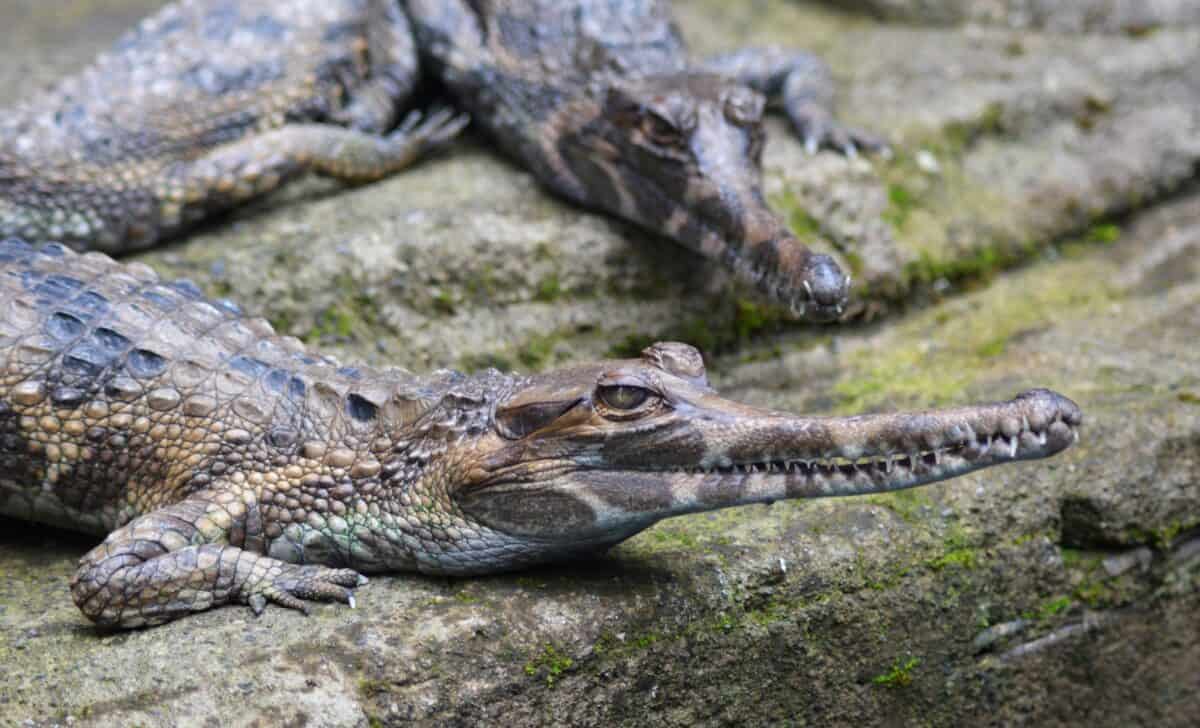
The gharial (Gavialis gangeticus) represents one of the most specialized and ancient crocodilians alive today. With fossil records dating back approximately 42 million years, the basic gharial body plan has remained largely unchanged, marking it as a true living fossil. Instantly recognizable by its extremely narrow snout that broadens at the end into a bulbous protrusion (in males), the gharial possesses perhaps the most specialized jaw structure of any living reptile, perfectly adapted for capturing fish in fast-moving rivers.
Unlike other crocodilians that have diversified their diets, gharials have maintained their specialized fish-hunting lifestyle for millions of years. Their slender snouts feature up to 110 interlocking teeth designed specifically for catching slippery prey rather than tearing apart larger animals. Male gharials develop the distinctive “ghara”—a bulbous growth at the tip of the snout—which they use to produce buzzing sounds during courtship and to display dominance. Once abundant throughout the Indian subcontinent’s river systems, gharials have suffered catastrophic population declines of over 98% during the past century. Today, fewer than 1,000 adult gharials remain in the wild, making this living fossil critically endangered despite having survived multiple mass extinction events throughout Earth’s history.
7. Leatherback Sea Turtle Ancient Mariner of the Deep

🔥 Would you like to save this?
We'll email this post to you, so you can come back to it later!
The leatherback sea turtle (Dermochelys coriacea) stands as the largest turtle species on Earth and one of the most ancient reptiles still swimming in our oceans. Their lineage has remained largely unchanged for approximately 100 million years, meaning these remarkable creatures were patrolling the world’s oceans while dinosaurs still walked the land. Unlike other sea turtles with hard shells, leatherbacks possess a distinctive leathery carapace composed of thousands of tiny bone plates covered by tough, rubbery skin. This primitive characteristic links them directly to their ancient ancestors.
As living fossils, leatherbacks have maintained several remarkable adaptations that have served them well for millions of years. They are the most widely distributed reptile species on Earth, traversing both tropical and subarctic waters with equal facility. This extraordinary range is possible due to their unique physiology—leatherbacks can maintain body temperatures up to 18°F warmer than surrounding waters thanks to their large size, specialized blood vessel arrangements, and thick insulating fat layers. They are also the deepest-diving of all sea turtles, plunging to depths exceeding 4,000 feet, deeper than most marine mammals can venture. Their primary diet consists almost exclusively of jellyfish.This specialization has remained unchanged for millions of years but now poses a threat as they frequently mistake floating plastic debris for their gelatinous prey.
6. American Alligator Apex Predator of Ancient Wetlands

🔥 Would you like to save this?
We'll email this post to you, so you can come back to it later!
The American alligator (Alligator mississippiensis) represents one of nature’s greatest conservation successes while simultaneously embodying living prehistory. These imposing reptiles have patrolled the wetlands, rivers, and lakes of the southeastern United States for roughly 8 million years in their current form, while their broader crocodilian lineage stretches back over 200 million years. Capable of reaching lengths exceeding 14 feet and weights of 1,000 pounds, these ancient predators have maintained their ecological niche through countless environmental changes.
What makes American alligators particularly fascinating as living fossils is their remarkable biological resilience. These creatures survived the Cretaceous-Paleogene extinction event that wiped out the dinosaurs, as well as numerous ice ages and climate shifts. Their basic body plan has proven so effective that it has required minimal evolutionary change over millions of years. Alligators can live up to 50 years in the wild, grow throughout their lives, and possess immune systems capable of fighting off severe infections, including bacteria that would prove fatal to humans. Scientists have even discovered that alligator blood contains powerful antimicrobial properties effective against HIV, West Nile virus, and antibiotic-resistant bacteria. After facing near-extinction in the mid-20th century due to overhunting, conservation efforts have restored population numbers to approximately 5 million individuals, ensuring this living fossil continues to thrive in modern ecosystems.

Halloween Dog Collar with Bow, Orange Cute Ghost Collar,
Check Price on AmazonAs an Amazon Associate, we earn from qualifying purchases.
10/9/2026 2:43 pm GMTi

Air Purifiers for Home Pets Large Room Up to 3000 Ft²,HEPA Air Cleaner with Washable Double-Side Filter, PM2.5 Air Quality Monitor,15dB Sleep Mode for Bedroom Odor Dust Pollen,White
Check Price on AmazonAs an Amazon Associate, we earn from qualifying purchases.
10/8/2026 8:23 am GMTi

Glass Hummingbird Feeder for Outdoors Hanging, 16 oz Leak-Proof Nectar Feeder with Bee Guards & Ant Moat
Check Price on AmazonAs an Amazon Associate, we earn from qualifying purchases.
10/7/2026 1:22 pm GMTi

Smart Bird Feeder with Camera Solar Powered, 2K HD Live Video, 10,000+ Bird Species AI Identification
Check Price on AmazonAs an Amazon Associate, we earn from qualifying purchases.
10/7/2026 1:22 pm GMTi

Halloween Cat Costume Cloak Witch Hat Pet Accessories
Check Price on AmazonAs an Amazon Associate, we earn from qualifying purchases.
10/9/2026 2:44 pm GMTi
5. Chinese Giant Salamander Amphibious Ancient Survivor

🔥 Would you like to save this?
We'll email this post to you, so you can come back to it later!
While technically an amphibian rather than a reptile, the Chinese giant salamander (Andrias davidianus) deserves mention as one of the most remarkable living fossils still found on Earth. These extraordinary creatures have remained virtually unchanged for over 170 million years, making them contemporary with many dinosaur species. As the largest amphibian in the world, they can reach lengths of up to 6 feet and weights exceeding 140 pounds, with a flattened body, small eyes, and loose, wrinkled skin that gives them a distinctly primitive appearance.
Chinese giant salamanders possess several ancient characteristics that have served them well through geological eras. Unlike most modern amphibians, they retain many primitive anatomical features, including vestigial gill slits and a cartilaginous skeleton rather than one fully composed of bone. They breathe primarily through their highly vascularized skin rather than lungs, an ancient respiratory method. Their sensory systems have remained largely unchanged for millions of years, relying on specialized sensory nodes along their bodies to detect vibrations and electrical fields in water rather than vision. Unfortunately, despite surviving multiple mass extinction events, these remarkable living fossils now face their greatest threat from human activities. Overharvesting for traditional medicine and luxury food markets, combined with habitat destruction, has reduced wild populations by more than 80% in recent decades, making them critically endangered despite their evolutionary resilience.
4. Coelacanth The Fish That Time Forgot

🔥 Would you like to save this?
We'll email this post to you, so you can come back to it later!
While not a reptile but rather a lobe-finned fish, the coelacanth (particularly the species Latimeria chalumnae and Latimeria menadoensis) represents one of the most astonishing discoveries in the history of zoology. Until 1938, coelacanths were believed extinct for 65 million years, known only from fossils dating back 400 million years. Their rediscovery off the coast of South Africa shocked the scientific community and earned them the nickname “the living fossil.” Coelacanths occupy a unique evolutionary position between fish and early tetrapods, providing insights into how aquatic vertebrates transitioned to land.
What makes the coelacanth particularly significant to the study of ancient reptiles is that it represents a pivotal branch in vertebrate evolution that eventually led to reptiles, birds, and mammals. Modern coelacanths display virtually identical morphology to their 400-million-year-old ancestors, with distinctive lobed fins that move in an alternating pattern resembling a primitive walking motion—a crucial evolutionary step toward terrestrial locomotion. They possess a unique electrosensory rostral organ in their snouts to detect prey, a notochord (primitive backbone) rather than a true vertebral column, and an intracranial joint allowing their upper jaw to lift independently when feeding. With lifespans estimated at 60 years or more and a remarkably slow metabolic rate, these ancient fish have maintained their deep-sea lifestyle for hundreds of millions of years, unchanged while reptiles evolved, dinosaurs rose and fell, and mammals diversified across the globe.
3. Saltwater Crocodile The Ancient Apex Predator

🔥 Would you like to save this?
We'll email this post to you, so you can come back to it later!
The saltwater crocodile (Crocodylus porosus) represents the culmination of a design so effective it has required little modification for over 200 million years. As the largest living reptile on Earth, capable of reaching lengths exceeding 20 feet and weights over 2,000 pounds, these formidable predators have maintained their position at the top of the food chain across Southeast Asia, Northern Australia, and the surrounding islands since prehistoric times. Their basic body plan dates back to the Late Cretaceous period, making them contemporary with many dinosaur species.
What has allowed saltwater crocodiles to persist virtually unchanged for millions of years is their unmatched combination of physical attributes and behavioral adaptations. Their bite force measures an astonishing 3,700 pounds per square inch—the strongest of any animal alive today and powerful enough to crush a full-sized cattle skull. Unlike many reptiles, saltwater crocodiles possess remarkably complex brains capable of sophisticated hunting strategies, tool use (using sticks to lure nesting birds), and social cooperation. They display exceptional navigational abilities, traveling over 250 miles through open ocean between islands using ocean currents. Perhaps most impressively, saltwater crocodiles exhibit indeterminate growth, continuing to increase in size throughout their 70+ year lifespans, with some evidence suggesting certain individuals may live well over a century. Despite extensive hunting during the 20th century, conservation efforts have helped populations recover in many regions, ensuring this ancient predator continues its prehistoric reign.

Hand Blown Glass Hummingbird Feeders for Outdoors Hanging, 24oz Wild Bird Nectar Feeder
Check Price on AmazonAs an Amazon Associate, we earn from qualifying purchases.
10/7/2026 1:23 pm GMTi

PetSafe Oasys Pet Fountain, 1/2 Gallon (64 oz), Small Dogs & Cats
Check Price on AmazonAs an Amazon Associate, we earn from qualifying purchases.
10/8/2026 8:14 am GMTi

Earth Rated XL Dog & Puppy Pee Pads, Discreet Top, Max Absorbency
Check Price on AmazonAs an Amazon Associate, we earn from qualifying purchases.
10/7/2026 1:28 pm GMTi

Glass Hummingbird Feeder for Outdoors Hanging
Check Price on AmazonAs an Amazon Associate, we earn from qualifying purchases.
10/7/2026 1:21 pm GMTi

Dog Stairs for Bed 18" H, 4-Step Dog Steps for High Bed
Check Price on AmazonAs an Amazon Associate, we earn from qualifying purchases.
10/9/2026 2:42 pm GMTi
2. Mata Mata Turtle The Leaf-Like Ambush Predator

🔥 Would you like to save this?
We'll email this post to you, so you can come back to it later!
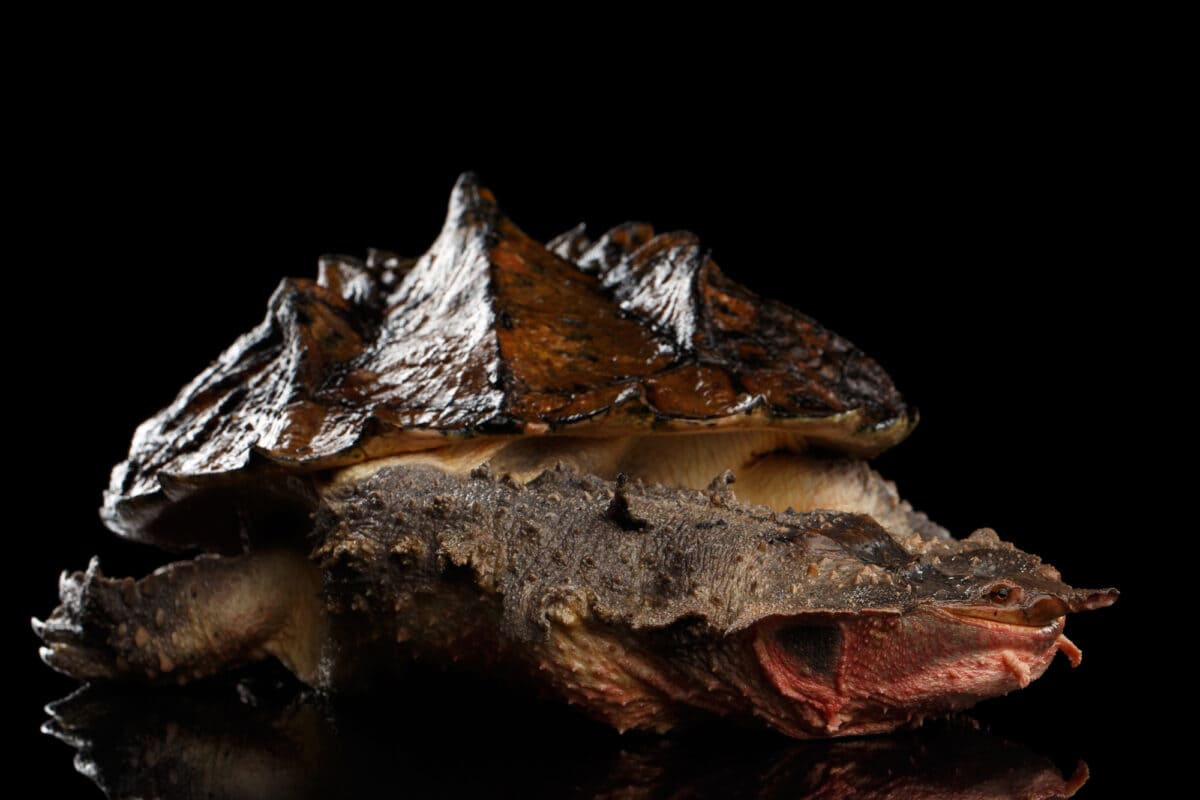
The mata mata turtle (Chelus fimbriata) represents one of the most visually striking examples of ancient reptiles still present in modern ecosystems. Native to the Amazon and Orinoco basins of South America, these remarkable freshwater turtles have maintained their highly specialized morphology for approximately 40 million years. Their flattened, leaf-shaped shells covered in bumps and ridges, combined with their triangular, flattened heads adorned with fleshy protrusions, create one of nature’s most effective camouflage systems—essentially rendering them indistinguishable from the decaying vegetation of their aquatic habitats.
What makes the mata mata particularly fascinating as a living fossil is its highly specialized feeding mechanism, which has remained unchanged for millions of years. Unlike most turtles that actively pursue prey, mata matas are ambush specialists that remain motionless on river bottoms, virtually invisible among the leaves and debris. When prey approaches, they create a powerful vacuum by rapidly expanding their throat cavity—a specialized structure called the hyoid apparatus—literally sucking fish into their mouths in less than 50 milliseconds. This unique feeding adaptation, combined with their extraordinary camouflage, has proven so effective that mata matas have required minimal evolutionary change despite shifting environmental conditions over geological timescales. While not currently endangered, these living fossils face increasing threats from habitat destruction and collection for the exotic pet trade.
1. Caiman Lizard The Snail-Crushing Specialist

🔥 Would you like to save this?
We'll email this post to you, so you can come back to it later!
The Northern caiman lizard (Dracaena guianensis) represents one of South America’s most specialized reptilian predators, with a lineage stretching back approximately 30 million years. Found primarily in the Amazon Basin, these semi-aquatic reptiles exhibit remarkable similarity to ancient teiid lizards known from the fossil record. Growing up to 4 feet in length with powerful bodies, laterally compressed tails, and distinctive bright orange to red heads contrasting with their green bodies, caiman lizards represent a specialized evolutionary branch that has maintained its basic form for millions of years.
What makes caiman lizards particularly interesting as living fossils is their highly specialized dietary adaptation. Their powerful jaws house unique, rounded teeth specifically evolved for crushing the shells of mollusks, primarily apple snails that form the bulk of their diet. This specialized feeding adaptation has remained unchanged for millions of years, representing a perfect example of evolutionary specialization that proved so effective that it required little modification over geological time. Their semi-aquatic lifestyle mirrors that of their ancient ancestors, dividing time between basking on branches overhanging water and swimming using lateral undulations of their powerful, compressed tails. While their population status remains relatively stable in remote areas, habitat destruction throughout the Amazon Basin poses increasing threats to these remarkable living representatives of prehistoric lizard lineages.

Professional 7 in 1 Dog Paw Cleaner for Dogs & Cats - Includes 1 Portable Paw Washer, 1 Bath Brush
Check Price on AmazonAs an Amazon Associate, we earn from qualifying purchases.
10/7/2026 1:26 pm GMTi

Portable Dog Water Bottle Foldable Dog Travel Water Bottle
Check Price on AmazonAs an Amazon Associate, we earn from qualifying purchases.
10/7/2026 1:29 pm GMTi

2 Pcs Halloween Pet Hat Bandana Set, Witch Pumpkin Costumes for Dogs
Check Price on AmazonAs an Amazon Associate, we earn from qualifying purchases.
10/9/2026 2:45 pm GMTi

Orthopedic Extra Large Dog Bed, Waterproof Washable XL Pet Bed 44"
Check Price on AmazonAs an Amazon Associate, we earn from qualifying purchases.
10/7/2026 1:32 pm GMTi
Conclusion:
🔥 Would you like to save this?
We'll email this post to you, so you can come back to it later!
The ancient reptiles featured in this article are more than just evolutionary curiosities—they are living testaments to the power of adaptation and survival. From the prehistoric tuatara of New Zealand to the ocean-roaming leatherback turtle and the fearsome saltwater crocodile, these remarkable species have withstood mass extinctions, climate shifts, and ecological upheavals while maintaining many of their ancestral traits. Their continued existence offers us a rare glimpse into Earth’s distant past, reminding us of the delicate balance between resilience and vulnerability. As we marvel at these living fossils, we are also called to protect them, ensuring that these extraordinary survivors of time remain part of our natural world for generations to come.

As a little kid, I fell in love with nature, wildlife, and animals. Living in the USA, South Africa, Italy, China and Germany gave me the opportunity to discover the world's Wildlife. My favorite animals are Mountain Gorillas, Siberian Tigers, and Great White Sharks.
I'm a certified PADI Open Water Diver, went to Everest Base Camp and Trekked Gorillas in Uganda. I hold a Master of Science in Economics and Finance.
Please send any feedback to feedback@animalsaroundtheglobe.com
- 16 Myths and Facts About the Bald Eagle - November 9, 2026
- 10 Mating Rituals Eagles Perform And 3 That End in Rejection - November 9, 2026
- 12 U.S. Cities Most at Risk from Earthquakes - November 9, 2026
Leave a comment
You must be logged in to post a comment.