

Most people assume humans sit at the top of nature’s sensory hierarchy – after all, we built telescopes, radios, and sonar that can map the ocean floor. But researchers who’ve spent entire careers studying animal biology admit something a lot more humbling: several senses already running wild in nature remain completely beyond human engineering, even with billions of dollars in defense and medical research thrown at the problem.
It’s not for lack of trying. Labs from MIT to the Max Planck Institute have spent decades attempting to reverse-engineer these abilities, and they keep hitting the same wall. The mechanisms are too small, too quantum, or too biologically tangled to copy into a machine – and the scientists who study them are the first to admit it. Here’s what they actually say about where human technology quietly gives up.
#1 – Sharks Detect Electricity a Billion Times Weaker Than Anything We Can Feel
🔥 Would you like to save this?
We'll email this post to you, so you can come back to it later!
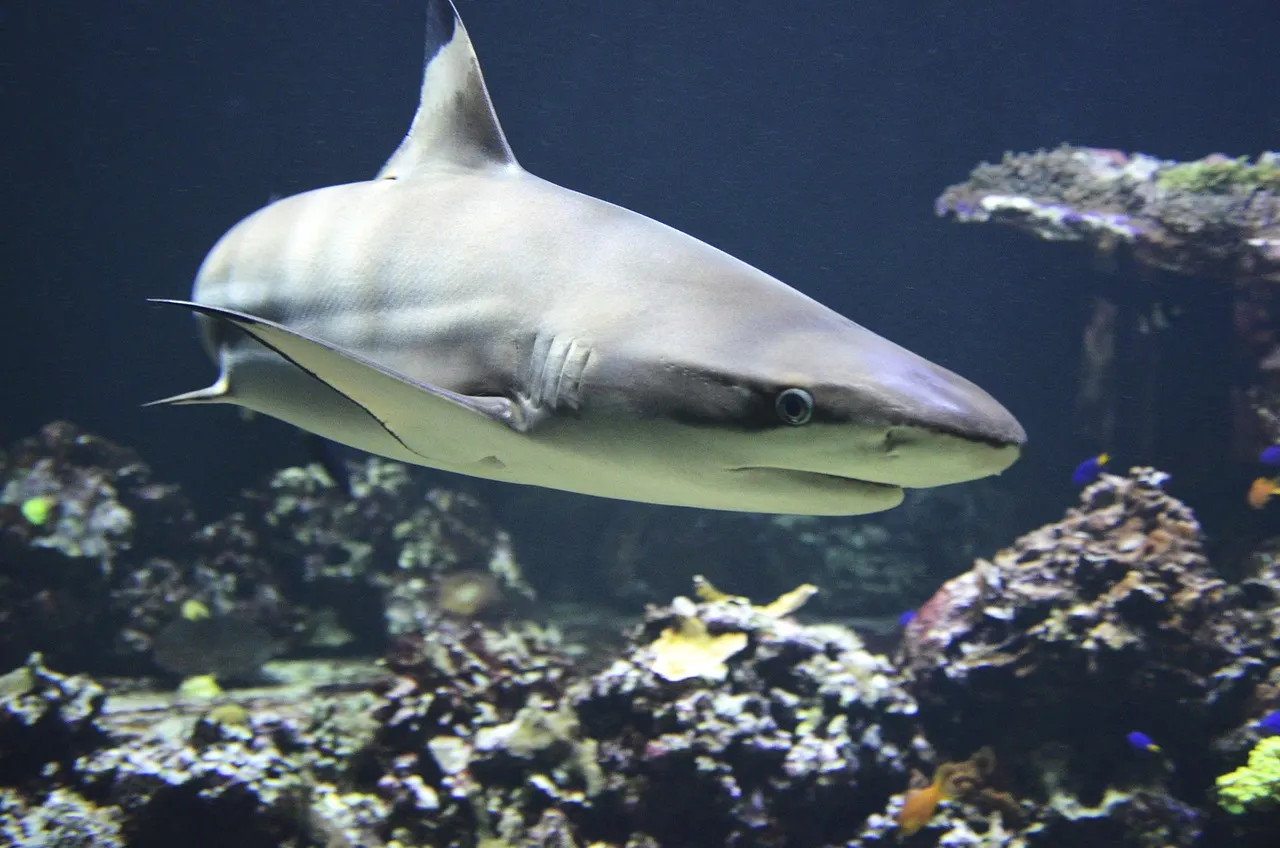
Sharks carry a sensory organ so sensitive that engineers studying it for military and medical applications have never managed to build an artificial equivalent that matches it in size.
The organ is called the ampullae of Lorenzini – named after a 17th-century Italian anatomist who described them back in 1678 but had absolutely no idea what they actually did. It took nearly three centuries before Dutch biologist Adrianus Kalmijn figured out their true purpose. Kalmijn demonstrated that some sharks can detect electric fields as tiny as 5 nanovolts per square centimetre, and newborn bonnethead sharks can pick up fields less than 1 nanovolt per square centimetre.
Fast Facts
- Discovered in 1678, but not understood for almost 300 years
- Sensitivity down to 5 nanovolts per square centimetre – under 1 nV/cm² in newborn bonnetheads
- Comparable to sensing a flashlight battery’s field from 10,000 miles away
- Powered by keratan sulfate jelly, the most conductive biological compound known
To put that in perspective, this is equivalent to the electric field of a flashlight battery connected to electrodes some 10,000 miles apart in the ocean. That sensitivity is over five million times greater than anything you or I could feel, and it’s by far the most acute in the animal kingdom. The secret lies in a jelly inside the pores called keratan sulfate, the most conductive biological compound known. No synthetic gel developed so far conducts at that level while staying biologically stable inside living tissue.
But sharks are just the warm-up. What birds do with quantum physics is even stranger.
#2 – Birds May Literally See Earth’s Magnetic Field Using Quantum Physics

🔥 Would you like to save this?
We'll email this post to you, so you can come back to it later!
Migratory birds fly thousands of miles to the exact same nesting site every single year, and for decades nobody could explain how. Now scientists suspect the answer involves quantum mechanics happening inside a bird’s eyeball – and even the researchers who discovered it admit they can’t fully explain it.
Researchers have confirmed that a protein found in bird eyes called cryptochrome displays a quantum mechanical phenomenon that makes it sensitive to magnetic fields. The theory suggests cryptochrome forms what physicists call a radical pair when struck by certain wavelengths of light – a short-lived chemical state where two electrons become separated between two molecules, yet their quantum state remains linked even when spatially apart. Some scientists believe birds process magnetic field information in the visual region of their brains, meaning birds may actually see the Earth’s magnetic field as a kind of overlay on their normal vision.
Here’s the humbling part: teams have shown that cryptochromes are indeed magnetically sensitive, but they haven’t yet proven these proteins are the critical ingredient in bird magneto-sensing. Even the scientists leading the research admit they don’t know exactly what the bird is seeing, because you cannot ask a bird to describe it. No lab-built compass runs on quantum spin chemistry housed in living cells.
Quantum spin chemistry in an eyeball is hard to top. Except the mantis shrimp is about to try, with an eye that runs on sixteen color channels instead of three.
#3 – The Mantis Shrimp’s Eyes Outclass Every Camera Ever Built
🔥 Would you like to save this?
We'll email this post to you, so you can come back to it later!
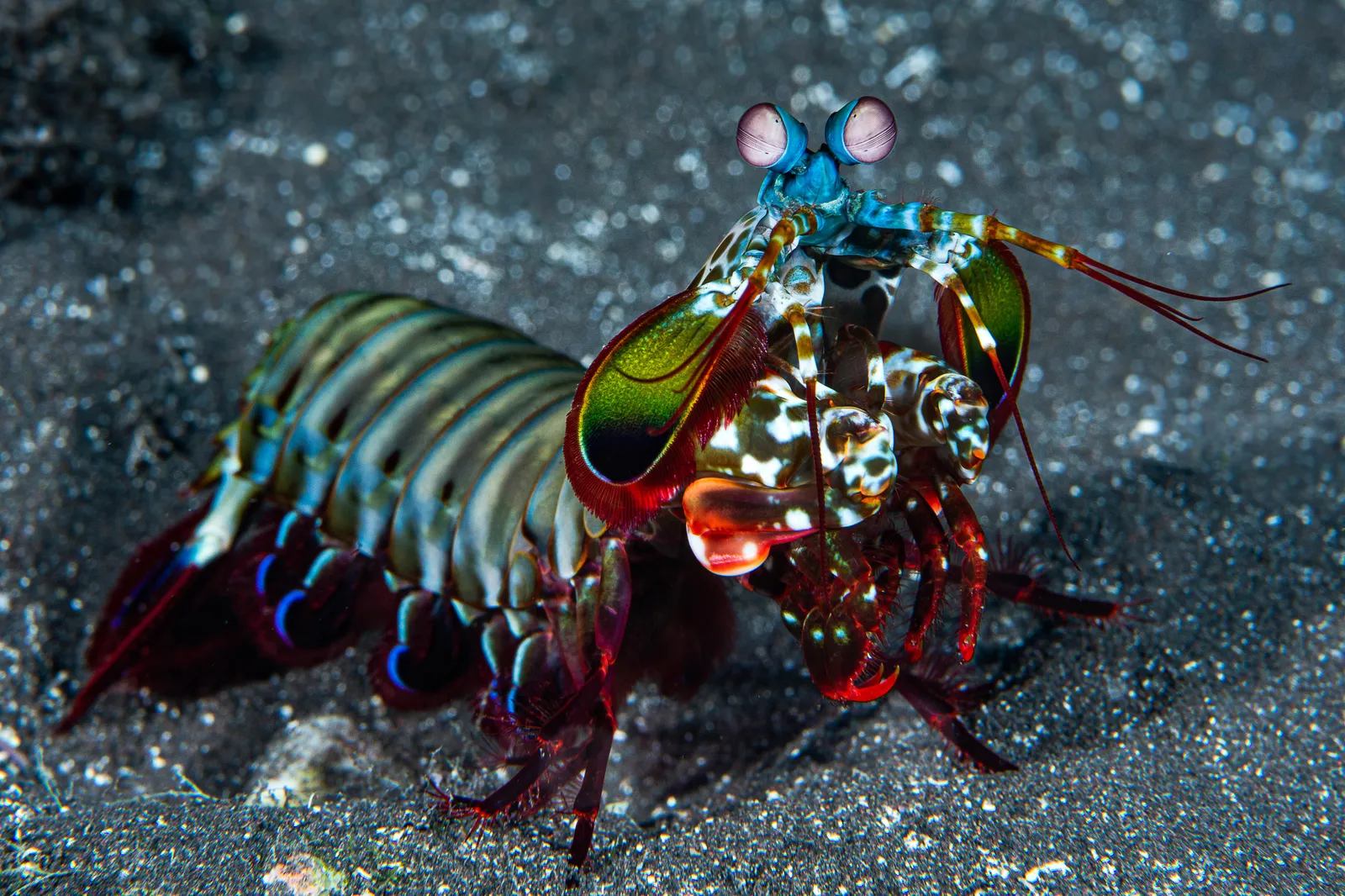
Most animals see the world through three color channels. The mantis shrimp doesn’t bother with three – it uses up to sixteen, and engineers still can’t fully explain why one animal would need that many.
Most people have three types of light-detecting photoreceptors, sensitive to red, green, and blue light, but the mantis shrimp has anywhere from 12 to 16 different photoreceptors in its midband. It’s also the only known animal that can detect circularly polarized light, where the wave component of light rotates in a circular motion. Oddly, more receptors don’t mean more perceived colors – scientists have found that mantis shrimp actually distinguish fewer colors than humans, which probably speeds up processing and helps them launch their lightning-fast strikes.
The bigger problem for scientists is translation, not detection. Attempts to build machines that mimic the full system run into the same barrier every time: detectors can record the same wavelengths and polarizations, but no output device translates those readings into a form that matches how the animal’s brain actually processes them. We can copy the sensor. We cannot copy the mind reading it.
Meanwhile, an elephant standing miles away is already listening to something no microphone can hear.
#4 – Elephants “Hear” Earthquakes and Tsunamis Through Their Feet
🔥 Would you like to save this?
We'll email this post to you, so you can come back to it later!
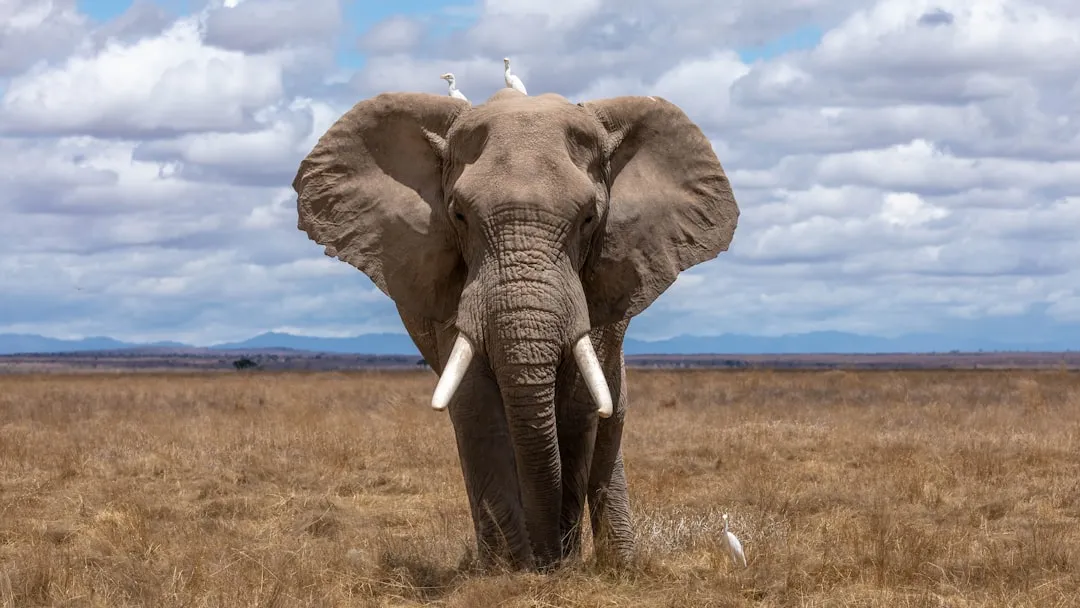
Elephants have a second hearing system that doesn’t use their ears at all, and it may have saved thousands of lives during one of the deadliest natural disasters of the modern era.
Using specialized mechanoreceptors in their fatty heel pads, elephants can detect infrasound, and signals from their feet travel to the brain to determine the source and direction of the sound. These low-frequency rumbles travel astonishing distances – vibrations can move up to 10 km through air, and even farther, up to 32 km, almost 20 miles, through the ground, crossing hills and dodging obstacles along the way. Some researchers believe many elephants survived the 2004 Indian Ocean earthquake and tsunami because of this exact system, sensing the seismic vibrations of the incoming waves and fleeing well before the water arrived.
At a Glance
- Detection happens through fatty heel pads, not the ears
- Vibrations travel up to 10 km through air, 32 km through solid ground
- Believed to have helped elephants sense the 2004 tsunami before it hit
- Some researchers argue they can distinguish human groups by footstep vibration alone
Beyond direction and distance, elephants seem to pull social meaning out of raw vibration itself. Some field researchers argue their seismic sensitivity is refined enough to distinguish between different human groups based purely on footstep vibrations – a controversial claim, but one that keeps getting revisited in wildlife conservation circles. No seismograph on Earth pairs that kind of directional precision with social recognition.
And somehow, a blind mole living underground moves even faster.
#5 – The Star-Nosed Mole Touches the World Faster Than a Blink
🔥 Would you like to save this?
We'll email this post to you, so you can come back to it later!
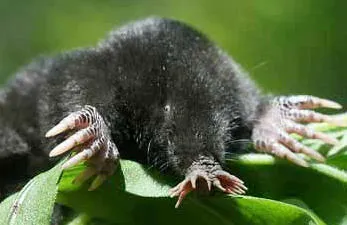
This animal is nearly blind, lives its entire life underground in total darkness, and still manages to identify and eat prey faster than any other mammal on the planet – using its nose as a touch scanner, not a smelling organ.
Each of the roughly 25,000 sensory receptors on its star-shaped nose fires information to the brain at extraordinary speed, making it the fastest mammalian forager on Earth, capable of detecting, identifying, and swallowing prey in less than a quarter of a second. That’s faster than the human eye can even register a flash of light. The receptors, called Eimer’s organs, are tiny touch domes packed onto 22 fleshy tentacles ringing the nostrils, and the mole sweeps them across the ground like a scanner bar at a checkout counter, dozens of times per second.
What makes this genuinely strange is the brain real estate involved: scientists have found that the star-nosed mole dedicates an enormous share of its brain to interpreting these touch signals – proportionally larger than the visual cortex takes up in a human brain. No prosthetic touch sensor or robotic gripper comes anywhere close to that processing speed.
Bats and dolphins take a completely different route to the same kind of superiority.
#6 – Bats and Dolphins Build 3D Sound-Maps in Real Time

🔥 Would you like to save this?
We'll email this post to you, so you can come back to it later!
Sonar exists because engineers copied echolocation. But the copy is nowhere near as good as the original, and most acoustic engineers will tell you that flatly.
Bats and toothed whales emit rapid clicks or ultrasonic pulses, then interpret the returning echoes to build a moving three-dimensional picture of everything around them – prey size, texture, distance, and speed, all decoded in milliseconds while the animal itself is flying or swimming at speed through cluttered environments like a forest canopy or a coral reef. Military and commercial sonar systems, by comparison, generally need calmer conditions and struggle badly with clutter, overlapping echoes, and fast-moving targets in three dimensions at once. A bat chasing an insect through dense branches, adjusting its call pattern hundreds of times per second to sharpen resolution as it closes in, is performing a computational feat that current signal-processing hardware still handles slower and with more error.
Quick Compare
- Biological echolocation: builds a 3D image in milliseconds, even in cluttered, fast-moving environments
- Man-made sonar: generally needs calmer conditions and struggles with overlapping echoes
- Biological echolocation: filters the animal’s own call from the returning echo instantly, in one skull
- Man-made sonar: usually needs the transmitter and receiver kept in separate hardware
What really stumps researchers isn’t the raw hearing range – it’s how effortlessly the brain filters out the bat’s own outgoing shriek from the faint returning echo, instantly, thousands of times a minute, without confusion. Man-made systems generally need the transmitter and receiver kept in separate hardware for that exact reason. Bats do it in one skull – snakes solve an even stranger fusion problem in one brain.
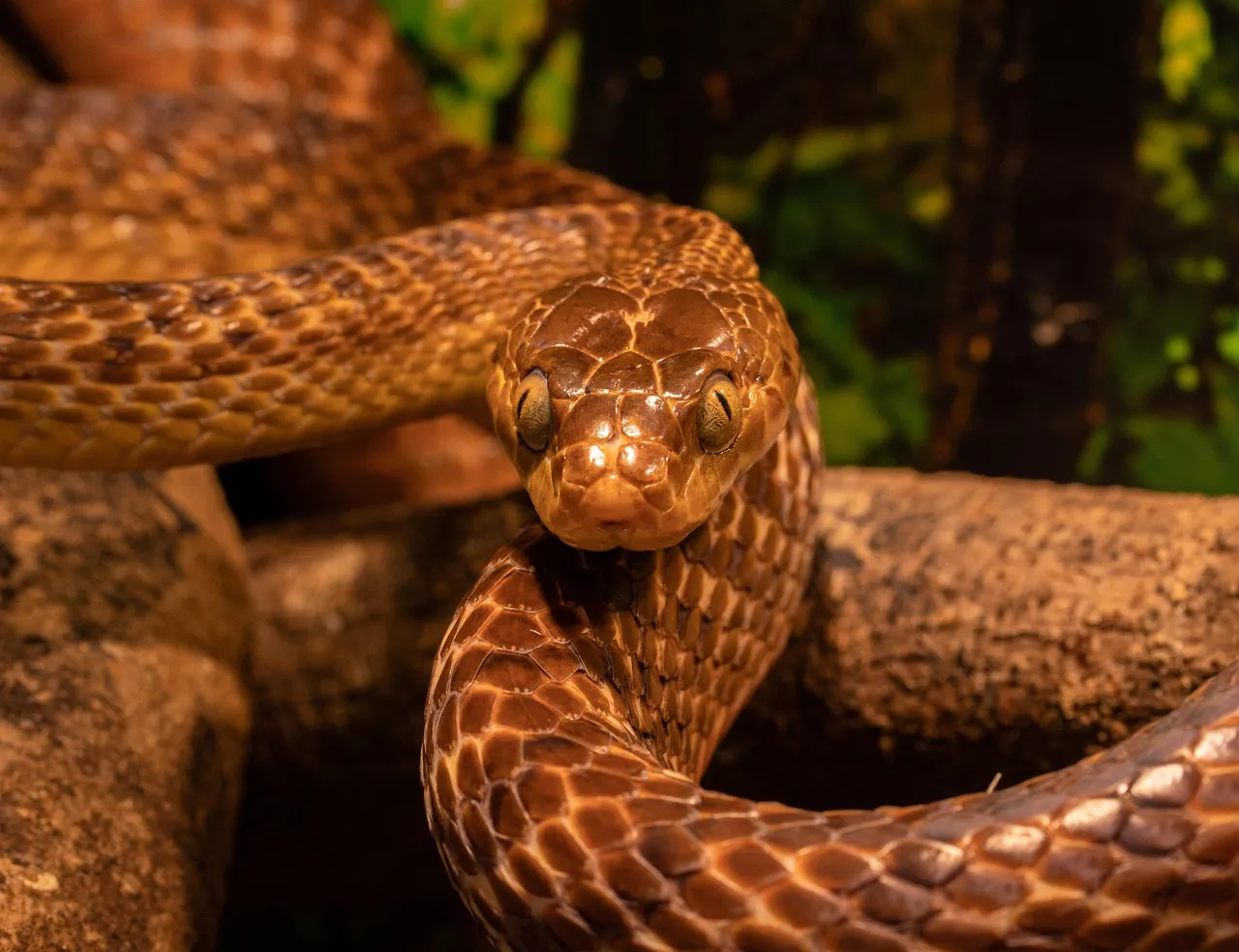
#7 – Snakes “See” Heat as Clearly as Visible Light
🔥 Would you like to save this?
We'll email this post to you, so you can come back to it later!
Pit vipers, boas, and pythons have a facial organ that lets them build a heat-based image of their surroundings, layered directly on top of their normal vision – and it works at a level of temperature sensitivity that industrial infrared cameras still struggle to match at that scale.
The organ sits in a small pit between the eye and nostril, lined with a membrane so thin and so densely packed with heat-sensitive nerve endings that it can register temperature differences of a fraction of a degree from a warm-blooded animal several feet away. Unlike a thermal camera bolted onto a tripod, this organ wires directly into the same part of the snake’s brain that processes ordinary vision, meaning the snake doesn’t see two separate images – a warm blob and a visual scene – it sees one merged picture. Scientists studying the pit organ have never fully reverse-engineered how the nervous system fuses two completely different types of sensory data, heat and light, into a single unified image with no apparent lag or confusion.
That fusion, more than the raw heat detection itself, is the piece nobody has managed to copy in a synthetic device. Most infrared-vision prototypes still require a separate screen or overlay; nothing yet blends the signal the way a snake’s brain does natively.
A dog’s nose, it turns out, has the same kind of unfair advantage.
#8 – A Dog’s Nose Can Detect Scent Concentrations Machines Still Miss

🔥 Would you like to save this?
We'll email this post to you, so you can come back to it later!
Drug-detection dogs, cancer-sniffing dogs, and search-and-rescue dogs are still standard practice in law enforcement and medicine for one blunt reason: the electronic “artificial nose” technology built to replace them hasn’t caught up.
A dog’s nasal cavity contains hundreds of millions of scent receptors, compared to roughly six million in humans, and a proportionally massive section of canine brain tissue is devoted to analyzing what those receptors pick up. Beyond raw receptor count, dogs also breathe differently while smelling – they separate the exhale from the inhale, keeping a continuous stream of fresh scent molecules flowing across the receptors instead of diluting the sample with every breath the way a human nose does. This lets working dogs track scent trails hours or even days old, across pavement, water, and disturbed soil, something electronic sensors calibrated in clean lab conditions consistently fail to replicate in the field.
Most people don’t realize scent dogs are also trained to isolate one specific compound buried inside overwhelming background odor, essentially pulling one thread of information out of thousands of competing smells in real time. Electronic “e-noses” exist, but they remain narrow-purpose tools calibrated for single compounds, not living instruments that adapt on the fly the way a trained dog does.
The platypus takes that same “unfair advantage” to an entirely different level.
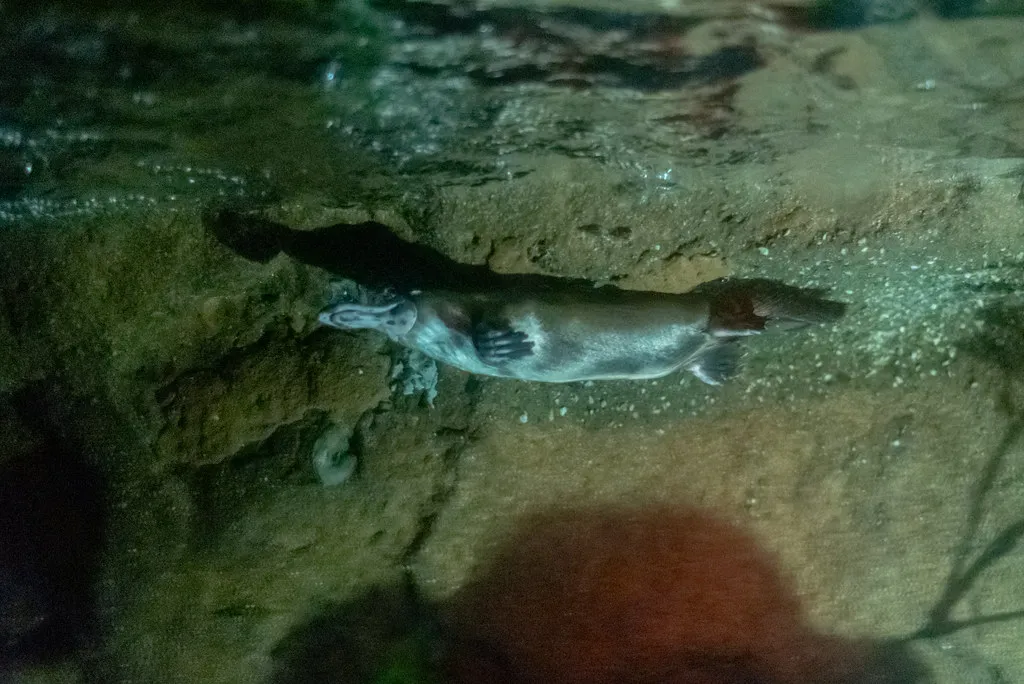
#9 – The Platypus Hunts Completely Blind Using Electric Signals
🔥 Would you like to save this?
We'll email this post to you, so you can come back to it later!
The platypus closes its eyes, ears, and nostrils entirely underwater and still catches prey with pinpoint accuracy – using electroreceptors packed into its rubbery bill instead.
Thousands of electroreceptors line the platypus bill, picking up the faint electrical signals given off by the muscle contractions of shrimp, insect larvae, and small fish hiding in murky riverbed sediment. Because all of its major senses shut down the moment it submerges, the platypus is essentially navigating and hunting through electricity alone for the entire duration of every dive, sometimes lasting more than a minute. Researchers studying monotreme biology consider this one of the more unusual sensory adaptations in mammals, since electroreception is far more common in fish and amphibians than in warm-blooded, fur-covered animals.
Worth Knowing
- Eyes, ears, and nostrils all shut off completely during every dive
- Thousands of electroreceptors are packed into the bill alone
- Dives can last more than a minute, running entirely on electrical sensing
- Electroreception is rare in mammals – it’s far more common in fish and amphibians
Robotic exploration has copied basic electric-field sensors for underwater drones, but none currently match the platypus bill’s dual function: sensing both prey location and texture simultaneously, in murky, silt-choked water, with zero visual reference. Many researchers argue this makes the platypus bill one of the most underrated sensory organs in the animal kingdom, quietly more sophisticated than its odd appearance suggests.
Fish, it turns out, have quietly mastered something similar – just without a bill at all.
#10 – Fish Feel Water Movement Without Ever Touching Anything

🔥 Would you like to save this?
We'll email this post to you, so you can come back to it later!
Every fish, including sharks, carries a sensory system running down both sides of its body that lets it feel objects, predators, and prey without seeing, smelling, or touching them directly.
The lateral line is a sensory organ found in many fish and amphibians that stretches from gills to tail – a long, hollow tube opening out into the skin through perforated scales, letting fish sense water displacement, pressure, and direction. This means a fish swimming in complete darkness can detect a predator approaching from behind, or a school of prey moving several body-lengths away, purely from the pressure waves rippling through the water. In tight schools, this same system lets hundreds of fish turn in perfect unison within a fraction of a second, without a single collision, using pressure changes from their neighbors’ movements as a real-time coordination signal.
Engineers building underwater robots have experimented with artificial lateral-line sensors for years, hoping to give autonomous submarines the same collision-avoidance ability. So far, none of these systems approach the density or sensitivity of the biological original, which is distributed across the entire length of the body rather than confined to a handful of sensor pads bolted onto a hull.
Which brings us to the smallest, and maybe strangest, sense on this entire list.
#11 – Moths Hear Bats Coming and Dodge in Mid-Air

🔥 Would you like to save this?
We'll email this post to you, so you can come back to it later!
Certain moth species have ears capable of detecting the ultrasonic hunting calls of bats from a significant distance, triggering evasive flight maneuvers so fast that the moth is often gone before the bat’s echo even registers a hit.
These moth ears are remarkably simple compared to a mammalian ear – sometimes just a tympanic membrane stretched over an air-filled cavity with only one or two sensory cells attached – yet they’re tuned precisely to the frequency range bats use to hunt. When a moth detects a distant bat call, it often simply adjusts its flight path away from the sound. But when the call grows loud enough to signal an imminent attack, many species switch strategies entirely, dropping into an erratic, tumbling dive that makes their flight path nearly impossible to predict. This isn’t a single reflex; it’s a graded response system, changing behavior based on exactly how close the threat actually is.
What continues to puzzle researchers is how such a minimal sensory structure – sometimes fewer neurons than you’d find in a single fingertip’s worth of human skin – can process threat distance and trigger a coordinated, full-body evasive maneuver almost instantly. No synthetic threat-detection system built for drones or robotics currently runs with that few components while staying that fast and that reliable in real-world, chaotic airspace.
The Bottom Line

🔥 Would you like to save this?
We'll email this post to you, so you can come back to it later!
Across oceans, skies, and pitch-black tunnels, animals are running sensory systems that make our best labs look primitive by comparison. Sharks feel electricity a billion times weaker than we can, mantis shrimp process light through sixteen channels we can’t even name, and elephants hear earthquakes through their feet. The quantum chemistry inside a bird’s eye and the touch-speed of a blind mole’s nose remain unreproduced despite decades of dedicated research and enormous funding.
Here’s the opinion most textbooks won’t print outright: human technology isn’t actually “ahead” of biology – it’s borrowing from it, badly, and still losing. Every sonar system, infrared camera, and electronic nose on this list is a rough sketch of something evolution finished perfecting millions of years ago. Which of these senses do you think we’ll finally crack first? Drop your guess in the comments.

- 7 Everyday Habits That Can Make Your Senior Dog Happier - November 5, 2026
- 10 Enigmatic Structures That Continue to Puzzle Scientists Today - November 5, 2026
- 10 Strange Ruins in the Americas That Challenge What We Know About Early History - November 5, 2026