


In the fascinating world of insects, sensory capabilities often reach extraordinary levels that far surpass human perception. These tiny creatures have evolved remarkable adaptations to detect prey, avoid predators, find mates, and navigate their environments with astonishing precision. While humans rely primarily on five basic senses, insects possess sensory systems that can detect stimuli we cannot even perceive. From infrared radiation and ultraviolet light to minute vibrations and chemical compounds in parts per trillion, insects’ super senses enable their evolutionary success across nearly every habitat on Earth. This article explores eleven insects with sensory capabilities that showcase nature’s incredible ingenuity in sensory adaptation.
The Monarch Butterfly’s Magnetic Compass
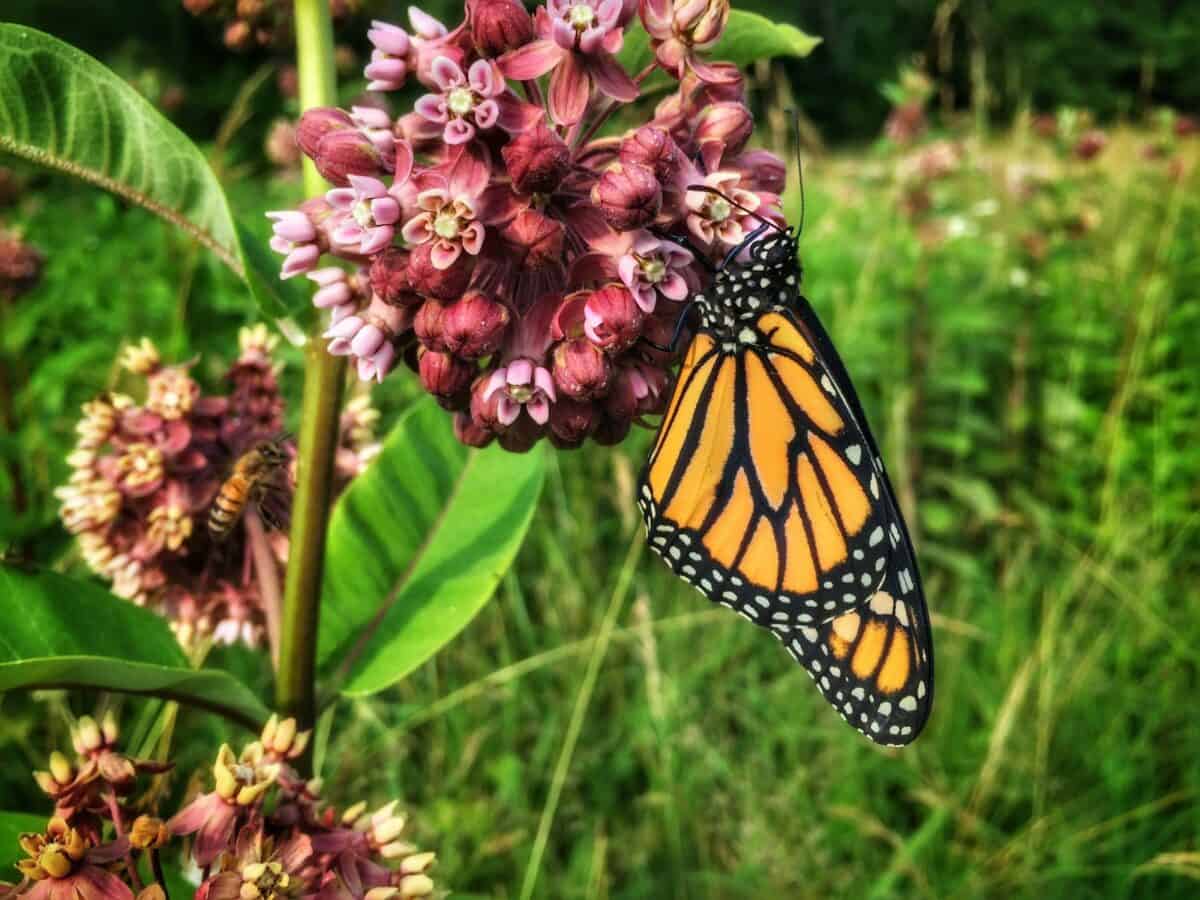
Monarch butterflies (Danaus plexippus) undertake one of the most incredible migrations in the insect world, traveling up to 3,000 miles from Canada to Mexico. What makes this journey even more remarkable is that these delicate creatures possess an internal magnetic compass that helps them navigate with astonishing precision. Scientists have discovered that monarchs have specialized cells containing magnetite, a magnetic mineral that allows them to detect Earth’s magnetic field. This magnetic sense works with a time-compensated sun compass and visual landmarks to guide them to specific overwintering sites in Mexico’s oyamel fir forests. What’s even more fascinating is that the monarchs making the journey south have never been to Mexico before – they’re typically several generations removed from the butterflies that made the northward migration the previous spring, yet they somehow inherit this precise navigation ability.
The Jewel Beetle’s Infrared Fire Detector

The jewel beetle (Melanophila acuminata) has evolved a remarkable adaptation that allows it to detect forest fires from up to 50 miles away. These beetles have specialized infrared receptors located in pits on their undersides that can detect infrared radiation emitted by fires with extraordinary sensitivity – they can sense temperature changes as small as 0.25°C. This adaptation serves a crucial reproductive purpose: Jewel beetles lay their eggs in freshly burned trees where their larvae can develop without competition from other wood-boring insects. The infrared organs of these beetles are so sensitive that researchers have studied them to develop better infrared sensors for human applications. These specialized organs, called pit organs, contain mechanoreceptors that respond to the expansion of tissue when infrared radiation is absorbed, transforming heat energy into mechanical energy that the beetle’s nervous system can interpret.
The Japanese Dancing Fly’s Super-Resolution Eyes
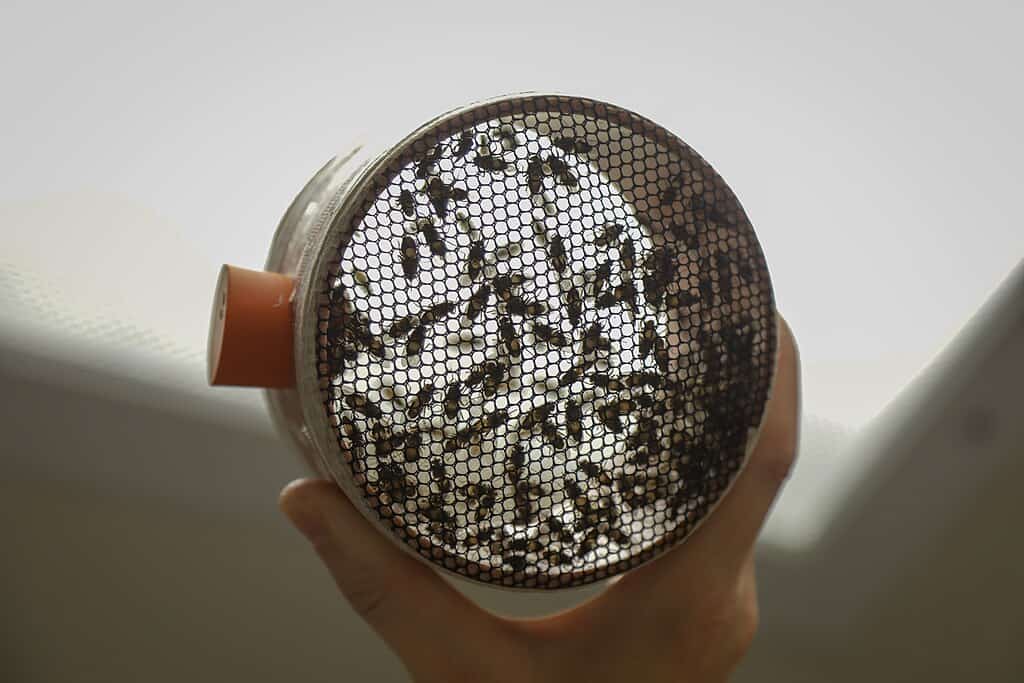
The Japanese dancing fly (Empis tanysphyra) possesses some of the most remarkable eyes in the insect world. These tiny flies have compound eyes with a special adaptation in the males that creates a “bright zone” – an area of enlarged facets that provides enhanced visual resolution. This adaptation allows male flies to spot potential mates against the bright sky with extraordinary precision. The bright zone contains facets up to four times larger than those in other parts of the eye, giving these flies visual acuity that far exceeds what would be expected for an insect of their size. Research has shown that this specialized visual system can detect movements as small as 0.1 degrees in visual angle – equivalent to seeing a 1mm movement from 5 meters away. This remarkable visual capability evolved specifically to help males track female flies during their complex mating rituals, which involve aerial dances and gift presentations.
The Hawk Moth’s Extraordinary Hearing

The hawk moth (Sphingidae family) possesses one of the most sensitive hearing systems in the natural world, able to detect the ultrasonic calls of predatory bats from remarkable distances. Unlike most insects that have ears on their thorax or abdomen, hawk moths have hearing organs located at the base of their proboscis – the tubular mouthpart used for feeding on flower nectar. This unique adaptation allows them to hear frequencies between 25-40 kHz, precisely the range used by hunting bats for echolocation. When a hawk moth detects these sound frequencies, it can execute evasive maneuvers within milliseconds, including power dives, spiral flights, or complete flight reversals. Some species can even produce ultrasonic clicks from their genitalia to jam bat sonar or warn the bats that the moths are unpalatable. This sophisticated hearing system evolved specifically as a countermeasure against bat predation and represents a remarkable example of the evolutionary arms race between predator and prey.
The Antennae of Male Silkworm Moths
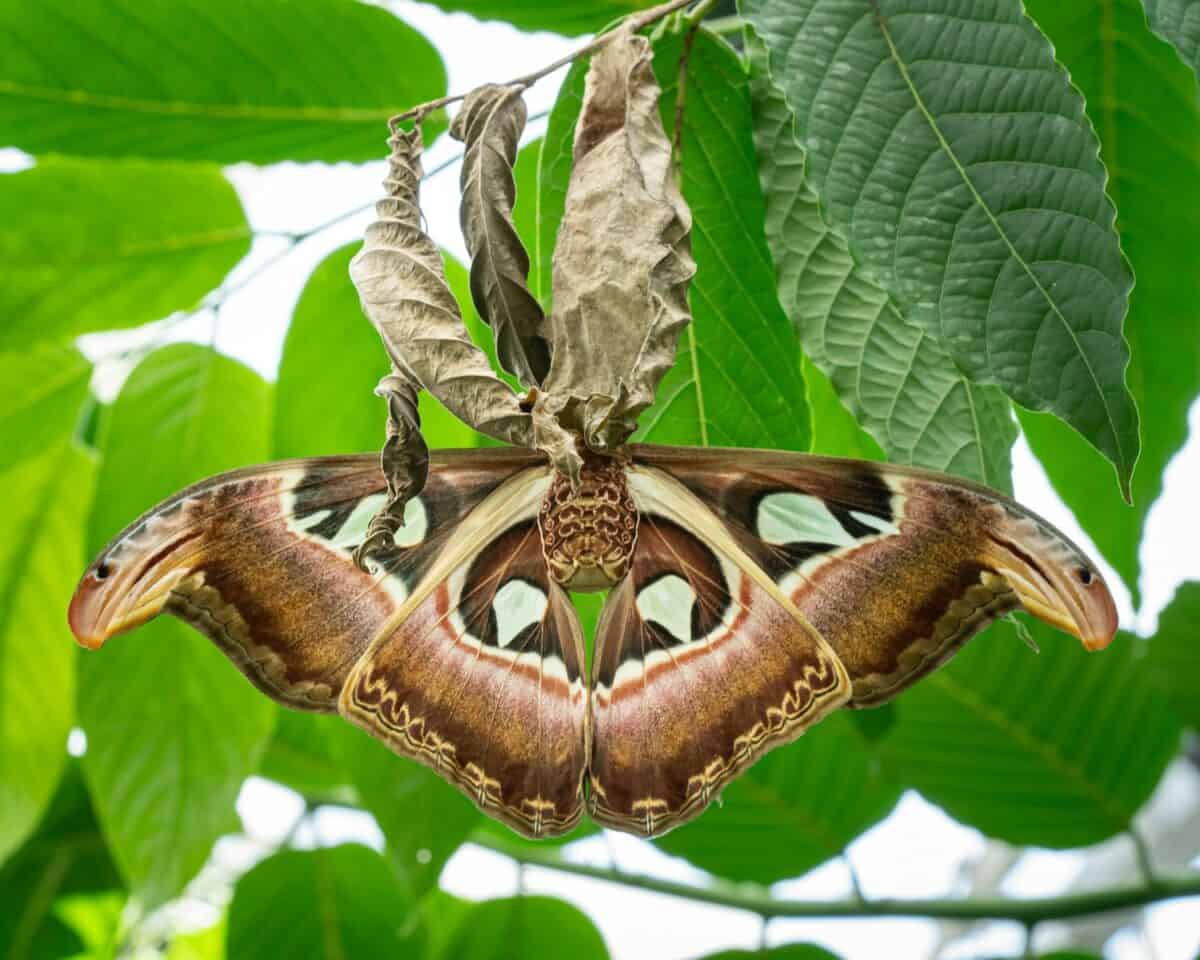
Male silkworm moths (Bombyx mori) possess perhaps the most sensitive chemical detection system known to science. Their large, feathery antennae are exquisitely tuned to detect bombykol, the sex pheromone released by female moths. Just one molecule of bombykol can trigger a response in the male’s sensory receptors, and they can detect and follow pheromone trails at concentrations as low as one part per trillion. To put this in perspective, it’s equivalent to detecting a single drop of perfume diluted in a volume of water equal to 20 Olympic-sized swimming pools. The antennae are designed like elaborate branching structures, providing a massive surface area packed with around 17,000 sensory receptors dedicated to bombykol detection. This remarkable sensory capability allows male silkworm moths to locate females from up to 7 miles away, even in complex environments with competing odors. These antennae have inspired biomimetic sensors for detecting explosive compounds and other substances of interest at previously undetectable concentrations.
The Desert Ant’s Remarkable Navigation

The Saharan desert ant (Cataglyphis bicolor) possesses one of the most sophisticated navigation systems in the insect world. Living in an environment virtually devoid of landmarks, these ants can forage up to 1,000 feet from their nest in winding paths searching for food, then return in a direct straight line with astonishing precision. They accomplish this remarkable feat through a process called path integration, essentially creating an internal “vector map” that continuously calculates their position relative to the nest. Desert ants use multiple sensory inputs for this navigation: they have specialized photoreceptors that detect polarized light patterns in the sky to determine direction, they count their steps using proprioceptors in their joints as a form of pedometer, and they possess magnetoreceptors that detect Earth’s magnetic field as a backup system. Additionally, these ants can measure tiny gradient changes in temperature and ground texture to help maintain their heading. This multi-sensory integration allows desert ants to navigate with precision that would be impossible with any single sense alone, creating one of nature’s most impressive living compasses.
The Water Strider’s Vibration Detection
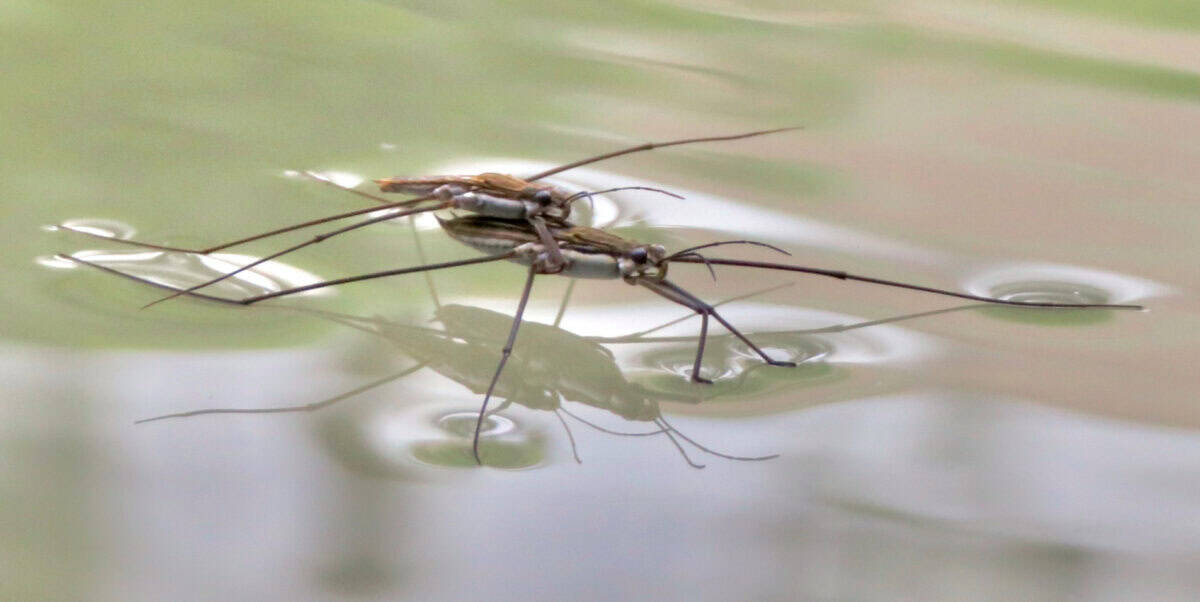
Water striders (Gerridae family) possess an extraordinary ability to detect minute vibrations on the water’s surface, allowing them to locate prey, avoid predators, and communicate with potential mates with remarkable precision. These semi-aquatic insects have specialized mechanoreceptors called scolopidia located in their legs that can detect ripples as small as 10 micrometers in amplitude – about one-fifth the width of a human hair. These vibration sensors are so sensitive that water striders can distinguish between different vibrational frequencies, allowing them to differentiate between the struggles of trapped prey, the approach of a predator, or the courtship signals of another water strider from distances up to 2 meters away. When a struggling insect creates ripples on the water surface, water striders can triangulate the source location with incredible accuracy by processing the timing differences between when the vibrations reach each of their six legs. This remarkable sensory system has evolved specifically for life at the water-air interface, where visual cues are often limited but vibrational information is abundant.
The Ultraviolet Vision of Bees

Honeybees (Apis mellifera) perceive the world in a dramatically different way than humans thanks to their extraordinary ultraviolet vision. While humans see the world in three primary colors (red, green, and blue), bees see in ultraviolet, blue, and green, allowing them to detect patterns on flowers that are completely invisible to the human eye. Many flowers have evolved “ultraviolet nectar guides” – patterns that appear only in UV light and direct bees precisely to the nectar and pollen. These patterns often form a bull’s-eye or landing strip pattern that efficiently guides pollinators. Bees can also see polarized light, which helps them navigate by using the sun’s position even on cloudy days when the sun isn’t directly visible. Research has shown that bees can distinguish between different flowers at a distance of up to 60 meters using their UV vision, and they can remember and recognize around 50 different flower patterns. This specialized vision has co-evolved with flowering plants over millions of years, creating a remarkable example of sensory adaptation that benefits both the insect and the plants they pollinate.
The Mosquito’s Multi-Modal Prey Detection

Female mosquitoes (particularly from the Aedes, Anopheles, and Culex genera) possess one of the most sophisticated multi-sensory hunting systems in the insect world, utilizing at least five different sensory modalities to locate human hosts with remarkable precision. Carbon dioxide detection is perhaps their most famous sense – mosquitoes can detect CO2 from human breath from up to 50 meters away using specialized receptors on their maxillary palps. Once closer, they employ thermal sensing to detect body heat through infrared receptors that can distinguish temperature differences as small as 0.2°C. Mosquitoes also possess chemoreceptors that identify human sweat compounds, particularly lactic acid, uric acid, and ammonia, at concentrations as low as a few parts per billion. Visual tracking becomes important at short range, with mosquitoes focusing on movement and contrasting colors. Finally, when within a meter of their target, they use humidity sensors to detect the moisture cloud that surrounds human bodies. This integrated multi-sensory approach allows mosquitoes to find hosts even in complex environments with competing stimuli, making them one of nature’s most effective hunters despite their tiny size.
The American Cockroach’s Air-Current Detectors

The American cockroach (Periplaneta americana) possesses one of the most sensitive air-current detection systems in the animal kingdom, enabling its legendary escape abilities. Their bodies are equipped with hundreds of specialized hair-like structures called filiform sensilla, primarily located on two appendages called cerci at the rear of their abdomen. These sensilla can detect air movements as slight as 0.05 millimeters per second – equivalent to the displacement of air from a fruit fly passing several centimeters away. The neurological processing of this sensory information is equally impressive: signals from the cerci travel to giant interneurons that can trigger escape responses in less than 50 milliseconds (0.05 seconds). This incredible speed allows cockroaches to begin their escape even before a human’s hand movement creates enough air displacement to physically reach them. This sensory system evolved as a specific adaptation against predators, giving cockroaches what appears to be an almost supernatural ability to anticipate threats. Research has shown that cockroaches can determine not just the presence but also the direction and intensity of air currents, allowing them to run at precise angles away from perceived threats.
The Electric Field Sensing of Bumblebees

Bumblebees (Bombus species) possess a sensory ability that was only recently discovered by scientists – they can detect electric fields, making them among the few insects known to have this capability. When bees fly through the air, their wings generate positive electrical charges, while flowers typically carry a slight negative charge. Research has shown that bumblebees can detect these electrical field differences and use them to determine whether a flower has recently been visited by another bee. The sensory receptors for this electrical field detection are specialized hair-like structures called mechanosensory hairs that cover their bodies. These hairs bend slightly in response to electric fields, and this mechanical deformation triggers neural signals. Experiments have demonstrated that bumblebees can distinguish between artificial flowers with different electric charges and learn to associate specific electric field patterns with food rewards. This recently discovered sense adds another layer to bees’ already impressive sensory toolkit and likely plays an important role in their foraging efficiency, allowing them to avoid flowers that have already had their nectar harvested by other pollinators.
Conclusion: The Remarkable Sensory World of Insects

The extraordinary sensory capabilities of insects reveal nature’s remarkable ability to evolve specialized adaptations for survival and reproduction. From the magnetic navigation of monarch butterflies to the electric field sensing of bumblebees, these sensory systems allow insects to perceive aspects of the world that remain completely outside human perception. These super senses didn’t evolve for our appreciation but emerged through millions of years of natural selection to solve specific ecological challenges. Scientists continue to discover new insect sensory capabilities, with many of these adaptations inspiring biomimetic technologies in fields ranging from robotics to medical diagnostics. As we develop a deeper understanding of insect sensory biology, we gain not only scientific knowledge but also a profound appreciation for the remarkable diversity of ways to perceive and interact with the world around us – reminding us that human perception represents just one of countless possible ways to experience reality.

As a little kid, I fell in love with nature, wildlife, and animals. Living in the USA, South Africa, Italy, China and Germany gave me the opportunity to discover the world's Wildlife. My favorite animals are Mountain Gorillas, Siberian Tigers, and Great White Sharks.
I'm a certified PADI Open Water Diver, went to Everest Base Camp and Trekked Gorillas in Uganda. I hold a Master of Science in Economics and Finance.
Please send any feedback to feedback@animalsaroundtheglobe.com
- 13 Incredible Wolves That Made Wildlife History - June 19, 2026
- 12 Most Colorful Freshwater Fish You Can Own - June 19, 2026
- 14 Creatures That Glow in the Dark And Why - June 18, 2026