


Nature’s food chain presents a fascinating yet brutal reality where predators have evolved remarkable abilities to hunt, kill, and survive. These apex hunters shape ecosystems, control prey populations, and have developed extraordinary adaptations that make them masters of their environments. From the depths of the ocean to the highest mountain peaks, the world’s most ruthless predators demonstrate nature’s perfect balance of power, speed, and instinct. This article explores 17 of the most formidable hunters on our planet, revealing their hunting techniques, evolutionary advantages, and the impressive statistics that make them truly fearsome.
The African Lion Kings of Coordinated Hunting
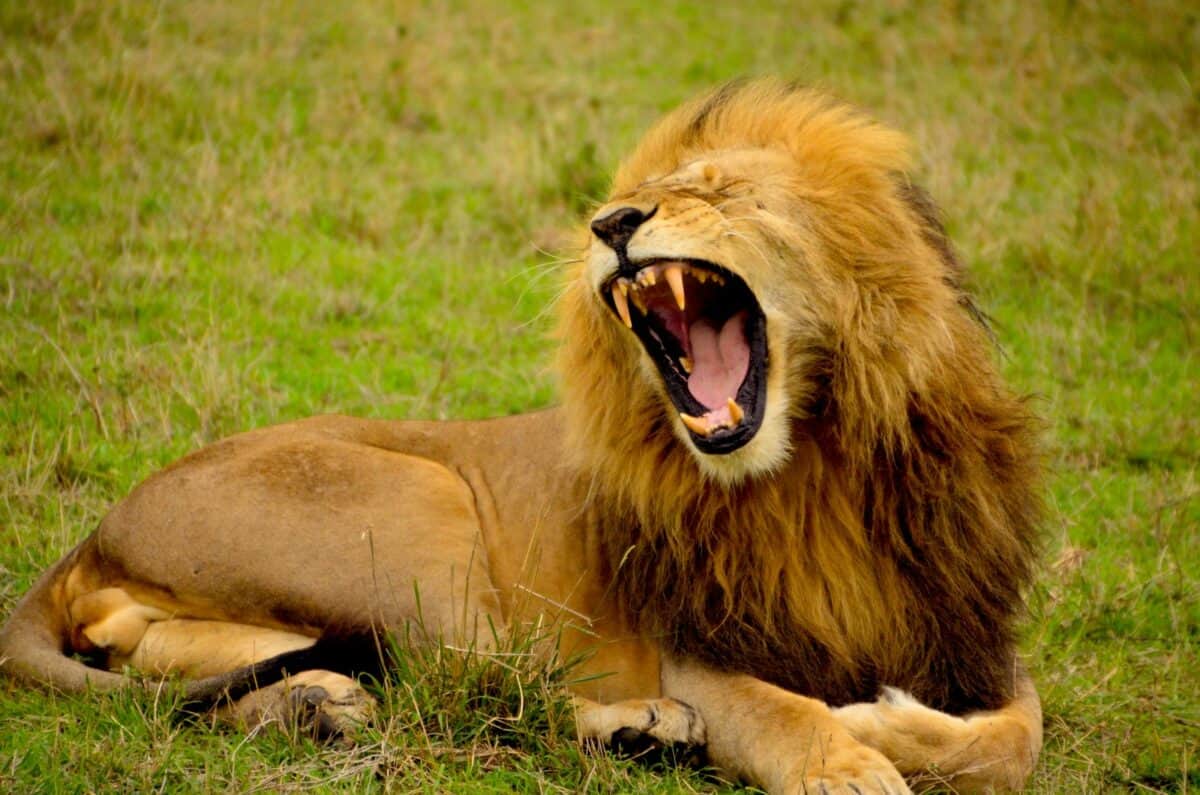
African lions (Panthera leo) stand as iconic symbols of power in the animal kingdom, with females serving as the primary hunters within their social structure. These big cats have perfected the art of cooperative hunting, working in groups called prides to take down prey much larger than themselves, including buffalo, zebras, and even young elephants. A lioness can sprint at speeds reaching 50 mph (80 km/h) for short bursts and exert a bite force of approximately 650 pounds per square inch (PSI). What makes lions particularly ruthless is their hunting efficiency—they’re known to suffocate their prey slowly by clamping their powerful jaws around the victim’s throat, cutting off air supply rather than delivering an immediate killing blow. Additionally, male lions sometimes practice infanticide when taking over a pride, killing cubs fathered by rivals to bring females back into estrus sooner—a brutal yet evolutionary strategy that ensures their genetic lineage continues.
Great White Shark The Ocean’s Perfect Predator

The great white shark (Carcharodon carcharias) has earned its reputation as one of the most effective predators in marine environments. These apex hunters can detect a single drop of blood in 10 billion drops of water and sense the electrical fields generated by all living organisms. Their hunting technique involves stealth and explosive power—great whites often strike from below with such force that they can breach the water’s surface while attacking seals, launching their 2-ton bodies entirely out of the water. Armed with multiple rows of serrated teeth that continuously regenerate throughout their lifetime (potentially producing up to 30,000 teeth during their lives), these sharks deliver bites exceeding 4,000 PSI—the strongest of any living animal. Their ruthlessness is demonstrated in their “bite and wait” strategy when hunting larger prey, where they inflict a catastrophic wound and then retreat, returning to feed once the prey has bled to death. Recent research has revealed that great whites have specific hunting grounds they return to year after year, showing a calculated approach to predation that combines instinct with learned behavior.
Saltwater Crocodile Ancient Ambush Hunter

The saltwater crocodile (Crocodylus porosus) represents predatory perfection that has remained largely unchanged for 200 million years. As the largest reptilian predator on Earth, males can reach lengths of 20 feet (6 meters) and weigh over 2,000 pounds (900 kg). These patient hunters employ an ambush strategy, remaining motionless for hours with only their eyes and nostrils above water before exploding into action with acceleration that can propel 80% of their body out of water in milliseconds. Their bite force measures an astounding 3,700 PSI, allowing them to crush turtle shells and mammal bones with ease. What makes saltwater crocodiles particularly ruthless is their indiscriminate predatory behavior—they are opportunistic hunters that will attack virtually anything that enters their territory, including sharks, water buffalo, and humans. They employ the infamous “death roll,” a spinning maneuver that tears chunks from their prey while drowning them. Unlike many predators that hunt primarily for food, saltwater crocodiles will often attack perceived threats to their territory even when not hungry, establishing them as one of the few animals that will actively hunt humans given the opportunity.
Polar Bear Arctic Specialist with Unstoppable Power

The polar bear (Ursus maritimus) has evolved into the Arctic’s most formidable predator, with specialized adaptations that make it a master hunter in one of Earth’s harshest environments. These massive carnivores can weigh up to 1,500 pounds (680 kg) and possess incredible physical capabilities, including the ability to swim continuously for days at speeds up to 6 mph (10 km/h) while tracking prey. Their primary hunting strategy involves stalking seals at breathing holes in the ice, sometimes waiting motionless for hours before striking with massive paws that can crush a seal’s skull with a single blow. Polar bears demonstrate remarkable problem-solving abilities during hunts, using ice flows as platforms to approach prey and even employing tools to hunt walruses by dropping rocks on their heads. What makes polar bears particularly ruthless is their persistence—they have been documented tracking prey for over 100 miles and can detect a seal beneath 3 feet of compacted snow through smell alone. Their specialized metabolism is so efficient that they can digest nearly 84% of the protein and 97% of the fat they consume, meaning very little of their prey goes to waste. As climate change reduces their hunting grounds, polar bears have shown increasing boldness in approaching human settlements, demonstrating their adaptability as predators.
Killer Whale The Ocean’s Intelligent Tactician

Killer whales, or orcas (Orcinus orca), represent the pinnacle of intelligent predation in marine environments. These apex predators operate in highly coordinated pods with sophisticated hunting strategies that vary by region and prey type, demonstrating what scientists now recognize as distinct cultural hunting traditions. Orcas possess the second-largest brain of any marine mammal and put their intelligence to lethal use. Their tactical sophistication is evident when hunting seals on ice floes—they synchronize their movements to create waves that wash prey into the water or tip ice platforms. Perhaps most impressive is their ability to hunt great white sharks by flipping them upside down, inducing a state called tonic immobility that renders the shark helpless while the orca extracts its nutrient-rich liver with surgical precision. Orcas can reach speeds of 30 mph (48 km/h), communicate using complex vocalizations specific to their pod, and possess teeth that can be 4 inches (10 cm) long. Their ruthlessness is exemplified by their occasional practice of “playing” with prey before killing it, sometimes tossing seals 80 feet into the air repeatedly or separating baby whales from their mothers and drowning them before sometimes leaving the carcass uneaten—behavior that seems to serve as hunting practice for younger pod members. With no natural predators of their own, killer whales truly earn their name as one of nature’s most efficient and intelligent killing machines.
African Wild Dog The Most Successful Hunter in Africa
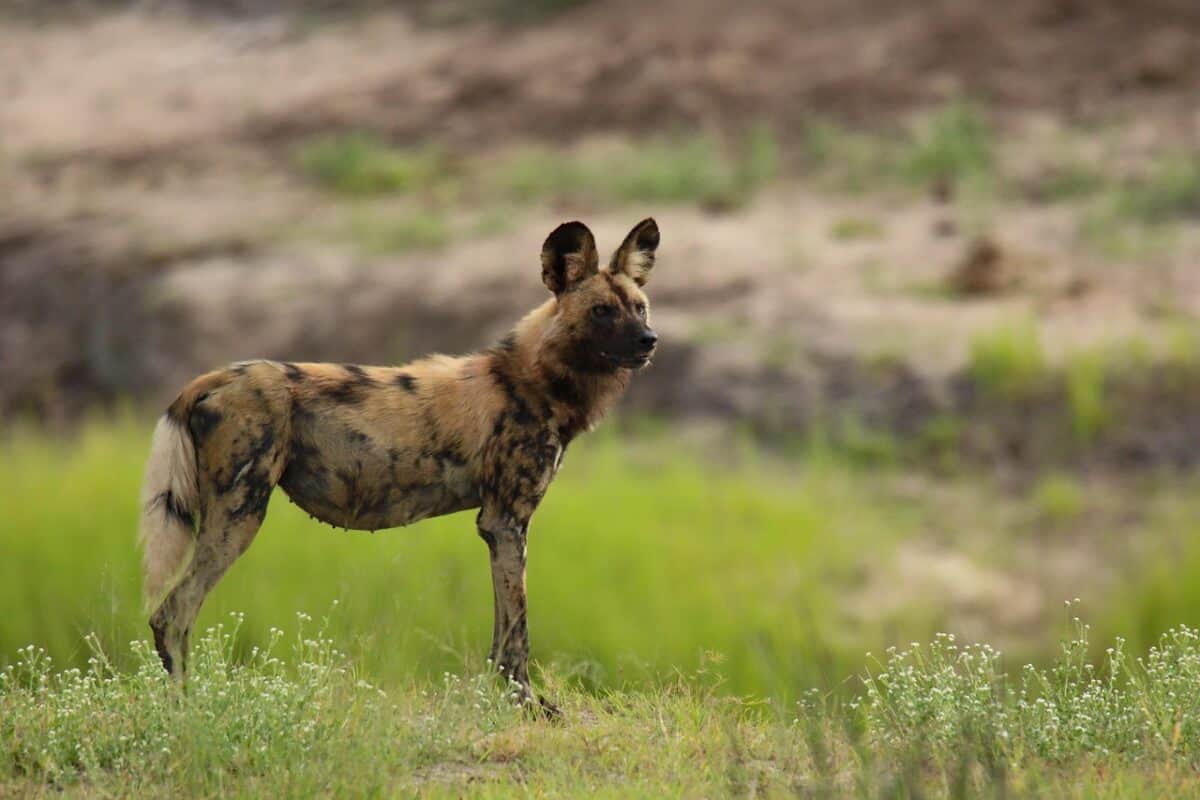
The African wild dog (Lycaon pictus) boasts the highest successful kill rate of any large predator in Africa, with hunting success rates reaching 80%—far exceeding lions at 30% and leopards at 38%. These highly social canids hunt in packs of 6-20 members using sophisticated communication and remarkable stamina. Unlike many predators that rely on ambush tactics, wild dogs employ relentless pursuit at speeds of up to 44 mph (70 km/h), maintaining this pace for up to 3 miles (5 km) while coordinating perfectly to exhaust their prey. What makes these animals particularly ruthless is their killing method—they begin consuming their prey while it’s still alive, tearing it apart in a feeding frenzy that can reduce a 150-pound antelope to bones in 15 minutes. The pack maintains a strict social hierarchy during hunts but practices communal care afterward, with members regurgitating food for pups, injured dogs, and those who guarded the den. Despite their efficiency, wild dogs face serious conservation challenges, with fewer than 6,000 remaining in the wild due to habitat loss, disease, and persecution. Their incredible teamwork represents one of nature’s most efficient collective hunting systems, making them worthy of their nickname: “nature’s perfect predators.”
Komodo Dragon Lethal Predator with a Toxic Bite

The Komodo dragon (Varanus komodoensis) stands as the world’s largest lizard and one of its most formidable ambush predators, with adults reaching up to 10 feet (3 meters) in length and weighing up to 300 pounds (136 kg). These reptilian hunters employ a multi-faceted approach to killing that combines brute strength, sensory superiority, and biological weaponry. Komodos can detect carrion from up to 2.5 miles (4 km) away using their forked tongues, which collect scent particles and transfer them to a specialized organ in the roof of their mouth. What makes these predators particularly ruthless is their hunting methodology—they deliver a bite with serrated teeth and then track their injured prey for miles, sometimes for days, as it succumbs to blood loss and infection. Research has revealed that Komodo dragons possess venom glands that inject a potent toxin causing rapid blood pressure drops, inhibited clotting, and inducing shock. Additionally, their mouths harbor over 50 strains of bacteria that create septic conditions in wound sites. Perhaps most disturbing is their cannibalistic tendency—adult dragons will consume younger members of their species, forcing juveniles to roll in fecal matter to repel adults and spend their early years living in trees to avoid being eaten. With a success rate of 75-90% once they bite prey, these living relics from the age of dinosaurs demonstrate predatory efficiency that has sustained them for millions of years.
Harpy Eagle The Jungle’s Aerial Assassin
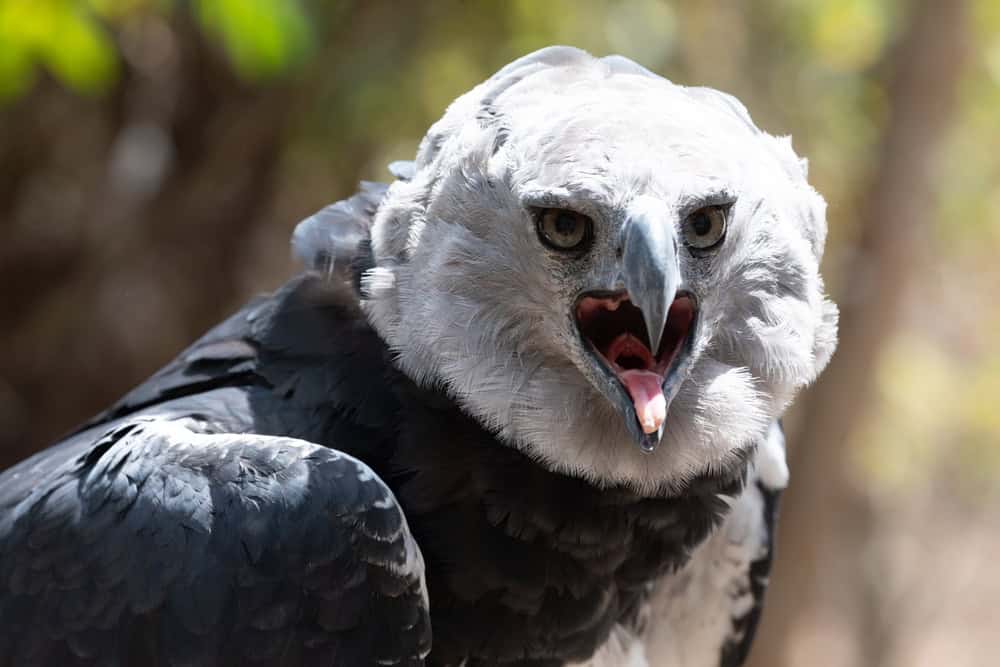
The Harpy Eagle (Harpia harpyja) reigns as one of the most powerful avian predators on Earth, with females weighing up to 20 pounds (9 kg) and possessing a wingspan reaching 7 feet (2.1 meters). These aerial hunters have evolved specialized adaptations for navigating dense rainforest canopies, including short, broad wings for exceptional maneuverability and legs as thick as a human wrist that can exert crushing force. What makes Harpy Eagles particularly ruthless predators is their talon strength—each rear talon can reach 5 inches (13 cm) in length, exceeding the claws of a grizzly bear, with a grip strength capable of exerting 530 PSI, sufficient to puncture the skull of a monkey or sloth instantly. Their hunting strategy combines stealth and explosive power; they silently perch for hours before ambushing prey at speeds up to 50 mph (80 km/h), generating impact forces strong enough to kill on contact. Harpy Eagles possess exceptional vision, able to spot small prey movements from over 650 feet (200 meters) away, and they demonstrate remarkable precision by extracting monkeys from tree branches without disturbing surrounding foliage. These eagles exhibit significant hunting intelligence, known to remove and discard the toxic skin of certain tree frogs before consuming them and developing specialized techniques for handling different prey types. With a successful hunt rate of approximately 82%, Harpy Eagles stand as one of the most efficient aerial predators in nature, capable of carrying prey weighing equal to their own body weight while flying.
Wolf Master of Pack Hunting Strategy

Gray wolves (Canis lupus) represent one of nature’s most sophisticated examples of cooperative hunting, with packs functioning as highly coordinated units that can take down prey ten times the size of an individual wolf. These apex predators communicate through a complex language of vocalizations, body postures, and facial expressions that allow them to execute precise hunting formations tailored to specific prey and terrain types. During hunts, wolves demonstrate remarkable role specialization—some members serve as “scouts” to locate prey, others position themselves as “blockers” to direct prey movement, while the fastest members become “chasers” that pursue the target. What makes wolves particularly ruthless is their calculated approach to victim selection; they systematically test herds to identify the weakest, oldest, or youngest individuals, applying just enough pressure to reveal vulnerability without wasting energy. Their endurance surpasses most prey species, capable of trotting at 5 mph (8 km/h) for hours and sprinting at 35 mph (56 km/h) when closing in for the kill. Wolf packs demonstrate adaptive intelligence by altering hunting strategies based on prey behavior—they will drive caribou toward waiting pack members or separate a bison from its herd before surrounding it. Their bite force measures approximately 1,200 PSI, sufficient to crush moose femurs to access nutritious marrow. With success rates reaching 10-20% for large prey (compared to just 5% for many big cats hunting alone), wolf packs represent one of nature’s most effective collaborative hunting systems, evolving over millions of years to become the template for cooperative predation.
Tiger Solitary Ambush Master

The tiger (Panthera tigris) stands as the largest member of the cat family and one of the most efficient solitary hunters on the planet. These striped predators have perfected the art of stealth, with coat patterns that create disruptive camouflage allowing them to disappear in dappled forest light. What makes tigers particularly ruthless hunters is their combination of power and precision—they can silently approach within 20 feet of prey despite weighing up to 660 pounds (300 kg) and deliver a killing bite to the neck with pinpoint accuracy. Their hunting strategy involves patient stalking, sometimes following prey for hours before attacking from behind in an explosive burst of speed reaching 40 mph (65 km/h). A tiger’s strength is almost mythical, capable of dragging prey weighing twice its body weight more than a mile to a secure feeding location. Their hunting adaptations include specialized night vision with six times more rod cells than human eyes, allowing them to hunt effectively in near-total darkness, and whiskers that can detect the slightest air movements from prey breathing. Tigers possess the strongest bite force of any big cat at approximately 1,050 PSI, enabling them to crush the spinal cord of large prey instantly. Perhaps most impressive is their problem-solving ability during hunts—tigers have been documented creating ambush funnels by strategically breaking branches to direct prey movement and using water features to approach prey silently. With a success rate of 1 in 10 to 1 in 20 hunts, tigers demonstrate remarkable persistence, sometimes tracking potential prey for days before finding the perfect moment to strike.
Snow Leopard The Himalayan Ghost

The snow leopard (Panthera uncia) has evolved into one of nature’s most specialized high-altitude predators, hunting successfully in some of Earth’s most extreme environments where temperatures can plummet to -40°F (-40°C). These elusive cats possess a suite of adaptations that make them masters of their mountainous domain, including oversized nasal cavities that warm inhaled air, extra-large paws that function like natural snowshoes, and the proportionally longest tail of any big cat (up to 3 feet/1 meter) that provides balance on precipitous terrain and wraps around their bodies as insulation during sleep. What makes snow leopards particularly ruthless hunters is their ability to execute precision attacks on near-vertical mountain faces—they can leap up to 50 feet (15 meters) horizontally and 20 feet (6 meters) vertically, often pouncing on prey from above with such force that they can break the neck of an animal three times their size upon impact. Their hunting strategy involves patiently stalking mountain goats and sheep along narrow ridgelines, sometimes remaining motionless for hours before exploding into action. Snow leopards exhibit remarkable problem-solving during hunts, using terrain features to mask their approach and herding prey toward cliffs where escape becomes impossible. Perhaps most impressive is their capacity to take down animals weighing up to 550 pounds (250 kg) despite weighing only 80-120 pounds (36-54 kg) themselves. With a thick coat featuring hair up to 5 inches (12 cm) long and a specialized throat structure that allows them to kill prey in the thin mountain air where oxygen is scarce, snow leopards represent one of nature’s most perfectly adapted high-altitude killing machines.
Conclusion:

From the icy expanses of the Arctic to the dense canopies of the Amazon and the vast savannas of Africa, apex predators represent the pinnacle of evolutionary design. Each species profiled in this article exemplifies a unique balance of intelligence, physical prowess, and instinct honed over millennia. Whether it’s the precision strike of a snow leopard on a mountain ledge or the coordinated wave-making tactics of orcas, these hunters do more than survive—they dominate their ecosystems with strategic brilliance and lethal efficiency. Yet, with this dominance comes responsibility on our part. Many of these apex predators are under threat from habitat destruction, climate change, and human conflict. Their continued existence is vital not just for biodiversity but for maintaining the health and stability of the ecosystems they govern. In studying and protecting these formidable creatures, we are also safeguarding the intricate web of life they help sustain.

As a little kid, I fell in love with nature, wildlife, and animals. Living in the USA, South Africa, Italy, China and Germany gave me the opportunity to discover the world's Wildlife. My favorite animals are Mountain Gorillas, Siberian Tigers, and Great White Sharks.
I'm a certified PADI Open Water Diver, went to Everest Base Camp and Trekked Gorillas in Uganda. I hold a Master of Science in Economics and Finance.
Please send any feedback to feedback@animalsaroundtheglobe.com
- The 10 Rarest Dog Breeds Making a Comeback in America - July 19, 2026
- 13 Creatures That Survived Mass Extinctions - July 19, 2026
- 12 Pets That Are Perfect for Seniors - July 19, 2026