
Your cat hasn’t stepped into a garden in years. It has a heated bed, a bowl that never runs empty and a sunbeam with its name on it. And yet there it is at 5 a.m., crouched behind the bedroom door, plotting against your ankles.
If you’ve ever wondered why a cat who grew up outdoors still acts like it’s on shift, these 11 habits explain it. Instincts don’t expire when the cat flap closes. Some of these routines look hilarious, a few look like bad behavior, and almost all of them make sense once you know the job they used to do.
The real surprise isn’t that the old routines survived. It’s how faithfully they’re still running in your living room, down to the order of the stops on your cat’s daily rounds. One habit near the end says a lot about how your cat sees your whole home.
#11 – The Daily Patrol Nobody Asked For
🔥 Would you like to save this?
We'll email this post to you, so you can come back to it later!
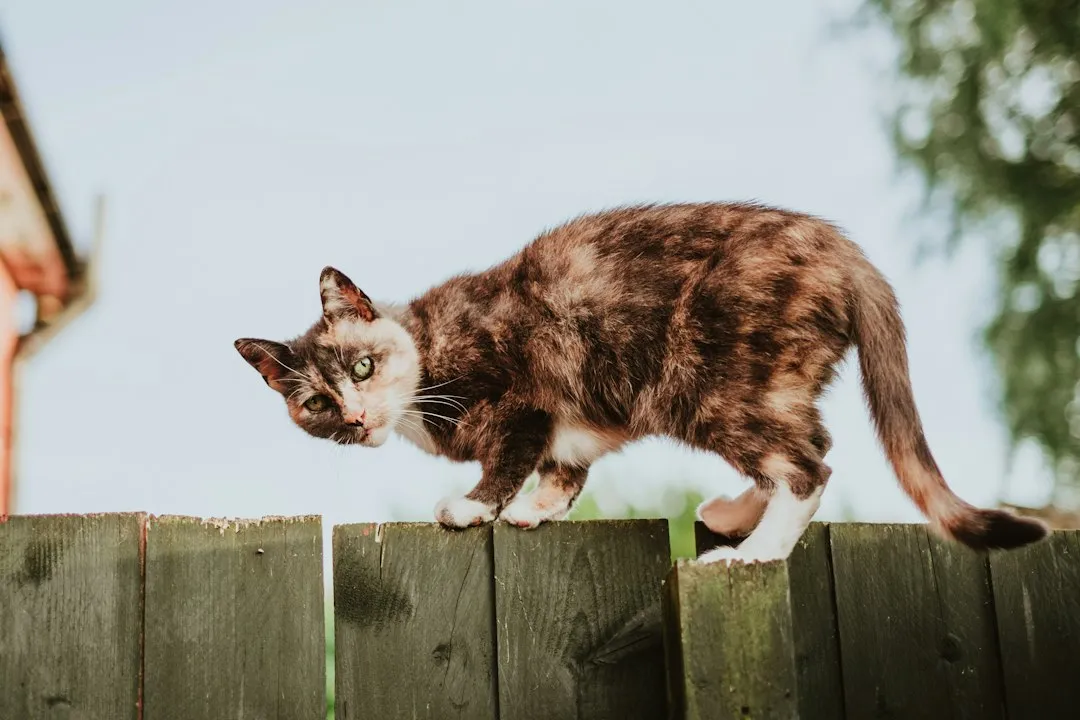
Your cat isn’t wandering aimlessly. It’s inspecting its territory.
Outdoors, a cat’s day includes regular rounds of its range. It checks boundaries, sniffs for new arrivals and refreshes its own scent. Indoors, the range shrinks to your floor plan, but the rounds often continue in the same order, day after day.
Watch closely and you’ll spot the pattern. Your cat visits the same corners, sniffs the same doorways and rubs its cheeks along the same furniture edges. That rubbing is scent-marking, and it’s a sign of confidence, not clinginess.
Typical indoor patrol stops include:
- The front door and any spot where outside smells enter
- Windowsills and ground-floor vantage points
- Corners, table legs and the edges of sofas
- Your shoes and bags, which carry unfamiliar scents
Bags and shoes get extra attention because they smell like places your cat can’t go. It’s reading your day like a newspaper. If you’ve ever seen your cat freeze with its mouth slightly open after a deep sniff of your sneakers, that’s the flehmen response, a way of pulling scent toward a second scent-detecting organ in the roof of the mouth.
Don’t wipe down every spot your cat rubs. Scent is how it keeps its space feeling familiar and safe.
But that’s nothing compared to what we found about #10…
#10 – Hunting Everything That Moves (Even When Dinner Is Served)
🔥 Would you like to save this?
We'll email this post to you, so you can come back to it later!
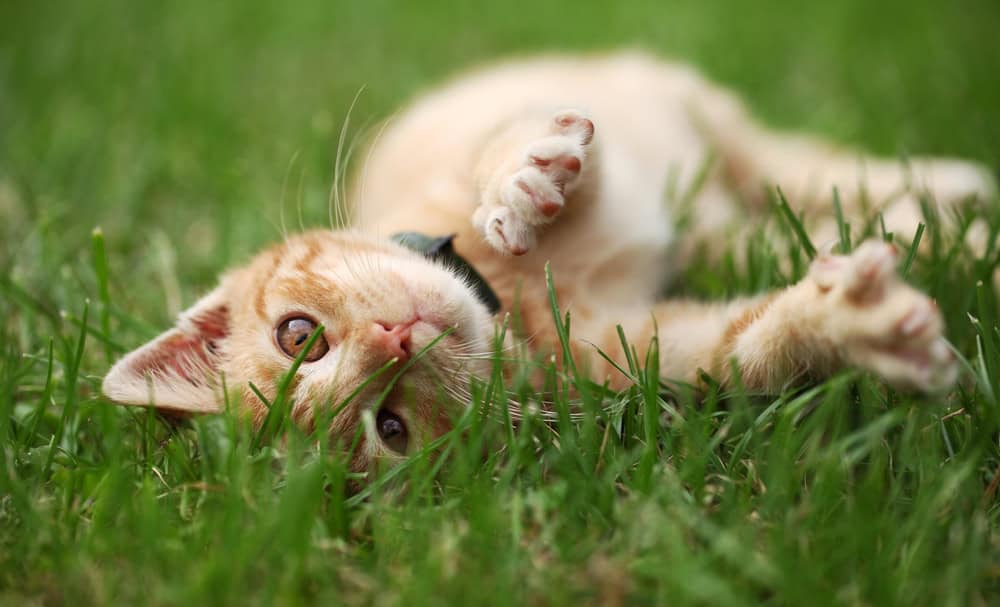
A full food bowl doesn’t switch off the hunting instinct.
Research on cat behavior has long shown that hunger and hunting are driven separately. A well-fed cat can still stalk and kill prey. So your cat’s fascination with a stray moth is normal, not a sign you’re underfeeding.
Indoors, “prey” gets creative. Hair ties, bottle caps, shoelaces, dust motes and the odd unlucky spider all qualify. A former outdoor hunter may treat a fly in the kitchen like the event of the week.
Some cats also carry toys around and drop them at your feet, sometimes yowling as they do it. Experts debate why, and no single explanation is settled. Common theories include practicing a hunt, showing off a catch or moving “prey” to a safe spot.
The one mistake nearly everyone agrees on is scolding. Punishing a natural behavior doesn’t remove the urge. It just teaches the cat to hide it from you.
Many owners assume a bowl of food covers everything, but many experts now argue that food alone doesn’t meet a hunter’s needs. The hunt itself matters, and so does the payoff at the end of it.
But the next habit surprises even seasoned cat owners at #9…
#9 – Treating Your Plant Pots Like a Garden
🔥 Would you like to save this?
We'll email this post to you, so you can come back to it later!
A cat raised outdoors learned one thing early: soil is a toilet.
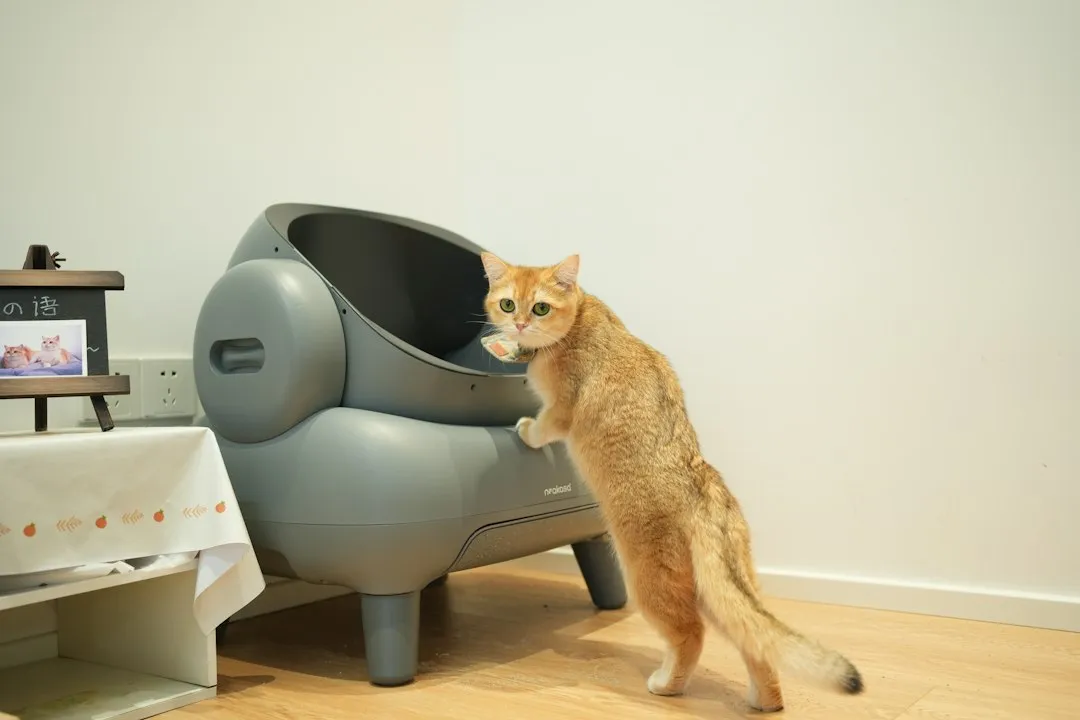
Outdoors, cats typically eliminate in loose, fine-textured ground. They dig, go and cover. Indoors, a houseplant pot can look exactly like that old arrangement, and a litter box may seem like a poor imitation.
This is why some cats ignore a litter tray for weeks after moving inside. Others dig the box energetically, scatter litter and cover everything with intense focus. Both are echoes of the same outdoor routine.
Texture often matters. Many cats prefer soft, fine-grained, unscented litter, though individual taste varies a lot. It’s worth testing rather than assuming.
A few habits help most cats adjust:
- Offer a large, easy-to-enter box in a quiet spot
- Keep it scooped daily, since cats are picky about cleanliness
- Try more than one litter type side by side
- Add more than one box in multi-cat homes
Plant pots deserve a second look for another reason. Some common houseplants are toxic to cats, and lilies are among the most serious. Check any plant before leaving it within reach.
But that’s nothing compared to the drama at #8…
#8 – Camping Out at the Door and Yowling for Freedom
🔥 Would you like to save this?
We'll email this post to you, so you can come back to it later!
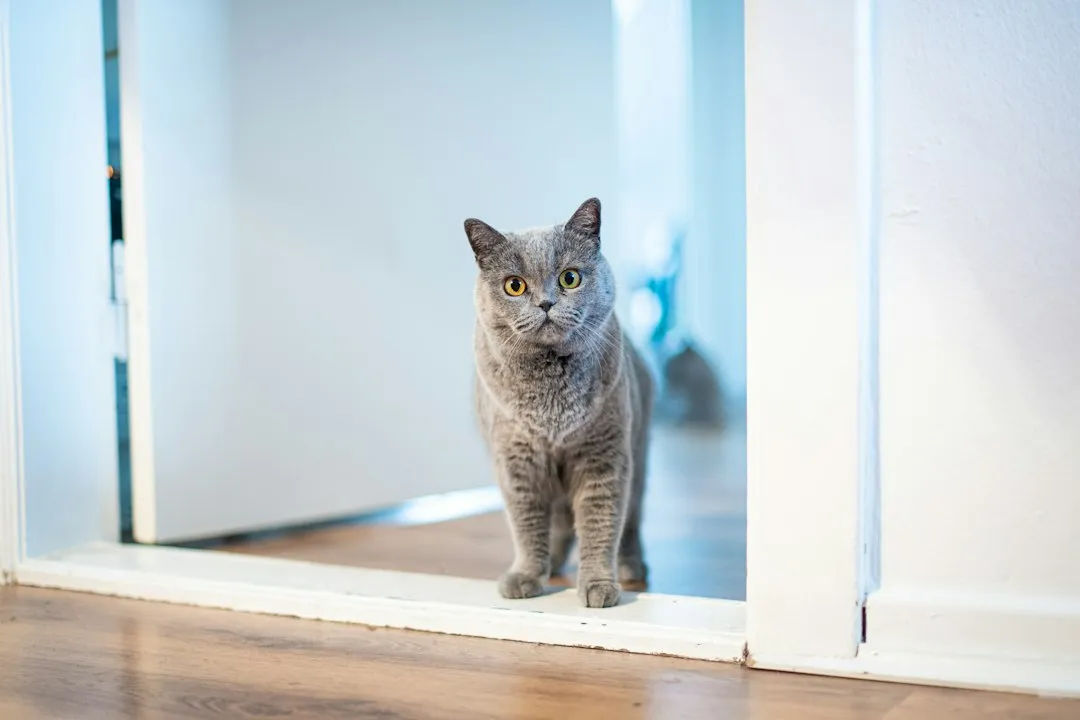
The door is the one spot your cat never stops thinking about.
Cats learn routines fast. If your cat once had free access outside, the sound of keys, a latch or an opening door can trigger an instant reaction years later. The link between that sound and “outside” never faded.
Many ex-outdoor cats sit by the door, cry at it or dart toward any gap. Some wait until you’re distracted with groceries. Experts say the escape attempt is usually less about being unhappy and more about being driven by habit and curiosity.
Consistency matters most. If you sometimes give in to the yowling, you’re teaching the cat that persistence pays off. Behavior specialists call this intermittent reinforcement, and it’s powerful.
Safety matters here too. Make sure your cat wears ID and is microchipped, because a determined door-dash can happen in any household.
Then there’s the debate. Some people argue that a cat used to roaming should never be confined. Many veterinary groups argue the opposite, pointing to traffic, fights, disease and other outdoor hazards. There’s no universal answer, and the best middle ground is often a secure catio, a harness walk or an enclosed garden.
Quick Compare: Safer Ways to Give Outdoors Back
- Catio: A fully enclosed outdoor space. Fresh air and real sights and smells, with the most protection, but it takes space and setup.
- Harness walk: Supervised exploring on your terms. It needs gradual training, and not every cat will tolerate it.
- Enclosed garden: More room to roam and climb. It only works if the fencing is truly cat-proof.
But the next behavior is where things get weirdly entertaining at #7…
#7 – Staring at Birds for Hours (and Chattering at Them)
🔥 Would you like to save this?
We'll email this post to you, so you can come back to it later!
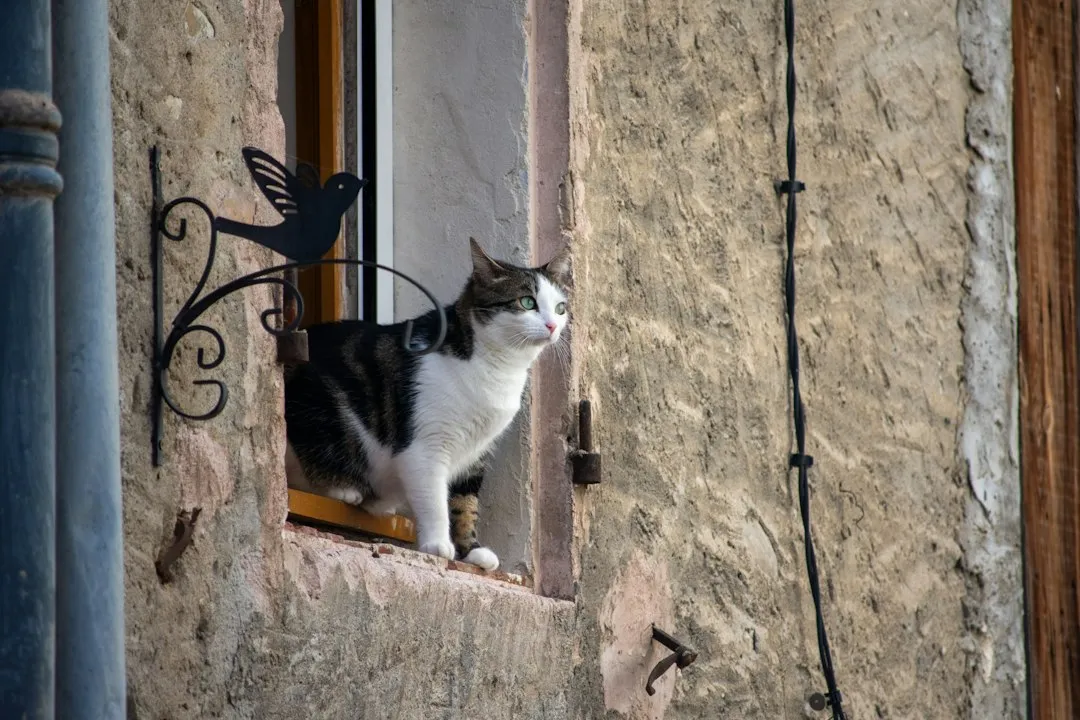
To your cat, the window isn’t glass. It’s a screen showing live prey.
A cat watching birds, squirrels or insects is doing what its ancestors did: waiting, tracking and calculating. Cats can stay motionless for long stretches while watching. That’s patience built over generations.
Many owners also notice a strange chattering sound, where the jaw trembles and the cat makes rapid clicks. No one is completely sure why cats do it. Common theories point to excitement, frustration or a rehearsal of the killing bite. It’s still one of the great unsolved little mysteries of cat behavior.
Window watching is generally healthy, but it can be a double-edged sword. A cat that sees prey it can’t reach may become frustrated, and sometimes that frustration gets redirected toward another pet or a person nearby.
Good window setups include:
- A sturdy perch with a clear view
- A bird feeder placed outside, at a safe distance
- A spot that’s warm and out of drafts
But that’s nothing compared to what your cat does with your garden-variety greenery at #6…
#6 – Nibbling Grass and Houseplants
🔥 Would you like to save this?
We'll email this post to you, so you can come back to it later!
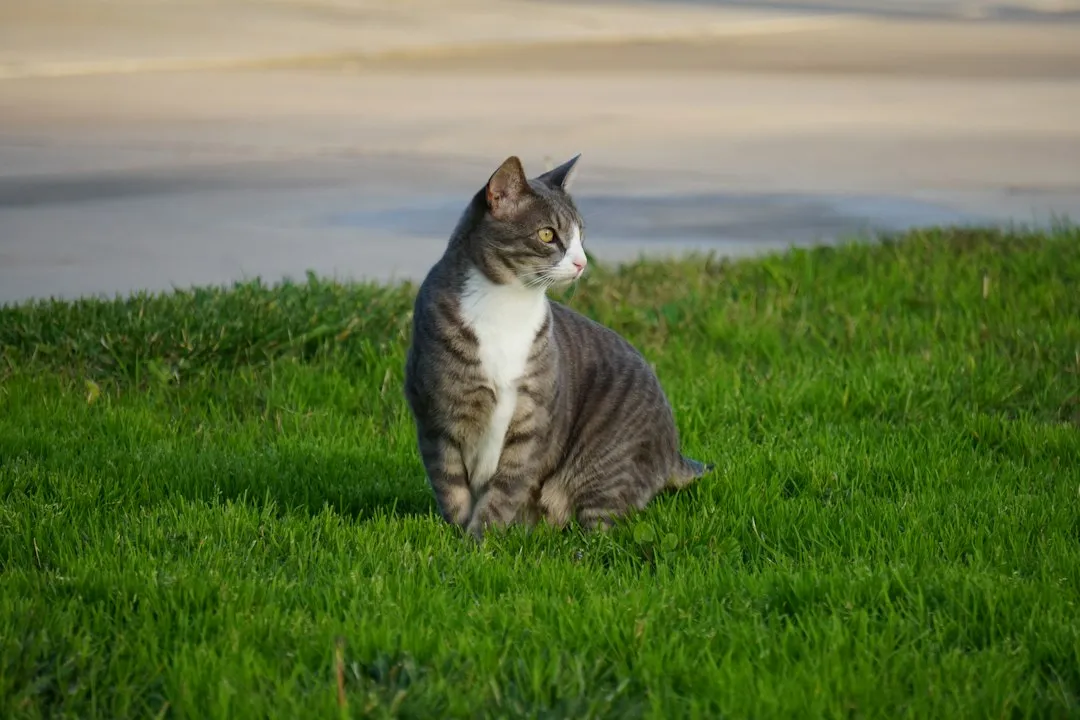
If your cat sneaks a chew on a leaf, it’s following an old habit.
Outdoor cats often eat grass, and plenty of indoor cats do too. Despite the popular belief that it’s always about making themselves vomit, scientists haven’t pinned down one definite reason.
Theories include fiber for digestion, helping move hair or parasites through the gut, or simply liking the taste and texture. The evidence is mixed. Many cats eat grass and never vomit, which weakens the “purge” explanation as a universal rule.
Worth Knowing
- Cats are obligate carnivores, so grass is a side habit, not a nutritional need.
- Cat grass is usually grown from wheat, oat, barley or rye seed.
- Those seeds typically sprout within about a week, so a fresh pot is a cheap, quick fix.
Indoors, the problem is what’s within reach. Your old outdoor cat knew which lawn grass to chew. Your living room offers a very different menu, and some of it is dangerous.
Safe habits to build:
- Grow a pot of cat-friendly grass such as oat, wheat or barley
- Remove toxic plants, or put them in rooms the cat can’t enter
- Check with your vet if the chewing becomes constant or comes with vomiting
Lilies deserve special mention. They’re widely listed as seriously toxic to cats, and the danger isn’t limited to the flower itself. Even pollen or vase water can cause trouble.
But the next habit is the one that makes owners lose patience at #5…
#5 – Marking Territory With Urine
🔥 Would you like to save this?
We'll email this post to you, so you can come back to it later!
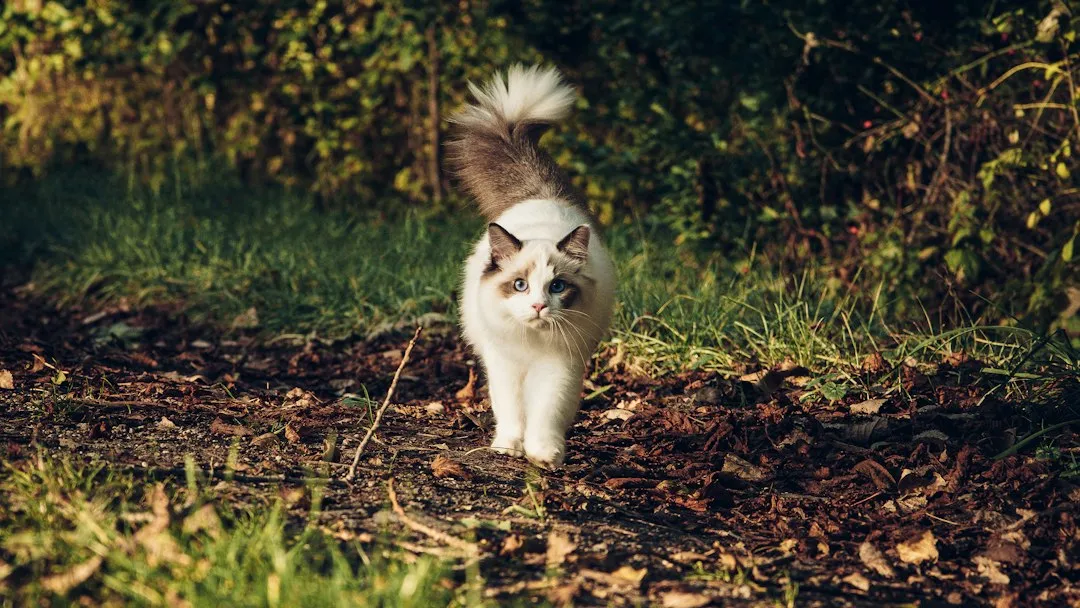
This is the habit people misread most, and it’s rarely about spite.
Outdoors, scent marking with urine is one way cats communicate about space. Indoors, a former outdoor cat may spray on walls, doors or windows, especially if it detects another cat outside. Neutering reduces spraying in many cats, but it doesn’t always stop it.
Spraying is different from ordinary urination. The cat usually stands, lifts its tail and aims at a vertical surface. Puddles on the floor or in the bathtub can have other causes, including medical ones.
That’s why a vet visit comes first. Urinary problems can look like a behavioral issue, and treating the wrong cause wastes time. Stress, changes in routine and unfamiliar cats outside can also be triggers.
Practical steps often recommended:
- Rule out medical causes with your vet first
- Clean marked areas with an enzymatic cleaner, since ordinary cleaners may leave a trace the cat can still smell
- Block the view of outdoor cats near windows
- Keep litter boxes clean and accessible
But that’s nothing compared to the damage report waiting at #4…
#4 – Shredding Furniture Like It’s a Tree
🔥 Would you like to save this?
We'll email this post to you, so you can come back to it later!
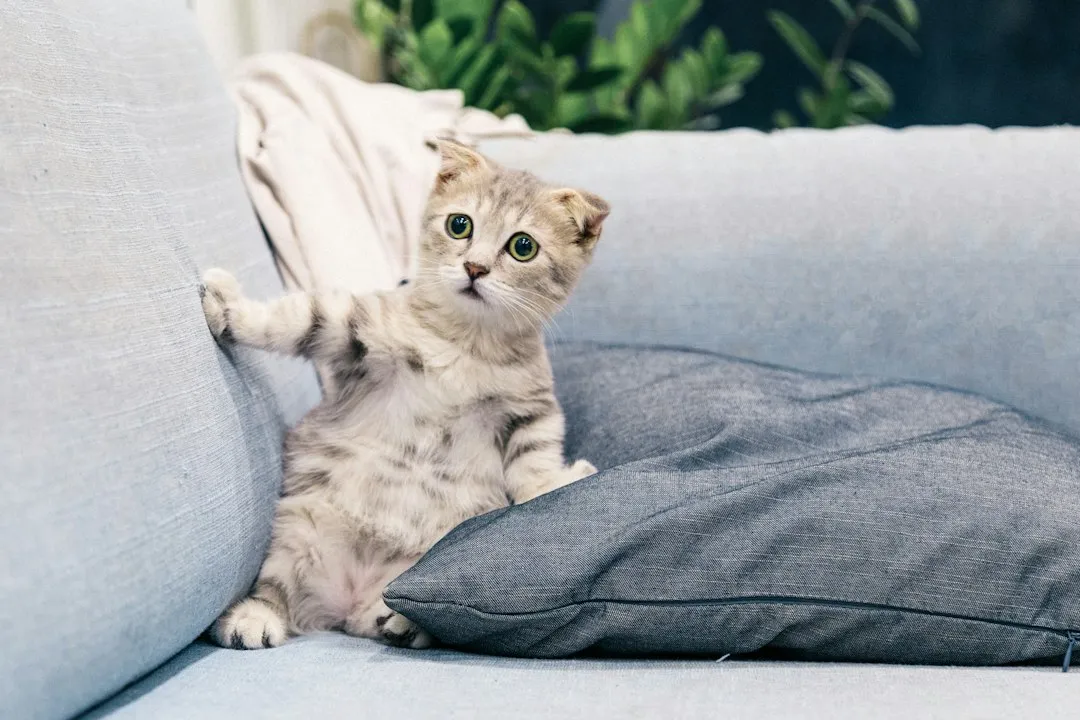
Your sofa corner is standing in for the old fence post.
Scratching isn’t just claw maintenance, although that’s part of it. Cats scratch to shed the worn outer layer of their claws, to stretch their bodies and to leave marks. The paws have scent glands, so every scratch leaves both a visible mark and a scent message.
Outdoors, trees, posts and rough walls made perfect scratching stations. Indoors, the most appealing options are often your sofa arm, a carpet edge or a door frame. They’re visible, sturdy and in the middle of the action.
Declawing is the wrong answer. It isn’t a trim; it removes part of each toe. Many veterinary and animal-welfare groups oppose it, and it’s banned or restricted in a growing number of places. Redirecting works better.
What most cats want from a scratcher:
- It’s tall or sturdy enough that it doesn’t wobble
- It’s placed near where the cat sleeps or by the entrance
- It has a surface they like, such as sisal, cardboard or wood
- You offer both vertical and horizontal options
But the next habit might explain why you’re awake before sunrise at #3…
#3 – Waking You at Dawn and Going Wild at Dusk
🔥 Would you like to save this?
We'll email this post to you, so you can come back to it later!
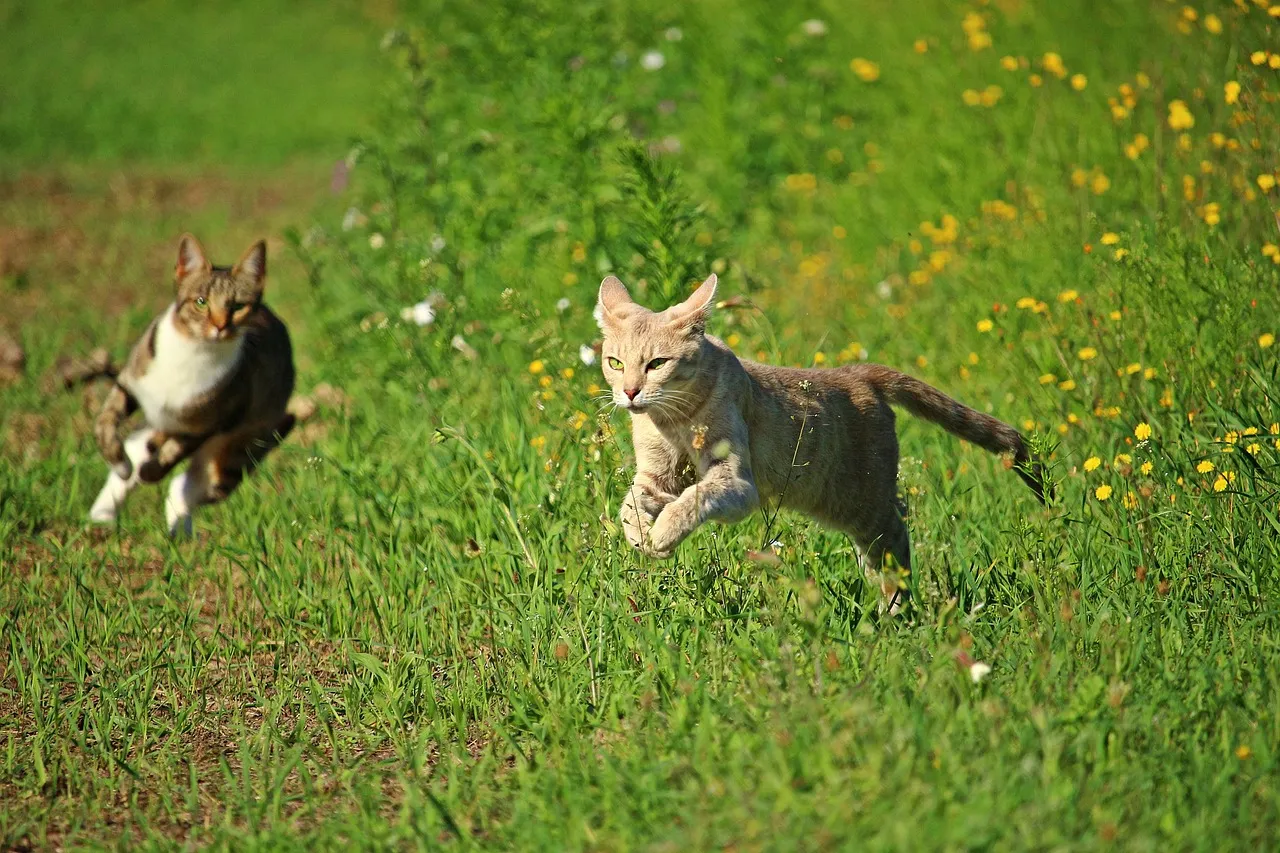
Your cat isn’t broken. It’s running on a hunter’s schedule.
Cats are crepuscular, which means they’re most active around dawn and dusk. That timing matches when many small prey animals move around. An outdoor cat would use those hours to hunt and patrol. Indoors, the same clock turns into a 5 a.m. alarm.
Many owners notice a burst of evening “zoomies” too. The cat sprints through the house, climbs furniture and skids around corners. That’s stored energy coming out, often because the day was mostly sleep.
At a Glance: The Hunter’s Clock
- Peak activity: Around sunrise and early evening.
- Daytime: Adult cats typically sleep roughly 12 to 16 hours a day.
- Why it matters: Long naps plus no outlet equals a burst of energy right when you want quiet.
- Red flag: A sudden change in sleep or energy, especially in an older cat, is worth a vet check.
Feeding your cat when it yowls at dawn backfires. It teaches the cat that early noise gets breakfast. Experts generally suggest shifting the routine instead.
What often helps:
- A vigorous play session before bed
- A meal right after the play, mimicking hunt, catch, eat
- An automatic feeder set for early morning
- Ignoring the yowling rather than rewarding it
These are the same instincts as in #10, just running on a clock that doesn’t care about your alarm.
But this next one is the one that gets your ankles in trouble at #2…
#2 – Ambushing Your Ankles From Behind the Door
🔥 Would you like to save this?
We'll email this post to you, so you can come back to it later!
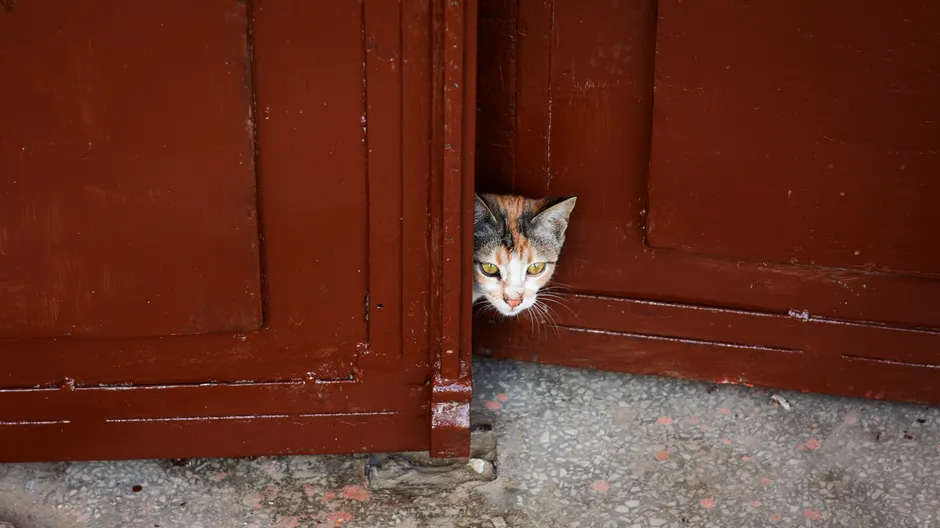
The ankle attack is a hunt with nowhere else to go.
Predatory behavior follows a sequence: watch, stalk, chase, pounce, bite. Outdoors, a cat could run through the whole thing. Indoors, the sequence gets cut short, and you become the moving target that walks past the hiding spot at the same time every day.
Look for the warning signs. The cat crouches low, its eyes widen, its rear end wiggles and then it springs. Cats often choose corners, doorways and the space under furniture, which are the places a hunter would wait outdoors.
Rough play with hands or feet is the part owners get wrong. It teaches the cat that skin is a toy. Experts recommend using wand toys and other objects instead.
A good session usually includes:
- Slow, prey-like movement away from the cat
- Short bursts of speed, then pauses
- A real “catch” at the end, so the cat doesn’t get frustrated
- A small meal or treat afterward
But the most telling habit of all is still waiting at #1…
#1 – Staying on Guard When Nothing Is Wrong
🔥 Would you like to save this?
We'll email this post to you, so you can come back to it later!
The habit that gives it away is that your cat never fully switches off its alertness.
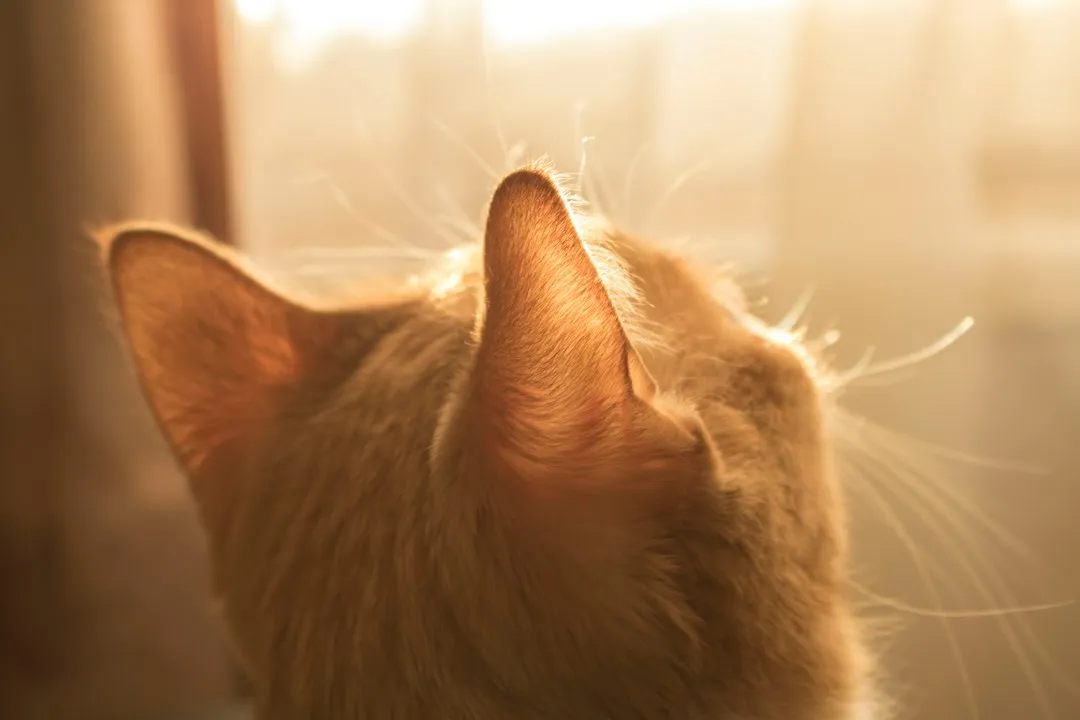
Outdoor life teaches caution. A cat has to notice cars, dogs, other cats and strange noises. Cats can rotate their ears independently, which lets them track several sounds at once. Years indoors don’t erase that skill.
You’ll see it in small ways. Ears swivel at noises you can’t hear. The cat bolts when the doorbell rings, picks a high perch with a view of the exits, or disappears under the bed when guests arrive. Cats also doze lightly, ready to wake quickly.
Why It Stands Out
- Each ear has more than 30 muscles, which is why it can swivel so precisely.
- Cats hear far higher pitches than people, well into the ultrasonic range where rodent squeaks live.
- A high perch gives a clear view of every exit, which is the same logic as a lookout point outdoors.
This isn’t necessarily anxiety. For a cat that once relied on awareness to stay safe, it’s a normal setting. But a cat that is hiding constantly or refuses to eat should see a vet.
The best thing you can do is give it control:
- Provide high perches and hiding spots
- Let it approach visitors rather than forcing it
- Keep routines predictable
- Offer enrichment that feels like exploring
Some people say an ex-outdoor cat can never be fully content indoors. That’s too simple. The cats that adjust best are the ones whose owners treat enrichment as a requirement, not a bonus.
An outdoor-raised cat doesn’t “get over” its past. It brings it inside. Patrolling, hunting, scratching, marking, door-watching and dawn raids are all the same instincts looking for a job.
Here’s the opinionated part. Keeping a cat indoors is a trade, and it only works if you pay for the safety with real stimulation: play that ends in a catch, perches with a view, safe plants and a litter setup it likes. Scolding doesn’t work. Understanding does.
Which of these 11 habits does your ex-outdoor cat still do, and what finally worked for you?

- 7 Everyday Habits That Can Make Your Senior Dog Happier - November 5, 2026
- 10 Enigmatic Structures That Continue to Puzzle Scientists Today - November 5, 2026
- 10 Strange Ruins in the Americas That Challenge What We Know About Early History - November 5, 2026