
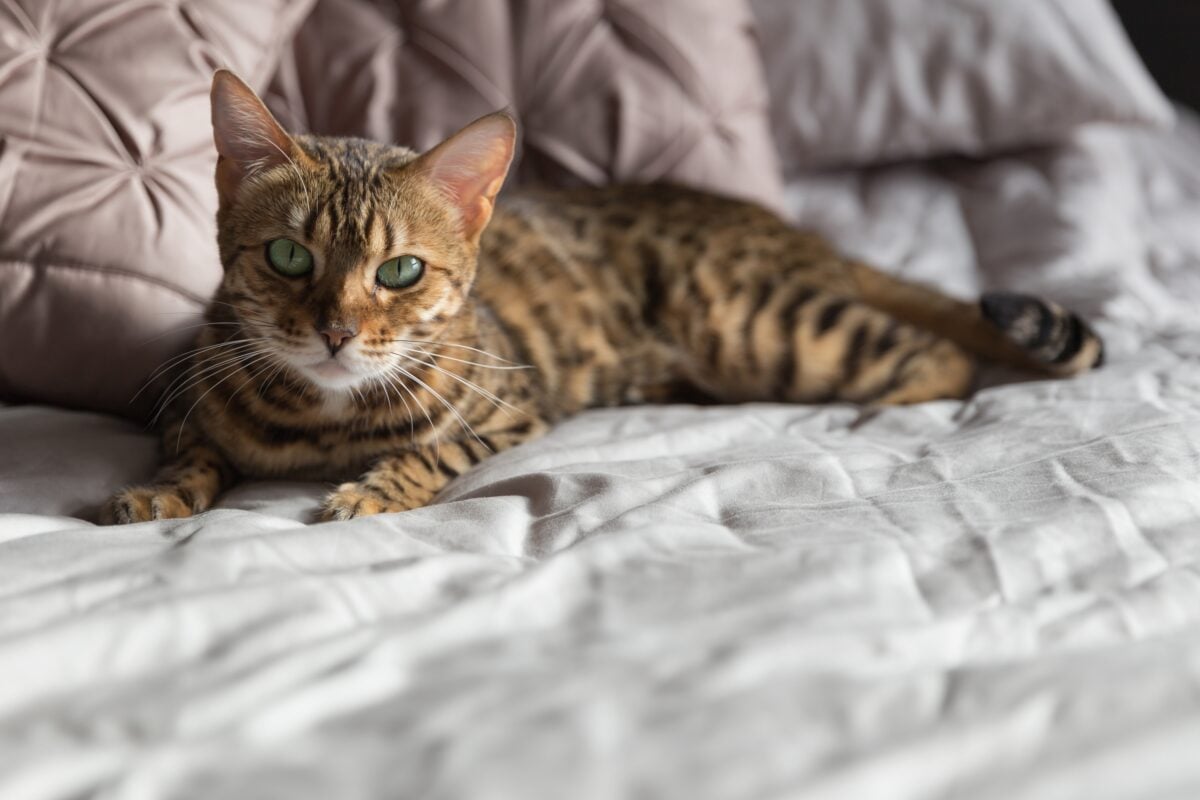
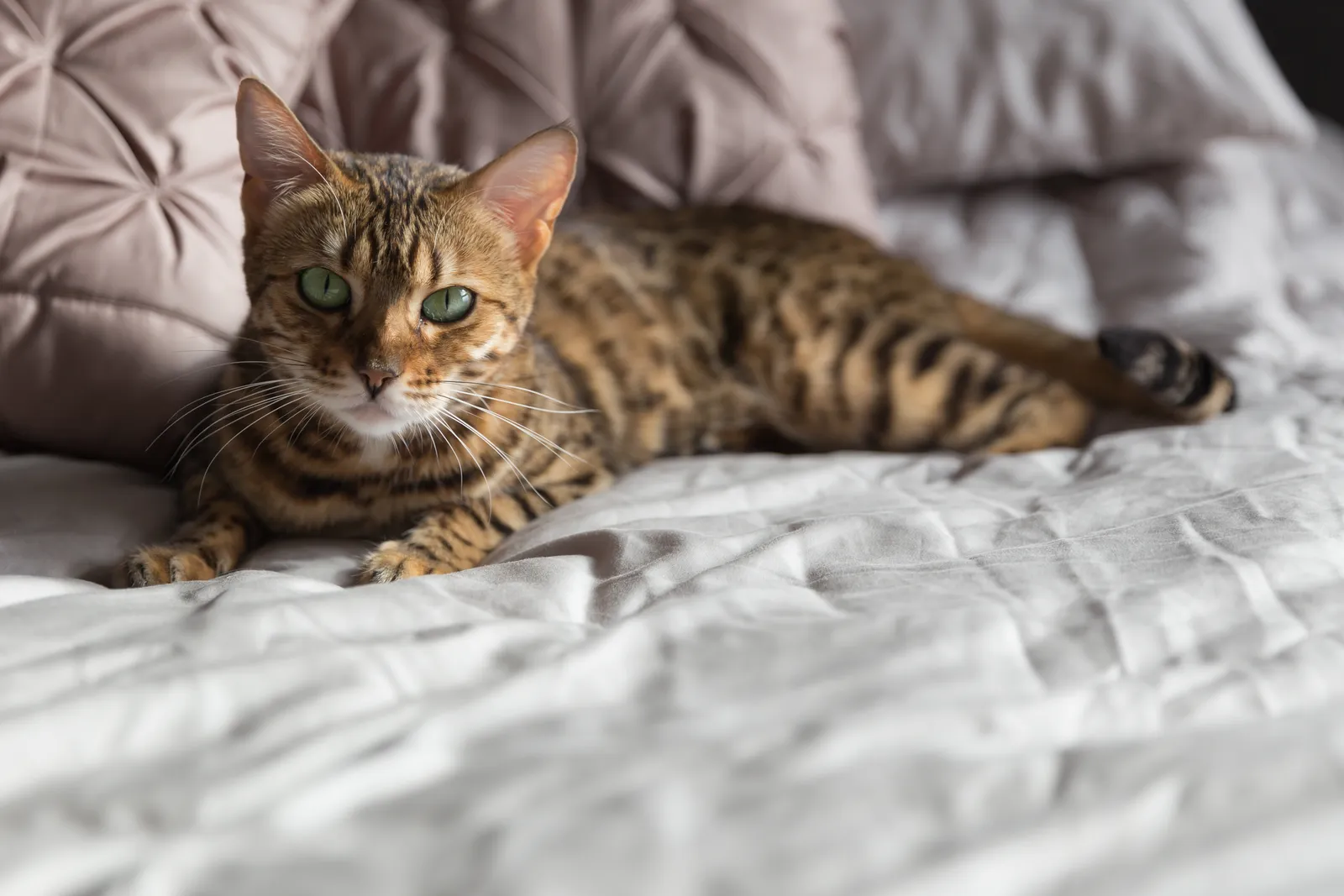
Picture a Bengal and you probably see a pocket-sized leopard stretched across a velvet sofa. That image sells kittens. It also sets new owners up for some very big surprises, and the real story behind this cat is stranger and more interesting than the photos suggest.
Here’s the twist. A genome study of 947 Bengal cats found an average of just 3.48% leopard cat DNA. So where do the sprinting, the bathtub raids and that glittering coat actually come from? And what do first-time owners wish someone had told them before the kitten came home? Start at #11, and keep going, because the biggest shock of all has nothing to do with genes.
#11 – The Wild Side Is Much Smaller Than You Think
🔥 Would you like to save this?
We'll email this post to you, so you can come back to it later!
Your Bengal is a domestic cat, and the genetics back that up. The breed was created by crossing an Asian leopard cat with domestic cats, especially the spotted tabby Egyptian Mau. The name comes from the leopard cat’s old scientific name, Felis bengalensis (the species is now classed as Prionailurus bengalensis).
The name sounds exotic, but the cat on your sofa is a house cat. Researchers have looked closely at what the leopard cat actually left behind. In one analysis, every Bengal carried multiple distinct leopard cat segments, averaging 21.4 per cat. That sounds like a lot until you see the next finding.
No leopard cat variants have swept to high frequency in the breed. Instead, the signs of selection within the breed are tied to sequences of domestic cat origin. In plain terms, breeding has not locked in “wild” genes. Pet Bengals are fully domestic cats, usually four or more generations from the wild ancestor.
That doesn’t mean the breed’s wild-looking energy is imaginary. Owners really do see the climbing, the stalking and the intensity. It just comes packaged in a cat that wants to share your blanket, not a wild animal pretending to be a pet.
But the label that really separates one Bengal from another is something most buyers never ask about, and it’s #10.
#10 – The “F-Number” Decides Almost Everything
🔥 Would you like to save this?
We'll email this post to you, so you can come back to it later!
Two Bengals can look identical and live completely different lives, and the generation label is why. First-generation Bengals, called F1, have one Asian leopard cat parent and one domestic cat parent. Each generation after that moves further from the wild parent, and the numbers climb to F2, F3, F4 and beyond.
Here’s the quick version:
- F1: one leopard cat parent
- F2: a leopard cat grandparent
- F3: a leopard cat great-grandparent
- F4 and later: the generations most pet homes are built around
Early generations (F1 to F3) can keep many leopard cat characteristics, including difficulty with litter box training and a wilder temperament. That is why one breed guide recommends pet Bengals be at least F4. A cat that looks like a trophy can behave like a handful.
TICA requires a Bengal to be at least four generations removed from the Asian leopard cat. The Cat Fanciers’ Association requires six. Registries don’t agree on where “domestic” starts, so don’t treat the label as a guarantee.
Quick Compare
- TICA: at least four generations from the leopard cat
- CFA: at least six generations from the leopard cat
- Breed-guide advice for pet homes: F4 or later
Rules on early-generation hybrids also vary by location. Check your local law before you fall for a kitten.
But even a well-bred, late-generation Bengal has one feature that stops people in their tracks, and it’s #9.
#9 – That Glittering Coat Is Rarer Than Most People Realize
🔥 Would you like to save this?
We'll email this post to you, so you can come back to it later!
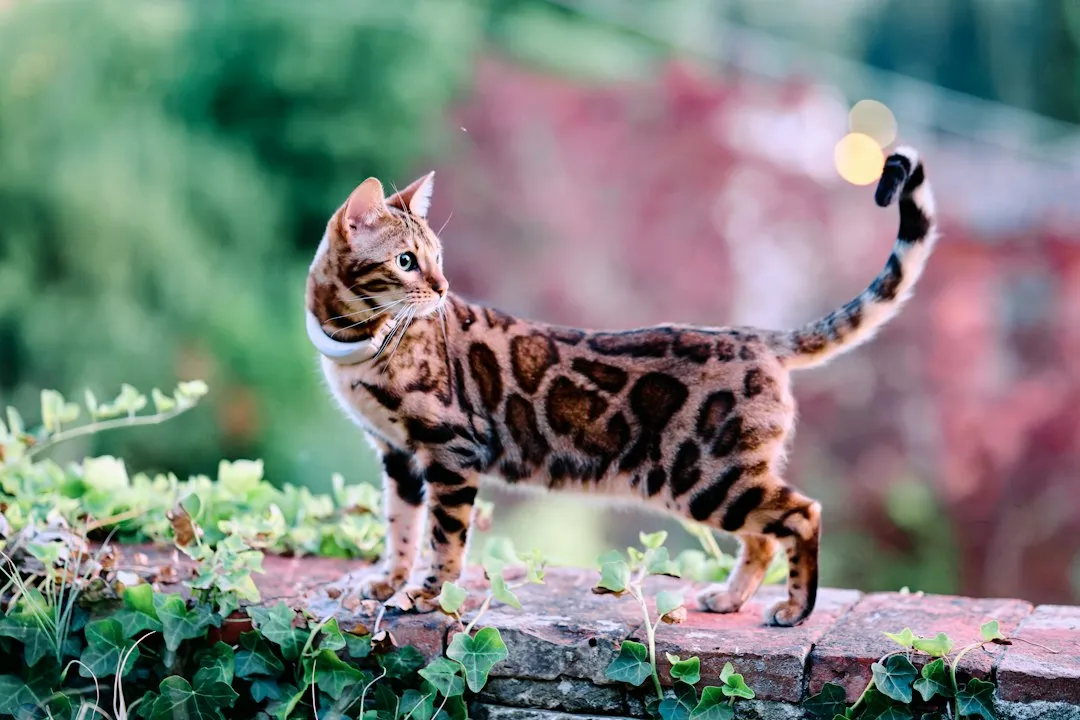
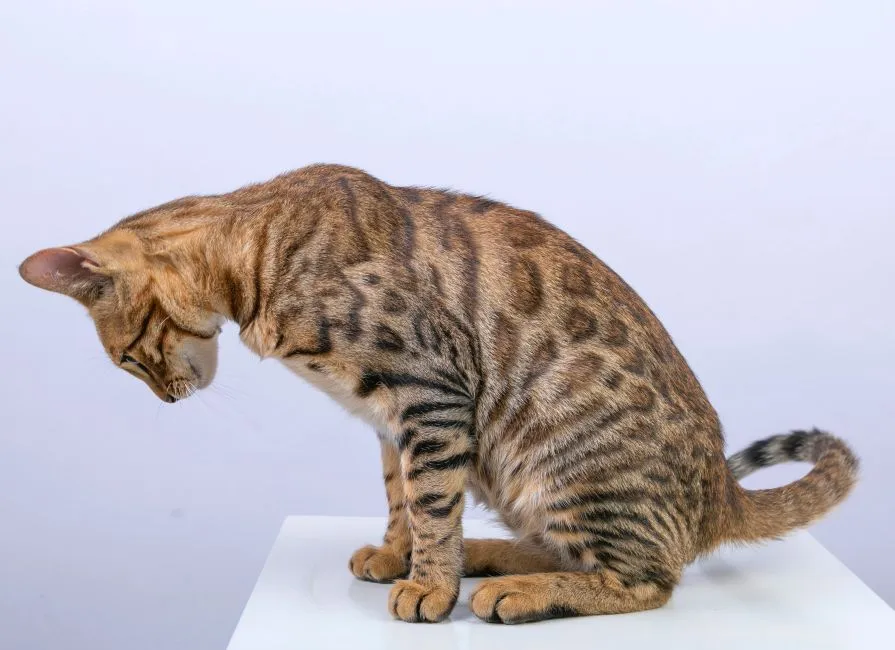
The coat is the main reason people buy a Bengal, and it’s also the worst reason. One breed guide calls the Bengal the only domestic breed known for true leopard-style rosettes and a glittering coat.
The breed was designed to resemble exotic wild cats such as ocelots, margays and clouded leopards. The spotted pattern traces back to the spotted tabby Egyptian Mau in the foundation lines. Owners describe the effect in sunlight as if the fur had been dusted with gold.
The look is no accident. It was a deliberate goal. Breeders wanted the vivid, contrasting coat of the leopard cat with the docile temperament of the domestic cat. The “glitter” is a real, recognised trait of the breed, not a marketing gimmick. Many owners also describe the short coat as unusually soft and silky, though individual cats vary.
Here’s the uncomfortable truth, though. Choosing a Bengal for its coat alone is the quickest route to regret. A coat doesn’t open cabinets at 3 a.m. or ask for a third play session before lunch. The cat underneath does.
- The pattern is the easy part.
- The temperament is the full-time job.
And that temperament has a quirk that surprises almost everyone who brings a Bengal home. It’s #8.
#8 – The Water Obsession Is Real
🔥 Would you like to save this?
We'll email this post to you, so you can come back to it later!
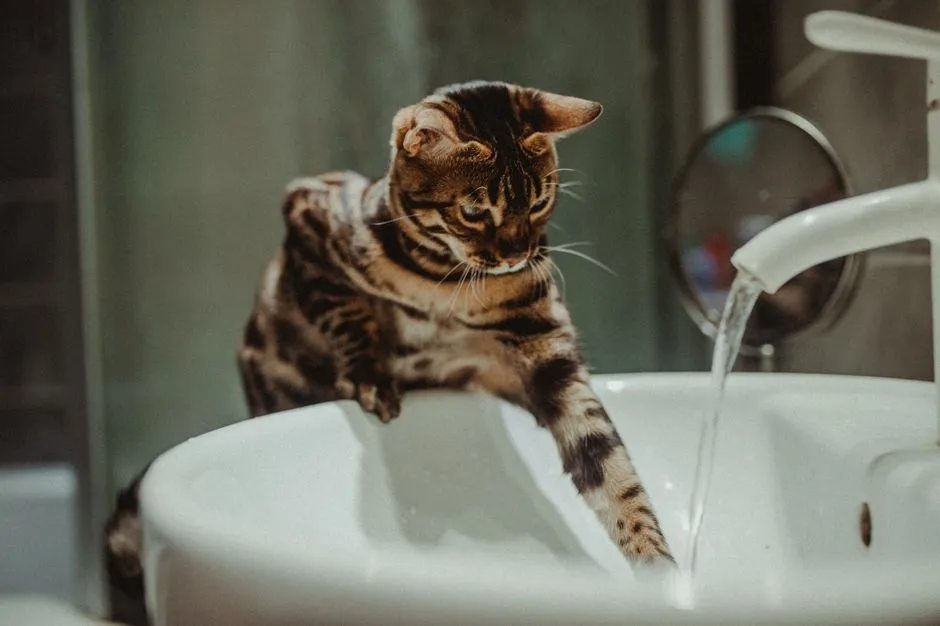
Most cats avoid water, and plenty of Bengals seem to treat it as a toy. Bengals descend from the Asian leopard cat, a wild species known for swimming and sticking its paws in water. Bengals are described as unafraid of water.
Owners commonly report cats that dunk toys in the water bowl, paw at running taps and wait outside the shower. Don’t be surprised if your Bengal jumps in the bathtub with you. Individual cats differ, and some stay as water-shy as any other breed. Still, “water-curious” is a common description.
Expect some of these:
- Splashing water out of the bowl
- Fishing objects out of the toilet
- Following you into the bathroom
The practical fix is easy. Keep toilet lids down, and give the cat something better to splash in. Any open water deserves a quick look, too, since a cat that loves it doesn’t always know when to stop.
But if you think the water habit is a lot to manage, wait until you see how much energy is behind it. That’s #7.
#7 – They Treat Your Home Like a Gym
🔥 Would you like to save this?
We'll email this post to you, so you can come back to it later!
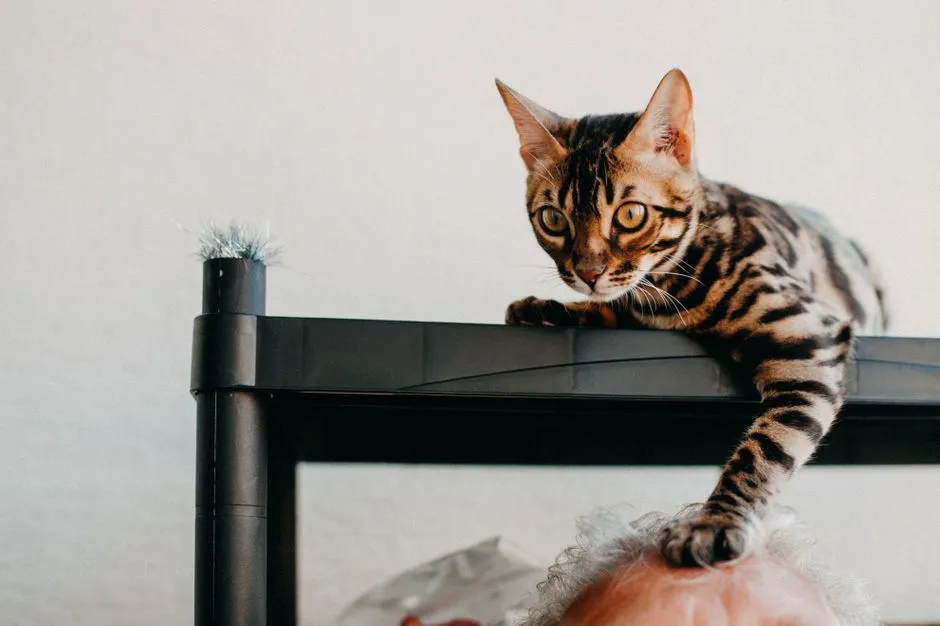
A Bengal doesn’t just walk through a room. It uses the whole room. Despite their wild appearance, Bengals are described as friendly and extremely active. The breed is considered medium to large, and typical weights run from about 3.5 to 7 kg.
That is a lot of muscle going up your curtains. One breed guide ties the Bengal’s high activity directly to its cross-breeding with the wild Asian leopard cat. An activity level like that doesn’t switch off because you’re tired. It needs somewhere to go.
Here is what experienced owners usually build in:
- Tall cat trees and wall-mounted shelves
- Several short, intense play sessions a day
- Safe window perches for watching outside
Think vertical. A Bengal with floor space only will use your bookshelves instead, and the top of the fridge, and the door frames.
At a Glance
- Size: medium to large
- Typical weight: about 3.5 to 7 kg (roughly 7.7 to 15.4 lb)
- Personality: friendly and extremely active
- Best setup: climbing space, daily play and window views
The energy is only half the story, though. The brain behind it is the part that really catches owners off guard, and it’s #6.
#6 – They’re Smart Enough to Outwit You
🔥 Would you like to save this?
We'll email this post to you, so you can come back to it later!
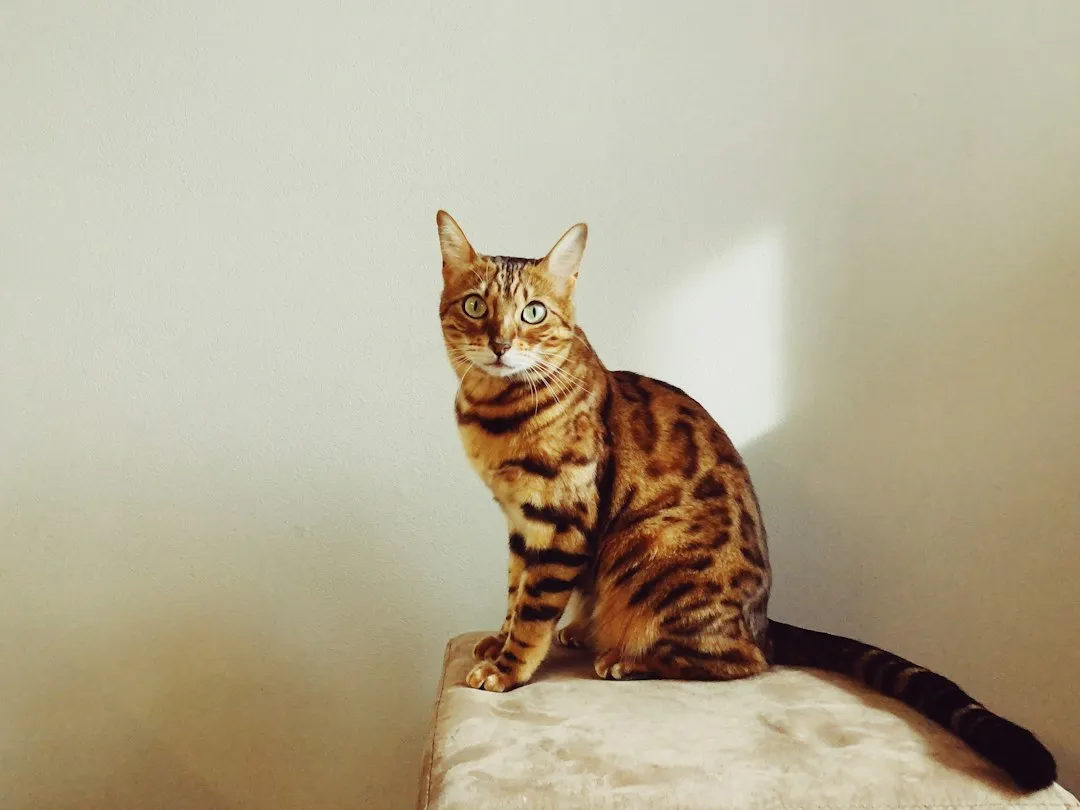
Your Bengal will figure out your house faster than you’d like. Bengals are described as intelligent enough to learn tricks. Many owners report cats that fetch, open doors and work out cabinet latches. Some can even be trained to walk on a harness.
Intelligence is the reason a bored Bengal is a problem. A clever cat with nothing to do invents its own projects. The same mind that learns “sit” in two sessions can also learn exactly which drawer holds the treats.
Most owners learn this the hard way, so plan ahead:
- Use child-proof latches on low cabinets
- Teach short tricks with treats and a clicker
- Rotate puzzle feeders and toys weekly
Training sessions can be a few minutes long. Short and consistent beats long and tiring.
But smart cats don’t just solve puzzles quietly. Most of them have plenty to say about it, and that’s #5.
#5 – Many Bengals Are Surprisingly Talkative
🔥 Would you like to save this?
We'll email this post to you, so you can come back to it later!
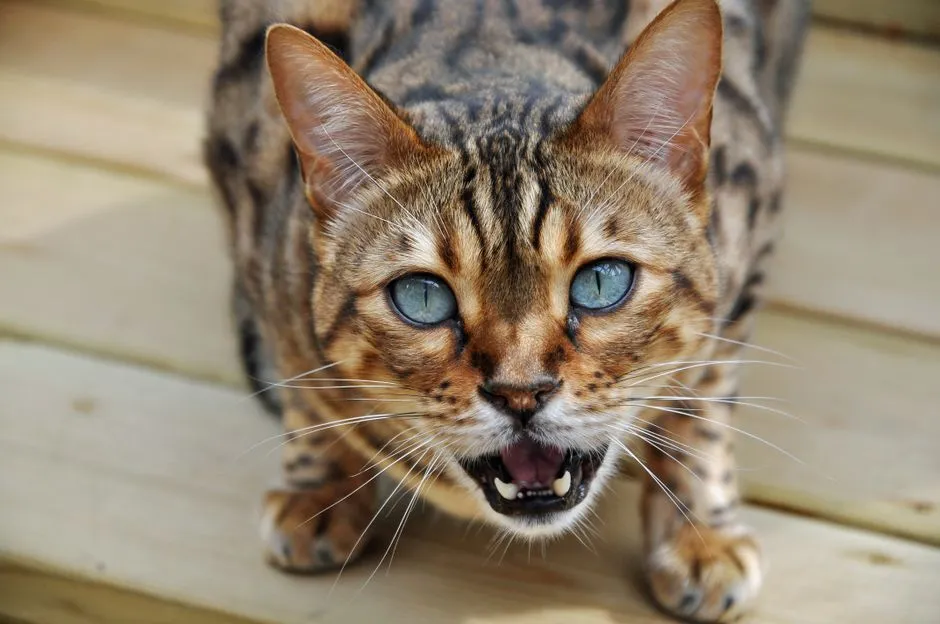
Don’t expect a silent, decorative cat. Many owners describe Bengals as chatty, with chirps, trills and the occasional full-volume complaint. Some cats stay fairly quiet.
The sounds are usually aimed at you, and they often have a point: dinner, play or an open door. A Bengal that “talks” is usually asking for something, and it learns quickly which sounds get results.
That’s where owners slip up. Rushing to answer every demand teaches the cat that louder works.
A few habits help:
- Keep feeding times predictable
- Reward quiet behavior with attention
- Meet the need before it turns into yowling
Our view is that the “chatty Bengal” is often a bored or under-stimulated one. Check the activity level before you blame the personality.
And speaking of attention, the way a Bengal plays has more in common with hunting than with fun. That’s #4.
#4 – Play Isn’t Play. It’s Practice for the Hunt.
🔥 Would you like to save this?
We'll email this post to you, so you can come back to it later!
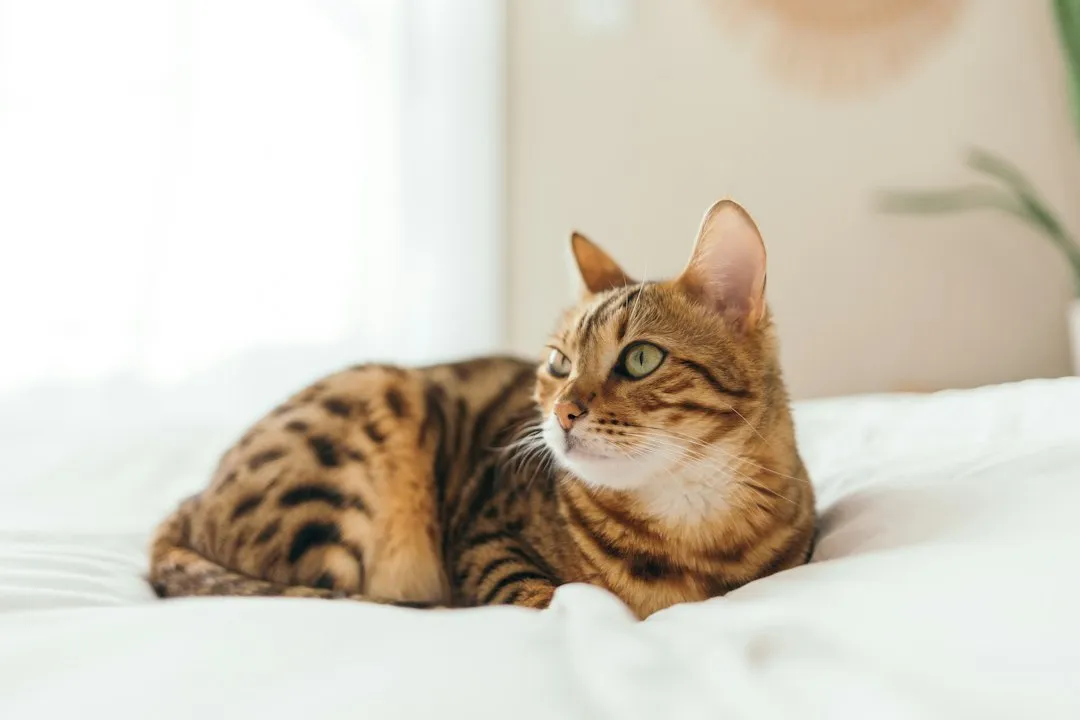
Dangling a toy in front of a Bengal can look like a very serious operation. The Asian leopard cat is a wild species about the size of a domestic cat, ranging from Pakistan and India to eastern Russia and Southeast Asia.
It’s a small predator, and many Bengal owners see that style in their own cats. Stalking, pouncing and carrying “kills” around the house are common. The wild parent is roughly house-cat sized, so the hunting drive in a Bengal doesn’t need a big animal to explain it.
Wand toys that move like prey usually work better than a ball left on the floor. Many owners structure play like a hunt: stalk, chase, catch, then a small meal. It’s a simple routine, and it often helps cats settle afterwards.
But what happens when these hunting instincts have no outlet? Owners say it’s the moment the honeymoon ends, and it’s #3.
#3 – Boredom Is the Real Destruction Machine
🔥 Would you like to save this?
We'll email this post to you, so you can come back to it later!
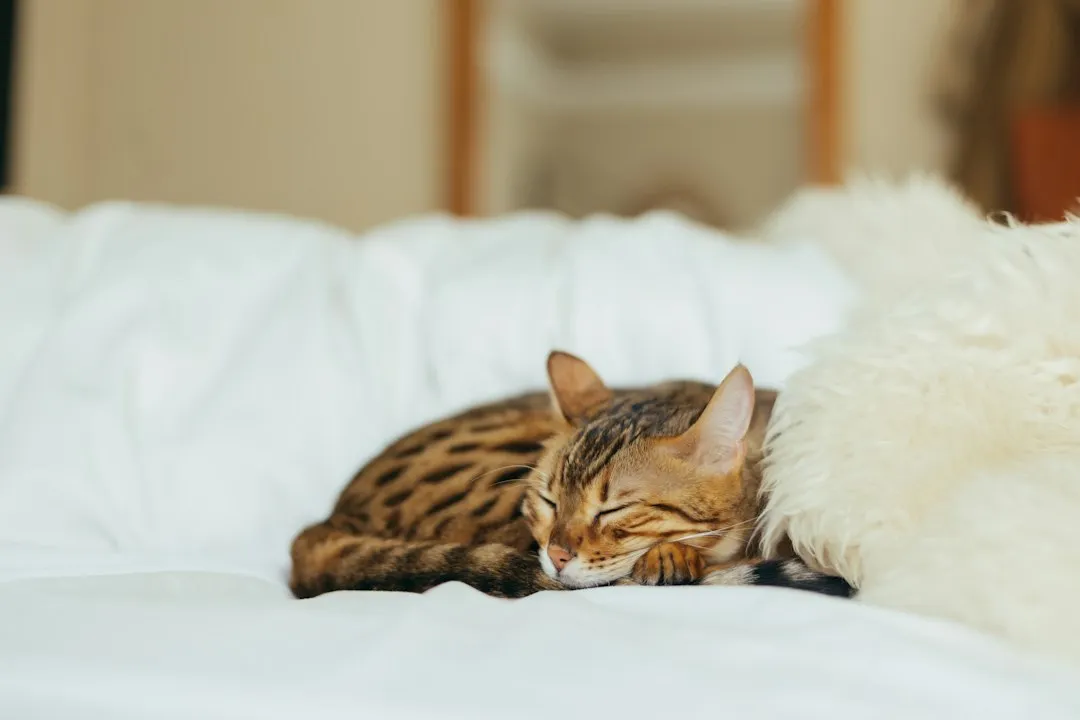
The usual complaint about Bengals isn’t aggression. It’s wrecked furniture and rearranged shelves. A cat this active and this clever needs jobs.
Without them, it makes its own: shredding upholstery, emptying drawers, knocking things off counters at 4 a.m. Most owners don’t realize the behavior is a symptom, not a personality flaw. Early-generation Bengals can also bring litter box difficulties, so stress and under-stimulation can make a bad situation worse.
Signs your Bengal needs more:
- Nighttime zoomies that get worse over time
- Destroying the same item repeatedly
- Pulling things off shelves while watching you
Here’s a more controversial take. Breeders sometimes pitch Bengals as a good fit for apartments. That can work, but only if someone is home and engaged for much of the day.
Behavior is only half of what you’re signing up for, though. The other half is medical, and that’s #2.
#2 – The Health Paperwork Matters More Than the Pedigree
🔥 Would you like to save this?
We'll email this post to you, so you can come back to it later!
The glamorous coat hides a short list of inherited conditions every buyer should know. Bengals are affected by several genetic diseases, including Bengal progressive retinal atrophy (PRA-b), pyruvate kinase deficiency and hypertrophic cardiomyopathy (HCM).
PRA causes blindness, and there is no known cure. The hereditary form isn’t limited to older cats. That’s why a pedigree full of champions means little without test results to go with it.
There is no such thing as an HCM-free breeding line. A small percentage of Bengals develop this enlarged-heart condition. So a breeder who promises “HCM-free lines” is a red flag.
What responsible breeding looks like:
- Heart ultrasound screening for HCM
- DNA tests for PRA-b and PK deficiency
- Open records you can actually read
Some guides recommend annual echocardiograms. Talk to your vet about the schedule that suits your cat.
And the biggest surprise of all has nothing to do with genes. It’s about time, and it’s #1.
#1 – A Bengal Is a 12-to-16-Year Lifestyle, Not an Accessory

🔥 Would you like to save this?
We'll email this post to you, so you can come back to it later!
The single biggest surprise is how long the commitment lasts. The average Bengal lifespan is 12 to 16 years, and indoor Bengals from health-tested lines often live longer. That means the cat that wrecks your curtains this year could still be sharing your home well into the next decade.
The breed itself is young. The first documented Bengal is attributed to California breeder Jean Mill, who crossed a domestic shorthair with an Asian leopard cat in 1963. The Cat Fanciers’ Association only accepted the Bengal into its “Miscellaneous” class in 2016. Compared with centuries-old breeds, there is less long-term history to lean on.
Fast Facts
- Average lifespan: 12 to 16 years
- First documented Bengal: 1963, credited to Jean Mill
- CFA Miscellaneous class: 2016
- Longevity boost: indoor life and health-tested lines
Most owners who thrive with Bengals share one trait. They treat the cat as a project partner, not a decoration. They build vertical space, schedule daily play, keep records and stay curious.
That, more than the rosettes, is what separates a happy Bengal home from a regretful one.
The Bottom Line
The Bengal isn’t a miniature leopard. It’s a clever, athletic, water-loving domestic cat that needs far more work than its photos suggest.
Our opinion: the breed is a poor choice for anyone who wants a quiet, low-effort companion. It’s a rewarding one for owners who’ll provide space, stimulation and genuine health-tested breeding. Skip the breeders who sell you the look and dodge the paperwork.
Would you rather have a calmer cat that fits your life, or a Bengal you’d have to rebuild your home for?

- 7 Everyday Habits That Can Make Your Senior Dog Happier - November 5, 2026
- 10 Enigmatic Structures That Continue to Puzzle Scientists Today - November 5, 2026
- 10 Strange Ruins in the Americas That Challenge What We Know About Early History - November 5, 2026