
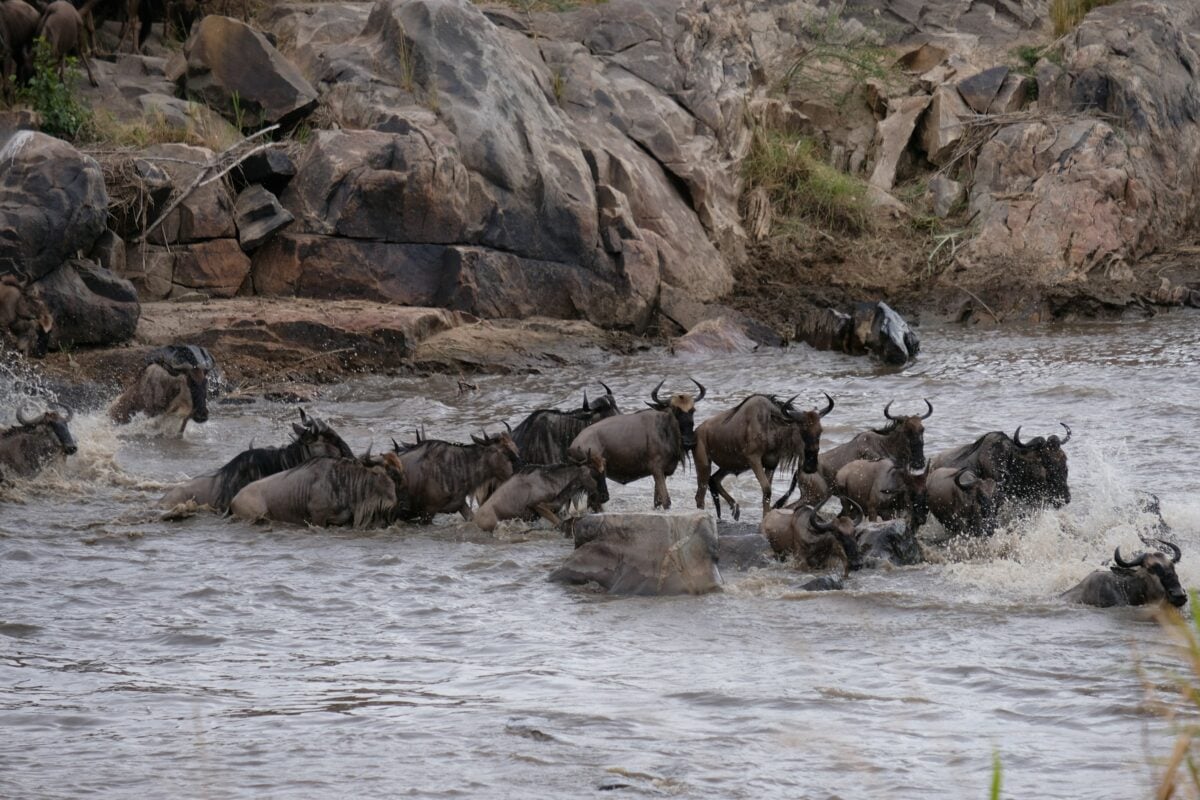
Most people assume migration is simple: an animal gets hungry, cold, or crowded, so it moves. But some journeys in the animal kingdom defy that logic so badly that researchers who’ve spent decades studying them still argue over how they’re physically possible.
We’re talking about creatures with brains smaller than a grain of rice pulling off feats that would bankrupt a modern GPS system, and mammals crossing entire oceans on memory alone. Here’s what migration biologists actually say once the cameras stop rolling and the polite explanations run out.
#12 – Christmas Island’s Red Crab Army That Shouldn’t Sync Up
🔥 Would you like to save this?
We'll email this post to you, so you can come back to it later!
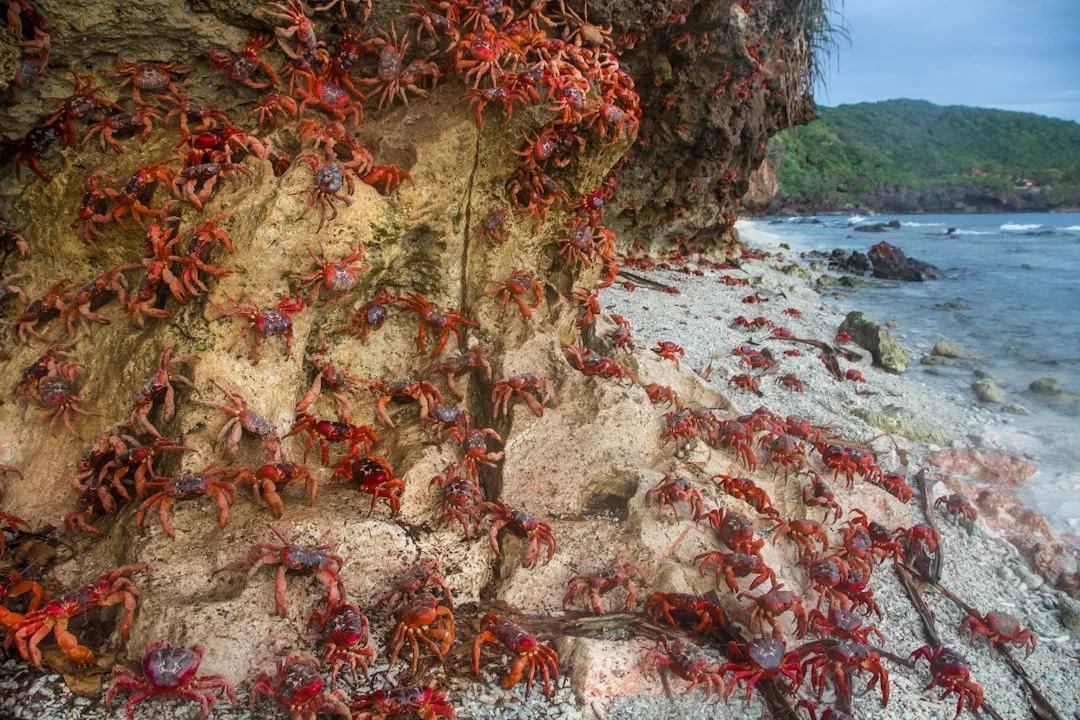
Every year, roughly 40 to 50 million red crabs on Christmas Island abandon their forest burrows at the exact same time and march to the ocean.
There’s no leader, no scout, no obvious signal that starts the exodus. The trigger is tied to the lunar cycle and the first soaking rains of the wet season, but the precision with which millions of individual crabs synchronize their departure has never been fully explained. They cross roads, climb cliffs, and swarm beaches in numbers so dense the ground appears to move like a living carpet.
Biologists have mapped the rough timing to moisture and moonlight, but the coordination mechanism between individual crabs remains murky. Many researchers now openly admit the “how” of the synchronization is still guesswork dressed up as science.
But wait until you see what desert locusts do to their own bodies in #11.
#11 – Desert Locusts That Rewire Their Own Bodies Mid-Migration
🔥 Would you like to save this?
We'll email this post to you, so you can come back to it later!
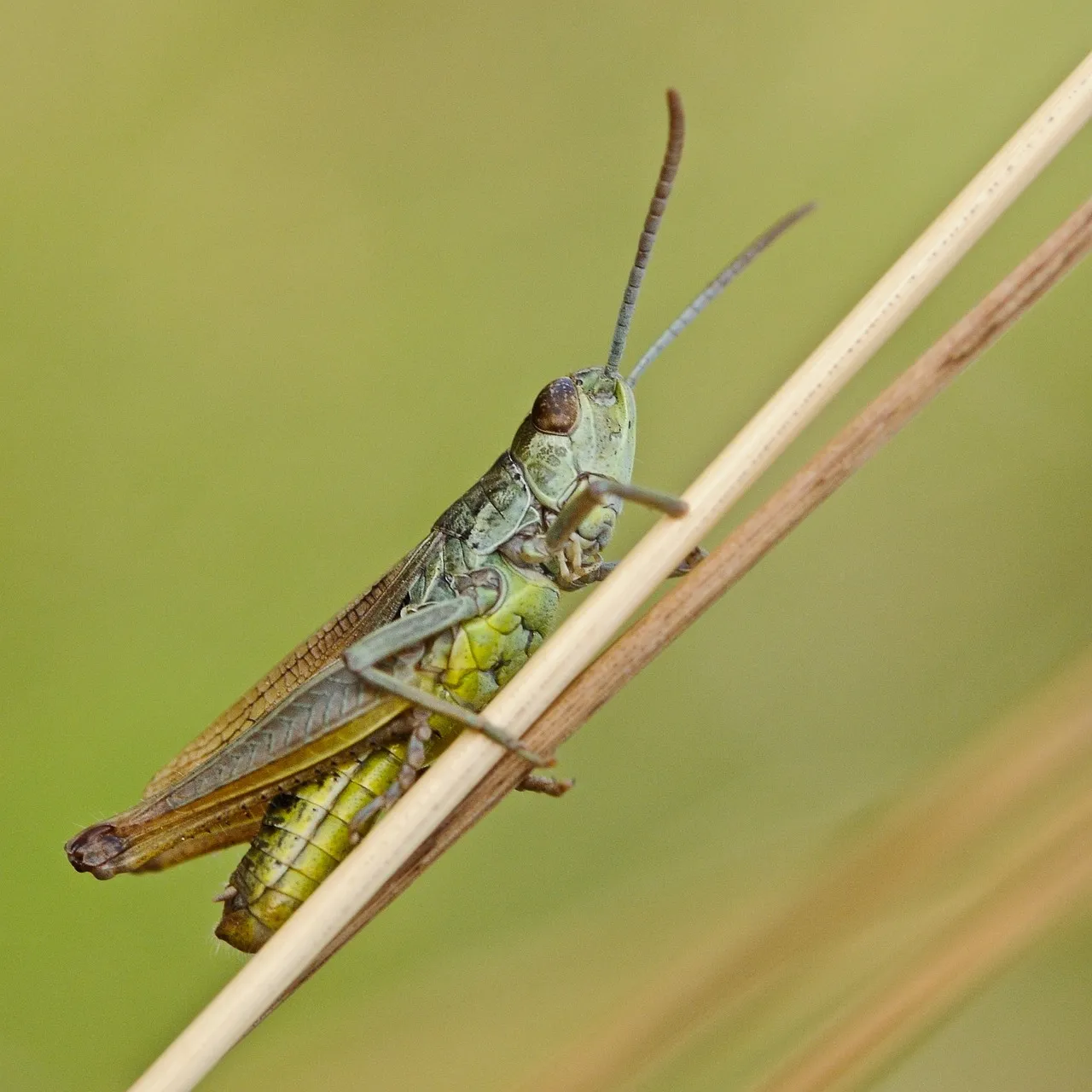
Desert locusts don’t just migrate – they transform into an entirely different insect first.
Under normal conditions, these locusts are solitary, sluggish, and avoid each other. But when population density spikes, something in their brain chemistry flips, and the same species grows longer wings, changes color, and becomes aggressively social within hours. This isn’t a slow evolutionary shift. It’s a real-time physical and behavioral rewrite triggered by touch and crowding cues.
At a Glance
- Trigger: rising population density forces a rapid phase change
- Transformation: body color, wing length, and behavior can shift within hours
- Swarm size: outbreaks can involve billions of insects moving as one
- Range: swarms have been tracked traveling hundreds of miles in a single push
Once transformed, locusts form swarms devouring everything in their path. Scientists studying the phase-change mechanism still debate exactly how a simple touch to the hind leg cascades into a full-body redesign.
It’s less “migration” and more forced metamorphosis on a deadline. Still, that’s tame next to the underwater conga line waiting in #10.
#10 – Spiny Lobsters That March in Single-File Chains Underwater
🔥 Would you like to save this?
We'll email this post to you, so you can come back to it later!
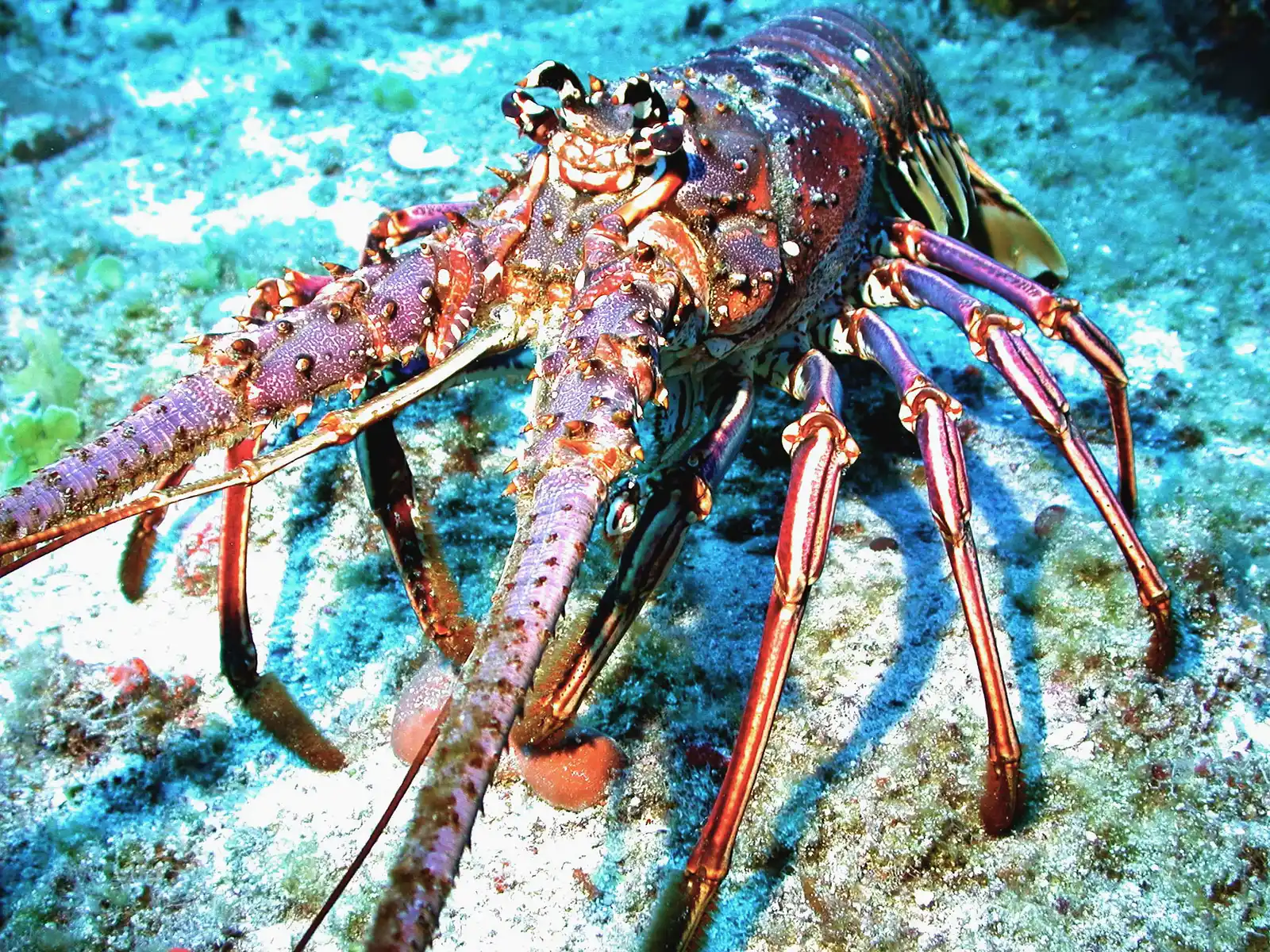
When storms churn the Caribbean and Atlantic waters each fall, spiny lobsters do something almost no other crustacean does: they form single-file lines and walk, nose-to-tail, across the ocean floor for miles.
These queues can stretch dozens of individuals long, moving together with a coordination that looks almost military. Researchers believe the lobsters use a built-in magnetic compass alongside chemical cues to hold formation, but nobody has fully cracked how an animal with such a simple nervous system maintains group cohesion over long, current-battered distances.
The queuing behavior appears to reduce individual predation risk and conserve energy through drafting, similar to cyclists in a pack. What’s controversial is the claim that lobsters can navigate home from unfamiliar locations using magnetic maps alone – a finding many biologists initially dismissed as too advanced for an invertebrate.
Even that pales next to the tiny insect flying blind toward one cave in #9.
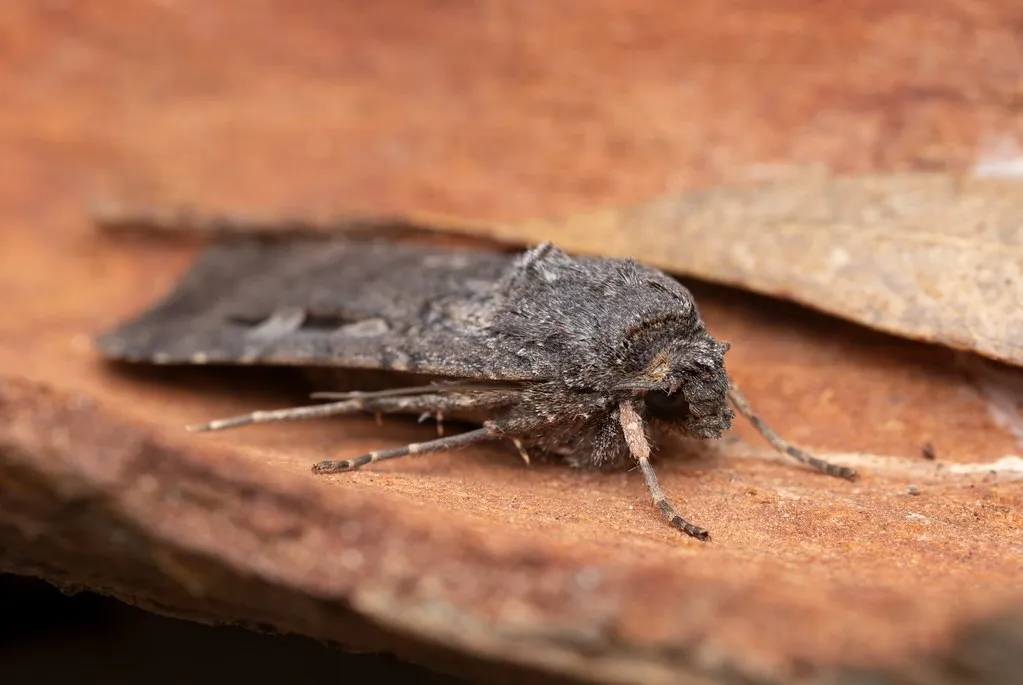
#9 – Bogong Moths That Fly 600 Miles to One Specific Cave
🔥 Would you like to save this?
We'll email this post to you, so you can come back to it later!
Every spring, billions of Bogong moths in Australia leave their breeding grounds and fly up to 600 miles to the exact same handful of cool alpine caves – caves they have never visited before in their four-month lifespan.
No adult moth has ever made this trip previously, and no parent survives to guide them, meaning each moth is navigating from pure inherited instinct. They arrive, cluster by the millions on cave walls to escape summer heat, then reverse the journey months later to breed and die.
Scientists studying the moths suspect they combine visual landmarks with a magnetic sense to pinpoint caves smaller than a shopping mall parking lot. What continues to baffle entomologists is the precision – these are not vague regional migrations but pinpoint navigation to specific rock formations passed down through instinct alone.
And that’s just insects. Wait until you see what whales pull off in #8.
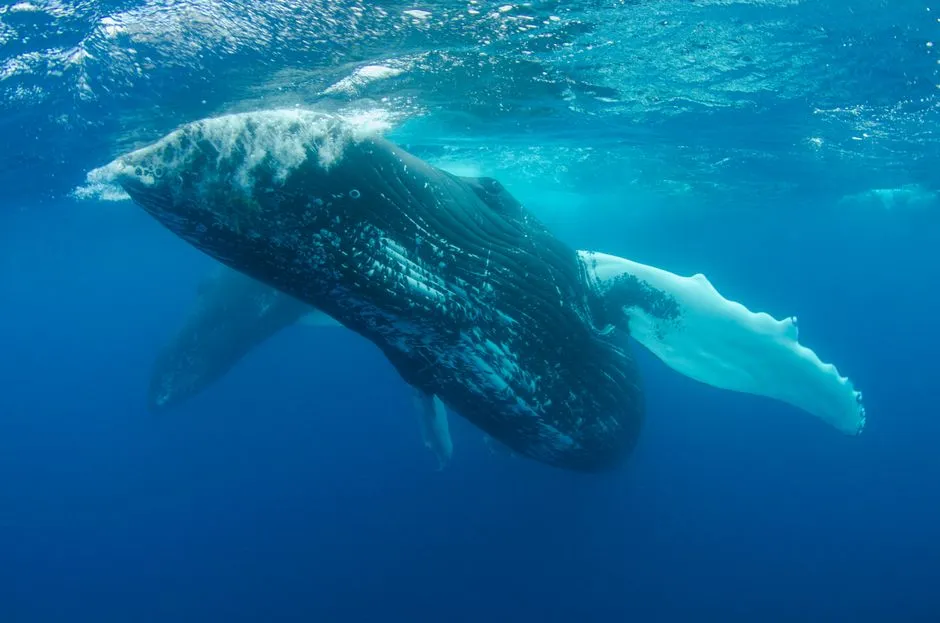
#8 – Humpback Whales That Cross Entire Oceans on Memory Alone
🔥 Would you like to save this?
We'll email this post to you, so you can come back to it later!
Humpback whales undertake some of the longest migrations of any mammal on Earth, moving between polar feeding grounds and tropical breeding waters thousands of miles apart, often with barely any food intake for months.
What troubles researchers isn’t the distance – it’s the accuracy. Individual whales have been tracked returning to the same breeding lagoons and feeding banks year after year, sometimes with route deviations of only a few degrees across thousands of miles of open, featureless ocean. There are no landmarks out there, no coastline to hug for reference.
The leading theories involve a combination of solar position, magnetic field sensitivity, and possibly even sound mapping using low-frequency calls that travel for hundreds of miles underwater. None of these explanations have been definitively confirmed.
Many marine biologists now openly say the mechanism is likely a layered combination of senses working together, not one single “magic” sense. Whales aren’t even the strangest nose in the ocean, though – that title goes to #7.
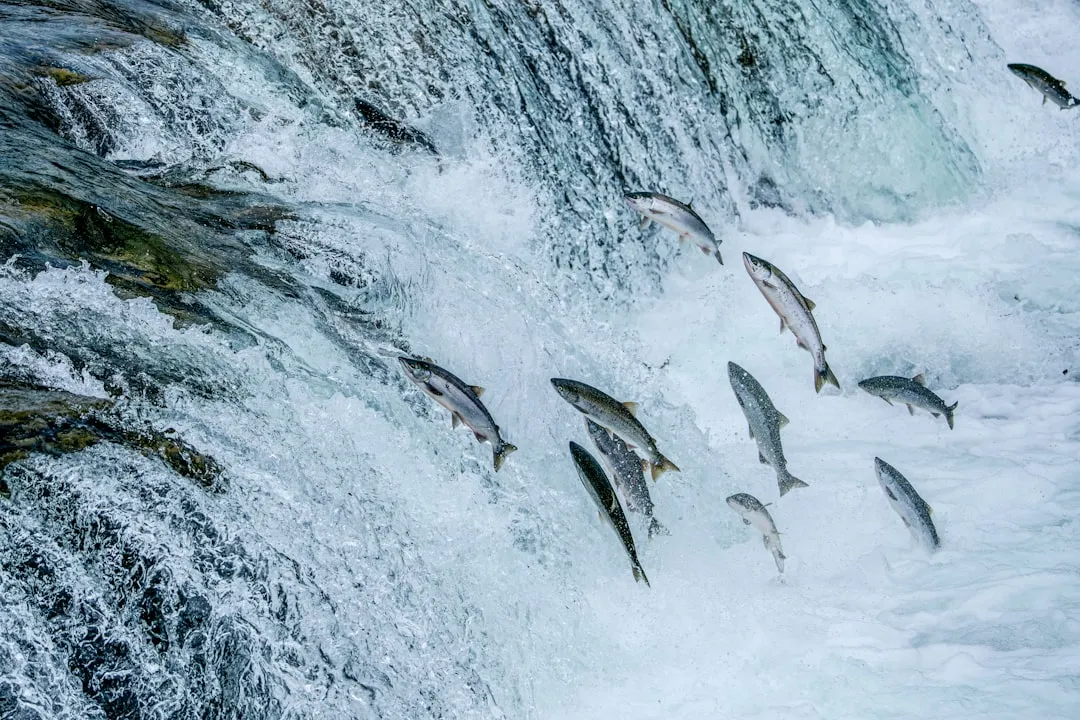
#7 – Pacific Salmon That Smell Their Way Home Across Thousands of Miles
🔥 Would you like to save this?
We'll email this post to you, so you can come back to it later!
Pacific salmon are born in a specific freshwater stream, migrate thousands of miles into the open ocean for years, and then turn around to find that exact same stream to spawn and die.
The dominant theory is that salmon imprint on the unique chemical signature of their home stream as juveniles and use smell to retrace it years later. But the ocean portion of the journey involves open water with no scent trail whatsoever. For that leg, biologists believe magnetic field sensitivity takes over, essentially giving the fish a built-in compass for the ocean phase before switching to smell once they hit coastal waters.
Worth Knowing
- Home imprinting happens while salmon are still juveniles, long before they ever leave the stream
- The open-ocean leg relies on magnetic sensing, since there’s no scent trail out at sea
- Smell takes back over once the fish reach coastal waters near home
- Some hatchery-raised salmon have returned to the specific release pipe decades later
What frustrates researchers is that the switch between navigation systems appears seamless, yet no one has isolated exactly where one system hands off to the other.
Some salmon populations show homing accuracy so precise that hatchery-raised fish have been documented returning to the specific pipe they were released from decades earlier. Salmon smell their way home – turtles do something even weirder in #6.
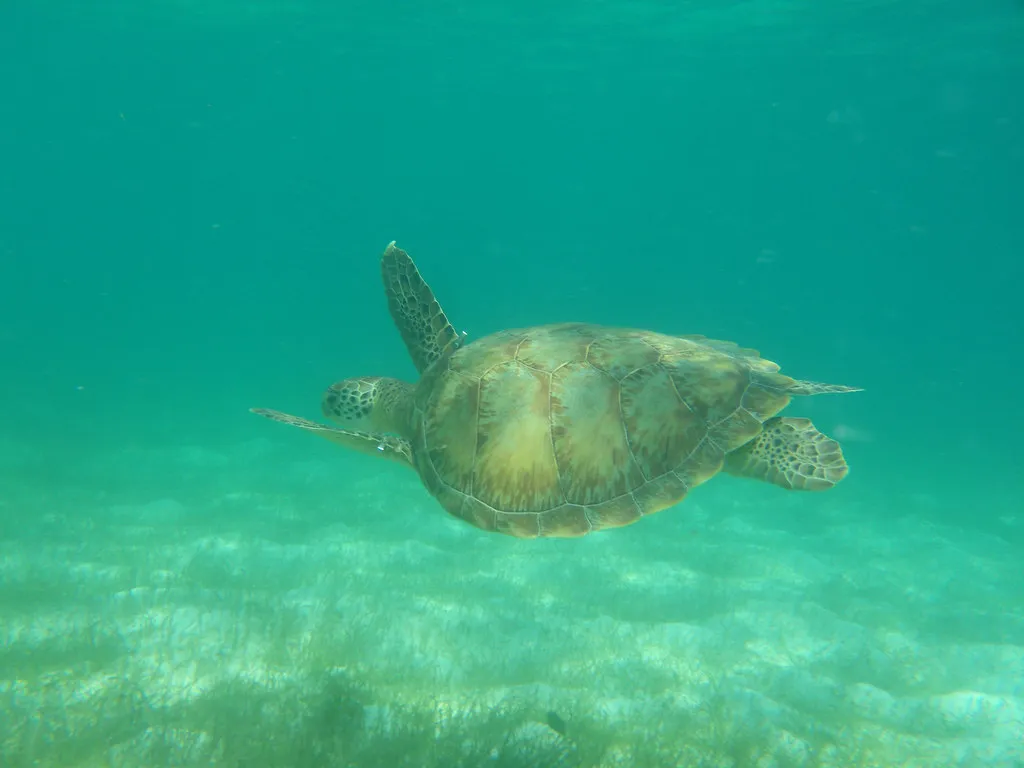
#6 – Green Sea Turtles With a Built-In GPS to a Beach They’ve Never Chosen
🔥 Would you like to save this?
We'll email this post to you, so you can come back to it later!
Female green sea turtles migrate thousands of miles across open ocean to lay eggs on the exact same beach where they themselves hatched decades earlier – sometimes the same stretch of sand within a few hundred yards.
Researchers now believe turtles imprint on the unique magnetic signature of their birth beach as hatchlings, essentially recording a magnetic “address” they carry for their entire lives. When it’s time to nest, they use that magnetic map to navigate back across ocean basins with no visual cues, no scent trail, and years between visits.
What’s genuinely controversial among biologists is how a magnetic signature – which shifts slowly over geological time – stays a reliable enough marker for a turtle that might not return for 20 to 30 years.
Some experts argue this alone should make homing impossible over such timescales, yet turtles keep proving them wrong nesting after nesting season. Turtles remember a beach. Monarchs remember a route they’ve never flown, and that’s coming up in #5.
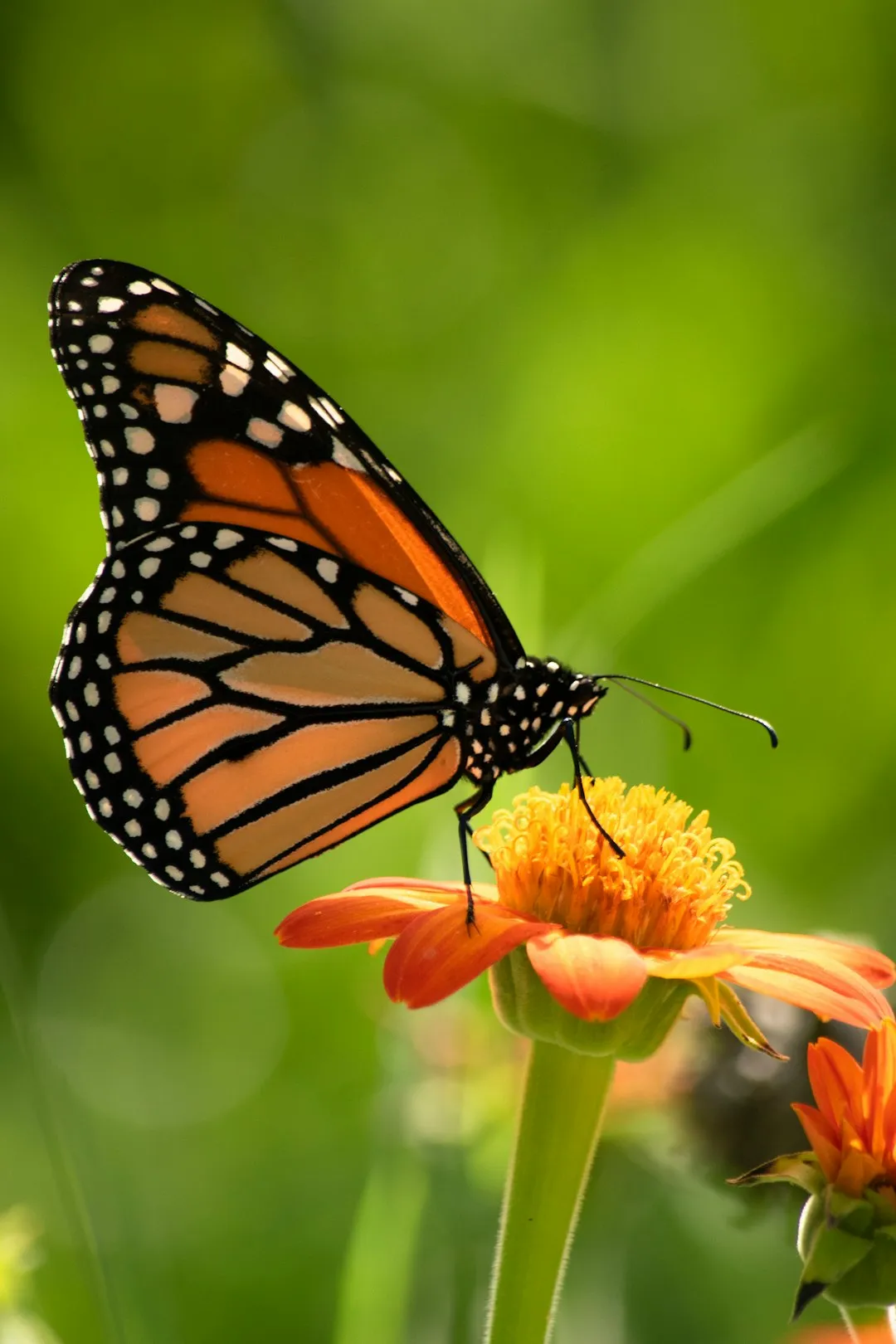
#5 – Monarch Butterflies That Navigate a Route None of Them Have Flown Before
🔥 Would you like to save this?
We'll email this post to you, so you can come back to it later!
Monarch butterflies migrating from Canada and the northern United States to a specific patch of forest in central Mexico complete a journey that spans three to four generations of the same migratory cycle.
The butterflies that arrive in Mexico each winter are the great-great-grandchildren of the monarchs that left the previous spring, meaning not a single individual making the full southbound journey has ever flown it before. There is no adult monarch alive at any point to teach the route. Yet the insects consistently cluster on the same mountainside trees their ancestors used.
Scientists studying monarch navigation point to a sun-compass system paired with an internal circadian clock, allowing the insects to correct their flight angle as the sun moves across the sky throughout the day.
Even with that explained, many researchers admit the multi-generational route memory is the part that remains genuinely mysterious. Butterflies use the sun to steer. Up next, a beetle that steers by the entire galaxy.
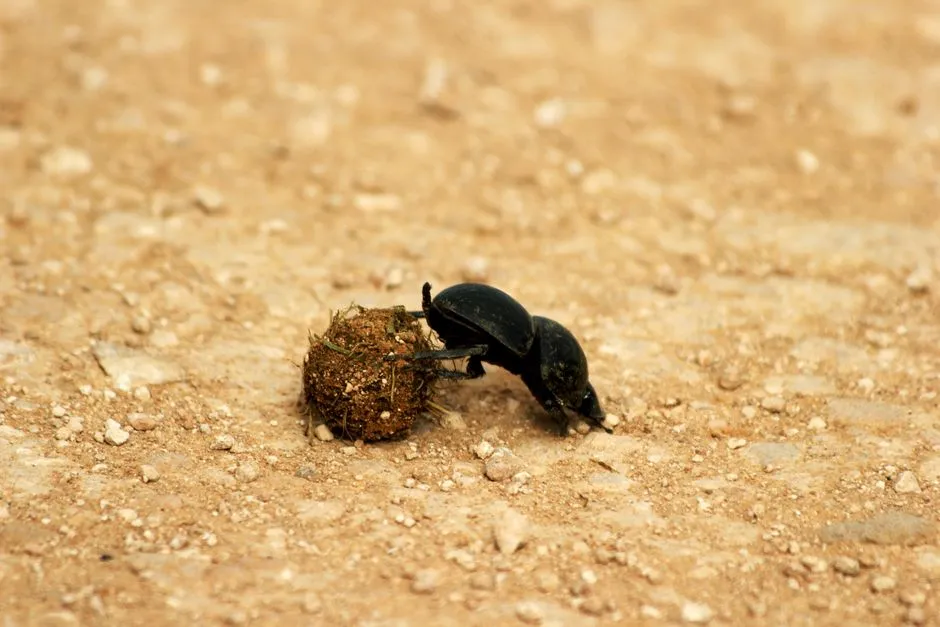
#4 – Dung Beetles That Steer by the Milky Way
🔥 Would you like to save this?
We'll email this post to you, so you can come back to it later!
It sounds like satire, but it’s peer-reviewed science: dung beetles use the Milky Way itself as a navigational compass.
Researchers studying the nocturnal species Scarabaeus satyrus set up experiments in a South African planetarium and outdoor arenas, manipulating what the beetles could see of the night sky. The dung beetle turned out to be the first known species in the animal kingdom to navigate using the Milky Way.
To confirm it, researchers even put tiny cardboard hats on the beetles’ heads, blocking their view of the sky. With those blindfolds on, the beetles lost all sense of direction and rolled around aimlessly – proof the galaxy itself, not the moon or individual stars, was steering them.
Dung beetles see about 1000 times better than honey bees, which have the best daytime vision.
Marie Dacke, evolutionary biologist
That level of night vision in an insect this small still strikes many entomologists as evolutionarily excessive – until you remember what’s at stake: losing a stolen dung ball to a rival in the dark. Beetles look at stars. Eels disappear for a century, and that’s #3.
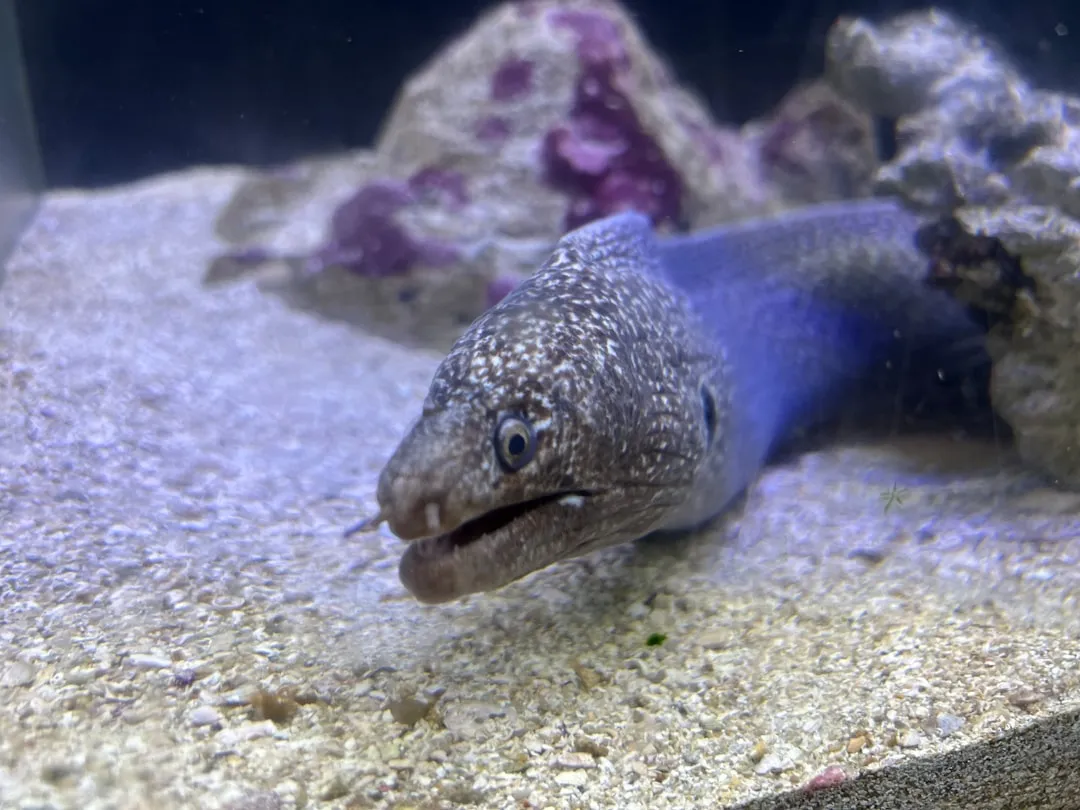
#3 – European Eels That Vanish Into a Sea No One Has Ever Watched Them Reach
🔥 Would you like to save this?
We'll email this post to you, so you can come back to it later!
For over a century, scientists knew European eels disappeared from rivers across an entire continent and were never seen again. Until recently, no one had proof of where they actually went to breed.
Danish biologist Ernst Johannes Schmidt discovered in 1921 that European eels migrate to the Sargasso Sea to spawn, based purely on tracking larvae backward across the Atlantic. But despite nearly a century passing since Schmidt proposed the Sargasso Sea as the breeding ground, no eggs or spawning adults have ever been sampled there to confirm it.
It wasn’t until satellite tags were finally attached to migrating eels that researchers got direct evidence of adults actually reaching the Sargasso Sea. An adult European eel undertakes the longest spawning migration of all anguillid eels – a distance of 5,000 to 10,000 km across the Atlantic Ocean.
Even now, scientists still don’t fully know what happens when these eels actually spawn in the wild. No human has ever witnessed it. Eels vanish into mystery. This next bird just racks up impossible mileage instead.
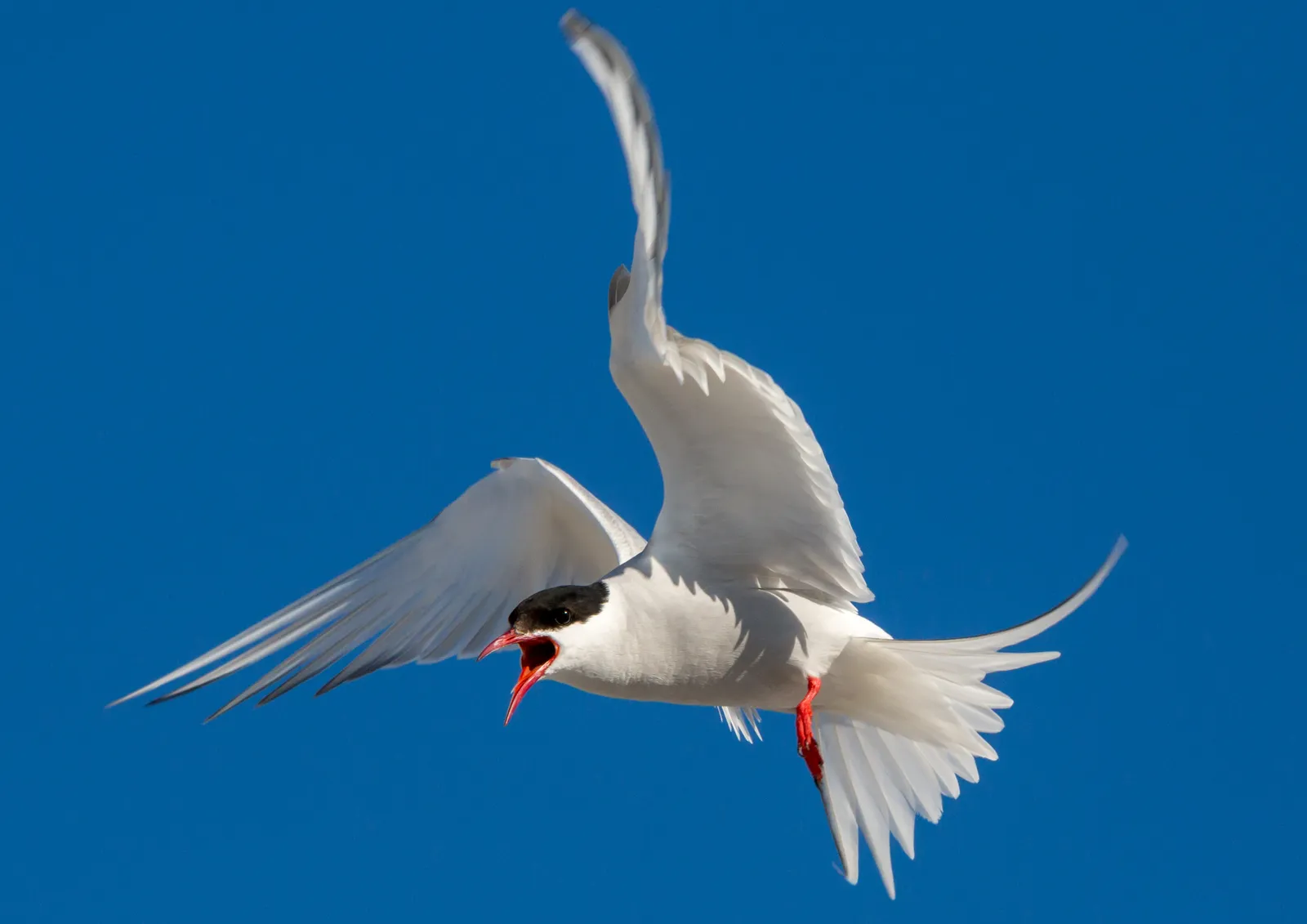
#2 – Arctic Terns Logging More Miles Than a Trip to the Moon and Back – Three Times Over
🔥 Would you like to save this?
We'll email this post to you, so you can come back to it later!
If any bird makes migration biologists question their own field, it’s the Arctic tern – a bird weighing barely 100 grams that racks up mileage no engineer would design into a living creature.
Arctic terns fly on average 44,000 miles on their annual migration from pole to pole, and the annual roundtrip has been recorded at more than 71,000 km depending on the route taken that year. Over a full lifetime, that adds up to a staggering total.
Quick Compare
- Average annual round trip: about 44,000 miles pole to pole
- Best recorded annual route: more than 71,000 km in a single year
- Lifetime distance: roughly 2.4 million km, equal to about 60 trips around Earth
- Moon comparison: more than three round trips to the moon and back
What makes this genuinely controversial in ornithology circles isn’t just the distance – it’s that young terns migrate on their very first journey, often without an experienced adult to follow. A bird with zero prior experience, no map, and no mentor completing a 44,000-mile round trip on the first attempt is the part biologists still can’t fully explain. Even that record gets crushed by the bird holding the #1 spot.
#1 – The Godwit That Flew for 11 Days Without Ever Landing
🔥 Would you like to save this?
We'll email this post to you, so you can come back to it later!
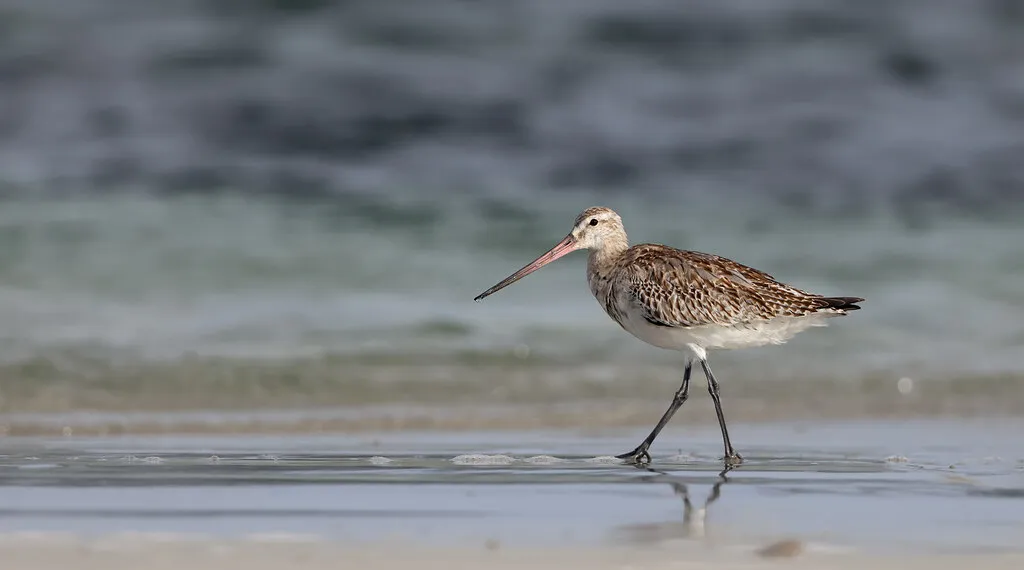
If one migration deserves to top a list of things biologists concede shouldn’t be possible, it’s the bar-tailed godwit’s nonstop transpacific flight – a feat so extreme it reads like a typo the first time you hear it.
A four-month-old bar-tailed godwit known as B6 set a new world record by completing a non-stop 11-day migration of 8,425 miles from Alaska to Tasmania, Australia, representing the longest documented non-stop flight by any animal. The bird flew over open ocean the entire time, with no food, no water, and no rest stops of any kind for over 260 straight hours.
To pull this off, godwits feed for two months in Alaska before the flight, during which males may double in size. They’re also able to shrink the size of their internal organs to make way for energy-rich fat that sustains them during the journey.
Airborne during both day and night, they may burn through more than half of their body weight, while also boosting the size of their chest muscles and heart to aid the distribution of energy and oxygen. Even researchers who track these birds for a living describe the flight as pushing the outer limits of vertebrate physiology – a bird essentially cannibalizing its own organs mid-flight just to stay airborne.
The Bottom Line
🔥 Would you like to save this?
We'll email this post to you, so you can come back to it later!
Strip away the Hollywood narration and what’s left is genuinely humbling: eels vanish for a century before anyone confirms where they breed, beetles steer by galaxies, and a shorebird flies for 11 days by shrinking its own guts.
None of these migrations rely on a single “magic” explanation. They’re stitched together from magnetic senses, inherited instinct, and physiological tricks scientists are still decoding piece by piece.
The uncomfortable truth is that biologists have documented these journeys far better than they’ve ever explained them. That gap between watching something happen and understanding why is where the real wonder lives – and it’s a gap that isn’t closing anytime soon.

- 7 Everyday Habits That Can Make Your Senior Dog Happier - November 5, 2026
- 10 Enigmatic Structures That Continue to Puzzle Scientists Today - November 5, 2026
- 10 Strange Ruins in the Americas That Challenge What We Know About Early History - November 5, 2026