

Have you ever wondered what deadly creatures might be lurking just beneath the surface of everyday life? While some of the world’s most dangerous animals are often well-known, many others remain hidden in plain sight, quietly blending into their surroundings. These creatures, with their surprising abilities and lethal defenses, can be found from bustling cities to serene forests. Their stealthy nature and unsuspecting appearances make them even more fascinating—and frightening. Let’s dive into the world of these 12 deadly animals that might be closer than you think.
Brazilian Wandering Spider

The Brazilian Wandering Spider, often referred to as the “banana spider,” is not your average arachnid. Found in tropical South America, this spider doesn’t spin a web to catch its prey. Instead, it wanders the forest floor and urban areas, actively hunting its victims. Its venom is potent enough to kill a human, causing intense pain, paralysis, and even death if left untreated. Surprisingly, these spiders are sometimes found in shipments of bananas, making them a hidden threat in grocery stores worldwide. Their ability to blend into their environment and their aggressive nature make them one of the most dangerous spiders known to man.
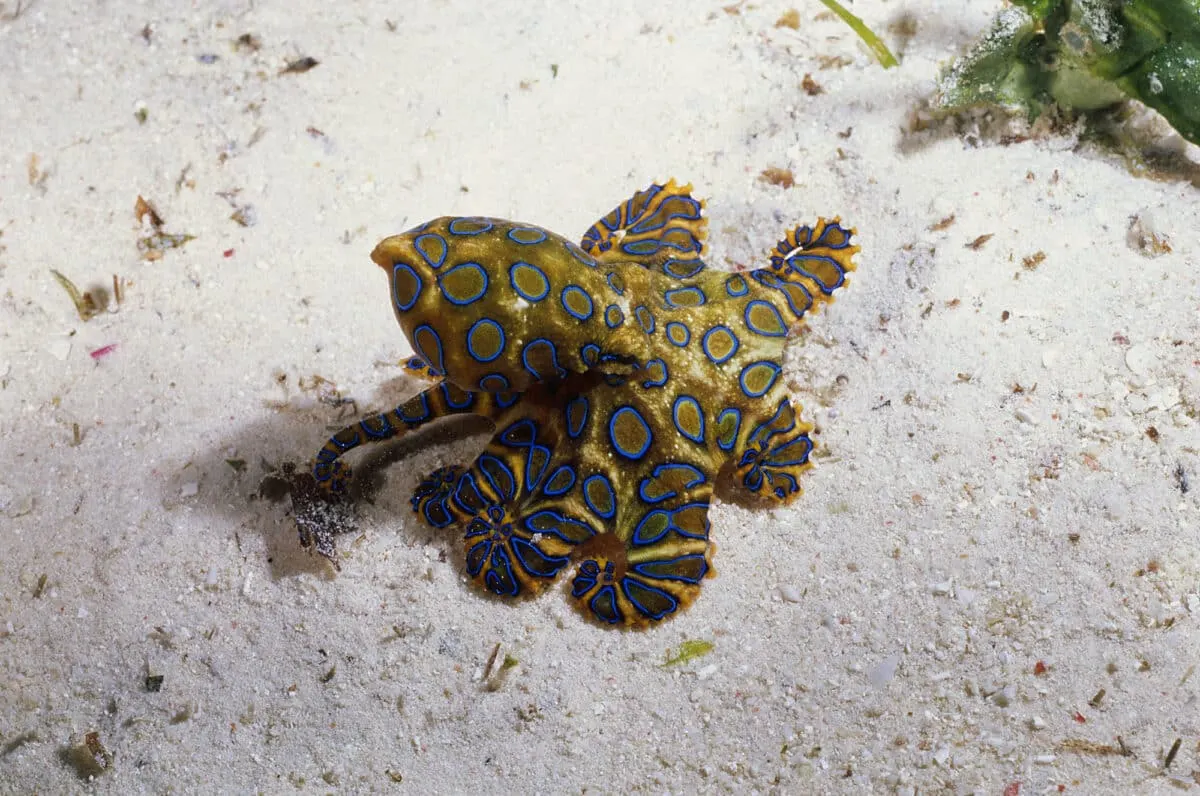
Blue-Ringed Octopus

The Blue-Ringed Octopus is a small but deadly sea creature found in the Pacific and Indian Oceans. Despite its vibrant blue rings, which appear when the octopus feels threatened, it is often overlooked due to its small size. This tiny octopus carries enough venom to kill 26 adult humans within minutes. The venom, called tetrodotoxin, causes muscle paralysis and can lead to respiratory failure. What makes the Blue-Ringed Octopus particularly dangerous is its tendency to hide in shallow tide pools and crevices, where unsuspecting beachgoers might encounter it.
Stonefish

Camouflaged to look like a rock or piece of coral, the Stonefish is one of the most venomous fish in the world. Found in the coastal waters of the Indo-Pacific region, it is often accidentally stepped on by swimmers or divers. The Stonefish has spines on its back that release venom when pressure is applied, causing excruciating pain and potentially fatal consequences if not treated quickly. Its ability to remain motionless and blend into its surroundings makes it a master of disguise in the underwater world.
Box Jellyfish

Box Jellyfish, known for their cube-shaped bodies, are found in the warm coastal waters of the Pacific and Indian Oceans. These translucent creatures are nearly invisible in the water, making them a hidden danger to swimmers. Their tentacles contain millions of nematocysts, which release venom that can cause heart failure, paralysis, and death within minutes. The Box Jellyfish is often considered one of the most venomous marine animals, and their presence in popular swimming areas poses a significant threat to humans who unknowingly enter their domain.
Pufferfish

The Pufferfish, often associated with its comical appearance and ability to inflate, is a deadly delicacy in some cultures. Found in warm coastal waters, this fish contains tetrodotoxin, a potent neurotoxin that is 1,200 times more poisonous than cyanide. Despite its deadly nature, Pufferfish is considered a gourmet dish in Japan, where it is known as fugu. However, it must be prepared by specially trained chefs to avoid poisoning. The Pufferfish’s seemingly benign appearance and popularity as a food item make it a surprising hidden danger.
Inland Taipan

The Inland Taipan, also known as the “fierce snake,” holds the title of the most venomous snake in the world. Native to the arid regions of Australia, this elusive serpent is rarely seen by humans. Its venom is so potent that a single bite can kill up to 100 adult men. However, the Inland Taipan is known for its reclusive nature and tends to avoid human contact, making encounters extremely rare. Its ability to deliver a deadly bite while remaining largely hidden in its environment underscores the danger it poses.
Asian Giant Hornet

The Asian Giant Hornet, often referred to as the “murder hornet,” is the largest hornet species in the world. Found in East Asia, these hornets can grow up to two inches long and have a venomous sting that can cause severe pain, tissue damage, and even death. They are known for their aggressive behavior and tendency to attack in groups, posing a significant threat to both humans and honeybee populations. Their size and ferocity make them a formidable opponent, often hiding in plain sight in rural and suburban areas.
Deathstalker Scorpion

The Deathstalker Scorpion, native to North Africa and the Middle East, is one of the most dangerous scorpions in the world. Its venom contains a potent mix of neurotoxins that can cause intense pain, fever, convulsions, and potentially death. Despite its small size, the Deathstalker is highly aggressive and often found hiding under rocks or in burrows, waiting to ambush its prey. Its ability to blend into its arid surroundings makes it a hidden threat to those who venture into its territory.
Golden Poison Dart Frog

The Golden Poison Dart Frog, native to the rainforests of Colombia, is one of the most toxic animals on Earth. This small, brightly colored amphibian carries enough poison to kill 10 adult humans. Indigenous tribes have used its potent toxin to coat the tips of their blow darts for hunting. Despite its deadly nature, the Golden Poison Dart Frog is a master of disguise, often hiding among the leaves and debris of the forest floor. Its vibrant colors serve as a warning to potential predators, but to the untrained eye, it can easily go unnoticed.
Komodo Dragon

The Komodo Dragon, the largest living species of lizard, is found on a few Indonesian islands. These formidable creatures can grow over 10 feet long and weigh up to 150 pounds. They are apex predators with a venomous bite that can cause shock, paralysis, and death. Despite their size, Komodo Dragons are skilled hunters, using stealth and surprise to ambush their prey. Their presence on popular tourist islands makes them a hidden danger to unsuspecting visitors who may not realize the threat they pose.
Bullet Ant

The Bullet Ant, native to the rainforests of Central and South America, is infamous for its incredibly painful sting. Often described as the most painful insect sting in the world, the pain can last for up to 24 hours. The Bullet Ant’s venom contains a potent neurotoxin that can cause temporary paralysis and intense burning sensations. Despite their small size, these ants are highly aggressive and often found in trees or on the forest floor, making them a hidden threat to those who venture into their habitat.
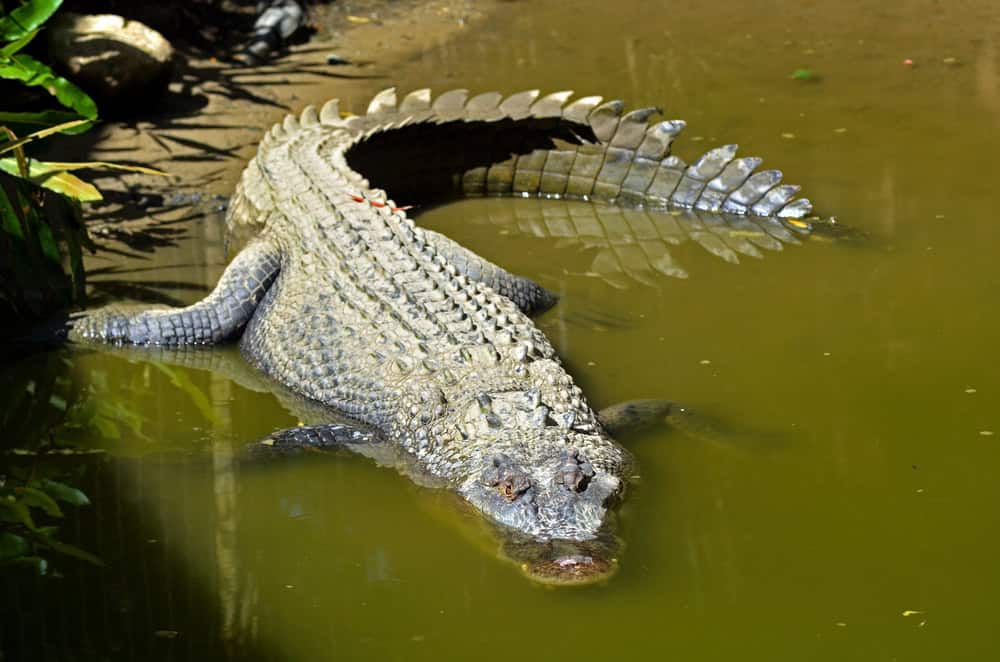
Saltwater Crocodile

The Saltwater Crocodile, the largest reptile in the world, is found in the coastal regions of Southeast Asia and Australia. These formidable predators can grow over 20 feet long and weigh over 2,000 pounds. Known for their incredible strength and speed, Saltwater Crocodiles are capable of taking down large prey, including humans. They often lurk just beneath the water’s surface, waiting to ambush unsuspecting victims. Their ability to remain hidden in murky waters makes them a deadly threat to those who venture too close to their territory.
In conclusion, the world is filled with creatures that, while seemingly ordinary or even invisible, possess lethal capabilities. These animals, hiding in plain sight, remind us of the delicate balance between beauty and danger in nature. Their existence challenges us to appreciate and respect the natural world, always aware that the most dangerous threats are often the ones we least expect. What other hidden dangers might be lurking around us, waiting to be discovered?

As a little kid, I fell in love with nature, wildlife, and animals. Living in the USA, South Africa, Italy, China and Germany gave me the opportunity to discover the world's Wildlife. My favorite animals are Mountain Gorillas, Siberian Tigers, and Great White Sharks.
I'm a certified PADI Open Water Diver, went to Everest Base Camp and Trekked Gorillas in Uganda. I hold a Master of Science in Economics and Finance.
Please send any feedback to feedback@animalsaroundtheglobe.com
- 15 Gardening Tips That Are a Hummingbird’s Nightmare (— Avoid #4 at All Costs) - July 23, 2026
- 15 Most Misunderstood Dog Breeds - July 23, 2026
- 14 Dog Breeds That Do not Need Much Exercise - July 23, 2026