

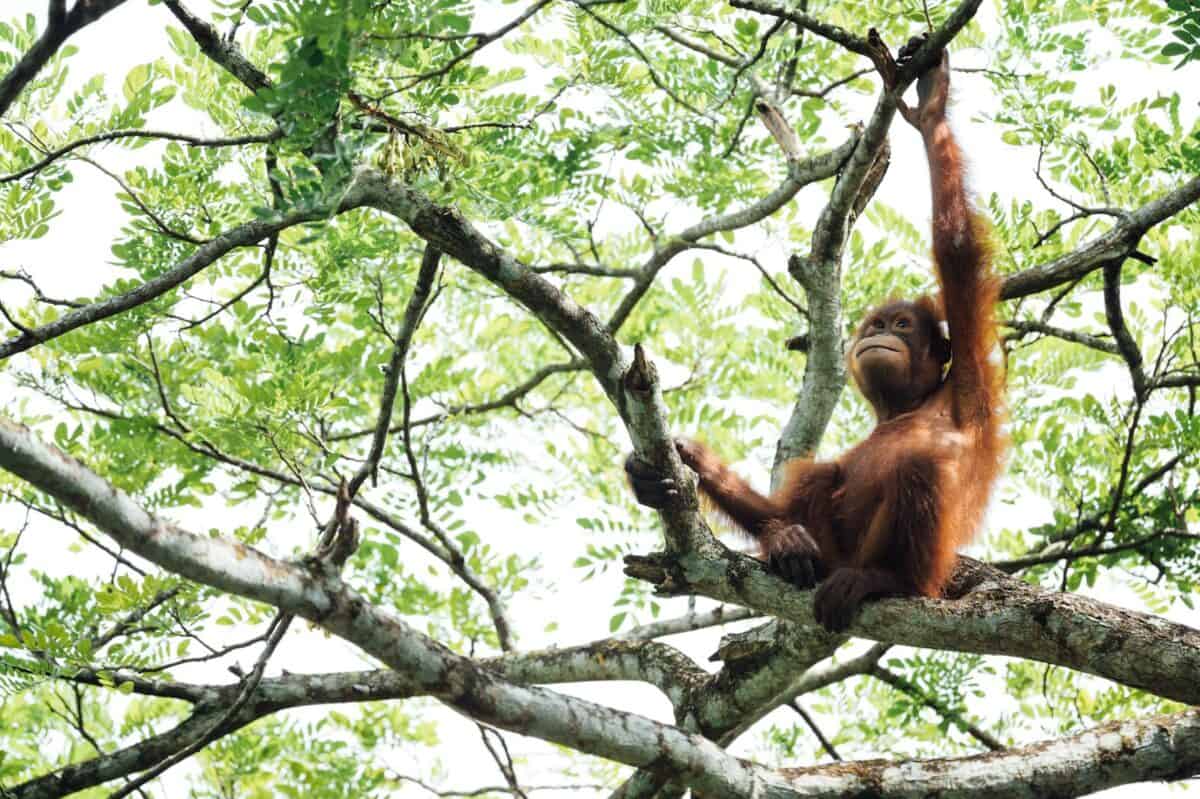
Primates represent one of the most diverse and fascinating orders of mammals, with monkeys comprising a significant portion of this group. Among monkeys, scientists recognize two distinct evolutionary lineages: Old World monkeys (Cercopithecidae) and New World monkeys (Platyrrhini). These two groups diverged approximately 40 million years ago and have since developed numerous distinguishing characteristics due to their separate evolutionary paths. From facial features to tail functionality, habitat preferences to social structures, these primates showcase remarkable adaptations that reflect their unique evolutionary histories. This article explores twelve key differences between Old World and New World monkeys, highlighting how geography and evolution have shaped these remarkable primates into the diverse species we observe today.
Nose Shape and Structure

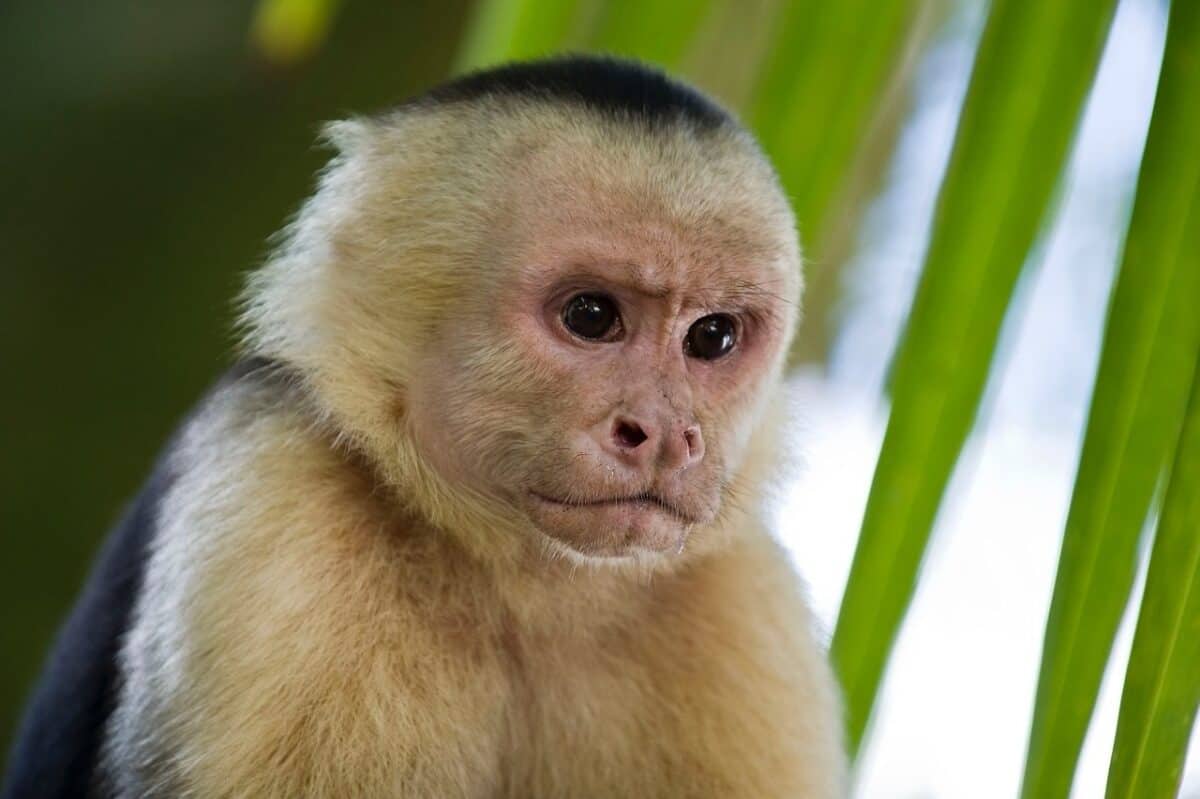
One of the most reliable ways to distinguish between Old World and New World monkeys is by examining their nose structure. Old World monkeys have narrow noses with downward-facing nostrils that are close together, resembling the nose structure of humans. This nose configuration is known as “catarrhine,” derived from Greek words meaning “downward-facing nostrils.” In contrast, New World monkeys possess what scientists call “platyrrhine” noses, characterized by flatter noses with outward-facing nostrils that are set farther apart. This distinct nasal structure serves as such a reliable identifier that taxonomists use these terms to classify the two groups: Catarrhini for Old World monkeys and Platyrrhini for New World monkeys. These nasal differences likely evolved in response to different environmental pressures in Africa and Asia versus the Americas.
Prehensile Tails

Perhaps one of the most remarkable adaptations found in New World monkeys is the prehensile tail, which functions essentially as a fifth limb. Many New World monkey species, such as spider monkeys, howler monkeys, and capuchins, possess tails that can grasp branches, manipulate objects, and even support their entire body weight while hanging. The underside of these prehensile tails typically has a sensitive, hairless patch similar to a fingerprint that enhances grip and sensory feedback. Old World monkeys, by contrast, never developed prehensile tails. Their tails, while sometimes long and used for balance, cannot grasp objects or support their weight. Some Old World monkey species, like macaques and baboons, have relatively short tails, and others, such as the Barbary macaque, have extremely reduced tails that appear almost non-existent. This fundamental difference reflects the distinct arboreal adaptations that evolved separately on different continents.
Cheek Pouches

Many Old World monkey species possess specialized cheek pouches, which are essentially expandable pockets inside their cheeks that allow them to store food temporarily. These pouches enable monkeys like macaques and baboons to collect large amounts of food quickly in competitive or dangerous situations, then retreat to safer locations to process and consume their findings. Some species can store an amount of food in their cheek pouches equivalent to what their stomach could hold. New World monkeys, however, completely lack these specialized pouches. This absence means they must either consume food where they find it or carry it in their hands, which limits their gathering efficiency. The evolution of cheek pouches in Old World monkeys likely represents an adaptation to more terrestrial lifestyles and competitive feeding environments, where the ability to gather food quickly provides a significant advantage.
Ischial Callosities

Old World monkeys have developed distinctive hardened patches of skin on their buttocks known as ischial callosities. These specialized sitting pads are composed of thickened skin overlying the ischial bones (sitting bones) and are typically hairless and often brightly colored in some species. These callosities serve as comfortable, built-in “sitting pads” that allow the monkeys to rest comfortably on branches or hard surfaces for extended periods. They’re particularly prominent in species like baboons and macaques. New World monkeys completely lack these specialized sitting pads. The absence of ischial callosities in New World monkeys may relate to their more consistently arboreal lifestyle, where they’re more likely to perch than sit flat on branches, and where their prehensile tails often provide additional support. This anatomical difference represents another clear marker for distinguishing between these two major monkey groups.
Geographical Distribution

As their names suggest, Old World and New World monkeys have entirely different natural geographical distributions, separated by vast oceans. Old World monkeys are native to Africa and Asia, ranging from the forests of West Africa to the mountains of Japan and the islands of Southeast Asia. Their habitats span from tropical rainforests to savannas, mountains, and even semi-desert regions. Species like baboons have adapted to life in relatively arid environments, while others like proboscis monkeys inhabit mangrove swamps. New World monkeys, meanwhile, are exclusively found in Central and South America, from Mexico to northern Argentina. Their distribution is primarily concentrated in tropical and subtropical forests, particularly in the Amazon Basin, where they’ve evolved to occupy different levels of the forest canopy. This complete geographical separation has been fundamental in driving the evolutionary divergence between these two monkey lineages over millions of years.
Dental Formula
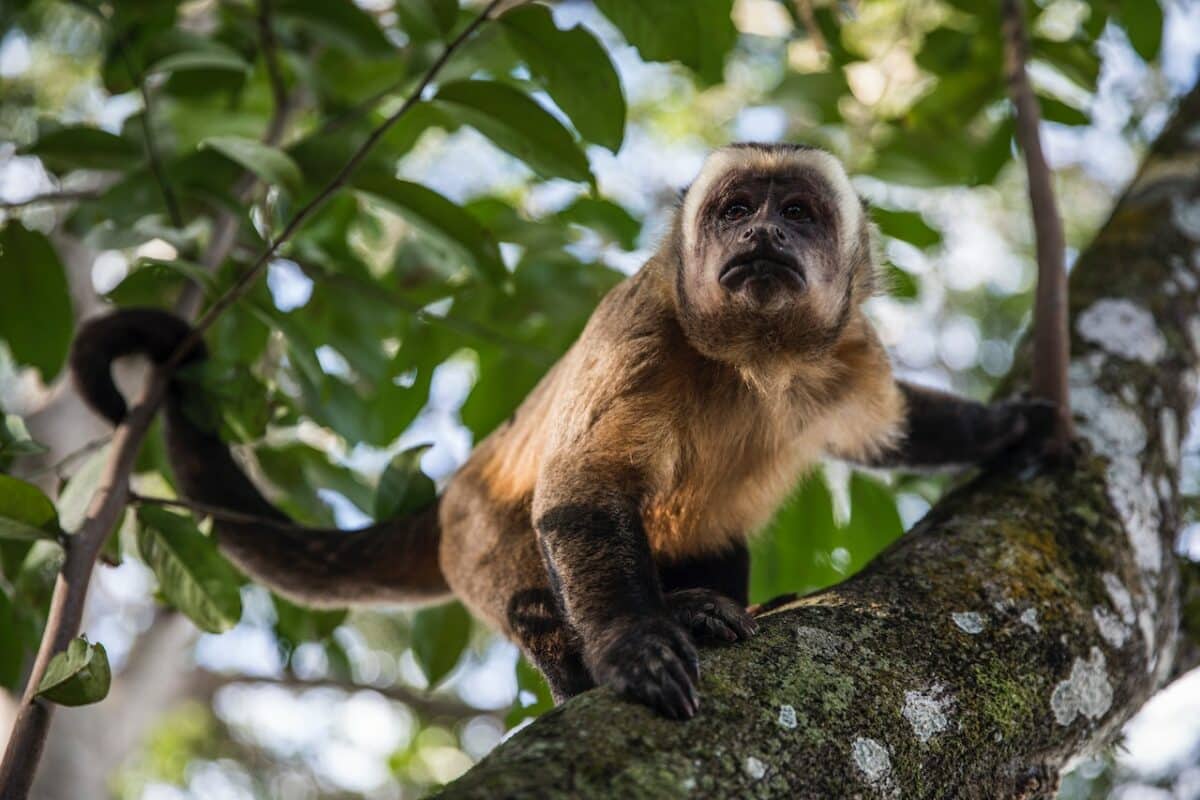
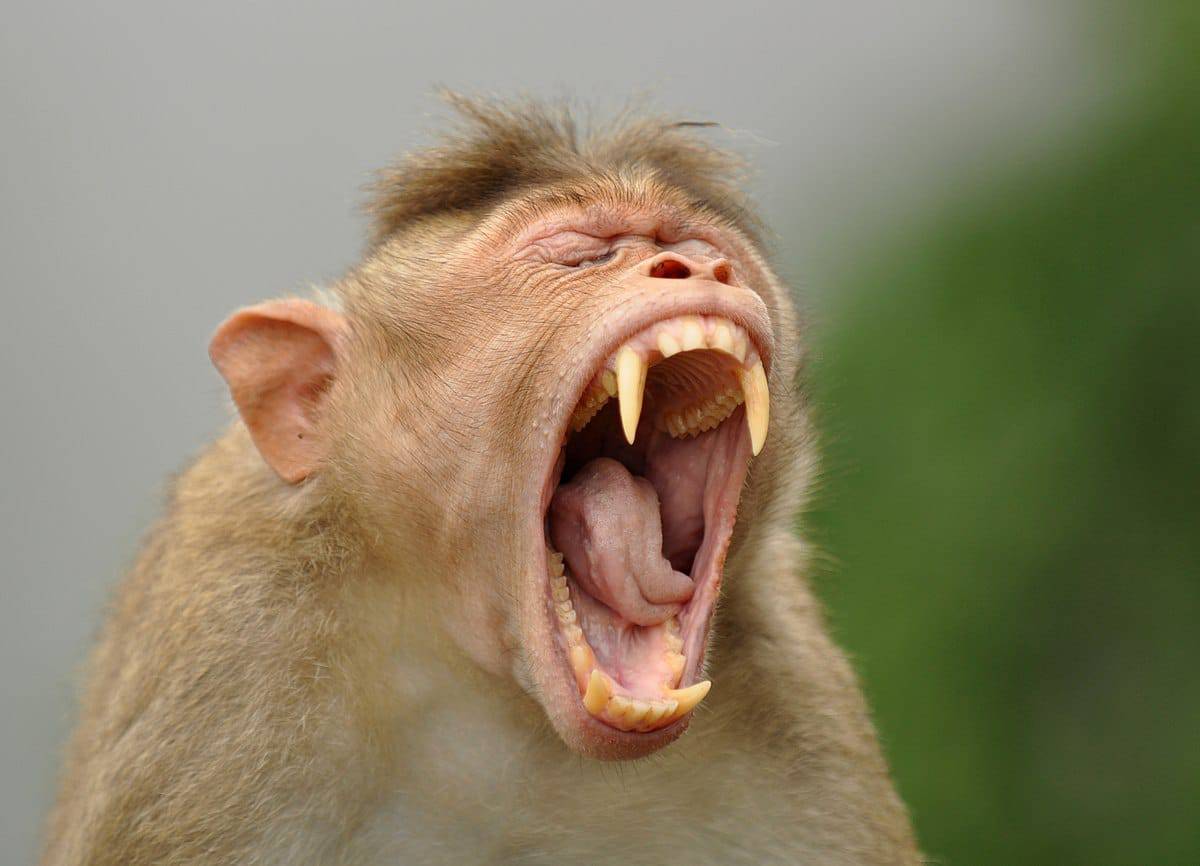
The dental formula—the number and arrangement of teeth—differs significantly between Old World and New World monkeys, providing scientists with another reliable method of classification. Old World monkeys possess a dental formula of 2:1:2:3, meaning they have two incisors, one canine, two premolars, and three molars on each side of both the upper and lower jaws, totaling 32 teeth—the same number as humans. New World monkeys, however, typically have a dental formula of 2:1:3:3 or 2:1:3:2, depending on the species, giving them 36 or 32 teeth respectively. Most notably, many New World monkey species have an additional premolar compared to their Old World counterparts. These dental differences reflect varying dietary adaptations and evolutionary histories. The structure of molars also differs between the groups, with Old World monkeys generally having bilophodont molars (with two ridges) while New World species often have tribosphenic molars with more varied structures.
Color Vision

Vision capabilities represent another fascinating divergence between Old World and New World monkeys. Old World monkeys possess trichromatic color vision similar to humans, meaning all individuals can distinguish between red, green, and blue wavelengths of light. This uniform trichromatic vision likely evolved as an adaptation for detecting ripe fruits against green foliage. The situation is more complex among New World monkeys, where many species exhibit what scientists call polymorphic color vision. In these species, males are typically dichromatic (effectively “color-blind” in the red-green spectrum), while females can be either dichromatic or trichromatic depending on their genetic makeup. This variation occurs because the genes for color vision are located on the X chromosome in New World monkeys, and females (XX) can carry different variants on each chromosome. The howler monkey is a notable exception among New World primates, as both males and females possess uniform trichromatic vision that evolved independently from Old World monkeys.
Locomotion and Posture

Old World and New World monkeys have developed different locomotor strategies and postural habits that reflect their distinct evolutionary paths. Old World monkeys typically employ quadrupedal locomotion (using all four limbs) with a tendency toward terrestrial movement in many species, though numerous forest-dwelling species remain primarily arboreal. Their limb proportions are generally more balanced, and their bodies are often adapted for sitting upright on branches or the ground. New World monkeys, in contrast, are almost exclusively arboreal, with adaptations specifically for life in the trees. Many species practice various forms of brachiation (swinging by the arms) or utilize their prehensile tails for supported suspensory movements. Spider monkeys, for instance, can hang and feed using only their tail, leaving all four limbs free for other activities. Some New World species like marmosets and tamarins have developed claw-like nails instead of the flat nails seen in Old World monkeys, allowing them to cling to tree trunks and larger branches in ways their Old World counterparts cannot.
Body Size Range

The range of body sizes differs notably between Old World and New World monkey groups, with Old World monkeys generally displaying larger average body sizes. The largest Old World monkeys, such as adult male mandrills, can weigh up to 54 kg (119 lbs), making them the largest of all monkey species. Other substantial Old World monkeys include baboons and colobus monkeys. The size range extends down to the smallest Old World monkey, the talapoin, which weighs approximately 1.3 kg (2.9 lbs). New World monkeys exhibit a generally smaller size range, with the largest species being the muriqui (woolly spider monkey), weighing up to 15 kg (33 lbs). At the smaller end of the spectrum, New World monkeys include the world’s smallest monkeys—the pygmy marmoset—weighing as little as 100 grams (3.5 oz) when fully grown. This diminutive primate could fit in a human hand and represents an extreme adaptation to a specialized ecological niche in the Amazonian rainforest.
Social Structures
While both monkey groups display complex social behaviors, their typical social structures show some distinctive patterns. Old World monkeys often form larger, more hierarchical social groups with complex dominance hierarchies. Species like baboons and macaques may live in troops of dozens or even hundreds of individuals with multiple adult males and females. These societies frequently feature strong maternal lineages where females remain in their birth group for life while males disperse to join new groups. By contrast, New World monkeys typically form smaller social units. Many species, such as marmosets and tamarins, live in family groups consisting of a breeding pair and their offspring, exhibiting social monogamy (though not always sexual monogamy). Other New World species like spider monkeys practice a fission-fusion social system where large communities split into smaller subgroups during daily activities. These differences in social organization reflect varying ecological pressures, predation risks, and resource distribution patterns in their respective habitats.
Reproductive Strategies
Reproductive biology shows marked differences between Old World and New World monkeys. Old World monkeys typically produce single offspring, with twins being extremely rare. Their reproductive cycle often includes visible signs of fertility, with many species developing pronounced sexual swellings during estrus that signal receptivity to males. Gestation periods generally range from 5-7 months, with relatively longer periods of infant dependency and development. New World monkeys show greater diversity in reproductive strategies. While some species follow the single-birth pattern seen in Old World monkeys, others—particularly the smaller species like marmosets and tamarins—regularly produce twins or even triplets. These small-bodied New World monkeys have evolved cooperative breeding systems where multiple group members, including older siblings and fathers, actively participate in infant care by carrying and sharing food with offspring. Another distinctive feature of some New World monkeys is that males in certain species, like the titi monkey, serve as primary infant carriers, a behavior rarely observed among Old World primates.
Evolutionary Timeline

The evolutionary histories of Old World and New World monkeys follow distinctly separate timelines after their ancient divergence. Fossil evidence indicates that the two lineages split approximately 40 million years ago from a common anthropoid ancestor. Old World monkeys first appear in the fossil record about 25-30 million years ago in Africa, diversifying into the two major subfamilies we recognize today: Cercopithecinae (cheek-pouched monkeys like macaques and baboons) and Colobinae (leaf-eating monkeys like colobus and langurs). New World monkeys have a more mysterious evolutionary history, with limited fossil evidence. Scientists believe they reached South America from Africa, possibly by rafting across a narrower Atlantic Ocean on floating vegetation mats when the continents were closer together. The earliest New World monkey fossils date to about 26 million years ago in South America. This geographic isolation led to completely independent evolutionary trajectories, resulting in the convergent evolution of similar traits through different genetic mechanisms, such as trichromatic color vision, which evolved separately in Old World monkeys and howler monkeys.
Conclusion
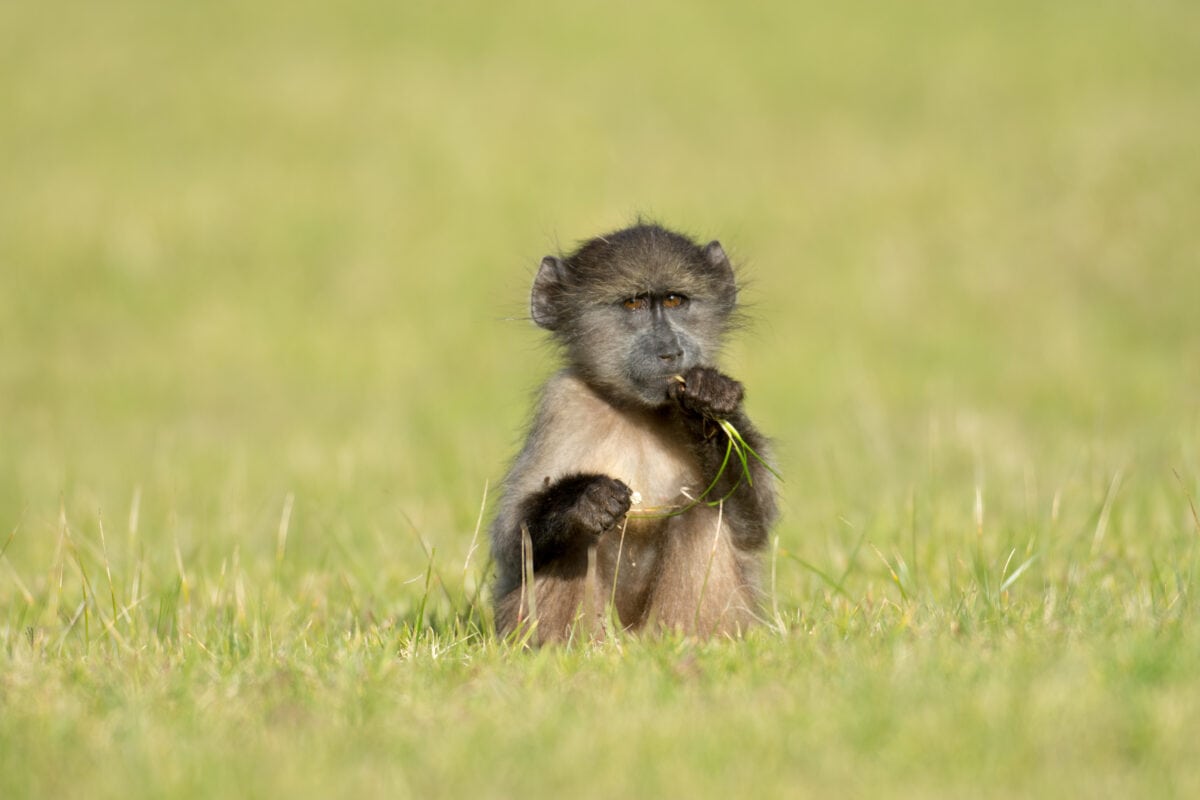
The distinctions between Old World and New World monkeys represent one of the most fascinating examples of parallel evolution in the animal kingdom. Despite sharing a common ancestor millions of years ago, these two primate groups have developed remarkably different adaptations in response to their separate continental environments. From the prehensile tails and unique color vision systems of New World species to the cheek pouches and sitting pads of Old World monkeys, these differences showcase how geographical isolation drives evolutionary divergence. Understanding these differences not only helps us categorize and identify monkey species but also provides valuable insights into evolutionary processes and ecological adaptations. As we continue to study these remarkable primates, we gain not only a deeper appreciation for their unique characteristics but also a better understanding of our own evolutionary history as primates ourselves.

As a little kid, I fell in love with nature, wildlife, and animals. Living in the USA, South Africa, Italy, China and Germany gave me the opportunity to discover the world's Wildlife. My favorite animals are Mountain Gorillas, Siberian Tigers, and Great White Sharks.
I'm a certified PADI Open Water Diver, went to Everest Base Camp and Trekked Gorillas in Uganda. I hold a Master of Science in Economics and Finance.
Please send any feedback to feedback@animalsaroundtheglobe.com
- 10 Times Nature Disrupted Major Events - July 26, 2026
- 11 Sharks So Strange You’d Think They’re Mythical - July 26, 2026
- 12 Dog Breeds That Hate Being Alone - July 26, 2026