
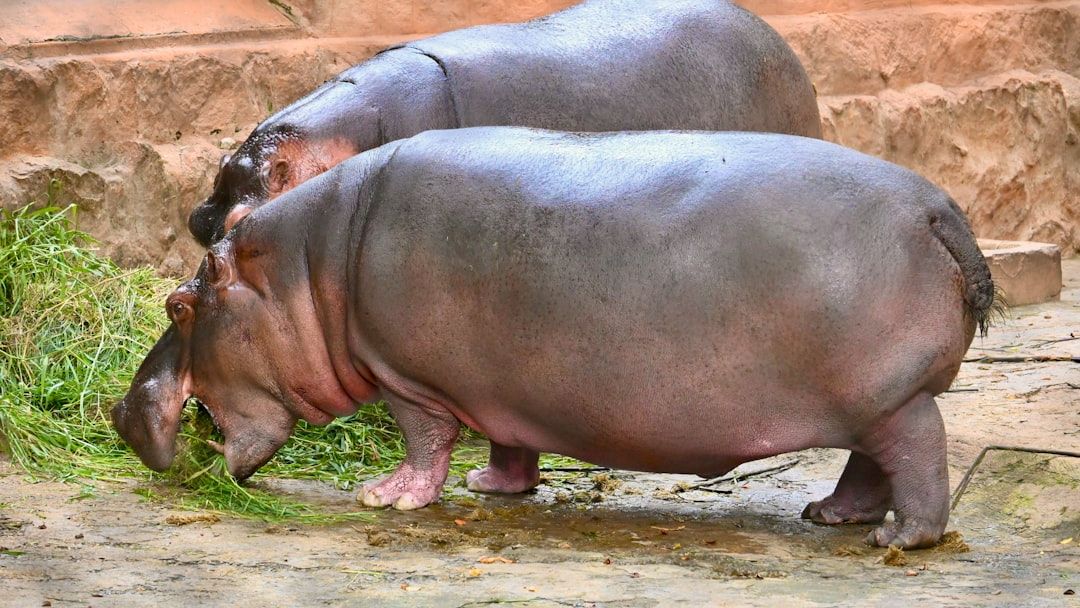
Think you know everything about hippos? Think again. These massive river dwellers might look slow and docile, but that couldn’t be further from the truth. They’re hiding abilities that seem almost impossible for such bulky creatures. From mind-boggling speeds to bizarre secretions that look like blood, hippos are full of surprises that challenge everything we assume about large mammals. Let’s be real, these animals are way more fascinating than most people give them credit for.
What makes hippos so intriguing isn’t just their size. It’s the contradictions they represent. Here’s the thing: they’re simultaneously terrifying and essential to their ecosystems, gentle giants who turn deadly in seconds, aquatic animals that can’t actually swim. Ready to dive deeper into the world of these incredible beasts? Be prepared to have your mind completely changed about Africa’s most misunderstood mammal.
They’re Actually Related to Whales, Not Pigs
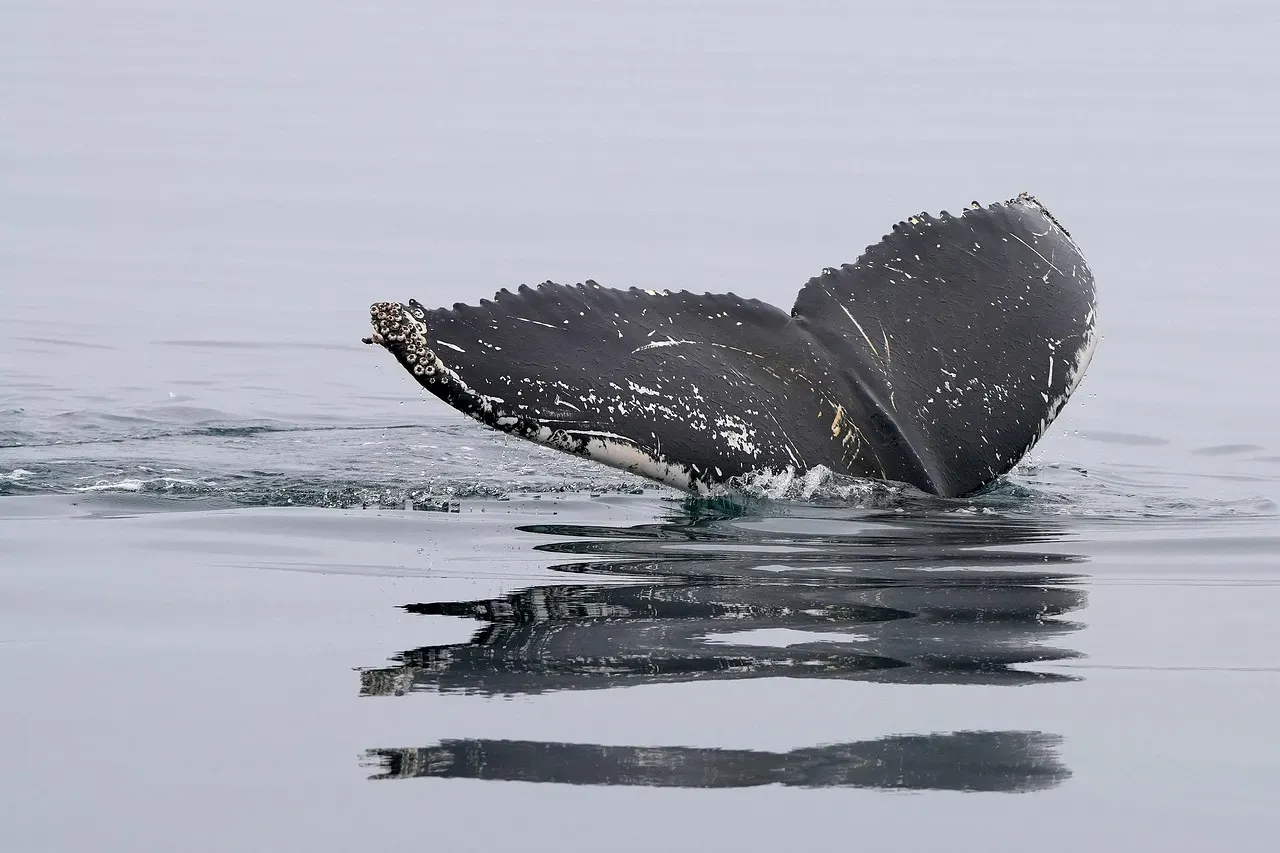
Scientists have discovered that hippopotamuses are the closest living terrestrial relatives to cetaceans, which include whales, porpoises, and dolphins, with a common ancestor believed to have existed around 55 million years ago. Yeah, I know that sounds crazy. You’d think an animal that spends so much time on land would be related to other land mammals like pigs or cattle.
The genetic evidence tells a completely different story though. Although their name comes from the Greek for “river horse” because of the time they spend in the water, their closest living relatives are whales, dolphins, and pigs. This evolutionary connection explains some of their unusual adaptations for water life.
It’s fascinating how evolution works. Around one-third of the hippopotamus’s body weight is made up of their head. That massive head structure actually shares certain skeletal features with their aquatic cousins. Just imagine a whale with legs roaming African rivers millions of years ago.
This relationship becomes even more obvious when you watch them underwater. Their movements, their ability to hold their breath, even the way they communicate through water all hint at that ancient cetacean connection. Nature really does have a sense of humor sometimes.
Hippos Can’t Swim or Float
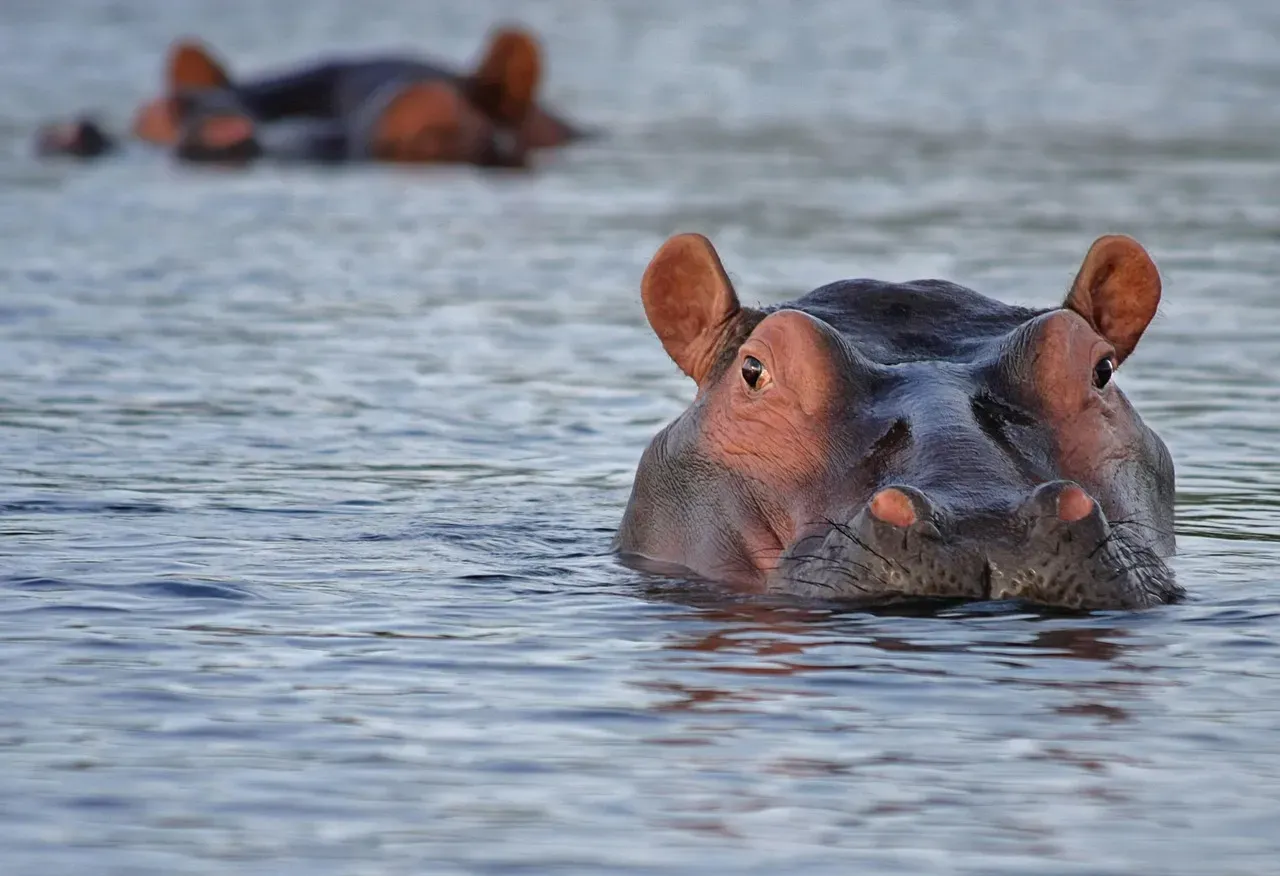
Despite their need to spend most of their time in the water, hippos can’t swim; instead, they run or walk along river beds. I’ll admit, when I first learned this fact, I had to double-check it multiple times. How does an animal that lives in water not know how to swim?
Although they spend most of their lives underwater, hippos do not swim in the traditional sense; instead, they move through water by pushing off the bottom and walking or bounding along riverbeds. Their bones are extremely dense, which makes them sink rather than float. This actually works to their advantage in shallow rivers and lakes.
Picture this: a three-ton animal essentially walking on the bottom of a river like it’s strolling through a park. Instead of swimming by paddling through water, hippos move by walking or bounding along the bottom of rivers and lakes, and even in water, their movement is impressively swift, reaching speeds of up to 12 mph underwater.
Their dense bone structure serves multiple purposes. It helps them stay submerged with minimal effort, conserves energy, and gives them stability in fast-moving currents. When they’re rafting – napping while submerged in water – a subconscious reflex keeps them near the water’s surface. They literally sleep underwater without drowning.
They’re Africa’s Deadliest Large Mammal
Forget lions, leopards, or crocodiles. According to the African Wildlife Foundation, hippos kill around 3,000 people annually, while lions kill about 70 people per year on average. That’s not a typo. Hippos are responsible for more human deaths than any other large African animal.
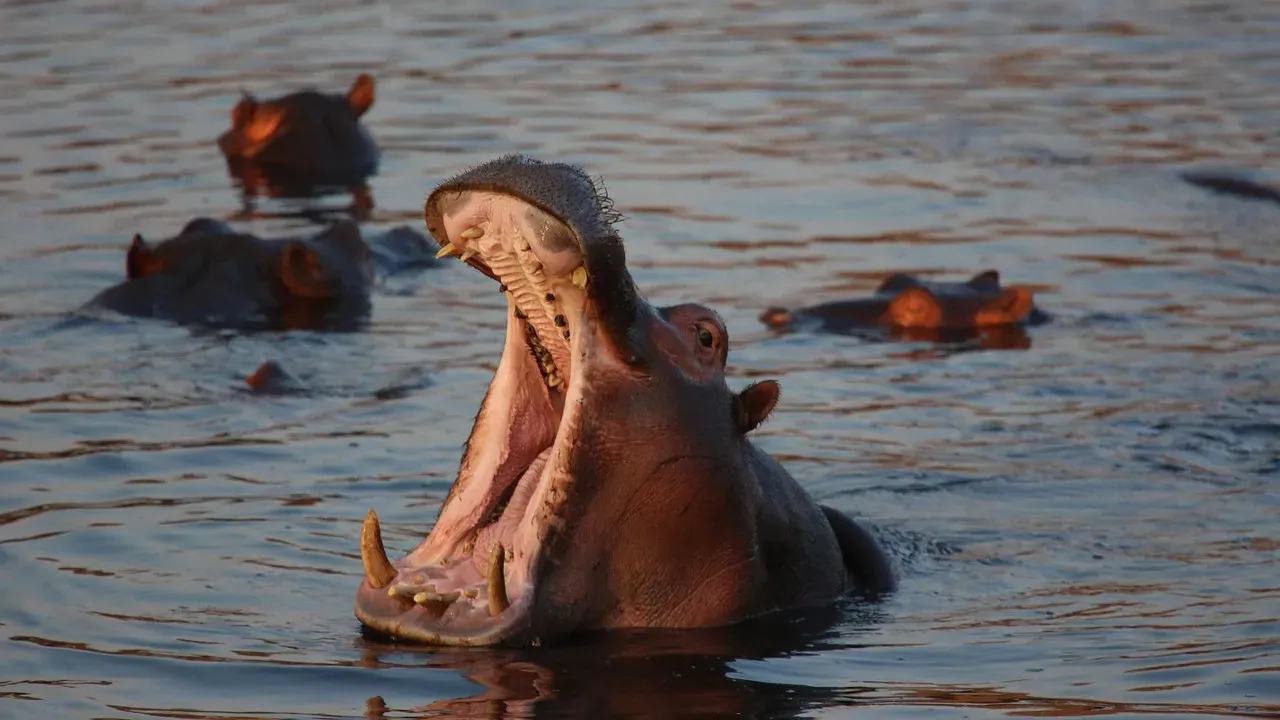
Hippos are among the most dangerous animals in the world due to their aggressive and unpredictable nature. What makes them so deadly isn’t just their size. Their jaws can open to 180 degrees and bite down with three times the strength of a lion. Now that’s absolutely terrifying when you think about it.
Hippos are some of the deadliest animals in Africa, killing at least 500 people a year. Different sources provide varying estimates, but all agree on one thing: these animals are incredibly dangerous. Hippo attacks can occur in water or on land, often without obvious provocation.
Their tusks grow continuously and can reach impressive lengths. They’re armed with impressive, sharp teeth that can grow up to 50 centimeters long, used for eating and defense. Combine that weaponry with their territorial nature and you’ve got a recipe for disaster if you wander into their space.
Most attacks happen when people unknowingly get between a hippo and the water, or when hippos venture onto land at night to graze and encounter humans. In an encounter with a hippo, a human has an 86.7% chance of fatality. Those aren’t odds anyone wants to face.
They Can Run Faster Than Usain Bolt
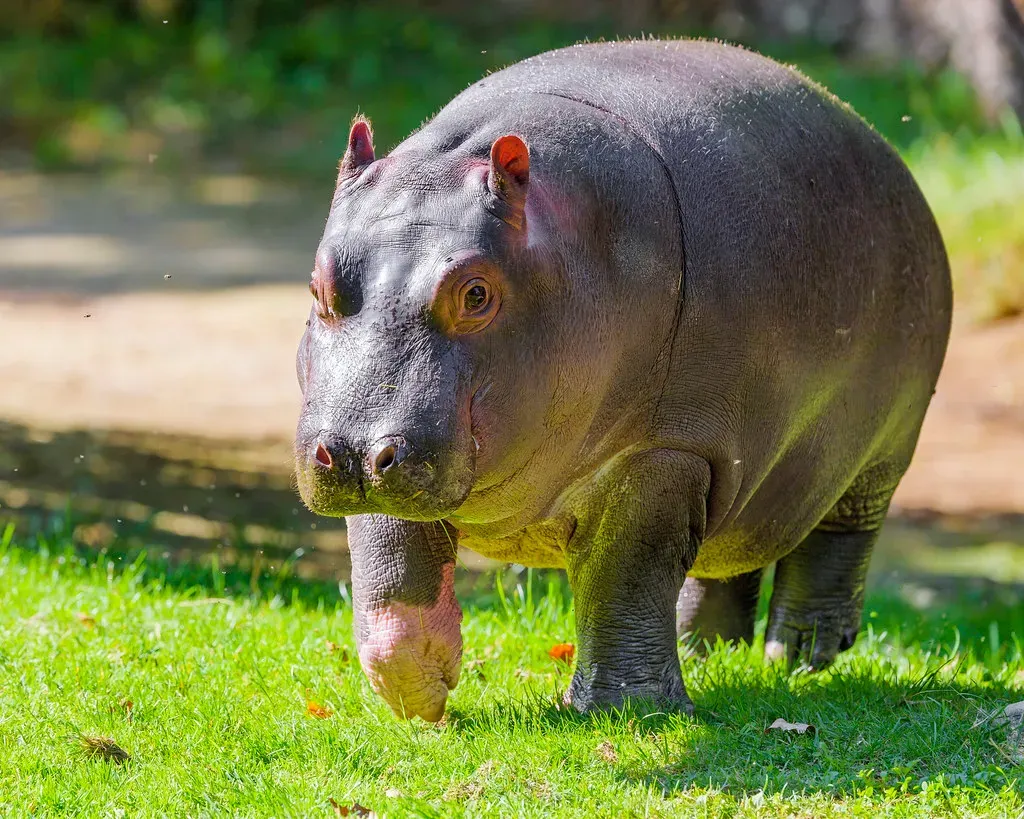
Hippos can run at speeds of up to 30 km/h (19 mph) over short distances, making them one of the fastest land animals of their size. For context, that’s faster than most humans can sprint. Even trained athletes would struggle in a race against these massive creatures.
Let’s put this in perspective. Hippos run at 30 km/h, whereas humans have an average speed of around 10 to 13 km/h, and many athletes have a sprinting speed of around 24 km/h, but they are still unlikely to beat a hippo in a race. Your only hope? Running uphill or in zigzag patterns, because hippos struggle with direction changes.
What’s even more incredible is their running technique. Hippos can reach speeds of up to 19 mph (30 kmh) for short distances, and when they are at their top speed they spend 15% of the time completely off the ground – airborne. Yes, these multi-ton animals actually become airborne when running at full speed.
Hippos are designed for short bursts of speed rather than long-distance running. They can only maintain top speed for roughly thirty seconds before tiring out. Still, thirty seconds is more than enough time for a hippo to catch up to an unsuspecting person.
Their powerful leg muscles generate explosive force despite supporting massive weight. A hippo can reach top speed in just a couple of seconds. That acceleration is genuinely shocking for such a large animal.
They Secrete a Natural Sunscreen That Looks Like Blood
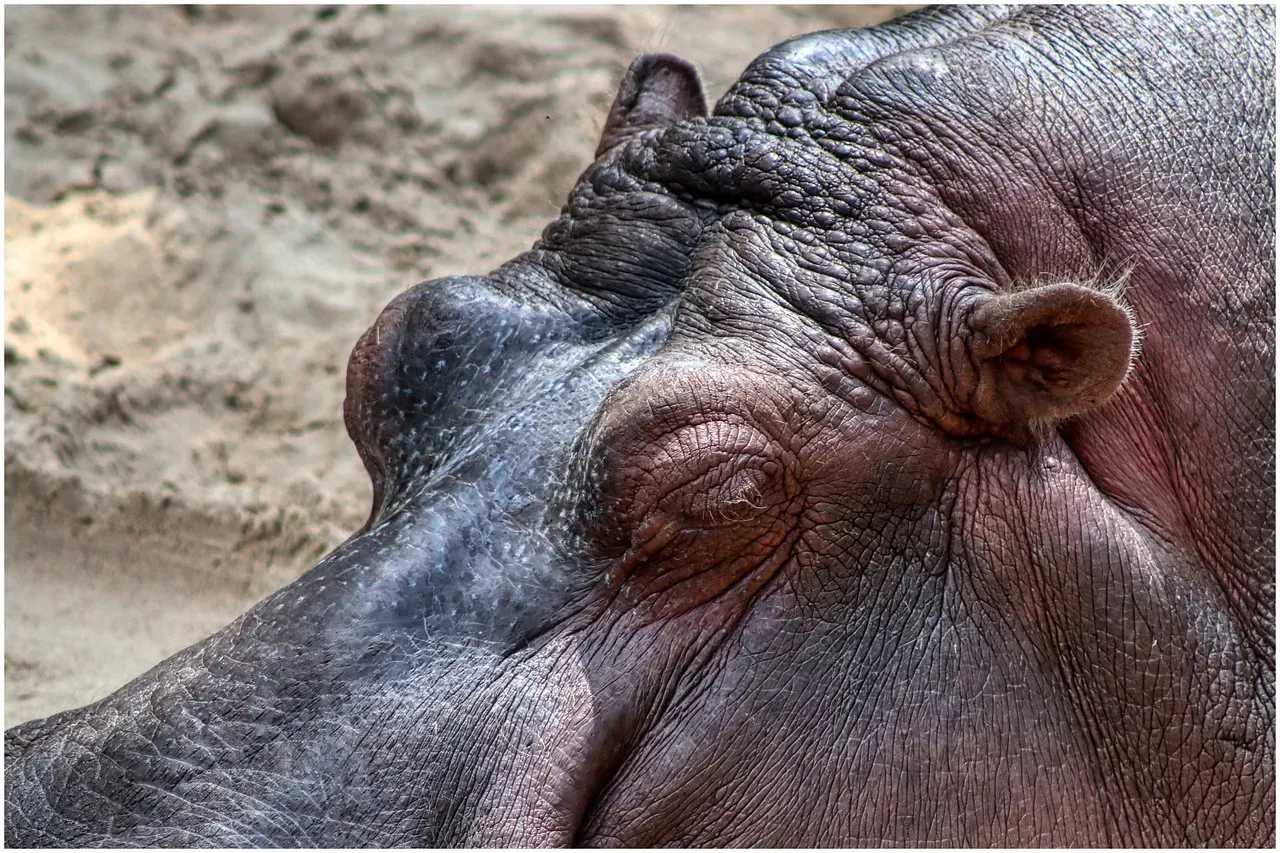
The hippopotamus does not sweat, and because it cannot sweat, the hippopotamus’s skin quickly becomes dry above the water, but the body secretes an oily substance that keeps the skin moisturized, prevents sunburn, and has anti-bacterial properties. This secretion is one of nature’s most bizarre solutions to a common problem.
Sometimes this substance is called “blood sweat” because it makes the hippo look reddish, as if it’s covered in blood, but it’s neither sweat nor blood, and this substance becomes red-orange a few minutes after secretion and, in the end, has a brown color. Imagine seeing a hippo for the first time covered in what appears to be blood oozing from its skin.
The science behind it is actually quite sophisticated. Two highly acidic pigments have been identified in the secretions; one red hipposudoric acid and one orange norhipposudoric acid, which inhibit the growth of disease-causing bacteria and their light-absorption profile peaks in the ultraviolet range, creating a sunscreen effect.
This natural sunscreen is essential for their survival. Hippo skin is 6 cm (2.4 in) thick across much of its body with little hair. Without this protective secretion, their sensitive skin would quickly crack and burn under the intense African sun. This natural sunscreen cannot prevent the animal’s skin from cracking if it stays out of water too long.
Honestly, it’s one of evolution’s most creative solutions. A built-in sunblock and antibiotic combined into one reddish secretion that makes them look like they’re sweating blood? That’s just wild.
Their Jaws Are Engineered Weapons
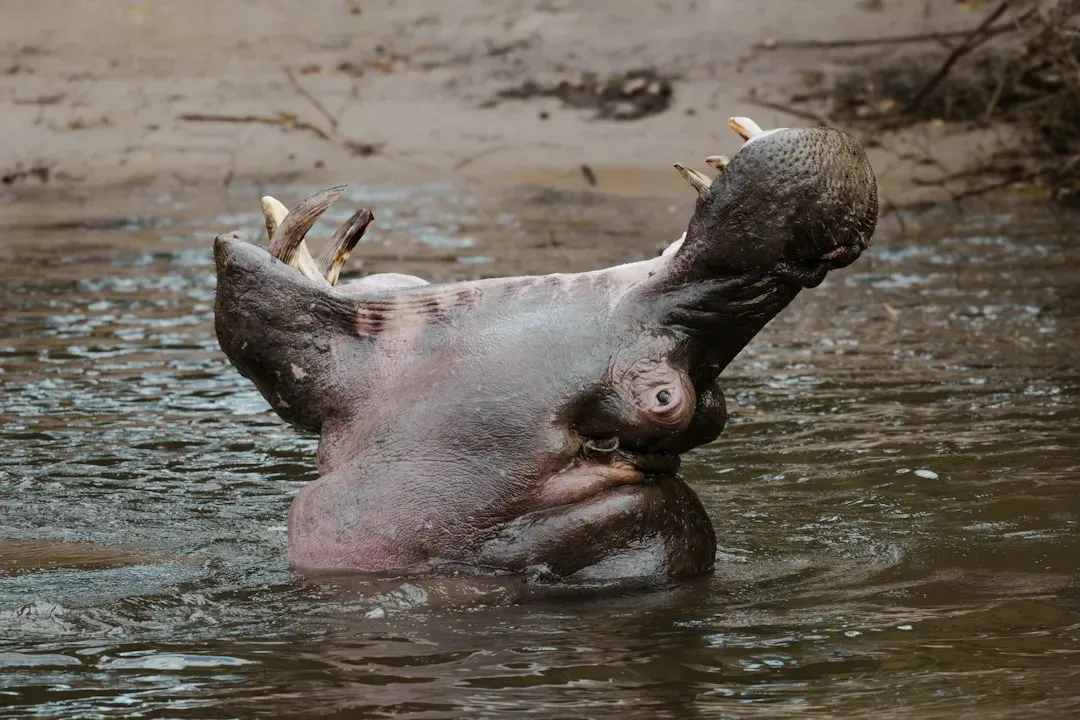
Despite the hippos’ cute appearance, they are among the most dangerous and aggressive of all mammals, and their canine and incisor teeth grow continuously, with canines reaching 20 inches (51 centimeters) in length. Those tusks aren’t just for show either. They sharpen themselves through constant grinding.
Their incisors and canines are modified and grow over a foot each, made of extremely hard ivory that surpasses even that of an elephant, and they never stop growing and are sharpened when they grind them against one another, making them even deadlier. That’s right: their ivory is harder than elephant ivory.
The bite force is equally impressive. Hippos have bulky, barrel-shaped bodies, short and stout legs, large heads, and enormously powerful jaws that can open to 180 degrees and bite down with three times the strength of a lion. Three times stronger than a lion’s bite. Let that sink in for a moment.
Crushing a human being is a piece of cake for its sharp teeth. It’s a brutal reality, but important to understand just how dangerous these animals are. They can open their mouth at a 180-degree angle and literally snap a person in half.
These weapons serve multiple purposes. Male hippos use them in territorial battles with other males, slashing and biting in violent confrontations. Mothers use them to protect their young from predators. They’re basically walking, three-ton fighting machines with self-sharpening weapons that never stop growing.
They’re the World’s Third Largest Land Mammal
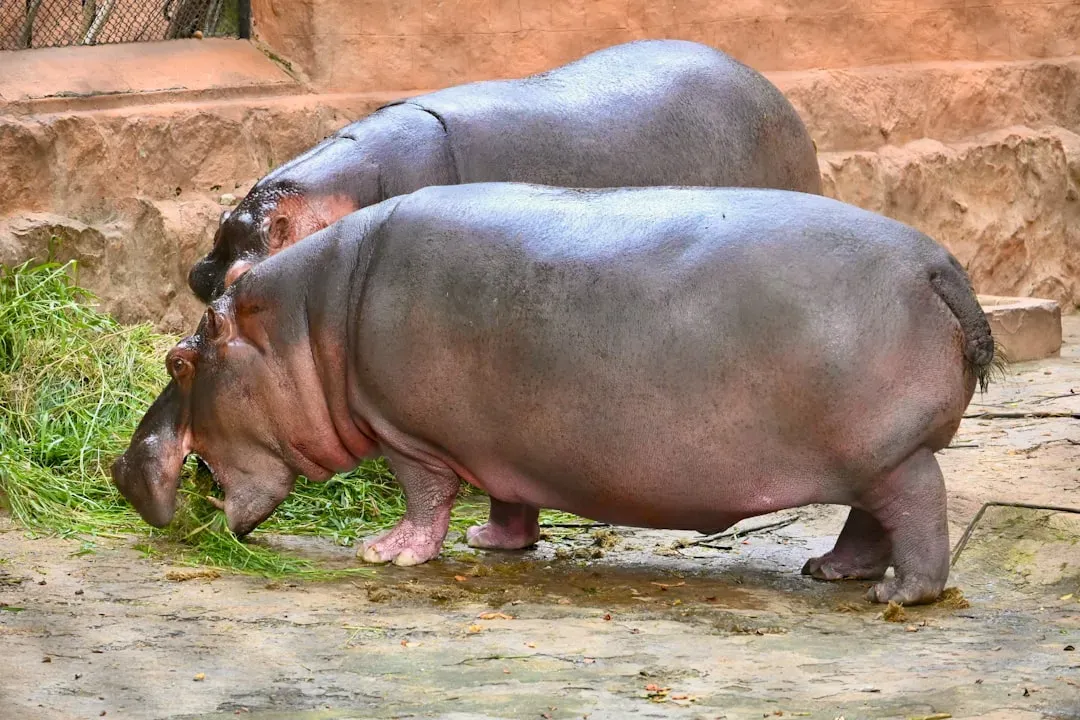
Hippos are the world’s third-largest land mammals after elephants and white rhinos, with males reaching lengths of 10.8 to 16.5 feet, and weighing up to 9,920 pounds, while females weigh up to 3,000 pounds. That’s nearly five tons of pure muscle and bulk. It’s hard to comprehend that size until you’re standing next to one.
These muscular animals have round torsos and pinkish brown bodies with two-inch-thick, waterproof skin, and short, stout legs. Their body proportions seem almost comical when you think about it. Massive torso, tiny legs, enormous head. Yet somehow it all works perfectly for their lifestyle.
On average, they weigh 3,300 lbs, but large males never truly stop growing, and even if they don’t get you with tusks, an accidental bump is enough to break bones, and an all-out attack is enough to kill. The sheer mass of these animals makes them dangerous even without aggressive intent.
Their size provides numerous advantages. Few predators dare challenge a fully grown adult hippo. A full-grown adult doesn’t have much in the way of natural predators, although lions have been known to take down hippos, but it depends upon how many lions, the age of the hippo, and how far it is from the water.
That massive body requires equally massive amounts of food. Hippos eat a lot and can consume up to 60 pounds of food a night. They spend hours each night grazing on grass, covering significant distances from water to find enough vegetation to sustain their enormous bulk.
They Make Sounds Louder Than Rock Concerts
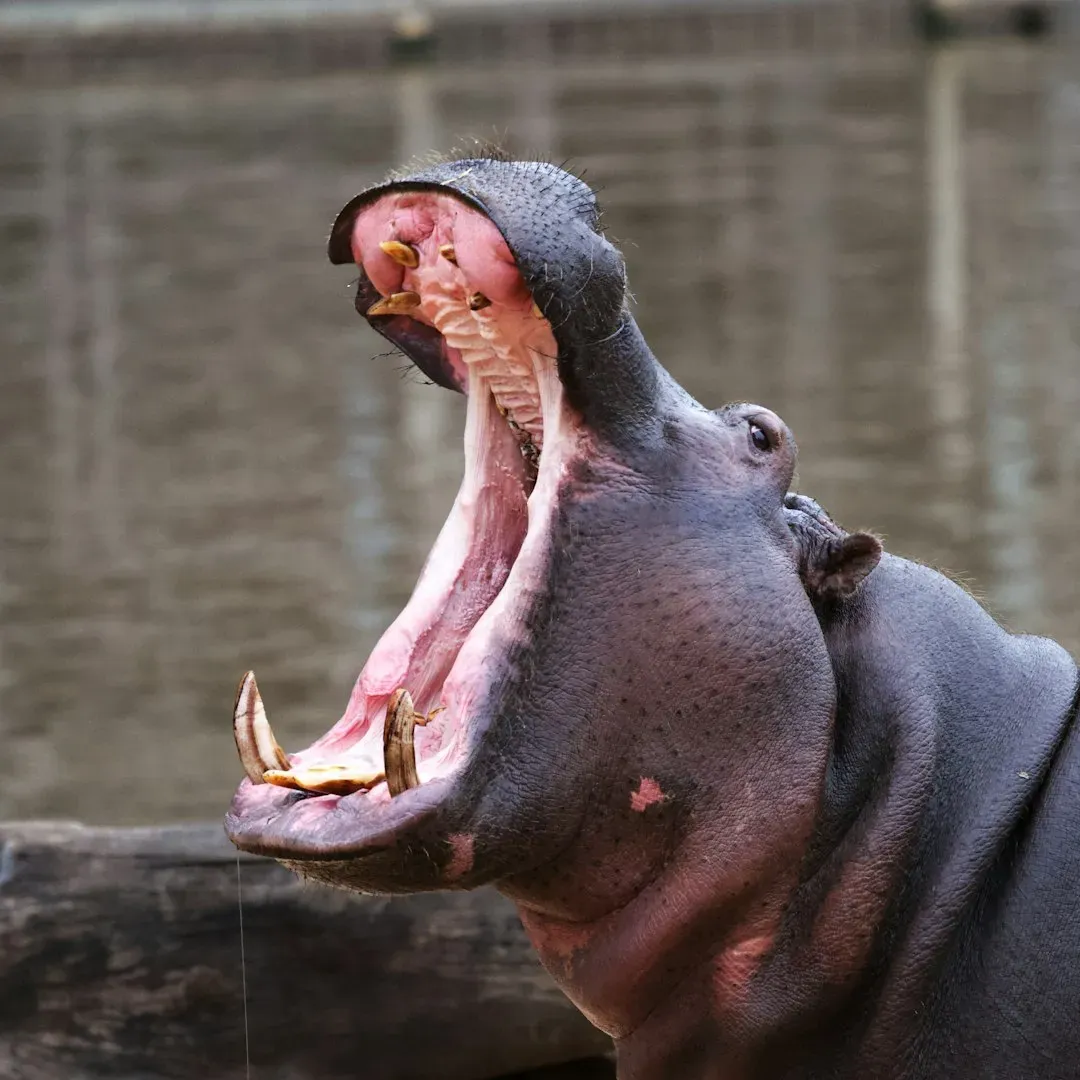
According to the San Diego Zoo, hippo grunts have been recorded at 115 decibels, which is comparable to the sound of sandblasting or the volume of a rock concert when you’re standing about 15 feet from the speakers. Imagine being near a group of hippos all vocalizing at once. The noise would be overwhelming.
In addition to just being loud, they make some interesting sounds, including groans, grunts, squeals, thundering bellows and wheezy breathing sounds. Their vocal repertoire is surprisingly diverse for an animal that spends so much time underwater. These sounds serve important communication functions within their social groups.
Hippos use vocalizations to establish territory, warn off rivals, and maintain social bonds within their pods. The sounds travel both through air and water, which makes sense given their semi-aquatic lifestyle. Underwater, they can communicate over considerable distances using low-frequency sounds.
What’s particularly interesting is that hippos can recognize individual voices within their group. They know who’s who based on vocal signatures alone. This level of social complexity suggests a higher degree of intelligence than most people attribute to these animals.
The volume serves a practical purpose too. In dense river vegetation and murky water, being loud ensures your message gets across. Whether it’s a territorial bull warning intruders or a mother calling to her calf, those 115-decibel grunts cut through environmental noise like nothing else.
They Spend Up to 16 Hours a Day in Water
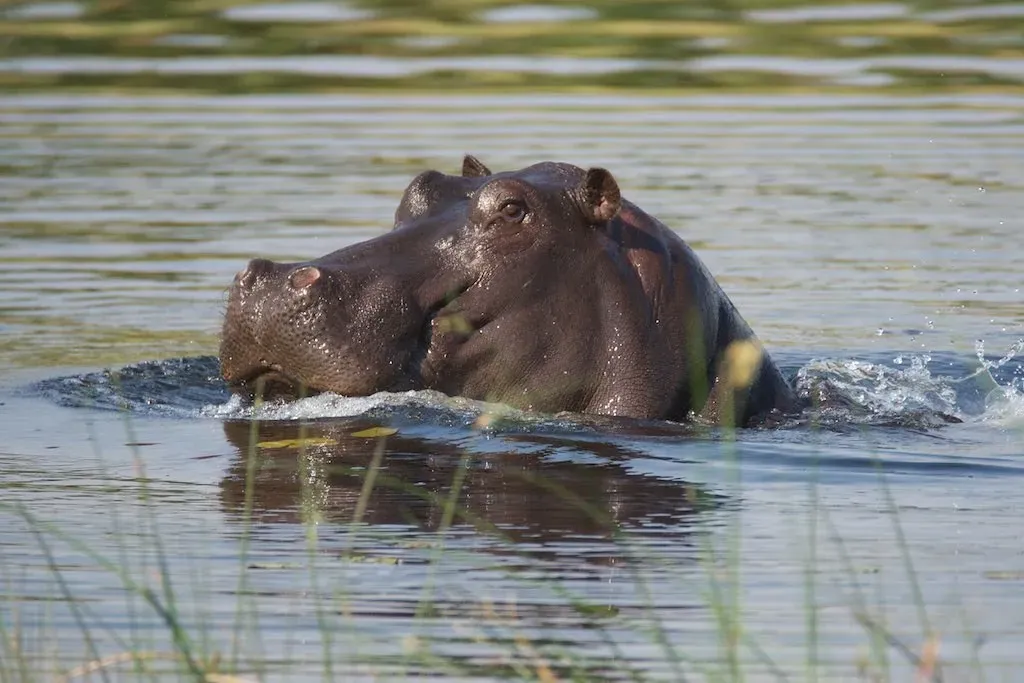
Despite this incredible plus, the hippopotamus still spends around 16 hours a day underwater. Their entire daily routine revolves around water. It’s where they feel safest, coolest, and most comfortable. Without regular access to water, hippos would literally die from dehydration and heat exposure.
Hippos must keep their skin wet with mud or water for most of the day to stay hydrated, and while they don’t have sweat glands, they secrete a red substance called blood sweat that helps protect their reddish-brown, thick yet sensitive skin from sunburn and keeps it moisturized.
Their skin is incredibly sensitive despite its thickness. Direct sunlight causes it to crack and bleed without the protection of water or mud. The hippo’s nose, ears, and eyes are on the top of its head, and they protrude from the water while the rest of its head and its body lie beneath the surface, so that a hippo can breathe, see, and hear even while its body is submerged.
This adaptation allows them to remain almost completely hidden while still monitoring their surroundings. When a hippo sinks completely underwater, its nose and ears automatically close so that no water seeps in as they walk along the bottoms of rivers and lakes. It’s an automatic reflex that requires no conscious thought.
Although hippos can’t breathe underwater, they can hold their breath for up to five minutes. During that time, they walk along the bottom, graze on aquatic vegetation, or simply rest. When they’re rafting – napping while submerged in water – a subconscious reflex keeps them near the water’s surface.
They’re Essential Ecosystem Engineers
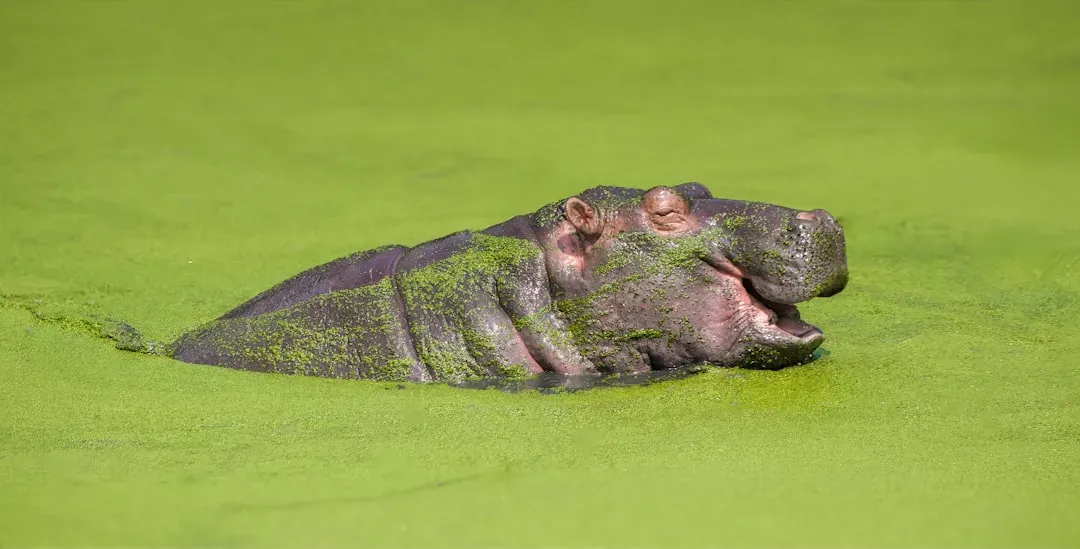
When hippos defecate in the water during the daytime, their dung – which is rich in nutrients – washes through the waterways and delivers important elements like nitrogen and phosphorus to other species in the ecosystem. I know that sounds gross, but it’s actually crucial for river health. Their poop literally feeds entire aquatic food chains.
These herbivores graze on the vegetation surrounding wetlands, helping prevent overgrowth, which can clog water sources, disrupt the natural flow of water, and threaten the biodiversity of aquatic ecosystems. Without hippos, many African waterways would become choked with vegetation and far less productive.
Healthy wetlands act as effective carbon sinks and remove excess carbon from the atmosphere, and by maintaining the balance of these delicate ecosystems, hippos help mitigate the effects of climate change. Who would’ve thought that hippos play a role in fighting climate change?
Their ecosystem engineering extends beyond nutrient cycling. They create pathways through dense vegetation that other animals use. They maintain deepwater channels in rivers through their constant movement. They even provide habitat for fish and other aquatic creatures in the wallows they create.
As ecosystem engineers – a species whose presence changes, creates, destroys, or maintains a habitat – the loss of hippos also affects the wider ecosystem. Their disappearance would cascade through entire food webs, affecting countless other species that depend on the ecological services hippos provide.
They Graze on Land at Night Like Giant Lawnmowers
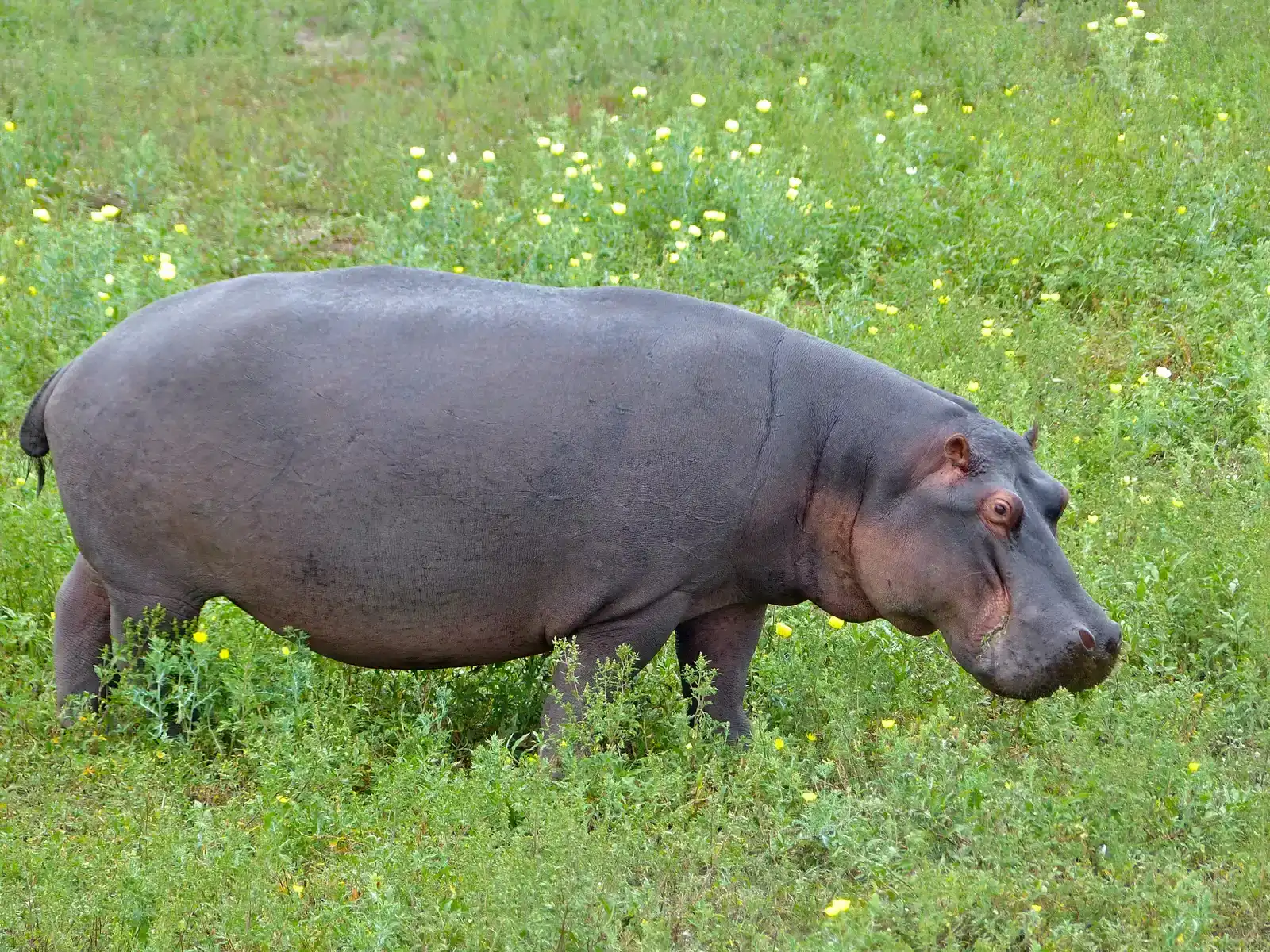
At dusk, hippos leave their watery daytime spot, lumber onto land, and walk as far as 5 miles (8 kilometers) from the water to graze on short grasses, their main food. These nightly feeding expeditions are essential for maintaining their massive bulk. They’re strict herbivores despite their fearsome reputation.
The most common reason hippos come onto land is to feed at night, spending about five to six hours of their day grazing, most of it during the night when the sun is down and less intense, and they can range up to five miles in their search for grass.
Their nighttime grazing patterns create distinct pathways through vegetation. Over time, these “hippo highways” become permanent features of the landscape, used by other animals as well. The constant trampling and grazing shapes the entire structure of riverside plant communities.
At night they leave the water to graze, consuming up to 40 kg in a single outing. That’s roughly ninety pounds of vegetation in one night. They’re incredibly efficient grazers, using their massive lips to crop grass close to the ground.
What’s fascinating is that despite eating such enormous quantities, hippos are relatively selective about what they eat. They prefer short, tender grasses over tougher vegetation. This selective grazing pressure actually increases plant diversity in areas where hippos are present, creating a mosaic of different vegetation types.
They Live in Complex Social Groups
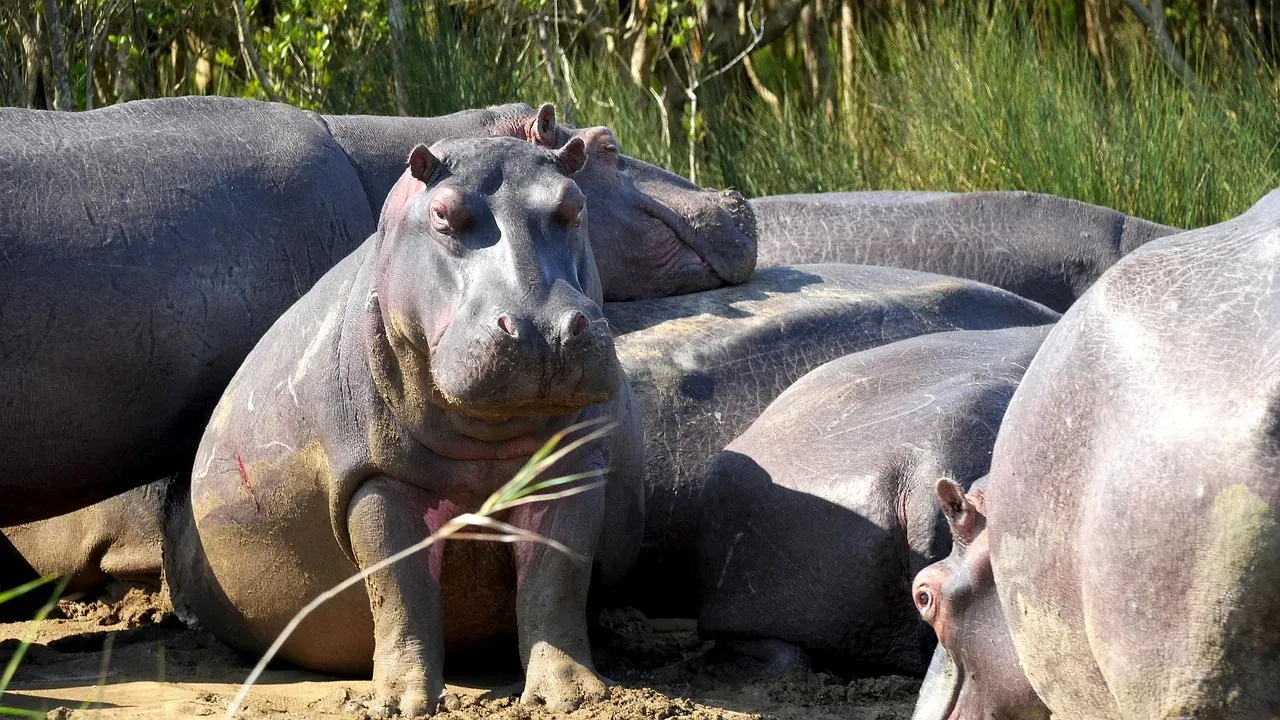
Hippos exhibit strong social bonds and typically live in groups with anywhere from 40 to 200 hippos, known as bloats, pods, or herds. The social dynamics within these groups are surprisingly complex. Territorial males preside over sections of river, while females and young form the core of social groups.
Territorial bulls each preside over a stretch of water and a group of five to thirty cows and calves, and mating and birth both occur in the water. Males fight viciously for control of prime territories, engaging in brutal battles that can result in serious injuries or death.
Crocodiles, lions, hyenas, and leopards are all potential threats while growing up – but the most dangerous thing to a young hippo is another hippo, and when you live in a group that may contain as many as 100 individuals, disagreements are bound to happen, and sometimes young hippos get caught in the middle of violent clashes between adults and can be bitten or crushed – occasionally by their own parent.
Despite the potential for violence, hippos also display cooperative behaviors. Females often assist each other with calf rearing. They maintain social bonds through vocalizations and physical contact. Younger hippos learn social rules through observation and interaction with older individuals.
During the day, hippos remain cool by staying in water or mud, emerging at dusk to graze on grasses, and while hippos rest near each other in the water, grazing is a solitary activity and hippos typically do not display territorial behaviour on land. The shift from social water life to solitary land grazing demonstrates remarkable behavioral flexibility.
They’re Vulnerable and Facing Multiple Threats
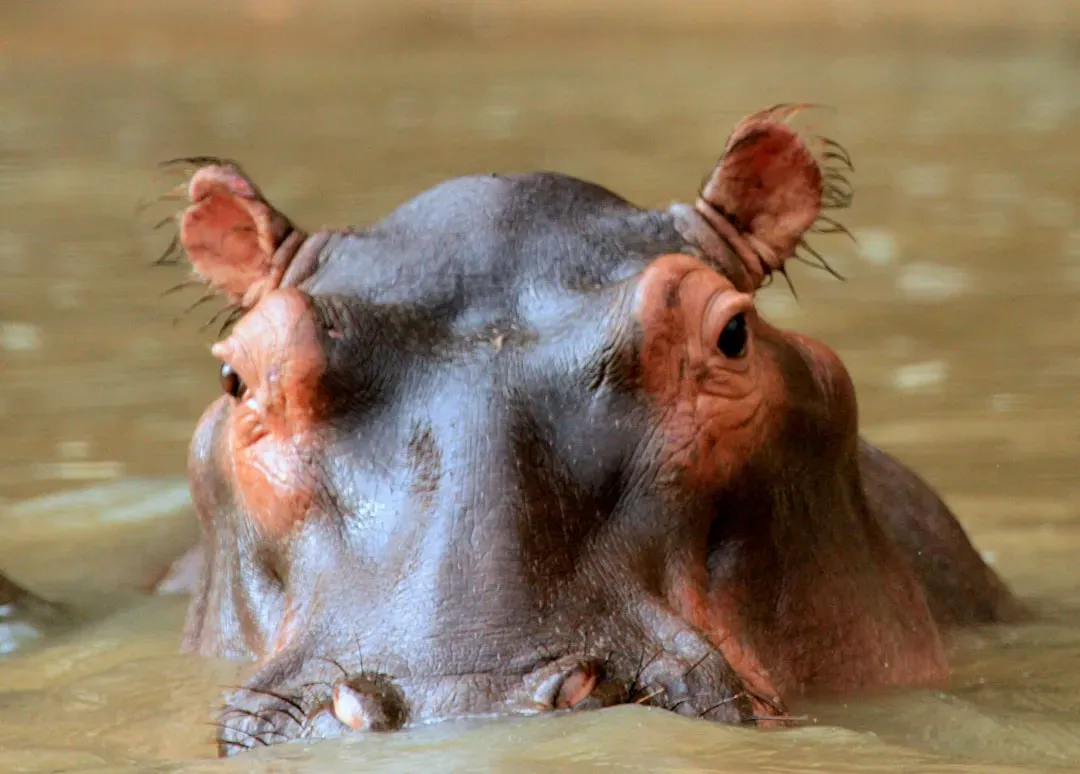
The hippopotamus is classified as Vulnerable by the IUCN, with around 115,000 individuals left, and populations are declining due to habitat loss and hunting. Despite their fearsome reputation and ecological importance, hippos face serious conservation challenges. Human activities pose the greatest threat to their survival.
They are threatened by habitat loss and poaching for their meat and ivory (canine teeth). As human populations expand, hippos lose access to traditional waterways and grazing areas. The hippopotamus is threatened by poaching for its meat, fat, and ivory teeth, along with the loss of its habitat and human-hippo conflicts, and because the species is slow to reproduce, threats can significantly impact population numbers.
Threats such as illegal hunting for their meat and ivory and habitat loss, exacerbated by drought, have led to steep declines in hippo numbers in recent years, especially in areas of political and economic instability. Climate change compounds these problems by reducing available water resources during increasingly severe droughts.
Human-hippo conflict represents a growing problem. Sometimes, it is the hippo that invades human areas like local farmlands, devouring crops, and with the constant growth of human settlements, human and hippo territories frequently overlap, and these encounters are on the rise. Farmers protecting their crops sometimes kill hippos in retaliation.
The pygmy hippopotamus faces even greater challenges. The pygmy hippopotamus is classified on the IUCN Red List as endangered and has held that status since 2006, with the pygmy hippopotamus population decreasing and less than 2,500 mature individuals currently remaining. This smaller hippo species requires intact forest habitat, which is rapidly disappearing across West Africa.
Conclusion
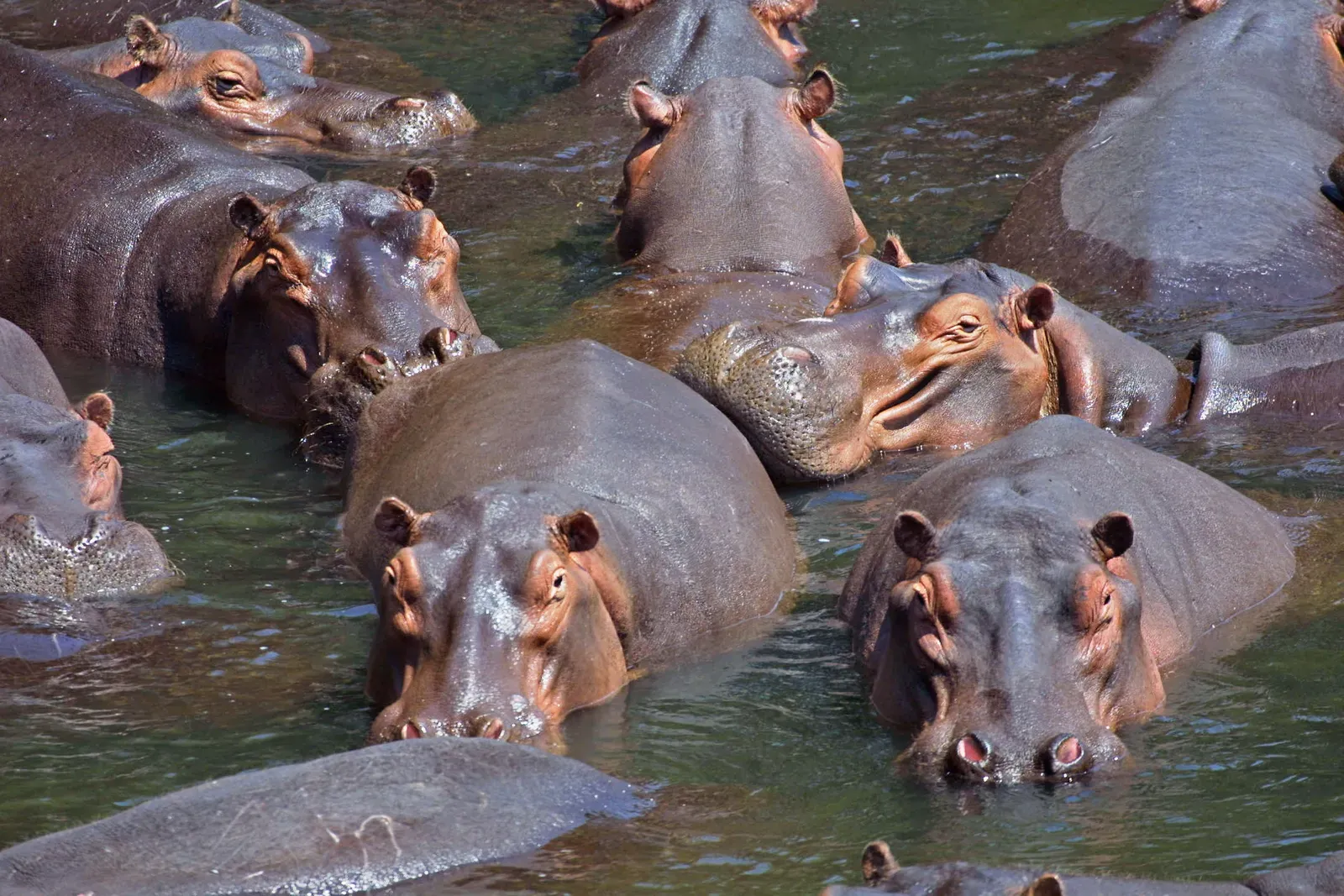
Hippos are living contradictions wrapped in thick, sensitive skin. They’re gentle giants that kill thousands, aquatic masters that can’t swim, massive herbivores that outrun Olympic sprinters. These remarkable creatures challenge every assumption we make about animals based on appearance alone.
Their importance extends far beyond their individual survival. As ecosystem engineers, they shape entire river systems and support countless other species. Their loss would ripple through African waterways in ways we’re only beginning to understand. Conservation efforts aren’t just about saving hippos – they’re about preserving the intricate ecological webs these animals maintain.
The next time you see a hippo lounging peacefully in water, remember there’s an evolutionary marvel beneath that calm exterior. Millions of years of adaptation have created an animal perfectly suited to a life between land and water, capable of extraordinary feats despite seeming utterly out of place in both environments.
So what do you think? Did any of these facts surprise you? These magnificent animals deserve far more respect and protection than they currently receive. Share your thoughts about these incredible river giants.

- 6 US States With the Most Beaver - August 7, 2026
- Who Would Win in a Battle Between a Great White Shark and an Orca - August 7, 2026
- How the Brazilian Free-Tailed Bat Reaches Incredible Speeds - August 7, 2026