


The bald eagle, a majestic symbol of freedom and strength, soars through the skies of North America, captivating the hearts and minds of bird enthusiasts and patriots alike. Known for their impressive wingspan and piercing eyes, these birds of prey have been revered throughout history. Here, we explore 12 fascinating facts about bald eagles that showcase their unique characteristics and behaviors, offering a deeper understanding of one of nature’s most awe-inspiring creatures.
They Aren’t Actually Bald

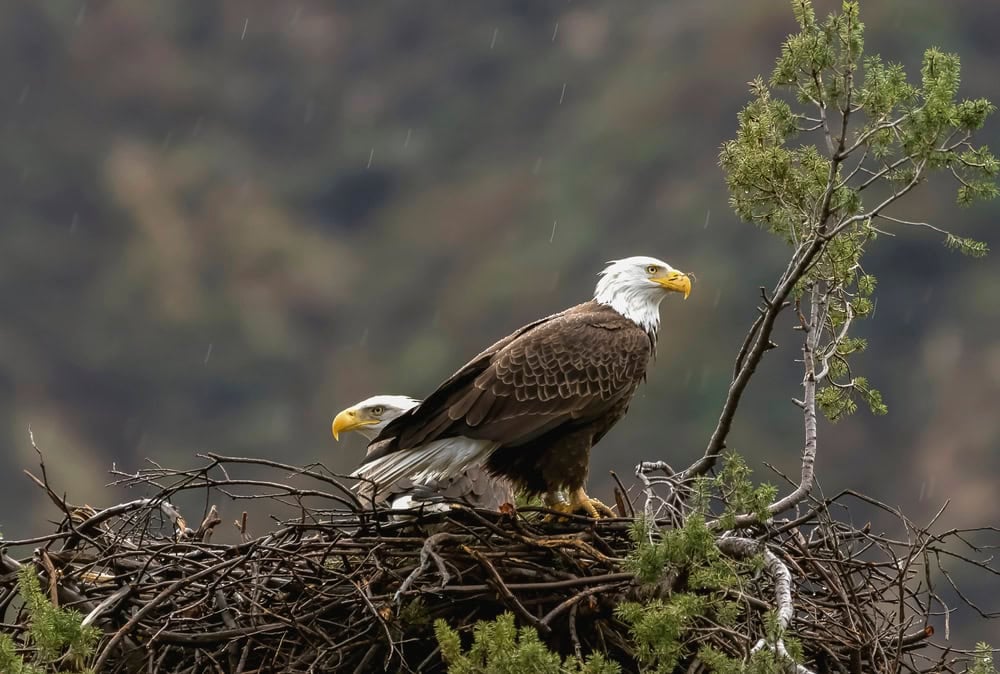
Despite their name, bald eagles are not bald. The term ‘bald’ comes from an older meaning of the word, which refers to ‘white-headed.’ Adult bald eagles have a striking white head and tail, with the rest of their body covered in a rich dark brown plumage. This iconic coloration develops when they reach maturity, around the age of 4 or 5 years old.
Their Eyesight Is Exceptional

Bald eagles have extraordinary vision, about four to eight times stronger than that of humans. This exceptional eyesight allows them to spot prey from as far as two miles away. Their eyes are equipped with many cone cells, providing them with keen detail and vibrant color perception, crucial for hunting among various landscapes.
They Build Huge Nests

Bald eagles construct some of the largest nests of any bird species, often measuring 5 to 6 feet in diameter and weighing over 1,000 pounds. These nests, called aeries, are built high in tall trees and are meticulously maintained year after year, sometimes reaching a depth of 10 feet as the eagles add to them annually.
Bald Eagles Mate for Life

Demonstrating a strong partnership, bald eagles often mate for life. Once they find a suitable partner, these pairs engage in elaborate courtship rituals, including acrobatic swoops and synchronized flights. While these birds typically remain faithful, they may find new partners if one of the pair dies.
They Are Skilled Fishers

Bald eagles are expert fishers, and fish make up a large portion of their diet. With their powerful talons and sharp beaks, they can efficiently snatch fish from the water’s surface—sometimes even stealing catches from other birds. This fishing prowess is a key factor in their preference for habitats near lakes, rivers, and coastal regions.
Eagles Can Swim

Following an occasional missed fishing attempt, bald eagles might find themselves in the water. Interestingly, they can swim by using their wings like oars to reach the shore, albeit clumsily. This ability to swim comes in handy when an eagle weighs itself down with extra-heavy prey.
They’re Not Afraid of Scavenging

While bald eagles are skilled hunters, they are also adept scavengers. They often feed on carrion and are known to steal prey from other birds and animals. Opportunistic foraging helps them survive when hunting conditions are unfavorable.
Juvenile Eagles Look Different from Adults

Juvenile bald eagles are quite different in appearance from their adult counterparts. Young eagles have mottled brown and white plumage, which gradually changes to the iconic white and brown pattern over several years. This evolutionary trait helps camouflage juveniles, offering them better protection from predators.
Bald Eagles Are Powerful Fliers

Known for their grace in the air, bald eagles can soar at altitudes over 10,000 feet. With wingspans ranging from 6 to 7.5 feet, they take advantage of thermals—rising warm air currents—that allow them to travel effortlessly over long distances, often reaching speeds of up to 40 miles per hour in level flight.
They Make Distinct Sounds
Unlike the piercing screeches often used in media portrayals, bald eagles typically produce a series of high-pitched whistles and chatters. These sounds differ when communicating with partners, offspring, or other eagles, serving various purposes like signaling presence or alerting to danger.
Bald Eagles Were Once Endangered

The bald eagle population faced a significant decline mid-20th century due to hunting, habitat destruction, and the use of pesticides like DDT. Conservation efforts, including legal protection and banning harmful chemicals, have led to a population rebound. Today, bald eagles are listed as species of ‘least concern,’ showcasing a remarkable recovery.
They Live Across North America

Bald eagles are found across most of North America, from Alaska and Canada to northern Mexico. While they prefer to inhabit areas near bodies of water for fishing, their adaptability allows them to thrive in diverse environments ranging from seacoasts to mountainous regions.
Conclusion:

In conclusion, the bald eagle is not only a symbol of American pride but also a remarkable creature of the natural world. From their astounding vision to their complex social structures, bald eagles demonstrate the intricacies of evolution and the importance of preserving wildlife. As bold navigators of the sky and diligent caretakers of their young, they remind us of the interconnectedness and resilience of life on Earth.

As a little kid, I fell in love with nature, wildlife, and animals. Living in the USA, South Africa, Italy, China and Germany gave me the opportunity to discover the world's Wildlife. My favorite animals are Mountain Gorillas, Siberian Tigers, and Great White Sharks.
I'm a certified PADI Open Water Diver, went to Everest Base Camp and Trekked Gorillas in Uganda. I hold a Master of Science in Economics and Finance.
Please send any feedback to feedback@animalsaroundtheglobe.com
- 10 Things Fish Use Their Fins For And 3 They Can Not Do - July 31, 2026
- 10 Animals That Survived Mass Extinction Events - July 31, 2026
- 10 Facts About the New Guinea Singing Dog - July 31, 2026