

Most people assume that hanging a feeder is the finish line – fill it with sugar water, wait, and the hummingbirds will come. But ask anyone who’s actually watched these birds work a backyard, and they’ll tell you a different story. Hummingbirds don’t wait around for a feeder. They beeline for specific flowers first, and if those blooms aren’t there, your feeder might sit untouched for weeks.
So what exactly are they looking for? It’s not random. Certain nectar-rich plants trigger an almost instant response the moment a hummingbird spots them from the air, and once you know which ones, you can turn even a small patch of yard into a flight path they visit every single day. Here are the 12 plants that pull hummingbirds in before they even notice your feeder exists.
12 – Lantana (Lantana camara)
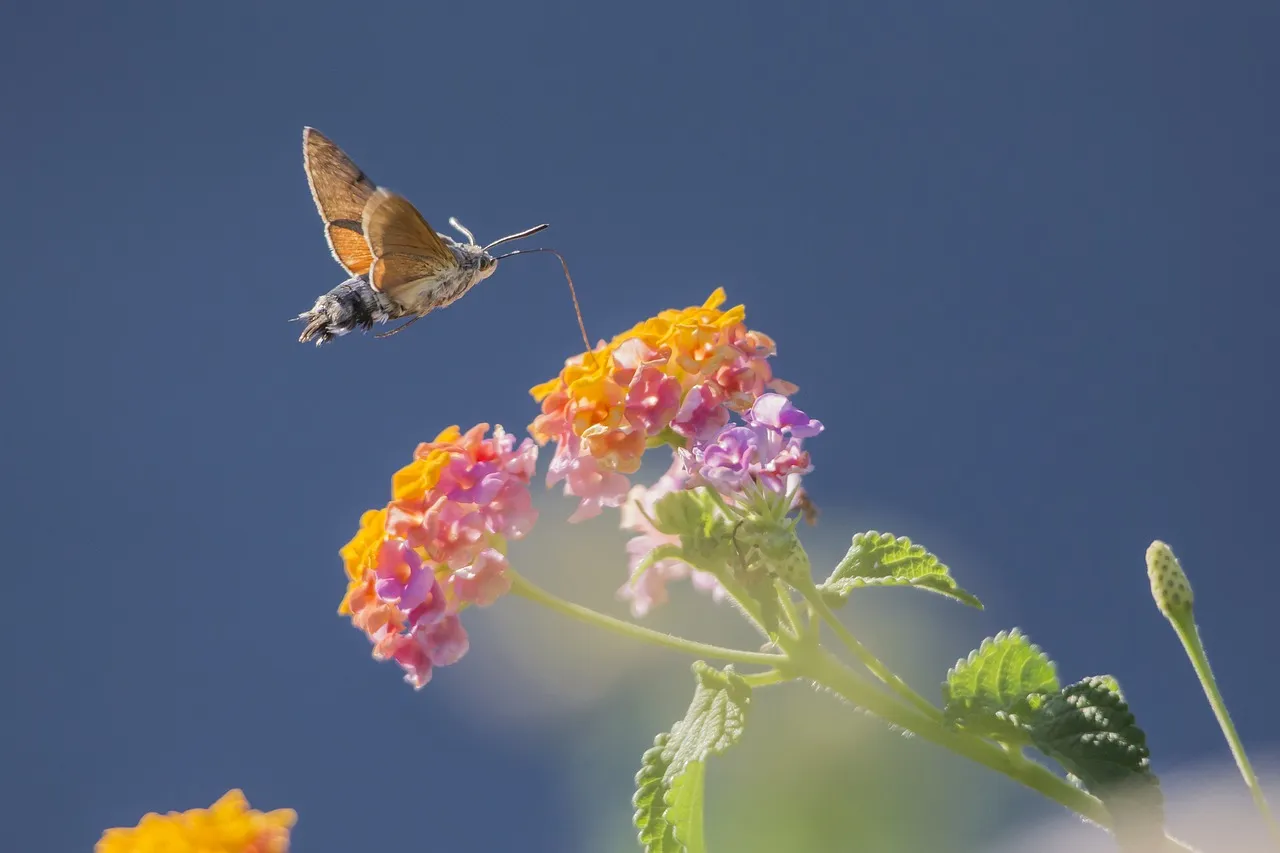
Lantana’s clustered, multicolored blooms look almost too cheerful to be strategic, but hummingbirds see something different – a nonstop nectar buffet packed into tiny tubular flowers. It thrives in punishing heat, which means it keeps producing right through the peak of summer when other plants start to wilt and quit.
What makes lantana genuinely useful is how little it asks for in return. It shrugs off drought, needs almost no fussing, and still blooms from late spring straight through the first frost. For gardeners who want hummingbird traffic without a full-time gardening habit, it’s close to a guarantee.
Fast Facts
- Hardiness zones: 9 to 11 (grown as an annual farther north)
- Bloom season: late spring through first frost
- Height: 1 to 6 feet, depending on variety
- Water needs: low once it’s established
11 – Bee Balm (Monarda didyma)
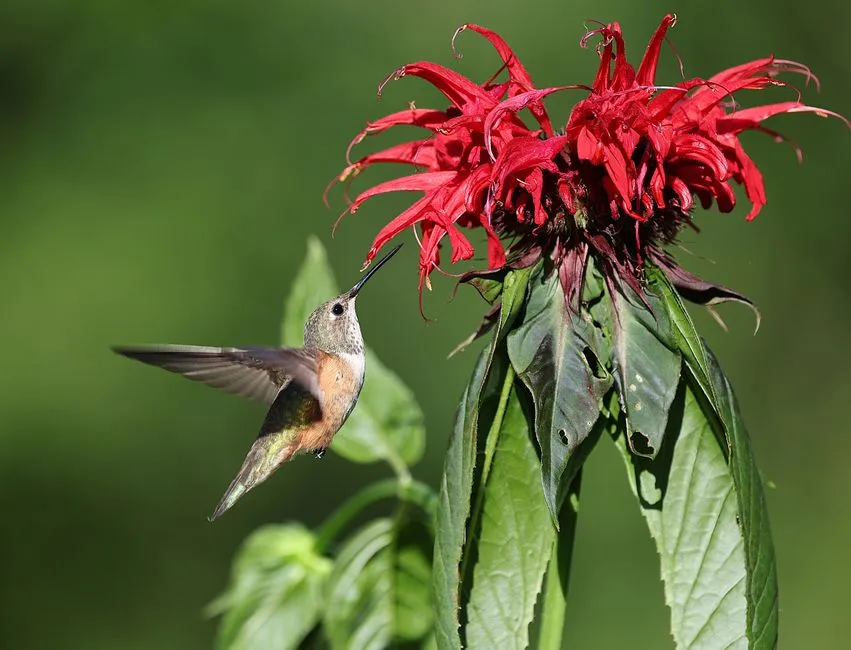
Bee balm’s flowers look like tiny fireworks frozen mid-explosion, and hummingbirds treat them like a dinner bell. The red and pink varieties are the real draw – the tubular shape lines up perfectly with a hummingbird’s long beak, almost like the plant was built around the bird.
It’s also a plant that rewards patience. Once established, bee balm spreads fast, filling in garden beds with dense color and turning a single patch into a genuine pollinator hotspot. Butterflies and bees show up too, but the hummingbirds tend to arrive first and stay longest.
10 – Salvia (Salvia spp.)
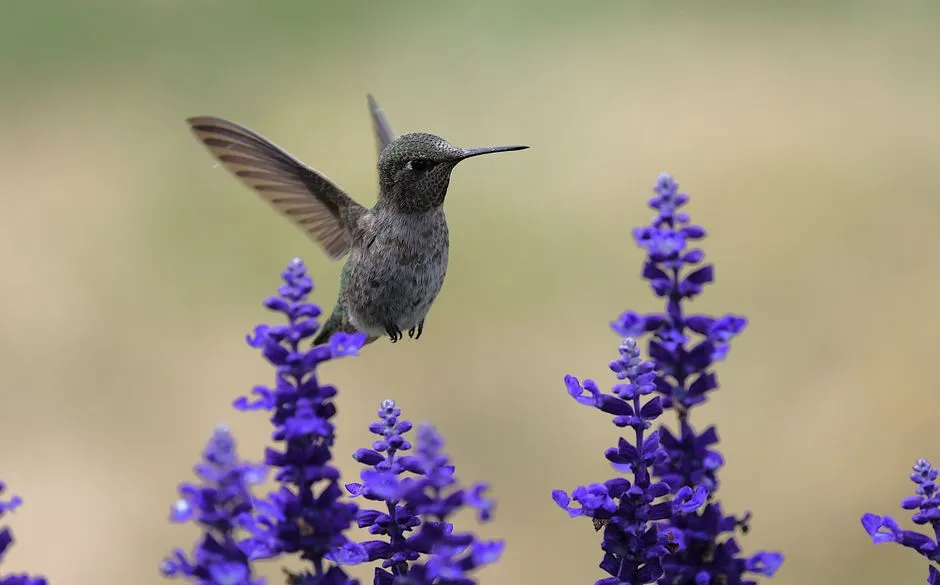
Salvia doesn’t just attract hummingbirds – it seems to hypnotize them. The long flowering spikes in red, purple, and blue stay in near-constant bloom from late spring through frost, which means there’s rarely a dry spell in the nectar supply.
It also happens to be forgiving. Salvia handles heat and drought without complaint, so it keeps working even during the weeks when you forget to water. That reliability is exactly why it shows up in so many “hummingbird garden” plans – it simply doesn’t quit.
9 – Trumpet Vine (Campsis radicans)
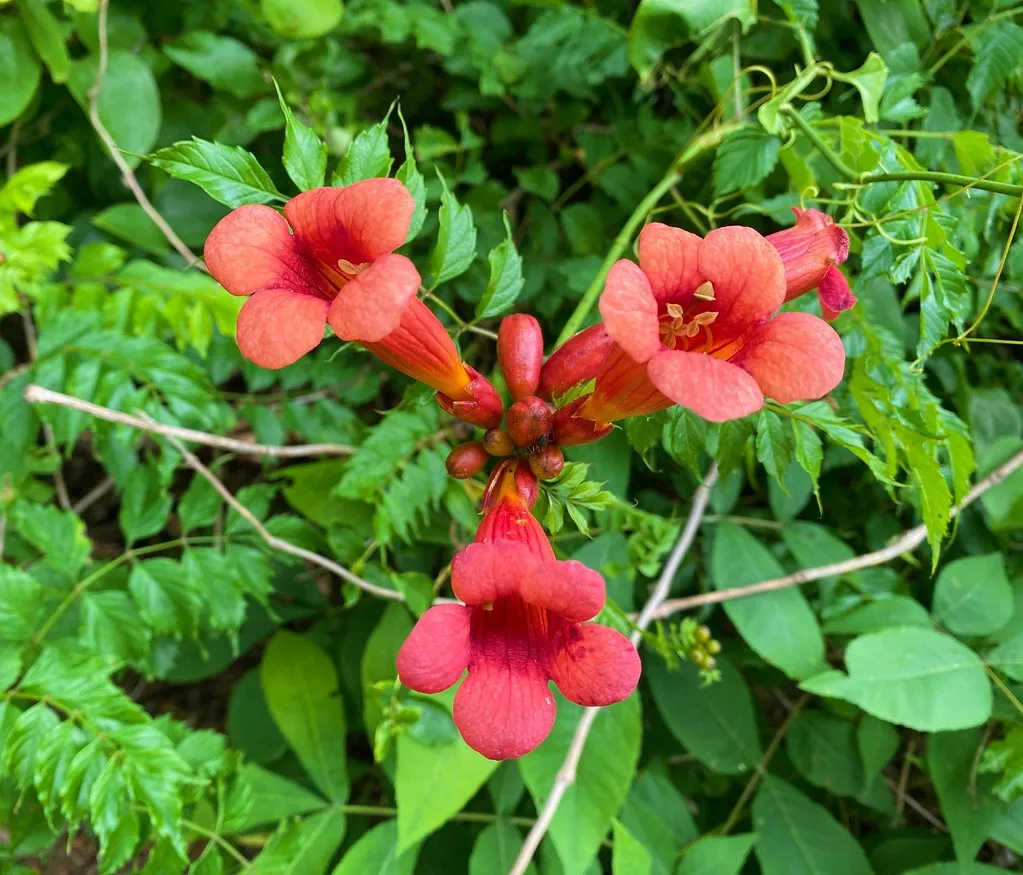
Trumpet vine doesn’t do subtle. Its bright orange-red blooms erupt in loud clusters, and hummingbirds treat the whole vine like an all-you-can-drink buffet. Give it a fence, trellis, or arbor, and it will climb aggressively, covering more ground than most gardeners expect.
That aggression is the tradeoff. Left alone, trumpet vine can take over a yard, so regular pruning is non-negotiable. But for gardeners willing to keep it in check, the payoff is a steady, season-long stream of hummingbird visits.
Worth Knowing
- Can stretch 25 to 40 feet in a single growing season once established
- Needs sturdy support – a flimsy trellis won’t hold up
- Prune hard in late winter to keep it from swallowing nearby structures
- Hardy in zones 4 through 9
8 – Cardinal Flower (Lobelia cardinalis)
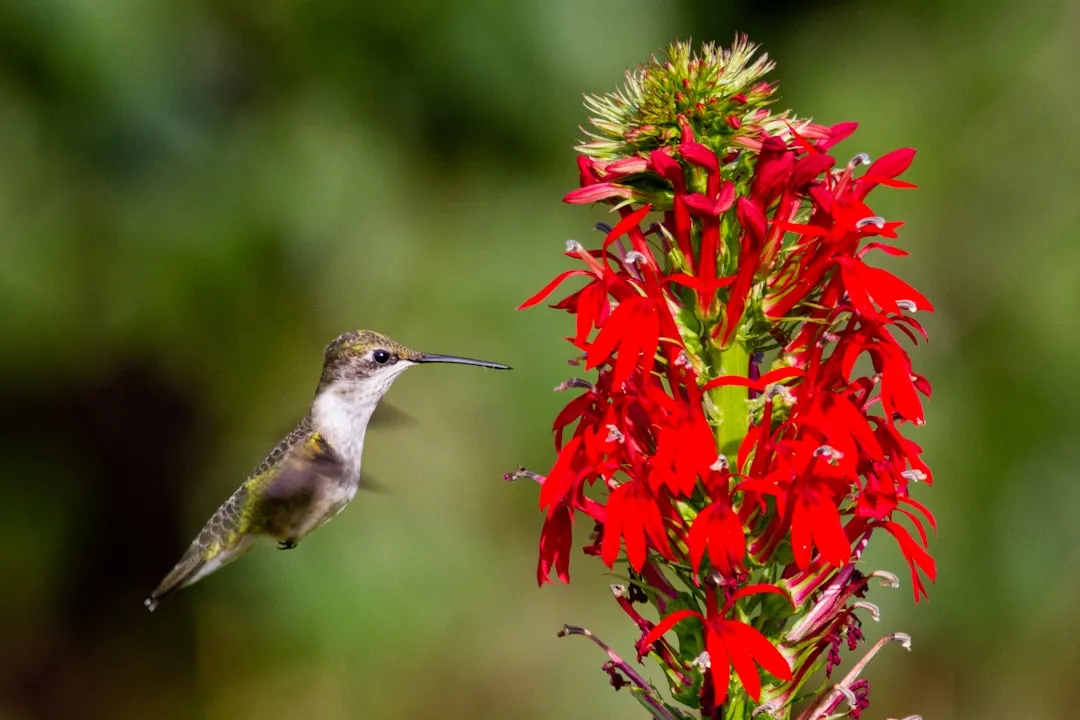
Cardinal flower’s scarlet spikes look almost too vivid to be real, and that’s exactly the point – hummingbirds spot that shade of red from remarkable distances. It also does something most nectar plants can’t: it tolerates wet soil and even grows happily near ponds or water features.
Its timing matters just as much as its color. Cardinal flower blooms from mid to late summer, right when many earlier flowers are fading out. That makes it a critical late-season lifeline for hummingbirds fueling up before their long migration south.
7 – Fuchsia (Fuchsia spp.)
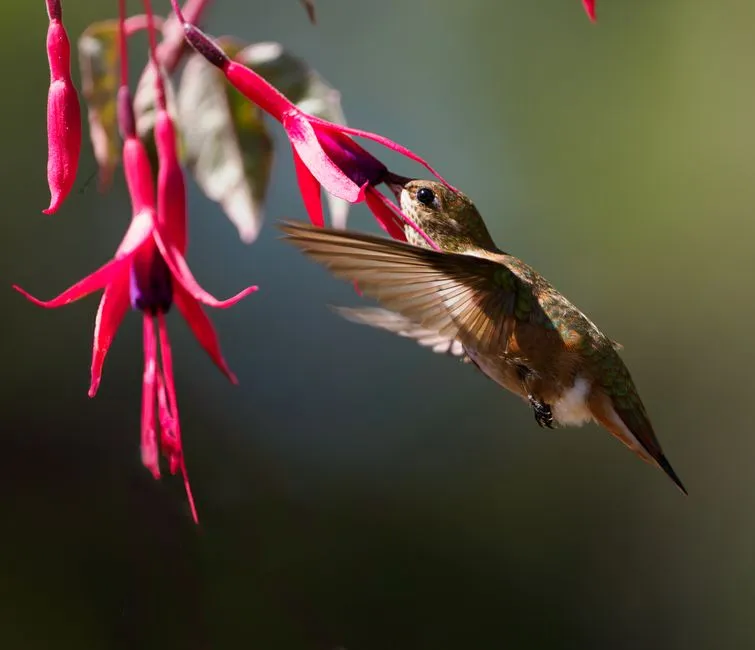
Fuchsia’s dangling, teardrop-shaped blooms in pink, purple, and red practically beg to be noticed, and hummingbirds oblige. Unlike many sun-loving nectar plants on this list, fuchsia prefers partial shade, which makes it a smart pick for porches, containers, and shadier garden corners.
It also blooms nonstop through summer, so there’s rarely a moment when the plant isn’t offering something. The dramatic shape adds visual flair to any setup, but the real payoff is how often it keeps hummingbirds circling back.
6 – Penstemon (Penstemon spp.)
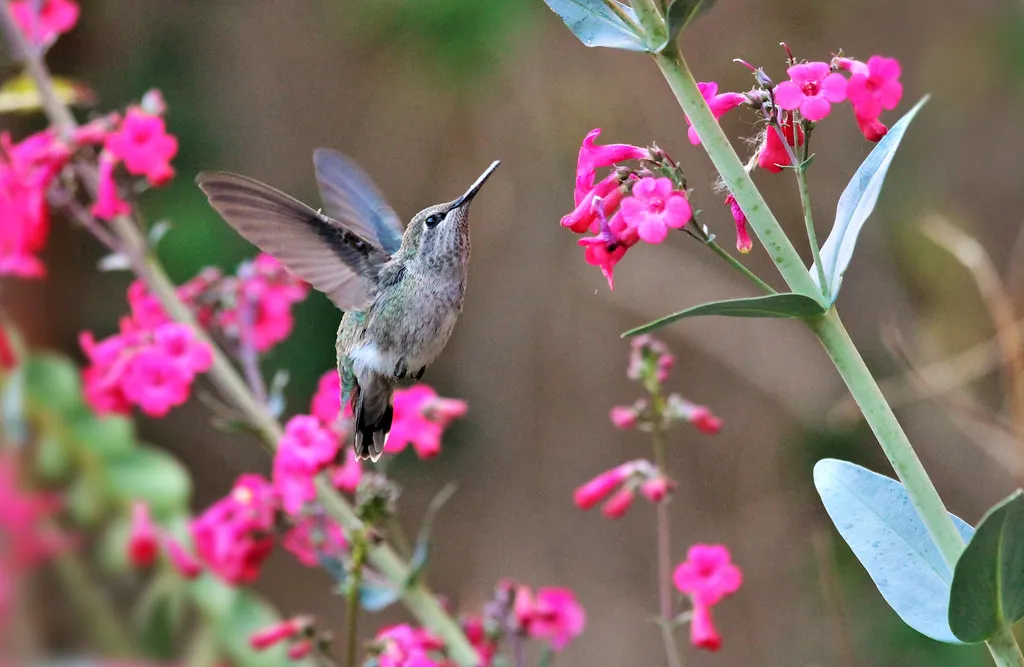
Penstemon, sometimes called beardtongue, sends up tall spikes lined with tubular flowers that hummingbirds notice almost immediately. The red varieties are the standout performers, though the plant comes in a wide range of colors.
As a North American native, it’s built for exactly this kind of duty. Once established, it tolerates drought and poor soil without much complaint, giving gardeners a low-maintenance option that still delivers a steady nectar supply from late spring into mid-summer.
At a Glance
- Native to North America, with over 250 known species
- Bloom time: late spring into mid-summer
- Prefers full sun and well-drained, even sandy soil
- Height: 1 to 3 feet for most garden varieties
5 – Columbine (Aquilegia spp.)
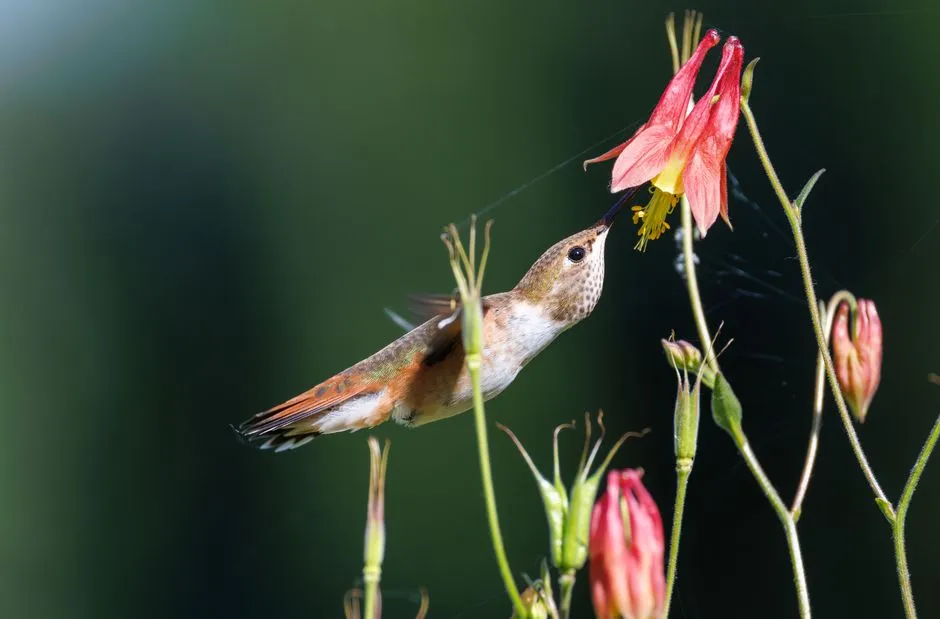
Columbine holds a special place in the hummingbird calendar – its nodding, spurred blossoms are often the very first real meal migrating hummingbirds find when they return in spring. The native red-and-yellow variety, Aquilegia canadensis, is especially prized for how precisely it times its bloom with the birds’ arrival.
There’s something almost poetic about that timing, a quiet reunion between plant and bird that repeats every year without fail. It’s a connection poets have noticed too.
A route of evanescence, with a revolving wheel.
Emily Dickinson
Columbine prefers part shade and well-drained soil, and it grows reliably across zones 3 through 8, making it one of the most dependable early-season options for gardeners hoping to catch hummingbirds the moment they return.
4 – Zinnia (Zinnia elegans)
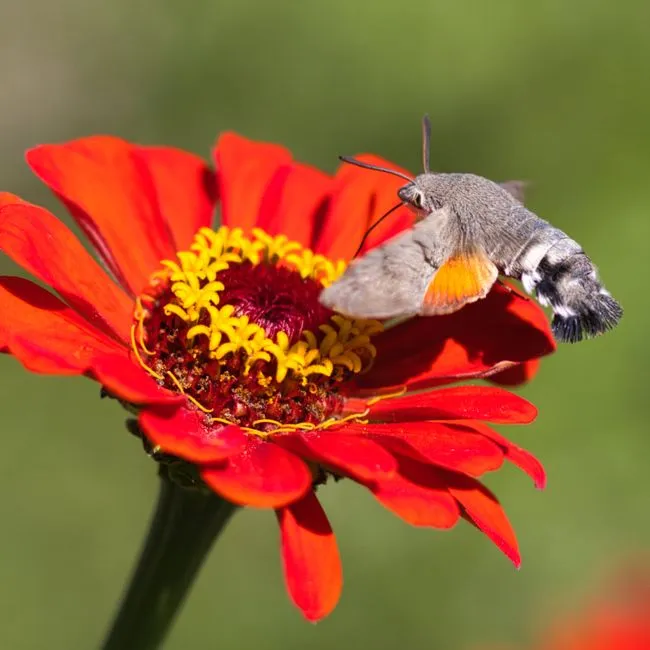
Zinnias are often the first flower a new gardener ever plants, and it turns out hummingbirds have similar beginner-friendly instincts toward them. The bright, flat blooms in red, orange, and pink are easy to spot from the air, and they keep producing nectar for weeks with almost no upkeep.
They’re also fast. Zinnias grow quickly from seed and bloom within weeks, which means even a late-planted patch can start pulling in hummingbirds before summer is halfway over. For anyone testing whether a yard can support hummingbird traffic, zinnias are close to a foolproof experiment.
3 – Petunia (Petunia spp.)
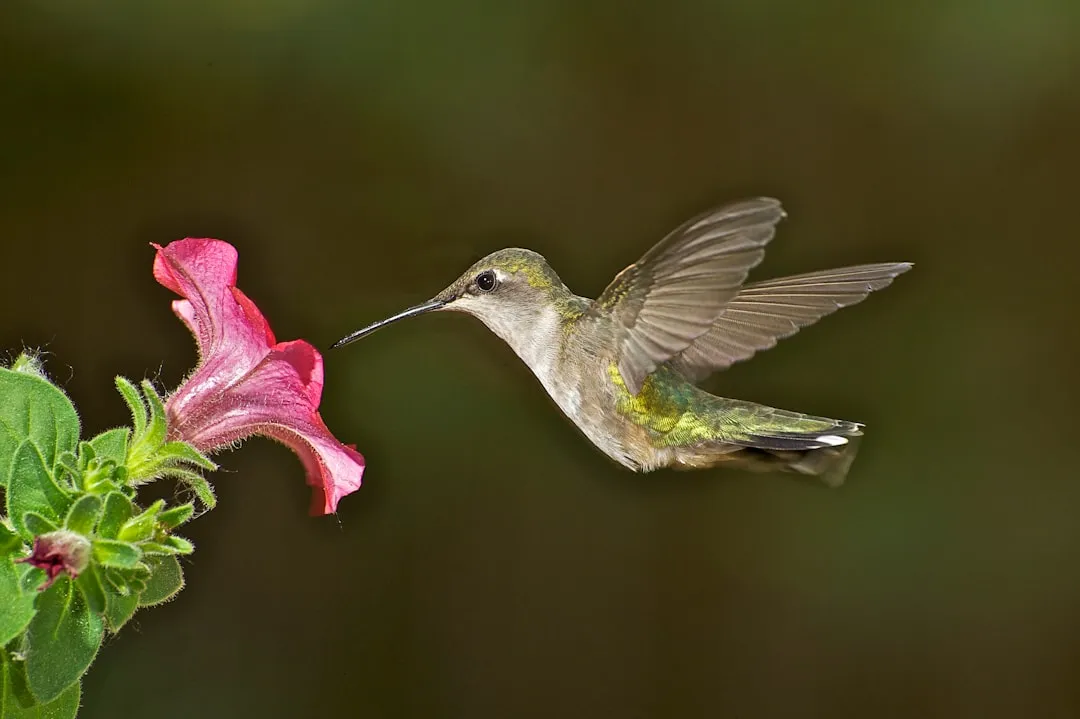
Petunias get dismissed as an ordinary hanging-basket flower, but their trumpet-shaped blooms are exactly the kind of shape hummingbirds are wired to seek out. The nectar sits deep enough that it favors long-beaked visitors over most other insects, which keeps hummingbird traffic surprisingly consistent.
They also bloom relentlessly through summer heat, especially with regular deadheading. Planted near a porch or window, petunias tend to bring hummingbirds close enough to watch up close, which is part of why they remain a favorite for anyone gardening specifically to see the birds, not just attract them.
2 – Hummingbird Mint (Agastache spp.)
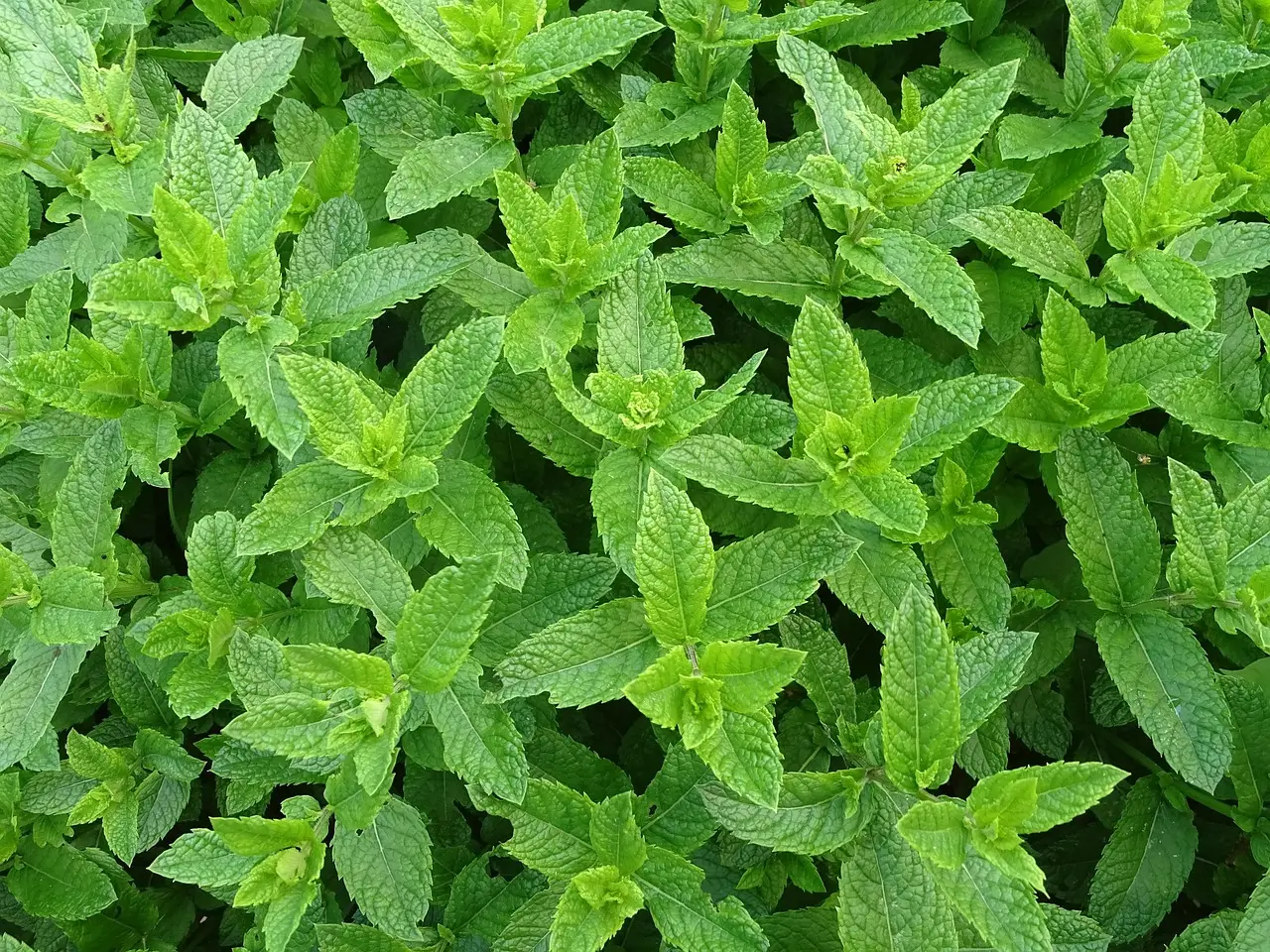
The name isn’t a marketing gimmick. Agastache, widely known as hummingbird mint, produces spiky flower clusters loaded with nectar, and the birds respond to it with almost startling consistency. It’s a plant that seems to have earned its common name honestly.
It’s also tough in ways that matter for real gardens. Agastache tolerates heat, drought, and poor soil while still blooming for months, making it one of the rare plants that delivers both reliability and near-guaranteed hummingbird visits without demanding much in return.
1 – Coral Honeysuckle (Lonicera sempervirens)
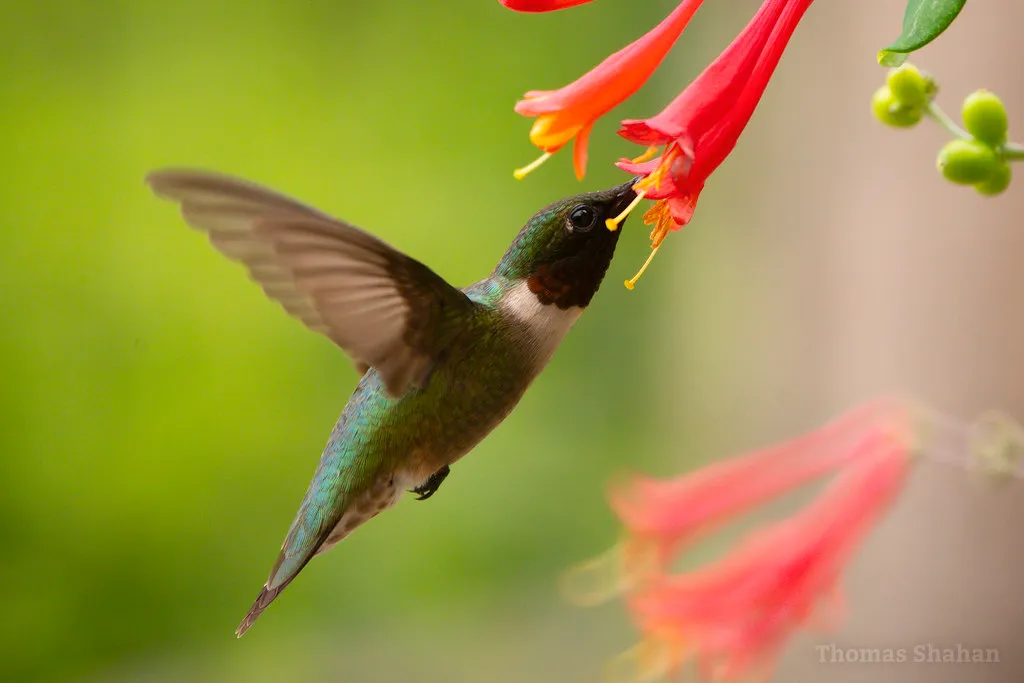
If there’s one plant that defines the hummingbird-and-flower partnership, it’s coral honeysuckle. This native vine produces clusters of slender, tubular red-orange blooms that seem engineered specifically for a hummingbird’s beak, and it’s been painted alongside these birds in classic American natural history illustrations for a reason – the pairing is iconic.
It also blooms early and often, frequently opening its first flowers just as spring migrants arrive and continuing well into summer. Unlike its more aggressive cousin, Japanese honeysuckle, coral honeysuckle stays reasonably well-behaved, climbing fences and trellises without swallowing the yard whole. It’s the plant most likely to be the very first stop a hummingbird makes each season, and arguably the one every hummingbird garden should be built around.
Why It Stands Out
- Often blooms as early as spring migration begins
- A non-invasive alternative to Japanese honeysuckle
- Evergreen to semi-evergreen in warmer climates
- Hardy in zones 4 through 9, tolerating both sun and light shade
If you ask me, the feeder is the least important part of this whole equation. Sugar water is a backup plan, not a strategy. The real magnetism comes from the flowers, and once you plant even three or four of these – especially something early like columbine paired with something dependable like coral honeysuckle – you stop hoping hummingbirds show up and start expecting them. That shift, from waiting to knowing, is the entire point of gardening for these birds in the first place.
