


When most people think of bats, they envision mysterious creatures flitting through the darkness, using echolocation to navigate and hunt insects. While these nocturnal abilities are indeed remarkable, the world of bats is far more diverse and fascinating than many realize. Across the globe, different bat species have evolved extraordinary adaptations and behaviors that go well beyond nighttime flying. From pollinating vital crops to singing complex songs, these incredible mammals demonstrate remarkable versatility that often goes unnoticed. This article explores 13 bat species with abilities and behaviors that showcase just how remarkable these misunderstood animals truly are.
The Nectar-Sipping Artists Lesser Long-Nosed Bats

Lesser long-nosed bats (Leptonycteris yerbabuenae) are nature’s unsung heroes in the southwestern United States and Mexico. Far more than nocturnal flyers, these bats are critical pollinators of agave plants, the primary ingredient in tequila production. Their specialized elongated snouts and tongues allow them to reach deep into the agave flowers, collecting nectar while their fur becomes coated with pollen. As they travel from plant to plant, they transfer this pollen, facilitating reproduction. Without these bats, the tequila industry would face serious challenges, as agave plants would produce significantly fewer seeds and genetic diversity would decline. Remarkably, these bats can travel up to 60 miles in a single night on their pollination routes, making them essential ecological engineers in desert ecosystems.
The Blood-Sampling Specialists Common Vampire Bats

Common vampire bats (Desmodus rotundus) have developed one of the most specialized diets in the animal kingdom – they feed exclusively on blood. But there’s much more to these bats than their feeding habits. They’ve evolved into highly social creatures with complex cooperative behaviors. Vampire bats practice food sharing, regurgitating blood meals to help hungry roostmates who haven’t fed. This altruistic behavior strengthens social bonds within colonies. Even more remarkable is their ability to recognize individual calls among hundreds of bats and form close, friendship-like bonds. Recent studies have shown that these friendships, formed in captivity, continue when the bats are released into the wild. Additionally, vampire bats possess specialized heat sensors in their noses that help them locate blood vessels near the surface of their prey’s skin, making them sophisticated biological engineers.
The Fishing Experts Greater Bulldog Bats

Greater bulldog bats (Noctilio leporinus), also known as fishing bats, have mastered a hunting technique unique among bats. Using their enlarged, sharp-clawed feet and echolocation abilities, they can detect ripples on water surfaces caused by fish. When a potential meal is located, these bats swoop down and drag their specialized feet through the water, hooking fish with remarkable precision. Their feet are equipped with curved claws that act like gaffs to snag prey, while the loose skin between their legs forms a pouch-like structure to help scoop up fish. These bats can carry fish weighing up to 50% of their body weight back to their roosts. Not limiting themselves to fishing, they also consume water insects and have been observed catching crustaceans. Their waterproof fur allows them to briefly submerge while hunting, making them truly amphibious bats.
The Tent-Building Architects: Honduran White Bats
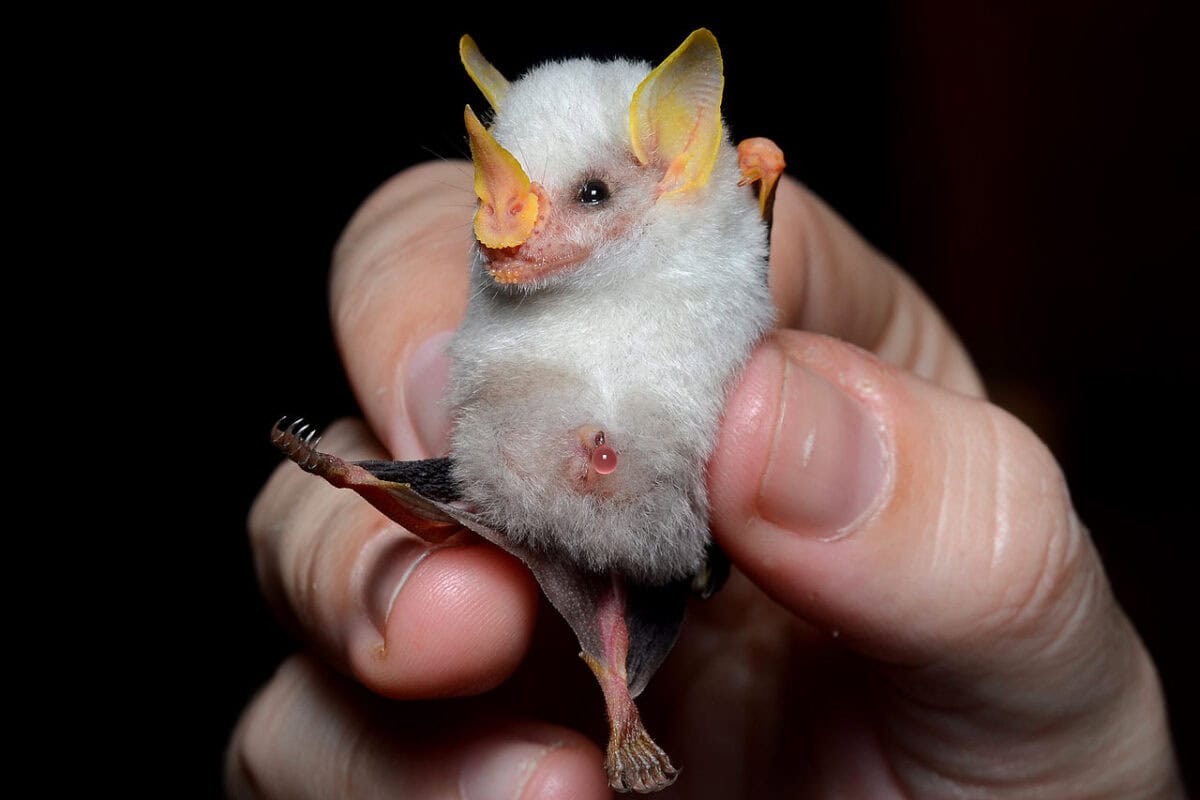
Honduran white bats (Ectophylla alba) are tiny architects that transform large heliconia leaves into protective shelters. Using their specially adapted teeth, these snow-white bats with bright yellow ears and noses bite along the central vein of heliconia leaves, causing them to fold downward into a tent-like structure. These “tents” serve multiple purposes: they shield the bats from rain, hide them from predators, and regulate temperature by creating a microclimate. Unlike most bats that roost in dark caves or trees, Honduran white bats remain under their leaf tents during daylight hours, where their white fur helps reflect green light coming through the leaves, effectively camouflaging them. A single colony will construct multiple tents within a small area, allowing them to rotate between shelters when one becomes damaged or discovered by predators. This sophisticated architectural behavior demonstrates remarkable problem-solving abilities in a creature that weighs less than 6 grams.
The Sonic Superstars Mexican Free-Tailed Bats
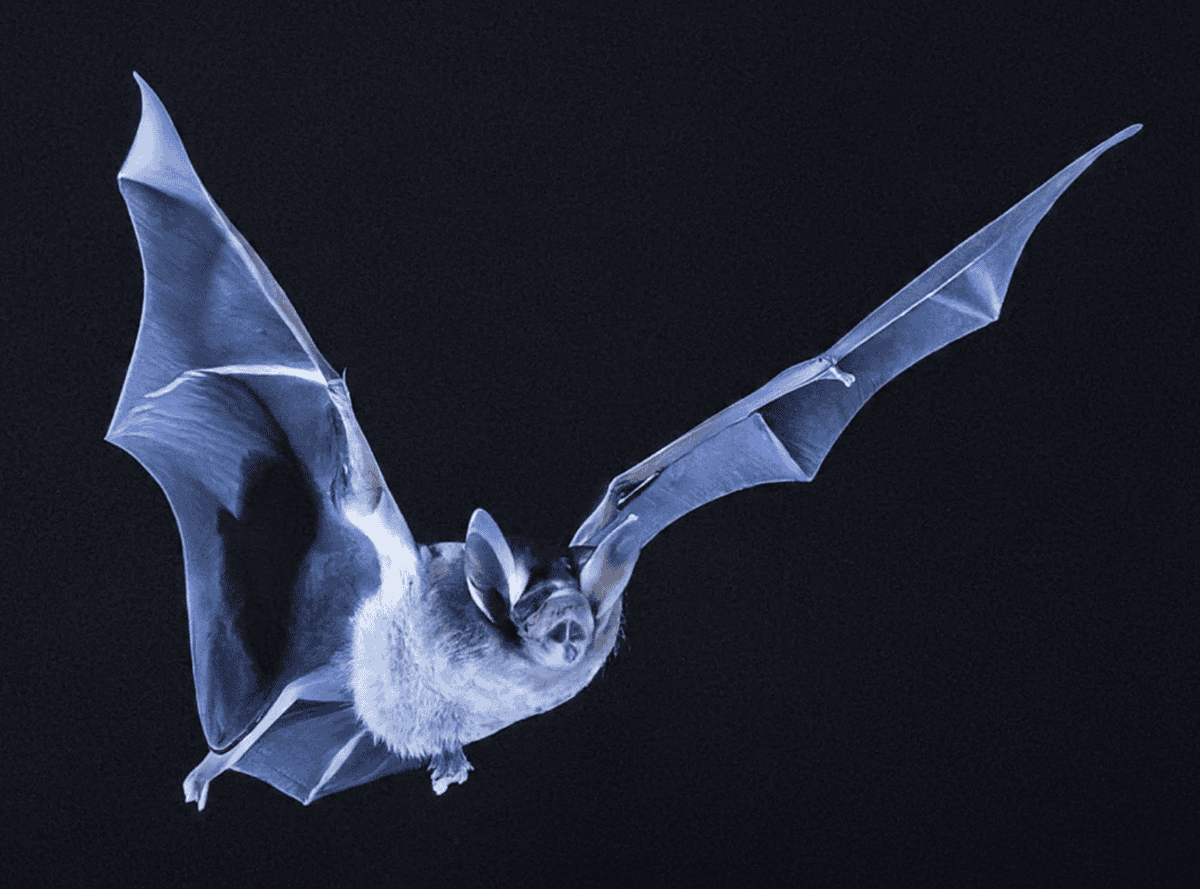
Mexican free-tailed bats (Tadarida brasiliensis) are vocal virtuosos with communication skills rivaling those of many primates. Males produce complex songs consisting of specific syllables and phrases to attract females and defend territories. Their vocalizations are so elaborate that researchers have identified distinct dialects among different colonies. These bats can modify their echolocation calls when flying in large groups to avoid interference from other bats’ signals – a form of “social jamming avoidance.” Beyond their vocal abilities, Mexican free-tailed bats are incredible aerialists, flying at altitudes up to 10,000 feet and reaching speeds of nearly 100 miles per hour, making them one of the fastest horizontal-flying animals on the planet. Their massive colonies, sometimes numbering in the millions, consume thousands of tons of agricultural pests annually, providing billions of dollars in ecosystem services to farmers across North and Central America.
The Fruit Gardeners Jamaican Fruit Bats
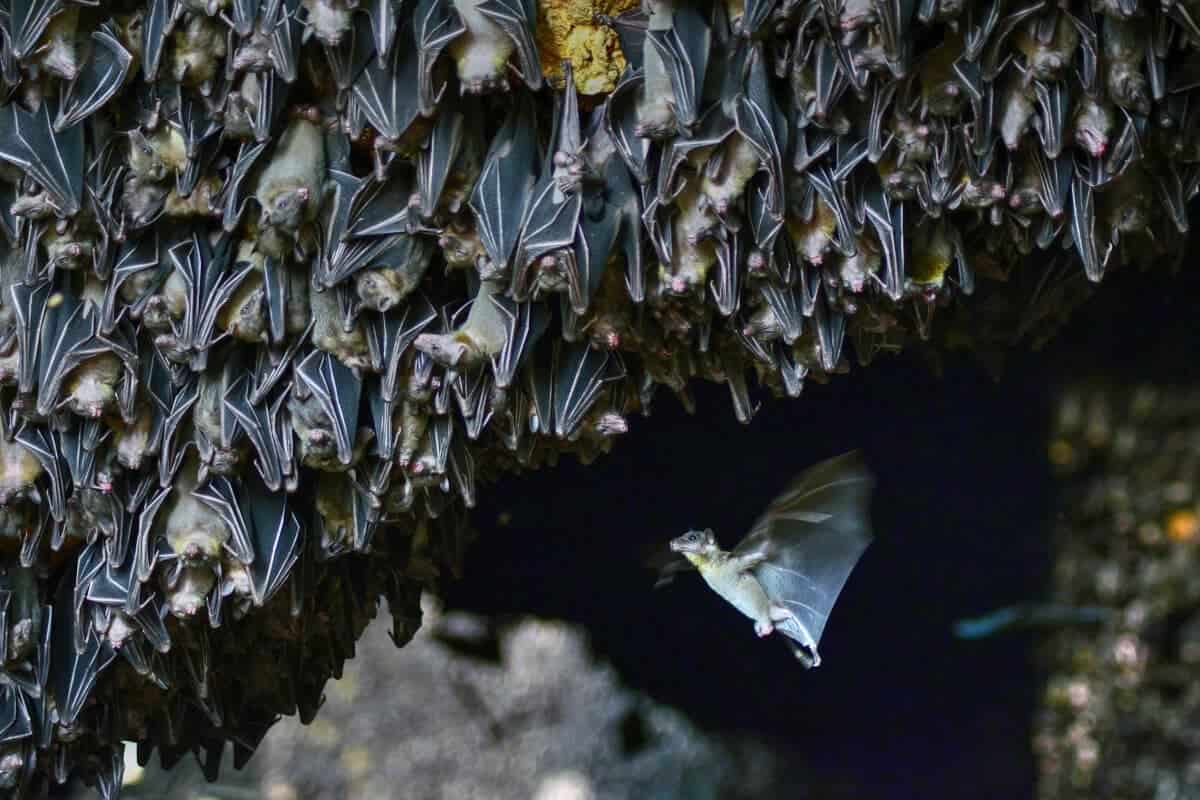
Jamaican fruit bats (Artibeus jamaicensis) are essential ecosystem engineers that shape forest compositions throughout Central and South America. Unlike simple seed dispersers, these bats practice a form of directed seed dispersal, carrying fruits away from parent trees to specific feeding roosts. After consuming the fruit pulp, they discard the seeds in these locations, effectively planting new trees in suitable growth areas. Some studies suggest these bats can remember the locations of fruiting trees and return to them seasonally, demonstrating impressive spatial memory. Their seed dispersal is particularly important for pioneer plant species that colonize forest gaps and disturbed areas. Additionally, Jamaican fruit bats have developed specialized digestive systems that process fruit extremely quickly – sometimes in as little as 15-20 minutes. This rapid digestion allows them to consume multiple fruits in a single night, maximizing their ecological impact. They show preferences for certain fig species, making them crucial conservationists of these keystone tropical tree species.
The Weather Forecasters Eastern Red Bats

Eastern red bats (Lasiurus borealis) possess an uncanny ability to detect changes in barometric pressure, allowing them to predict incoming weather systems. Research has shown they often increase feeding activity before storms, seemingly aware of the approaching weather front hours before it arrives. This meteorological sensitivity helps them prepare for periods when hunting may be impossible. Unlike cave-dwelling bats, eastern red bats roost in trees, camouflaging themselves as dead leaves by hanging from a single foot and wrapping their furry tails around their bodies. During winter, they enter a state of torpor but can emerge to feed on warmer nights, demonstrating remarkable temperature regulation abilities. Perhaps most impressive is their migration pattern – eastern red bats undertake seasonal journeys comparable to those of birds, traveling hundreds of miles between summer and winter territories. They’ve developed specialized fur that traps air for additional insulation, allowing them to survive cold temperatures that would kill many other bat species.
The Carnivorous Hunters Spectral Bats

Spectral bats (Vampyrum spectrum), the largest bats in the Americas, are formidable predators with hunting abilities that extend far beyond insect-catching. With a wingspan reaching up to 3 feet, these carnivorous bats pursue prey that many wouldn’t expect bats to tackle – including birds, rodents, and even other bat species. Their hunting strategy involves perching at listening posts and detecting prey movements, then swooping down for a precise strike with their powerful jaws. Spectral bats are also among the few bat species known to hunt cooperatively, with mated pairs sometimes working together to catch larger prey. Family units maintain complex social structures, with males actively participating in raising offspring and defending territories. They establish “larders” near their roosts, storing partially eaten prey for later consumption – a behavior more commonly associated with predatory birds or mammals. Their intelligence is evident in their ability to remember specific hunting routes and prey locations night after night.
The Desert Survivors Pallid Bats
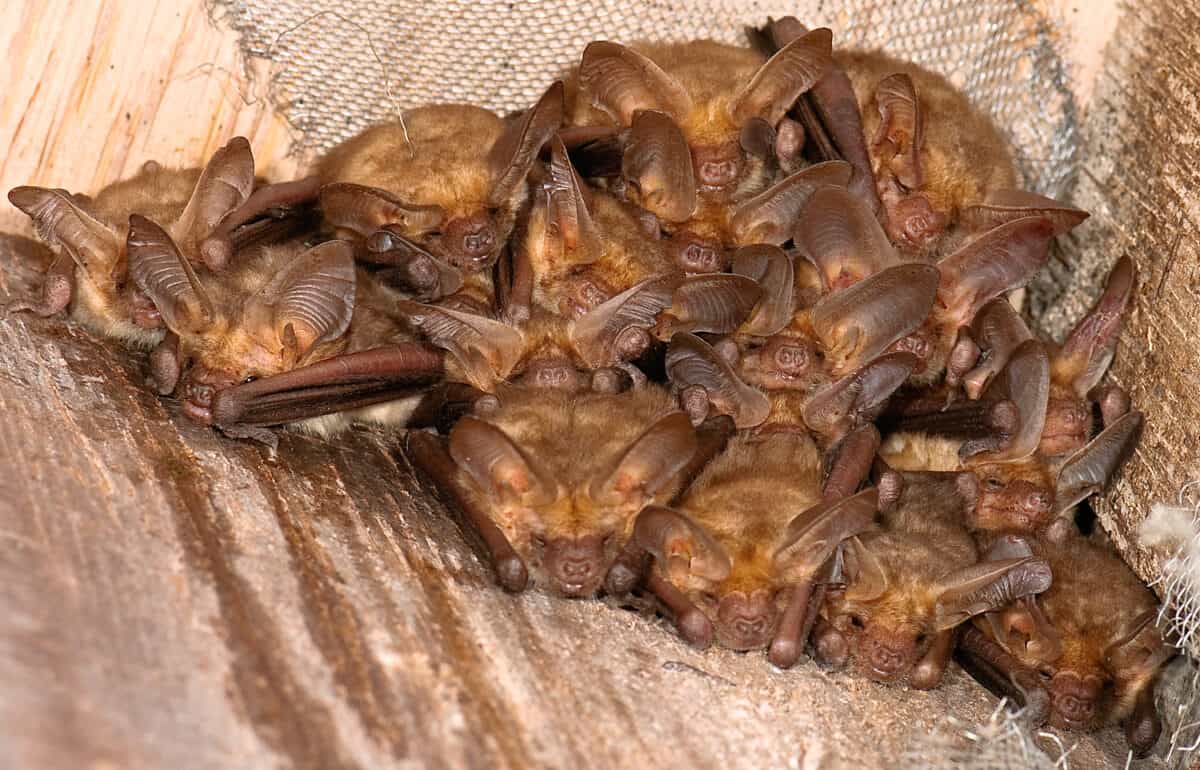
Pallid bats (Antrozous pallidus) have developed extraordinary adaptations to thrive in harsh desert environments. Unlike most bats that primarily use echolocation to find flying insects, pallid bats specialize in hunting ground-dwelling prey, including scorpions and centipedes. They possess a remarkable immunity to scorpion venom, allowing them to consume these dangerous arachnids without ill effects. Their oversized ears contain specialized neural networks that can detect the subtle sounds of prey moving on the ground, giving them the ability to hunt in complete darkness without echolocation. Pallid bats have evolved specialized water conservation mechanisms, obtaining most of their moisture from their food to survive in arid regions where water is scarce. Their kidneys produce highly concentrated urine to minimize water loss. During extreme heat, they enter a state of estivation, similar to hibernation but induced by high temperatures, allowing them to reduce metabolic activity and water loss during the hottest days of summer.
The Omnivorous Adaptors Egyptian Fruit Bats

Egyptian fruit bats (Rousettus aegyptiacus) showcase exceptional dietary flexibility that allows them to thrive in diverse environments. Unlike most fruit bats that rely solely on fruit, Egyptian fruit bats consume fruits, flowers, nectar, pollen, leaves, and occasionally insects, making them true omnivores. They’ve developed the remarkable ability to identify ripe fruits in pitch darkness using their exceptional sense of smell. Recent research has revealed these bats possess a mental “map” of flowering and fruiting trees in their territory, systematically visiting them based on ripening schedules. Egyptian fruit bats are also among the few bat species that use a primitive form of echolocation – they produce audible clicking sounds with their tongues that function similarly to the ultrasonic calls of microchiropteran bats. Their social learning capabilities are equally impressive; young bats learn food preferences and processing techniques by observing adults, with cultural transmission of these behaviors occurring within colonies.
The Migratory Marathoners Hoary Bats
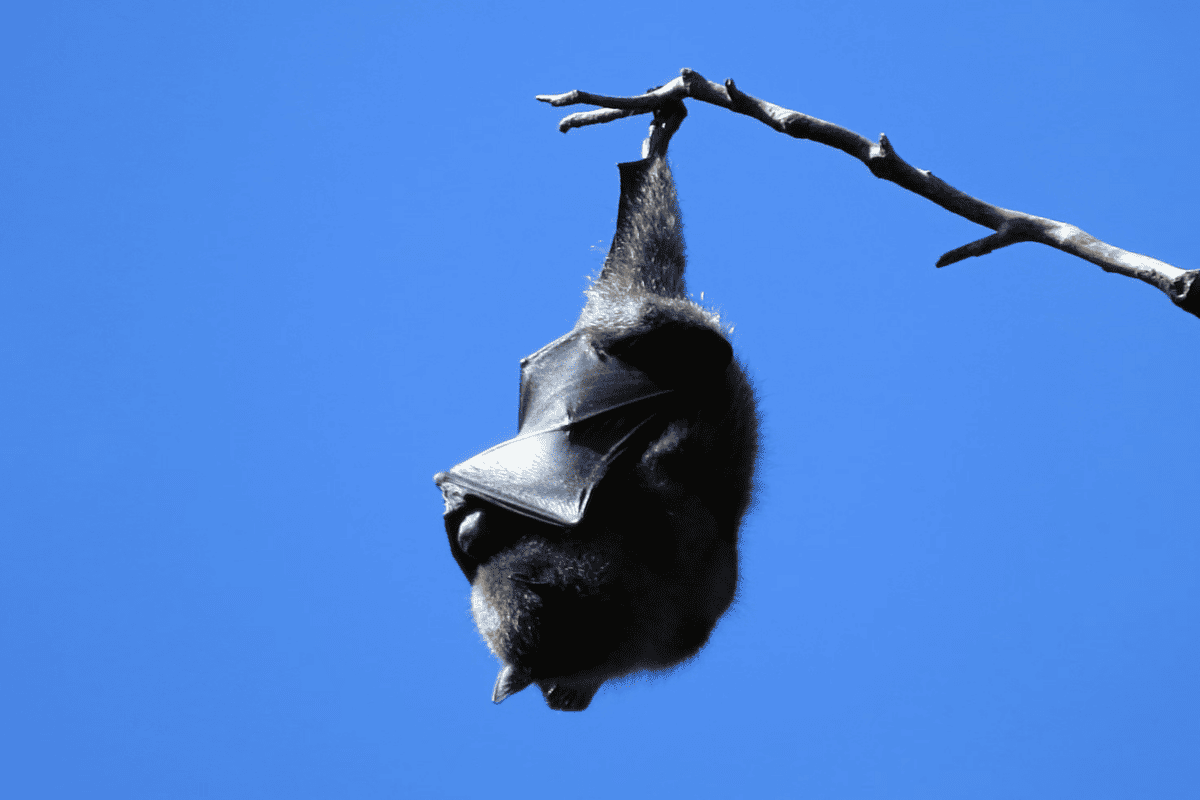
Hoary bats (Lasiurus cinereus) are the marathon runners of the bat world, undertaking some of the longest migrations of any bat species. These solitary travelers journey up to 1,000 miles between their summer and winter territories, with some populations even making the remarkable 2,500-mile journey between Canada and Mexico. Even more impressively, evidence suggests some hoary bats make the 2,200-mile oceanic crossing from the mainland to Hawaii – an extraordinary feat for creatures weighing under an ounce. Unlike birds that can rest on water, these bats must complete this journey without stopping. Hoary bats have evolved specialized physiological adaptations for these long journeys, including enhanced fat storage capacity and metabolic adjustments that maximize flight efficiency. Their fur, the longest of any North American bat, provides crucial insulation during these energy-intensive migrations across changing climate zones. Recent studies using isotope analysis of their fur have revealed complex migration patterns with population-specific routes, suggesting a level of navigational precision previously unrecognized in bats.
The Heat-Resistant Specialists Desert Long-Eared Bats

Desert long-eared bats (Otonycteris hemprichii) have mastered survival in one of Earth’s most extreme environments – the scorching deserts of North Africa and the Middle East. These bats can tolerate ambient temperatures exceeding 40°C (104°F) without suffering heat stress, thanks to specialized thermoregulation mechanisms. Their oversized ears serve a dual purpose: enhancing their hunting abilities and functioning as radiators to dissipate excess body heat. Desert long-eared bats practice “water-free living,” obtaining almost all their moisture from their prey and producing extremely concentrated urine and dry feces to minimize water loss. Perhaps most remarkable is their specialized hunting behavior targeting the highly venomous deathstalker scorpion (Leiurus quinquestriatus). Using their enhanced hearing, these bats can pinpoint scorpions moving across sand in complete darkness. When attacking, they target the scorpion’s head and crush it quickly to neutralize the venomous tail. They’ve developed a partial immunity to scorpion venom, though not complete resistance, making their hunting strategy all the more impressive.
The Agricultural Allies California Leaf-Nosed Bats
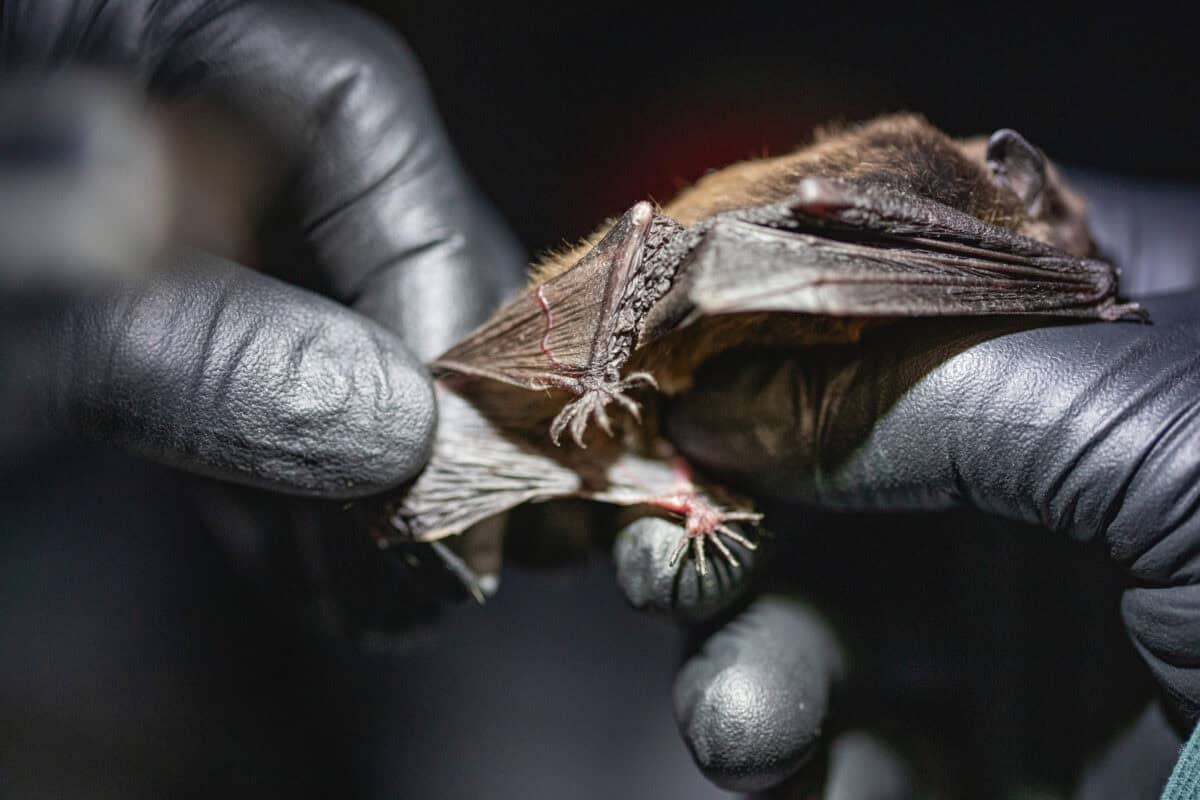
California leaf-nosed bats (Macrotus californicus) have developed specialized hunting techniques that make them invaluable allies to agriculture in the southwestern United States. Unlike many insectivorous bats that catch prey in flight, these bats specialize in gleaning – the practice of plucking insects directly from vegetation surfaces. Their distinctive nose leaf acts as an acoustic lens, focusing their echolocation calls with such precision that they can detect a stationary insect on a leaf. This specialized hunting approach makes them particularly effective at controlling agricultural pests that hide on plant surfaces rather than flying in open air. California leaf-nosed bats have unusually large eyes for a microchiropteran bat, allowing them to use visual cues alongside echolocation when hunting in dimly lit conditions. They’ve developed a remarkable ability to identify and focus on specific pest species that are agricultural threats, effectively acting as targeted biological control agents. Agricultural areas with healthy California leaf-nosed bat populations often show significantly reduced crop damage from certain pest insects.
Conclusion: Understanding the Extraordinary World of Bats

The remarkable adaptations and behaviors exhibited by these 13 bat species represent just a glimpse into the extraordinary diversity of the world’s only flying mammals. Far from being simple nocturnal flyers, bats have evolved specialized skills that make them ecological powerhouses – from agricultural pest control and pollination to seed dispersal and ecosystem engineering. Their sophisticated social structures, problem-solving abilities, and specialized adaptations demonstrate evolutionary ingenuity that deserves both scientific attention and conservation efforts. As we continue to study these remarkable creatures, we consistently discover new capabilities that challenge our understanding of their cognitive and physical limits. By appreciating the full spectrum of bat abilities and their crucial ecological roles, we can work more effectively to protect these valuable and fascinating mammals for future generations.

As a little kid, I fell in love with nature, wildlife, and animals. Living in the USA, South Africa, Italy, China and Germany gave me the opportunity to discover the world's Wildlife. My favorite animals are Mountain Gorillas, Siberian Tigers, and Great White Sharks.
I'm a certified PADI Open Water Diver, went to Everest Base Camp and Trekked Gorillas in Uganda. I hold a Master of Science in Economics and Finance.
Please send any feedback to feedback@animalsaroundtheglobe.com
- 15 Unexpected Animal Abilities That Defy Logic - August 7, 2026
- 11 Ancient Creatures That Still Roam the Earth - August 7, 2026
- 17 Surprising Facts About the American Bison - August 7, 2026