


Picture this: you’re standing on the edge of America’s Great Plains, watching a massive beast charge through snow that would stop a truck dead in its tracks. That beast? The mighty American bison. These shaggy giants didn’t just stumble into survival—they’re absolutely engineered for it. From their bone-crushing winter endurance to their surprising athletic prowess, bison have mastered the art of staying alive in ways that’ll blow your mind. Think you know what makes these animals tick? Think again.
13. They’re Massive Winter Warriors Who Laugh at Blizzards

When winter storms hit the Great Plains with bone-chilling winds and sub-zero temperatures, most animals either migrate south or hunker down in shelter. Bison develop thick, woolly coats that help protect them from freezing temperatures and harsh winds, and it’s said that a bison’s winter coat is so thick and provides insulation so effective that when snow accumulates on its coat, it will not melt from the heat of the bison’s skin. Their skin also thickens in response to cold temperatures and fatty deposits appear to insulate the animal, plus their skin literally gets thicker in winter, and just like bears, bison bulk up with fat deposits that help insulate their bodies and keep them warm. During winter storms, bison will actually turn toward the storm, hunker down, and wait for it to pass. These massive mammals can face off against the wind, hunker down and wait out storms that would kill other animals, and with thick coats and creating a low profile, bison can survive the same storm that would kill many domestic livestock. It’s like having a built-in survival suit that makes them practically invincible against Mother Nature’s worst tantrums.
12. Their Metabolism Slows Down Like a Living Power-Saving Mode

Under cold stress, bison have developed the adaptation to minimize nutritional needs and slow their metabolism to conserve energy. People say bison during the winter are time minimizers rather than energy maximizers, meaning bison cannot merely eat more food and more often to compensate for the low nutritional forage they eat, instead, they slow down their metabolisms, the amount of time they spending foraging, and the amount of food they consume in order to conserve energy. Bison also have the ability to generate internal body heat through digestion, and forage is retained longer in their gut — due to the increase of indigestible plant material found in the winter — which allows them to eat less but still receive the nutrition they require. Think of it like your smartphone switching to battery-saver mode when it’s running low. They have adapted to efficiently find nourishment from low quality forage that allows them to battle blizzards, -40 degree temperatures, and 50 mph winds. Under cold stress, bison have developed the adaptation to minimize nutritional needs and slow their metabolism to conserve energy, they slow down the amount of time they spend foraging, and the amount of food they consume in order to conserve energy, and forage is retained longer in their gut — due to the increase of indigestible plant material found in the winter — which allows them to eat less but still receive the nutrition they require. It’s basically biological genius in action.
11. They Use Their Heads as Living Snow Plows

When blizzards blanket the plains with deep snow, bison use their heads as a plow of sorts to push aside the accumulation and reach the forage below, and bison also have the ability use their large head and massive neck and shoulder muscles as snow plows to forage in snow as deep as four feet. A bison’s shoulder hump isn’t just a pretty decoration, it’s made up of muscle and supported by long vertebrae that let the bison use its head to plow through snow, and because bison are plant eaters and forage between nine and 11 hours a day, this special skill comes in handy in the winter, allowing this massive animal to swing its head from side to side, clearing the snow and creating foraging patches. Their large shoulder hump allows them to use massive neck muscles to swing their heads from side to side to clear snow away from foraging patches, and this snow-plowing-like capability is unique among ungulates (hoofed animals), which normally scrape away snow with their front feet. It’s like having a built-in bulldozer attachment. When snow becomes too deep, bison use their heads to push it aside, making it easier to travel and graze. While other animals struggle and starve, bison just put their heads down and literally plow their way to dinner.
10. They’re Surprisingly Fast Despite Weighing a Ton

They’ve been clocked at 35 mph to 40 mph when running at full speed, and they can run up to 35 miles per hour. The massive animals (weigh up to 2,000 pounds and can hit speeds of 40 miles per hour) feed on grasses and sedges year-round. Despite their enormous size, bison are incredibly athletic, and they can reach speeds of up to 35 miles per hour and jump over 6 feet, with the bison, shaggy behemoth of the Great Plains, despite weighing as much as a ton, can race up to 40 mph. On average, bison can run at speeds of up to 35 miles per hour (56 kilometres per hour), and this astonishing speed allows them to outrun most predators, ensuring their survival in the wild. Imagine a one-ton furry missile barreling across the plains—that’s basically what a running bison looks like. Their speed isn’t just impressive; it’s a lifesaver when wolves or other predators come calling. Think of it this way: they’re basically the pickup trucks of the animal world, but with way better acceleration.
9. They’re Incredible Athletes Who Can Jump Over Six Feet

Despite weighing about a ton, they have a vertical jump of up to 6 feet, are good swimmers and can spin around quickly to defend themselves against predators, and bison can spin around quickly, jump high fences and are strong swimmers. They can reach speeds of up to 35 miles per hour and jump over 6 feet! The bison, shaggy behemoth of the Great Plains, despite weighing as much as a ton, can race up to 40 mph, jump up to 6 feet vertically and can quickly pivot to combat predators. This vertical jumping ability is absolutely mind-blowing when you consider that these animals can weigh as much as a small car. Plus, they’re extremely agile. It’s like watching a mountain suddenly decide to become a gymnast. Their athleticism completely destroys any stereotypes about slow, lumbering giants—bison are basically the superathletes of the animal kingdom disguised in shaggy fur coats.
8. They’re Expert Swimmers Despite Their Bulk

Despite weighing about a ton, they have a vertical jump of up to 6 feet, are good swimmers and can spin around quickly to defend themselves against predators, and bison can spin around quickly, jump high fences and are strong swimmers. This swimming ability might seem impossible when you look at their massive, muscular build, but bison are surprisingly comfortable in water. Their powerful legs that help them plow through snow also work incredibly well for propelling their bulk through lakes and rivers. Think about it: if you can handle pushing through four feet of snow, swimming through water is probably a breeze. Their swimming skills add another layer to their survival toolkit—when faced with a river or lake, they don’t have to find a way around it. They just dive in and power through. It’s like having an all-terrain vehicle that works on land, snow, and water. This aquatic ability also helps them access feeding areas that other large mammals might not be able to reach, giving them yet another survival advantage.
7. They Can Spin Around Like Combat Fighters

Despite weighing about a ton, they have a vertical jump of up to 6 feet, are good swimmers and can spin around quickly to defend themselves against predators, bison can spin around quickly, jump high fences and are strong swimmers, and the bison can quickly pivot to combat predators. This agility is absolutely crucial for their survival because it means they can face threats from any direction without being caught off guard. Imagine a 2,000-pound animal that can suddenly whip around faster than you can blink—that’s the reality of bison combat skills. Their ability to pivot quickly turns them from potential prey into formidable opponents that even wolves think twice about attacking. Plus, they’re extremely agile. It’s like having a tank that can suddenly perform ballet moves. This spinning ability, combined with their speed and jumping power, makes bison incredibly difficult targets for any predator brave enough to try their luck. They’re not just built for survival; they’re built for active defense.
6. They Survived Through Ice Ages When Giants Fell
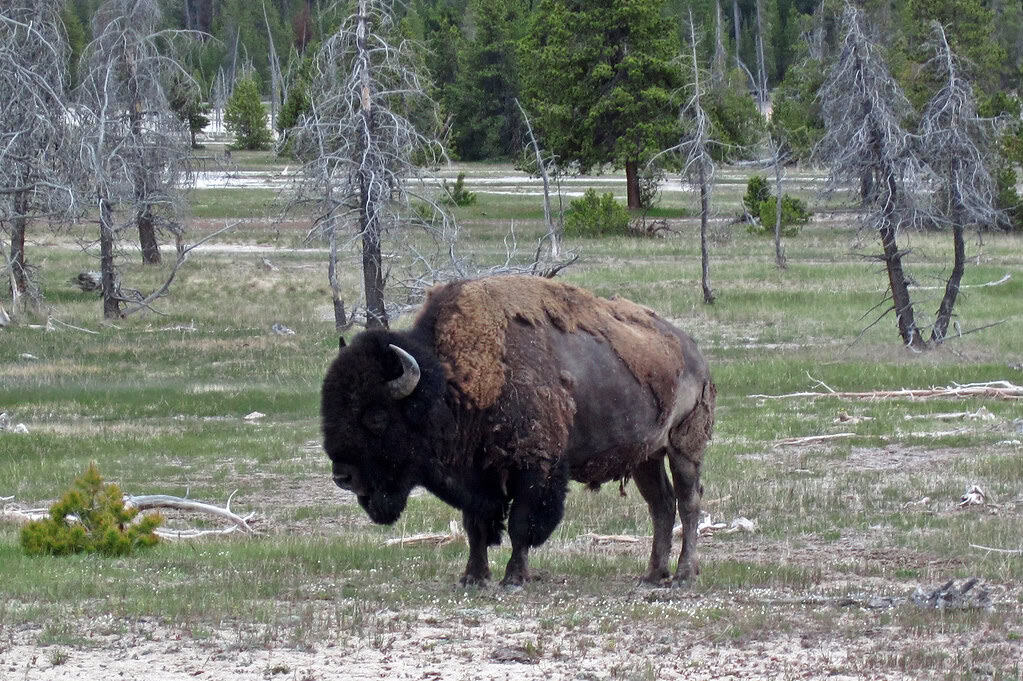
According to Down to Earth, Nature’s Role in American History, by Ted Steinberg Bison survived the Pleistocene extinctions unlike larger animals like mammoths and mastodons due to their ability to survive on less forage. While massive creatures like woolly mammoths and saber-toothed tigers went extinct, bison kept on trucking through some of the harshest environmental changes our planet has ever seen. Though the bison’s ancestors roamed the continent with saber-toothed tigers and woolly mammoths, he could not protect himself from expansion and was nearly wiped out in the late 1800s as the nation’s population moved West. Their survival through the Pleistocene extinctions proves they’re not just tough—they’re practically indestructible when it comes to environmental challenges. Think of them as the ultimate survivors who watched entire species disappear while they just adapted and kept going. Plains bison are one of the most iconic animals in North America, and they have been part of the ecosystem ever since the ice age. This incredible track record of survival through massive climate shifts and environmental upheavals shows that bison have been perfecting their survival strategies for thousands of years.
5. They’re Living Ecosystem Engineers
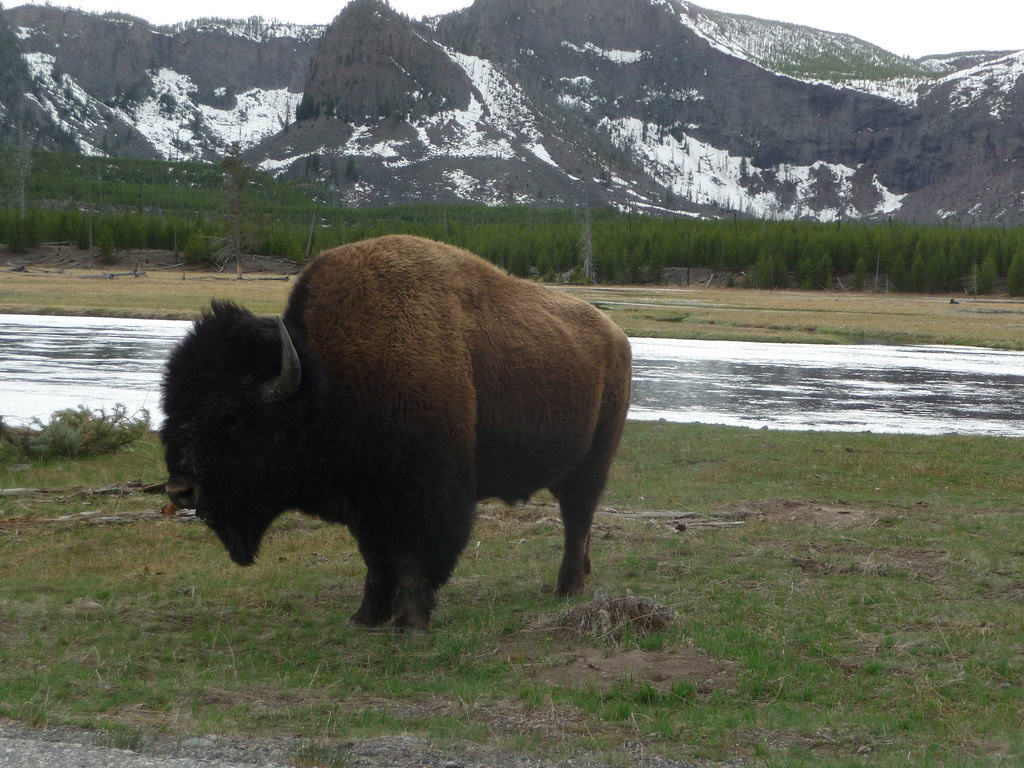
Bison were once the principal large grazers in North America, playing a central role in shaping the landscapes they roamed, and their positive impacts on the land in turn contributes significantly to the health of the biodiversity found in those landscapes including the grassland plant community, wildlife like songbirds, amphibians, and more, with their grazing maintains grasslands by keeping woody vegetation at bay, their pounding hooves and wallowing breaks the surface of hard soils, allowing more water to seep into the ground, and in winter they plow highways in the snow that make it possible for smaller grazers like pronghorn to survive. In contrast to top-down trophic systems, bison (“iinniiwa”: Blackfoot, “tatanka”: Lakota, “ivanbito”: Navajo, “kuts”: Paiute) influence natural systems from the bottom-up, which makes them a keystone species, and as the largest land-dwelling mammal in North America, bison exhibit the ability to transform the landscape simply by engaging in their typical behavior each day. They’re basically nature’s landscapers, constantly improving the environment for countless other species. Pigs aren’t the only animals that like to wallow in the dirt—bison will roll around in dirt to help shed their fur and try to prevent the bites of pesky insects, and they will also wallow during mating season to leave behind their scent and show off their stamina. Every step they take, every wallowing session, every grazing moment helps create better habitats for other animals. It’s like having a construction crew that works 24/7 to improve the neighborhood for everyone.
4. They Have Four-Stomach Digestive Powerhouses

In order to process cellulose in grasses, bison stomachs have four chambers which contain microorganisms to help in digestion. Bison are herbivores, grazing on the grasses and sedges of the North American prairies year-round, and while they feed primarily on grasses, they also consume flowering plants, lichens and woody plant leaves, they typically ingest 1.6% of their body mass per day of dry vegetation, and their daily schedule involves two-hour periods of grazing, resting and cud chewing, before moving on to a new location to graze again. This four-chambered stomach system is like having a high-tech processing plant inside their bodies, breaking down tough plant materials that other animals can’t even digest. The microorganisms in their stomachs work like tiny chemical factories, turning fibrous grass into usable energy. Bison primarily eat grasses, weeds and leafy plants—typically foraging for 9–11 hours a day. It’s basically the biological equivalent of having a supercharged food processor that can turn cardboard into steak. This digestive efficiency means they can survive on vegetation that would starve other large mammals, giving them a massive survival advantage in harsh environments.
3. They Navigate by Sound and Scent Despite Poor Eyesight

Though bison have poor eyesight, their hearing is excellent, and cows and calves communicate through pig-like grunts, and bulls can bellow across great distances, especially during mating season. This sensory trade-off actually works in their favor—while they might not see threats coming from far away, they can hear danger approaching and communicate warnings to the entire herd instantly. Their communication system is like having a built-in early warning network where every member of the herd becomes a lookout. The fact that bulls can bellow across great distances means they can coordinate herd movements and warn of threats even when scattered across vast territories. Think of it as nature’s version of a walkie-talkie system, but way more effective. An interesting fact from the National Park Service is that bison herds appear to be directed by older females. Their reliance on hearing and scent over sight also means they’re perfectly adapted for environments where visibility might be limited by snow, dust, or vegetation—exactly the conditions they face regularly on the Great Plains.
2. They Form Strategic Social Networks for Maximum Survival

Bison are social animals that live in herds, and at the height of summer, you may find herds in Yellowstone of 200+, but the average group size in winter is about 20, during the cold winter months, these herds provide warmth and protection for individual animals, herds huddle together for shelter from the wind and snow in the winter, and for these giants, there is power in numbers. Winter is a critical time for bison as they must balance energy intake with energy expenditure while navigating snow-covered terrain and enduring freezing temperatures, and to minimize the risk of starvation or hypothermia, bison exhibit several behaviors throughout the season including migration, huddling together for warmth, pawing through deep snow for food sources, and consuming higher quality foods when available. When spring comes, calves are born in the relative safety of the herd, and an interesting fact from the National Park Service is that bison herds appear to be directed by older females. This social structure isn’t just about companionship—it’s a sophisticated survival strategy where experienced females lead the group to the best grazing areas and safest locations. Having older, wiser females in charge means the herd benefits from years of accumulated survival knowledge. It’s like having a GPS system run by grandmothers who know every shortcut and danger spot for miles around.
1. They’re North America’s Largest Land Mammals Built Like Tanks
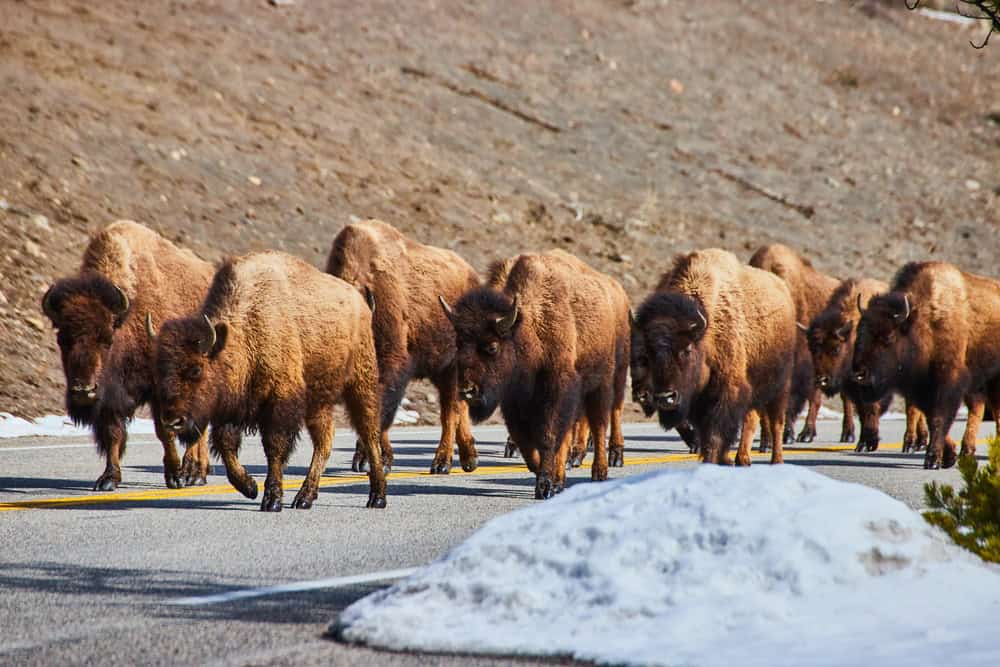
Bison are the largest mammal in North America, with male bison (called bulls) weighing up to 2,000 pounds and standing 6 feet tall, while females (called cows) weigh up to 1,000 pounds. Their sheer size alone is a survival mechanism—predators think twice before challenging a creature that looks like it could demolish a small car. But it’s not just size that gives them an edge: bison have thick skulls reinforced for head-to-head combat, dense bone structures, and a powerful front end supported by a massive shoulder hump filled with muscle. That front-loaded strength allows them to charge with incredible force, bulldoze snow, and defend against threats. Their tank-like build is not only about intimidation—it’s about durability, power, and endurance. Whether it’s fending off wolves, withstanding extreme weather, or trekking across unforgiving terrain, bison are the all-terrain heavy-duty vehicles of the animal world.
Conclusion: Built to Endure, Born to Survive

From icy winds to predator attacks, from deep snowdrifts to sparse winter forage, bison face challenges that would break most animals—but not them. Every aspect of their biology is a masterclass in adaptation. Their thick coats, four-chambered stomachs, snow-plowing heads, and lightning-fast reflexes make them not just survivors but dominators of the harshest environments on Earth. Bison are more than icons of the American frontier—they’re walking testaments to nature’s ability to build lifeforms perfectly tuned to thrive against all odds. So the next time you see one of these woolly tanks grazing calmly on the prairie, know that you’re looking at one of the greatest survival stories still in motion.

As a little kid, I fell in love with nature, wildlife, and animals. Living in the USA, South Africa, Italy, China and Germany gave me the opportunity to discover the world's Wildlife. My favorite animals are Mountain Gorillas, Siberian Tigers, and Great White Sharks.
I'm a certified PADI Open Water Diver, went to Everest Base Camp and Trekked Gorillas in Uganda. I hold a Master of Science in Economics and Finance.
Please send any feedback to feedback@animalsaroundtheglobe.com
- 3 Dangerous Invasive Species the USA Must Eradicate - July 21, 2026
- 10 Things That Calm Cats And 4 That Make Them Nervous - July 21, 2026
- The Most Colossal Whale Ever Spotted Off Alaska - July 21, 2026