


Birds of prey are among nature’s most impressive hunters, equipped with extraordinary vision that allows them to detect small prey from remarkable distances. Their visual acuity far surpasses that of humans, with some species able to spot a mouse from heights that seem impossible to the average observer. This exceptional eyesight, combined with specialized hunting adaptations, makes these aerial predators some of the most efficient hunters in the animal kingdom. In this article, we’ll explore 15 birds of prey with vision so powerful they can detect small rodents from astonishing distances, examining the unique adaptations that give each species its hunting edge.
The Remarkable Vision of Raptors

Birds of prey possess visual systems that are among the most sophisticated in the animal kingdom. While humans have approximately 200,000 photoreceptors per square millimeter in their retinas, many raptors boast over one million. This dense concentration of light-sensitive cells allows for image resolution that’s 2-8 times sharper than human vision. Additionally, many birds of prey have two foveae (areas of acute vision) in each eye rather than the single fovea humans possess, enabling them to see forward and sideways simultaneously with exceptional clarity. Their eyes also contain more rods and cones—the cells responsible for detecting light and color—allowing them to see ultraviolet light invisible to humans and maintain visual acuity in varying light conditions. These adaptations collectively enable raptors to detect the subtle movements of small prey from altitudes that can exceed 10,000 feet in some species.
Bald Eagle America’s Sharp-Eyed Symbol

The Bald Eagle (Haliaeetus leucocephalus), America’s national bird, possesses vision approximately 4-5 times sharper than human eyesight. Their large eyes contain about one million light-sensitive cells per square millimeter of retina, compared to our 200,000. This visual acuity allows them to spot fish and small mammals from altitudes of up to 10,000 feet, though they typically hunt from perches or while soaring at heights of 500-1,000 feet. A Bald Eagle can detect a rabbit-sized animal from about 2 miles away when conditions are optimal. Their eyes are nearly the same size as human eyes despite having a much smaller skull, demonstrating the evolutionary priority placed on vision for this apex predator. Additionally, Bald Eagles can rapidly switch between monocular and binocular vision, giving them a wide field of view while maintaining depth perception when focusing on prey.
Golden Eagle The Mountain Hunter

The Golden Eagle (Aquila chrysaetos) has perhaps the most impressive long-distance vision among all eagles. With eyes that are proportionally larger than most other birds of prey, Golden Eagles can detect prey movements from up to 2 miles away in clear conditions. Research has shown that these magnificent birds can spot a hare from a distance of nearly 3.2 kilometers (2 miles) when soaring at altitude. Their retinas contain an estimated 1.2 million photoreceptor cells per square millimeter, creating extraordinary visual resolution. Golden Eagles primarily hunt in open landscapes—mountains, plateaus, and grasslands—where their incredible distance vision provides a significant advantage. These birds dive toward prey at speeds reaching 150 mph, requiring not only exceptional eyesight but also precise depth perception to time their strikes accurately. Unlike some other raptors, Golden Eagles rely almost exclusively on vision rather than hearing when hunting, making their extraordinary eyesight essential to their survival.
Peregrine Falcon The High-Speed Visual Hunter

The Peregrine Falcon (Falco peregrinus) combines exceptional vision with unparalleled speed, making it one of nature’s most formidable aerial hunters. These falcons can spot prey from heights exceeding 3,000 feet and have been documented identifying pigeons from distances of up to 5 miles in ideal conditions. Their visual acuity is estimated to be 2.6 times sharper than human vision. What makes the Peregrine’s visual system particularly remarkable is its ability to maintain focus during high-speed dives (stoops) that can reach over 240 mph—the fastest recorded speed of any animal. To prevent their eyes from drying out during these dives, Peregrines have specialized nictitating membranes that protect the eyes while maintaining visual clarity. Their visual processing speed is also accelerated, allowing them to track fast-moving prey with precision that would be impossible for human visual systems. This combination of distance vision and high-speed visual processing makes the Peregrine Falcon one of the most effective hunters in the bird world.
Red-tailed Hawk The Roadside Hunter
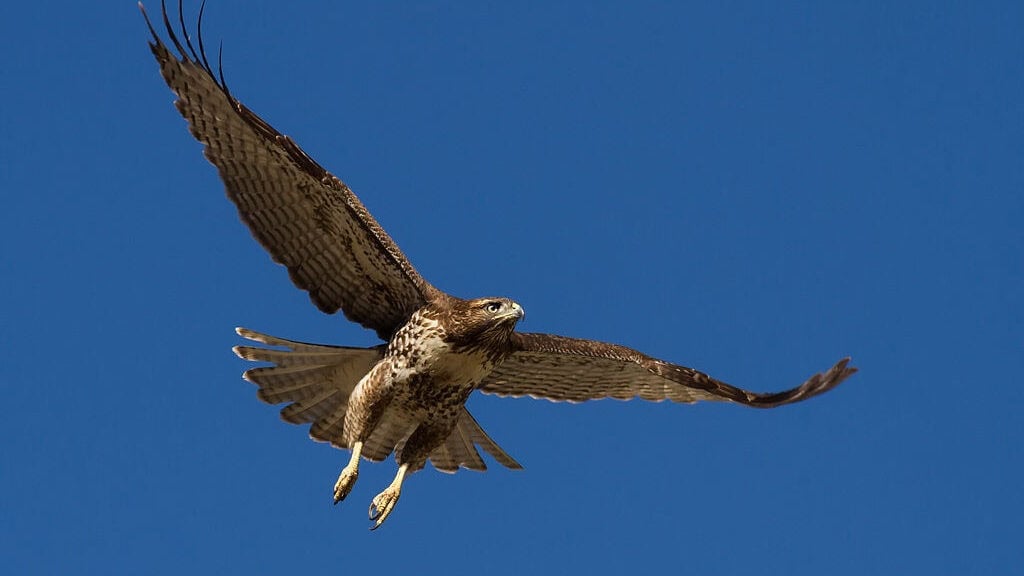
The Red-tailed Hawk (Buteo jamaicensis), one of North America’s most common and adaptable raptors, possesses vision approximately eight times more powerful than human eyesight. These hawks can detect a mouse or vole from a perch or soaring height of about 100-200 feet, but their distance vision allows them to spot larger prey from much further—up to a mile away in open terrain. Their eyes contain approximately 1 million photoreceptors per square millimeter of retina and can detect ultraviolet light, which helps them track rodents through urine trails invisible to humans. Red-tailed Hawks frequently hunt from elevated perches along roadways, using their superior vision to scan large areas efficiently. They’ve successfully adapted to human-altered landscapes, often utilizing telephone poles and fence posts as hunting perches. Their visual system is complemented by exceptional patience; a Red-tailed Hawk will sometimes remain motionless for hours, scanning the ground for the slightest movement that betrays potential prey.
Northern Goshawk The Forest Phantom

The Northern Goshawk (Accipiter gentilis) represents a specialized adaptation of raptor vision for forest hunting environments. Unlike eagles that rely on long-distance vision in open spaces, Goshawks have evolved visual systems optimized for detecting movement through dense foliage and executing high-speed chases through woodland obstacles. Their vision is estimated to be 8 times sharper than human sight, allowing them to detect small movements of prey animals even through complex forest canopies. Goshawks have proportionally larger eyes than many other raptors relative to their skull size, maximizing light gathering and visual acuity. Their eyes contain a high concentration of motion-detecting cells, making them extremely sensitive to the slightest movements of potential prey. This forest specialist can spot a squirrel or rabbit from a quarter-mile away, even through partial forest cover. Additionally, Goshawks possess exceptional spatial memory and awareness, enabling them to navigate through dense forest at speeds up to 38 mph while maintaining visual contact with prey—a remarkable feat of visual processing and coordination.
Osprey The Fish-Spotting Specialist
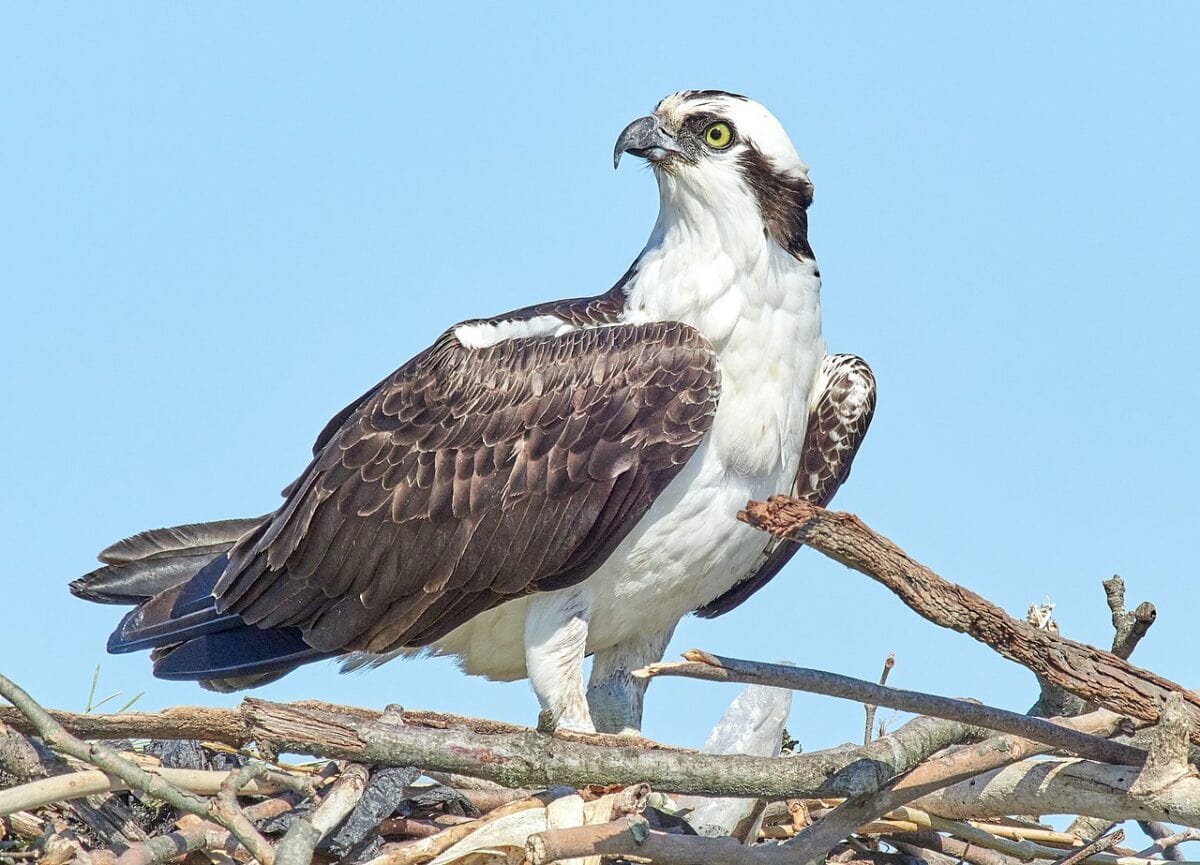
The Osprey (Pandion haliaetus) has evolved specialized vision for spotting fish beneath the water’s surface, a challenging visual environment due to light refraction. Their eyes contain polarizing filters that reduce glare from water, allowing them to see clearly beneath the surface where other predators might be blinded by reflection. Ospreys can spot fish from heights of 30-100 feet above water, but their exceptional vision allows them to detect larger schools from distances of up to a mile away. Their visual acuity is approximately 3-5 times greater than human vision, with special adaptations for underwater target acquisition. When an Osprey spots a fish, it calculates the refraction angle caused by water—essentially solving a complex physics problem instinctively—before diving with outstretched talons. Their eyes have specialized oil droplets that enhance color discrimination underwater, helping distinguish fish from their surroundings. Remarkably, Ospreys have a successful hunting rate of about 70%, significantly higher than many other predators, largely due to their specialized visual adaptations for fishing.
Harris’s Hawk The Cooperative Hunter
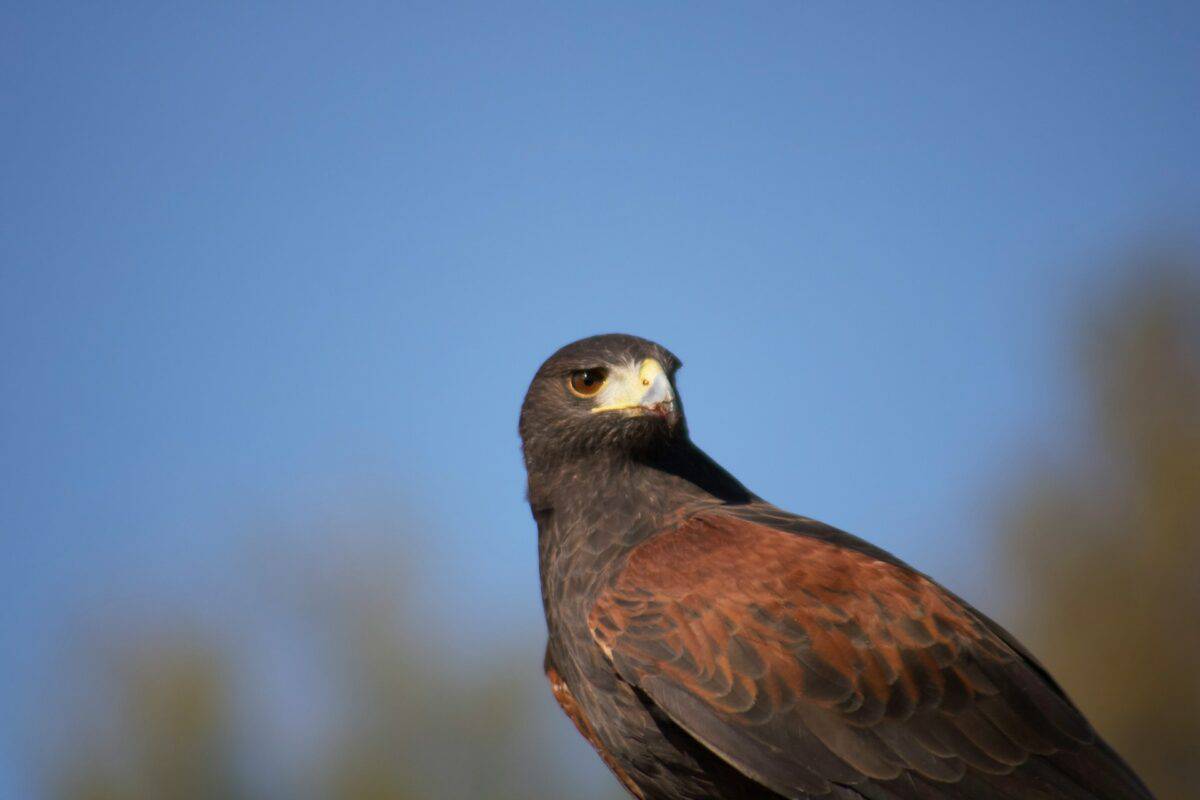
Harris’s Hawks (Parabuteo unicinctus) are unique among birds of prey for their cooperative hunting behavior, which is supported by their excellent vision. These hawks possess visual acuity approximately 5 times sharper than human vision, allowing them to detect small prey from distances of about half a mile in their desert and scrubland habitats. What makes their visual system particularly interesting is how it supports their social hunting strategy. Harris’s Hawks hunt in groups of 2-7 birds, with some individuals perching as lookouts while others flush prey from cover. Their eyes have evolved to maintain exceptional peripheral vision while also providing sharp central focus, allowing them to track both their prey and fellow hunting party members simultaneously. Research suggests these hawks can communicate visually through subtle body language, coordinating complex hunting maneuvers. Their retinas contain approximately 900,000 photoreceptors per square millimeter, providing excellent resolution for detecting the small movements of desert mammals even against similarly colored backgrounds. This combination of sharp vision and social coordination makes Harris’s Hawks remarkably efficient hunters in arid environments where prey can be scarce.
Ferruginous Hawk The Prairie Specialist
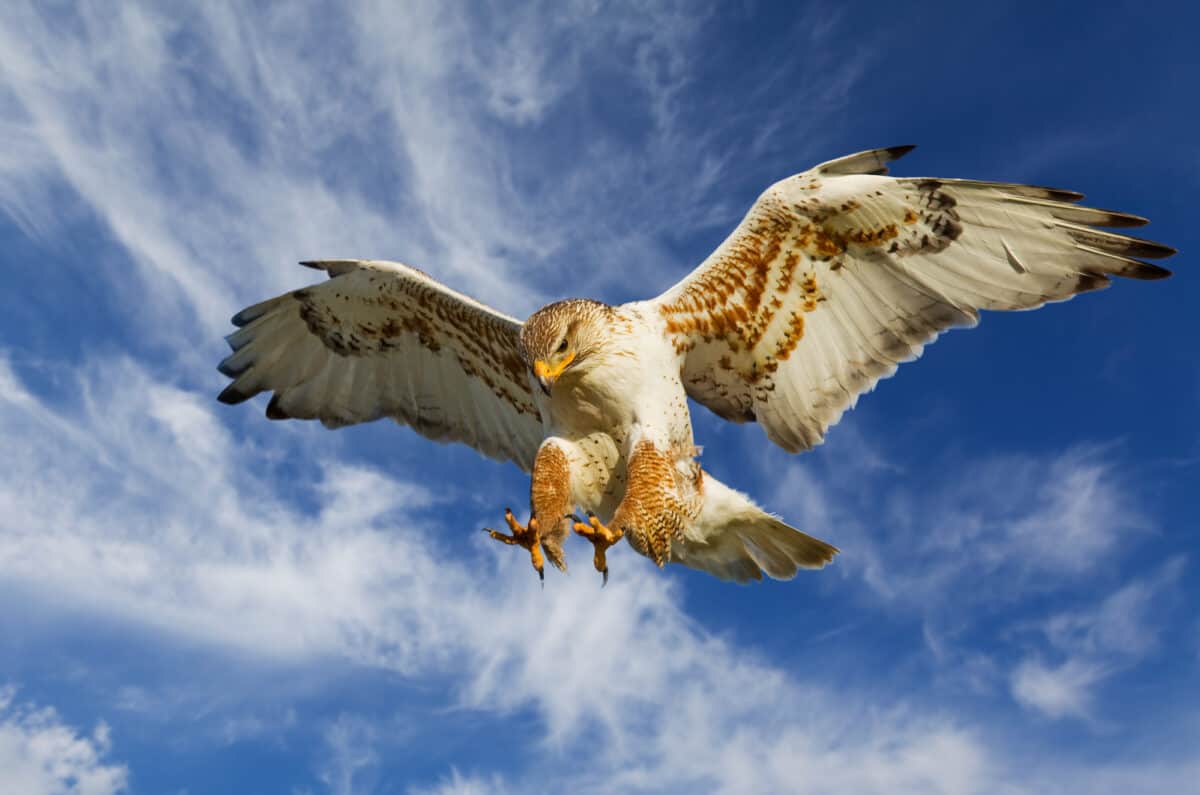
The Ferruginous Hawk (Buteo regalis), North America’s largest hawk species, has visual adaptations specifically evolved for hunting in vast, open prairie environments. These impressive raptors possess vision estimated to be 8 times sharper than human eyesight, allowing them to detect the subtle movements of small mammals from extraordinary heights. Ferruginous Hawks typically hunt from soaring positions 200-500 feet above ground, but can spot prey from distances exceeding a mile when conditions are favorable. Their large eyes contain approximately 1.2 million photoreceptors per square millimeter, providing exceptional resolution for detecting prairie dogs, ground squirrels, and rabbits against the uniform backdrop of grasslands. Unlike forest-adapted raptors, Ferruginous Hawks have evolved a visual system optimized for extreme distance rather than penetrating vegetation. They have an enlarged fovea (the area of sharpest vision) that creates a magnification effect similar to built-in binoculars. Additionally, these hawks have specialized photoreceptors sensitive to the ultraviolet reflectance of rodent urine trails, allowing them to identify areas of high prey activity even when no animals are immediately visible on the surface.
Swainson’s Hawk The Long-Distance Migrant
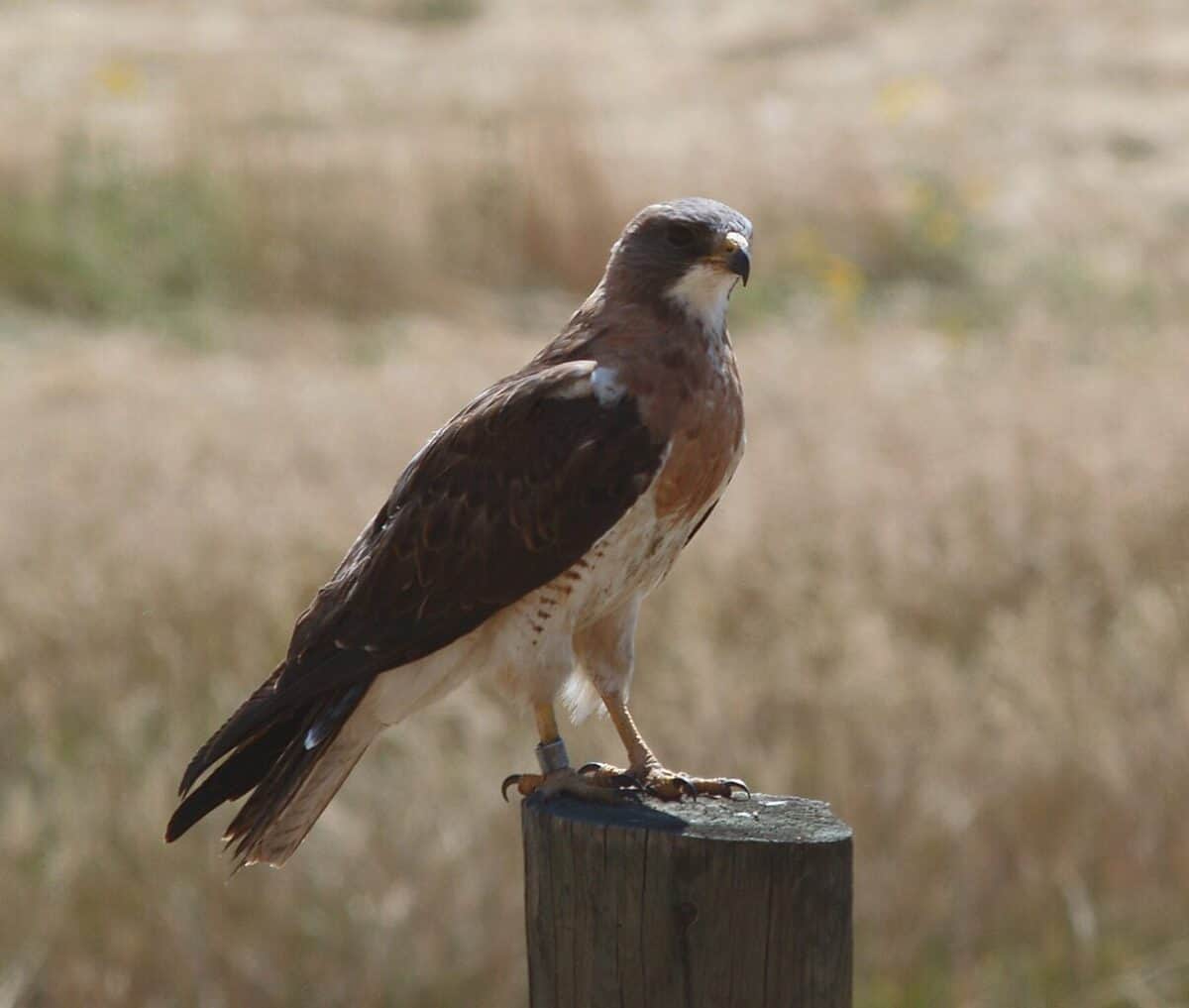
Swainson’s Hawks (Buteo swainsoni) have developed exceptional vision that serves them not only in hunting but also during their remarkable migrations between North and South America—one of the longest migratory journeys of any raptor. Their vision is approximately 6-8 times sharper than human eyesight, allowing them to spot insects, small mammals, and reptiles from heights of 200-300 feet during hunting. However, during migration, these hawks demonstrate perhaps even more impressive visual capabilities, using thermal updrafts to soar at altitudes exceeding 5,000 feet while still monitoring the landscape below for opportunistic hunting. Their eyes contain specialized oil droplets that enhance color discrimination and contrast sensitivity, which helps in detecting both prey and navigational landmarks during migration. Swainson’s Hawks have a distinctive visual adaptation that allows them to shift their diet seasonally—from primarily mammalian prey during breeding season to almost exclusively insects (particularly grasshoppers and dragonflies) during migration and wintering. This dietary flexibility is supported by visual adaptations that allow them to detect both the movement patterns of small mammals and the flight patterns of insects from significant distances. Research using radar tracking has shown that migrating Swainson’s Hawks can maintain visual contact with other flock members even when separated by distances of up to half a mile.
Secretary Bird: The Walking Hunter

The Secretary Bird (Sagittarius serpentarius) of African grasslands represents a unique evolution of raptor vision adapted for a terrestrial hunting lifestyle. Unlike most birds of prey that hunt from the air, Secretary Birds spend most of their time walking through grasslands searching for prey. Nevertheless, they possess visual acuity comparable to flying raptors, estimated at 5-6 times sharper than human vision. Their eyes are positioned on the sides of their head rather than forward-facing like most raptors, providing nearly 360-degree vision while sacrificing some binocular overlap. This visual arrangement allows them to scan vast areas of grassland efficiently while walking up to 20 miles per day. Secretary Birds can detect small movements of snakes, lizards, and rodents in grass from distances of up to 100 meters away. Their eyes contain specialized photoreceptors sensitive to ultraviolet light, which helps them detect rodent urine trails and shed snake skins that reflect UV light. Additionally, these birds have exceptionally fast visual processing speeds, allowing them to strike with their powerful legs at venomous snakes with precision timing—targeting the head to avoid being bitten. Their hunting success relies almost entirely on their extraordinary vision rather than on hearing or scent detection.
Black Kite The Opportunistic Hunter
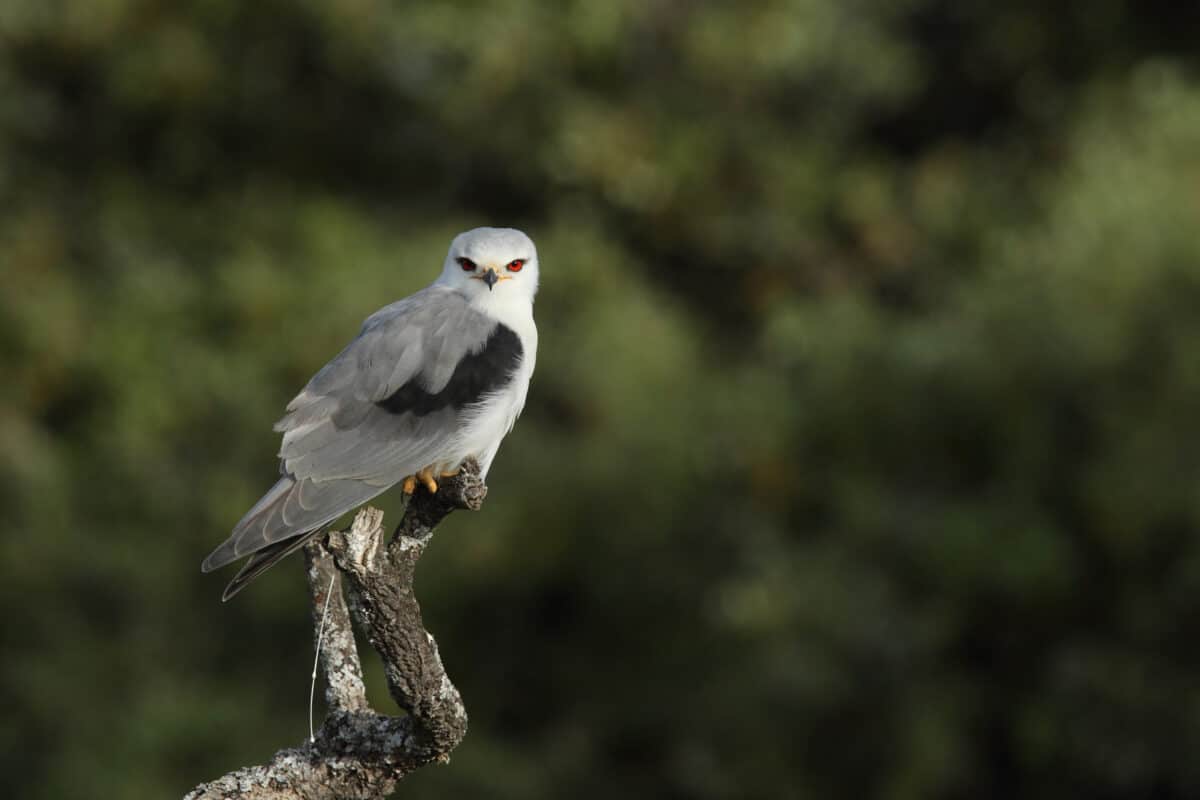
The Black Kite (Milvus migrans), one of the world’s most numerous raptors, has evolved a highly adaptable visual system that supports its opportunistic hunting and scavenging lifestyle. These medium-sized raptors possess vision approximately 6 times sharper than human eyesight, allowing them to detect small prey from heights of 200-300 feet. What makes Black Kites particularly remarkable is their ability to detect smoke and fire from distances of up to 15 miles away—an adaptation that allows them to locate grassland fires where they can capture fleeing insects and small animals. Their eyes contain specialized receptors sensitive to infrared radiation, helping them pinpoint the hottest areas of a fire where prey is most likely to emerge. Black Kites have also developed visual specializations for urban environments, where they’ve become successful adaptors to human civilization. They can spot discarded food items from significant distances and have been observed monitoring human activities for potential feeding opportunities. Studies have shown that Black Kites can recognize specific human behaviors associated with food availability, demonstrating not just sharp vision but sophisticated visual processing abilities. Their visual acuity extends to detecting the slight movements of insects in grass from heights where the insects themselves are too small to be seen—instead, the kites perceive the subtle movement of grass blades disturbed by the insects.
White-tailed Eagle Europe’s Visual Giant
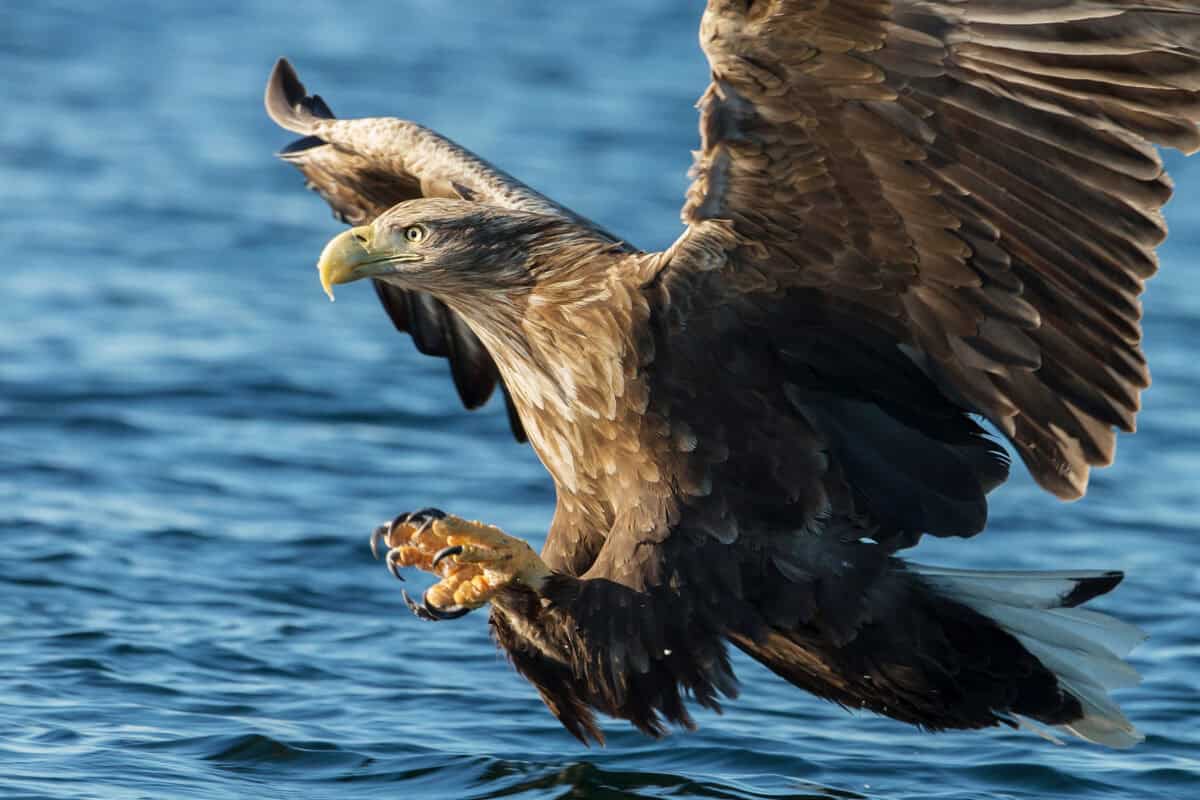
The White-tailed Eagle (Haliaeetus albicilla), Europe’s largest eagle, possesses some of the most powerful vision among northern raptors. With visual acuity estimated at 4-5 times sharper than human eyesight, these magnificent birds can detect fish near the water’s surface from heights exceeding 200 meters and can spot mammalian prey from distances of up to 1.5 miles in optimal conditions. Their eyes contain approximately 1 million photoreceptors per square millimeter of retina, providing exceptional resolution for identifying prey from great distances. White-tailed Eagles have developed specialized visual adaptations for their varied diet and hunting techniques. When fishing, their eyes can penetrate water surface glare through specialized oil droplets that act as polarizing filters. For terrestrial hunting and scavenging, they possess excellent motion detection capabilities that allow them to notice the slightest movements of potential prey even against visually complex backgrounds. Their eyes also demonstrate remarkable light sensitivity, allowing them to hunt effectively in the low-light conditions common in their northern range, particularly during winter months. White-tailed Eagles maintain territories that can exceed 70 square kilometers, which they monitor visually from perches and during soaring flights, demonstrating the critical importance of their exceptional distance vision for both hunting and territorial defense.
Martial Eagle Africa’s Aerial Giant
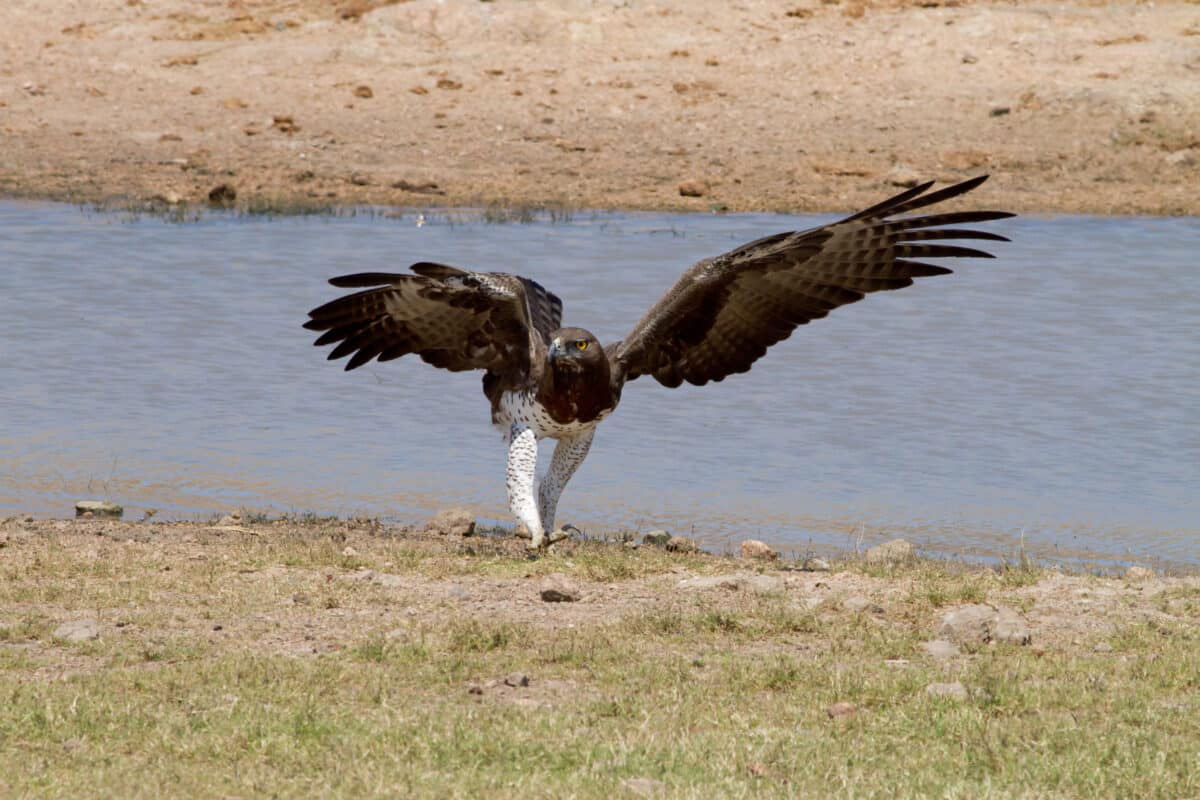
The Martial Eagle (Polemaetus bellicosus), Africa’s largest eagle, possesses perhaps the most powerful vision of any bird of prey on the continent. These massive raptors have visual acuity estimated at 8 times sharper than human vision, allowing them to spot prey from extraordinary heights. Martial Eagles typically hunt from soaring altitudes of 500-1,000 feet but can detect prey movements from up to 3.5 miles away when conditions are optimal. Their enormous eyes contain approximately 1.6 million photoreceptors per square millimeter—among the highest densities recorded in any raptor. This visual resolution allows them to detect animals as small as mongoose and hyrax from distances where these prey would be completely invisible to human observers. Martial Eagles’ hunting territories can span over 100 square kilometers in arid regions, which they survey visually during soaring flights. Their eyes have evolved specialized filtering to cut through the heat haze common in African savannas, maintaining visual clarity where other predators’ vision would be distorted. Additionally, these eagles have exceptional depth perception from extreme distances, allowing them to time their hunting stoops.
Conclusion:
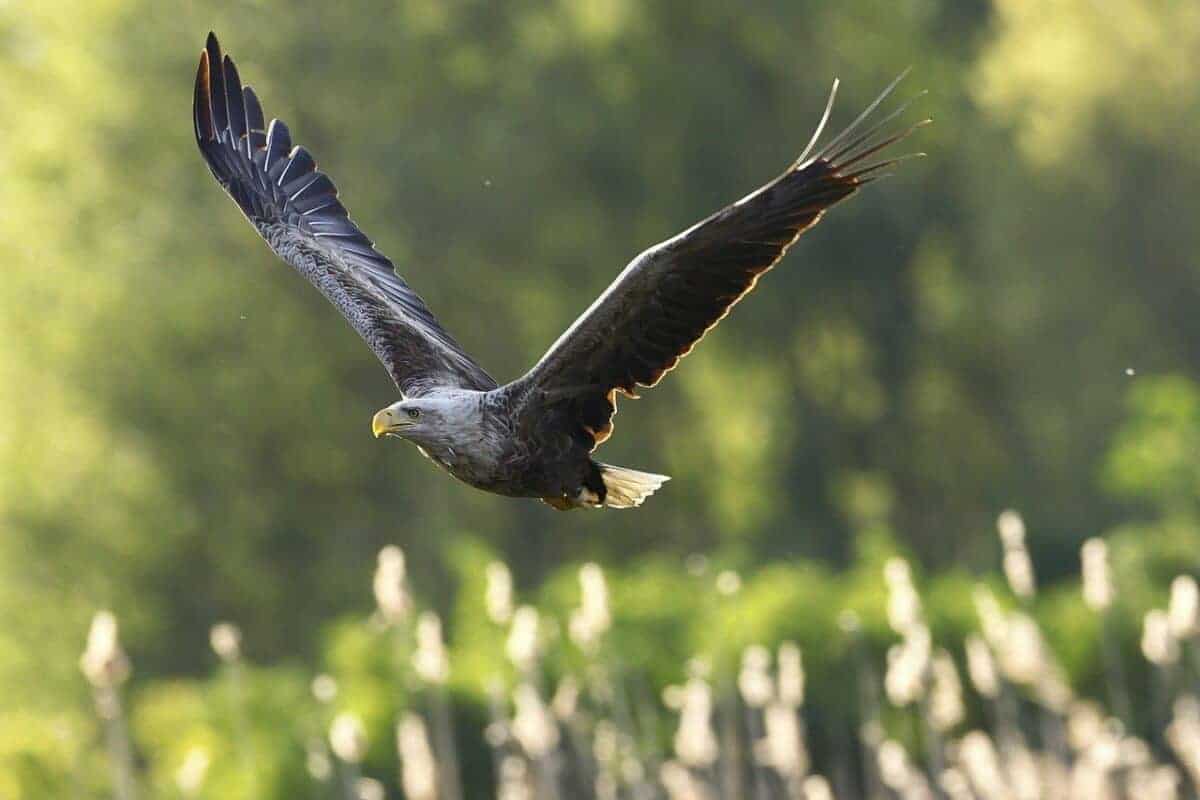
In the world of raptors, it is vision—not size, speed, or strength—that often determines success. As explored throughout this article, birds of prey possess highly specialized eyesight tailored to their environments and hunting styles, from the prairie-scanning Ferruginous Hawk to the glare-piercing Osprey. Whether detecting a mouse from a mile away or tracking insects in mid-flight, these adaptations give raptors a critical edge in locating and capturing prey. Their extraordinary visual systems are not only marvels of evolution but also vital tools for survival, proving that in nature, the ability to see with precision often separates predator from prey.

As a little kid, I fell in love with nature, wildlife, and animals. Living in the USA, South Africa, Italy, China and Germany gave me the opportunity to discover the world's Wildlife. My favorite animals are Mountain Gorillas, Siberian Tigers, and Great White Sharks.
I'm a certified PADI Open Water Diver, went to Everest Base Camp and Trekked Gorillas in Uganda. I hold a Master of Science in Economics and Finance.
Please send any feedback to feedback@animalsaroundtheglobe.com
- 13 Aquatic Mammals That Don not Look It - July 10, 2026
- 15 Unlikely Hunters With Killer Instincts - July 10, 2026
- 10 Low-Maintenance Pets for Busy Owners - July 10, 2026