
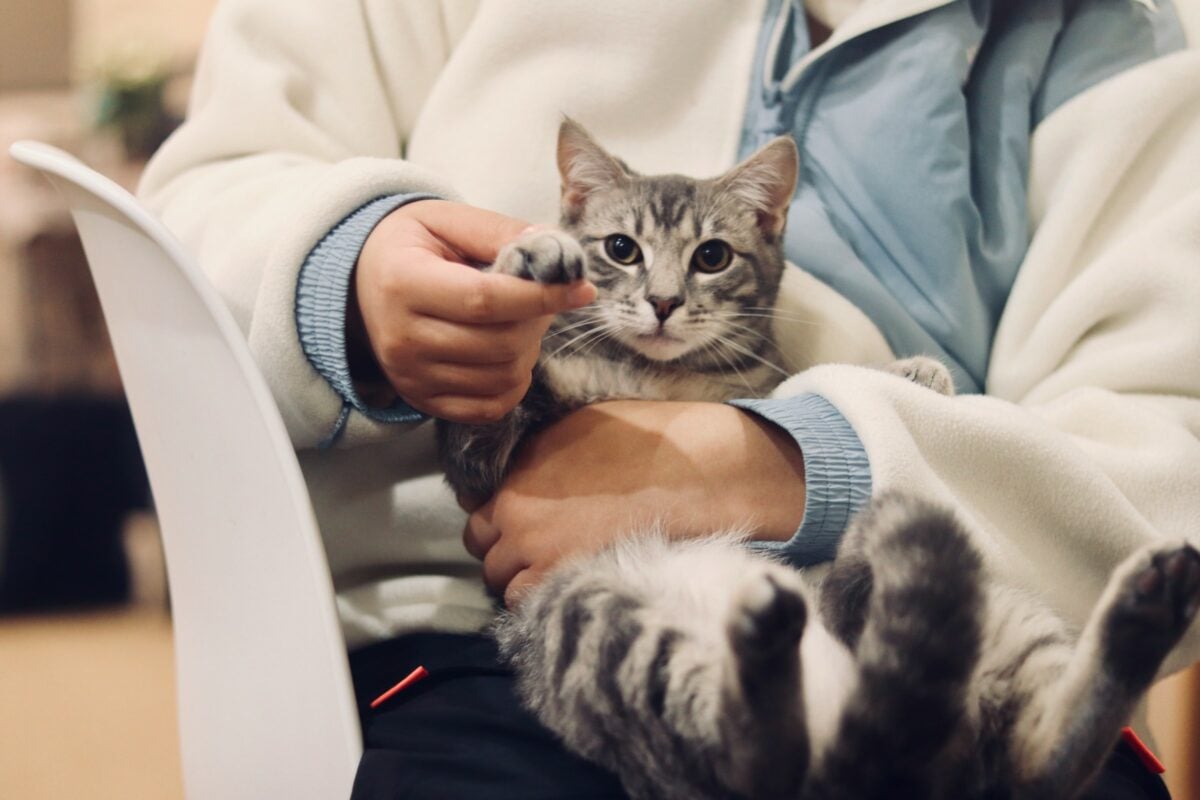
Most owners think a senior cat’s autumn check-up is a quick weigh-in and a vaccine top-up. That’s the part you see. The real work happens in the ten minutes you barely notice, while your vet reads your cat’s spine, gums, eyes, breathing and even the way she walks into the room. Here are all 14 signs, from the obvious to the sneaky.
Cats hide illness better than almost any other pet, so small clues matter far more than big symptoms. A vet’s fingertips can catch things your eyes have missed for months. One of these signs you can check at home tonight while she naps, and one will change how you hear the phrase “she’s just old” forever.
#14 – The Number on the Scale
🔥 Would you like to save this?
We'll email this post to you, so you can come back to it later!
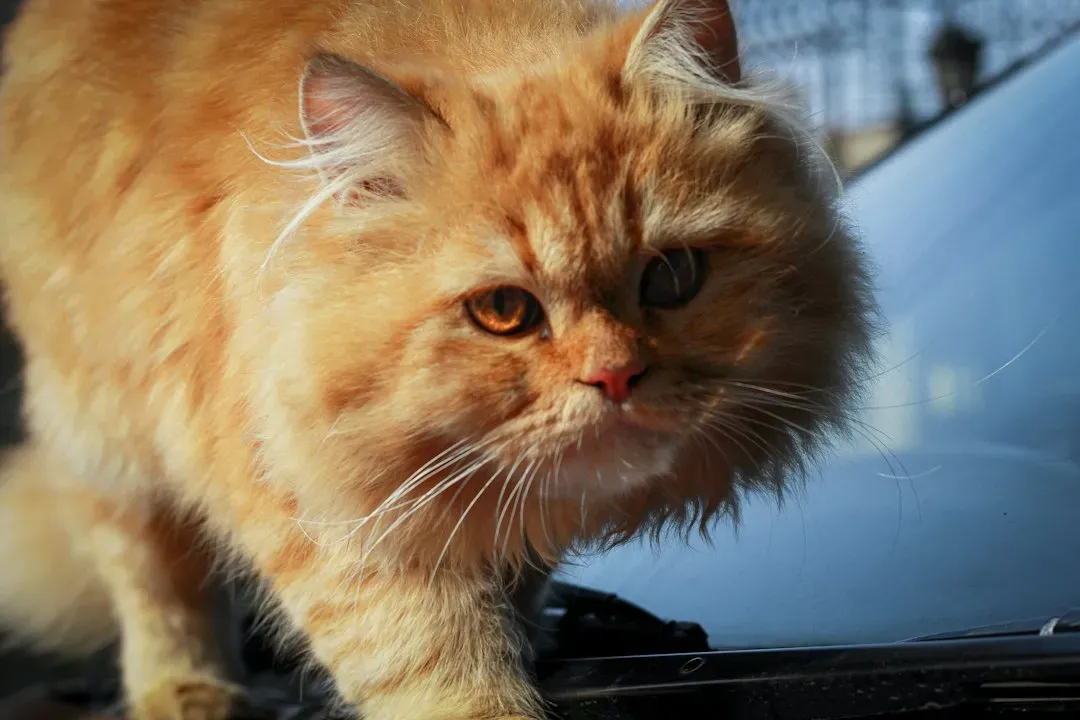
Your cat’s weight trend is the first thing a vet checks, and it tells them more than you’d expect.
A cat can lose weight for months without anyone noticing. Fur is brilliant camouflage, and a slow slide of a few grams a week never looks dramatic in the living room. Vets compare today’s weight with past visits, because the direction of the trend often matters more than the number itself.
They also score body condition by feel and by sight. From above, there should be a visible waist. From the side, there should be a slight tuck of the belly. Ribs should be felt under a thin layer of padding, not seen.
Common reasons for a drifting scale:
- Hyperthyroidism, which often brings weight loss alongside a good appetite
- Kidney disease, which can dull appetite over time
- Dental pain that makes chewing unpleasant
- Diabetes, where weight drops despite normal or increased eating
Weight gain counts too. Extra kilos strain ageing joints and raise the risk of diabetes, so a creeping increase gets just as much attention as a drop.
But the scale only shows fat and muscle combined, and what a vet finds next with their fingertips is far more revealing in #13…
#13 – Hidden Muscle Loss
🔥 Would you like to save this?
We'll email this post to you, so you can come back to it later!
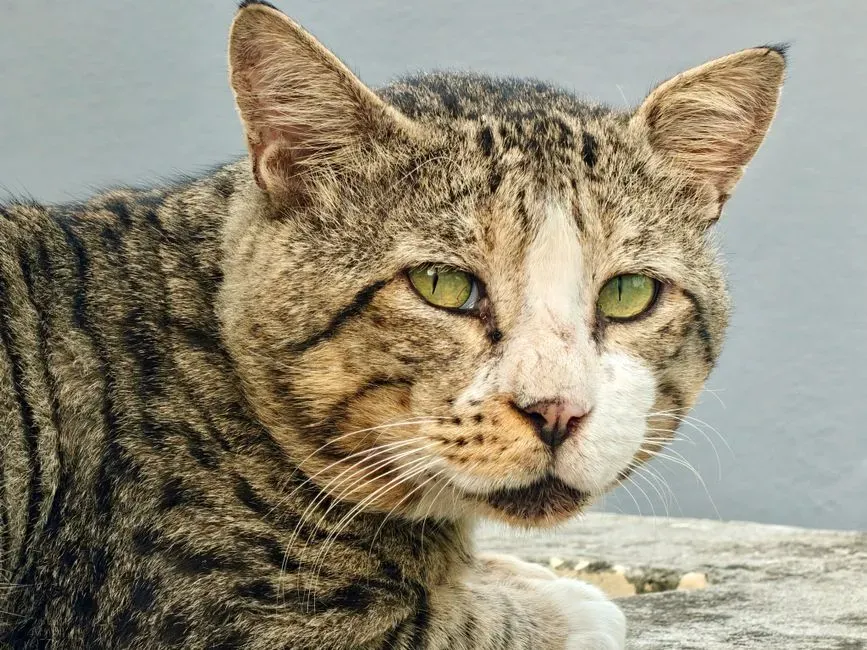
A cat can look “fine” and still be quietly wasting away.
Vets run their hands along the spine, shoulders and hips. They’re grading muscle condition, which is separate from body fat. An older cat can carry a round belly and still have bony, thinned-out muscle over the spine. The scale can even look reassuring while this is happening.
At a Glance
- Body fat: judged by the waist, the belly tuck and how easily ribs can be felt
- Muscle: judged by feeling along the spine, shoulder blades and hips
- The scale: can’t tell the two apart, so it can hide a problem
- The sneaky combo: a soft, round belly sitting on top of a bony back
It’s easy to miss at home. Most of us judge by the belly or the fluff of the coat, while vets judge by feel, since fur can disguise almost everything.
Muscle loss in senior cats can be linked to chronic disease. It can also reflect less activity or a diet that no longer meets her needs. The cause matters, because the fix differs completely.
If muscle is thinning, a vet may suggest bloodwork, a urine test and a diet review. And please don’t settle for “she’s just getting old.” Many vets would happily ban that sentence, because it has delayed more diagnoses than almost anything else.
And while muscle sits under the skin, there’s a clue sitting right on top of it, which we’ll reveal in #12…
#12 – The Coat That Stopped Looking Right
🔥 Would you like to save this?
We'll email this post to you, so you can come back to it later!
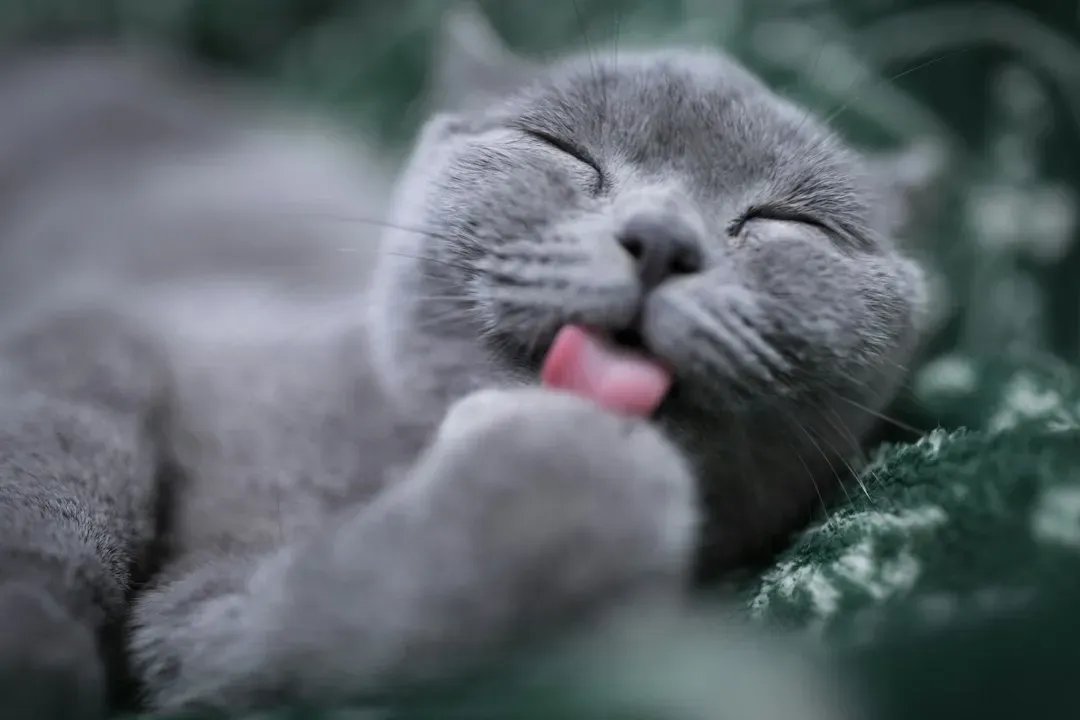
Your cat’s fur is a secret health report, and vets read it in seconds.
A healthy cat grooms constantly. When grooming drops, the coat tells on her. Vets look for greasy patches, dull texture, clumps of matted fur and flaky dandruff, usually around the lower back and hips, the places a stiff cat can’t reach.
Here’s what most owners miss: a scruffy coat is rarely about the coat. It’s often about a body that hurts too much to twist and stretch. Arthritis in the spine or hips is a classic culprit.
Other possible causes include dental pain, obesity that blocks reach, and general illness that saps energy. Some cats with an overactive thyroid develop a ragged, unkempt coat as well.
What the vet checks:
- Coat quality and texture along the back and flanks
- Mats near the base of the tail and the hindquarters
- Skin underneath, for scabs, redness or parasites
- Whether the cat can comfortably reach those spots
A brush fixes the fur, not the reason behind it. The better question is why she stopped grooming in the first place.
Next up is a part of the body that most owners never inspect at all, and it’s #11…
#11 – Claws, Paws and Skin
🔥 Would you like to save this?
We'll email this post to you, so you can come back to it later!
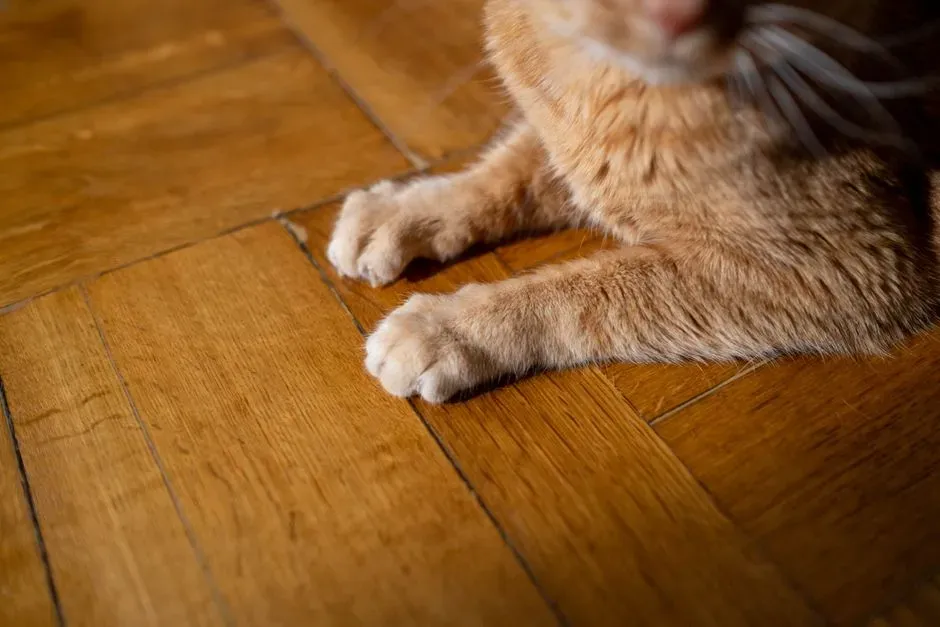
Senior cats can grow claws right into their own paw pads.
Younger cats wear their claws down with scratching, climbing and jumping. Older cats often do less of all three. Vets check every nail because overgrown claws can curl into the pad and cause painful wounds that stay hidden under fur and a cat’s talent for suffering in silence.
Old nails also thicken and turn brittle. They can look pale and layered, almost like pages of a book. That’s normal ageing, but it means trimming needs extra care.
Skin gets a once-over as well. Vets part the fur to look for scabs, thin patches and fleas. A sore paw can go unnoticed for weeks in a cat who never limps.
The most overlooked step is checking between the toes. Dirt, litter and moisture can collect there, particularly in cats with stiff joints who groom less. Think of it as a routine pedicure with a purpose.
But nothing hides pain like what’s happening inside the mouth, and that comes next in #10…
#10 – The Mouth Tells All
🔥 Would you like to save this?
We'll email this post to you, so you can come back to it later!
Dental disease is one of the most common problems in older cats, and it hurts far more than most people realize.
Vets lift the lips and look at the gums, teeth and tongue. They’re hunting for red gum lines, heavy tartar, broken teeth and the tiny holes of tooth resorption. These lesions can sit right at the gum line, where they’re easy to overlook.
Cats rarely stop eating completely when their mouths hurt. Instead, they eat more slowly, drop kibble, chew on one side or leave food in the bowl. It’s easy to read that as fussiness when it’s actually pain.
Signs that suggest a dental problem:
- Bad breath that’s more than ordinary “cat breath”
- Pawing at the mouth or drooling
- A sudden preference for soft food
- Dropping food while eating
Here’s the controversial bit. Many owners fear anaesthesia in an old cat, yet many vets argue that untreated mouth pain is often the bigger risk. Pre-anaesthetic bloodwork helps make that call safer.
The eyes are next, and they can reveal a problem that has nothing to do with eyesight, as we’ll show in #9…
#9 – Cloudy Eyes and Odd Pupils
🔥 Would you like to save this?
We'll email this post to you, so you can come back to it later!
Not every hazy eye is a cataract, and not every cataract is the real problem.
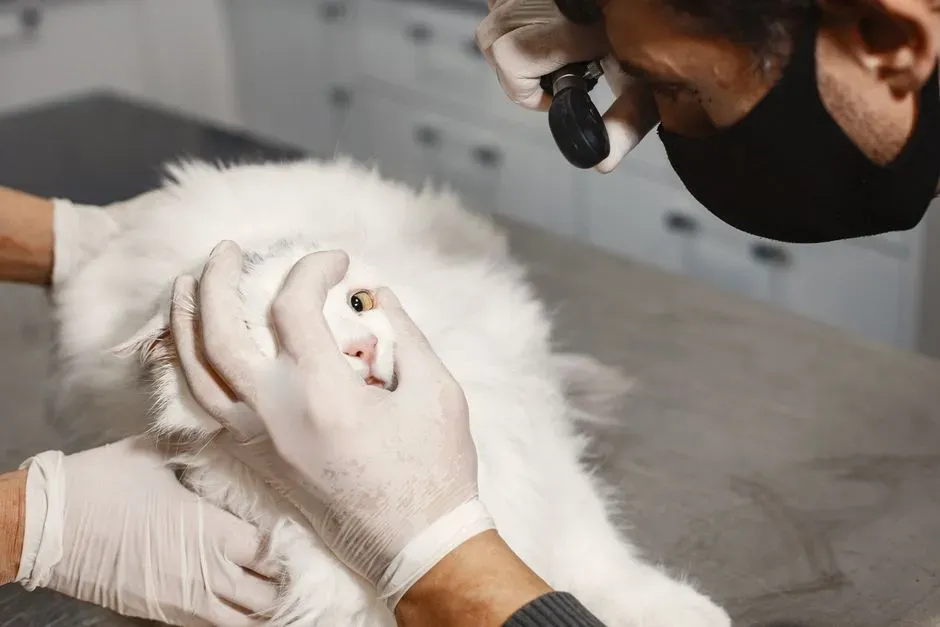
Vets shine a light into each eye and watch how the pupils respond. They check size, symmetry and clarity. A bluish-grey haze in an older cat’s lens is often lenticular sclerosis, a normal age change that usually doesn’t cause blindness.
Quick Compare
- Lenticular sclerosis: a soft bluish-grey haze, a common age change, and usually little effect on vision
- Cataract: a denser, whiter opacity that can block light and affect sight
- The catch: they can look alike, so only a proper eye exam sorts them out
Still, a vet needs to tell the difference. True cataracts, inflammation inside the eye and other conditions can look similar to an untrained eye.
The retina is also checked where possible. Bleeding or detachment can point to a serious body-wide issue, especially high blood pressure. Sudden blindness, wide-open pupils or a cat bumping into furniture are emergencies.
At home, vision loss tends to show up in a dark room or an unfamiliar one. Cats map their homes by memory and whisker, so poor eyesight can hide in plain sight. Moving a piece of furniture is the quickest way to find out.
Which brings us to the most underrated test in the entire appointment, in #8…
#8 – Blood Pressure Check
🔥 Would you like to save this?
We'll email this post to you, so you can come back to it later!
High blood pressure is a silent problem in older cats, and it can strike the eyes first.
Vets use a small cuff, usually on a front leg or the tail, plus a Doppler probe to hear the pulse. It’s painless and quick. It’s a routine part of senior care because hypertension often has no obvious signs until organs are affected.
It’s often linked with kidney disease and an overactive thyroid. That’s why a high reading can trigger further tests rather than just medication.
The tricky part is stress. A frightened cat can read high simply because she’s in a clinic. Vets know this, and they may repeat the measurement or compare it with other findings before drawing conclusions.
Why it matters:
- Untreated hypertension can damage the eyes, brain, heart and kidneys
- Early detection gives vets more treatment options
- Repeated readings give a more reliable picture
And speaking of vital organs, the heart gets its own close inspection in #7…

Portable Dog Water Bottle Foldable Dog Travel Water Bottle
Check Price on AmazonAs an Amazon Associate, we earn from qualifying purchases.
10/7/2026 1:29 pm GMTi

Halloween Cat Costume Cloak Witch Hat Pet Accessories
Check Price on AmazonAs an Amazon Associate, we earn from qualifying purchases.
10/9/2026 2:44 pm GMTi

Orthopedic Extra Large Dog Bed, Waterproof Washable XL Pet Bed 44"
Check Price on AmazonAs an Amazon Associate, we earn from qualifying purchases.
10/7/2026 1:32 pm GMTi

Hand Blown Glass Hummingbird Feeders for Outdoors Hanging, 24oz Wild Bird Nectar Feeder
Check Price on AmazonAs an Amazon Associate, we earn from qualifying purchases.
10/7/2026 1:23 pm GMTi

2 Pcs Halloween Pet Hat Bandana Set, Witch Pumpkin Costumes for Dogs
Check Price on AmazonAs an Amazon Associate, we earn from qualifying purchases.
10/9/2026 2:45 pm GMTi
#7 – The Heart and the Breathing Rate
🔥 Would you like to save this?
We'll email this post to you, so you can come back to it later!
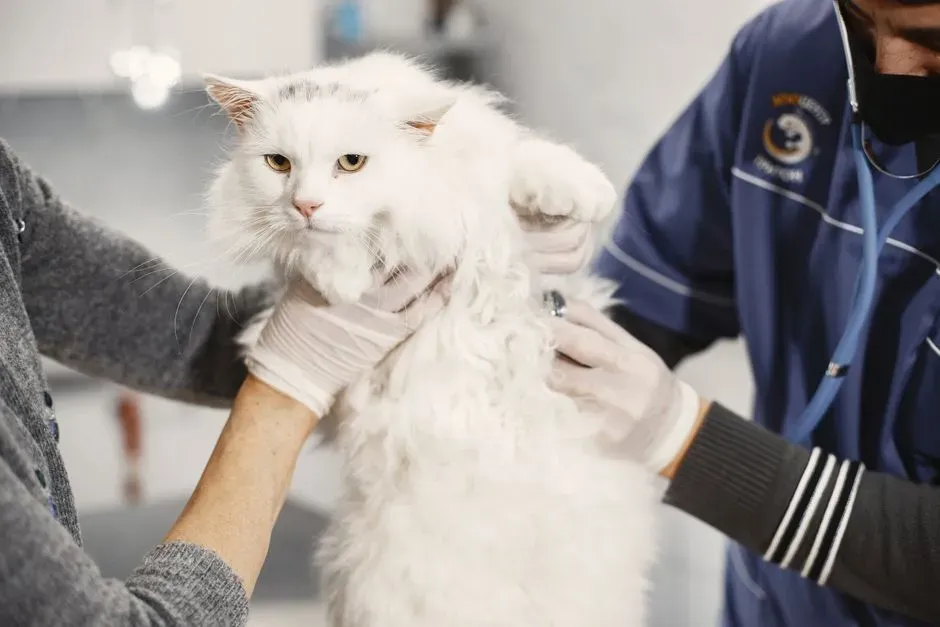
A heart can be in trouble long before a cat shows a single symptom.
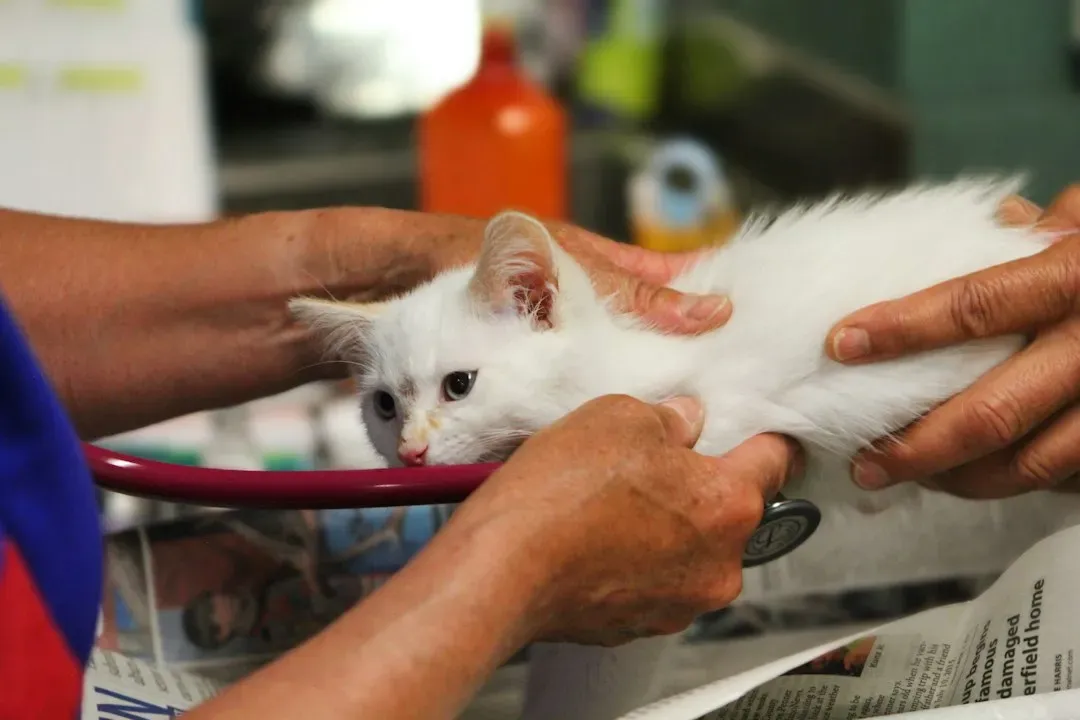
Vets listen with a stethoscope for murmurs, irregular rhythms and unusual sounds. But here’s what surprises owners: a murmur doesn’t always mean disease, and a normal-sounding heart doesn’t always mean a healthy one.
That’s why a murmur may lead to a heart scan or a blood test for heart stress. Conditions such as hypertrophic cardiomyopathy can exist without obvious signs for a long time.
Vets also ask a simple home question: how fast does she breathe when asleep? Resting breathing rate is a useful early warning, and vets commonly advise keeping it below roughly 30 breaths per minute while a cat is calm and asleep.
How to count at home:
- Wait until she’s fully relaxed or asleep
- Count each rise and fall of the chest for 30 seconds
- Double the number
- Write it down and show your vet
Open-mouth breathing in a cat is never normal. Call a vet immediately.
Heart aside, the next check is for a gland most owners have never heard of, and its signature symptom looks like good news in #6…
#6 – The Neck Feel for Thyroid Trouble
🔥 Would you like to save this?
We'll email this post to you, so you can come back to it later!
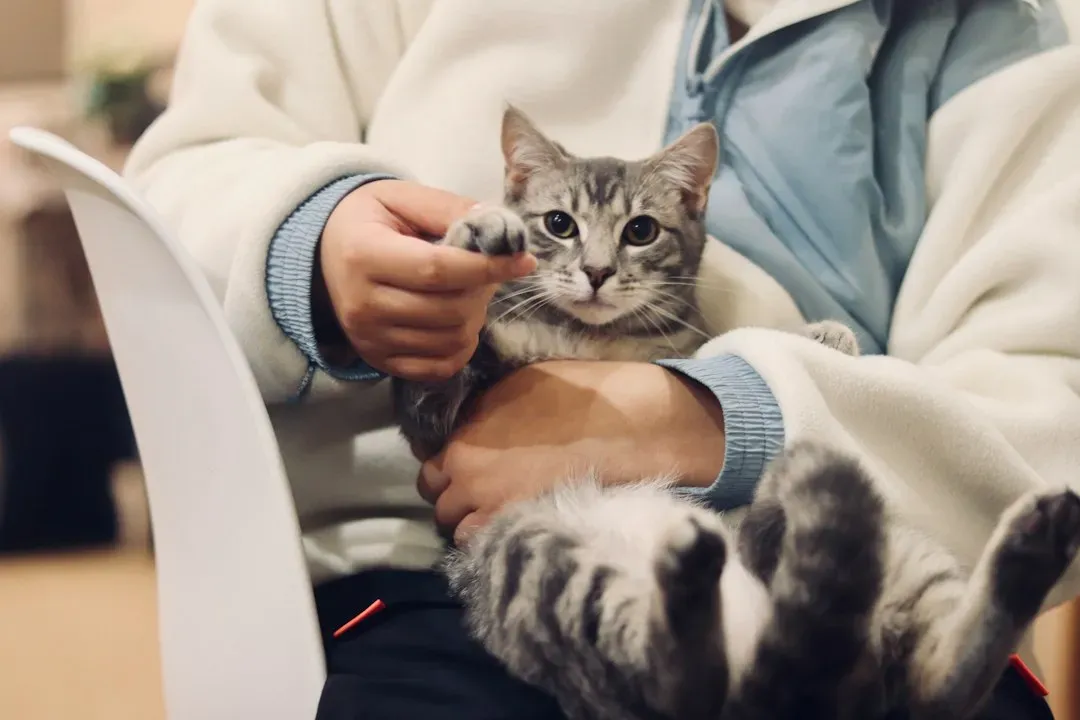
Vets can sometimes detect an overactive thyroid just by running a finger along the neck.
An enlarged thyroid gland can feel like a small nodule beside the windpipe. This is called palpation, and it takes seconds. Hyperthyroidism is one of the most common hormone disorders in older cats, so vets always look for it.
The classic picture is a cat that’s eating more but still losing weight. She may also be restless, vocal and thirsty, with a rapid heart rate.
Because it looks like a healthy appetite, many owners are delighted at first. That’s what makes it so sneaky. Left alone, the condition can quietly strain the heart and raise blood pressure.
Diagnosis usually relies on a blood test for thyroid hormone. Treatment options range from medication to diet and other therapies, and the best choice depends on the individual cat.
Now to the body’s quiet filter system, which many experts count among the biggest threats of all in #5…
#5 – Kidney Warning Signs
🔥 Would you like to save this?
We'll email this post to you, so you can come back to it later!
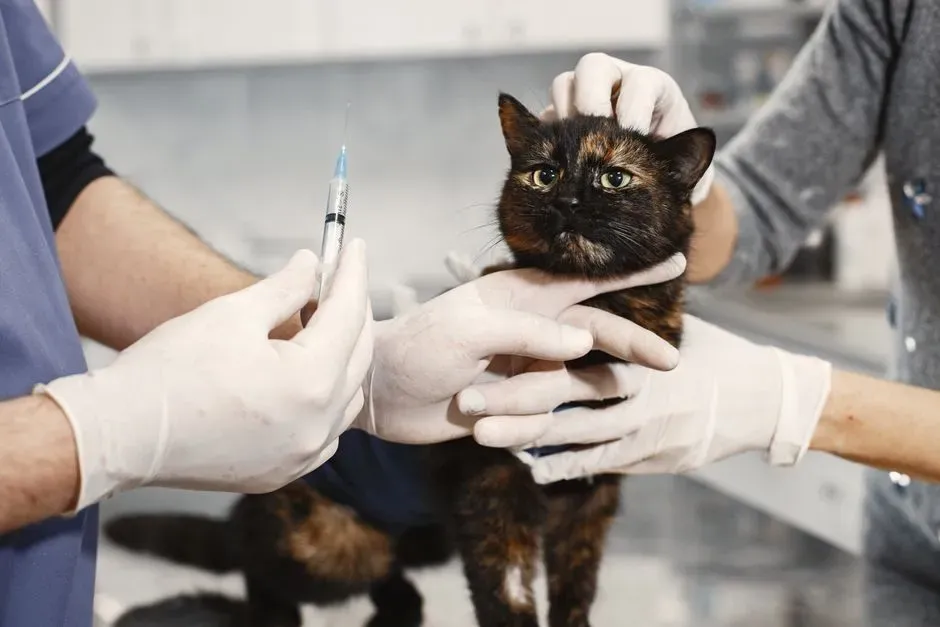
Chronic kidney disease is one of the great threats to ageing cats, and it hides well.
Kidneys can lose a lot of function before symptoms appear. Vets watch for increased thirst, more urine, weight loss, poor appetite and a dry-feeling coat. They also check hydration by gently lifting the skin and seeing how quickly it settles.
Bloodwork is where the real detective work happens. A test called SDMA can flag kidney decline earlier than creatinine alone in many cases. A urinalysis adds the missing piece, since dilute urine is an early clue.
Fast Facts
- Kidney disease is graded in four stages under the IRIS system
- SDMA can rise before creatinine does, giving vets a head start
- Dilute urine and extra drinking are among the earliest clues
- Blood pressure is usually checked alongside kidney tests
Here’s the opinion that divides owners: skipping senior bloodwork to save money is a false economy, many vets argue. Catching kidney changes early can allow dietary and medical support sooner, which usually costs less than a crisis.
Staging systems, like those from the International Renal Interest Society, help vets plan care. Treatment is tailored, so never change your cat’s diet without veterinary advice.
But the most visible clue of ageing isn’t in the blood at all. It’s in how your cat moves, which brings us to #4…

Earth Rated XL Dog & Puppy Pee Pads, Discreet Top, Max Absorbency
Check Price on AmazonAs an Amazon Associate, we earn from qualifying purchases.
10/7/2026 1:28 pm GMTi

Halloween Dog Collar with Bow, Orange Cute Ghost Collar,
Check Price on AmazonAs an Amazon Associate, we earn from qualifying purchases.
10/9/2026 2:43 pm GMTi

Glass Hummingbird Feeder for Outdoors Hanging, 16 oz Leak-Proof Nectar Feeder with Bee Guards & Ant Moat
Check Price on AmazonAs an Amazon Associate, we earn from qualifying purchases.
10/7/2026 1:22 pm GMTi

Air Purifiers for Home Pets Large Room Up to 3000 Ft²,HEPA Air Cleaner with Washable Double-Side Filter, PM2.5 Air Quality Monitor,15dB Sleep Mode for Bedroom Odor Dust Pollen,White
Check Price on AmazonAs an Amazon Associate, we earn from qualifying purchases.
10/8/2026 8:23 am GMTi

Smart Bird Feeder with Camera Solar Powered, 2K HD Live Video, 10,000+ Bird Species AI Identification
Check Price on AmazonAs an Amazon Associate, we earn from qualifying purchases.
10/7/2026 1:22 pm GMTi
#4 – Stiff Joints and Missing Jumps
🔥 Would you like to save this?
We'll email this post to you, so you can come back to it later!
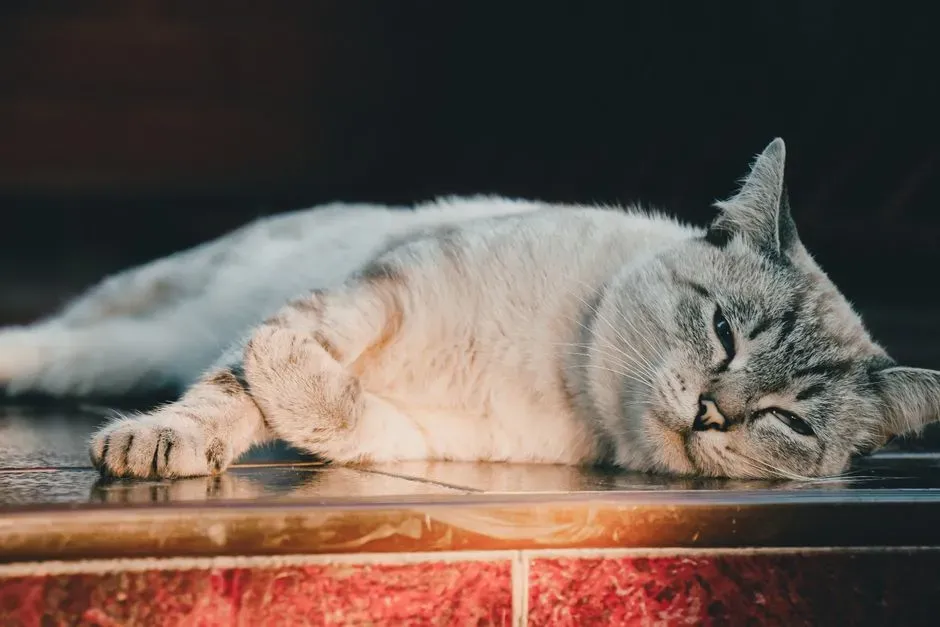
Arthritis is extremely common in older cats, and most owners never see a limp.
Studies using X-rays have found joint changes in a large share of senior cats. Yet cats rarely limp. Instead, they quietly stop doing things, like leaping onto the sofa, climbing stairs or using the cat flap.
Vets gently flex the hips, knees, elbows and spine. They also watch your cat walk across the room and ask about changes at home. Even a hesitant pause before a jump counts as evidence.
Tell-tale signs of joint pain:
- Skipping high perches she once loved
- Missing the litter tray edge or soiling near it
- Reduced grooming, especially on the back
- Irritability when touched near the hips
Cooler autumn weather often makes owners more aware of stiffness, though the condition itself isn’t only seasonal. Treatment can involve pain relief, weight management, home changes and newer therapies.
Pain isn’t the only thing hiding in the body, though, and the next check might shock you in #3…
#3 – The Belly Examination
🔥 Would you like to save this?
We'll email this post to you, so you can come back to it later!
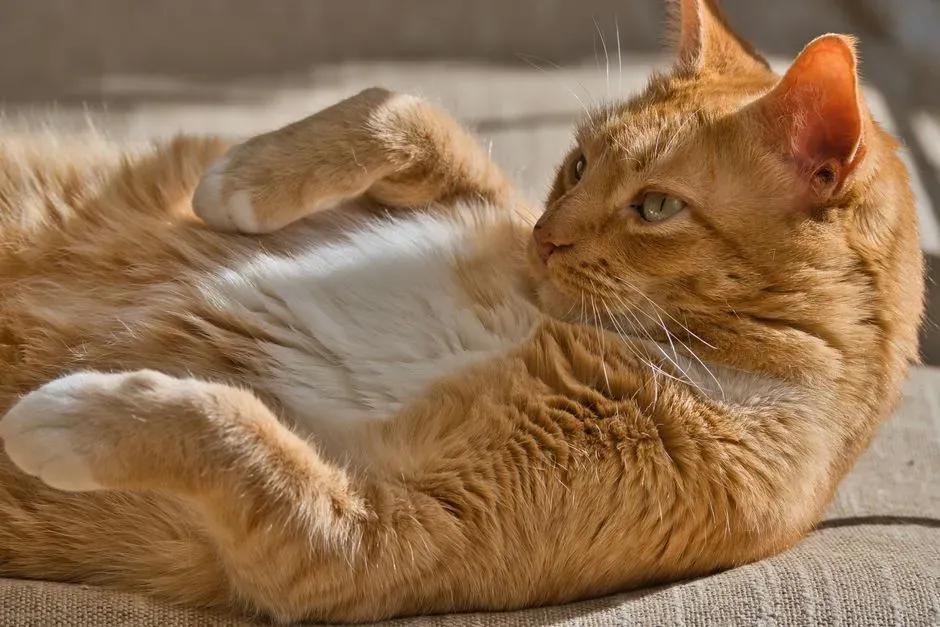
A vet’s hands can find things in the abdomen that no home check ever will.
Gentle pressure lets vets assess the kidneys, bladder, intestines and lymph nodes. They notice size, shape, firmness and any sign of discomfort. A bladder that feels too full, or a thickened loop of intestine, can steer the next test.
Constipation also gets attention. Older cats can become backed up due to dehydration, arthritis that makes squatting painful, or reduced gut movement. Chronic constipation shouldn’t be dismissed as a minor issue.
Vets also ask about vomiting, diarrhoea and appetite. Long-term digestive signs in seniors can point to conditions like inflammatory bowel disease or, in some cases, cancer. Only testing can separate them.
Worth Knowing
- Note roughly how often she vomits, and what it looks like
- Snap a photo of any unusual stool or diarrhoea
- Watch for straining, tiny dry stools or fewer litter clumps
- Mention any change in appetite, even a small one
Many owners wave off hairballs. Vets often argue that regular vomiting is never truly “normal,” even though cats do it often. If it’s happening more than occasionally, bring it up.
If the belly holds secrets, the skin holds a few more, and the next one is easy to miss in #2…
#2 – Lumps, Bumps and Mouth Growths
🔥 Would you like to save this?
We'll email this post to you, so you can come back to it later!
Any new lump on an older cat deserves a name, not a guess.
Vets feel along the chest, belly, legs, neck and under the tail. Mammary tissue is checked carefully, particularly in cats that weren’t spayed or were spayed late. A lump that’s small today can look very different in a few months.
Not every lump is cancer. Cysts, abscesses and benign growths are all common. But you can’t tell by touch alone, so vets may take a sample with a fine needle for analysis.
They also check the mouth, under the tongue and the lymph nodes. Sores in the mouth that don’t heal need prompt attention.
What to do between visits:
- Feel your cat from nose to tail once a month
- Note the size and location of any lump
- Take a photo beside a coin for scale
- Don’t wait for the next appointment if it grows quickly
And the final sign isn’t found on the body at all. It’s in your cat’s mind, and it may be the one that matters most in #1…

PetSafe Oasys Pet Fountain, 1/2 Gallon (64 oz), Small Dogs & Cats
Check Price on AmazonAs an Amazon Associate, we earn from qualifying purchases.
10/8/2026 8:14 am GMTi

Dog Stairs for Bed 18" H, 4-Step Dog Steps for High Bed
Check Price on AmazonAs an Amazon Associate, we earn from qualifying purchases.
10/9/2026 2:42 pm GMTi

Professional 7 in 1 Dog Paw Cleaner for Dogs & Cats - Includes 1 Portable Paw Washer, 1 Bath Brush
Check Price on AmazonAs an Amazon Associate, we earn from qualifying purchases.
10/7/2026 1:26 pm GMTi

Glass Hummingbird Feeder for Outdoors Hanging
Check Price on AmazonAs an Amazon Associate, we earn from qualifying purchases.
10/7/2026 1:21 pm GMTi
#1 – Mind and Behaviour Changes
🔥 Would you like to save this?
We'll email this post to you, so you can come back to it later!
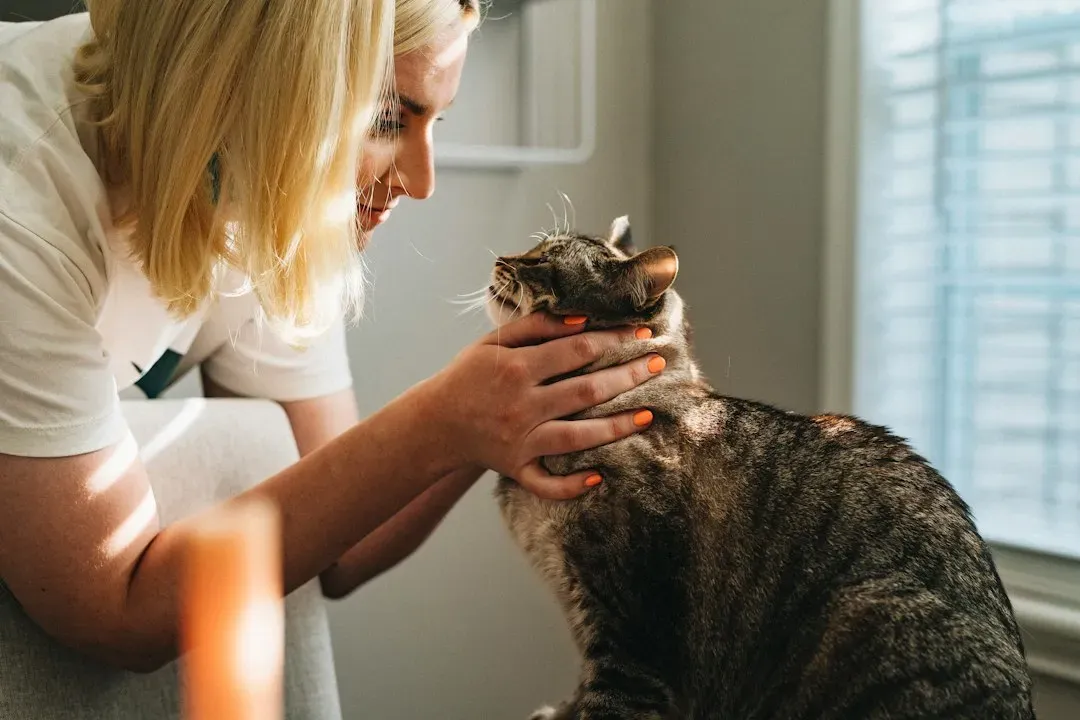
The biggest clue in an older cat’s check-up is often a story, not a test.
Vets ask about sleep, litter habits, vocal behaviour and personality. Night-time yowling, staring at walls, getting lost in familiar rooms or seeming unusually clingy can point to feline cognitive dysfunction, which is similar in some ways to dementia in people.
Here’s the catch. Many of these signs overlap with pain, high blood pressure, thyroid disease and failing eyesight or hearing. So vets rule out physical causes first.
Behaviour changes worth reporting:
- Disorientation or getting stuck in corners
- Disrupted sleep and loud night-time calling
- Accidents outside the litter tray
- Less interest in play or interaction
“Bad behaviour” in a senior cat is often a medical signal. Scolding a cat for toileting outside the tray can miss the point entirely.
Put all 14 signs together and a pattern jumps out: almost none of them announce themselves loudly. Weight drift, thinning muscle, a scruffy coat, a skipped jump. Each one is easy to excuse and easy to miss.
That’s exactly why autumn check-ups matter, and why “she’s just old” should be retired as an explanation. My opinion? Twice-yearly senior visits with bloodwork, a blood pressure reading and a proper dental check are the best investment an owner can make.
Ageing isn’t a disease, but ignoring it is a risk. The cat curled on your lap has spent years hiding her pain so you wouldn’t worry. A good vet visit is how she finally gets to tell you.

- Project Diana: Bouncing Radio Waves Off The Moon - November 6, 2026
- The Hidden World of Nocturnal Animals: Secrets of the US Nighttime Ecosystem - November 6, 2026
- The Kakapo: New Zealand’s Flightless Nocturnal Parrot - November 6, 2026