
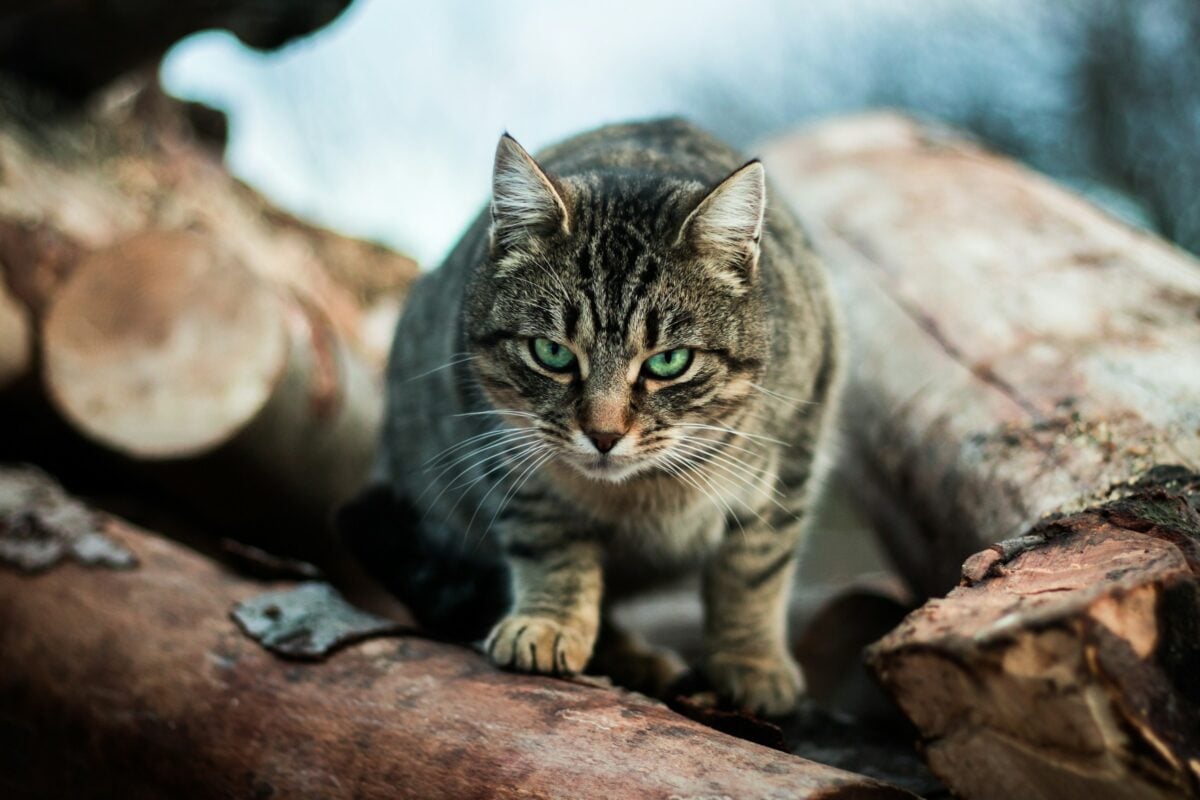
Most people assume a cat’s rough start “doesn’t matter” anymore once it’s fed, warm, and sleeping on a couch. Rescuers know better. Those early months of hunger, cold, and constant threat don’t just fade away – they rewire the cat’s brain in ways that quietly show up for the rest of its life.
From how it eats to how it sleeps to who it trusts, a formerly feral cat is running old survival code underneath its new, cozy exterior. Stick around, because some of these lifelong habits are stranger, sadder, and more touching than anything you’d expect from an “ordinary” house cat.
#15 – They Never Fully Relax Around Doors and Windows
🔥 Would you like to save this?
We'll email this post to you, so you can come back to it later!
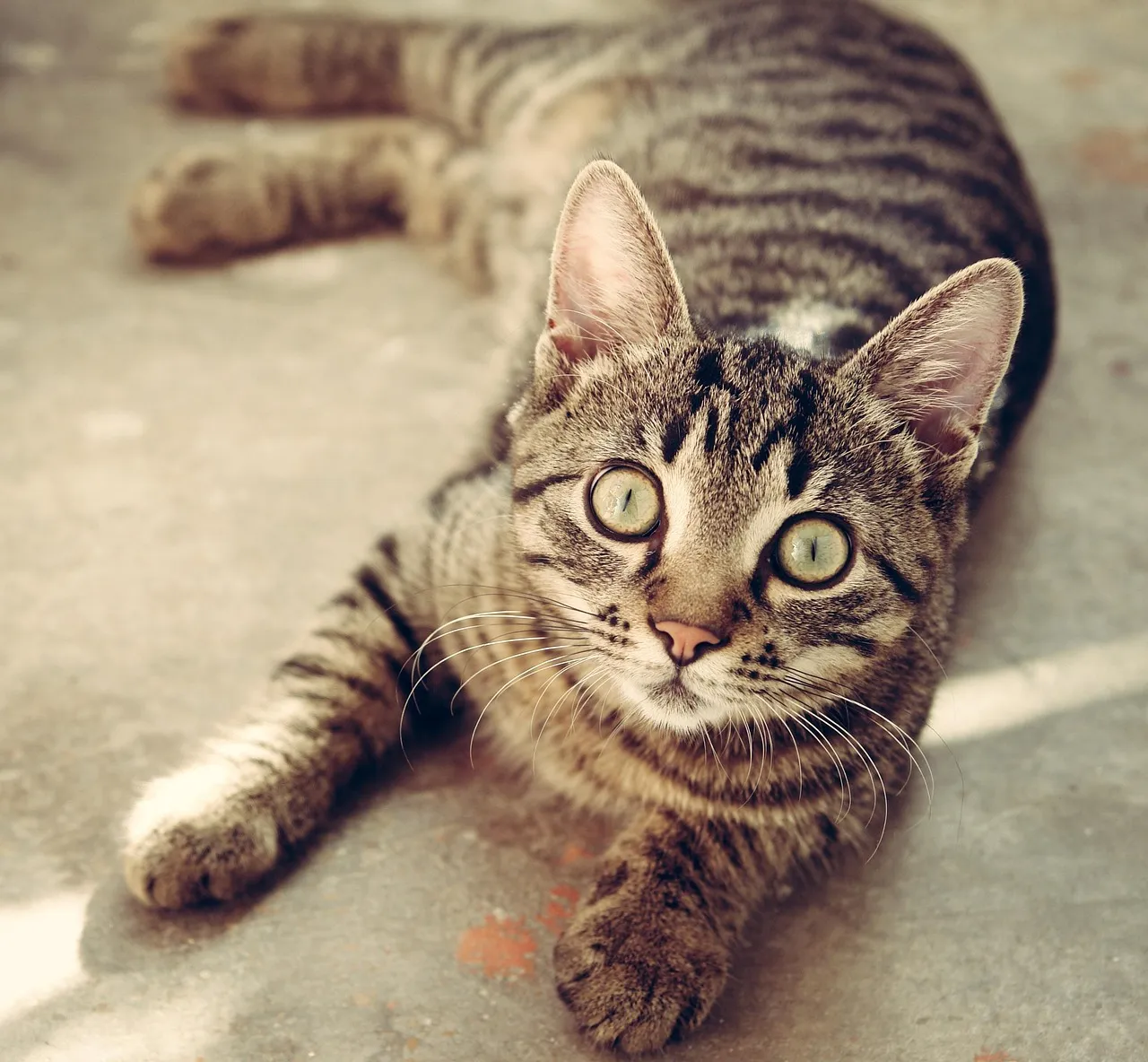
Even when a formerly feral cat looks completely melted into the couch, doors and windows never become “just decor.” To them, an opening is an exit, a threat, and an escape route, all rolled into one narrow rectangle.
Plenty of guardians notice their ex-feral will freeze mid-stretch or bolt the second a door swings open, even years into indoor life. That’s not drama. It’s muscle memory from a world where an open door could mean a strange dog, an angry human, or a rival cat charging straight at them.
Fast Facts
- Open doorways are treated as high-risk transition zones, not just pathways.
- Sudden movement near an exit is one of the most common startle triggers in rescued cats.
- Many formerly feral cats pick a “watch spot” that keeps every doorway in view.
- This wariness can persist for years, even in a fully safe, indoor-only home.
These cats often watch entrances from a distance before ever approaching, and they’ll hover near a favorite hiding spot the moment guests arrive. Some will pace by windows at night, scanning the dark like they’re still pulling perimeter duty on a street that no longer exists for them.
You can move a cat like this into the safest home on earth, but you can’t delete the part of its brain that has mapped every possible exit. And that instinct is only the beginning – the next one throws a lot of new cat parents completely off guard.
#14 – Their “Flight Distance” Stays Hard-Wired for Life
🔥 Would you like to save this?
We'll email this post to you, so you can come back to it later!
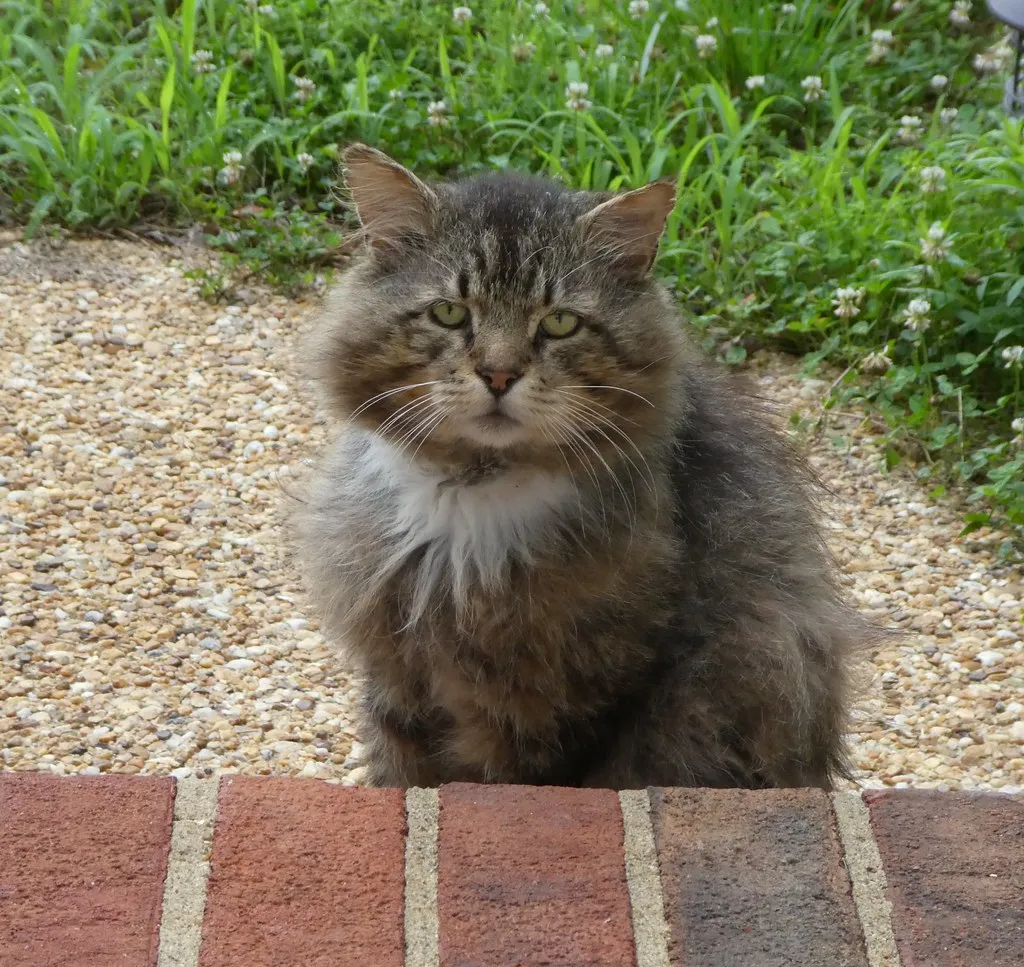
A cat raised in a stable home from kittenhood will usually tolerate you walking past, vacuuming nearby, or dropping a pan without flinching much. A formerly feral cat tends to come with a permanently extended “flight distance” instead.
Flight distance is the invisible bubble around a cat where, if you move into it too fast or too loudly, the cat feels forced to retreat just to feel safe again. For ex-ferals, that bubble often stays larger for the rest of their lives, even with people they adore.
You’ll see it in small ways: they step off the couch the instant you walk straight at them, or they circle behind furniture rather than cross an open room near you. Even a cat who trusts you completely will usually prefer a slow, sideways approach over a direct one.
Many never become “pick-me-up” cats, because being lifted can trigger old panic memories of being trapped or caught. People sometimes mistake this for “still not tame,” but behaviorists see it differently – it’s a permanent safety setting that can shrink over the years, but almost never fully switches off.
#13 – Hiding Becomes Their Permanent Coping Strategy
🔥 Would you like to save this?
We'll email this post to you, so you can come back to it later!
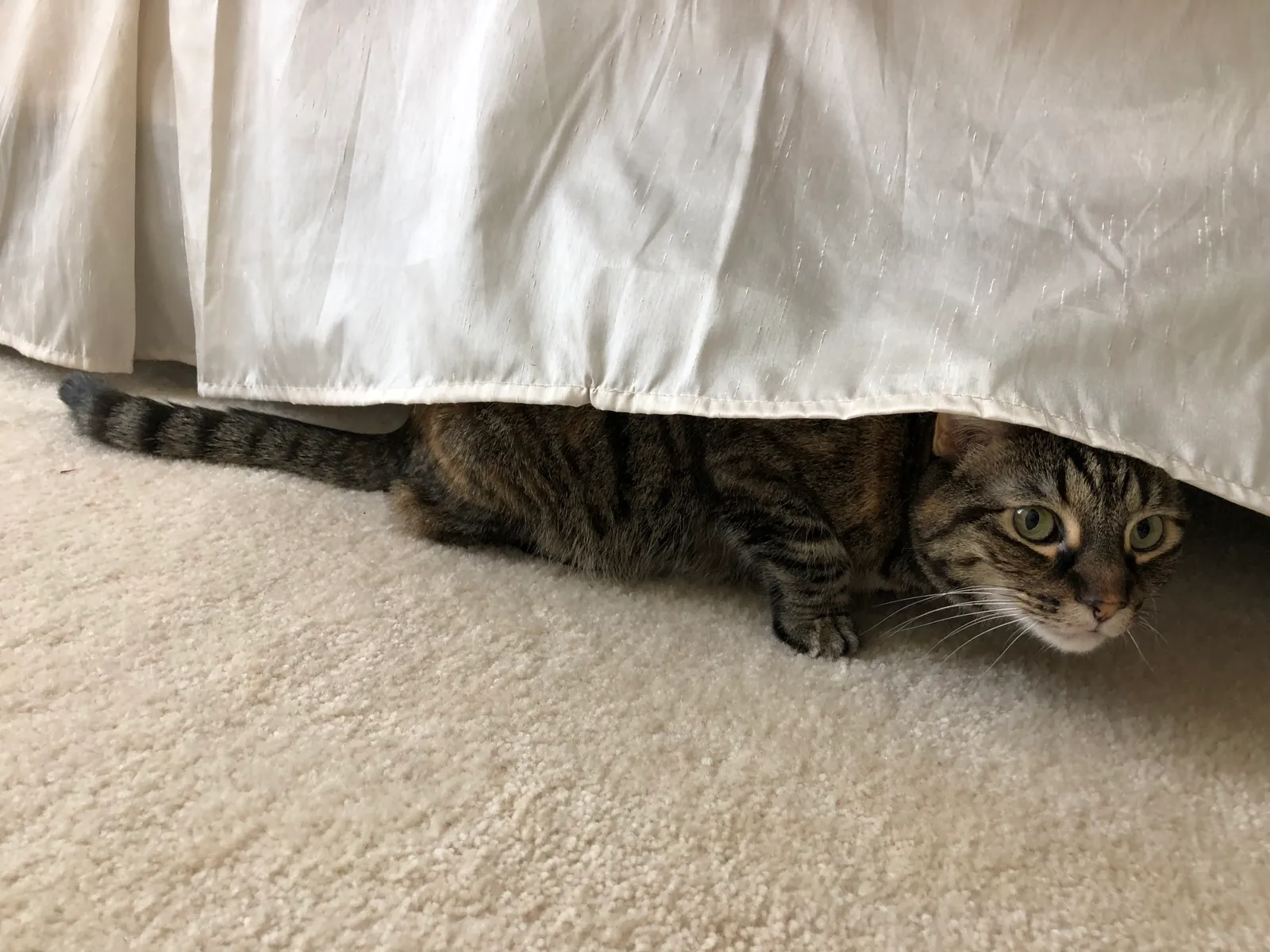
Every cat hides sometimes. A formerly feral cat hides with intention. For them, disappearing under the bed isn’t shyness – it’s strategy, stress relief, and an emotional reset button all at once.
Years after rescue, many ex-ferals still vanish for hours when something shifts: new furniture, a thunderstorm, guests in the house, or even moving boxes stacked in the hallway. Most will settle on one or two “core safe zones” they return to like clockwork, and they’ll often choose spots that are high, enclosed, or dark instead of anywhere out in the open.
Here’s the part that surprises people: a formerly feral cat can hide even when it’s deeply bonded and affectionate. You might have a cat who purrs against your chest every night and still bolts the instant a stranger’s voice carries down the hallway. That’s not distrust of you specifically – it’s just how this particular cat learned to survive everything else.
Smart guardians eventually stop trying to drag these cats out into the open and instead build the hiding in on purpose: covered beds, blanket-lined boxes, vertical shelves where the cat can watch the room without being watched back. Once you accept that hiding is this cat’s version of deep breathing, its whole “personality” suddenly makes a lot more sense – and the next habit is even harder to unlearn.
#12 – They Treat Every Meal Like It Could Be the Last One
🔥 Would you like to save this?
We'll email this post to you, so you can come back to it later!
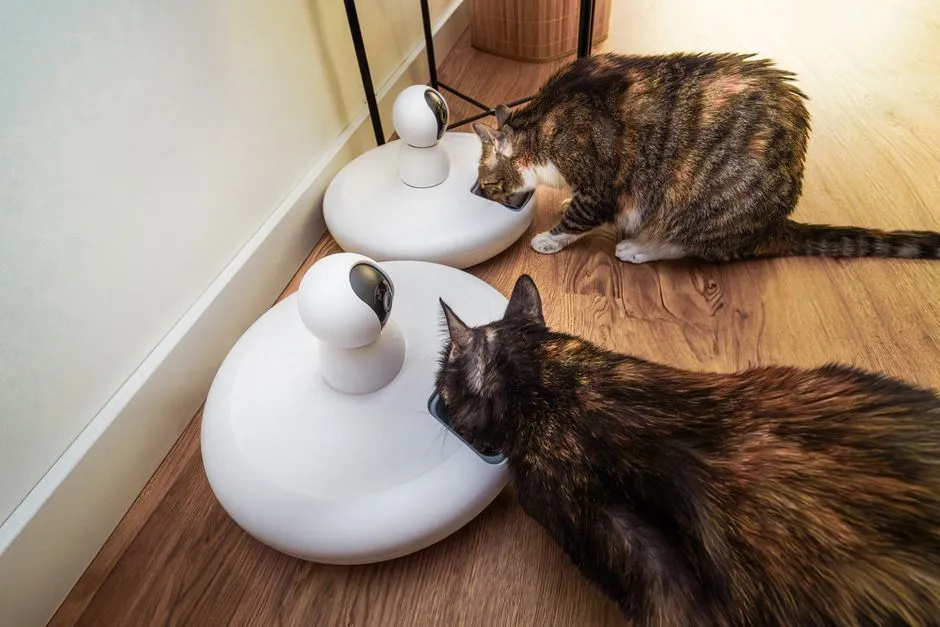
It catches new guardians off guard: a well-fed, entirely indoor ex-feral cat can still act like the food bowl is a limited-time offer. To a cat that’s known real hunger, a full bowl never quite feels 100% guaranteed, no matter how many years of dinners come and go.
Some of the most common lifelong food habits include speed-eating so fast the cat occasionally vomits it back up, guarding the bowl from other pets who aren’t even interested in it, and pacing or crying if feeding time shifts by even thirty minutes. Others will “bury” or stash leftover food nearby, as if hiding a stockpile for later.
Some of these cats will eat until they’re visibly uncomfortable, because some quiet part of their brain still whispers, eat now, you don’t know when you’ll get more. Free-feeding helps some cats and does nothing for others, because the real problem isn’t quantity – it’s the mindset underneath it.
This is exactly why slow-feeder bowls, several small meals, and separate feeding stations can be so effective. You’re not just feeding a cat at that point. You’re slowly convincing a former street survivor that, maybe for the first time in its life, food is not something it has to fight for.
#11 – Their Relationship With the Litter Box Stays Complicated
🔥 Would you like to save this?
We'll email this post to you, so you can come back to it later!
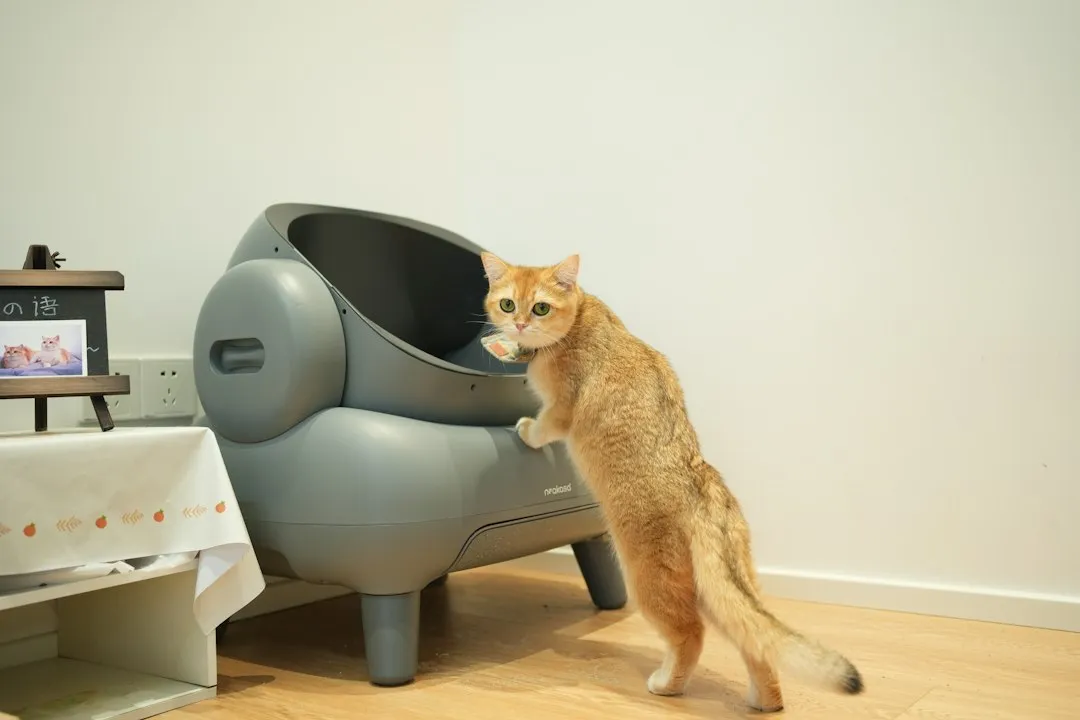
People like to assume using a litter box is pure instinct. It isn’t – it’s instinct plus learning, and kittens pick up what “counts” as a toilet from their mother and their environment. A formerly feral cat usually grew up going in dirt, mulch, sand, or leaf litter, not a plastic tray filled with clay pellets.
So to that cat, the indoor litter box is actually a pretty strange object. Many ex-ferals scratch at the sides of the box, the floor around it, or nothing at all, instead of neatly burying their business the way a “textbook” cat does. Others strongly prefer unscented, sandy textures over perfumed litter, and some will target house plants or rugs simply because the texture feels closer to real ground.
Some will even hold it until the entire house goes quiet – a strange but understandable holdover from a world where using the bathroom made you vulnerable to whatever was watching. To a formerly feral cat, privacy while eliminating isn’t a preference; it’s non-negotiable.
The fix is almost never punishment, which only adds fear to an already loaded situation. It’s about matching the litter texture, box size, and location to what the cat’s brain already expects. For a lot of these cats, a big, uncovered box tucked into a quiet corner is the closest thing to the edge of a field they’ll ever get again.
#10 – They Sleep Like They’re Still On Patrol
🔥 Would you like to save this?
We'll email this post to you, so you can come back to it later!
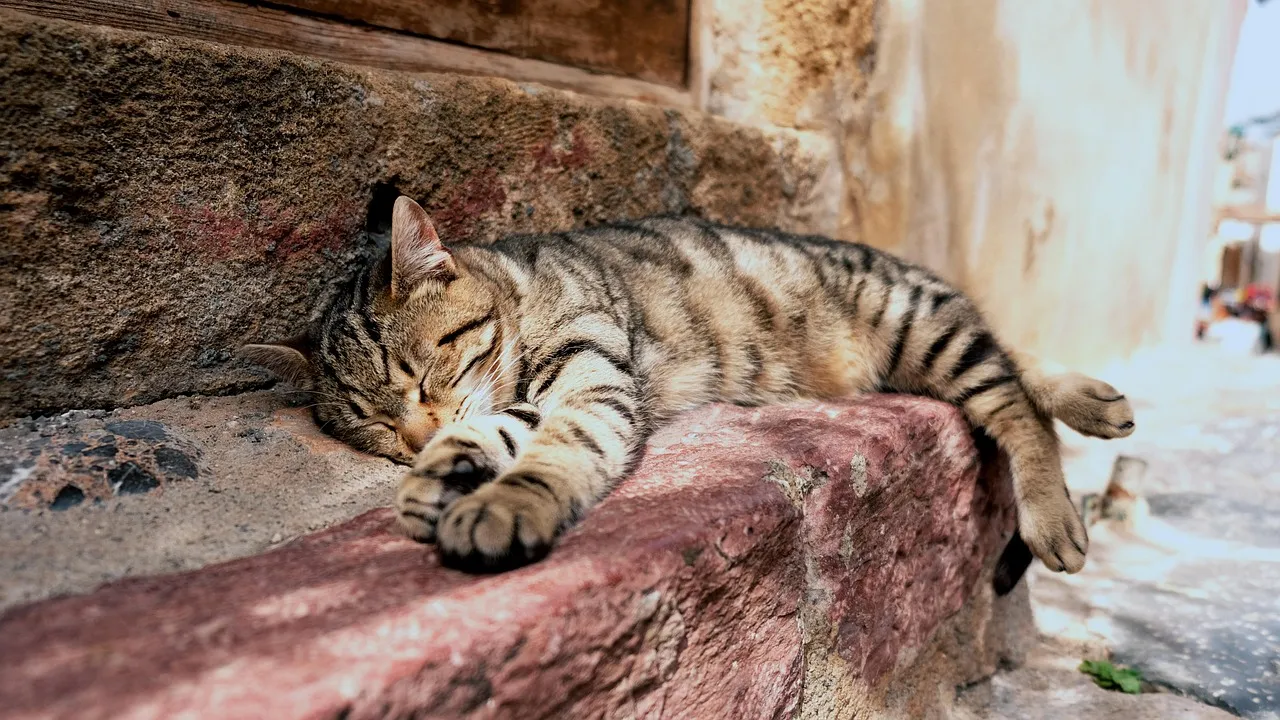
A typical house cat will sprawl belly-up in the middle of the floor without a single worry. A formerly feral cat may sleep, technically, but it rarely fully shuts off.
Watch closely and you’ll notice they choose spots with a clear view of the room, or a fast route to an exit. Their naps run lighter, too – the smallest sound sends an ear flicking or a head popping up mid-dream. Elevated perches, tucked-away corners, and the space under furniture usually win over open, exposed floor space.
Even once they finally join you on the bed, plenty of ex-ferals still choose the edge or the foot of the mattress instead of the center. It isn’t about loving you less – it’s about staying half a second away from “move, now,” a habit built during years of sleeping somewhere genuinely dangerous.
Some guardians misread this as distrust, but it’s rarely about you specifically; the cat is monitoring the world, not judging you. And here’s the quietly emotional part rescuers talk about: the day a formerly feral cat finally sleeps flat on its back, right in the open middle of the room, is a day a lot of longtime rescuers admit brings them close to tears.
#9 – Their Play Style Stays Wild, Fast, and All Business
🔥 Would you like to save this?
We'll email this post to you, so you can come back to it later!
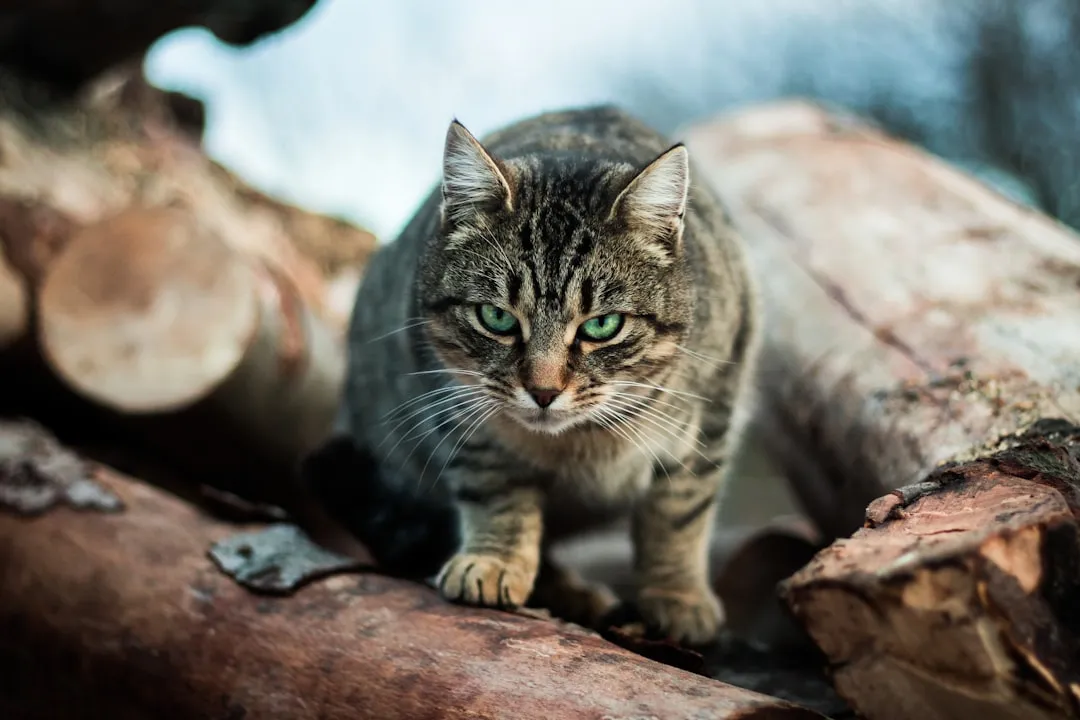
Most house cats play like they’re doing improv theater – loose, silly, all over the place. Formerly feral cats play more like they’re training for a job interview with nature itself.
Their sessions tend to be short, intense, and locked onto realistic “catch and kill” movements rather than random toy-chasing. You’ll see fewer goofy belly-up wiggles and a lot more stalking from behind furniture, calculated pounces, and quick grab-bite-done routines executed in near silence with laser-focused eye contact.
Quick Compare
- House-raised cat: Loose, playful, easily distracted by any moving object.
- Formerly feral cat: Short, intense bursts focused on realistic prey movement.
- House-raised cat: Happy with squeaky balls, crinkle toys, or catnip mice.
- Formerly feral cat: Prefers wand toys that mimic birds, mice, or insects in motion.
Wand toys that mimic birds or scurrying mice tend to be gold with these cats, while a plastic ball with a bell inside often gets completely ignored. That’s not because the cat “doesn’t know how” to play – it’s because play and hunting share the same neural wiring for a cat that spent real time hunting to survive. There was never room outside for silly, unproductive movement; every burst of energy doubled as practice.
Some people get almost offended when an ex-feral snubs a fun-looking novelty toy, but behaviorists put it simply: if you want to unlock a formerly feral cat’s playful side, you have to speak to its predator brain, not its clown brain.
#8 – They Bond to One Person Like Their Life Depends On It
🔥 Would you like to save this?
We'll email this post to you, so you can come back to it later!
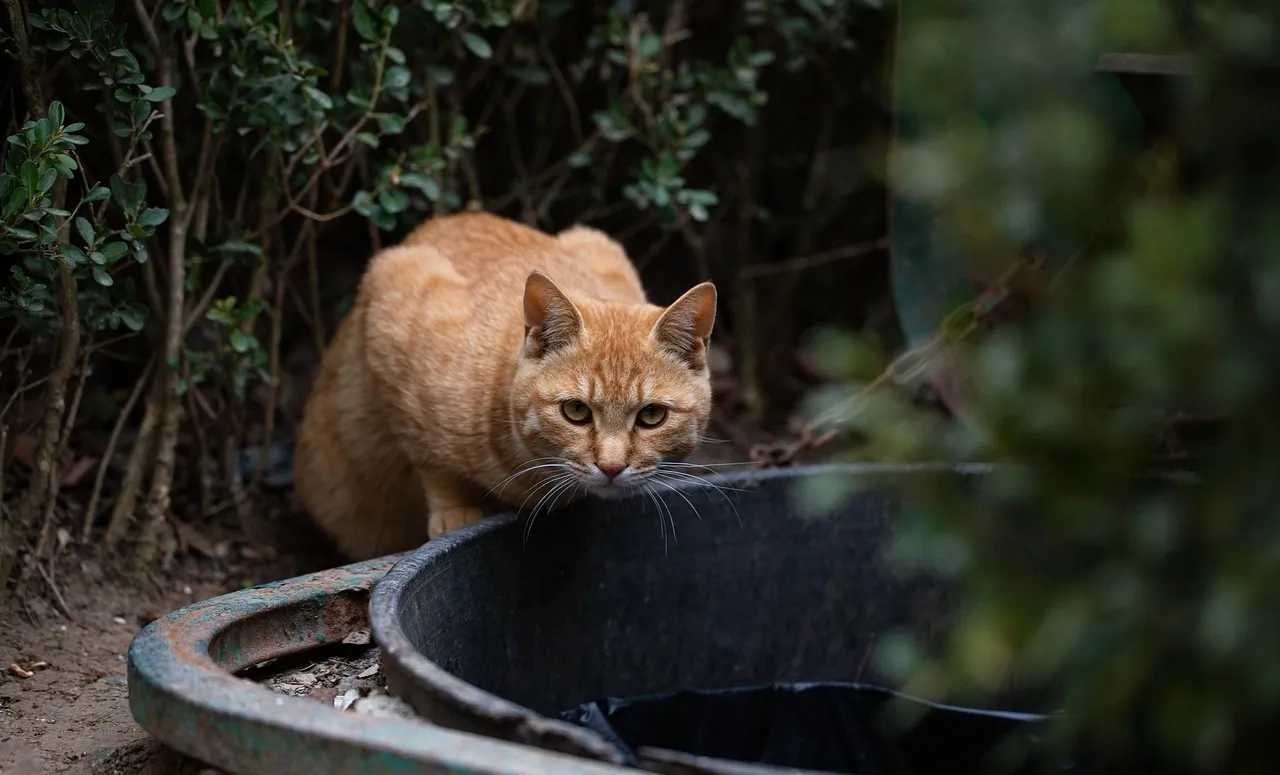
Here’s the part that genuinely surprises people: once a formerly feral cat picks a person, that bond often runs harder than what you’ll see from a lot of “normal” house cats. Not necessarily more cuddly – more intense, more singular.
These cats will often tolerate everyone else in the household but truly relax with only one specific person. They’ll trail that person from room to room like a quiet shadow, and if that person travels or is simply away longer than usual, you might see spiking distress – hiding, refusing food, restless pacing.
This isn’t the casual “I like whoever fills my bowl” attachment some social cats have. It’s closer to a you are my safe base in an unpredictable universe imprint, and it tends to stick for life. Some behaviorists see this ultra-specific bonding as a survival adaptation: in a genuinely dangerous, unpredictable world, you invest everything in the one being who consistently keeps you alive.
That’s flattering, honestly, but it’s also a real responsibility. Once a formerly feral cat chooses you, you’re not just someone’s pet owner anymore. You’ve become the reference point that a creature rebuilt its entire definition of safety around.
#7 – Their Idea of “Affection” Doesn’t Look Like the Movies
🔥 Would you like to save this?
We'll email this post to you, so you can come back to it later!
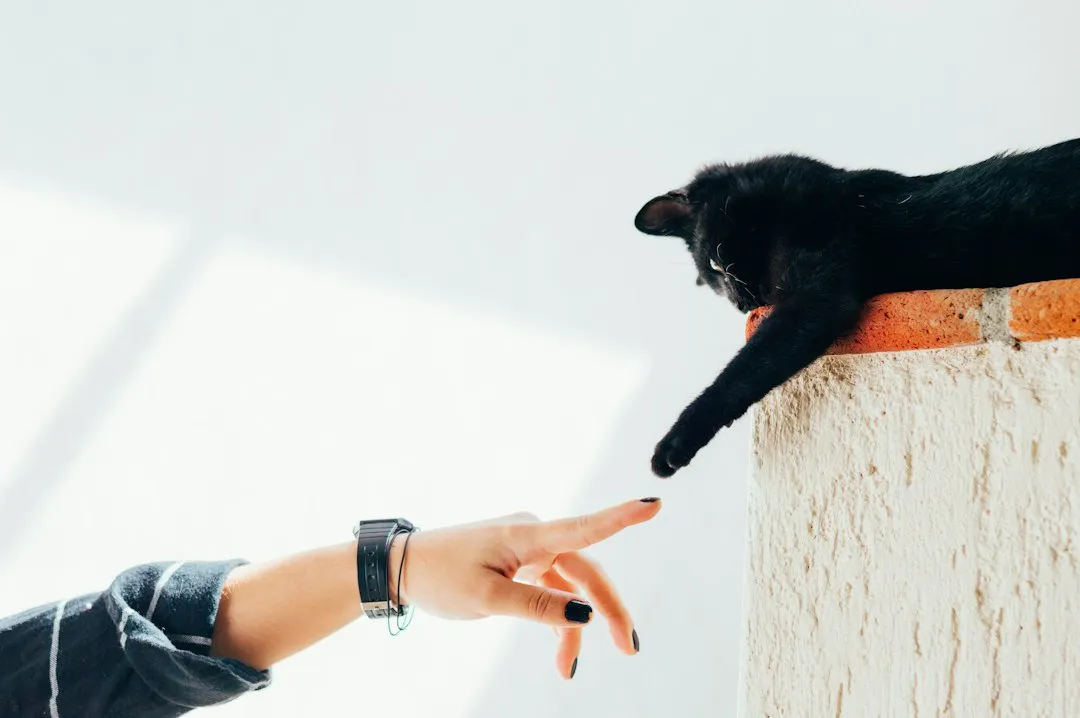
Most people picture affection as constant petting, lap time, and cuddling on demand. Formerly feral cats often mean something completely different when they’re trying to say “I love you.”
Instead of nonstop touch, they might sit near you but just out of reach, watching with slow, soft blinks. They might sleep with their back turned but their body pressed firmly against your leg, groom your hair or beard in quick intense bursts, or leave you the occasional “gift” – a favorite toy, or an unlucky bug they consider a genuine offering.
For a cat that once avoided every human on sight, simply choosing to exist in your space is already a massive emotional risk. Many will still flinch slightly at sudden contact while being deeply, unmistakably attached underneath it. People expecting a stuffed-animal-style cuddle cat sometimes completely miss these smaller signals and wrongly assume the bond isn’t strong.
In reality, plenty of ex-ferals are overwhelmingly affectionate by their own standard – it just doesn’t look like a viral cat video. Once you start grading affection on their scale instead of Instagram’s, a slow head bump from a formerly feral cat starts to feel like the emotional equivalent of a handwritten love letter.
#6 – Their Sound Sensitivity Never Turns Back Down
🔥 Would you like to save this?
We'll email this post to you, so you can come back to it later!
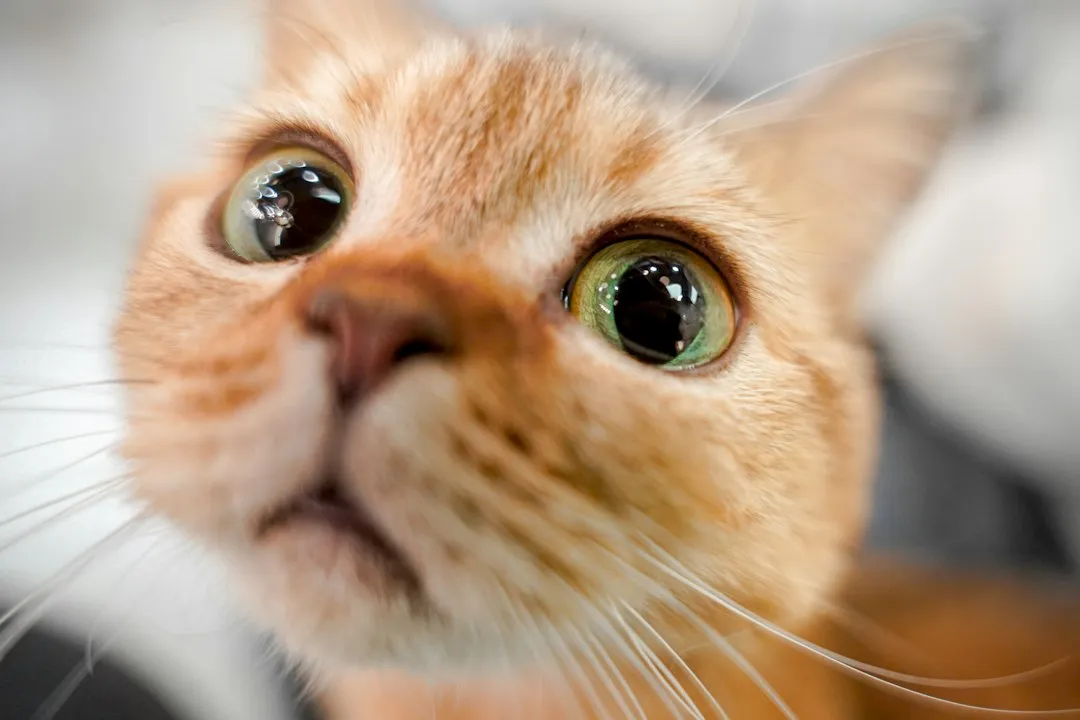
That instant “what was that?” reflex never fully disappears in a formerly feral cat. Many keep a lifelong hypersensitivity to sudden or unfamiliar sounds – and no, they’re not being dramatic, they’re neurologically primed for it.
You’ll notice sharp startle responses to dropped objects, raised voices, or even a phone buzzing on the counter. Loud appliances like blenders, vacuums, and hairdryers can trigger avoidance far beyond what most cats show, and outside sounds – a slamming car door, someone shouting on the sidewalk – can bring on a tensed body and dilated pupils in seconds.
Worth Knowing
- Sudden mechanical noises (vacuums, blenders, hairdryers) often trigger the strongest reactions.
- Unpredictable outdoor sounds, like slamming doors or shouting, can cause instant tension.
- Steady background noise, like a fan or soft music, is often more calming than total silence.
- The startle response rarely fades with age the way it does in cats raised indoors from birth.
Their nervous system spent years equating noise with real danger: cats fighting, cars approaching too fast, humans yelling, dogs barking somewhere close. That history doesn’t reset itself just because the noise is now coming from a television speaker instead of a real threat.
Interestingly, a lot of these cats actually respond better to steady, predictable background sound – a fan humming, soft music playing – than to complete silence broken by random spikes of noise. On the street, dead quiet was often the warning sign right before something bad happened, and that pattern-memory stays put. Guardians who live with these cats often catch themselves narrating everyday actions out loud – “I’m picking this up,” “closing the door now” – not because the cat understands English, but because the rhythm of a familiar voice becomes its early-warning system.
#5 – Territory Stays Something They’ll Fight to Protect
🔥 Would you like to save this?
We'll email this post to you, so you can come back to it later!
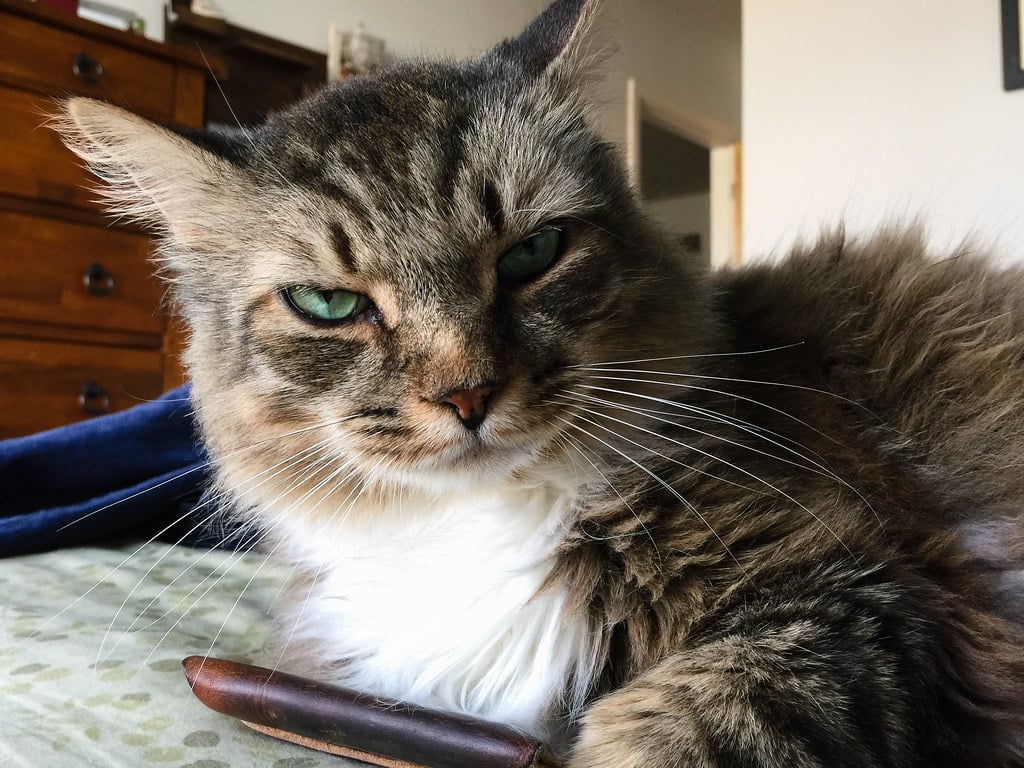
Territory matters to every cat, but to a formerly feral cat, territory is survival currency. They spent a real chunk of their life where losing ground meant losing food, shelter, or safety outright – and that mindset doesn’t just switch off indoors.
Lifelong territorial habits can show up as extreme vigilance at the window whenever a neighborhood cat wanders past, sudden aggression or spraying when a new pet is introduced too quickly, or the same patrol route walked through the house at almost the exact same time every single day.
Guardians are often shocked when their once-timid ex-feral suddenly hisses or lunges at a newcomer. But in the world this cat came from, a strange cat was never a potential friend – it was competition, or a threat to survival. Social niceties simply weren’t on the menu outdoors.
This is exactly why slow introductions, scent swapping, and vertical territory like cat trees and separate zones aren’t optional extras for these cats – they’re mandatory. You’re not just merging two pets into one household; you’re negotiating a peace treaty between creatures who both carry some version of trauma about losing ground. Many formerly feral cats do eventually accept new animals, just rarely with the relaxed, easy flexibility of a kitten raised in one stable home its whole life.
#4 – They Hide Pain and Illness Better Than Almost Any Other Cat
🔥 Would you like to save this?
We'll email this post to you, so you can come back to it later!
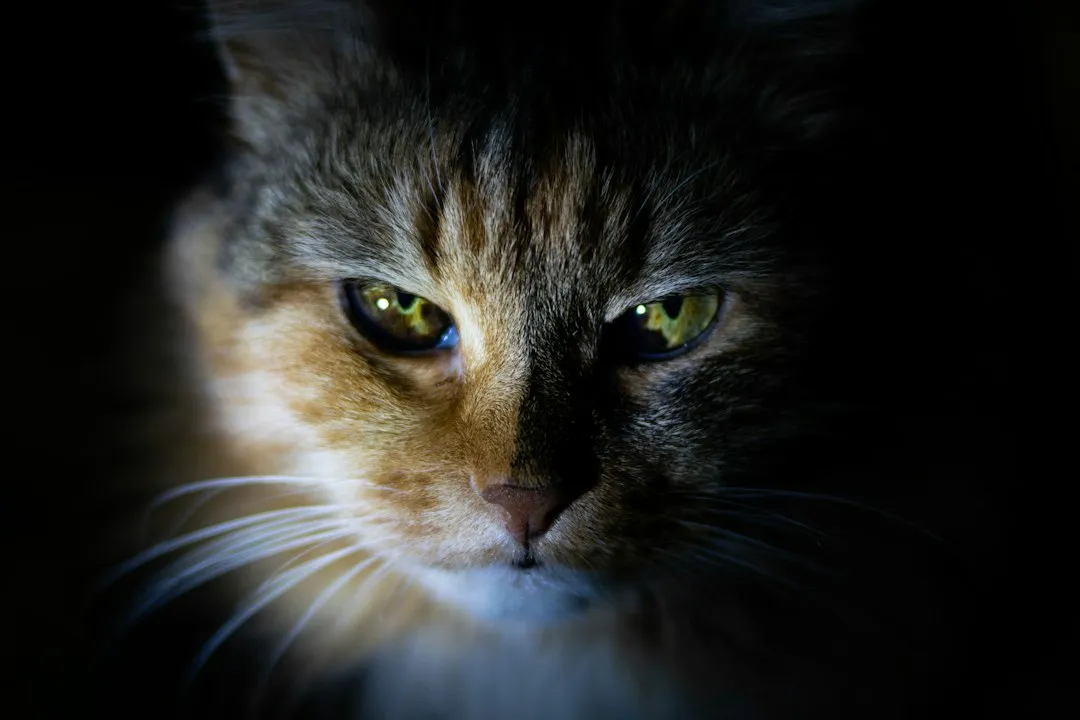
Every cat is famously good at masking pain, but formerly feral cats can be almost too good at it – because on the street, showing weakness was genuinely dangerous. Rescuers and vets often report that by the time an ex-feral finally “looks” sick, the problem has usually been building for a while already.
These cats will often keep eating just enough to avoid raising suspicion, retreat to hidden spots more frequently (easy to miss if hiding is already their normal behavior), and mask limping or discomfort unless it becomes genuinely severe. The brutal logic behind it makes sense once you know the backstory: on the street, the cat who limped visibly was the one who got pushed away from food, attacked, or picked off entirely.
Their survival strategy was simple – stay quiet, stay functional, or disappear. For guardians, that means you truly cannot wait around for obvious symptoms with a cat like this. Subtle changes matter far more here than with almost any other cat type: slightly less play, a small shift in posture, hiding in a different spot than usual.
Regular vet checkups and baseline bloodwork stop being optional with a formerly feral cat and start being essential. If you assume “oh, that’s just how they are,” it becomes dangerously easy to miss the one time that assumption is dead wrong.
#3 – They Guard Their Routines Like Sacred Ground
🔥 Would you like to save this?
We'll email this post to you, so you can come back to it later!
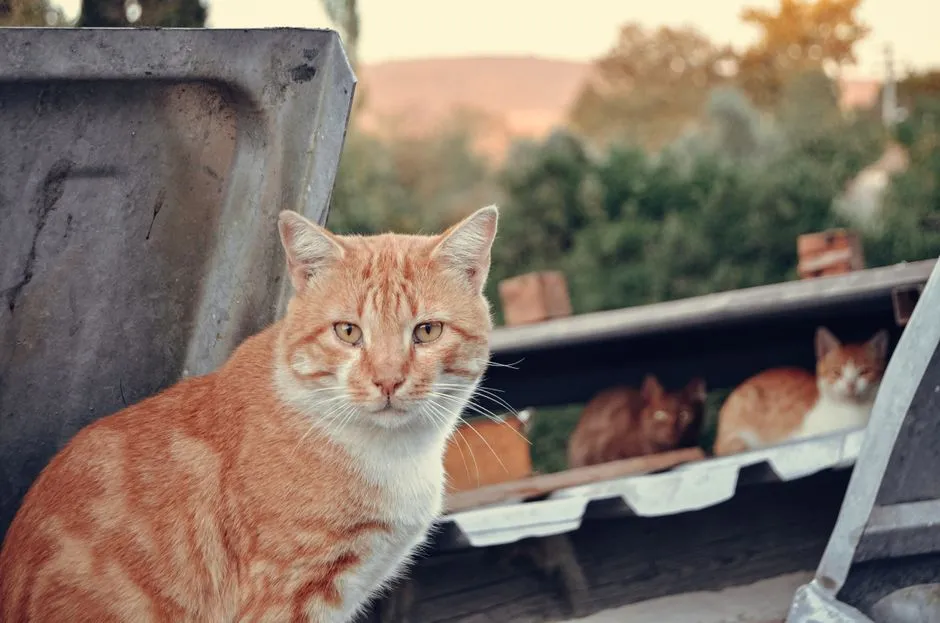
Once a formerly feral cat finally feels safe, something fascinating happens: it clings to routine with almost religious intensity. The same sleeping spot at the same time every day, the same path to the food bowl even when a shorter one exists, real visible stress if the furniture gets rearranged or someone sits in “their” chair.
On the street, predictability was rare and precious, so once these cats finally land somewhere that repeats itself reliably, they lock onto it hard. These small daily patterns become the exact opposite of chaos – proof, in their mind, that the world isn’t about to fall apart today.
Break that pattern too often and you’ll usually see the fallout fast: more hiding, more vocalizing, rejected food, a noticeable dip in confidence that can take days to rebuild. Plenty of well-meaning guardians accidentally destabilize these cats by constantly shaking things up “for enrichment,” when for a former street cat, stability itself is the enrichment.
Once you understand their rituals, you stop reading them as “picky” or “stubborn” and start seeing what they really are: a creature finally living somewhere it can control something, anything – and it is not giving that control up without a fight.
#2 – They Read Other Cats Better Than Almost Any House Cat Can
🔥 Would you like to save this?
We'll email this post to you, so you can come back to it later!
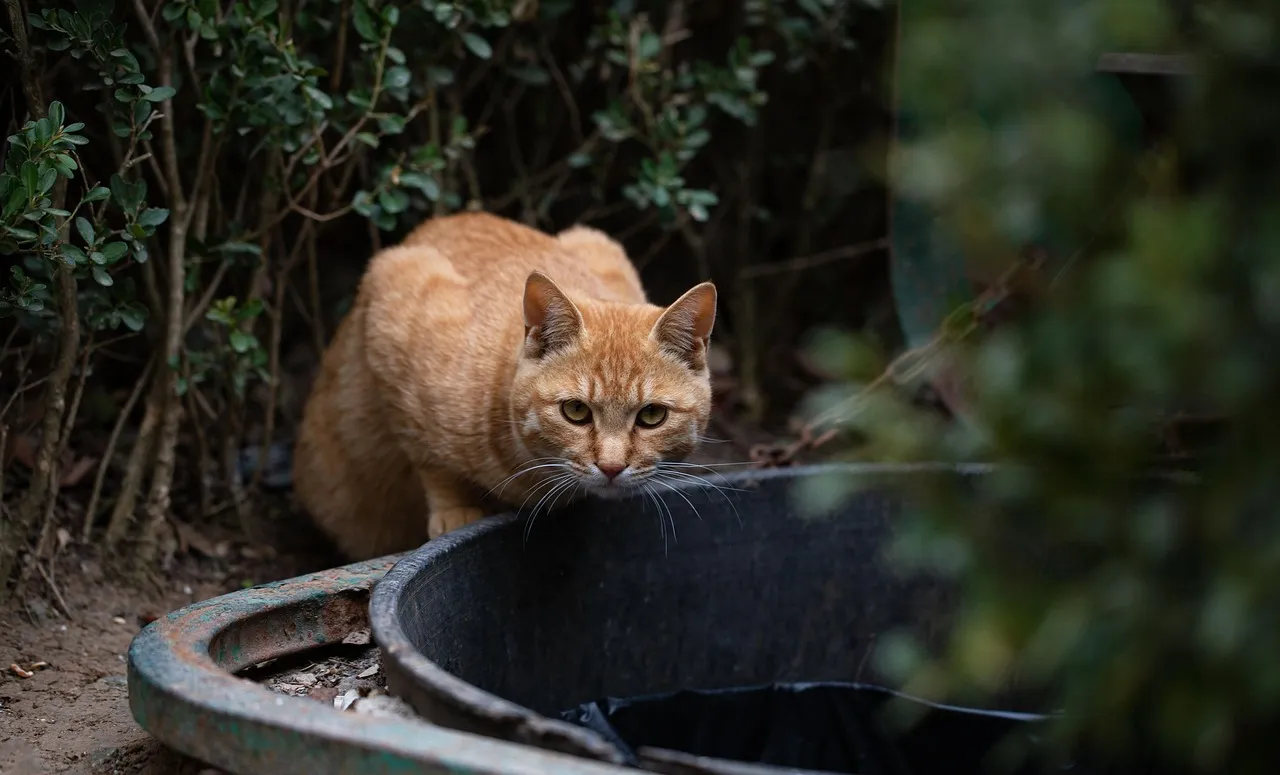
Here’s something behavior nerds quietly talk about: formerly feral cats are often far better at reading other cats than most indoor-only cats who never had much feline social contact growing up. Survival on the street meant reading body language instantly, gauging when another cat was bluffing versus genuinely dangerous, and navigating shared feeding spots, shelter, and territory without constant fights.
That street-level education doesn’t just evaporate once the cat moves indoors. You’ll often catch a formerly feral cat calmly de-escalating a tense standoff by simply choosing a different path or a different spot to sit, or noticing brewing conflict between other household pets well before any human does.
At a Glance
- Slow blinks and deliberate head turns signal calm, non-threatening intent.
- Curved walking paths help avoid direct confrontation with other animals.
- Choosing a different route often defuses tension before it becomes a real conflict.
- This fluency in body language rarely fades, even years after leaving colony life.
They also tend to use incredibly subtle, polite signals – slow blinks, deliberate head turns, curved walking paths that avoid direct confrontation – signals a lot of modern house cats never had to learn because they never needed them.
In a strange twist, some formerly feral cats end up becoming the unofficial “therapists” of multi-cat households, quietly keeping the peace by yielding space or gently redirecting tension before it boils over. Others, especially cats who came from high-conflict colonies, lean more defensive instead – but even then, their signals stay precise, not random. They remember a world where a bad social read had real consequences, so that fluency in cat language rarely fades, no matter how long the alley has been gone.
#1 – They Never Completely Stop Being Survivors – And That’s Their Superpower
🔥 Would you like to save this?
We'll email this post to you, so you can come back to it later!
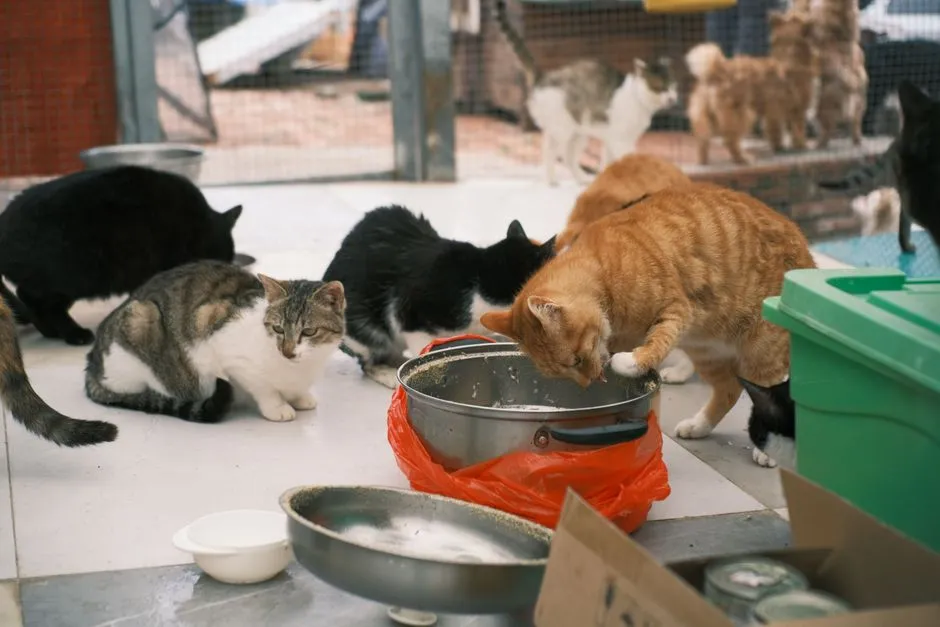
Here’s the uncomfortable truth most cute rescue stories skip right over: a formerly feral cat never becomes a blank slate. The streets, the hunger, the cold, the fights – all of it lives on in that cat’s nervous system for the rest of its life, whether anyone else notices or not.
You’ll see it in the pause before walking into a new room, even years into a safe, settled life. You’ll see it in the extra glance a cat gives you before finally curling up to sleep, or in the full-body sprint triggered by a sound you barely even registered, followed by a slow, cautious re-emergence, as if the cat is quietly testing whether the world is actually safe again.
Some people read all of this as “broken” or “less friendly.” That’s lazy thinking. What these cats really are is layered. You don’t get the instant, unearned affection of a bottle-fed kitten who’s never known danger. You get something rarer: a creature with every reason not to trust anyone, choosing to trust you anyway, one microscopic decision at a time.
There are no ordinary cats.
Colette
And here’s the part almost nobody tells new adopters: guardians of formerly feral cats will often quietly swear that once the bond is fully built, no other pet relationship ever feels quite as deep. Because you didn’t just adopt a cat. You helped rehabilitate a survivor, and it noticed.
The Bottom Line
🔥 Would you like to save this?
We'll email this post to you, so you can come back to it later!
Formerly feral cats don’t just “get over it” the moment they move indoors, and honestly, I think it’s a little insulting to expect them to. They carry their past into every single choice – how fast they eat, where they nap, how they play, who they trust, and exactly how much noise they can absorb before their body screams run.
To outsiders, these habits look like stubbornness, or shyness, or “issues” that need fixing. To anyone actually paying attention, they’re the living record of everything that cat had to do just to stay alive long enough to meet you.
Once you accept that, your whole framework shifts. You stop asking “why aren’t you a normal cat?” and start asking “what did you survive that makes this make complete sense?” That single shift in perspective is, in my opinion, the real difference between owning a cat and actually earning one’s trust.
And that’s when the real magic happens – when a creature built entirely for survival chooses, against every instinct it was ever taught, to stretch out on your pillow and purr like the danger was never real at all.

- The Cheetah: The Speed King of the Animal Kingdom - November 5, 2026
- The Remarkable Intelligence of Octopuses: Beyond What Scientists Imagined - November 5, 2026
- What Your Dog’s Tail Wags Are Really Trying to Tell You - November 5, 2026