


In the relentless pursuit of survival, animals have evolved extraordinary adaptations that defy imagination. From chemical warfare to death-defying regeneration, nature’s arsenal of survival tactics demonstrates the incredible ingenuity of evolution. These remarkable strategies have allowed creatures to thrive in the most extreme environments and escape seemingly impossible situations. Join us as we explore 15 of the most astonishing survival tactics in the animal kingdom, where the line between science fiction and reality becomes wonderfully blurred.
15. The Immortal Jellyfish’s Age Reversal

The Turritopsis dohrnii, commonly known as the “immortal jellyfish,” possesses perhaps the most extraordinary survival mechanism on Earth. When faced with starvation, physical damage, or environmental stress, this tiny jellyfish can revert from its mature medusa stage back to its juvenile polyp stage—effectively reversing its life cycle. This biological marvel is like a human reverting from adulthood back to childhood. Scientists have observed these jellyfish undergo this cycle of regeneration repeatedly, making them theoretically immortal. While they can still be consumed by predators or die from disease, their ability to cheat senescence (biological aging) represents one of the most remarkable survival adaptations ever documented and has significant implications for research on human aging and regenerative medicine.
14. Hairy Frog’s Wolverine-Like Defense

The Trichobatrachus robustus, aptly nicknamed the “horror frog” or “wolverine frog,” employs a defense mechanism straight out of a science fiction movie. When threatened, this Central African amphibian deliberately breaks its own toe bones, pushing the sharp, claw-like bone fragments through its skin to create formidable weapons. What makes this even more remarkable is that once the danger passes, the frog can retract these makeshift claws back into its toes, and the skin heals. This self-mutilation survival tactic is almost unique in the animal kingdom and represents an extraordinary example of how natural selection can produce seemingly impossible adaptations. The biochemical mechanisms that allow for the pain suppression and rapid healing necessary for this defense remain a fascinating area of research.
13. The Bombardier Beetle’s Chemical Cannon

The bombardier beetle possesses one of nature’s most sophisticated chemical weapons systems. When threatened, this insect mixes hydroquinone and hydrogen peroxide from separate chambers in its abdomen, catalyzing them with enzymes to create a violent exothermic reaction. The result is a boiling, caustic spray reaching temperatures of 100°C (212°F) that can be ejected at predators with astonishing accuracy. More impressively, the beetle’s internal mixing chamber is lined with heat-resistant materials that prevent it from cooking itself during this chemical reaction. The precision engineering of this defensive system is so remarkable that it has inspired designs for spray technologies, propulsion systems, and chemical reactors in human engineering. The bombardier beetle demonstrates how even small creatures can develop extraordinarily complex defensive systems when survival demands it.
12. The Opossum’s Death-Feigning Performance
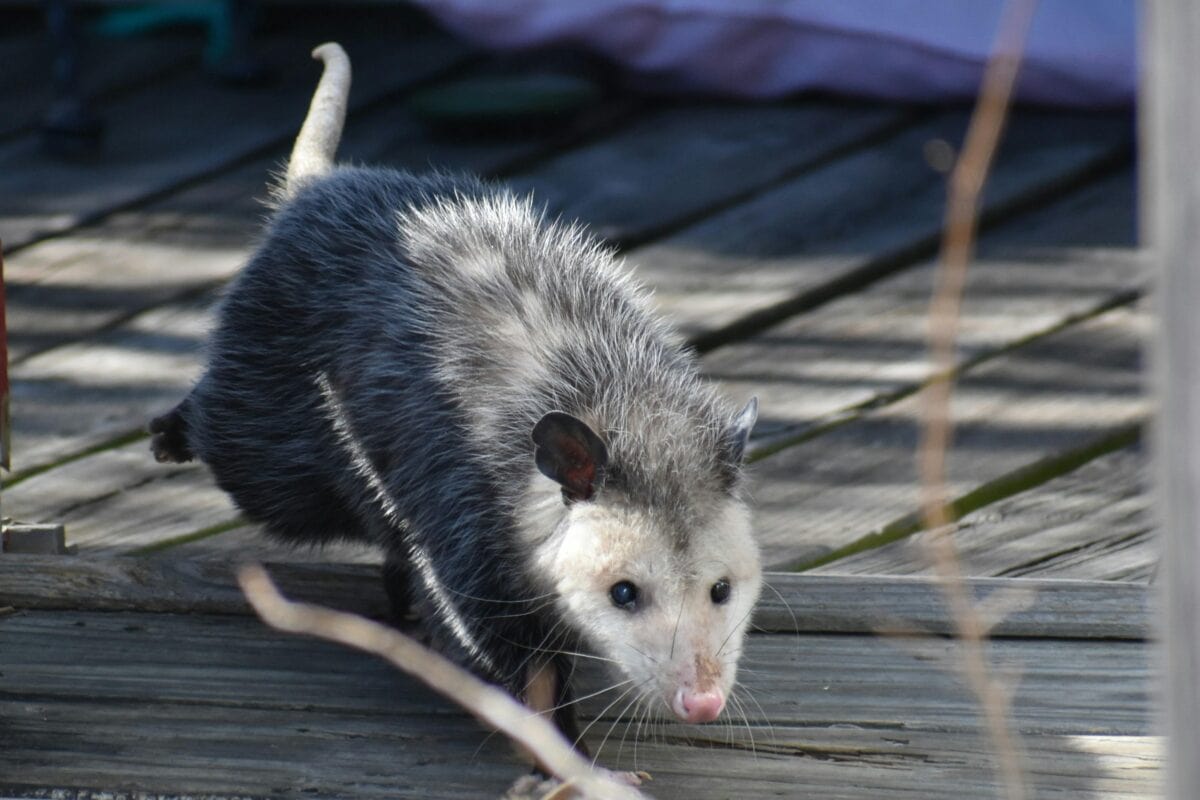
North America’s Virginia opossum takes the concept of “playing dead” to an entirely new level with a physiological response known as thanatosis. When confronted by predators, the opossum doesn’t simply lie still—it enters an involuntary comatose state that can last for hours. During this remarkable display, the opossum’s body becomes limp, its breathing slows dramatically, it secretes a corpse-like odor from anal glands, and its lips pull back in a death grimace. Many predators are programmed to avoid potentially diseased carrion, making this act highly effective. What makes this survival tactic particularly fascinating is that it’s not a conscious choice but rather an involuntary physiological response triggered by extreme fear. This sophisticated defense mechanism illustrates how even seemingly simple behaviors can involve complex neurological and physiological adaptations honed over millions of years of evolution.
11. The Axolotl’s Regenerative Superpowers
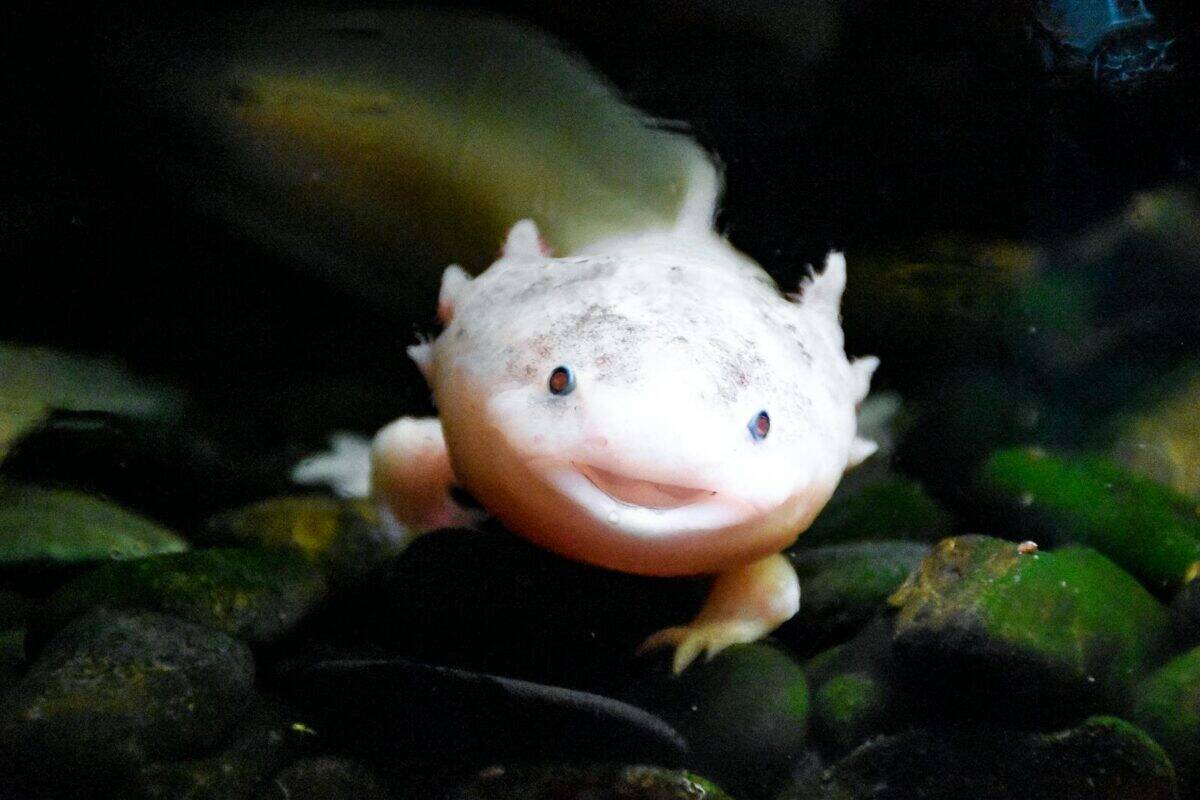
The Mexican axolotl possesses regenerative abilities that border on the miraculous. These aquatic salamanders can regrow entire limbs, portions of vital organs including the heart and brain, and even parts of their spinal cord—all without scarring. Most remarkably, when significant portions of their brain are removed, axolotls regenerate the missing tissue and restore normal behavior patterns. This extraordinary regenerative capacity far exceeds that of any other vertebrate and involves a complex process where cells at the wound site dedifferentiate (return to a stem-cell-like state) before rebuilding the missing structures. Scientists studying axolotl regeneration have identified unique genes and cellular mechanisms that could potentially revolutionize regenerative medicine for humans. The fact that this remarkable ability evolved primarily as a survival mechanism demonstrates how evolutionary pressure can produce capabilities that seem almost magical in their complexity.
10. The Indonesian Mimic Octopus’s Shape-Shifting Disguise

Discovered in 1998, the Indonesian mimic octopus (Thaumoctopus mimicus) elevates camouflage to an art form. Unlike other octopuses that change color and texture to blend with their surroundings, the mimic octopus impersonates other dangerous sea creatures. It can contort its body and adjust its coloration to convincingly mimic at least 15 different species, including venomous lionfish, sea snakes, and flatfish. What makes this ability particularly remarkable is that the octopus appears to select its impersonation based on the specific threat it faces, displaying a level of situational awareness previously thought impossible in invertebrates. With a brain that evolved completely independently from vertebrates, the mimic octopus demonstrates how intelligence and adaptive behavior can develop through entirely different evolutionary pathways when survival demands it. This sophisticated mimicry represents one of the most complex behavioral adaptations known in the animal kingdom.
9. The Wood Frog’s Freeze and Thaw Cycle

The North American wood frog (Lithobates sylvaticus) employs a survival strategy that seems to defy the fundamental requirements of life. During winter, these remarkable amphibians allow up to 65% of their body water to freeze solid. Their hearts stop beating, they cease breathing, and their blood no longer flows—by any conventional definition, they are dead. What makes this possible is a sophisticated biochemical adaptation where their livers produce massive amounts of glucose and urea, which act as natural antifreeze in their essential organs and cells. This prevents the destructive formation of ice crystals within cells while allowing ice to form in spaces between cells and organs. When spring arrives, the frogs thaw from the inside out and resume normal biological functions with no apparent ill effects. This remarkable adaptation allows wood frogs to survive in regions where temperatures regularly plunge to -20°C (-4°F), demonstrating how evolutionary pressures can produce solutions that push the very boundaries of what we consider to be living.
8. The Peregrine Falcon’s Hypersonic Hunting Dive
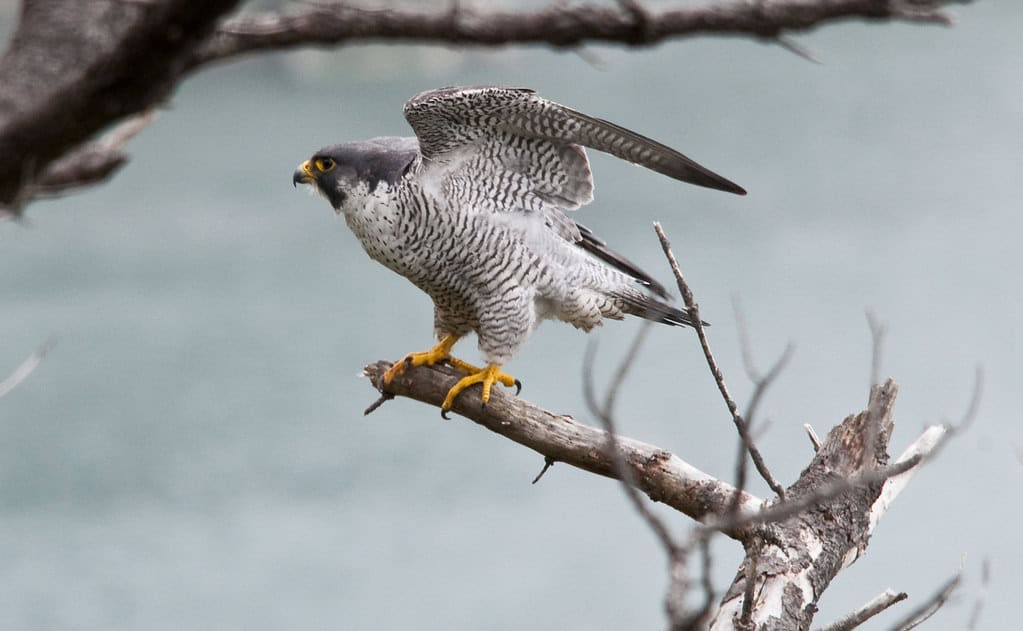
The peregrine falcon has evolved one of the most impressive hunting techniques in the animal kingdom—a high-altitude diving attack called a stoop that can reach speeds exceeding 240 mph (386 km/h), making it the fastest animal on Earth. What’s truly remarkable are the physiological adaptations that make this possible. Special bony tubercles in the falcon’s nostrils direct the crushing airflow away from its respiratory system, while transparent third eyelids protect its eyes without impairing vision. The falcon’s cardiovascular system can withstand extreme g-forces that would cause a human to lose consciousness, and specialized air sacs prevent its lungs from collapsing. Perhaps most impressive is the falcon’s neural processing power, which allows it to track small, evasive prey while diving at these incredible speeds, making split-second adjustments to its trajectory. This combination of adaptations represents an extraordinary example of how evolutionary pressure can fine-tune an organism for a highly specialized hunting strategy, creating capabilities that human engineering struggles to replicate.
7. The Tardigrade’s Multi-Dimensional Survival Kit

Tardigrades, or water bears, represent perhaps the ultimate survival specialists on Earth. These microscopic animals can withstand conditions that would obliterate any other life form. They can survive complete dehydration for decades by entering a state called cryptobiosis, where their metabolism reduces to 0.01% of normal, and their water content drops to just 3%. Tardigrades can endure temperatures from near absolute zero (-458°F/-272°C) to well above boiling point (300°F/149°C), pressure six times greater than the ocean’s deepest trenches, radiation doses thousands of times what would kill a human, and even the vacuum of space. When faced with dehydration, they produce special proteins that replace water in their cells and form a gel-like matrix that preserves their cellular structure. Their DNA is protected by unique proteins that prevent radiation damage, and their cell membranes contain specialized sugars that prevent them from shattering in extreme cold. These extraordinary adaptations make tardigrades the ultimate survival specialists, able to persist through planetary-scale catastrophes that would eliminate most other life forms.
6. The Pangolin’s Living Armor System
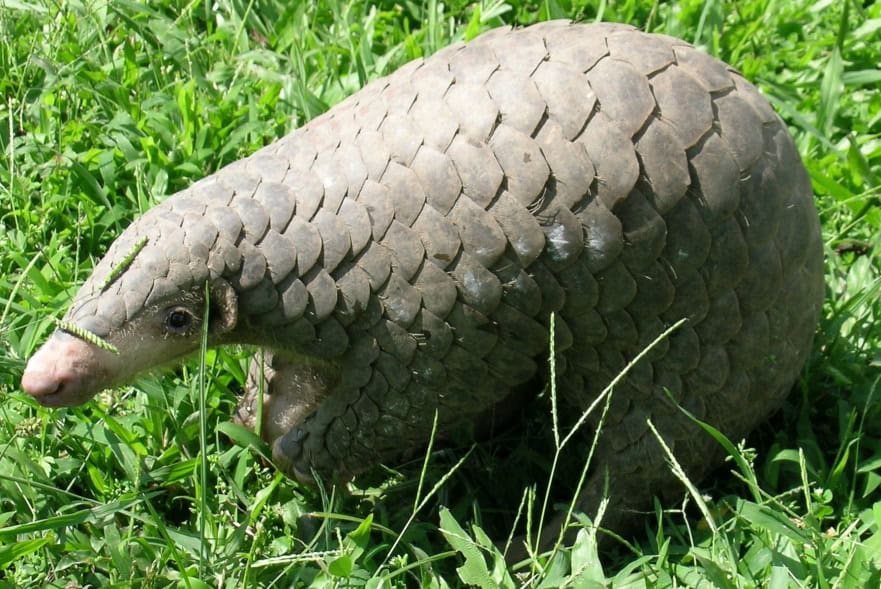
The pangolin’s defensive system represents one of nature’s most effective armor designs. Covered in overlapping scales made of keratin (the same material as human fingernails), these mammals possess a flexible yet incredibly durable defensive shield. Each individual scale is composed of overlapping layers of keratin that slide past each other when impacted, dissipating energy while remaining intact—a natural composite material that engineers are studying for bulletproof vest designs. When threatened, pangolins roll into a tight ball, with their scales forming an almost impenetrable sphere that protects their vulnerable undersides. Their scales also feature sharp edges that can slice predators that attempt to pry them open. Most remarkably, pangolins can contract specialized muscles at the base of each scale, effectively turning their armor into a weapon by creating a cutting, vice-like grip on anything caught between their scales. This elaborate defense system has allowed pangolins to survive for over 40 million years, though ironically, their remarkable armor has made them targets for human poaching, making them the most trafficked mammals in the world.
5. The Trap-Jaw Ant’s Ballistic Escape Mechanism

The trap-jaw ant possesses mandibles that operate like biological catapults, closing at speeds exceeding 145 mph (233 km/h)—the fastest known movement in the animal kingdom. While primarily used for hunting, these remarkable appendages serve a dual purpose as an emergency escape system. When threatened, the ant can aim its mandibles at the ground and trigger them, launching itself vertically up to 8 inches (20 cm) into the air—equivalent to a human jumping over a 30-story building. This “mandible jump” allows trap-jaw ants to instantly escape predators or threatening situations. The mechanism behind this extraordinary ability involves specialized muscles that work like a loaded spring, storing energy that can be released by a neural trigger in just 0.13 milliseconds. High-speed imaging reveals that during mandible closure, the ant experiences accelerations exceeding 100,000 times gravity. This dual-purpose adaptation demonstrates how natural selection can repurpose specialized structures for multiple survival functions, creating versatile tools that provide significant evolutionary advantages.
4. The Horned Lizard’s Pressure-Powered Blood Spray

The Texas horned lizard employs one of the most bizarre defensive mechanisms in nature: shooting blood from its eyes. When threatened by certain predators, particularly canids like coyotes and foxes, this lizard can rupture tiny blood vessels around its eyelids and project blood up to 5 feet (1.5 meters). This isn’t a simple leak but a pressurized spray activated by restricting blood flow in the head until vessels near the eyes rupture from the pressure. The expelled blood contains chemicals that taste foul to canine predators, making it both a startle tactic and a chemical deterrent. What makes this adaptation particularly remarkable is the lizard’s ability to precisely control blood pressure in specific regions of its head and selectively direct the spray toward the threat. The horned lizard can lose up to 25% of its blood volume in a defensive stand without suffering ill effects, thanks to specialized cardiovascular adaptations. This extraordinary defense mechanism demonstrates how extreme the evolutionary arms race between predator and prey can become, producing solutions that seem almost implausible in their complexity.
3. The Hagfish’s Slime Gland Arsenal
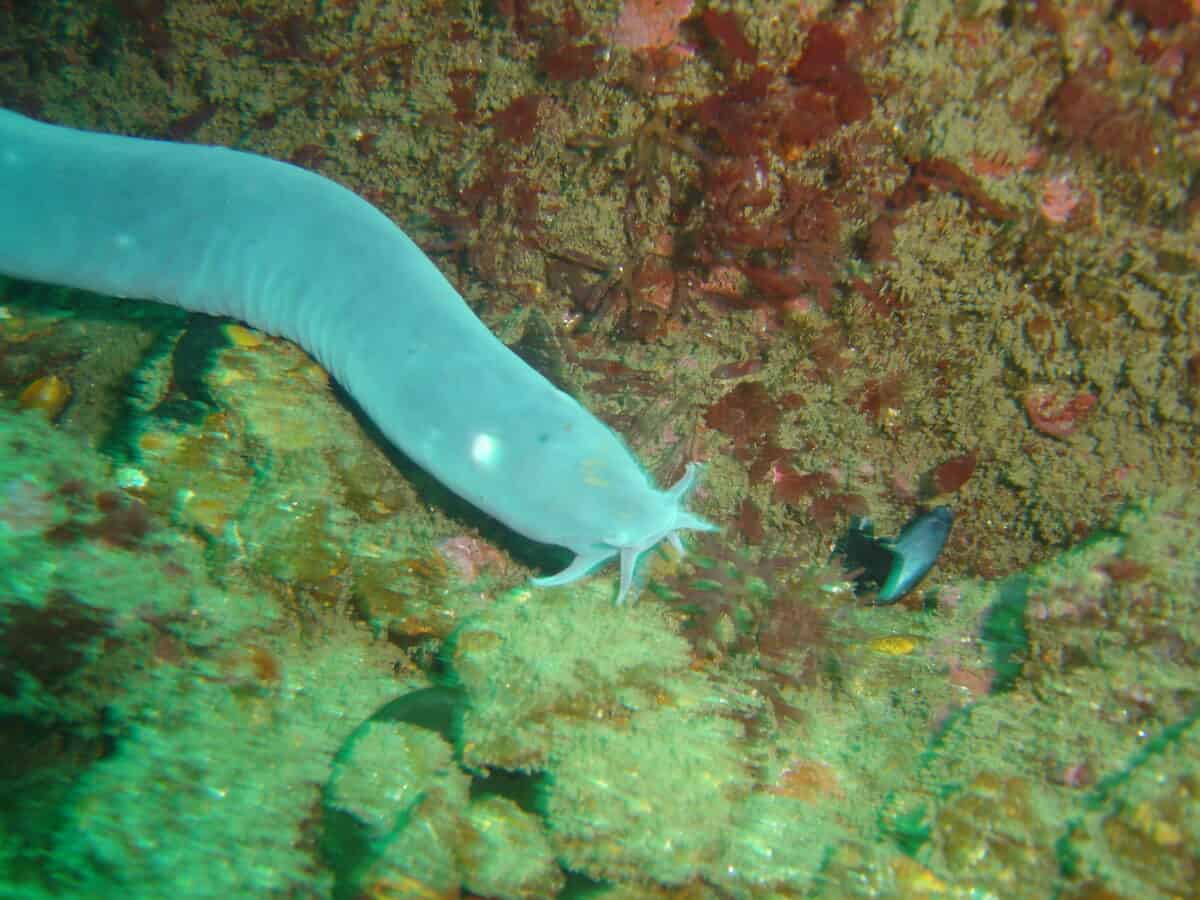
The hagfish possesses what might be the most effective quick-deployment defense system in the animal kingdom. When threatened, this ancient jawless fish can produce over 5.3 gallons (20 liters) of slime in a fraction of a second from approximately 100 specialized glands along its body. This remarkable substance contains thousands of silk-like fibers that, when exposed to seawater, expand 10,000 times in volume, creating a gelatinous cloud that clogs the gills of predatory fish, forcing them to retreat or risk suffocation. The slime consists of microscopic fibers stronger than nylon and only slightly weaker than spider silk, suspended in a mucus-like medium. Perhaps most impressive is the hagfish’s ability to clean itself of its own slime by tying itself into a knot and sliding the knot along its body to scrape off the substance, preventing self-suffocation. This extraordinary defense system has allowed hagfish to survive relatively unchanged for over 300 million years, making them one of the most evolutionarily successful vertebrate designs on Earth. Scientists are currently studying hagfish slime for applications in sustainable fabric production, high-strength materials, and medical applications.
2. The Lyrebird’s Audio Deception

The Australian lyrebird possesses perhaps the most extraordinary vocal mimicry abilities in the animal kingdom, serving as a sophisticated survival adaptation. These remarkable birds can recreate almost any sound they hear with astonishing accuracy—from the calls of over 20 different species of birds to the mechanical sounds of camera shutters, car alarms, chainsaws, and even human speech. Their syrinx (the avian equivalent of a larynx) is the most complex sound-producing organ in birds, containing muscles that can be adjusted with microscopic precision. What makes this ability particularly valuable for survival is how male lyrebirds incorporate these mimicked sounds into elaborate mating displays, with larger repertoires attracting more mates. Additionally, the lyrebird’s mimicry creates acoustic confusion for predators, making it difficult to locate the bird through sound alone. Most remarkably, lyrebirds can even mimic the sound of a flock of birds, creating the illusion of a large, threatening group when in fact there is only a single bird. This sophisticated audio deception represents one of the most complex behavioral adaptations for both reproduction and predator avoidance known in the animal kingdom.
1. The Deep-Sea Anglerfish’s Bioluminescent Lure

The female deep-sea anglerfish has evolved one of the most effective hunting adaptations in the ocean depths. In the perpetual darkness 3,000 feet (914 meters) below the surface, these fish possess a modified dorsal spine that extends over their mouths, tipped with a bioluminescent lure containing symbiotic bacteria. These bacteria produce light through a chemical reaction requiring significant energy—a cost the anglerfish meets by providing the bacteria with nutrients and a protected environment. What makes this system particularly remarkable is that the anglerfish can control the light’s intensity, using it to create pulsing patterns that mimic the movements of potential prey, effectively turning the predator into the visual appearance of prey. When curious fish approach this convincing lure, the anglerfish’s enormous jaws—proportionally some of the largest in the animal kingdom—snap shut with lightning speed. The anglerfish’s bioluminescent fishing rod represents one of the most sophisticated examples of both symbiosis and evolved mimicry, demonstrating how the extreme selective pressures of the deep ocean environment have produced hunting strategies that blend biology, chemistry, and deception in extraordinary ways.
Conclusion: Nature’s Masterclass in Survival

From self-healing amphibians to shape-shifting cephalopods and blood-squirting reptiles, the animal kingdom never ceases to astonish with its sheer ingenuity. These survival tactics, often stranger than fiction, are not just fascinating oddities—they’re the result of millions of years of relentless adaptation to hostile environments and predatory threats. Each creature’s unique solution to the challenge of survival offers a glimpse into evolution’s boundless creativity. As we continue to study these extraordinary adaptations, we not only deepen our appreciation for the natural world but also uncover insights that could one day inspire advances in medicine, engineering, and technology. In nature’s grand experiment, survival isn’t just about strength—it’s about innovation.

As a little kid, I fell in love with nature, wildlife, and animals. Living in the USA, South Africa, Italy, China and Germany gave me the opportunity to discover the world's Wildlife. My favorite animals are Mountain Gorillas, Siberian Tigers, and Great White Sharks.
I'm a certified PADI Open Water Diver, went to Everest Base Camp and Trekked Gorillas in Uganda. I hold a Master of Science in Economics and Finance.
Please send any feedback to feedback@animalsaroundtheglobe.com
- 15 Crocodile Facts That Prove They Have not Needed to Evolve - June 16, 2026
- 12 Signs a Koala Is Under Stress in Captivity - June 16, 2026
- 15 Ways Weather Changes Are Affecting Backyard Birds - June 16, 2026