

America’s national parks aren’t just stunning landscapes of mountains, forests, and canyons—they’re living, breathing ecosystems teeming with wildlife. From the iconic grizzly bears of Yellowstone to the elusive mountain lions of the Southwest, these protected areas offer some of the best wildlife viewing opportunities in the country. Visiting these natural sanctuaries gives you the chance to witness animals in their native habitats, behaving as they have for thousands of years. The following 15 animals represent some of the most magnificent creatures you might encounter during your national park adventures, each one a testament to America’s rich biodiversity and conservation success stories.
15. Grizzly Bears in Yellowstone and Glacier National Parks
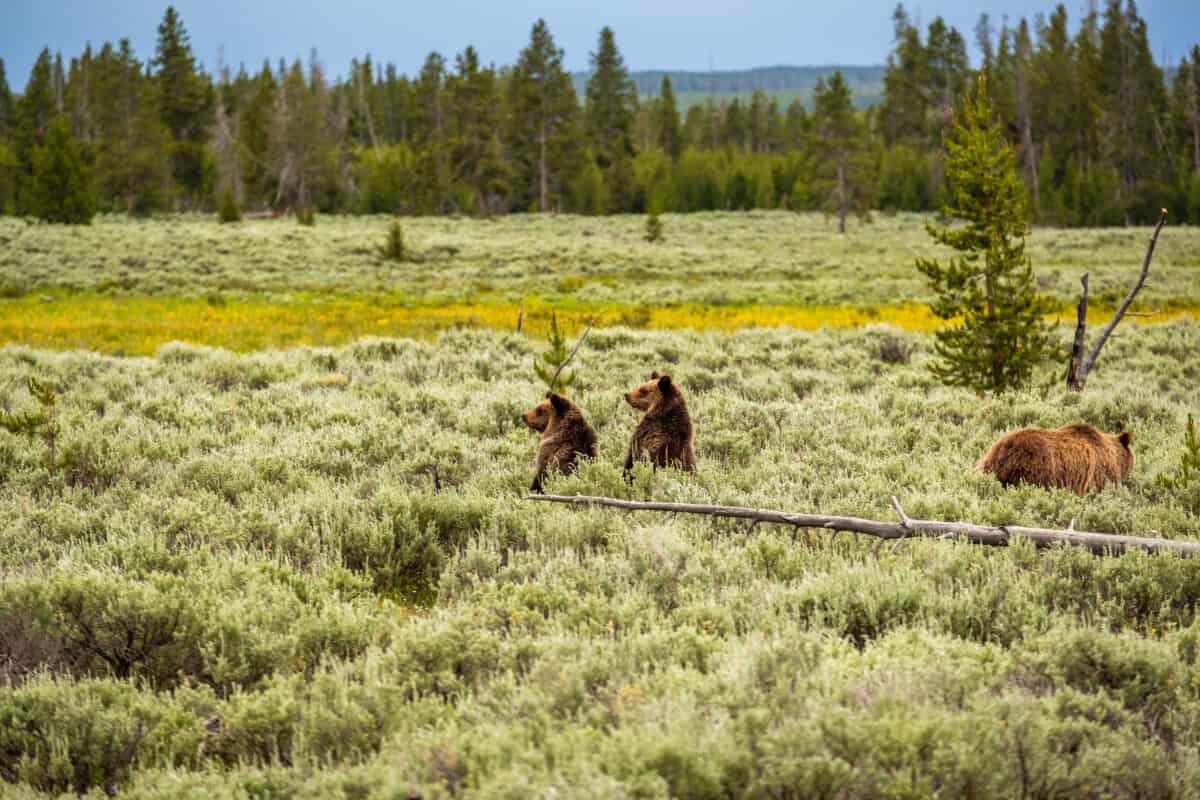
Few wildlife sightings inspire as much awe as spotting a grizzly bear in the wild. These massive omnivores, weighing up to 700 pounds, roam the valleys and mountains of Yellowstone and Glacier National Parks. Distinguished by their pronounced shoulder humps, dish-shaped faces, and long claws, grizzlies are most often spotted in meadows during spring and early summer when they feed on roots, grasses, and winter-killed animals. Hayden and Lamar Valleys in Yellowstone offer some of the best viewing opportunities, especially at dawn and dusk. Remember to always maintain a safe distance of at least 100 yards and carry bear spray when hiking in grizzly country.
14. Gray Wolves in Isle Royale and Yellowstone National Parks

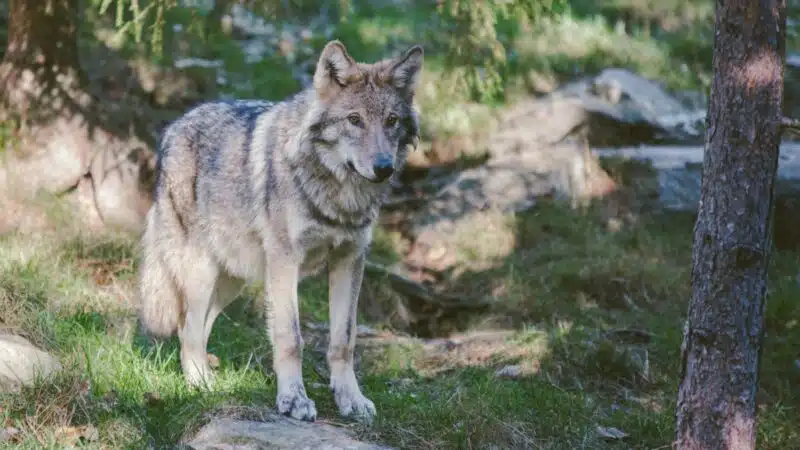
The successful reintroduction of gray wolves to Yellowstone in 1995 represents one of America’s greatest conservation achievements. These intelligent pack animals can now be observed (with patience and good optics) in Lamar Valley, often called “America’s Serengeti.” Isle Royale National Park in Michigan also hosts a famous wolf population, though viewing these elusive predators requires exceptional luck. Wolves play a crucial role as apex predators, helping regulate prey populations and creating trophic cascades that benefit entire ecosystems. Early morning wildlife safaris with spotting scopes offer the best chances to witness their social hunting behaviors and family interactions.
13. American Bison in Yellowstone and Theodore Roosevelt National Parks
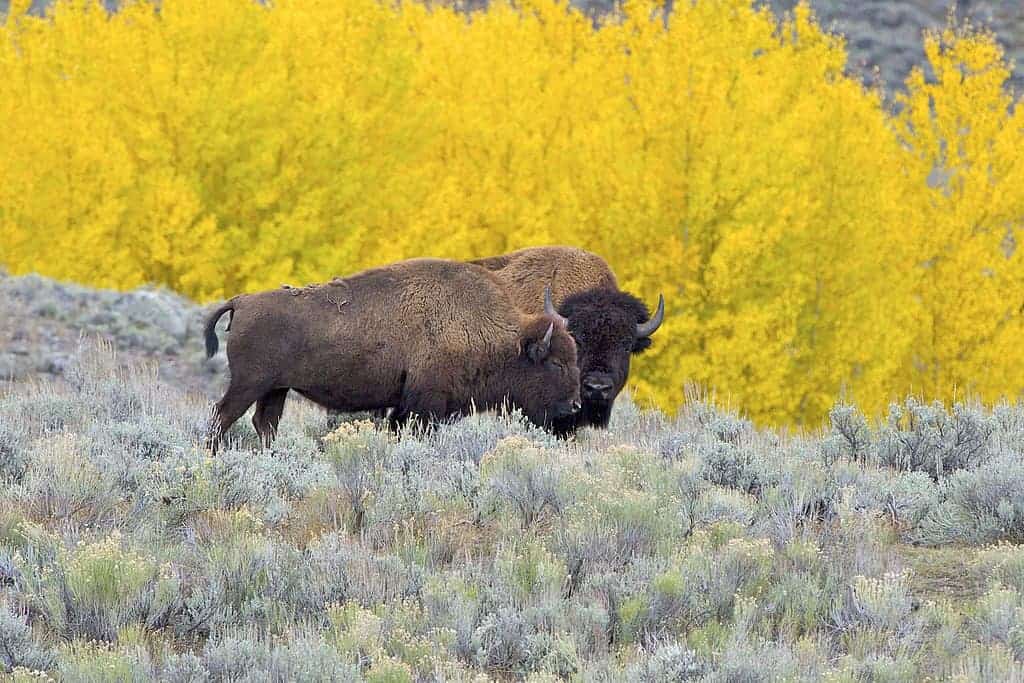
Once nearly extinc,t with just a few hundred remaining in the late 1800s, American bison have made a remarkable recovery, with Yellowstone now home to approximately 5,000 of these magnificent beasts. As America’s largest land mammal, adult males can weigh up to 2,000 pounds. Their massive heads, distinctive humped shoulders, and surprising agility make them unforgettable sights. Theodore Roosevelt National Park in North Dakota also maintains healthy herds. Bison can be unpredictable and dangerous despite their seemingly docile demeanor, so visitors should maintain a minimum distance of 25 yards. During summer rut season (July-August), bulls can be especially aggressive as they compete for mates.
12. Mountain Lions in Grand Canyon and Zion National Parks

Mountain lions (also called cougars or pumas) inhabit many western parks, though spotting one is considered extremely rare due to their secretive nature and primarily nocturnal habits. Grand Canyon, Zion, and Yosemite National Parks all support healthy populations of these solitary felines. Adult males can weigh up to 150 pounds and measure 8 feet from nose to tail tip. Their incredible jumping ability allows them to leap up to 40 feet horizontally and 15 feet vertically. Mountain lions primarily hunt deer, and evidence of their presence—such as partially covered prey, tracks, or scat—is more commonly encountered than the cats themselves. If you’re determined to spot one, hiking at dawn in remote areas with an experienced guide may increase your slim chances.
11. Moose in Grand Teton and Isle Royale National Parks
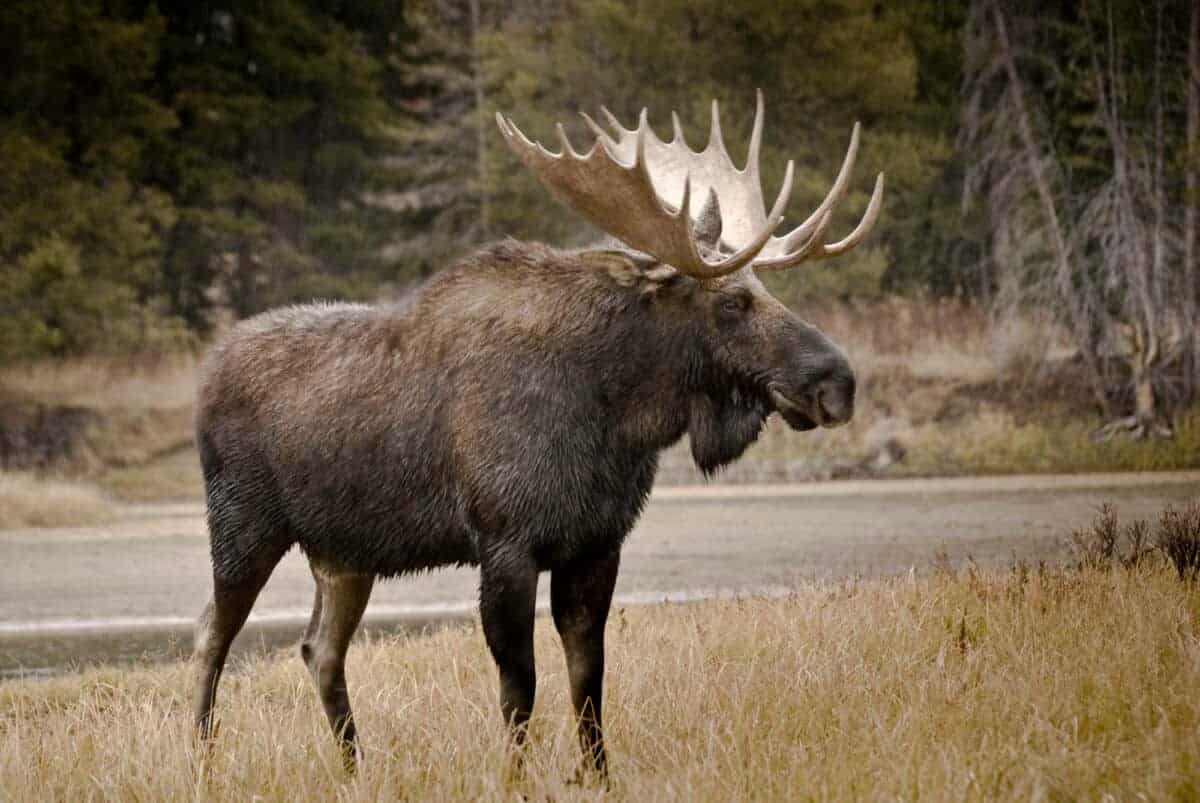
The largest members of the deer family, moose are unmistakable with their massive bodies, long legs, pendulous snouts, and (in males) impressive palmate antlers that can span six feet. Grand Teton National Park’s Willow Flats and Oxbow Bend are prime moose-watching locations, particularly in early morning and evening when these giants emerge to feed on aquatic vegetation. Isle Royale National Park in Michigan has one of the most studied moose populations in the world, offering excellent viewing opportunities. Despite their ungainly appearance, moose are excellent swimmers and can run up to 35 mph. Bull moose are particularly dangerous during the fall rut season, and cow moose aggressively protect their calves, so maintaining safe distances (at least 50 yards) is essential.
10. American Alligators in Everglades National Park
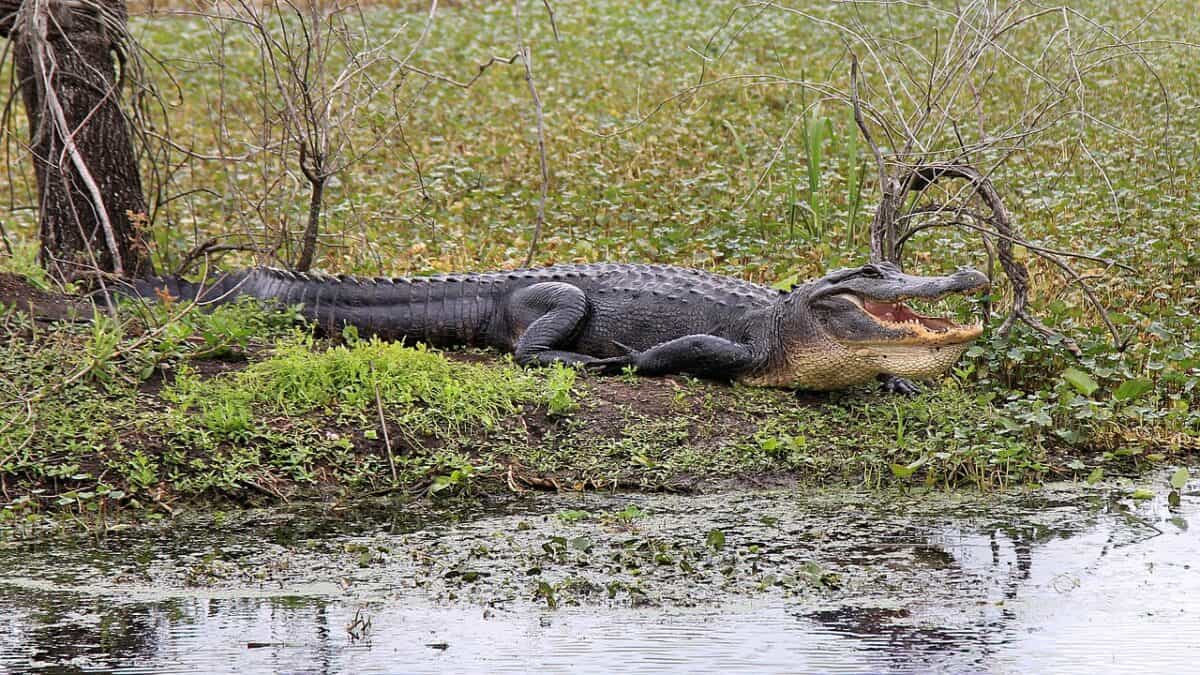
The prehistoric-looking American alligator is the undisputed star of Everglades National Park in Florida. These massive reptiles, reaching lengths of 13 feet and weights of over 800 pounds, have remained virtually unchanged for millions of years. The Anhinga Trail provides almost guaranteed alligator sightings as they bask along canal banks. During winter dry season (December-April), alligators congregate in remaining water holes, creating spectacular viewing opportunities. Despite their fearsome appearance, alligators are generally shy around humans but should never be approached or fed. The Everglades represent the only place on earth where alligators and crocodiles coexist naturally, though spotting the rarer American crocodile requires more persistence and knowledge of their preferred saltwater habitats.
9. Roosevelt Elk in Olympic National Park
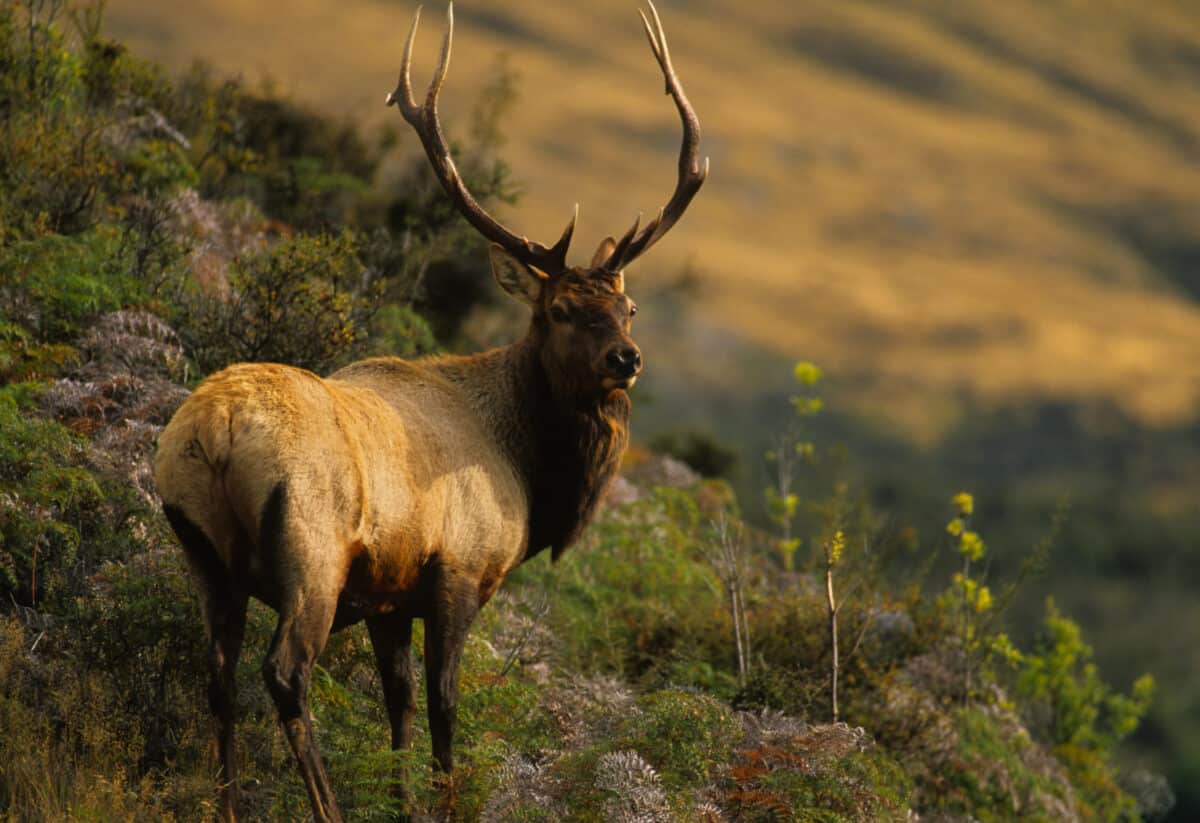
The magnificent Roosevelt elk, named after President Theodore Roosevelt, is the largest subspecies of elk in North America. Bulls can weigh up to 1,100 pounds and sport antlers spanning up to 4 feet. Olympic National Park in Washington provides sanctuary for these impressive ungulates, with the Hoh Rain Forest and Quinault Valley offering reliable viewing opportunities. During the fall rut season (September-October), visitors can witness spectacular bugling displays as bulls compete for harems of females. In spring, newly born calves add another dimension to wildlife watching. These elk played a crucial role in the park’s establishment, as President Roosevelt designated Olympic National Monument in 1909 specifically to protect them from overhunting after they were nearly eliminated from most of their historical range.
8. Bighorn Sheep in Rocky Mountain and Badlands National Parks
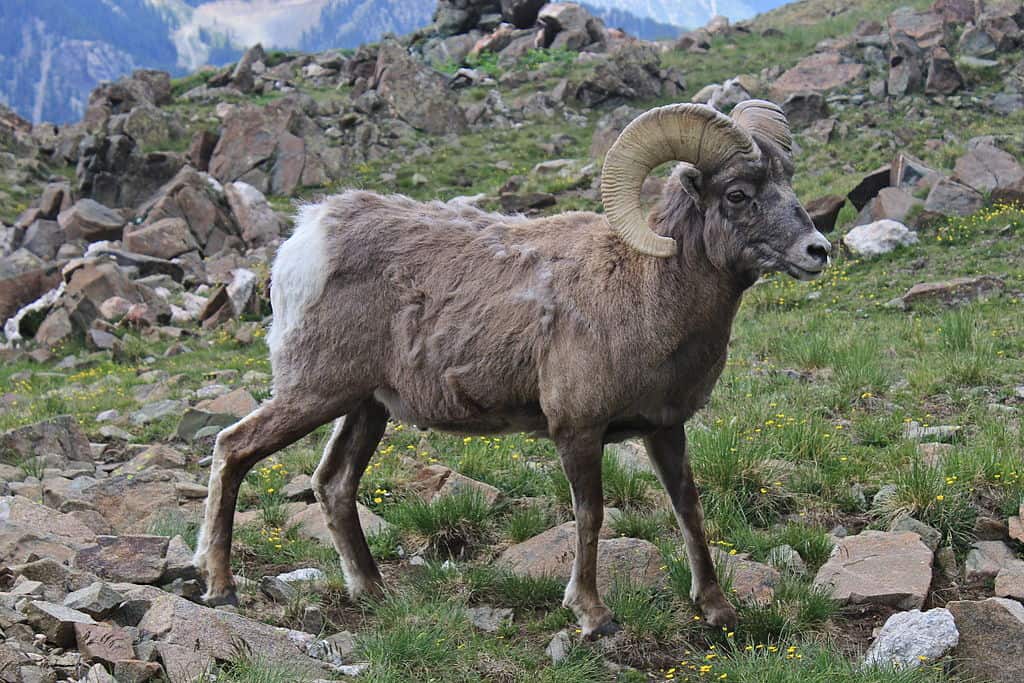
With their massive curved horns that can weigh up to 30 pounds, bighorn sheep are among the most distinctive mammals in America’s mountain parks. Rocky Mountain National Park offers excellent viewing opportunities, particularly around Sheep Lakes in spring and early summer. Badlands National Park in South Dakota hosts a reintroduced population that has thrived in the rugged landscape. During the fall rut (November-December), visitors may witness spectacular head-butting contests between males, with impacts that can be heard echoing through canyons. These athletic animals can jump 20 feet between ledges and safely navigate nearly vertical cliff faces that would defeat most predators. Conservation efforts have helped bighorn populations recover after they were decimated by diseases introduced from domestic sheep and unregulated hunting.
7. Black Bears in the Great Smoky Mountains National Park
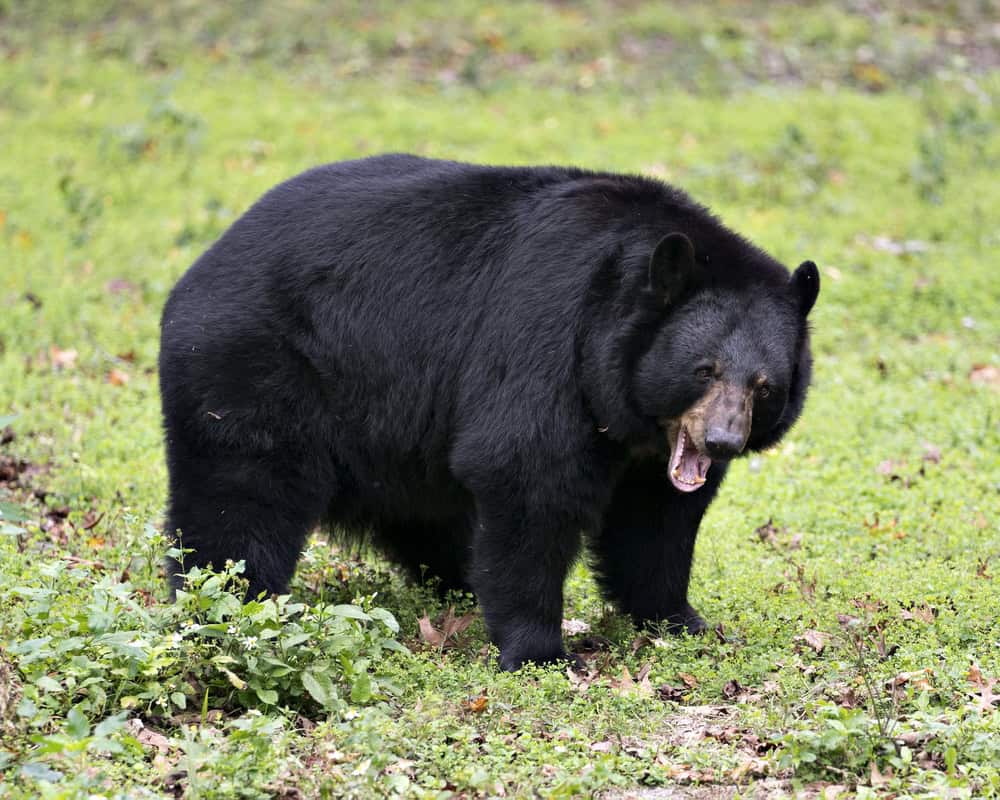
Great Smoky Mountains National Park hosts one of the densest black bear populations in North America, with approximately 1,500 bears roaming its forests. Despite their name, these bears can range in color from jet black to cinnamon brown. Cades Cove and Roaring Fork Motor Nature Trail offer some of the best viewing opportunities, especially in early morning and late evening. Unlike their grizzly cousins, black bears are excellent climbers and often send cubs up trees when danger threatens. Though smaller than grizzlies, adult males still weigh up to 500 pounds. Black bears are omnivorous opportunists, with diets consisting mostly of berries, nuts, and insects rather than meat. Park regulations require staying at least 50 yards from bears, and proper food storage is essential to prevent bears from associating humans with food. This dangerous connection typically leads to the bear’s demise.
6. Pronghorn in Yellowstone and Grand Teton National Parks

Often mistakenly called “antelope,” pronghorns are uniquely North American mammals and the second fastest land animal on Earth, capable of sustained speeds of 35 mph and bursts up to 60 mph. These adaptations evolved to escape now-extinct American cheetahs. Pronghorn are easily spotted in the open sagebrush flats of Yellowstone’s Lamar Valley and Grand Teton’s Antelope Flats (aptly named). Their distinctive white rumps, tan bodies, and black facial markings make them easily identifiable even at a distance. Both males and females grow horns, though male horns are larger with a distinctive forward-facing prong. Unlike deer antlers, pronghorn horns have a permanent bony core with an outer sheath that is shed annually. Their exceptional eyesight can detect movement up to 4 miles away, making them challenging to approach.
5. Sea Otters in Channel Islands National Park

With the densest fur of any animal (up to one million hairs per square inch), sea otters are both adorable and ecologically vital. Channel Islands National Park offers opportunities to view these playful marine mammals, which were once hunted to near extinction for their luxurious pelts. Sea otters are tool users, often seen floating on their backs while using rocks to crack open shellfish on their chests. They lack blubber and instead rely on their incredible fur and high metabolism to stay warm, requiring them to eat approximately 25% of their body weight daily. As keystone species, sea otters control sea urchin populations that would otherwise decimate kelp forests, thus maintaining healthy marine ecosystems. Kayaking tours around the Channel Islands provide excellent viewing opportunities while maintaining safe distances from these federally protected mammals.
4. Desert Bighorn Sheep in Grand Canyon and Death Valley National Parks
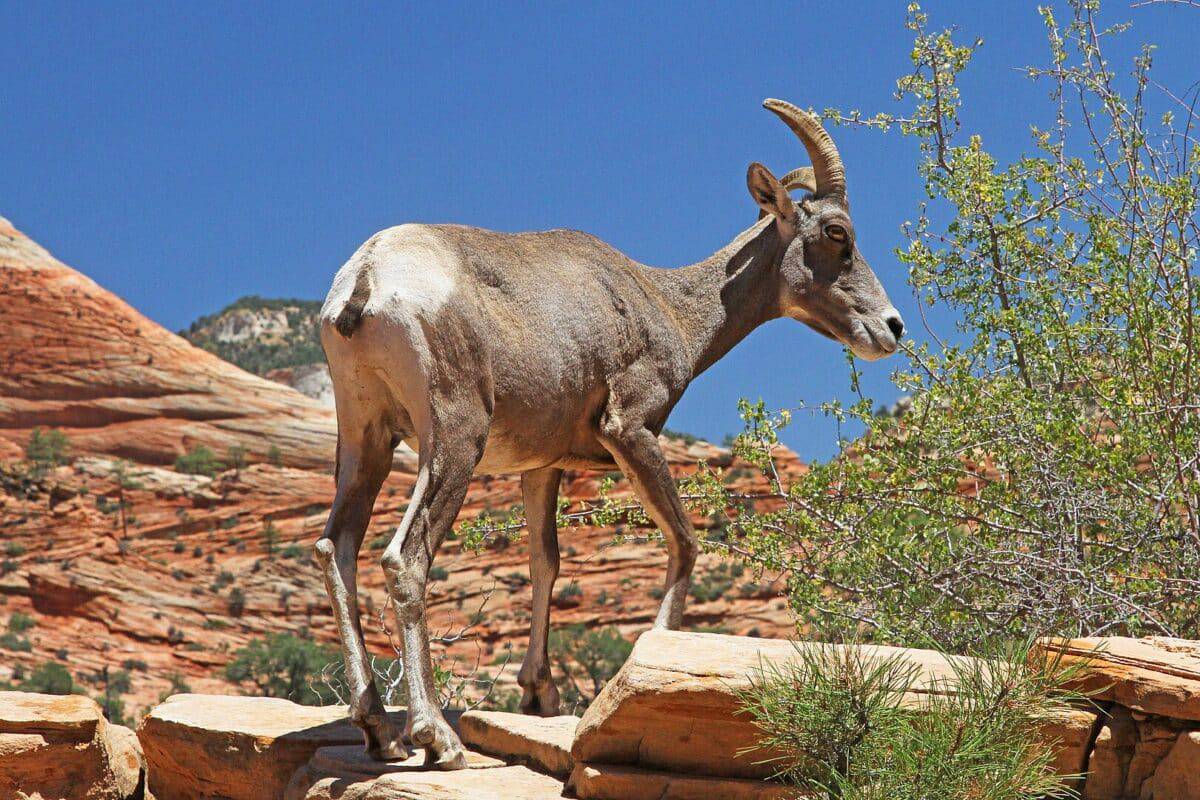
Adapted to the harsh conditions of America’s southwestern deserts, desert bighorn sheep showcase evolution’s ingenuity. These specialised ungulates can go for weeks without drinking by extracting moisture from desert vegetation and can lose up to 30% of their body weight through dehydration before drinking again. The steep walls of the Grand Canyon and the rugged mountains of Death Valley National Park provide ideal habitat for these agile climbers. Their split hooves with soft centres and hard edges provide excellent traction on nearly vertical surfaces. Desert bighorns are lighter and smaller than their Rocky Mountain cousins, with lighter-colored coats that reflect desert heat. The South Rim of Grand Canyon and Titus Canyon in Death Valley offer good viewing possibilities, especially during early morning hours near water sources.
3. American Crocodiles in Everglades National Park
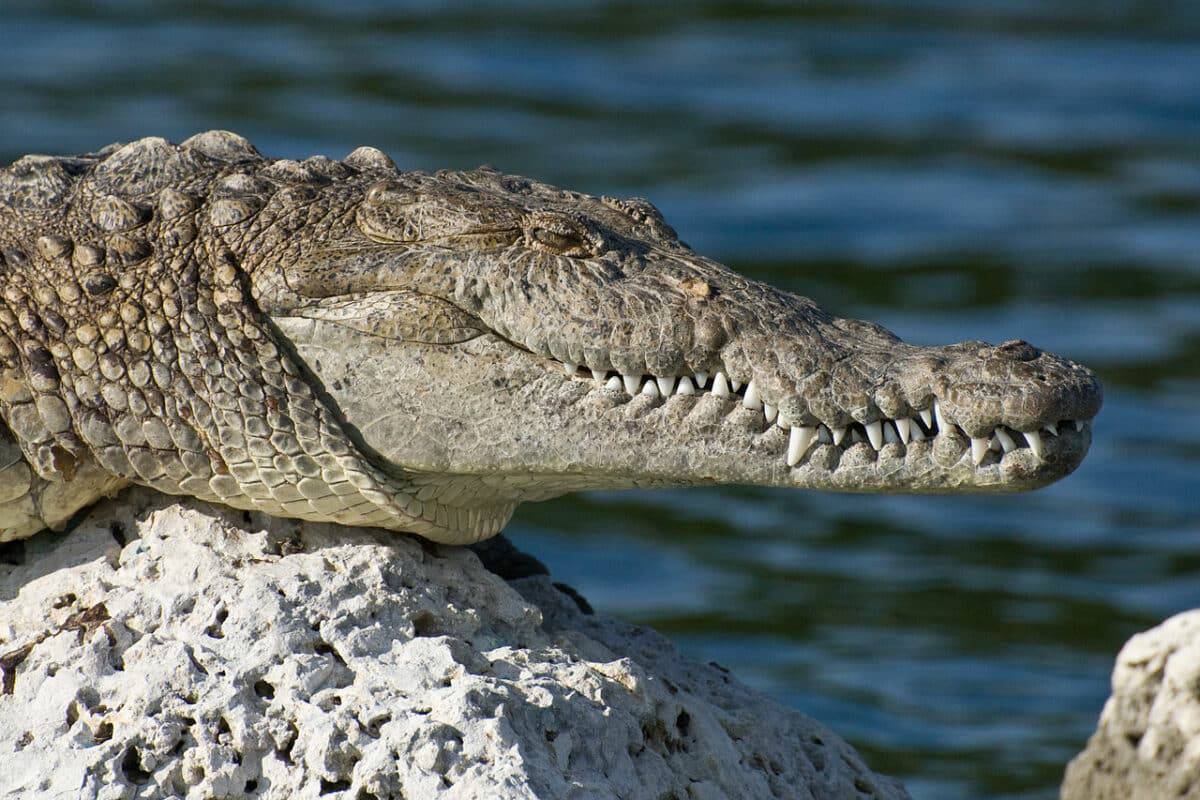
While alligators get most of the attention in the Everglades, the park is also home to the much rarer American crocodile. Distinguished from alligators by their more V-shaped snouts, visible lower teeth when their mouths are closed, and lighter greyish-green colouration, crocodiles prefer the saltwater environments of Florida Bay and the park’s coastal areas. The Flamingo Visitor Centre is one of the best places to potentially spot these federally threatened reptiles. American crocodiles are typically more shy and less aggressive toward humans than their infamous Nile or saltwater crocodile relatives, but should still be viewed only from safe distances. Conservation efforts have helped their U.S. population recover from fewer than 300 individuals in the 1970s to approximately 2,000 today, one of the Endangered Species Act’s success stories.
2. Caribou in Denali National Park

Denali National Park in Alaska offers the chance to see caribou (known as reindeer in Europe), with their magnificent antlers borne by both males and females—the only deer species where females routinely grow antlers. Denali’s caribou population of approximately 3,000 animals roams the tundra in loosely organised herds that can sometimes number in the hundreds. Their oversized hooves function like snowshoes in winter and provide stability in soft tundra during summer. These same hooves also serve as excellent digging tools for uncovering lichen beneath snow, their primary winter food. Caribou are strong swimmers, and their hollow hair provides exceptional insulation and buoyancy. The park road provides excellent viewing opportunities, particularly in late summer and early fall when caribou sport their fully developed antlers before the winter rut.
1. Wild Horses in Assateague Island National Seashore

The famed wild horses of Assateague Island National Seashore technically aren’t native wildlife. However, these feral horses have inhabited the barrier island for so long (possibly since the 1600s) that they’ve become an integral part of the ecosystem. According to local legend, they are descendants of survivors from a Spanish shipwreck, though they more likely derive from horses released by early colonists to avoid taxation and fencing requirements. These hardy ponies have adapted to island life, drinking twice the water of domestic horses to compensate for their salty diet of marsh grasses. The Maryland portion of the island hosts approximately 80 horses managed by the National Park Service. In comparison, the Virginia side (Chincoteague National Wildlife Refuge) has about 150 horses managed by the Chincoteague Volunteer Fire Department, which holds the famous annual pony swim and auction. Despite their approachable appearance, these are wild animals that kick, bite, and should be viewed from at least 40 feet away.
Conclusion: The Magnificent Wildlife Heritage of America’s National Parks

America’s national parks serve as crucial sanctuaries for wildlife in an increasingly developed world, preserving not just individual species but entire functioning ecosystems. The 15 animals highlighted here represent just a fraction of the incredible biodiversity protected within these public lands, from microscopic soil organisms to apex predators. When visiting these natural treasures, remember that patience, respect for wildlife, and proper viewing etiquette greatly enhance both your experience and the animals’ well-being. By maintaining safe distances, never feeding wildlife, and observing animals during their most active periods (typically dawn and dusk), you increase your chances of meaningful encounters while ensuring these species remain wild for future generations to enjoy. Our national parks offer not just spectacular scenery but living connections to the primeval America that existed before human development—a precious heritage worth celebrating and protecting.

As a little kid, I fell in love with nature, wildlife, and animals. Living in the USA, South Africa, Italy, China and Germany gave me the opportunity to discover the world's Wildlife. My favorite animals are Mountain Gorillas, Siberian Tigers, and Great White Sharks.
I'm a certified PADI Open Water Diver, went to Everest Base Camp and Trekked Gorillas in Uganda. I hold a Master of Science in Economics and Finance.
Please send any feedback to feedback@animalsaroundtheglobe.com
- 14 Most Vocal Dog Breeds Ranked - July 25, 2026
- 10 Fascinating Animal Adaptations You Won’t Believe Exist - July 25, 2026
- 10 Natural Disasters That Changed Entire Countries - July 25, 2026