
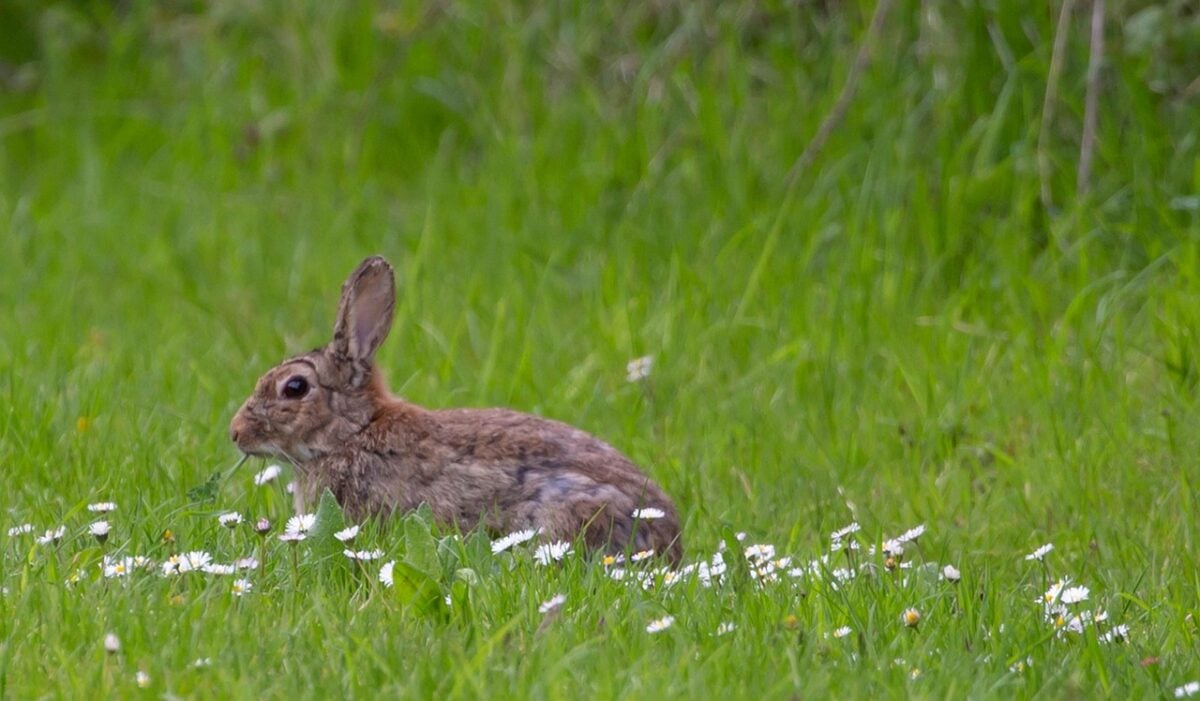
You plant something green on Saturday and expect a rabbit to be sitting in it by Sunday, like it’s been waiting for the ribbon-cutting. Most of the time, nothing happens. That’s because wild rabbits are far more cautious than their cute reputation suggests, and a yard has to pass a quiet, invisible “safety exam” before they relax into it.
The behaviors on this list are the proof that your garden passed. Some of them look adorable. Some are oddly specific. One of them shows just how well rabbits have learned your daily schedule. And the last few explain why gardeners so often say, “I barely ever see them, so why is everything chewed?”
#16 – They Switch From Nibbling to Full-On Grazing
🔥 Would you like to save this?
We'll email this post to you, so you can come back to it later!
The first shift is easy to miss. A rabbit in a brand-new yard takes short, scattered nibbles: one bite of clover here, one bite of lettuce there, then a quick retreat. It’s the wildlife version of tasting a free sample while eyeing the exit.
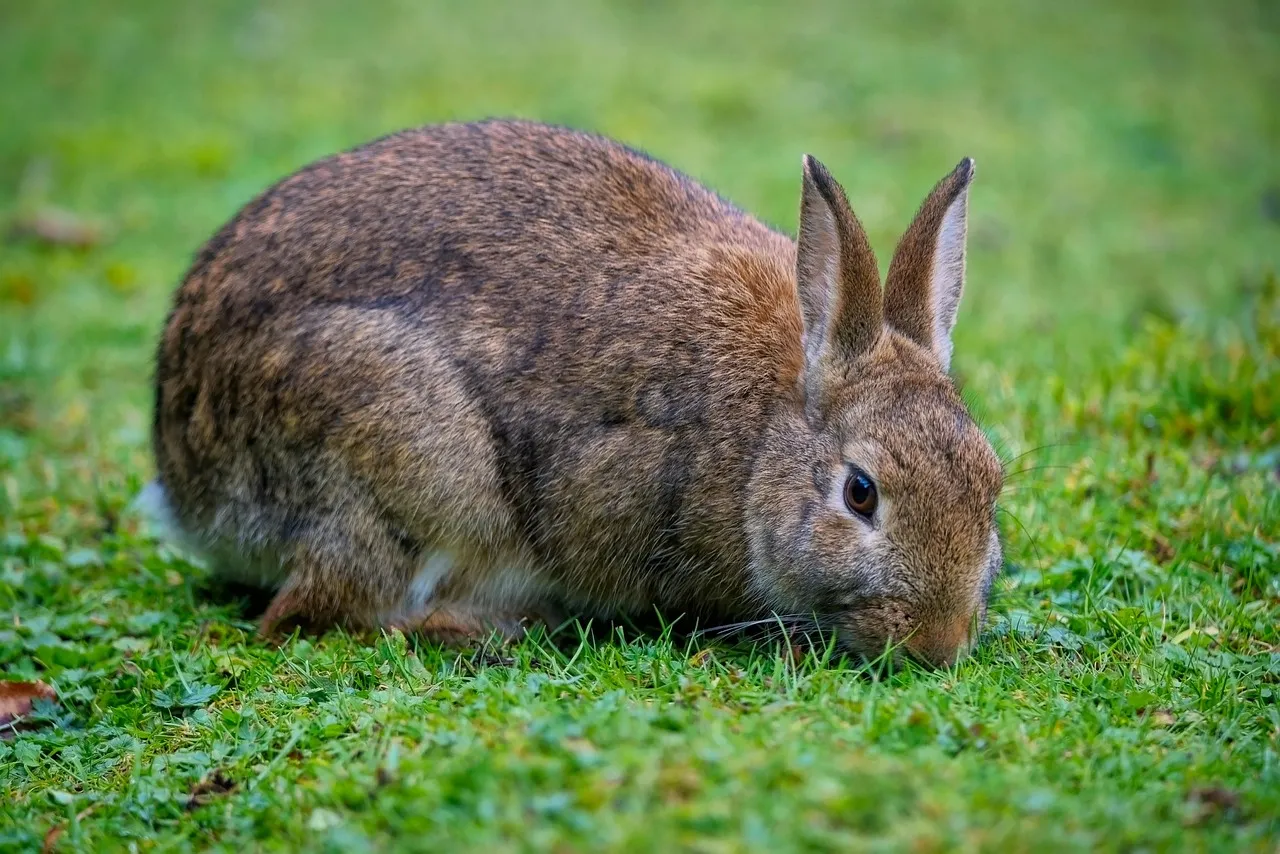
Once the garden feels safe, that changes. The rabbit lowers its body, settles its posture, and works through one patch for several minutes at a time. It isn’t just hungry. It’s done the math. Staying in one spot makes a rabbit an easier target for hawks, dogs, and people, so committing to a patch means it has decided the risk is low.
That’s the moment your plants stop being “sampled” and start being “on the menu.” You might also notice:
- Longer visits during calm, predictable parts of the day
- Less startle response to soft background noise like distant cars or a door closing
But that’s only the warm-up. The next sign is hiding in plain sight under your shrubs.
#15 – They Start Using Your Shrubs as Escape Tunnels

🔥 Would you like to save this?
We'll email this post to you, so you can come back to it later!
Once a garden feels safe, rabbits stop treating your landscaping as scenery and start treating it like infrastructure. Instead of crossing open lawn, they begin threading the same tight paths under shrubs, hedges, and low branches every visit.
Over days or weeks, those repeated trips press down grass and leaf litter into hidden runways only a few inches high. You’ll often find them near fences, dense perennials, or stacked wood. Most people walk right past them without noticing.
None of this is random wandering. Rabbits are prey animals built for short, explosive sprints, so they favor routes that keep them mostly out of sight. Memorizing and wearing in a tunnel is a big investment, and they only make it when your yard has been added to their mental map as “safe enough to plan around.”
Watch for:
- Narrow, slightly bare trails along foundation plantings
- Entry and exit points that line up with nearby cover or a gap in the fence
And if you think tunnels are a big vote of confidence, wait until you see what a rabbit does with its body next.
#14 – They Stretch Out and “Loaf” in the Open

🔥 Would you like to save this?
We'll email this post to you, so you can come back to it later!
Rabbits are basically anxiety with legs, so when one suddenly looks lazy in your yard, it’s a major milestone. In a garden that doesn’t feel secure, a rabbit rarely stays still for more than a few seconds.
Once it trusts the space, you may see it “loafing”: sitting or lying in a compact, relaxed pose with its feet tucked under or stretched behind and its eyes half-lidded. It’s the rabbit version of flopping onto the couch with one eye on the TV.
Quick Compare: Nervous Rabbit vs. Secure Rabbit
- Nervous: Stays upright, ears rigid, ready to bolt at the smallest sound
- Settling in: Pauses between bites, ears swiveling, but keeps eating
- Secure: Body relaxed, feet tucked, eyes half-closed, ears resting or lightly twitching
That posture means its muscles aren’t coiled to bolt every second. It still reacts to sharp noises, but the constant tension drops. Wildlife observers tend to see this only where:
- Disturbances are rare and predictable
- Predator pressure feels low
- Escape routes have already been rehearsed
That’s the calm side of rabbit confidence. The next clue has to do with the clock.
#13 – They Start Visiting in Broad Daylight, Not Just at Dawn and Dusk
🔥 Would you like to save this?
We'll email this post to you, so you can come back to it later!
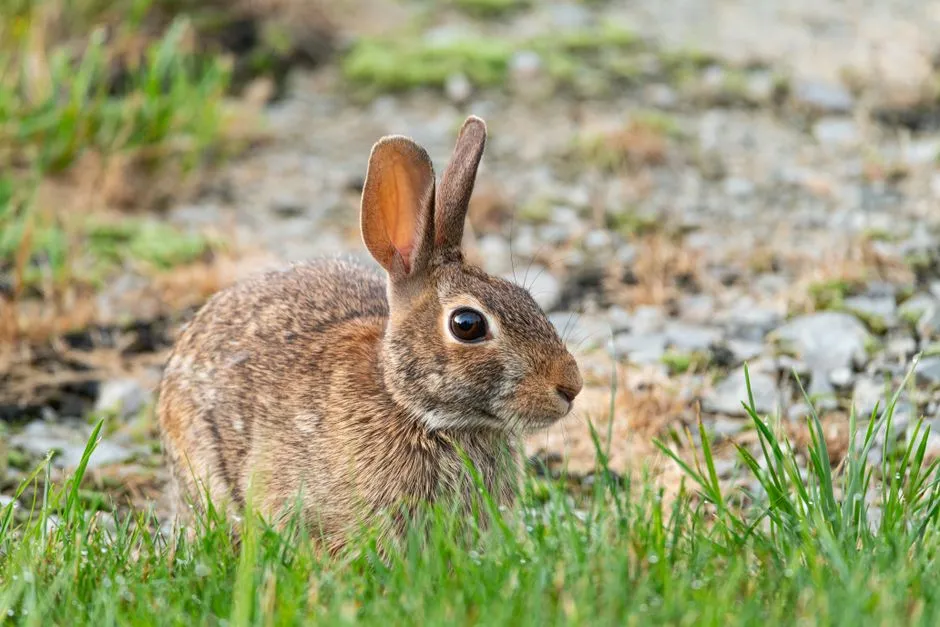
Most people assume rabbits are strictly early-morning and evening visitors. That’s only true in spaces they don’t fully trust. Wild rabbits are crepuscular, meaning they’re most active around dawn and dusk, when low light gives them cover.
In a garden they’re still testing, they stick to those windows. Once the yard consistently feels safe, you start spotting them at 10 a.m. or 3 p.m., especially on quiet days when human activity is low. It’s the moment people say, “We never used to see rabbits in the middle of the day. What changed?”
What changed is their confidence. A daytime visit tells you two things:
- They no longer treat your yard as a “sneak in, grab a bite, run” stop.
- Your routine has become predictable enough that they know when you’re unlikely to appear.
Daytime visits are only half the story, though. Next, the rabbits start leaving evidence behind.
#12 – They Leave “Territory Notes” in the Form of Droppings and Scent
🔥 Would you like to save this?
We'll email this post to you, so you can come back to it later!
When a garden feels risky, rabbits try to leave as little trace as possible. When it feels safe, they start signing the guest book. Scent is a big part of how rabbits read their world, and a comfortable rabbit stops hiding its tracks.
You may see more clustered, pellet-like droppings in specific places: under a favorite shrub, beside a regular gap in the fence, or right along a well-used path. That clustering matters. It’s more than digestive leftovers. It works as a quiet message: this spot feeds me and feels safe.
You might also find:
- Scraped or slightly disturbed soil where they’ve sat repeatedly
- Small urine patches in grassy areas they graze often
The more concentrated the signs, the more likely the rabbit is circling back to the same safe zones. Your garden has become a regular stop on its territory loop.
With the guest book signed, the rabbits get bolder about the menu, and your favorite plants start to feel it.
#11 – They Begin Sampling Higher-Risk Plants (Your Favorites)

🔥 Would you like to save this?
We'll email this post to you, so you can come back to it later!
At first, rabbits usually go for low, easy greens like clover, dandelions, and tender grass. When they upgrade to your roses, beans, young fruit trees, or raised beds, it isn’t just greed. It’s a safety signal.
The prized plants are often farther from cover, or they require a rabbit to rise on its hind legs, which leaves it exposed longer. A nervous rabbit won’t take that gamble. A secure one will stand, stretch, and carefully snip off the most nutritious buds and shoots.
Worth Knowing
- Rabbit damage usually shows a clean, slanted cut, almost like sharp scissors. Deer tend to leave ragged, torn edges.
- Most garden fencing advice calls for at least 2 feet of height, since rabbits rarely jump much higher.
- Mesh of about 1 inch or smaller keeps out adults and most youngsters.
- Burying or bending the bottom edge outward a few inches stops them from squeezing underneath.
That’s why the damage can feel personal. You’re seeing a rabbit that has decided it can afford the good stuff. Watch for:
- New bite marks appearing higher up on stems
- Selective damage to soft new growth while tougher leaves are left alone
- Rabbits briefly balancing to reach leaves on trellises or low shrubs
That’s the cost of confidence. The next sign looks harmless and may be the biggest trust signal on the list.
#10 – They Start Grooming Themselves in Your Yard
🔥 Would you like to save this?
We'll email this post to you, so you can come back to it later!
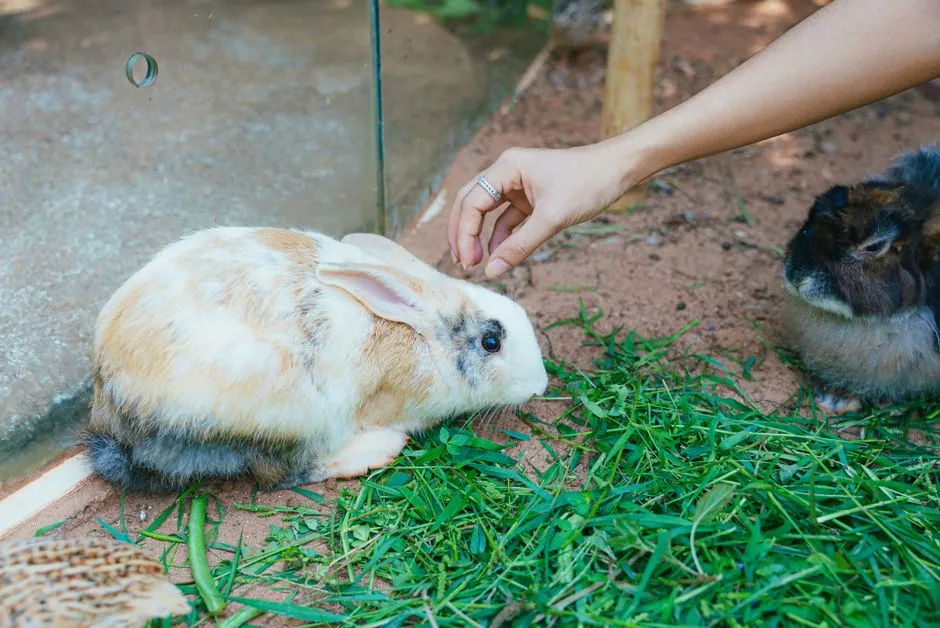
Self-care is a risky business in the wild. When a rabbit licks its fur, cleans its paws, or scratches behind an ear, it’s paying less attention to scanning for threats. So when a rabbit pauses mid-snack and starts a full grooming session in your garden, that’s a huge vote of confidence.
You may see it:
- Sit upright and wash its face with its paws
- Twist around to clean its sides or back
- Half-close its eyes while scratching
Two things are going right in your yard when this happens. There’s enough cover that the rabbit feels shielded, and it’s quiet enough that surprises are rare. While it grooms, its reaction time drops, and it only allows that in places it has mentally upgraded.
A rabbit only lets its guard down where it has moved your yard from “dangerous feeding ground” to “temporary home base.”
Once a rabbit trusts a space enough to clean up in it, it starts moving through it like it owns the floor plan.
#9 – They Use Fence Lines and Structures as “Shadow Roads”
🔥 Would you like to save this?
We'll email this post to you, so you can come back to it later!
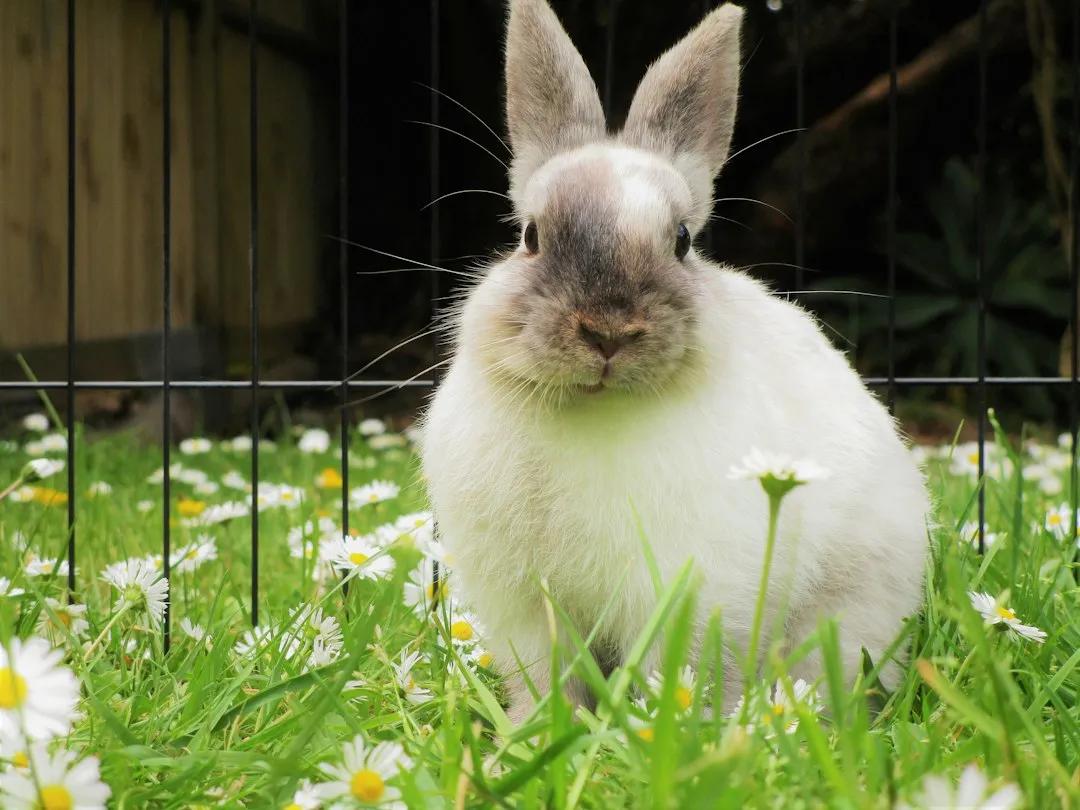
Once rabbits feel safe, they get strategic about how they move. Instead of hopping straight across the middle of your lawn, they start hugging straight edges: fence lines, raised bed borders, retaining walls, even the base of your house.
To a human, it looks like a quirky preference. To a rabbit, it’s a calculated move. Solid structures offer cover on one side and fewer directions for a predator to come from.
Common patterns include:
- Moving in long, low runs parallel to fences
- Pausing in corners where two structures meet
- Circling beds instead of crossing open centers
These “shadow roads” keep a rabbit in partial cover almost the entire time it’s above ground. They’re also easy to memorize and repeat, which is exactly what rabbits want in a place they now treat as regular territory.
The next one sounds backwards. In a safe garden, rabbits actually run less.
#8 – They Pause to “Listen” More Than They Flee
🔥 Would you like to save this?
We'll email this post to you, so you can come back to it later!
In a new or threatening environment, any sharp sound means instant flight. But in a yard they know, you’ll see rabbits freeze and listen far more often than you’ll see a dramatic sprint. It’s one of the clearest signs that the garden has become familiar.
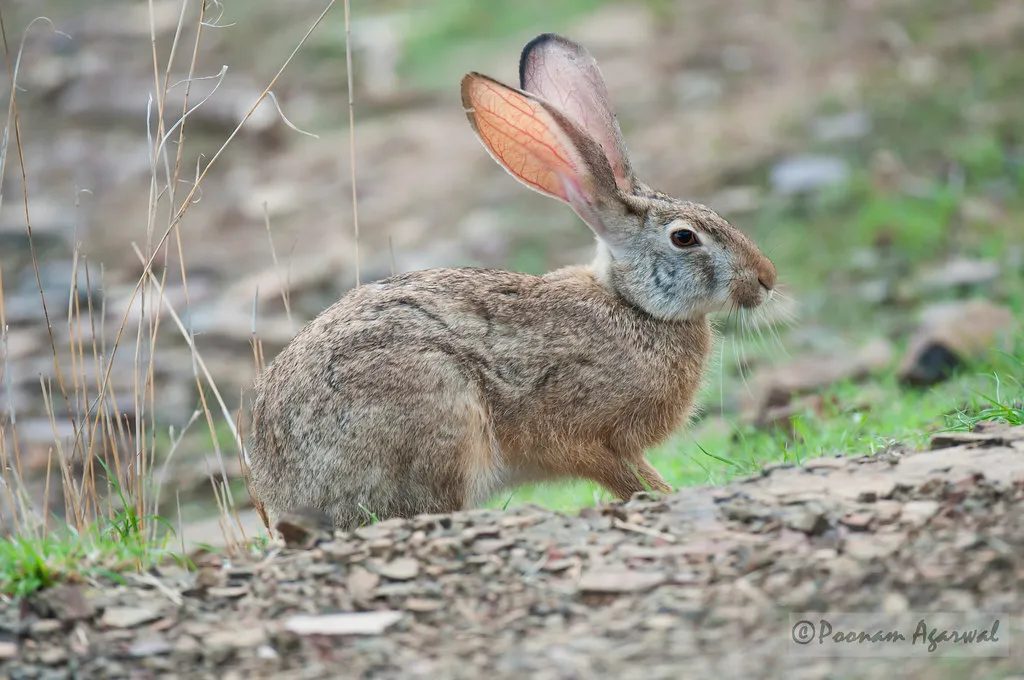
A car door, a bird call, or a distant bark might trigger a freeze: ears up, body still, nose working overtime. The rabbit holds the pose, then calmly goes back to eating if nothing changes. Their ears can swivel independently, like tiny satellite dishes, then relax again.
Key signs your garden feels familiar:
- They don’t bolt every time a door opens or a car passes
- They react differently to known sounds than to sudden, new ones
- Their ears sweep and scan, then settle back down
This isn’t laziness. It’s efficient threat assessment. Running burns precious energy and exposes a rabbit in the open, so only one that’s confident in its surroundings risks waiting to gather more information.
And when one rabbit has the garden figured out, others tend to notice.
#7 – They Bring a Partner (Or Two)
🔥 Would you like to save this?
We'll email this post to you, so you can come back to it later!
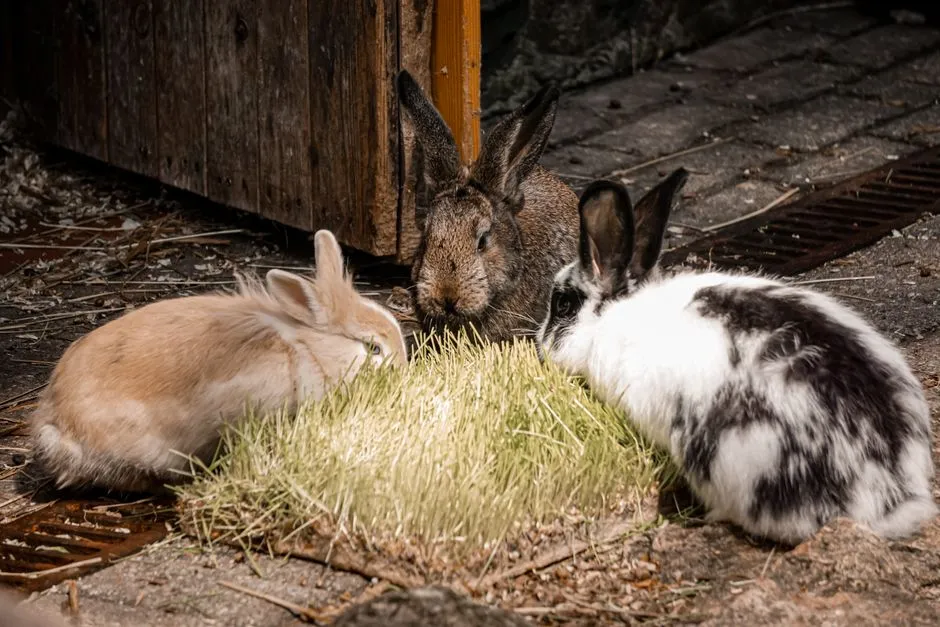
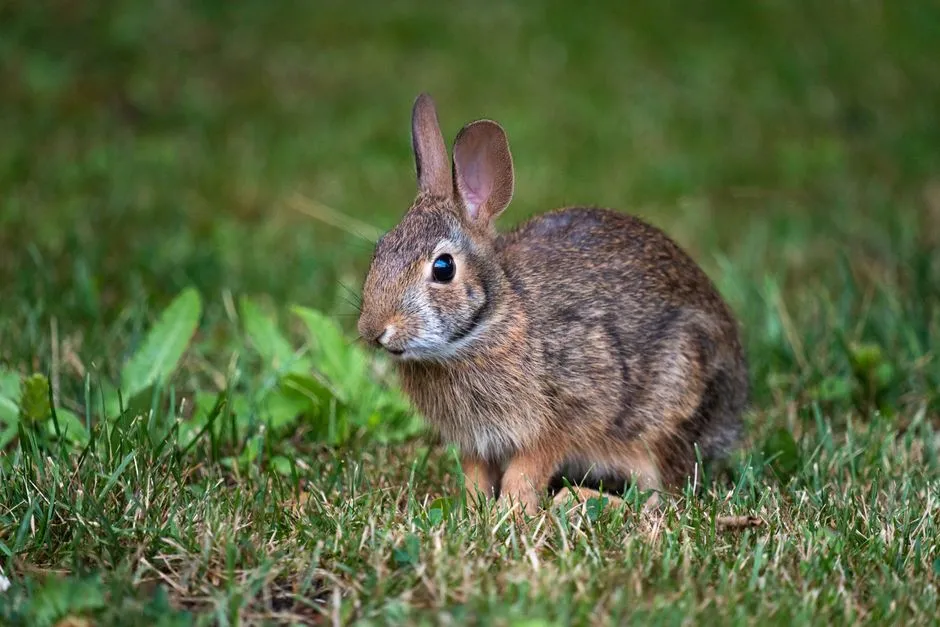
Wild rabbits are often seen alone, but once a garden ranks as genuinely safe, you may spot more than one rabbit using it. That doesn’t mean they’ve formed a friendly little club. Wild cottontails are largely solitary, and they don’t build the tight social groups some other rabbits do.
But territories overlap, and rabbits pay attention to where others feed and survive. If one rabbit has been visiting your yard safely for a while, others may start following the same route. The first rabbit has effectively done the scouting.
At a Glance: The Backyard Cottontail
- Social style: Mostly solitary, with overlapping home ranges
- Home range: Often just a few acres, so one yard can be a big part of it
- Gestation: Roughly 28 days
- Litters: Several per year during the warm season
Typical signs:
- Two rabbits feeding within sight of each other, but not necessarily close together
- One arriving shortly after another has left, often through the same entry gap
- A brief chase or display, then both settling in to graze separately
More rabbits also means more repetition, and repetition is where the next pattern shows up.
#6 – They Start Using the Same Entry Points Every Time
🔥 Would you like to save this?
We'll email this post to you, so you can come back to it later!
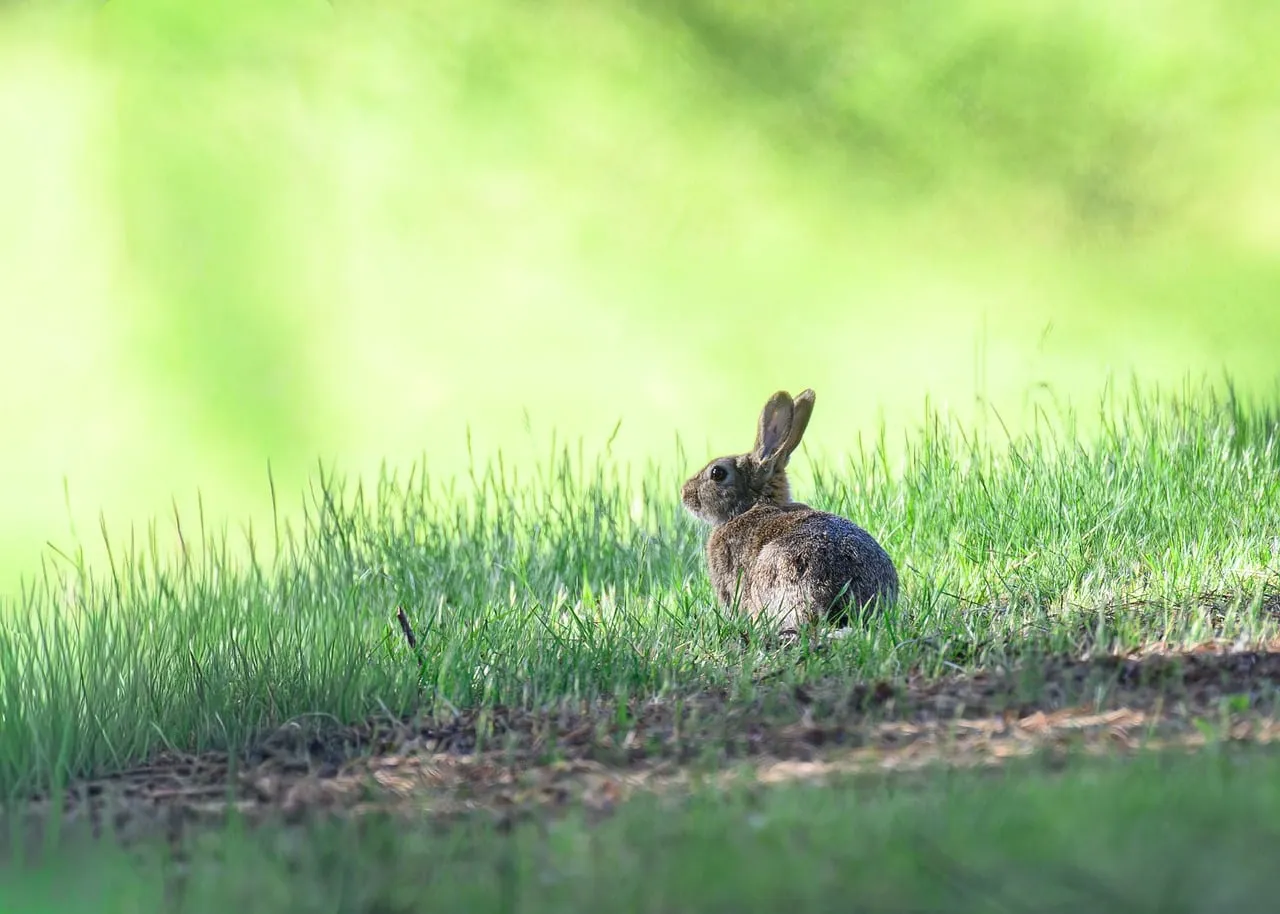
When rabbits are unsure, they explore randomly, poking at holes, gaps, and different routes. Once they feel secure, the randomness disappears. They enter and exit through the same specific openings: the space under a gate, a dip where the fence doesn’t quite touch the ground, or a narrow gap between shrubs and a wall.
Over time, that path becomes almost ritual. A fixed doorway lets a rabbit pause, scan quickly, and commit to open ground only when it’s ready.
Why it matters:
- Repeated routes mean the rabbit has rehearsed escape in both directions
- Choke points let it check the yard before stepping out
- It signals your garden is now a stable stop on a larger daily circuit
For a gardener, this is both good and bad news. It means you can predict and block traffic, but it also confirms that in the rabbit’s mind, your garden has been promoted to “regular territory.”
If rabbits learned your fence that well, imagine how well they’ve learned you.
#5 – They Take Advantage of Your “Quiet Hours”

🔥 Would you like to save this?
We'll email this post to you, so you can come back to it later!
Once rabbits have watched a yard long enough, they start keying into your daily rhythm like tiny, furry statisticians. Sunrise and sunset still matter, but now your schedule does too.
They quietly learn:
- When your dog is usually outside
- When the kids are in the yard
- When the mower or leaf blower shows up
In a truly secure-feeling garden, rabbits begin timing their visits to your least active windows, maybe late morning on workdays or midafternoon on weekends. That’s why some gardeners swear rabbits are “watching from the bushes” and waiting for the car to leave.
What’s really happening is pattern recognition. The more consistent your routine, the more precisely rabbits can slip into its gaps without feeling threatened.
Rabbits that know your routine this well also get curious, and that’s the next stage.
#4 – They Get Curious About Anything New You Add

🔥 Would you like to save this?
We'll email this post to you, so you can come back to it later!
Nervous rabbits avoid anything unfamiliar. Secure rabbits investigate. Once a garden feels consistently safe, you may see them sniffing, nudging, or standing up to inspect a new planter, a piece of garden decor, or a freshly added structure.
Instead of fleeing from a new pot or trellis, they approach it cautiously, check it out, and then go back to their usual path. It’s a small moment, but it shows they no longer treat every change as an emergency.
Subtle signs of this “curiosity upgrade” include:
- Standing on hind legs to sniff low railings or hanging pots
- Slow, deliberate approaches to new mulch piles or compost bins
- Quick test bites on unfamiliar plants instead of full avoidance
Curiosity is one thing. What comes next involves a whole new generation.
#3 – They Use Your Garden as a “Nursery Corridor”

🔥 Would you like to save this?
We'll email this post to you, so you can come back to it later!
Here’s where it gets serious. Once a garden feels very safe, it can quietly become part of a nursery route for young rabbits. Cottontail nests are shallow, fur-lined dips in the ground, and they’re often tucked into tall grass, brush piles, or the edges of a property. Sometimes they show up in lawns and flower beds, too.
A mother rabbit doesn’t hover around the nest. She visits briefly, mostly around dawn and dusk, which is why people stumble on nests without ever seeing her. When your yard passes the safety test, it becomes the dependable feeding ground supporting that hidden nursery.
Fast Facts: Cottontail Nests
- The nest is a shallow depression, roughly 4 inches deep, lined with grass and the mother’s fur.
- A typical litter is about 3 to 5 young.
- Babies leave the nest at around 2 to 3 weeks old, still small but fully on their own.
- A nest that looks abandoned usually isn’t. The mother is just staying away on purpose.
Telltale signs:
- Small, slightly awkward juvenile rabbits grazing near cover
- Droppings appearing in new areas you hadn’t seen used before
- Quick dashes by small rabbits into oddly specific patches of grass
Juveniles are less skilled at assessing threats than adults. If you’re seeing them out in the open, it usually means the area has felt reliably calm for some time.
Two signs left. And the next one is the one that makes people grin.
#2 – They Tolerate Slow Human Presence at a Distance
🔥 Would you like to save this?
We'll email this post to you, so you can come back to it later!
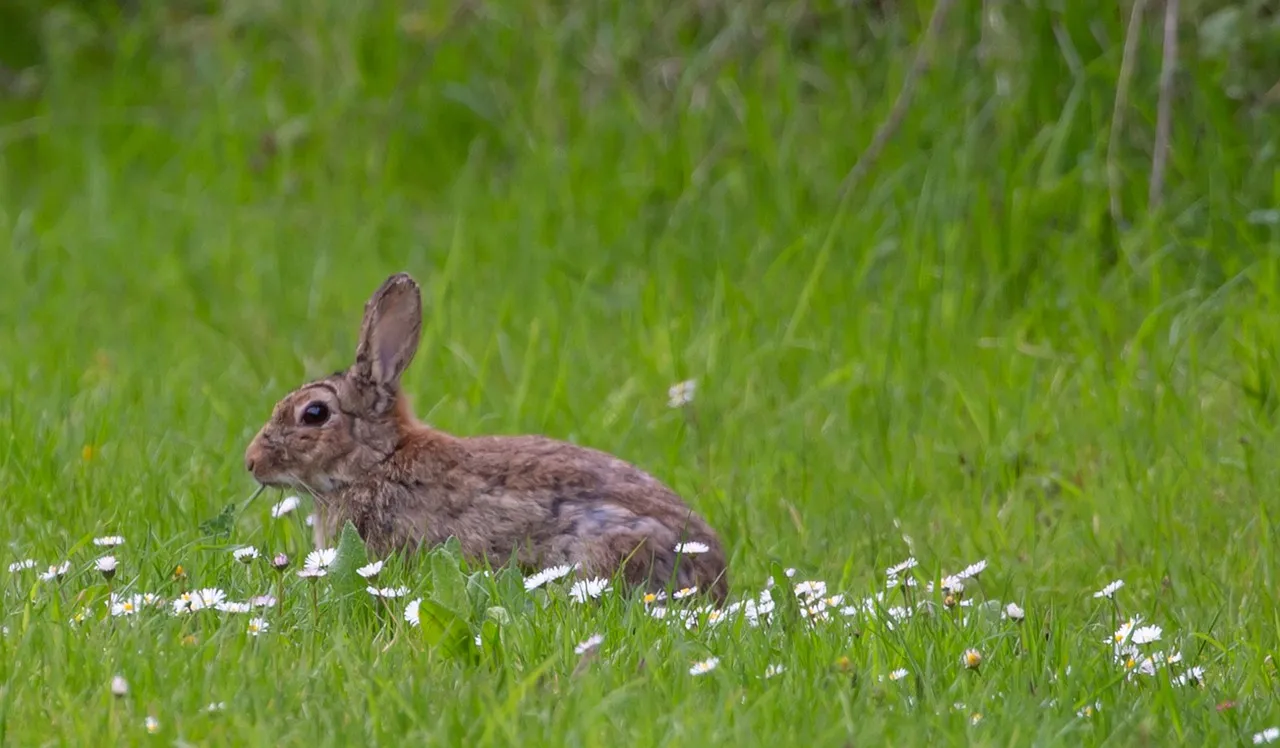
A rabbit that bolts the instant you crack the door doesn’t trust your garden yet. The shift comes when you can step outside, move slowly, and the rabbit just watches you.
In a secure-feeling yard, you might see:
- A rabbit freezing but not running as you walk by at a moderate distance
- Continued grazing while you’re visible through a window or on a distant patio
- A quick hop to better cover, then a choice to stay instead of leaving
Gardeners are split on this one. Some love the almost-tame vibe, and others see it as a sign that wildlife is getting a little too comfortable. Either way, it’s one of the clearest indicators that your yard’s sound, scent, and activity have been filed under “low threat.”
And that brings us to the sign that ties all the others together.
#1 – They Turn Your Garden Into the Center of Their Daily Route

🔥 Would you like to save this?
We'll email this post to you, so you can come back to it later!
The final upgrade is invisible unless you know what to look for. Your garden stops being a stop and becomes a hub in the rabbit’s daily life.
You’ll notice:
- Rabbits entering one side of the yard and leaving by another, as if on a loop
- Very consistent visit times, day after day
- A mix of behaviors in a single stay: grazing, grooming, loafing, exploring, then a calm exit along a familiar path
At this stage, your garden is a predictable anchor in a territory that likely includes multiple yards, hedgerows, and maybe a field or wooded strip. Other places might feed the rabbit, but yours is where it feels safe enough to do everything else: rest, clean up, cross paths with neighbors, and plan its next move.
That’s why the damage sometimes feels out of proportion to how often you actually see them. When your yard is the safe hub, most of what keeps those rabbits alive is happening right there between your beds and borders, often when you’re not looking.
The Bottom Line

🔥 Would you like to save this?
We'll email this post to you, so you can come back to it later!
Once you know what to watch for, rabbits basically announce when your garden has crossed the line from “interesting” to “officially safe territory.” The loafing, the clustered droppings, the repeat entry routes, the daytime grazing, and the calm way they watch you all tell the same story. Your yard is now part of their survival plan, not just a snack stop.
My honest take: that isn’t a failure on your part, and it isn’t worth a war. A garden that feels safe to wildlife is a garden doing something right. But the sweet spot isn’t giving rabbits the run of the place. It’s protecting the plants you can’t bear to lose with hardware cloth and low fencing, and letting them keep the clover and the lawn edges.
Because the real lesson here is that rabbits don’t wander into comfort by accident. They earn it by watching you, and by the time you notice them relaxing, they’ve been studying your yard for a lot longer than you’ve been studying them.

- 7 Everyday Habits That Can Make Your Senior Dog Happier - November 5, 2026
- 10 Enigmatic Structures That Continue to Puzzle Scientists Today - November 5, 2026
- 10 Strange Ruins in the Americas That Challenge What We Know About Early History - November 5, 2026