
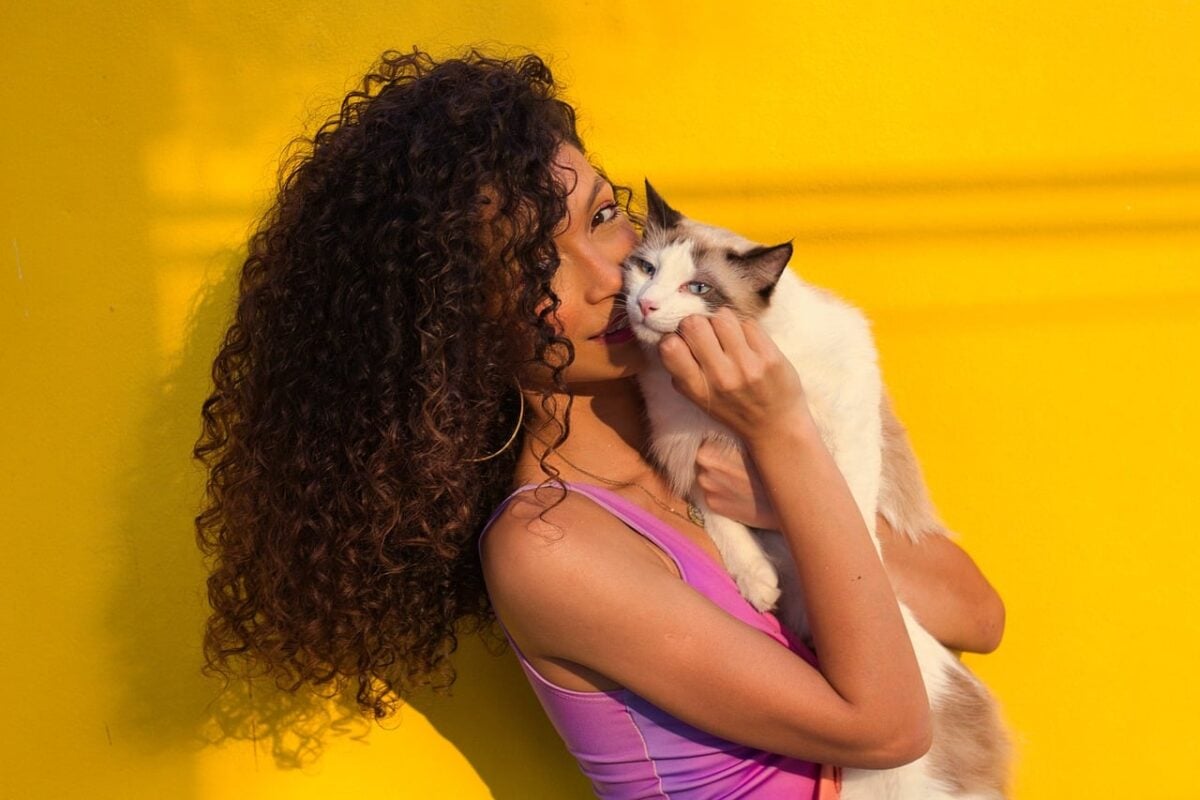
You feed the cat, scoop the litter and pay the vet bills. Then it walks right past you, climbs into someone else’s lap and settles in like it signed a lease. It feels personal, and the research suggests it isn’t random.
Here are 16 ways cats single out one person, and why they keep doing it. The twist is that food isn’t the deciding factor, and the person trying hardest often loses. Cats seem to choose through smell, routine, body language and a sense of safety, usually before you notice a decision was made. Start at #16 and the biggest surprises are waiting at the bottom of the list.
#16 – They Smell You Before They Decide Anything
🔥 Would you like to save this?
We'll email this post to you, so you can come back to it later!
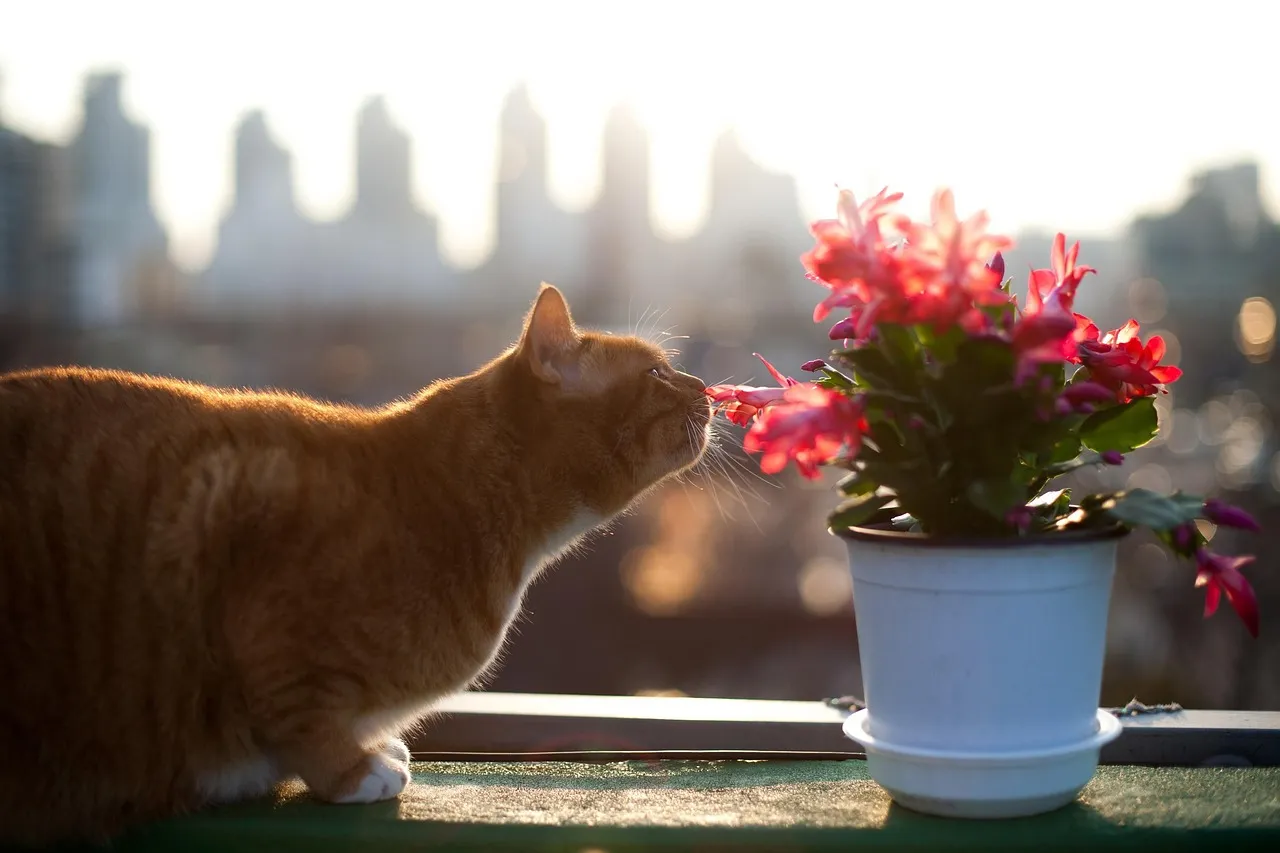
Your cat has already sized you up by scent before you’ve said hello. A cat’s nose carries roughly 200 million scent receptors, while a human has only about 5 million. That’s a lot of hardware pointed straight at you.
A 2025 study in PLOS One found that scent alone lets a cat tell people apart. The same research reported that cats lingered longer sniffing the odor of a stranger than that of someone they already knew. Familiar people get a quick check. Strangers get an investigation.
There may be an emotional layer too. Human odors appear to carry emotional information a cat can detect, so a cat may register a person’s stress or calm through scent well before any interaction occurs.
Past experience can color the first sniff as well. A rescue cat may struggle to bond with someone who shares a gender, height, age or hair color with a figure from its past. The first sniff isn’t only about you. It’s also about everyone who came before you.
But scent is only the first test, and the next factor is something you control every single day…
#15 – They Bond With the Most Predictable Human
🔥 Would you like to save this?
We'll email this post to you, so you can come back to it later!
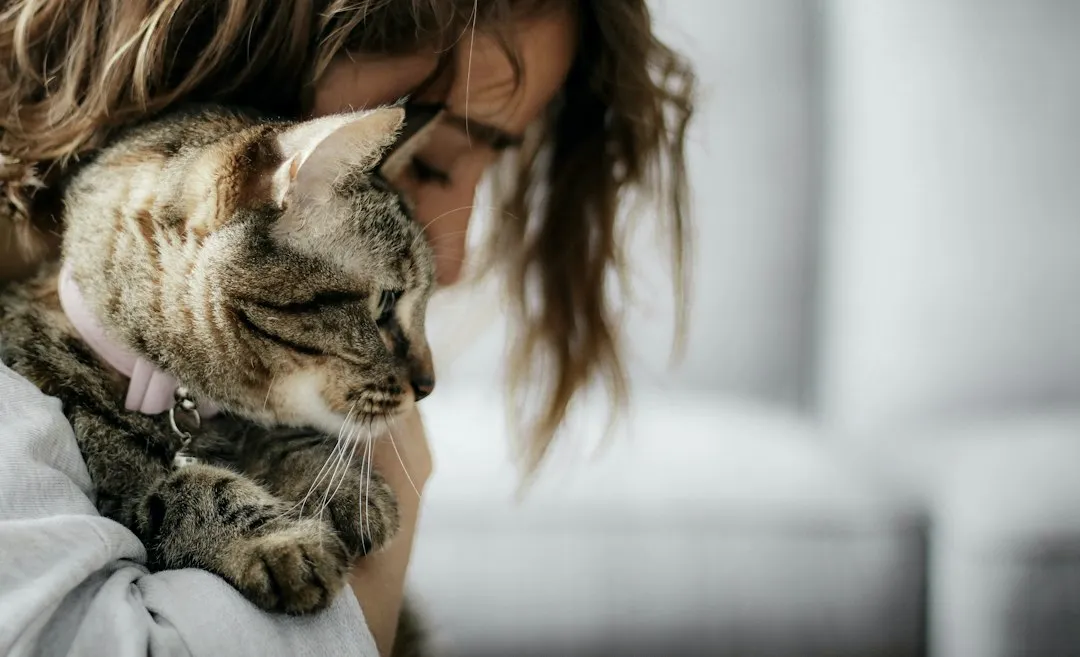
Routine is a love language in the cat world. Cats tend to bond with the person who does a few things consistently:
- Wakes up at the same time
- Comes home at a steady hour
- Feeds and interacts in a predictable way
The logic is simple: consistency creates trust, and trust creates attachment. A cat can’t read your calendar. It can only learn your patterns.
Here’s the part most people miss. The chaotic family member who gives lots of attention at random hours may rank lower than the quiet one who is simply reliable. The cat isn’t judging effort. It’s judging whether you’re easy to predict.
But reliability only works if you also know when to back off, and that’s where most cat lovers go wrong…
#14 – They Reward the Person Who Lets Them Lead
🔥 Would you like to save this?
We'll email this post to you, so you can come back to it later!
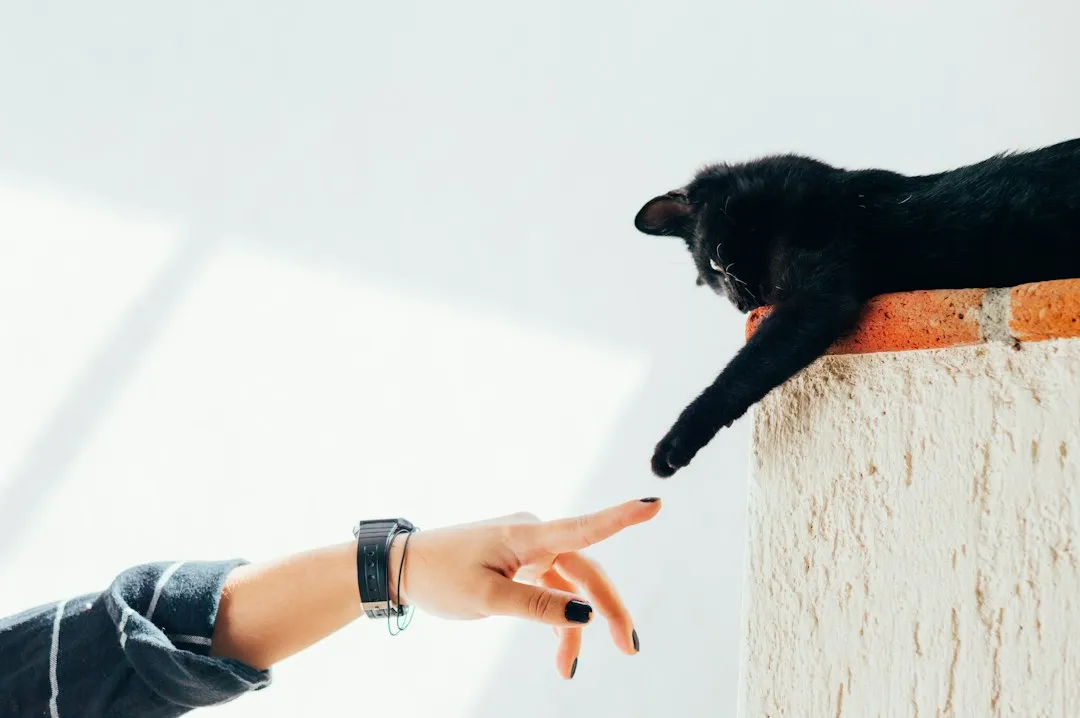
The fastest way to lose a cat is to demand its affection. Cats like people who respect their space and let them decide when to be touched. It sounds simple, yet it’s the rule people break most.
Cat moods swing quickly. One second they want a scratch behind the ears, and the next they’re swatting your hand away. The person who best reads those swings is often the one who wins the cat’s heart.
Restraint pays off later. The cat learns to appreciate it and rewards that person with attention when its mood shifts.
Here’s a take that annoys a lot of owners: the family member who “isn’t really a cat person” often gets the lap first. They don’t push, so the cat gets to choose.
And there’s a silent signal that tells a cat you understand this rule, one you can send with your eyes alone…
#13 – They Respond to Slow Blinks and Sideways Posture
🔥 Would you like to save this?
We'll email this post to you, so you can come back to it later!
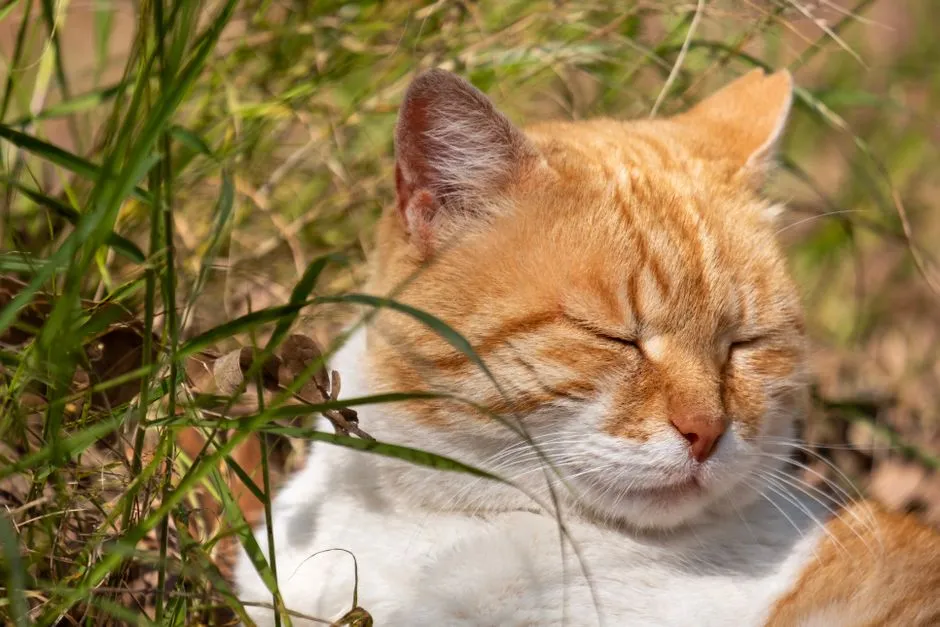
Your body is sending a message before you ever touch the cat. Cats tend to prefer people who blink slowly, sit or lie on the floor, turn their bodies sideways and let the cat start the contact.
None of those actions look like much. To a cat, they say “no threat here.” Staring, looming and reaching over a cat’s head say the exact opposite.
That leads to a telling idea in pet-behavior circles: if your cat chooses someone else, that person is probably speaking cat fluently without knowing it.
So the favorite isn’t always the biggest cat fan. Often it’s the person who happens to move slowly, talk softly and avoid staring.
But body language is only half the conversation, and the other half is something cats do almost exclusively with us…
#12 – They Pick the Person Who “Gets” Their Meows
🔥 Would you like to save this?
We'll email this post to you, so you can come back to it later!
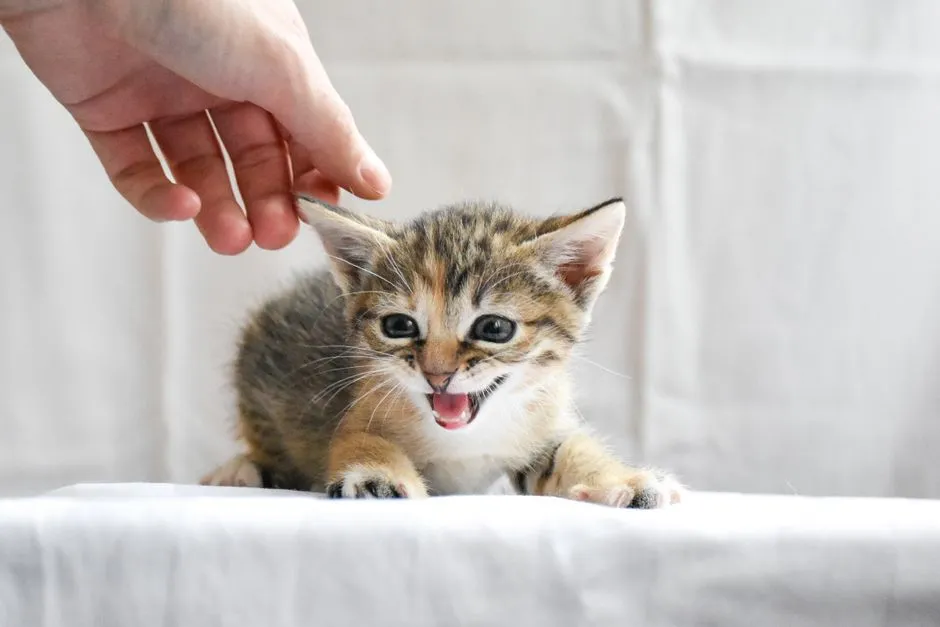
Here’s a fact that surprises many owners: cats don’t tend to meow much at each other, but they do meow at people. Meowing is largely a human-directed language.
That makes translation a skill. If one person seems to understand what the cat is asking for, whether through sound or body language, the cat will gravitate toward that person.
Confidence plays a role as well. A cat that feels understood trusts its needs will be met. It isn’t being sentimental. It’s choosing the most efficient translator in the house.
Think about who in your home actually responds correctly when the cat does the following:
- Stands by an empty bowl
- Sits at a closed door
- Paces near the litter box
That person probably has an edge.
Worth Knowing
- Kittens meow at their mothers, but adult cats mostly leave the habit behind with other cats.
- Many cats develop a private “dialect” with one person, so the same meow can mean different things in different homes.
- Pitch and length carry meaning: a short, bright chirp often reads as a greeting, while a long, drawn-out cry usually means a demand.
- Pairing the sound with body language, like a tail up or a stare at the cupboard, makes the message much easier to decode.
Of course, once a cat feels understood, it often starts bringing you things, and the most telling gift isn’t prey…
#11 – They Carry Toys to the One Who Plays Properly
🔥 Would you like to save this?
We'll email this post to you, so you can come back to it later!
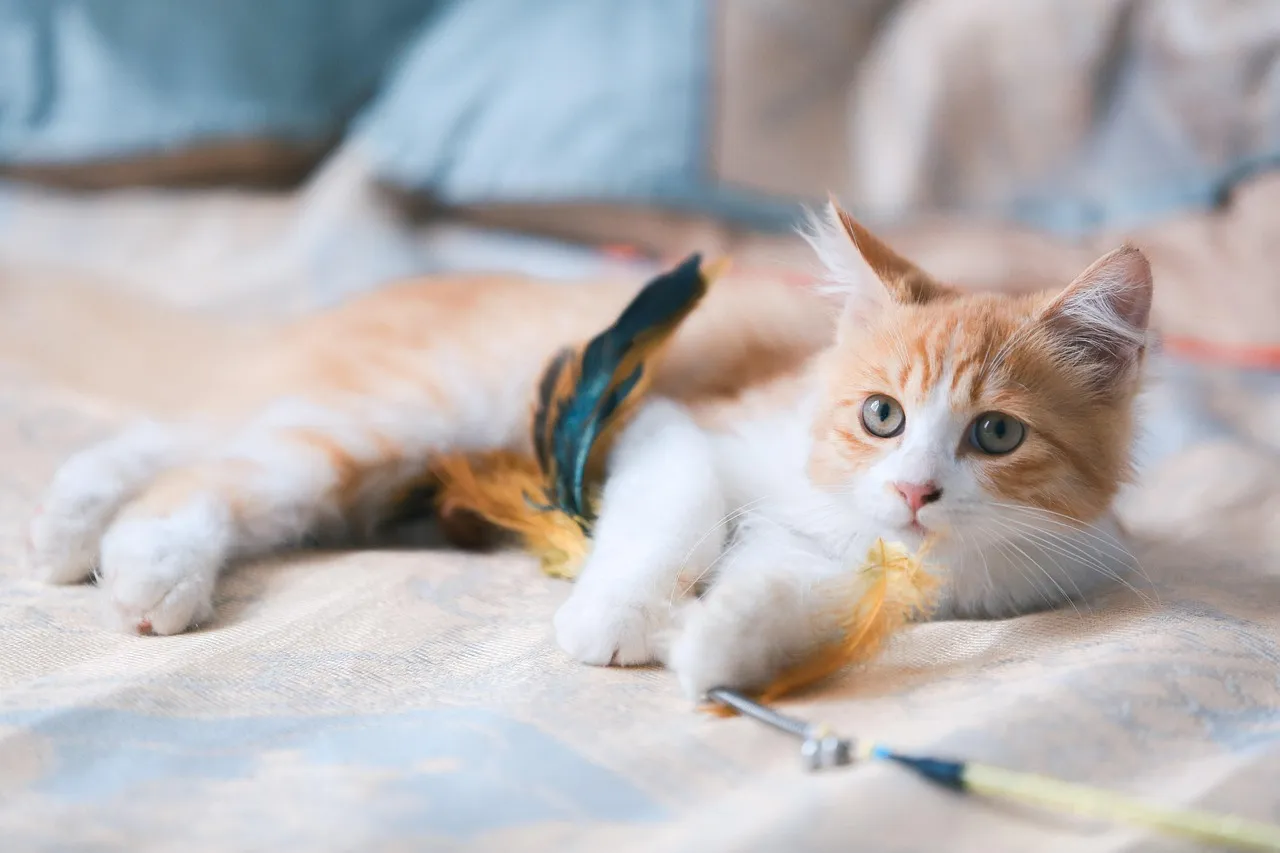
Play is a shortcut to a cat’s heart, and research indicates that toys mimicking prey can strengthen the human-cat bond. The person holding the feather wand is often chosen over people who skip the game.
Timing matters more than marathon sessions. Interaction frequency, not just duration, appears to strengthen the perceived security of the bond. Short, regular play sessions are worth more than the occasional epic game.
Pay attention to the toy delivery too. Cats often carry toys to their favorite person when they want interactive play. That’s an invitation, not a random act.
If your cat drops a toy at one person’s feet and walks past everyone else, you’ve just watched a ranking in action.
But play only works when the cat feels relaxed, and that depends on the energy you bring into the room…
#10 – They Gravitate Toward the Calmest Energy in the House
🔥 Would you like to save this?
We'll email this post to you, so you can come back to it later!
Cats read a room faster than most people do. They evaluate humans constantly, noting every movement, tone of voice and reaction. Then they act on what they see.
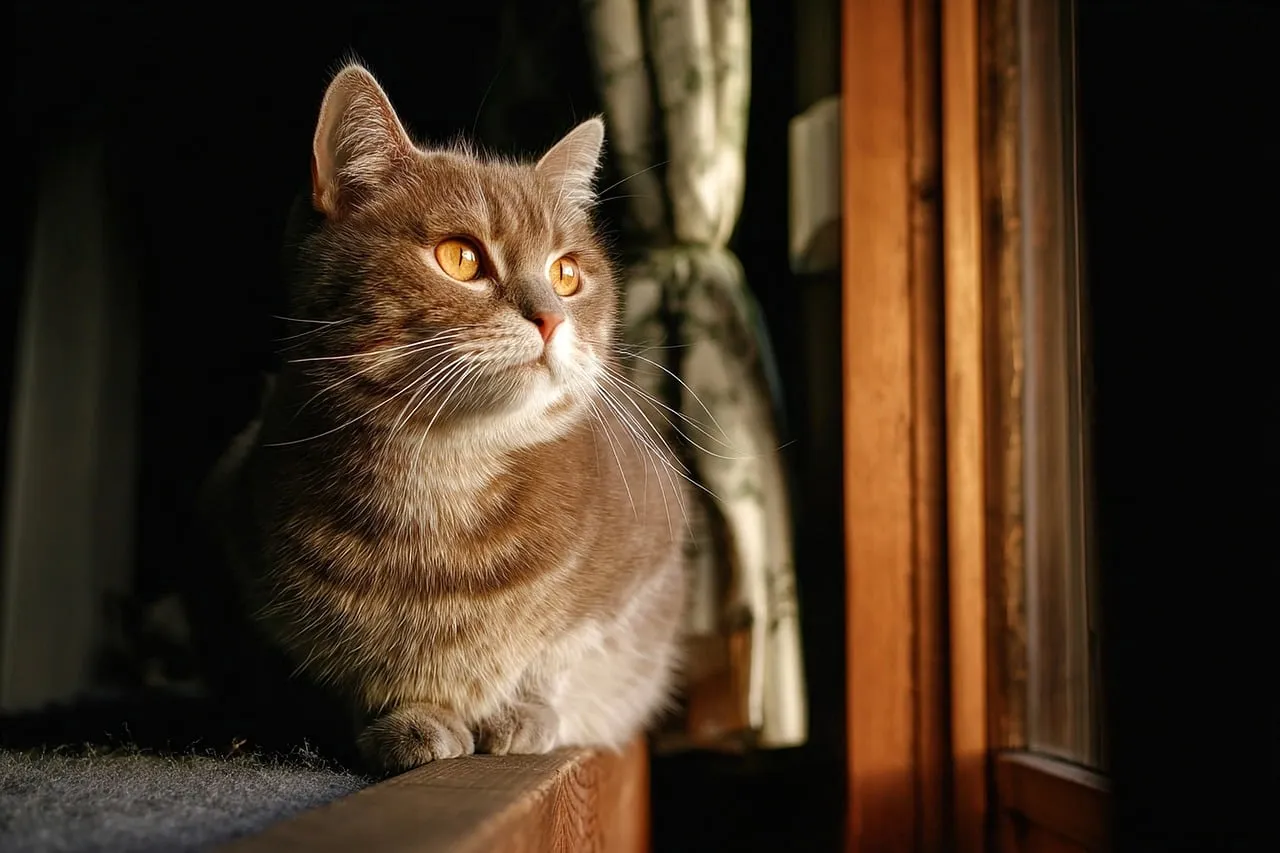
Calm people tend to win. Cats prefer people who are calm and predictable, move slowly and gently, don’t force attention and respect boundaries. They tend to see loud, unpredictable behavior as a threat rather than affection.
At a Glance
- Reads as safe: slow movement, soft voice, sitting low, letting the cat approach.
- Reads as risky: sudden noise, fast reaching, looming overhead, grabbing.
- Reads as pressure: staring, chasing, and carrying the cat around for one more photo.
If you radiate relaxed energy, your cat may perceive you as safe furniture. Not a flattering description, but a high compliment in cat terms.
This is why the loudest, most excited cat lover in the house can end up ignored. Enthusiasm isn’t the same as safety.
Which brings us to the factor everybody assumes is number one, and it may be overrated…
#9 – They Don’t Always Pick the Person With the Food
🔥 Would you like to save this?
We'll email this post to you, so you can come back to it later!
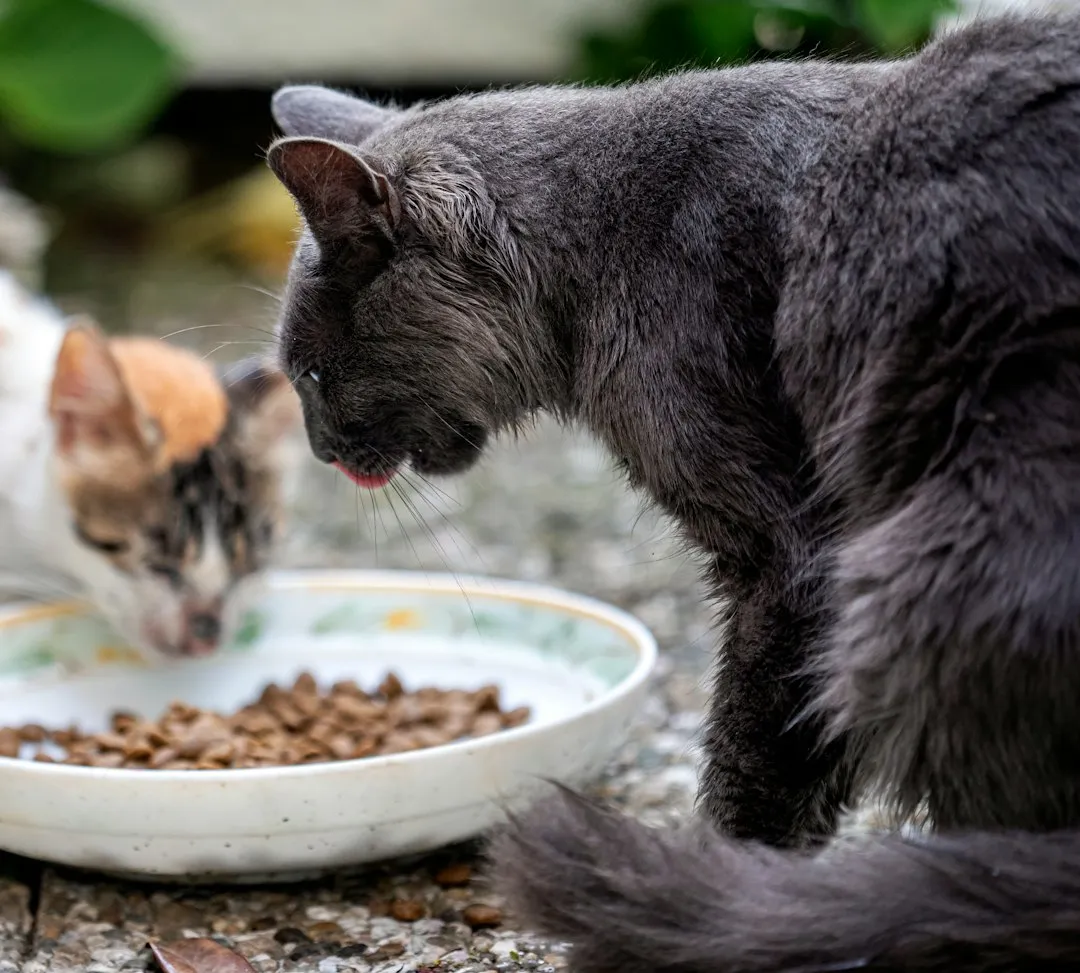
The popular belief is that the cat’s favorite is whoever feeds it. Some cat resources back that up: if you’re usually the one filling the bowl, you may well be the person the cat chooses.
Other sources push back hard. One argues that cats don’t choose based on who gives the most treats or who tries the hardest. Another says food helps, but it isn’t the most important factor.
So the evidence is mixed, and it’s worth saying so plainly. Food probably gets you noticed. It doesn’t guarantee a bond.
The evolutionary backdrop matters here. Roughly nine thousand years ago, cats’ wild ancestors essentially domesticated themselves when they learned that people were an excellent source of food and shelter. The relationship started with food, but modern cats seem to want more than that.
Still, there’s one tool you carry with you that cats seem to notice immediately, and it isn’t your hands…
#8 – They Recognize Your Voice and React Differently
🔥 Would you like to save this?
We'll email this post to you, so you can come back to it later!
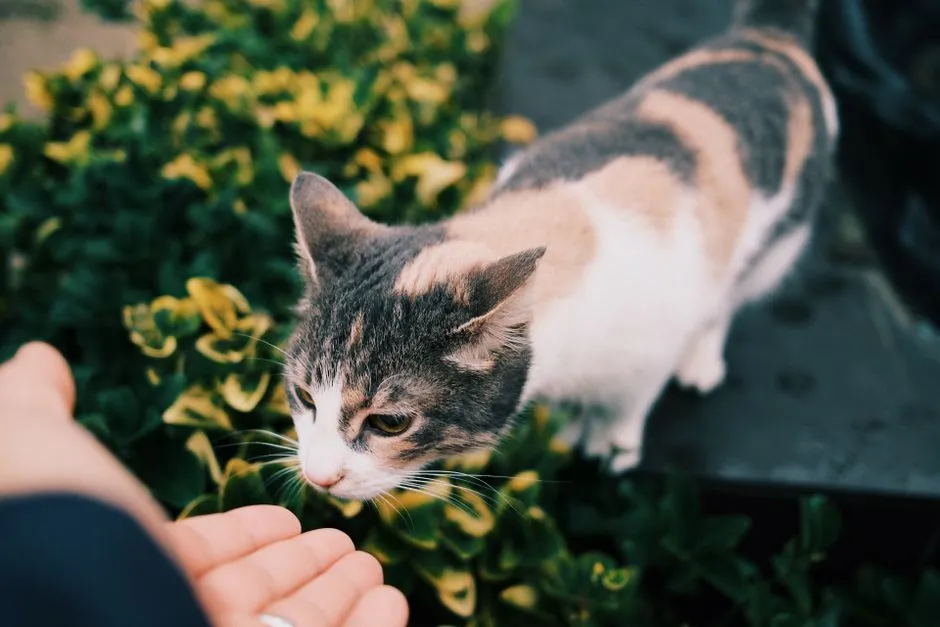
Your voice is part of how a cat files you under “mine.” Japanese researchers have reported that cats can tell their owner’s voice from a stranger’s, even though cats often don’t show much visible reaction.
That subtle response is easy to miss. A twitch of an ear or a small head turn may be the only sign the cat heard you and knew exactly who you were.
Tone matters as well. Cats pay attention to how you sound, which means a soft, steady voice may be doing quiet work for you.
Be careful about the opposite. If one person in the home regularly shouts, laughs loudly or makes sudden sounds, the cat may learn to keep its distance from that voice.
Next time your cat looks like it’s ignoring you, watch its ears. The reaction may be happening anyway.
And that brings us to the moment your cat makes its preference most obvious, right at the front door…
#7 – They Greet Only You at the Door
🔥 Would you like to save this?
We'll email this post to you, so you can come back to it later!
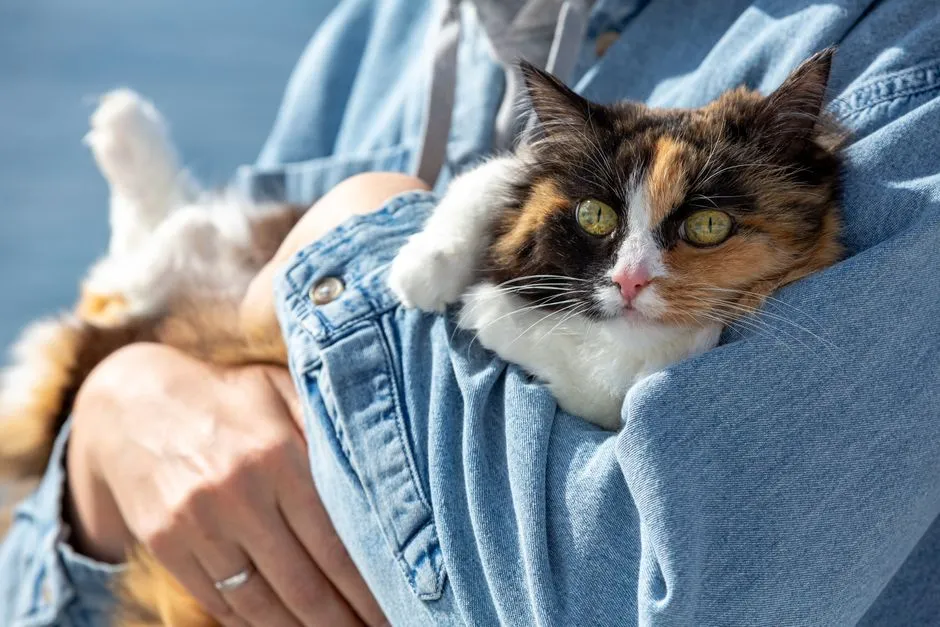
A cat that meets one person at the door and shrugs at everyone else is giving a clear signal. It’s one of the most reliable signs of a favorite, and one of the easiest to spot.
The greeting usually looks like this:
- A tail held upright as the cat approaches
- A quick meow or chirp
- A rub against your legs
Greetings are rarely random. A cat that lives with several people tends to save the full routine for one of them.
Don’t take it personally if you’re not the chosen one. A cat that skips the welcome for other household members isn’t necessarily rejecting them. It may simply have a stronger bond elsewhere.
But a greeting is brief, and what happens next, when the cat follows you through the house, says even more…
#6 – They Shadow You Everywhere, Even the Bathroom
🔥 Would you like to save this?
We'll email this post to you, so you can come back to it later!
Bathroom company is the least glamorous sign that a cat has chosen you. It’s also one of the most common.
A cat that trails one person from room to room is keeping that person in range. It’s checking where you are, what you’re doing and whether anything has changed.
This ties back to routine. A cat that knows your patterns often positions itself where your next move will happen.
Shadowing isn’t always the same as affection, though. Some cats follow you because they expect food or attention, and some do it out of habit. The difference shows up when you stop: a bonded cat usually settles near you, while a hopeful one keeps pestering.
Quick Compare
- The bonded follower: arrives, settles within sight of you and relaxes.
- The hopeful follower: keeps vocalizing and circles back toward the kitchen or the treat cupboard.
Following is one thing. The next signal involves the cat marking you as part of its own territory…
#5 – They Headbutt and Rub Against Only You
🔥 Would you like to save this?
We'll email this post to you, so you can come back to it later!
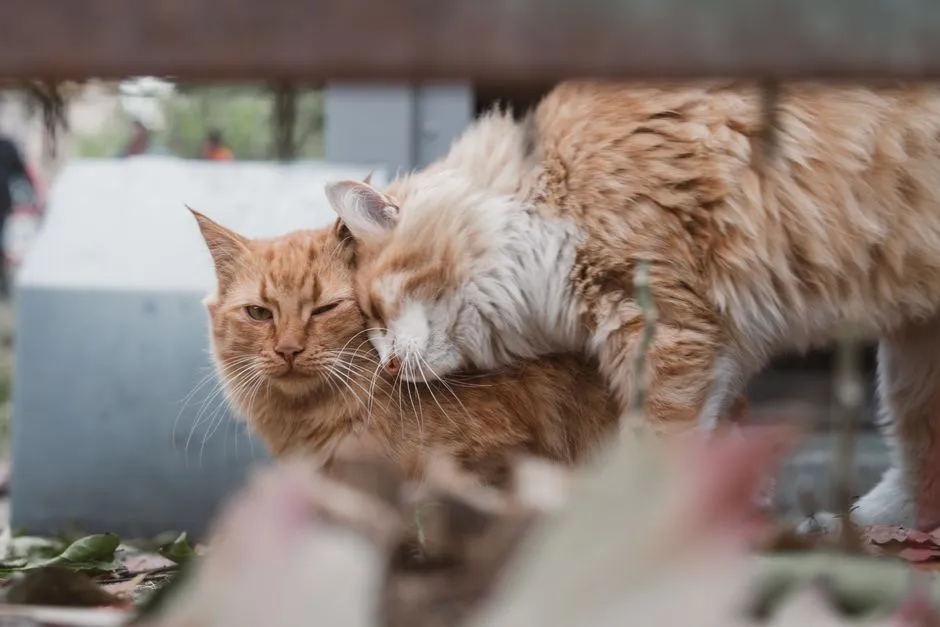
When a cat pushes its forehead into your hand or cheek, it isn’t just asking for a scratch. It’s mixing scents with you.
That matters because scent is how cats organize their world. A person who smells familiar and safe gets rubbed. A person who doesn’t gets sniffed, assessed and sometimes avoided.
This is where the selectivity shows. Plenty of cats tolerate petting from visitors, but headbutting is usually reserved for people the cat treats as part of its inner circle.
If your cat rubs you but only sniffs your partner, that’s useful information. It doesn’t mean your partner is disliked. It means the cat has made a distinction.
But the strongest proof of trust shows up when a cat lowers its guard completely…
#4 – They Sleep on You and Show You Their Belly
🔥 Would you like to save this?
We'll email this post to you, so you can come back to it later!
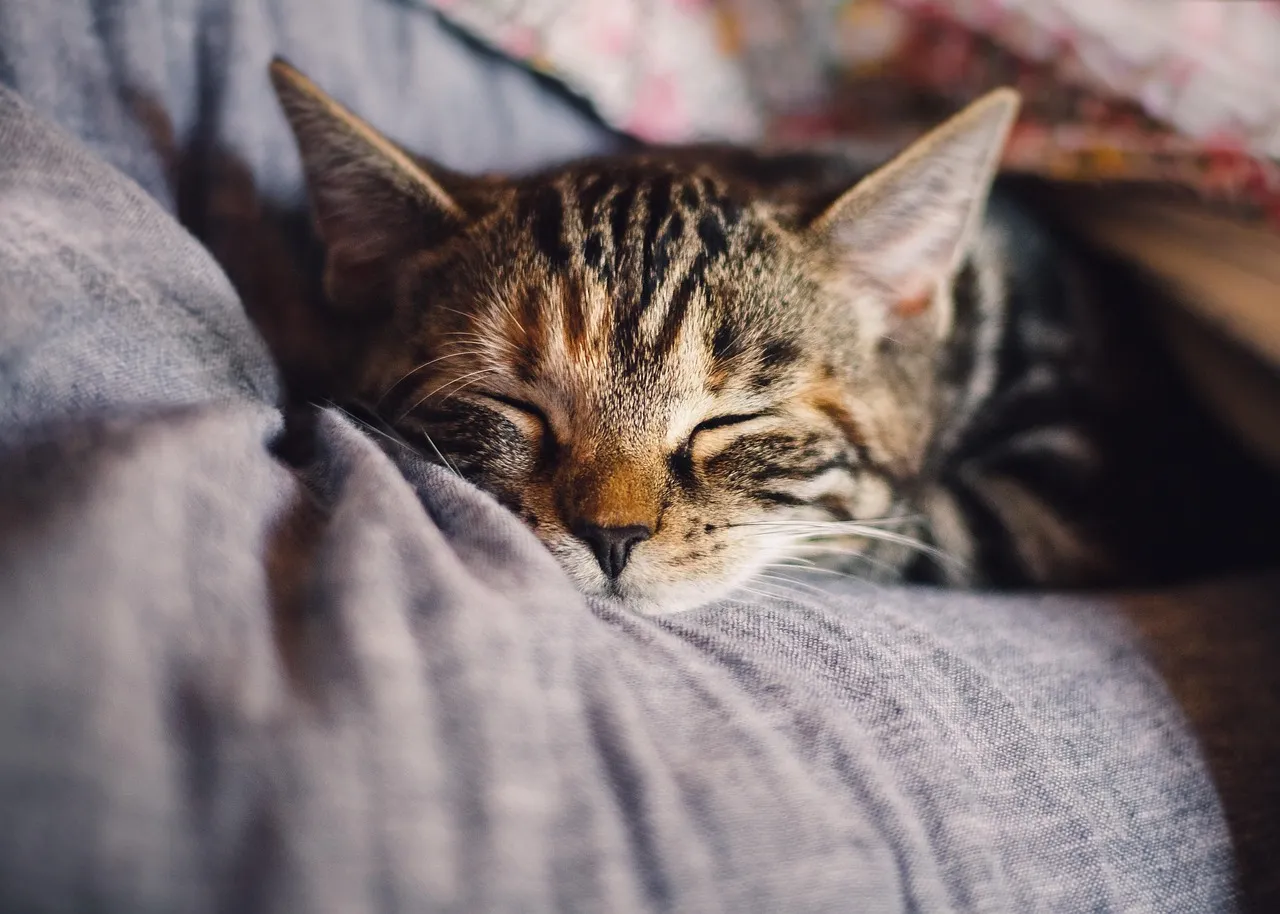
Sleeping is the most defenseless thing a cat does, which is why choosing where to nap says so much. A cat that curls up on one person’s lap or chest has decided that person is safe.
Belly exposure works the same way. When a cat shows its vulnerable stomach and rolls around, it’s communicating deep trust.
There’s a catch, and many owners learn it the hard way. A belly display is trust, but it isn’t always an invitation to rub. Plenty of cats show the belly and then grab the hand that touches it.
Respect the signal without testing it. Staying nearby and relaxed often matters more to the cat than a belly rub does.
And there’s a chemical reason sleeping beside you feels so good to both of you…
#3 – Their Bodies Actually Respond to Yours
🔥 Would you like to save this?
We'll email this post to you, so you can come back to it later!
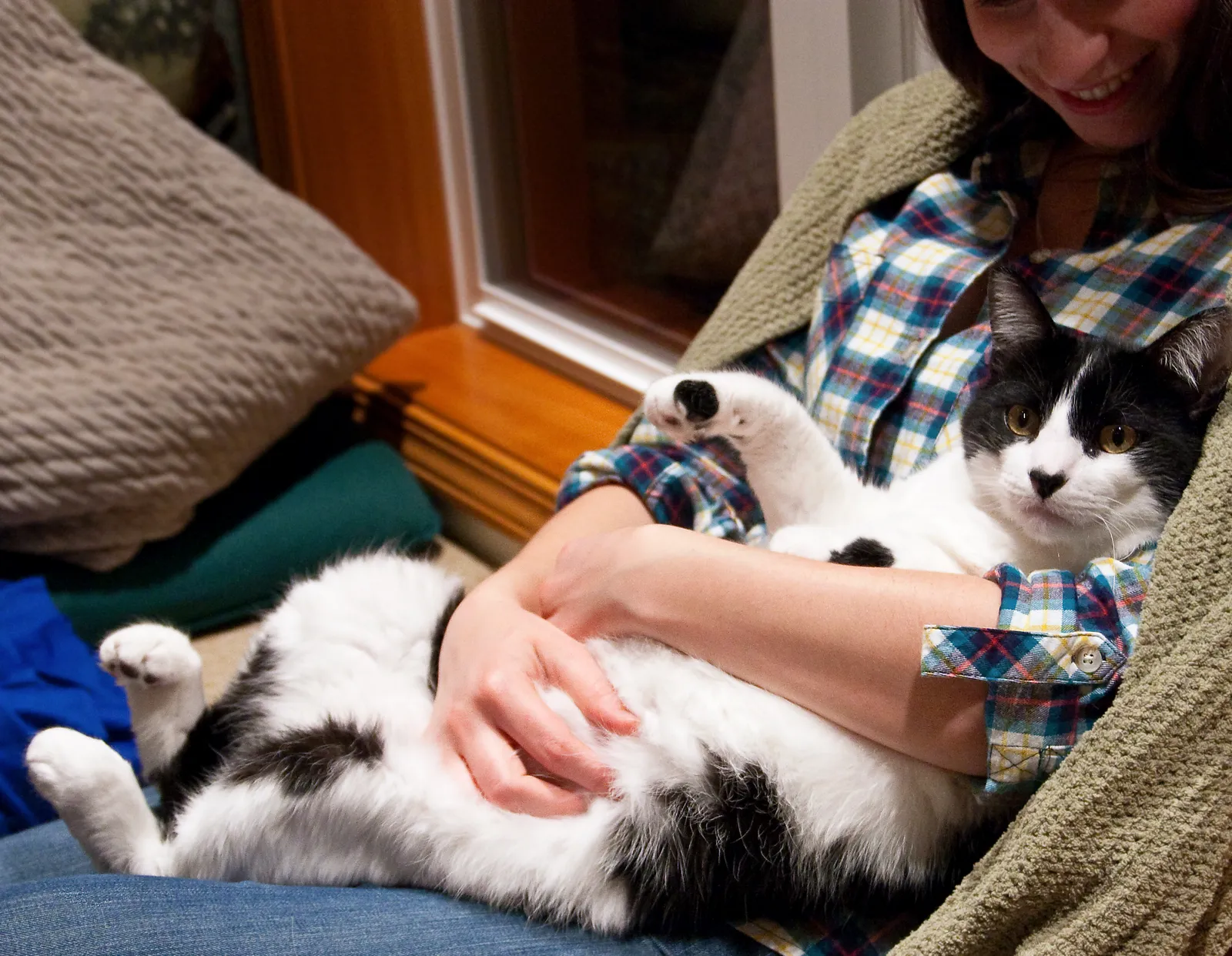
The bond isn’t only behavioral. It may be hormonal. One report says that when owners engaged in relaxed petting, cuddling or cradling, the owners’ oxytocin tended to rise, and so did the cats’ – if the interaction was not forced on the animal.
That “if” is the key. Another source states that forced affection can backfire, dropping oxytocin levels in cats who aren’t comfortable. The cuddle only counts if the cat chose it.
The same report suggests a build-up effect: the more time your cat spends close to you, the stronger this biological connection becomes. Evidence on this is still developing, so it’s best treated as a promising explanation rather than settled fact.
What it does explain is why the person who waits, rather than grabs, tends to get the longest laps.
So what does a favorite look like when researchers actually test it in a lab? The answer changes how you think about “aloof” cats…
#2 – They Treat You Like a Safe Base
🔥 Would you like to save this?
We'll email this post to you, so you can come back to it later!
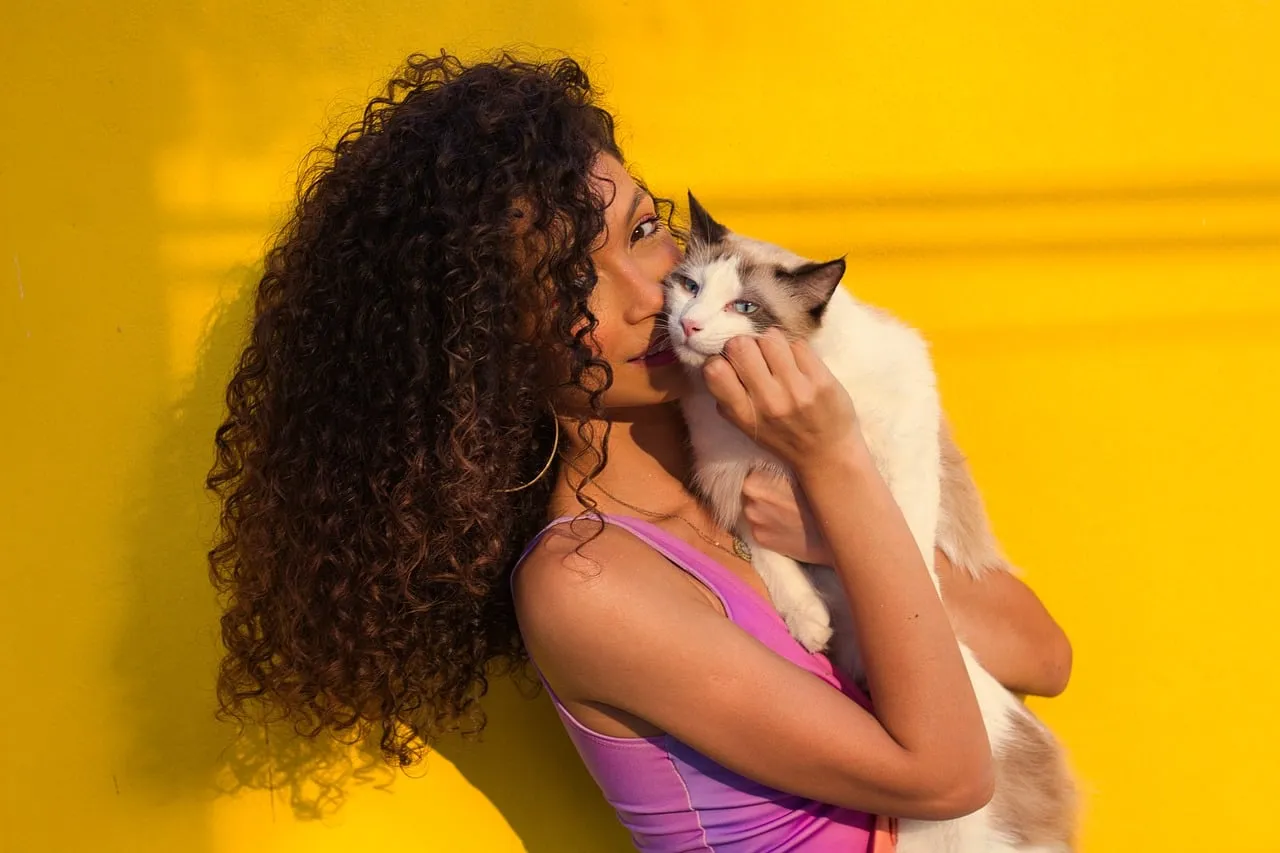
The aloof-cat stereotype took a hit in 2019. Dr. Kristyn Vitale, an animal behavior researcher at Oregon State University, reported that cats form secure and insecure attachments to their owners, similar to human children.
The numbers are striking. Her 2019 study found around 65% of cats form secure attachments, meaning they see you as a safe base for comfort and exploration. Another summary puts it at roughly two thirds of cats.
Fast Facts
- The study appeared in the journal Current Biology in September 2019.
- Of 70 classifiable kittens, 64.3% were securely attached. Among 38 adult cats, 65.8% were.
- Earlier research puts secure attachment at about 65% in human infants and 58% in dogs.
- The test was simple: two minutes with the caregiver, two minutes alone, then a two-minute reunion.
Now for a common belief that doesn’t hold up. Breeds like Siamese, Himalayan, Bengal and Norwegian Forest Cats often carry the one-person label. But attachment appears to develop between one specific cat and one specific person, not from a fixed breed trait. Mixed-breed cats play favorites just as readily as purebreds.
All of that points to one conclusion about what a cat is really choosing, and it isn’t the person who wants it most…
#1 – They Choose the Person Who Feels Safest, Not the One Who Tries Hardest
🔥 Would you like to save this?
We'll email this post to you, so you can come back to it later!
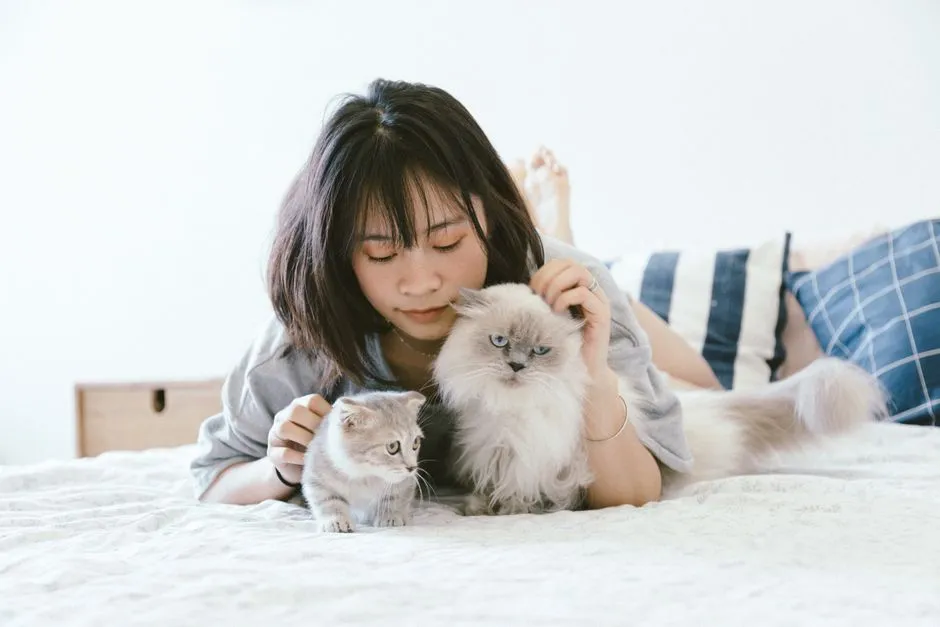
This is the real answer behind everything above. In homes with several people, cats often pick one primary bond. That doesn’t mean they don’t love the others. It means they feel safest, calmest and most understood with one individual.
Here’s the uncomfortable part. Over-affection can push cats away. Smothering, chasing and picking a cat up for one more photo may be exactly why you’re not the favorite.
The upside is that you can change it. Your cat isn’t rejecting anyone, it’s responding to what feels safest. That’s good news for the family member who feels left out.
Not every cat will bond closely, though. Some cats never express much desire for human interaction. That’s a personality, not a failure.
Cats don’t pick favorites by accident, and they don’t pick them by food alone. Scent, routine, calm energy and a person’s willingness to let the cat lead all seem to count. Breed matters far less than the stereotypes suggest.
Our take: the “loyal dog, aloof cat” idea is lazy. Cats are choosing, and they’re choosing carefully. If you’re not the favorite, the fix isn’t more attention. It’s less pressure, more consistency and a lot more patience.
Which of these 16 signs did your cat show first, and was the chosen person who you expected?

- 7 Everyday Habits That Can Make Your Senior Dog Happier - November 5, 2026
- 10 Enigmatic Structures That Continue to Puzzle Scientists Today - November 5, 2026
- 10 Strange Ruins in the Americas That Challenge What We Know About Early History - November 5, 2026