


Worried about unexpected vet bills?
Pet insurance can cover thousands in unexpected vet costs. Get a free quote from Lemonade in under 2 minutes.
Get My Free Quote →Sponsored · Opens Lemonade.com
Capybaras, the world’s largest rodents, are fascinating creatures that have captured the hearts of animal enthusiasts worldwide. Native to South America, these gentle giants exhibit some of the most unusual and endearing behaviors in the animal kingdom. Standing about two feet tall at the shoulder and weighing up to 150 pounds, capybaras resemble oversized guinea pigs with their barrel-shaped bodies, blunt snouts, and small ears. But it’s their peculiar habits and social nature that truly set them apart. From their impressive swimming abilities to their remarkable interspecies friendships, capybaras lead lives filled with behaviors that might seem strange to us but make perfect sense in their semi-aquatic world. Let’s explore 18 weird and wonderful habits that make capybaras one of nature’s most intriguing creatures.
The Art of Communal Napping

Capybaras have elevated group napping to an art form. These social rodents regularly engage in communal rest sessions, piling together in adorable heaps regardless of the temperature. Unlike many animals that huddle primarily for warmth, capybaras stack themselves together even in hot weather, showcasing their deeply social nature. These nap piles can include anywhere from a few individuals to over a dozen capybaras snoozing together, often with limbs casually draped over one another. This behavior strengthens social bonds within the group (called a herd) and provides mutual protection from predators, as at least one capybara usually remains semi-alert during these rest periods. Their commitment to group napping demonstrates the importance of community in capybara society.
Underwater Meditation Masters
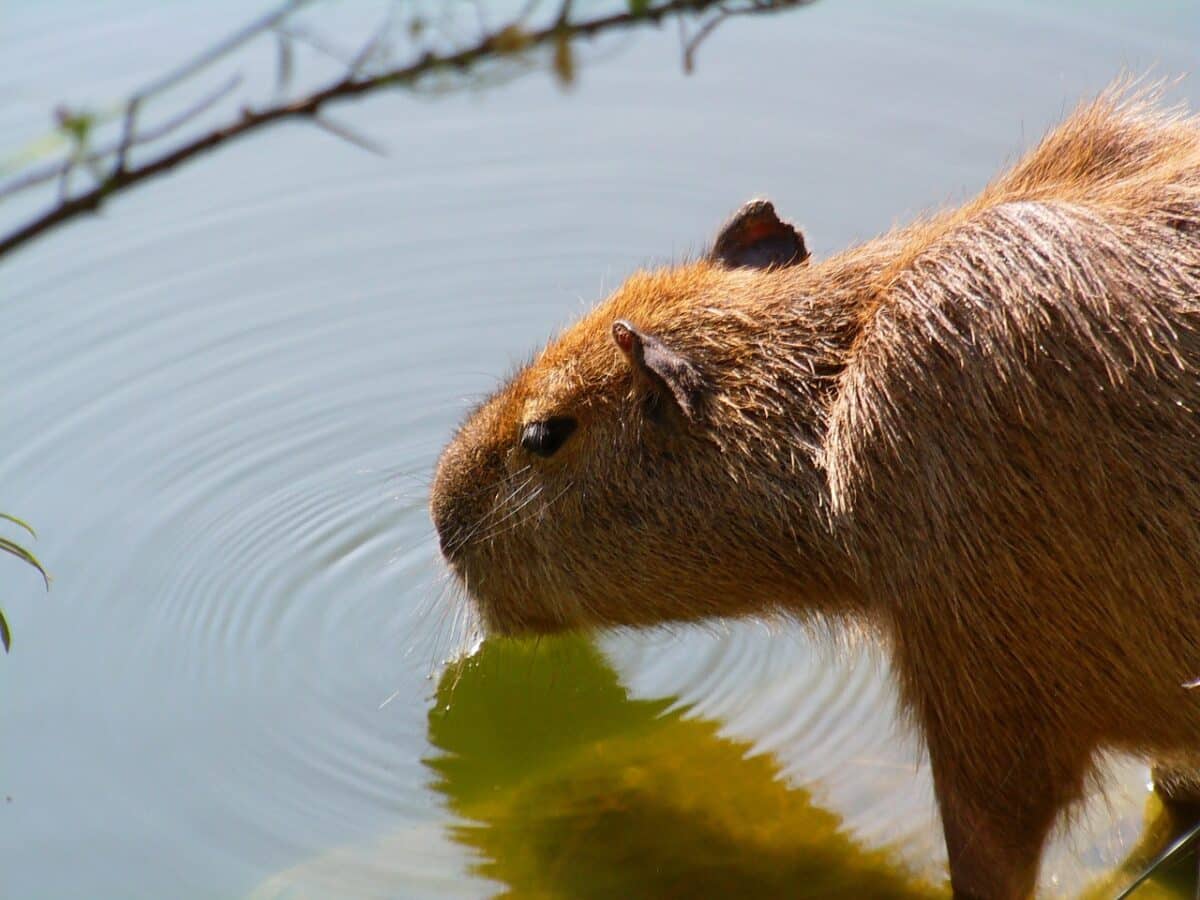
One of the capybara’s most remarkable adaptations is their ability to remain submerged underwater for up to five minutes. These semi-aquatic mammals often engage in what looks like underwater meditation, sinking beneath the surface with just their nostrils, eyes, and ears exposed—a position nicknamed “submarine mode.” This behavior serves multiple purposes: it helps them regulate their body temperature, hide from predators, and access underwater vegetation. Capybaras have evolved specially adapted nostrils that can close underwater, preventing water from entering their respiratory system. Their eyes and ears are positioned high on their heads, allowing them to remain alert while mostly submerged. This submarine-like resting position is so natural to them that captive capybaras will often create their own “pools” in muddy areas if proper swimming facilities aren’t available.
Nature’s Most Welcoming Animal Hosts

Perhaps the most internet-famous capybara trait is their seemingly supernatural ability to get along with virtually every other animal species. Dubbed “animal whisperers” by their admirers, capybaras have been documented peacefully coexisting with creatures that would normally be predators or prey—from birds and monkeys to crocodiles and domestic cats. This unusual tolerance manifests in what people affectionately call “capybara platforms,” where birds, monkeys, and other small animals perch atop calm, unbothered capybaras. This behavior stems from their non-threatening nature and the mutual benefits of their cleaning relationships with birds, which remove parasites while using the capybara as a convenient perch. Their gentle temperament and willingness to share their space have made them ambassadors of interspecies harmony in the animal kingdom.
Synchronized Swimming and Diving

Capybaras are exceptional swimmers who engage in synchronized swimming behavior that would impress Olympic judges. When a herd of capybaras enters the water, they often swim and dive in coordinated patterns, creating a spectacle of synchronized movement. Their webbed feet, which look similar to small paddles, make them naturally proficient in water. Young capybaras learn these swimming techniques from adults, often participating in what appears to be playful water ballet. This synchronized swimming serves practical purposes beyond play—it helps maintain group cohesion during water crossings and can confuse predators. Their bodies are perfectly adapted for aquatic life, with eyes, ears, and nostrils positioned on top of their heads, allowing them to remain mostly submerged while still aware of their surroundings. Some researchers believe these coordinated swimming behaviors strengthen social bonds within the herd.
The Peculiar Practice of Coprophagy

While it might seem unappetizing to humans, capybaras regularly practice coprophagy—the consumption of their own feces. This behavior, though strange to us, serves a vital nutritional purpose. Capybaras are hindgut fermenters, meaning that much of their digestion occurs in their cecum and large intestine through bacterial fermentation. By consuming their own droppings, they’re able to extract additional nutrients that weren’t absorbed during the first digestive passage, particularly vital B vitamins and fiber. Young capybaras often consume their mother’s feces to acquire the beneficial gut bacteria needed for their developing digestive systems. This recycling of nutrients is an efficient adaptation that helps capybaras maximize the nutritional value of their plant-based diet, especially during seasons when high-quality vegetation might be scarce. Though it might make humans squeamish, this habit demonstrates the remarkable efficiency of capybara digestive adaptations.
Morning Mud Bath Rituals
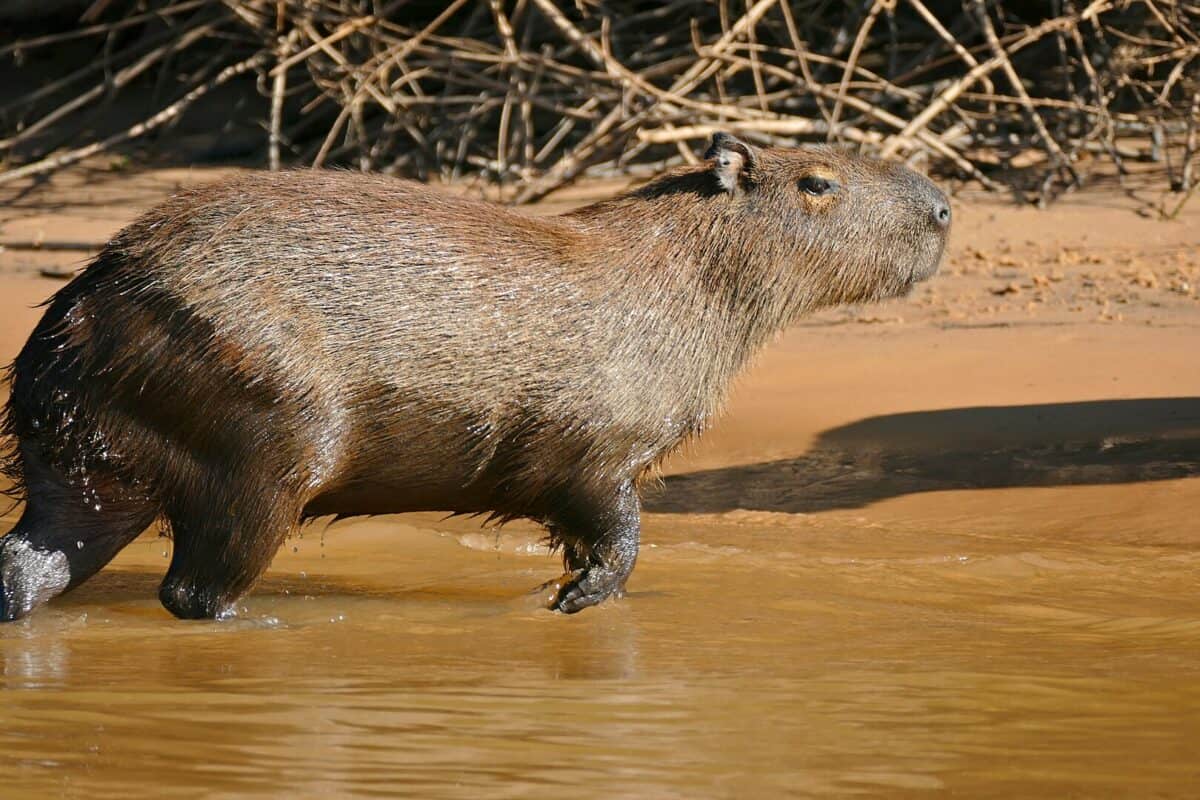
Capybaras are religious about their mud bath routines, typically engaging in this behavior during morning hours. These aren’t merely playful wallows—mud baths serve multiple crucial functions for capybara health. The mud creates a protective layer on their skin that acts as a natural sunscreen, preventing sunburn on their sensitive hide. It also serves as an effective insect repellent, creating a barrier against mosquitoes and ticks that might otherwise feast on these large rodents. The cooling properties of mud help capybaras regulate their body temperature during hot South American days. Their mud bath ritual involves a specific sequence: first wallowing and rolling in mud, then allowing it to dry on their fur, and often finishing with a cleansing swim. Capybaras in captivity become visibly stressed without access to proper mud bathing facilities, underscoring how essential this behavior is to their physical and psychological well-being.
Vocal Communication Complexity

Despite their placid appearance, capybaras maintain a sophisticated vocal communication system that includes at least a dozen distinct sounds. Their vocal repertoire ranges from gentle clicks and whistles to alarm barks and teeth chattering. Mother capybaras use specific purring sounds to communicate with their offspring, while males emit distinctive warning signals when danger approaches. One of their most unusual vocalizations is a dog-like bark used as an alarm call that can alert an entire herd to potential threats. Young capybaras produce high-pitched whistles when separated from their mothers, ensuring quick reunification. Perhaps most interesting is their underwater vocalization—capybaras can produce and perceive sounds while swimming, an adaptation that helps maintain group cohesion during river crossings. This complex communication system reflects their highly social nature and the need for clear signals within their tight-knit communities.
Nocturnal Grazing Migrations
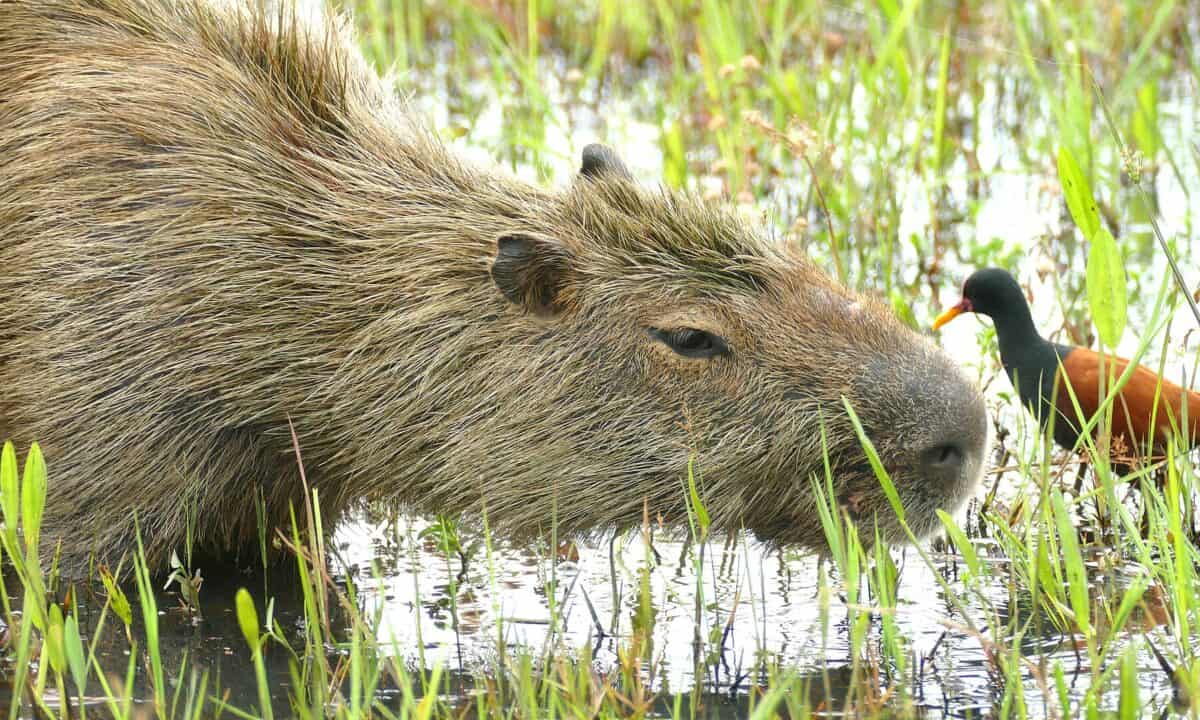
Though often seen lounging during daylight hours, capybaras transform into active grazers at dusk, embarking on nightly feeding migrations that follow specific patterns. These large rodents can consume 6-8 pounds of vegetation daily, requiring substantial foraging time. They typically follow established paths between resting areas and feeding grounds, creating capybara “highways” that become visible in their habitats over time. During these nocturnal grazing sessions, the herd moves in a coordinated formation with dominant adults positioned around the perimeter and vulnerable young centrally located for protection. Their grazing migration patterns change seasonally, adapting to flooding cycles and vegetation availability. Researchers have observed that these grazing routes are passed down through generations, with young capybaras learning traditional feeding grounds from older herd members. This nocturnal activity helps them avoid the intense heat of tropical days while minimizing exposure to daytime predators.
Teeth That Never Stop Growing
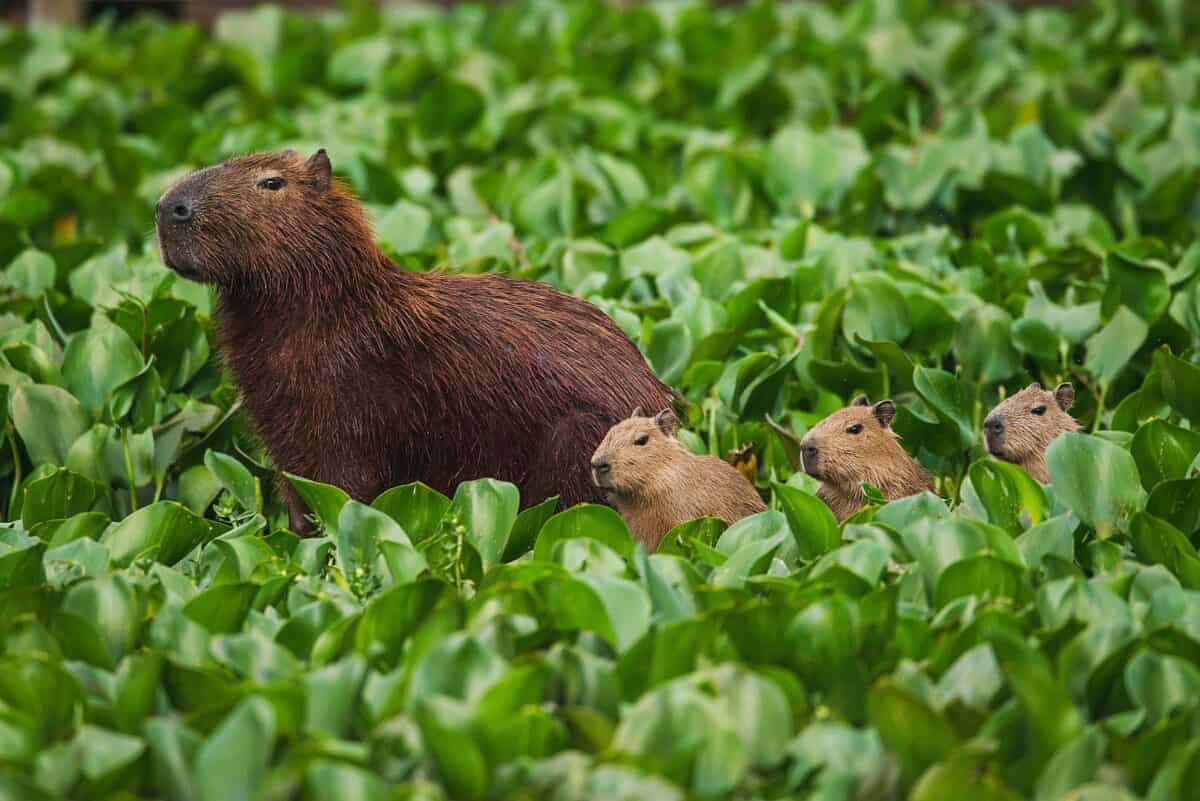
Capybaras possess one of the animal kingdom’s most remarkable dental adaptations—continuously growing teeth. Like all rodents, their incisors grow throughout their entire lives, requiring constant wear to maintain proper length and function. What makes capybara dentition particularly unusual is the structure of their molars, which also grow continuously and feature a unique pattern optimized for grinding tough vegetation. A healthy capybara spends several hours daily grazing, which naturally wears down their teeth at roughly the same rate they grow. Their front teeth can grow at a rate of about 2.5 millimeters per week, necessitating constant wear to prevent dental problems. To facilitate this essential grinding, capybaras have evolved a distinctive chewing motion that moves from side to side rather than up and down. This perpetual growth mechanism ensures they always have sharp, functional teeth for processing their fibrous plant diet, even as they wear down from constant use.
Elaborate Greeting Ceremonies

Capybaras engage in elaborate greeting rituals when reuniting after separations, even brief ones. These ceremonies involve a sequence of nose-to-nose touching, gentle vocalizations, and mutual sniffing that helps reestablish social connections and hierarchy within the group. When capybaras from different groups meet, they perform an even more complex greeting ritual that includes scent assessments and careful physical proximity negotiations. Young capybaras learn these social protocols by observing adults, gradually mastering the nuances of proper capybara etiquette. Perhaps most charming is their “welcome back” ceremony when a group member returns from a solitary excursion—the returning capybara is often surrounded by herd mates who take turns exchanging nose touches and soft vocalizations. These greeting rituals serve important social functions, reinforcing group bonds and exchanging information about external environments through scent transfer. For animals that rely heavily on social cohesion for survival, these ceremonies help maintain the complex social fabric of capybara society.
Scent Marking Through “Morrillo” Glands

Adult male capybaras possess one of the animal world’s most distinctive scent-marking structures—a specialized nasal gland called the “morrillo.” This dark, raised structure on top of their snout resembles a button nose and secretes a potent oily substance with a musky scent. Dominant males regularly mark territory by rubbing this gland against vegetation, creating olfactory boundaries that communicate territorial claims to other capybaras. The morrillo becomes especially active during breeding season, enlarging significantly and producing more powerful secretions that advertise the male’s reproductive status and dominance. This scent-marking behavior follows specific patterns, with males establishing “scent posts” at strategic locations around their territory’s perimeter. Fascinatingly, the chemical composition of morrillo secretions contains information about the individual’s health, age, and social status, creating a complex olfactory identification system. Female capybaras use these scent markers to evaluate potential mates, often preferring males whose morrillo secretions indicate superior genetic quality.
Aquatic Plant Foraging Techniques

Capybaras have developed specialized underwater foraging techniques to access aquatic vegetation that other herbivores cannot reach. Using their partially webbed feet for propulsion and their buoyant bodies for stability, they can effectively “walk” along river and pond bottoms while feeding on submerged plants. Their lips and teeth are specially adapted for underwater grazing, allowing them to clip vegetation with precision even without clear visibility. Remarkably, they can open their mouths underwater without aspirating water, thanks to specialized muscles that seal their throat during submersion. During dry seasons when terrestrial vegetation becomes scarce, this underwater foraging ability gives capybaras a significant survival advantage. They often feed in coordinated groups while submerged, with some individuals remaining more alert for predators while others focus on gathering food. Their underwater plant consumption plays an important ecological role in aquatic ecosystems, helping control excessive aquatic plant growth that might otherwise choke waterways.
Regurgitation and Re-chewing Behavior

Though not true ruminants like cows, capybaras sometimes engage in a behavior that resembles cud-chewing. After initially consuming vegetation, they occasionally regurgitate partially digested food and re-chew it before swallowing again. This behavior is most commonly observed when they’ve consumed particularly fibrous or tough plant material that benefits from additional mechanical breakdown. Unlike the four-chambered stomach system of true ruminants, capybaras achieve similar digestive efficiency through their enlarged cecum, where bacterial fermentation breaks down cellulose. The regurgitation behavior appears to be an adaptive response to challenging dietary conditions rather than a standard digestive process. Researchers have observed this behavior more frequently during dry seasons when only tougher vegetation is available. This adaptable feeding strategy demonstrates how capybaras have evolved multiple approaches to extract maximum nutrition from their herbivorous diet, contributing to their success across diverse South American habitats.
Babysitting Cooperatives

Capybaras have developed a remarkable cooperative parenting system that could be described as a rodent daycare program. Female capybaras within a herd will often nurse each other’s young in communal nursing sessions, with mothers sometimes feeding any offspring that approaches, not just their own. This “alloparenting” extends to supervision duties, with adult females taking turns watching over groups of young from multiple mothers while other females forage. These babysitting arrangements benefit the entire community by allowing mothers more feeding time while ensuring their young remain protected. Young capybaras are vulnerable to predators like jaguars, caimans, and anacondas, making this group supervision essential for survival. The communal care system also accelerates learning, as young capybaras observe multiple adult models rather than just their mothers. This cooperative breeding strategy represents one of the most advanced social systems among rodents and contributes significantly to capybara survival rates, with studies showing higher offspring survival in groups with strong alloparenting practices.
Hierarchical Feeding Formations

Capybara herds maintain strict feeding hierarchies that determine which individuals eat first and which must wait their turn. These hierarchies create distinctive feeding formations when the group grazes, with dominant males typically at the center of the richest vegetation patches. Subordinate adults position themselves in concentric circles around these prime spots, accessing progressively less optimal vegetation based on their social rank. This hierarchical feeding system reduces conflict within the group while ensuring that dominant breeding individuals receive optimal nutrition. Interestingly, nursing mothers receive temporary priority access regardless of their previous status, acknowledging their increased nutritional needs. Young capybaras learn their place in this feeding hierarchy through gentle corrections from adults, gradually understanding the complex social rules governing access to food resources. The formation shifts and reorganizes when the group moves to new feeding areas, but the basic hierarchical structure remains consistent. This organized approach to group feeding represents one of the most sophisticated social structures observed in rodent species.
Seasonal Coat Changes

Despite living in tropical and subtropical environments, capybaras undergo subtle but significant seasonal coat changes that many observers overlook. During the dry season, their fur becomes slightly longer and denser, providing additional insulation during cooler nights. When the rainy season arrives, they shed this thicker coat for a sleeker, more water-resistant version that facilitates their increased aquatic activities. Their fur contains specialized water-repellent oils that increase in production during wet periods, making their coats naturally water-resistant. Unlike many mammals that shed dramatically, capybaras’ coat transitions are gradual and might appear as simple color variations to casual observers—from reddish-brown in dry conditions to darker brown during wet seasons. These coat adaptations help them maintain optimal body temperature despite environmental fluctuations. The shedding process is assisted by their frequent rubbing against vegetation and through their mud baths, which help remove loose fur. This subtle but effective seasonal adaptation demonstrates how capybaras have fine-tuned their physiology to their semi-aquatic lifestyle.
Conclusion:
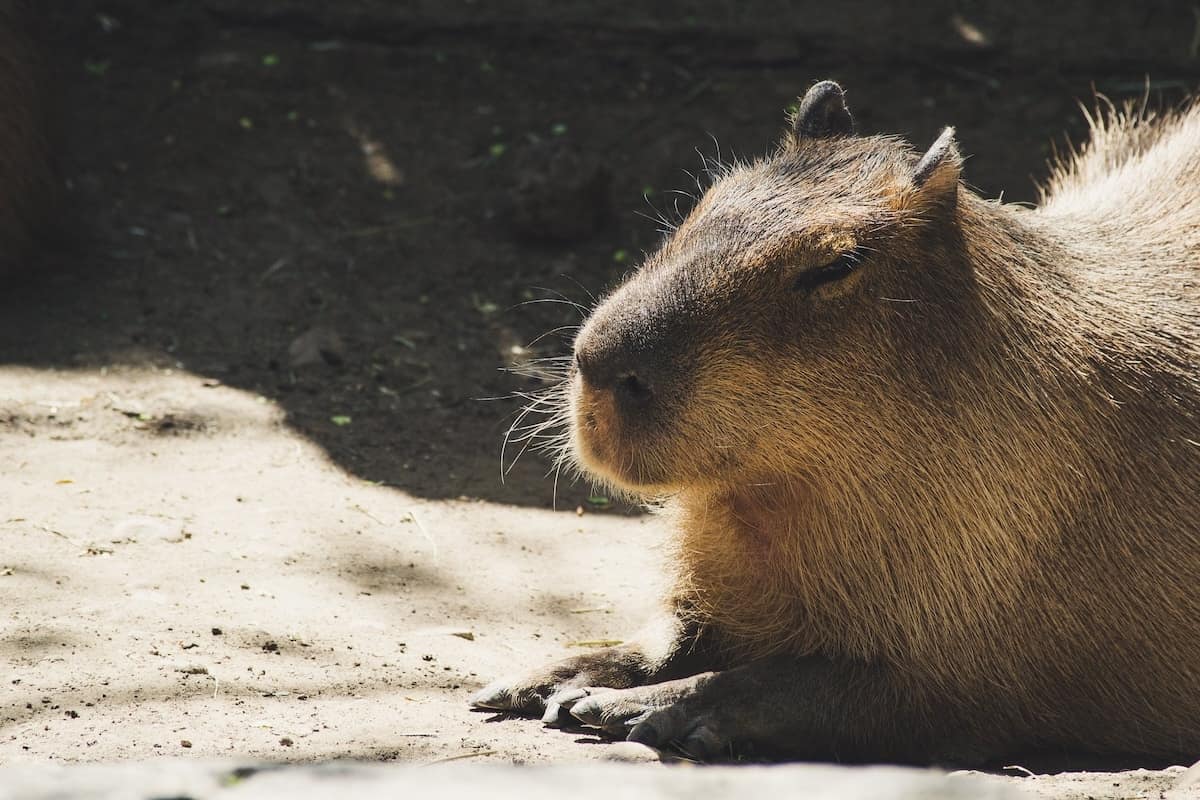
Capybaras, the world’s largest rodents, are far more than just adorable faces and relaxed attitudes—they’re fascinating creatures with a host of unusual and endearing behaviors that have helped them thrive in the wild and win the hearts of people across the globe. From their deep love for communal bathing and sunbathing to their surprising tolerance for other animals—including ducks, monkeys, and even crocodiles—capybaras exhibit a peaceful and social nature that is rare in the animal kingdom. Their weird and wonderful habits, like forming large social groups, vocalizing with clicks and whistles, and even allowing other species to use them as resting spots, show just how unique their lifestyle is. These behaviors aren’t just quirky; they’re vital to their communication, bonding, and survival strategies. Capybaras also demonstrate a strong sense of community, often seen huddling together for warmth or engaging in synchronized swimming to avoid predators.
Worried about unexpected vet bills?
Pet insurance can cover thousands in unexpected vet costs. Get a free quote from Lemonade in under 2 minutes.
Get My Free Quote →Sponsored · Opens Lemonade.com

As a little kid, I fell in love with nature, wildlife, and animals. Living in the USA, South Africa, Italy, China and Germany gave me the opportunity to discover the world's Wildlife. My favorite animals are Mountain Gorillas, Siberian Tigers, and Great White Sharks.
I'm a certified PADI Open Water Diver, went to Everest Base Camp and Trekked Gorillas in Uganda. I hold a Master of Science in Economics and Finance.
Please send any feedback to feedback@animalsaroundtheglobe.com
- Top 10 Animals Known for Their Incredible Speed in Water - June 6, 2026
- Animals and Wildlife in Michigan - June 6, 2026
- 21 Times Wild Animals Adopted Other Species - June 6, 2026