
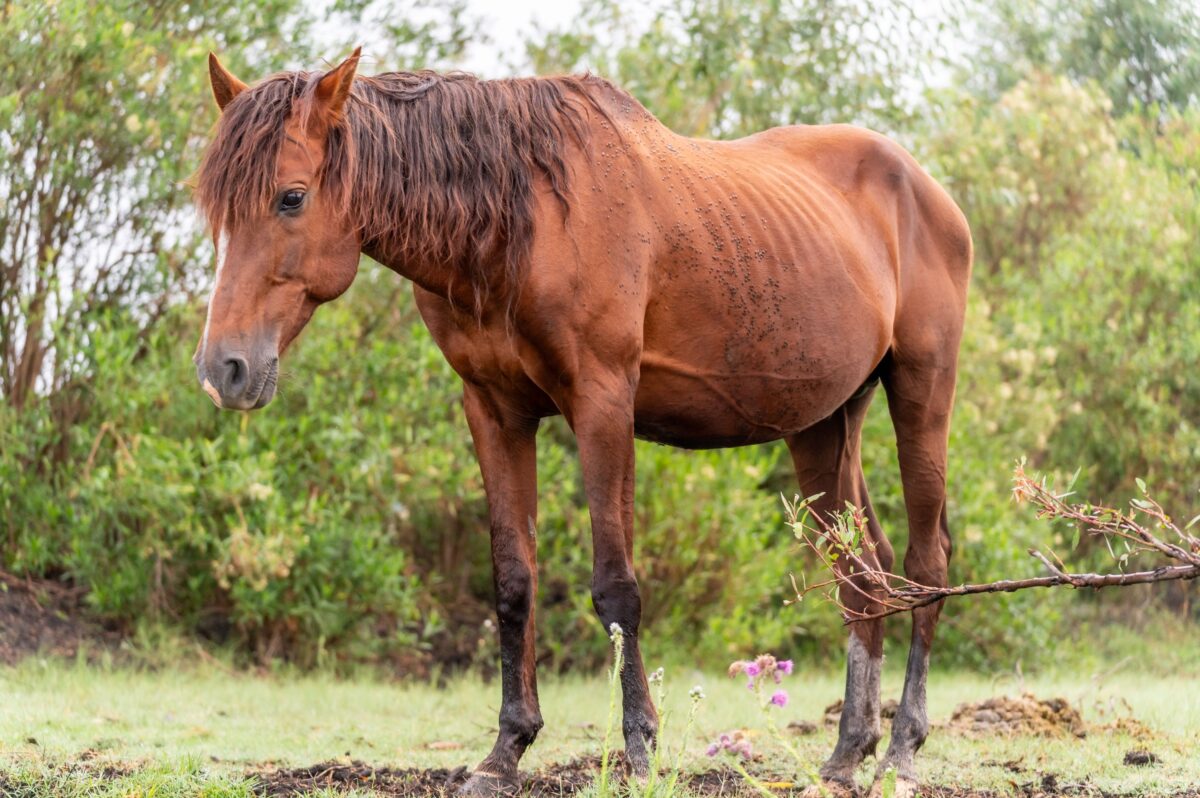
Most people believe an old horse is just a slower horse. That assumption sits quietly in barns everywhere, and it hides some of the most treatable problems a horse will ever face. Horses now often live well into their 20s and even 30s, which gives small changes a lot more years to go unnoticed.
The 17 signals below are the ones that slip past busy owners and stable hands every day. A dropped wad of hay. A fuzzy coat in July. A horse standing apart at feeding time. Each one gets filed under “just age,” and each one can be a message. One signal near the end is so easy to explain away that owners often do it for months, so keep reading.
#17 – Little Wads of Chewed Hay on the Ground
🔥 Would you like to save this?
We'll email this post to you, so you can come back to it later!
Check the ground under the hay net before you muck out. It may be telling you something your horse can’t.
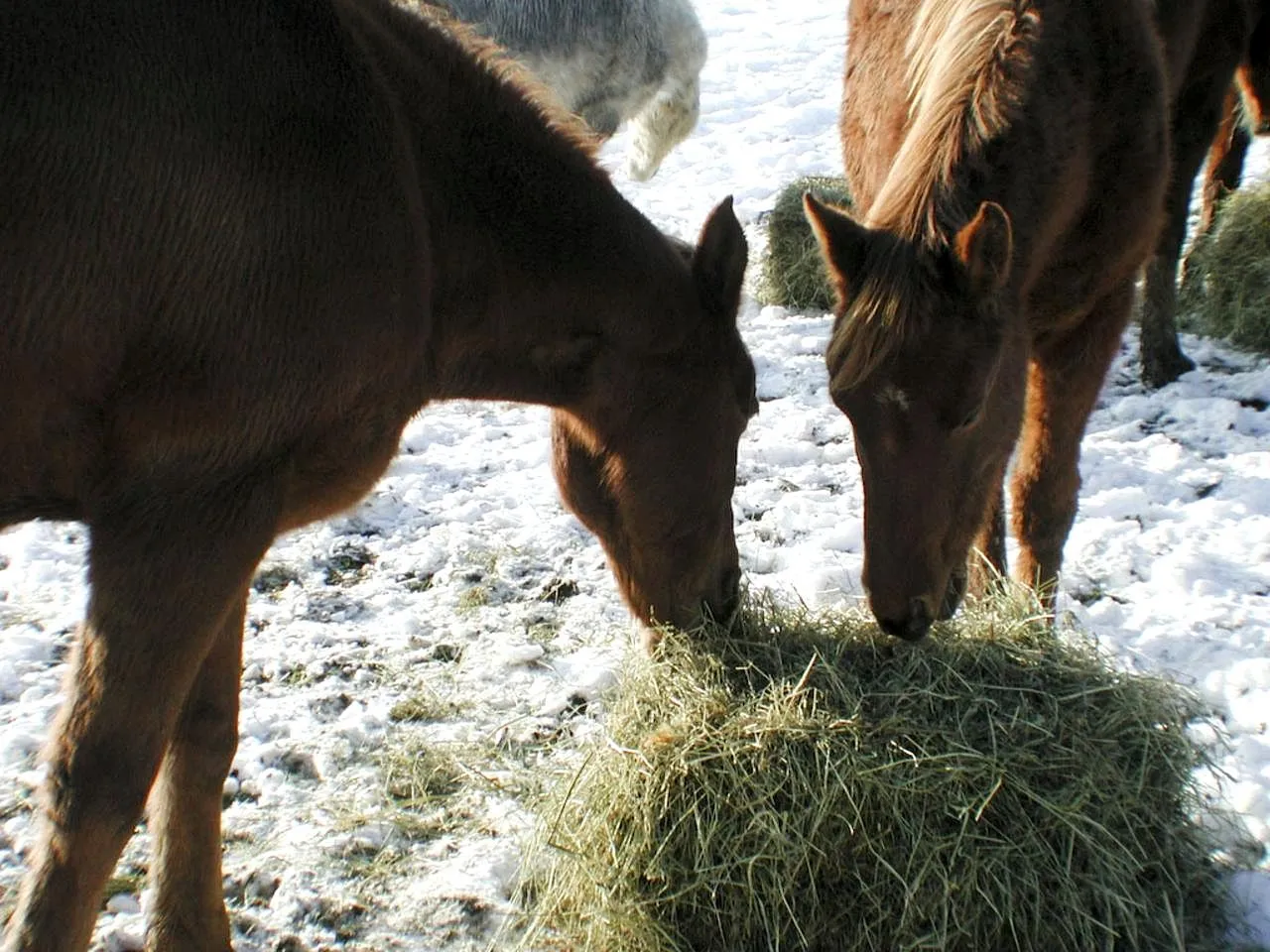
Those soggy, half-chewed balls of hay are called “quids.” A horse drops them when chewing hurts or simply doesn’t work anymore. A horse’s cheek teeth keep erupting for life, and in very old horses there is little reserve crown left. Eventually the teeth wear down to the gums.
Sharp enamel points, loose teeth, gaps that trap food and worn-out grinding surfaces all produce the same scene. The horse eats slowly, tilts its head and lets feed fall from its mouth. It may look like fussiness, but it is often pain.
Look for:
- Quids under the feeder or floating in the water bucket
- Long, undigested fibres in the manure
- Bad breath or a lopsided, one-sided chew
Age-by-teeth charts, including the famous Galvayne’s groove, are far less reliable than barn legend claims. Don’t guess at a horse’s dental health from a chart. Have a vet look inside the mouth.
But the next signal is one that owners often mistake for a fashion statement…
#16 – A Long, Curly Coat That Refuses to Shed
🔥 Would you like to save this?
We'll email this post to you, so you can come back to it later!
A fuzzy coat in July is not a quirk. It’s one of the clearest red flags in senior horse medicine.
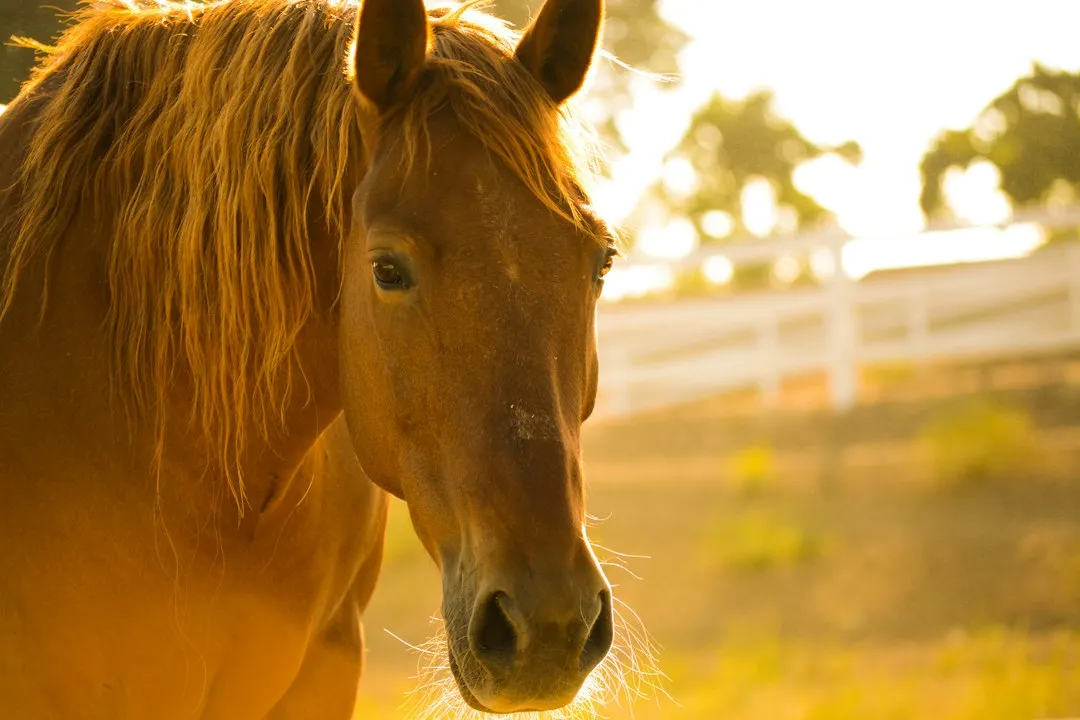
Abnormally long, wavy hair that sheds late or not at all is the classic sign of pituitary pars intermedia dysfunction, or PPID. This is an age-related hormonal condition, often called equine Cushing’s. Some horses show this coat change before any other symptom appears.
Many barns still shrug it off as “just old age.” Vets would call that the most expensive shrug in the stable. PPID can be tested for and managed with veterinary treatment. Left alone, it is linked to laminitis, muscle loss and recurring infections.
Watch for:
- Patches that shed while the rest stays woolly
- A coat that stays long all summer
- Heavy sweating under a thick coat
But the face of an aging horse reveals something else before you ever notice it…
#15 – Deep Hollows Above the Eyes
🔥 Would you like to save this?
We'll email this post to you, so you can come back to it later!
Stand in front of your old horse and look at the dips above its eyes. Most people never do.
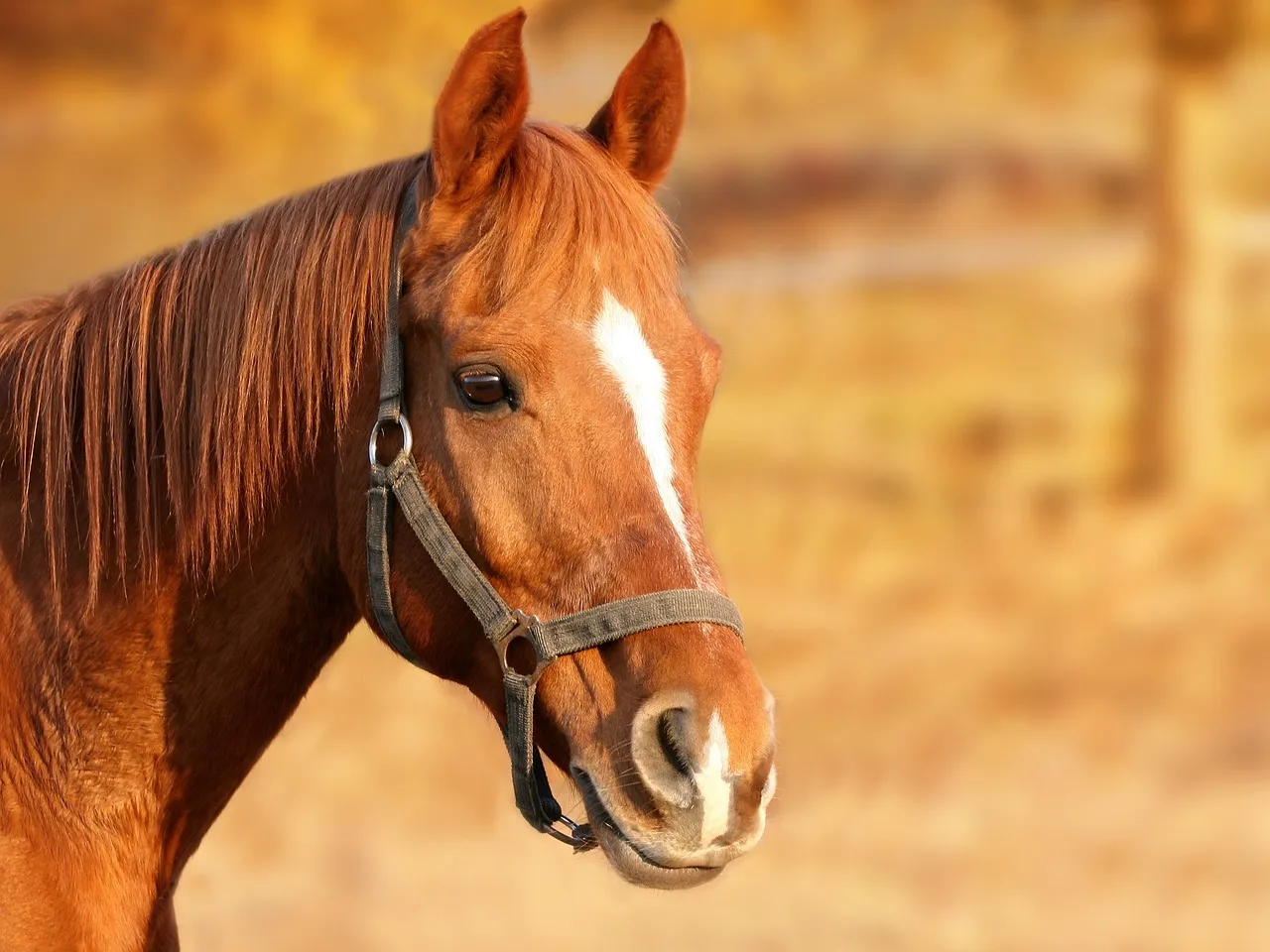
Those hollows, called the supraorbital fossae, deepen as fat and muscle fade with age. This change can appear well before a horse looks visibly thin from the side. For many seniors, the face is the first place weight loss shows.
The lower lip may droop and the muzzle may look longer. The back may sag a little behind the withers. Some of this is natural aging, as tissue and ligament tone change over the years.
Quick Compare
- Likely normal aging: changes that creep in over years, with steady appetite and a bright attitude
- Worth a vet call: hollows that deepen over weeks or months, especially with muscle loss or a coat change
- Act sooner: a sunken face plus eating trouble, dropped feed or a sudden drop in energy
The mistake is assuming that all of it is natural. Sudden or fast changes usually point to a problem with teeth, hormones, digestion or pain. A slow, gentle change over years is a different story.
Take a front-on photo each month. The camera catches what your eyes stop seeing when you look at the same horse every day. A vet can then tell you whether the change fits normal aging or deserves a workup.
But a thinning face is only half the story, because the real trouble often hides along the spine…
#14 – A Topline That Fades Despite Plenty of Feed
🔥 Would you like to save this?
We'll email this post to you, so you can come back to it later!
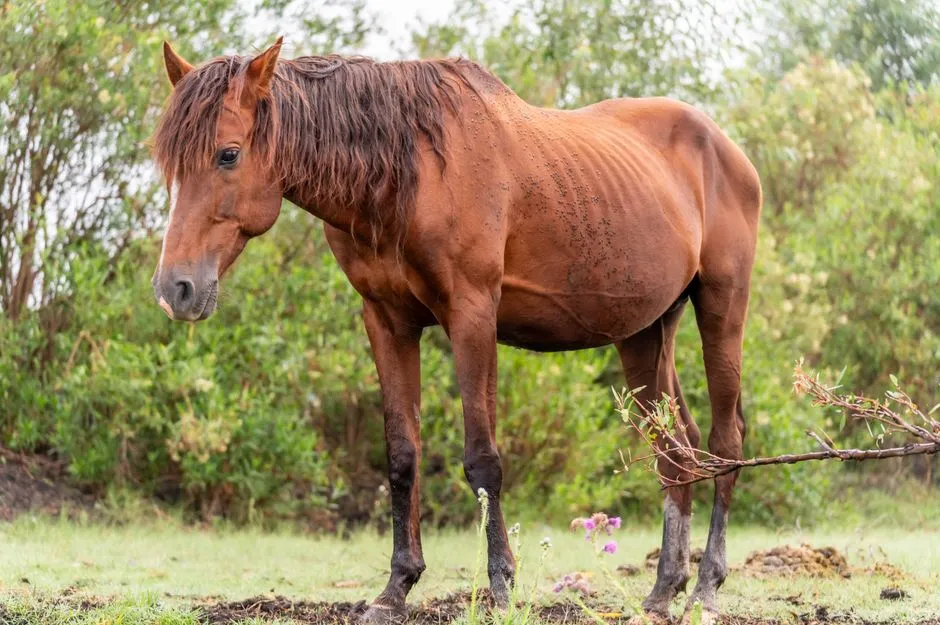
The horse is eating everything you give it, and it’s still losing muscle. That mismatch is one of the most frustrating warning signs in a barn.
Muscle loss over the back and hindquarters can come from age-related changes, dental trouble or PPID. Some research suggests older horses digest protein less efficiently than younger ones, though individuals vary a lot.
A horse can look fat in the belly and still be wasting away along the spine. Hay bellies fool a lot of people. Vets use the Henneke body condition scale, which runs from 1 to 9, to look past the barrel and score fat cover over the ribs, withers and loins.
Throwing more of the same hay at a thinning senior is the classic mistake. Quality protein, softer fibre and a proper diagnosis matter far more than sheer volume.
But a thin horse that moves stiffly raises another question altogether…
#13 – Stiff, Creaky First Steps
🔥 Would you like to save this?
We'll email this post to you, so you can come back to it later!
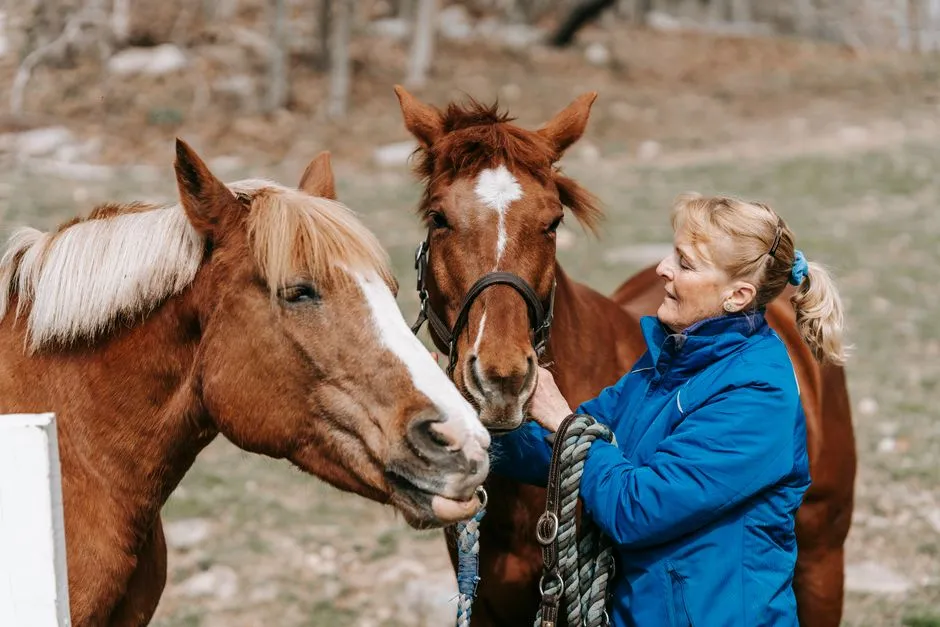
Watch the first twenty strides out of the stall. That is when old joints tell the truth.
Osteoarthritis is one of the most common problems in senior horses. The classic pattern is a stiff, short-strided walk that eases as the horse warms up. Many horses with sore joints look “fine” by the time anyone is watching.
The hocks, fetlocks, knees and coffin joints are the usual suspects. Cold weather and long hours in the stall often make things worse.
Here’s the controversial part. Many owners believe full retirement to a field is the kindest option. Many vets argue that steady, gentle movement does more for stiff joints than rest does.
Look for:
- Reluctance to turn tightly or back up
- Resistance to lifting a hind leg for the farrier
- Standing with a hind leg rested more than usual
But stiffness shows up in another way that most people read as laziness…
#12 – Short Strides and Dragging Toes
🔥 Would you like to save this?
We'll email this post to you, so you can come back to it later!
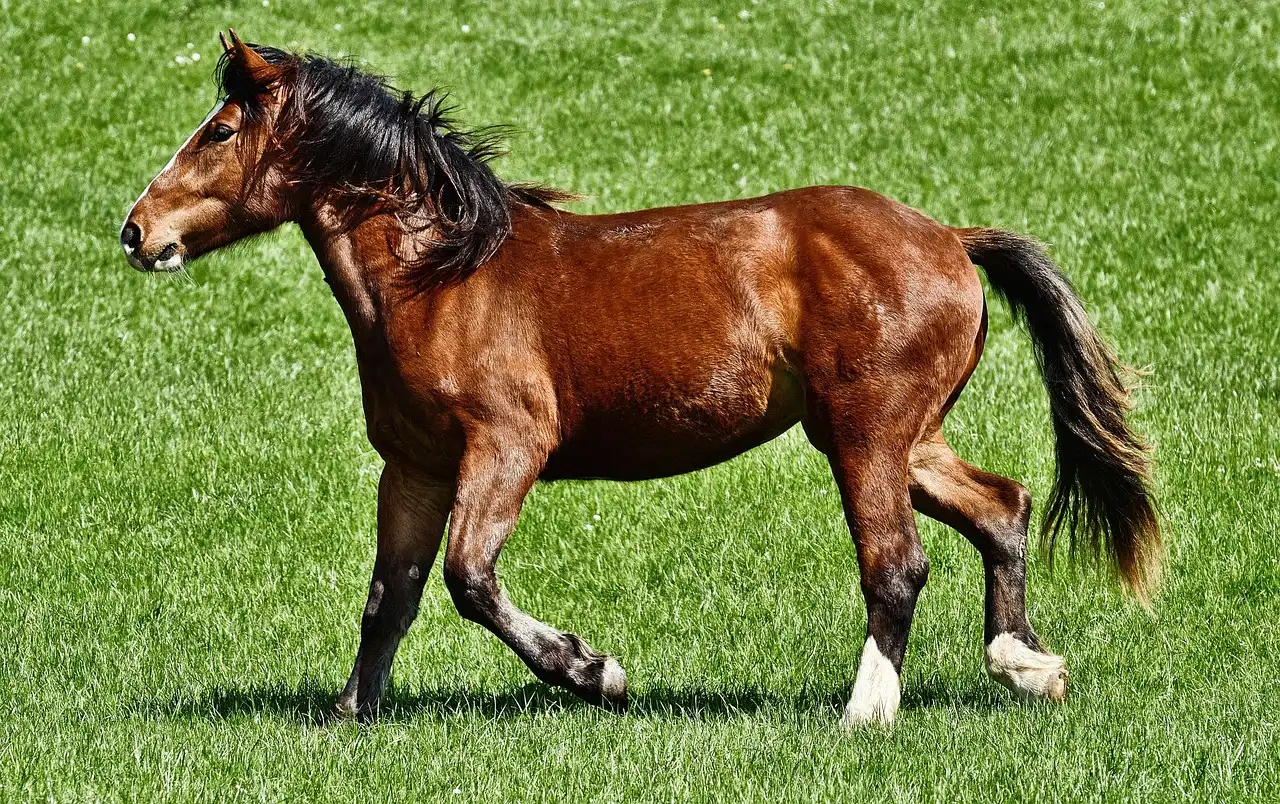
If your senior horse has started scuffing its toes, don’t write it off as sloppy movement.
Shorter strides and toe dragging often reflect pain, weakness or both. Sore hocks or stifles reduce how far a hind leg swings forward. Worn, uneven toe wear on the hooves can reveal dragging before you ever see a stumble.
Weak back muscles make the problem worse. So can long toes from overdue trimming.
Sometimes the cause is neurological, not orthopedic. Tripping that appears suddenly, or a horse that seems uncoordinated behind, needs a vet quickly. This is not a “wait and see” sign.
Ask your farrier to point out the wear pattern at every visit. Farriers often spot dragging in the hoof long before owners see it in the stride. Slick footing and uneven paddocks can also turn a minor stumble into a bad fall in an older horse.
But a horse that moves differently often changes where it stands in the herd, too…
#11 – Standing Alone at the Edge of the Herd
🔥 Would you like to save this?
We'll email this post to you, so you can come back to it later!
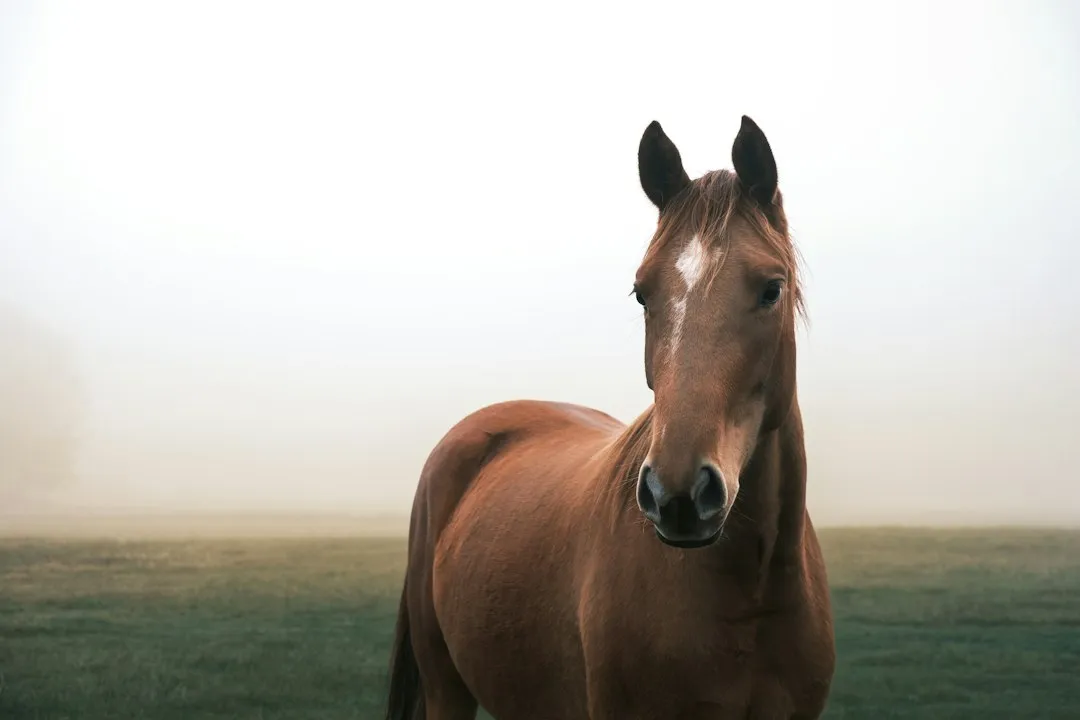
Social changes are among the signals busy barns miss most often, because nothing about them looks like illness.
An older horse that used to stand in the middle of the group may start hanging back. It may get chased off the hay pile by horses it once bossed around. Horses that lose their place in the herd often eat less, because they can’t defend the food.
This can be a pure pecking-order shift as younger horses grow bolder. It can also signal pain, poor vision or hearing, or simply being too slow to keep up with the group.
Many owners say “that’s just herd politics.” Experts say it’s worth a closer look. Try these simple checks:
- Feed the senior in a separate space and watch how it eats
- Place multiple hay piles far apart
- Compare its weight with that of its herd mates
But the quietest signal of all might be written across the horse’s face…
#10 – A Pinched, Worried Expression
🔥 Would you like to save this?
We'll email this post to you, so you can come back to it later!
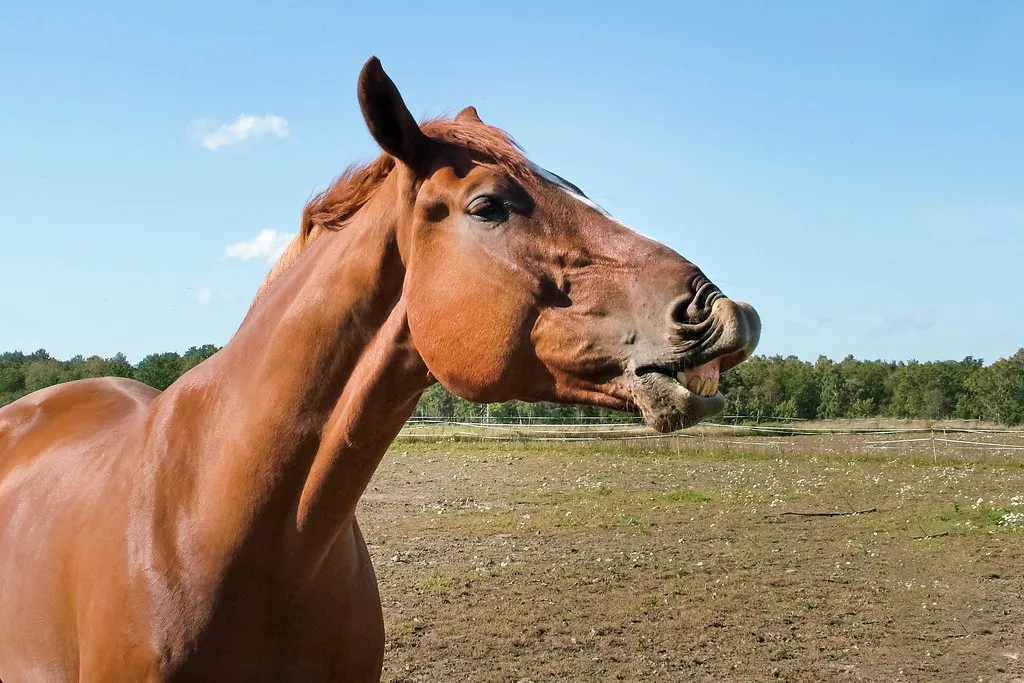
Horses express pain on their faces, and most owners have never been taught to read it.
Researchers developed the Horse Grimace Scale to score facial pain signals. It looks at ear position, tension around the eyes, tightened nostrils and strain in the chin and chewing muscles. A horse in pain may hold its ears stiffly back and look oddly “hard-eyed.”
Old horses are especially good at hiding discomfort. They stand quietly, which a busy handler can easily mistake for calm behavior.
Look for a tight muzzle, a lowered head, and a dull or worried look. Compare it to your own horse’s usual expression, not to a textbook picture.
But there is a surprisingly simple clue sitting right in your water trough…
#9 – Drinking and Urinating Far More Than Usual
🔥 Would you like to save this?
We'll email this post to you, so you can come back to it later!
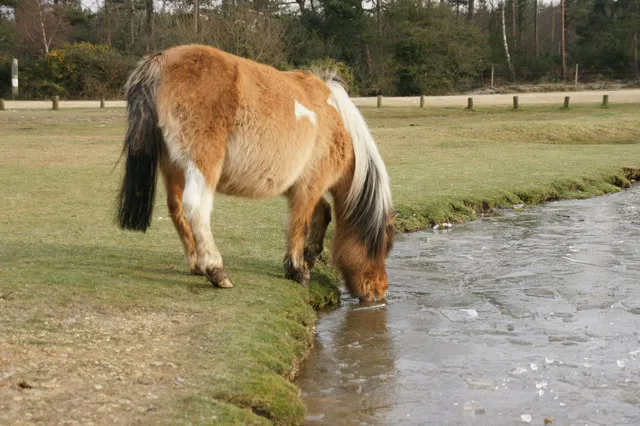
A trough that empties too fast is a clue worth taking seriously.
A typical adult horse drinks around 5 to 10 gallons (20 to 40 liters) a day. That goes up in hot weather or on dry hay. A horse that suddenly guzzles much more and leaves wet, heavy stall bedding may have an underlying disease.
Possible causes include PPID, kidney problems and other metabolic issues. The pattern is often missed in group turnout, where nobody sees who is doing the drinking.
Some horses with PPID also develop a ravenous appetite. Others turn picky. Neither pattern is “normal aging.”
Don’t restrict water to fix the problem. That can make a sick horse worse. Bring the information to your vet instead.
But thirst isn’t the only way the body shows trouble with its thermostat…
#8 – Sweating When It Makes No Sense
🔥 Would you like to save this?
We'll email this post to you, so you can come back to it later!
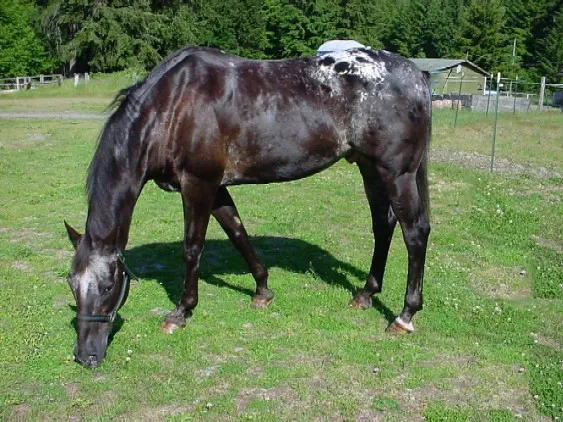
Dripping sweat on a cool morning is not the sign of a hard-working horse.
Abnormal sweating, either too much or too little, is linked to hormonal disease in older horses. PPID can cause excess sweating, especially under a thick coat. A horse that stops sweating properly in hot weather can overheat quickly.
Owners often blame the rug or the weather. Sometimes they are right. Often there is more to the story.
Check how your senior handles the same conditions as the younger horses beside it. A horse that is wet while the others are dry deserves a closer look. Also watch for:
- Patchy sweating on only part of the body
- A damp neck or flanks after minimal effort
- A horse that seems oddly hot and dry in summer
None of this is diagnostic on its own. Together with other signs, it helps build a picture a vet can follow up with testing.
Fast Facts
- Sweat is the horse’s main way of cooling down, which is why poor sweating is a real risk in summer
- A normal adult resting temperature is roughly 99 to 101°F
- A normal resting breathing rate is about 8 to 16 breaths per minute
- Taking all three numbers on a calm day gives you a baseline for hot, sweaty days
But the most urgent signal in this group often starts with a horse that simply seems “footsore”…
#7 – Rocking Back Off the Front Feet
🔥 Would you like to save this?
We'll email this post to you, so you can come back to it later!
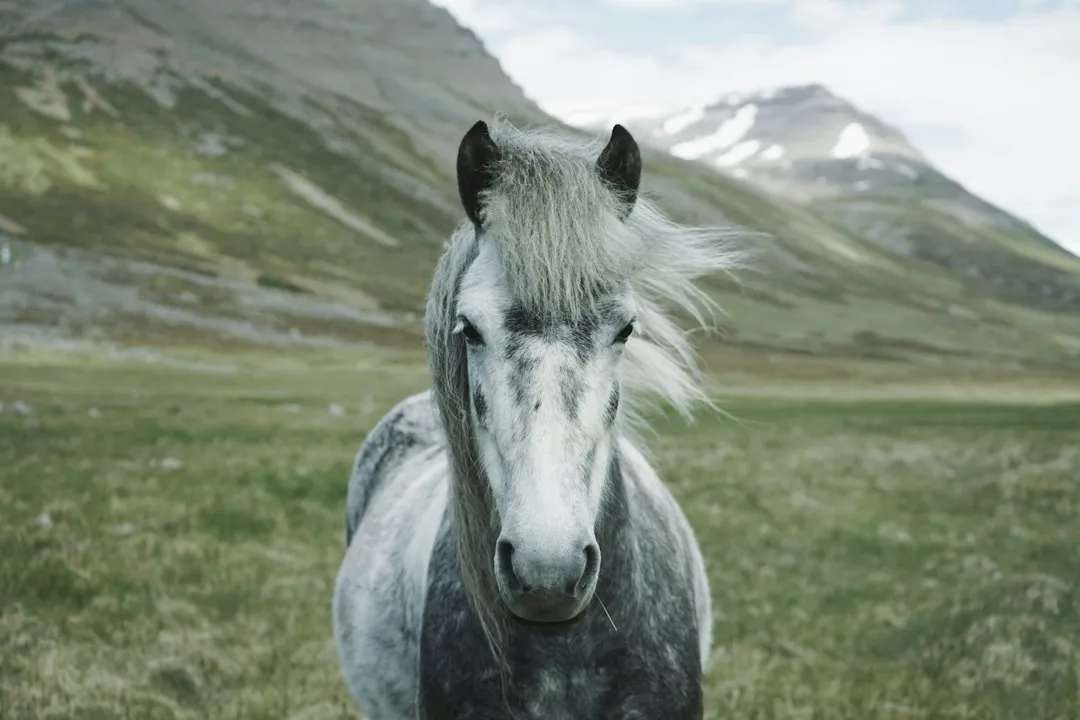
A horse leaning away from its toes is telling you something hurts, and laminitis is high on the list.
Older horses with PPID face a higher laminitis risk. The signs include shifting weight, reluctance to turn, a “stretched out” stance and heat in the hooves. A bounding pulse at the pastern can show up before the horse is clearly lame.
Don’t wait for obvious lameness. Laminitis is a veterinary emergency, and early action can change the outcome.
Here’s another detail most people overlook. ACTH levels naturally rise in late summer and autumn, so the timing of PPID testing matters. Ask your vet about seasonal reference ranges.
But hoof trouble is only one way aging bodies fail quietly. Another one is in the eyes…
#6 – Cloudy Eyes and Misjudged Steps
🔥 Would you like to save this?
We'll email this post to you, so you can come back to it later!
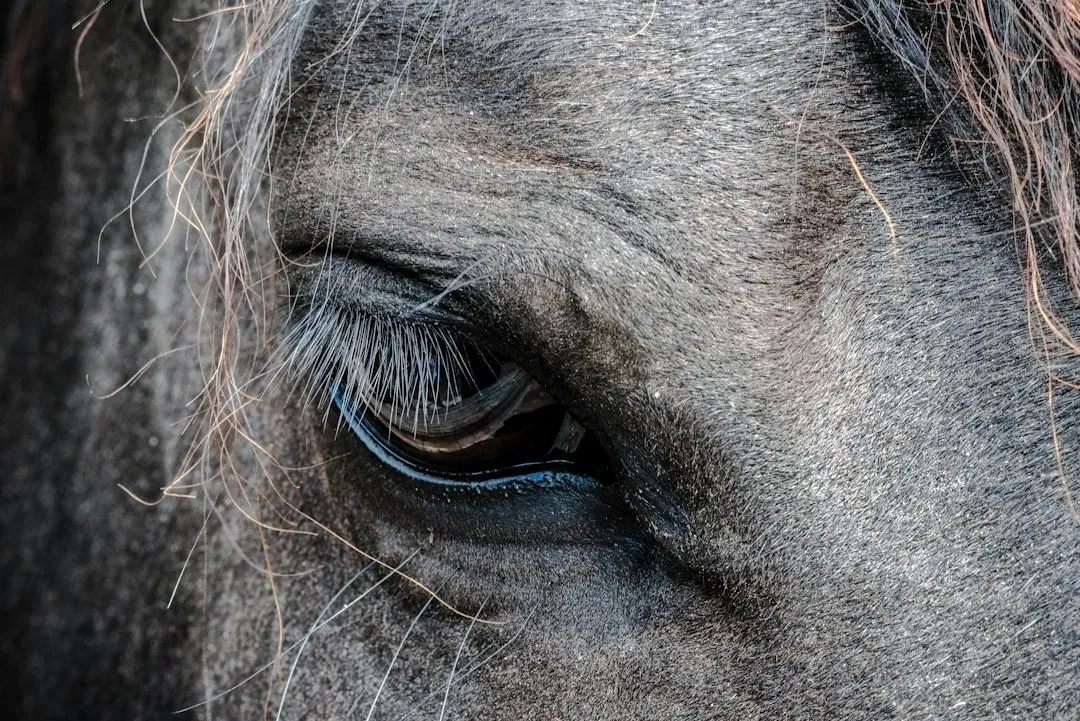
A bluish haze in an old horse’s eye isn’t always a problem, but it isn’t always harmless either.
Nuclear sclerosis is a normal age-related change that gives the lens a cloudy, grayish look. It usually has a minor effect on sight. Cataracts and inflammation are different, and they can cause real vision loss and pain.
Squinting, tearing, a swollen lid or a sudden change in the eye’s color is urgent. Don’t wait for the next scheduled vet visit.
At a Glance
- Nuclear sclerosis: a bluish-gray haze, usually in both eyes, with little effect on vision
- Cataract: a whiter, chalkier spot in the lens that can block sight
- Red flags: squinting, discharge, swelling or a sudden color change, which call for a prompt vet visit
Watch how your horse behaves around you:
- Spooking at things on one side
- Hesitating at doorways or shadows
- Startling when approached from the blind side
Many “behavior problems” in old horses are actually vision problems. Talk before you approach, keep the barn layout consistent and avoid moving feed buckets around.
But a horse that sees poorly and breathes poorly is a different challenge altogether…
#5 – A Cough That Won’t Quit
🔥 Would you like to save this?
We'll email this post to you, so you can come back to it later!
A lingering cough in the barn is not just “dust season.”
Equine asthma is common in older horses and tends to flare with dusty hay and bedding. Signs include coughing, nasal discharge and extra effort to breathe out. In long-standing cases, the abdominal muscles can build up along the barrel, creating a visible “heave line.”
Many stables have dust problems that nobody wants to fix. Hay is stored overhead, stalls are bedded with dusty shavings and the horse eats with its nose buried in the pile.
Fresh air matters most. Turnout, good ventilation and low-dust forage are the foundation. A vet can prescribe medication, but the environment is half the treatment.
But breathing trouble can also be a clue that the heart is struggling…
#4 – Tiring Out Faster Than He Used To
🔥 Would you like to save this?
We'll email this post to you, so you can come back to it later!
If your senior horse is winded after a walk it used to handle easily, take note.
Reduced stamina can come from lungs, heart, anemia, pain or muscle loss. Heart murmurs are fairly common in older horses, and many are minor. Some horses live comfortably for years with a murmur, while others have an underlying rhythm problem that needs treatment.
Atrial fibrillation, for example, can cause poor performance and exercise intolerance. A vet can tell the difference with a listening exam and sometimes an ultrasound.
Learn what normal looks like first. Record your horse’s resting numbers when it is calm and healthy, so you have something to compare against later.
But the hardest sign to spot happens when nobody is watching, usually at night…
#3 – Not Lying Down, or Struggling to Get Up
🔥 Would you like to save this?
We'll email this post to you, so you can come back to it later!
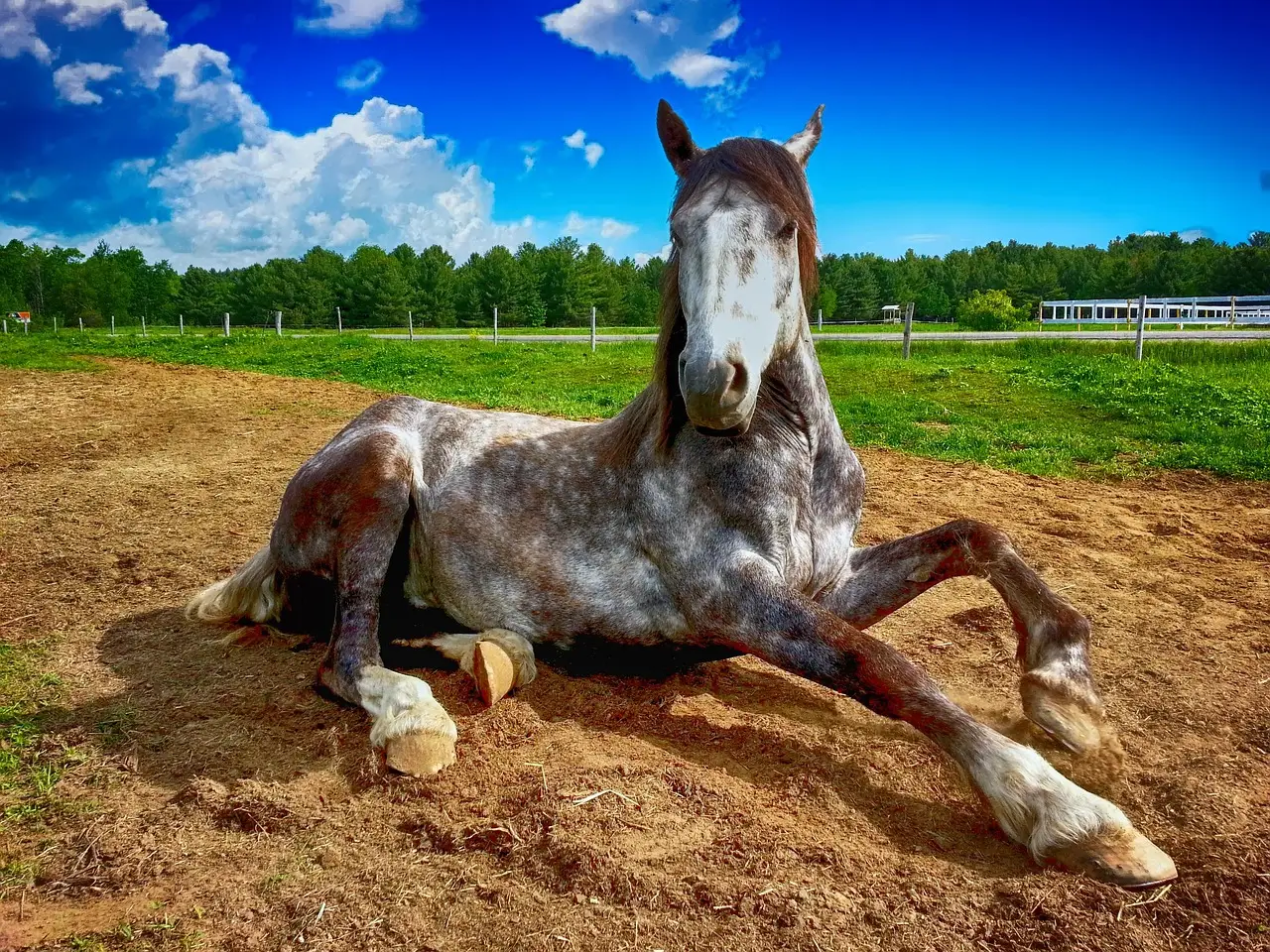
Horses do their deepest sleep lying down, so a horse that never does it has a problem.
Horses can doze on their feet thanks to a locking mechanism in the legs. But REM sleep requires lying down. A horse that is chronically deprived of that sleep can eventually collapse without warning.
Sore joints often make older horses reluctant to lie down. Some struggle to rise. Others get “cast” against a wall and cannot get up at all.
Clues include a lack of dents in the bedding, shavings that are always clean and a horse that looks sleepy at odd times of day.
But the most dangerous problem in this group can look like a minor stomach ache…
#2 – Mild, Repeating Colic Signs
🔥 Would you like to save this?
We'll email this post to you, so you can come back to it later!
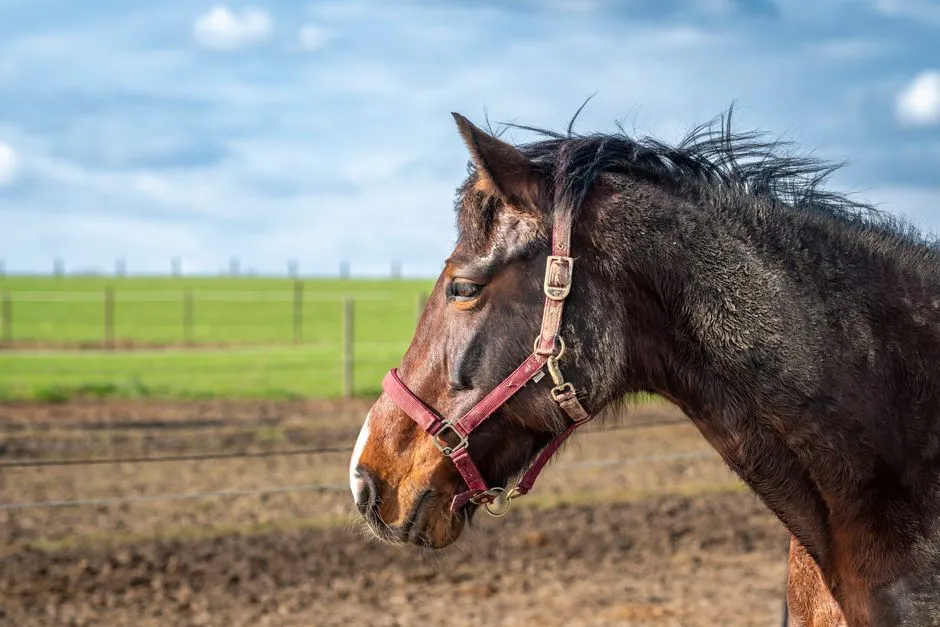
A horse that looks at its flank and goes off its feed is not “just a bit off.”
Older horses face specific colic risks. Poor chewing can contribute to impactions. Pedunculated lipomas, fatty growths on stalks, are mostly found in horses older than about 15. These can wrap around the intestine and cut off its blood supply.
Signs can be subtle in a stoic senior. Watch for:
- Fewer manure piles than normal
- Pawing, flank-watching or lip curling
- Lying down more than usual or refusing feed
Many owners walk the horse for hours and hope. Experts say that delay is a mistake. Call your vet early, especially if the signs return or don’t settle quickly.
But the last signal is the one owners explain away the longest…
#1 – Losing Interest in Everything
🔥 Would you like to save this?
We'll email this post to you, so you can come back to it later!
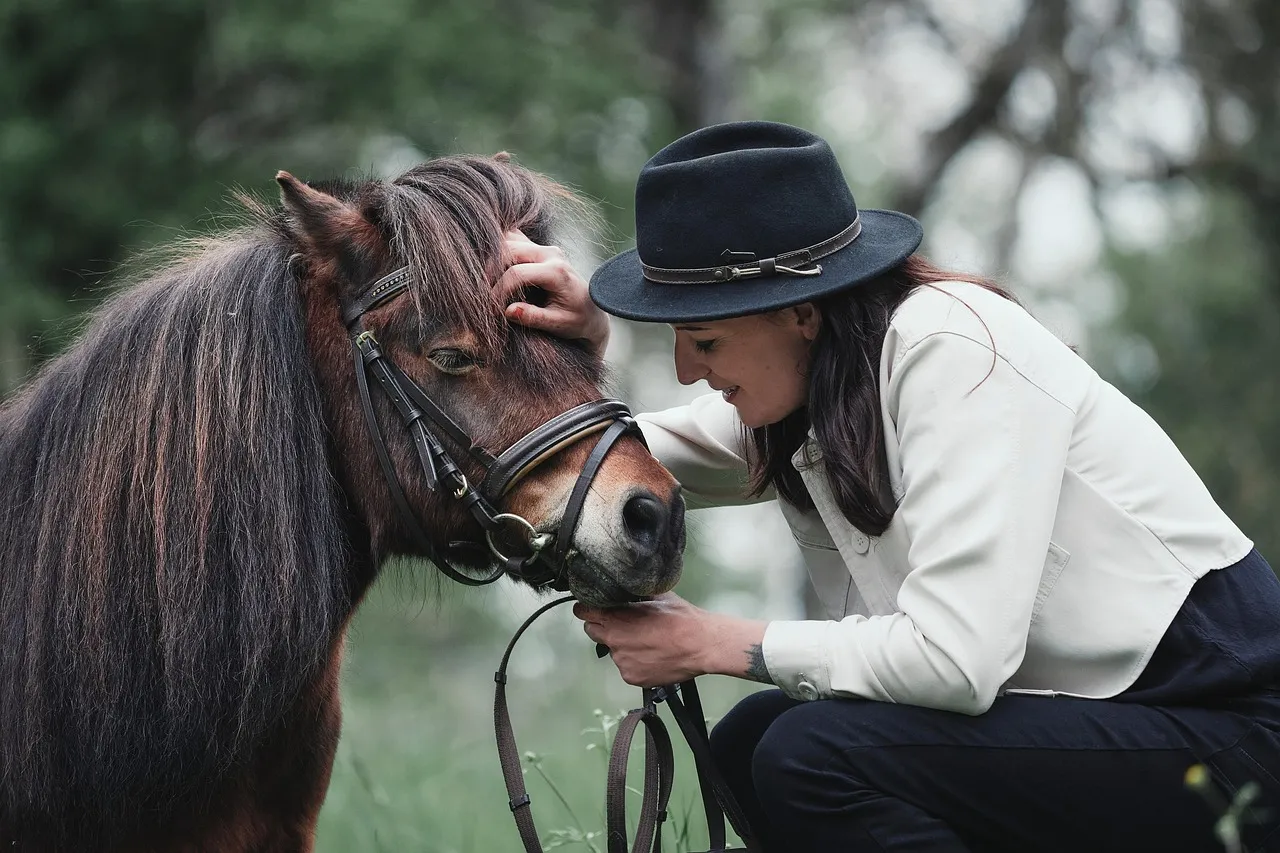
When a horse stops greeting you, stops caring about food and stands with a dull eye, listen closely.
Appetite and engagement are the broadest health indicators a horse has. A senior who turns away from favorite treats or stops nickering at feeding time is rarely just “getting quiet.” Withdrawal is often the body’s way of saying something hurts or isn’t working.
It may be dental pain, ulcers, organ disease or advanced arthritis. It can also be a combination. The cause matters, because some of them are treatable and others are not.
Here’s the honest truth. Many owners wait longer than they should, because the change comes slowly and the horse has been a friend for decades. Vets advise using quality-of-life checklists and asking for a frank assessment. A good-day-to-bad-day ratio is worth tracking in writing.
Worth Knowing
- Quality-of-life reviews usually weigh appetite, comfort, mobility and interest in the world
- A simple calendar marked “good day” or “bad day” shows trends that memory misses
- Pain, the most common culprit behind withdrawal, is often treatable
- Ask your vet for an honest opinion, not just reassurance
That brings us to what all 17 signals have in common…
Not one of these signs is “just old age.” Most are early messages about teeth, hormones, joints, lungs, eyes or pain, and many can be managed if someone catches them in time. The real mistake in busy stables is not ignorance. It’s habit, the quiet assumption that an old horse slowing down is normal and nothing needs to change.
Our opinion: every senior horse deserves a dental check, a hormone screen when the signs fit and a regular body-condition score. Stop comparing the horse to the others in the field and start comparing it to its own last month. The earlier you notice, the more good years you can give. Which of these signs did your barn miss the longest?

- 7 Everyday Habits That Can Make Your Senior Dog Happier - November 5, 2026
- 10 Enigmatic Structures That Continue to Puzzle Scientists Today - November 5, 2026
- 10 Strange Ruins in the Americas That Challenge What We Know About Early History - November 5, 2026