

Look at ten hummingbirds fighting over your feeder and you’ll probably guess wrong on at least seven of their ages. Most people size up a hummingbird the same way they size up a stranger at a party – bold colors, confident posture, must be an adult. That instinct is almost always misleading, and once you know what banders and feather researchers actually look for, you’ll wonder how you ever trusted your eyes before.
The truth is written in tiny, easy-to-miss details across the throat and tail – texture, wear, symmetry, even how light bounces off a feather edge. None of it requires a microscope, just a sharper way of looking. By the time you reach #1, you’ll never glance at a hummingbird the same way again.
#18 – The First-Hour “Fluff”: Juvenile Softness Around the Gorget

🔥 Would you like to save this?
We'll email this post to you, so you can come back to it later!
The very first age clue on a hummingbird’s throat has nothing to do with color. It’s texture. Fresh-out-of-the-nest birds show a soft, almost unfinished fuzziness where the gorget will eventually blaze, and up close those feathers look more like down than the sleek mirrored plates you see on adults.
That fuzziness exists because juvenile contour feathers in the gorget zone haven’t finished forming their rigid, plate-like structure yet. Light scatters instead of flashing, which is why the throat can look strangely matte or patchy even in bright sun.
- Margins that look frayed or uneven
- Tiny gaps where feathers haven’t fully filled in
Plenty of backyard watchers mistake this for illness or a rough molt. It’s neither – it’s just what a baby hummingbird’s throat looks like before its first real upgrade.
#17 – Patchy “Freckle” Iridescence: The Teenage Gorget
🔥 Would you like to save this?
We'll email this post to you, so you can come back to it later!
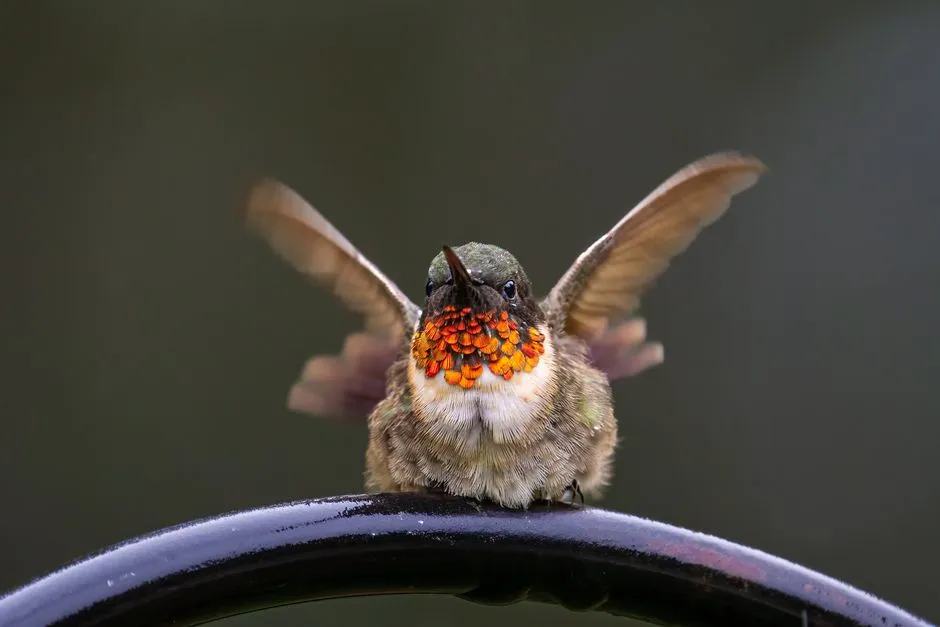
Once a young hummingbird hits its awkward middle stage, the gorget starts hinting at its future color, but not in the clean way field guides show it. Instead, you get scattered freckles of iridescent spots scattered across an otherwise dull, grayish throat.
Those isolated flashes are individual adult-type feathers erupting early, and here’s the twist: they’re often brighter than a full adult’s gorget, simply because the barbs and barbules are brand new and undamaged. Most people assume a dull throat means female or non-breeding. It might just mean teenager.
- From some angles, the bird looks totally plain
- Turn slightly and you catch a handful of blazing red, violet, or orange “pixels”
That sparse, freckled look is a dead giveaway for a bird still growing into itself, not one settling into old age.
#16 – The Sharp Color Cutoff: Juvenile Gorgets with Sudden Edges
🔥 Would you like to save this?
We'll email this post to you, so you can come back to it later!
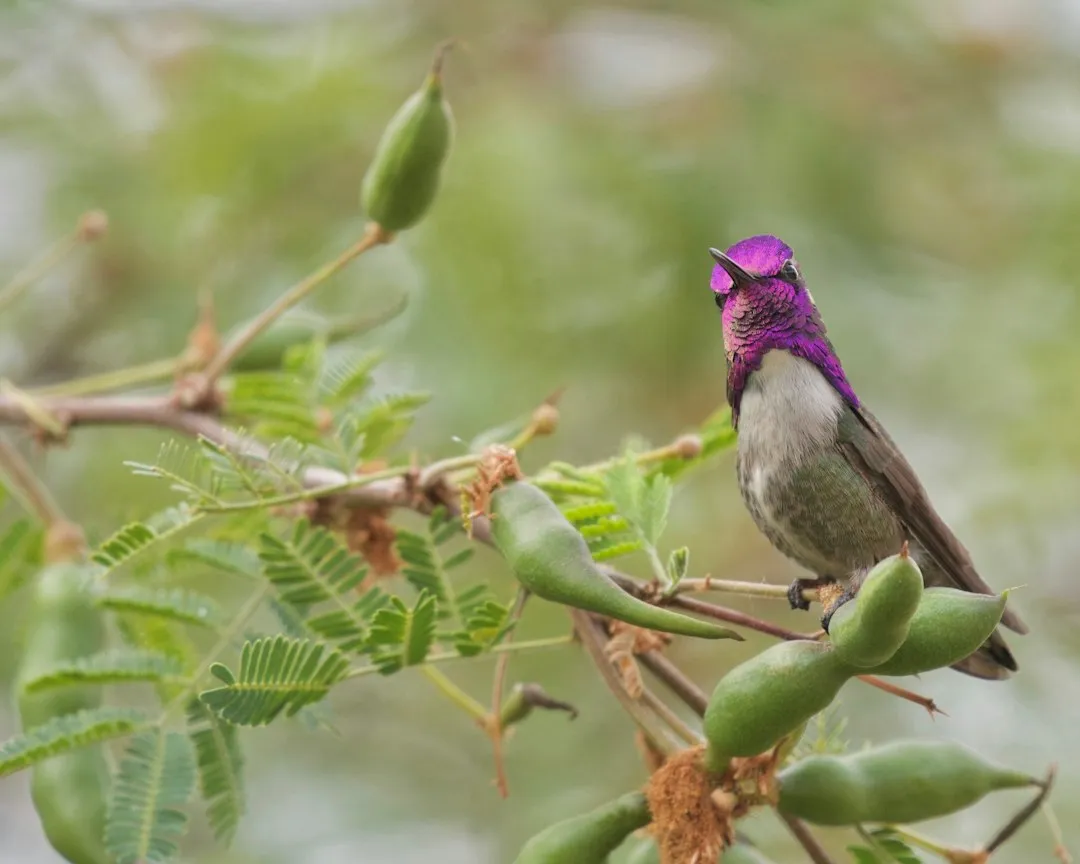
As the gorget fills in further, watch how abruptly the color stops. Younger birds often show a hard boundary where the emerging iridescent patch slams straight into plain buff or gray feathers, almost like someone painted the color on and forgot to blend the edges.
Older males in their prime tend to show a softer, more graded transition from full metallic throat into the upper chest. The color doesn’t fade completely – there’s just less of that harsh, geometric line.
- Does the color end in a solid, almost stenciled outline?
- Or does it melt gradually into the surrounding feathers?
A razor-cut border usually points to a young adult or a late juvenile just stepping into its first real display of color.
#15 – Micro-Chips at the Feather Tips: Subtle Wear with Real Age

🔥 Would you like to save this?
We'll email this post to you, so you can come back to it later!
Most people assume bright means young and dull means old. With hummingbirds, that’s only half true. Over multiple seasons of aerial combat, flower probing, and weather, gorget feathers pick up tiny chips, nicks, and rounded edges even while the color stays intense.
Under good light, older birds’ gorget scales stop forming those perfect little polygons. Some look blunted or notched – basically, feather mileage. It doesn’t mean the bird is ancient by songbird standards, but next to a first-year male’s razor-clean plates, the difference is obvious.
- A subtle softening along the outer gorget edge
- Tiny irregularities along individual feather tips
You won’t catch this at twenty feet, but once you know to look for it, feeder photos suddenly start telling age stories you’d been scrolling past for years.
#14 – Faded Fire: Sun-Bleaching Versus True Immaturity
🔥 Would you like to save this?
We'll email this post to you, so you can come back to it later!
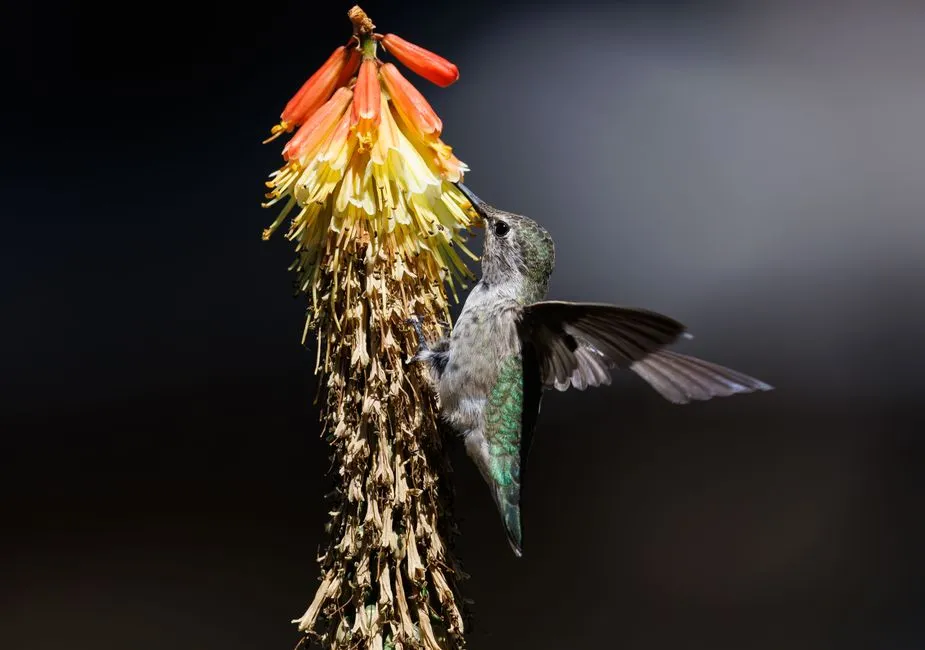
Here’s where even seasoned backyard watchers get fooled. A hummingbird can have a fully developed, complete gorget pattern and still look strangely washed-out – and people instantly call it young or female. Often, you’re actually looking at sun-bleached, UV-damaged feathers on a bird that’s been around for years.
Iridescence isn’t pigment, it’s structural, but the microscopic architecture that produces it can still degrade under months of harsh sun, especially in dry, high-light regions. The result is color that drifts toward yellowish or brownish tones and loses its punch.
Worth Knowing
- Gorget shimmer comes from light bending across microscopic keratin structures, not from pigment – which is why the same feather can look gray one second and fiery the next
- Because that shimmer depends on physical structure, months of harsh sun can wear it down the same way sunlight fades a car’s paint
- Sun-bleaching and true juvenile dullness can look similar at a glance, but only one comes paired with a complete, fully formed pattern
- The pattern is complete and symmetrical, just tired-looking
- Tail feathers show similar dulling or frayed tips
- The bird’s behavior – dominant, territorial – doesn’t match a juvenile
Younger birds usually have fewer colored feathers, but those few are shockingly pure. Faded but complete almost always means “been around the block,” not “still figuring it out.”
#13 – Asymmetry Tells on Them: Uneven Gorgets with History
🔥 Would you like to save this?
We'll email this post to you, so you can come back to it later!
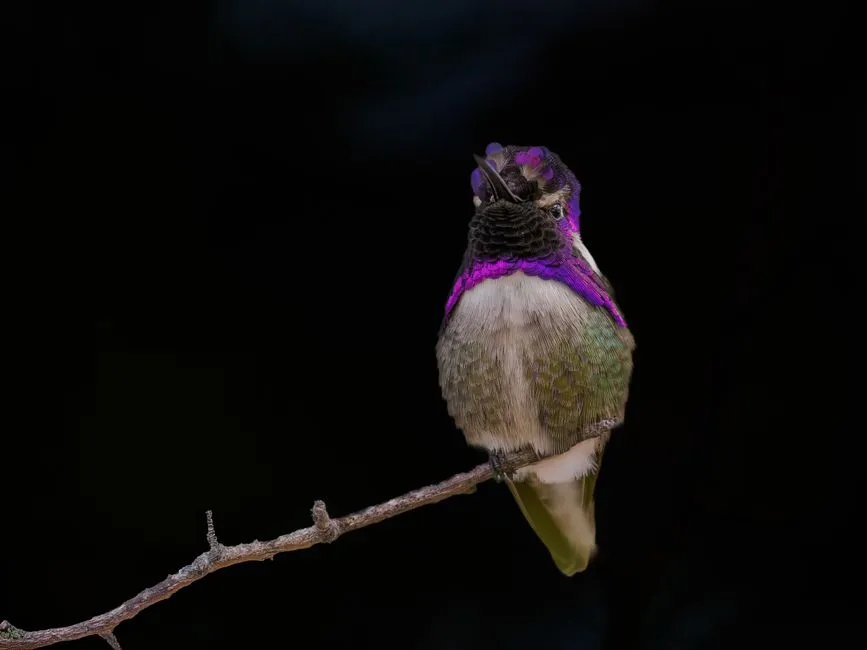
In a textbook world, an adult hummingbird’s gorget is perfectly mirrored – same shape, same density on both sides. In the real world, life happens, and older birds wear those accidents right on their throats.
A lopsided patch, a missing wedge of color on one side, or an odd dip in the outline usually points to past feather loss and regrowth. Juveniles might be underdeveloped, but that underdevelopment tends to be symmetrical on both sides.
- Lost feathers in a fight or collision
- Regrown feathers slightly off the original pattern
- Accumulated, uneven wear over time
Asymmetry paired with heavy wear is almost never a first-year combination. It belongs to a bird that has survived more than one brutal season.
#12 – The Dark “Under-Gorget”: Subtle Shadowing in Mature Birds
🔥 Would you like to save this?
We'll email this post to you, so you can come back to it later!
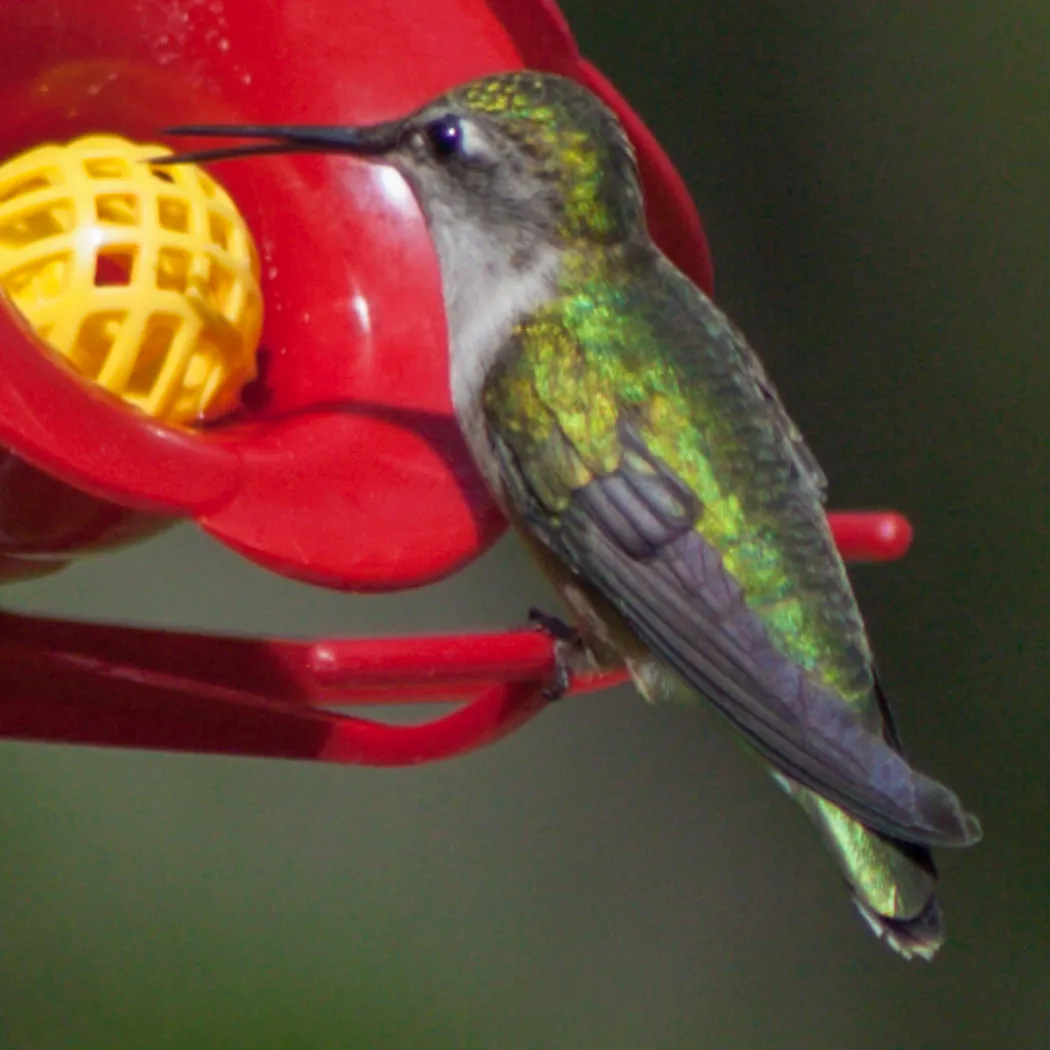
Here’s a clue almost nobody checks: what the gorget does in bad light. Young birds with sparse, developing throats often just look pale or plain when the sun angle is wrong. Older birds with dense feathering do something different entirely.
Their throat can turn a deep, almost blackish shade when the iridescence isn’t firing, because tightly packed, overlapping feathers absorb more light instead of bouncing it back to your eye. A gorget that swings from blazing color to inky darkness as the bird tilts its head is usually a mature male with serious feather coverage.
- How the throat looks in shade or overcast light
- Whether it goes flat gray (often younger) or dark and heavy (often older)
It’s counterintuitive, but the gorget that looks almost black in weak light can belong to the most developed, most mature bird at your feeder.
#11 – Tail Feather Edges: Crisp Versus Chewed-Up
🔥 Would you like to save this?
We'll email this post to you, so you can come back to it later!
Shift your eyes from the throat to the tail, and you’ll find one of the most reliable clues in the whole bird: the condition of the feather edges. First-year birds with recently grown flight feathers show razor-sharp, even margins, almost like they were cut with a laser.
Months of aggressive flying, perching, brushing through foliage, and scraping past feeder ports change that fast. Older birds accumulate real damage that shows up right at the vane’s edge.
- Tiny nicks along the vane edges
- Ragged tips, especially on the outermost tail feathers
- A general look of used equipment versus factory-fresh
The more uniformly clean and sharply pointed the tail feathers, the younger the bird tends to be. Edges that look shredded compared to the birds around them almost always belong to a veteran.
#10 – Juvenile Tail Shape: Shorter, Rounder, Less Dramatic
🔥 Would you like to save this?
We'll email this post to you, so you can come back to it later!
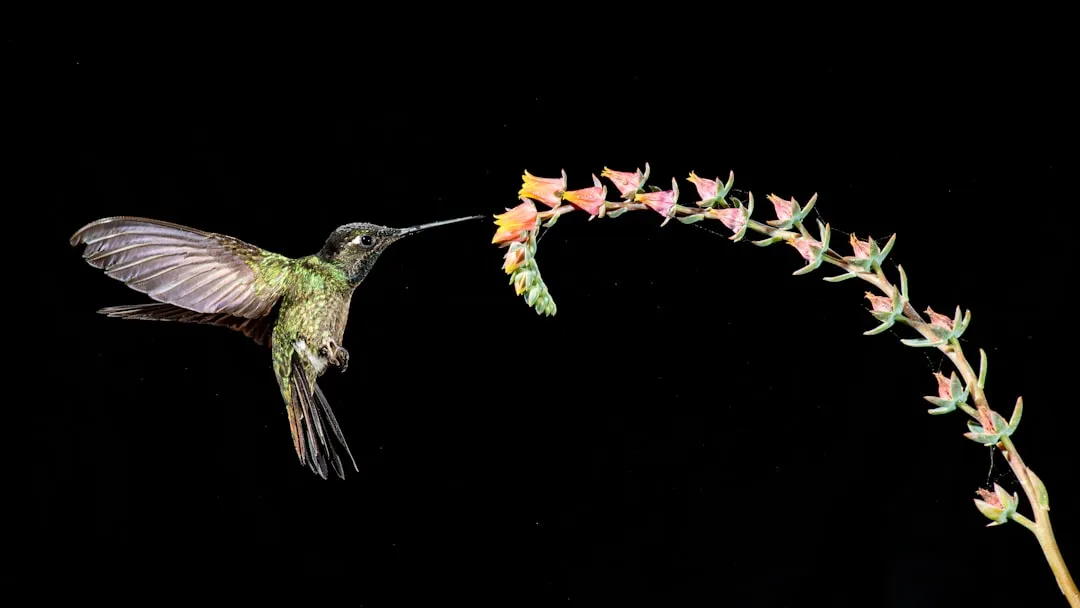
Compare a truly young hummingbird’s tail to a mature bird of the same species and the silhouette itself gives it away. Youngsters often show shorter, more rounded rectrices, with less dramatic differences between the inner and outer feathers.
Adult males in many species evolve striking tail geometry over time – longer outer feathers, sharper points, deeper notches – and those shapes are usually muted in first-year birds. It’s a quiet signal, but a powerful one.
Quick Compare
- Juvenile tail: shorter, rounded rectrices with minimal length difference between feathers
- Mature tail: longer, tapered outer feathers with pronounced points or notches
- Juvenile fan: soft, evenly rounded silhouette even at full spread
- Mature fan: sharper, more dramatic geometry that keeps developing year over year
Most casual birders fixate on color and completely ignore shape. In hummingbirds, that first year of geometric change can be just as telling as anything happening on the throat.
#9 – Fresh Tail Gloss: Shiny, Perfect Vanes in Young Birds
🔥 Would you like to save this?
We'll email this post to you, so you can come back to it later!
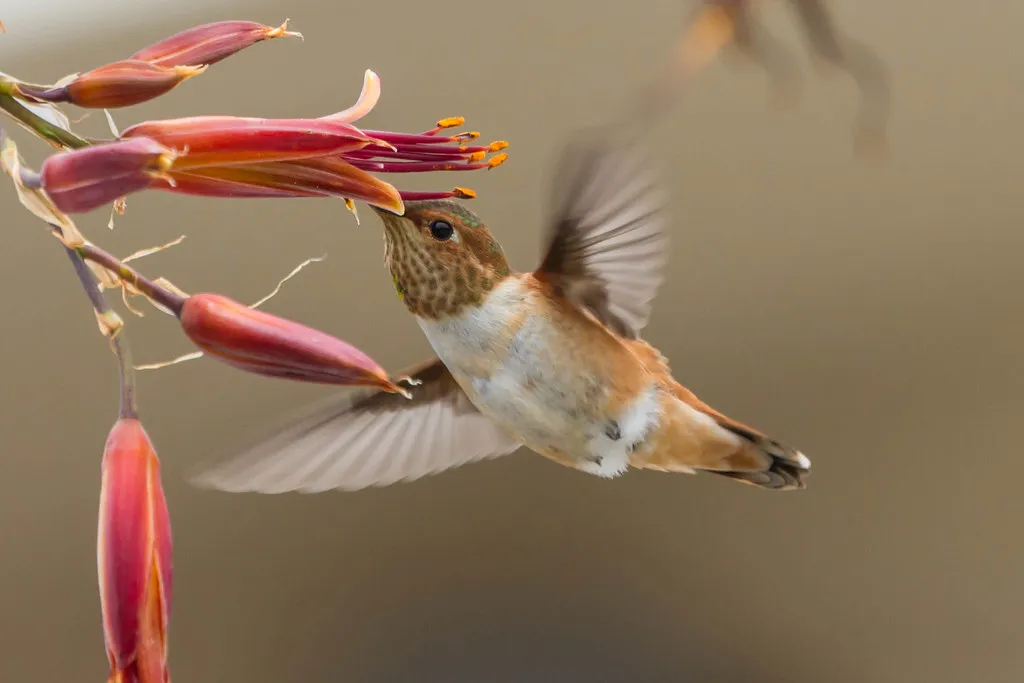
Feathers have a “new car” look, just like paint. A hummingbird that recently finished a molt often shows tail feathers with a tight, glossy finish, especially visible in good side light – even in species where the tail isn’t brightly colored.
Older birds can still have beautiful tails, but look closely and you’ll usually spot the difference.
- Slightly fuzzier vane edges
- Micro-separations where barbs no longer lock cleanly
- A matte look compared directly to a freshly feathered youngster
Banders pay close attention to “fresh” versus “worn” tail condition for exactly this reason. Fresh plus simple shape usually reads young; worn plus dramatic shape usually reads older. Not foolproof, but far more accurate than judging by cuteness.
#8 – White Tips and Fringes: Juvenile Signals That Vanish with Time
🔥 Would you like to save this?
We'll email this post to you, so you can come back to it later!
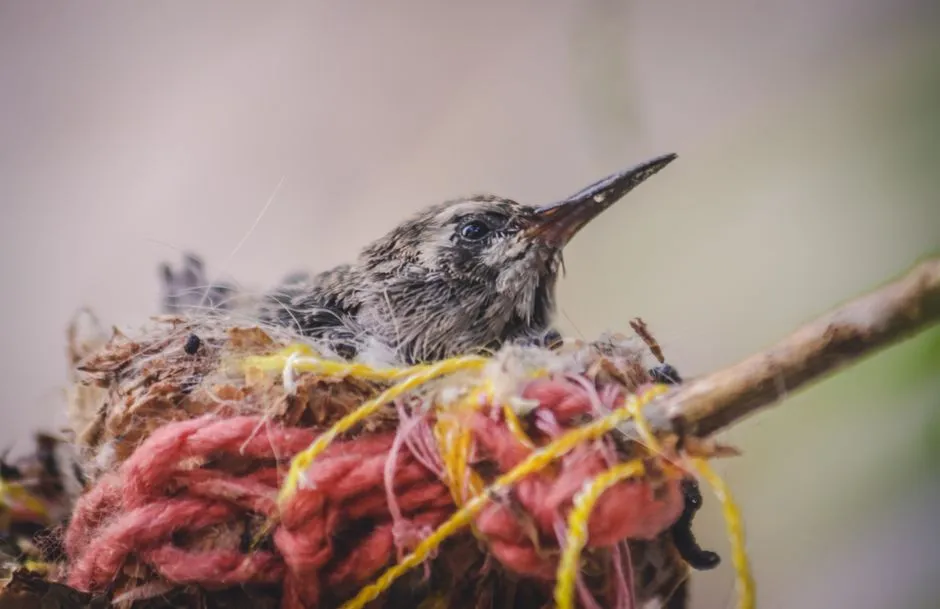
In many hummingbird species, juveniles carry conspicuous white or buffy tips on certain tail feathers. These pale fringes soften the tail’s look and give it a slightly frosted appearance compared with the bold, clean contrast of a full adult.
What surprises people is how fast these markings disappear – not through molt necessarily, but simply through everyday wear. A second-year bird mid-season may have already lost most of that juvenile edging, leaving only faint traces on the outer feathers.
- Are the white tips crisp, broad, and intact? Likely very young.
- Are they present but abraded and uneven? Probably aging out of juvenile plumage.
Relying on white tips alone can mislead you. Paired with gorget development, though, they sharpen the age picture considerably.
#7 – Tail Molt Lines: Mismatched Feathers Telling the Calendar
🔥 Would you like to save this?
We'll email this post to you, so you can come back to it later!
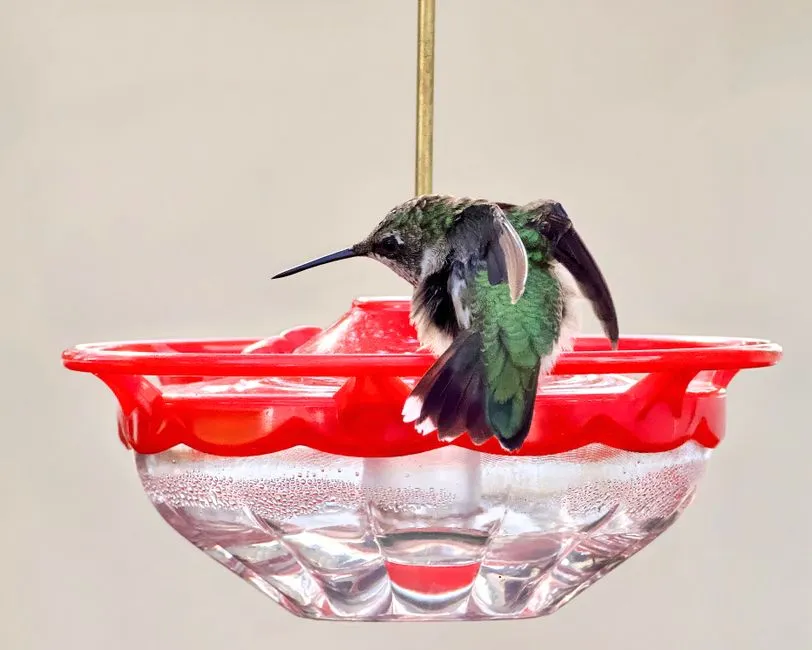
Bird banders obsess over molt for a good reason – mixed-generation feathers work like a natural timestamp. On a hummingbird’s tail, you might see some feathers darker, fresher, or longer sitting right next to older, more worn ones.
That mismatch usually means the bird is partway through its molt cycle, which typically lines up with age class. Juveniles generally shift from all-juvenile plumage, to a mixed patchwork, to a fully adult set over their first year.
Fast Facts
- Hummingbirds are among the species that go through one full molt per year, unlike gulls or eagles, which can take several years to reach adult plumage
- Adult males typically begin molting during the last week of July or the first week of August, roughly a week before females start theirs
- Juvenile male Ruby-throated Hummingbirds often carry mostly white throat feathers until their molt brings in the iridescent red
- In some species, Rufous and Anna’s hummingbirds replace their gorgets before the rest of their body feathers, which is exactly why a patchy throat can show up before a patchy tail
- Two or three tail feathers obviously newer than the rest
- A patchy pattern of fresh versus worn along one side
That’s a life in progress, not a static illustration from a field guide. Older birds, by contrast, tend to show cleaner, more synchronized tail sets, especially right after a complete molt.
#6 – Breaks and Kinks: The Battle Scars of Survival
🔥 Would you like to save this?
We'll email this post to you, so you can come back to it later!
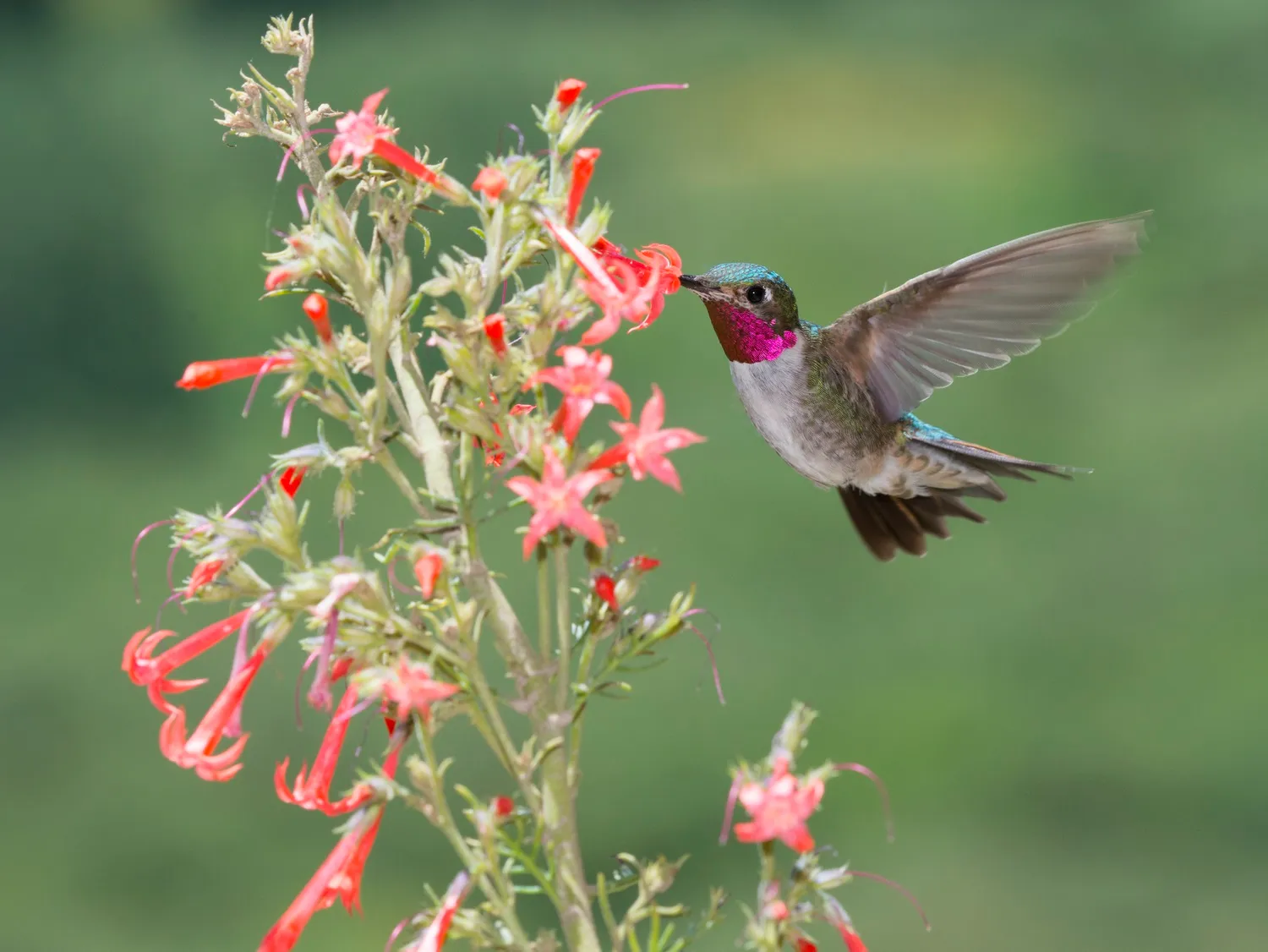
Everyone loves to romanticize hummingbirds as delicate little jewels. Their tails tell a rougher truth. Older birds, especially dominant males, often carry actual damage – bent shafts, partial breaks, twisted vanes, permanently splayed tips from collisions, predator escapes, or brutal territorial fights.
A bird in its first season simply hasn’t had enough time to collect that kind of deep mechanical damage, barring extreme bad luck.
At a Glance
- Most wild hummingbirds only live 3 to 5 years, so every visible scar represents a disproportionate slice of that short life
- The oldest confirmed wild hummingbird, a female Broad-tailed banded in Colorado, was recaptured at 12 years and 2 months old
- Ruby-throated Hummingbirds have lived 9 years, and Black-chinned Hummingbirds have been verified past 11 years, 2 months
- Every one of those extra seasons tends to show up as another chip, kink, or asymmetry along the tail
- One tail feather permanently kinked at mid-shaft
- A rectrix missing half its vane
- Chronic asymmetry in tail spread from old injuries
These are the quiet veterans of the feeder wars, and their tails prove it. It isn’t a pretty age marker, but it might be the most honest one on this entire list.
#5 – The Gorilla in the Room: Gorget Density, Not Just Color
🔥 Would you like to save this?
We'll email this post to you, so you can come back to it later!
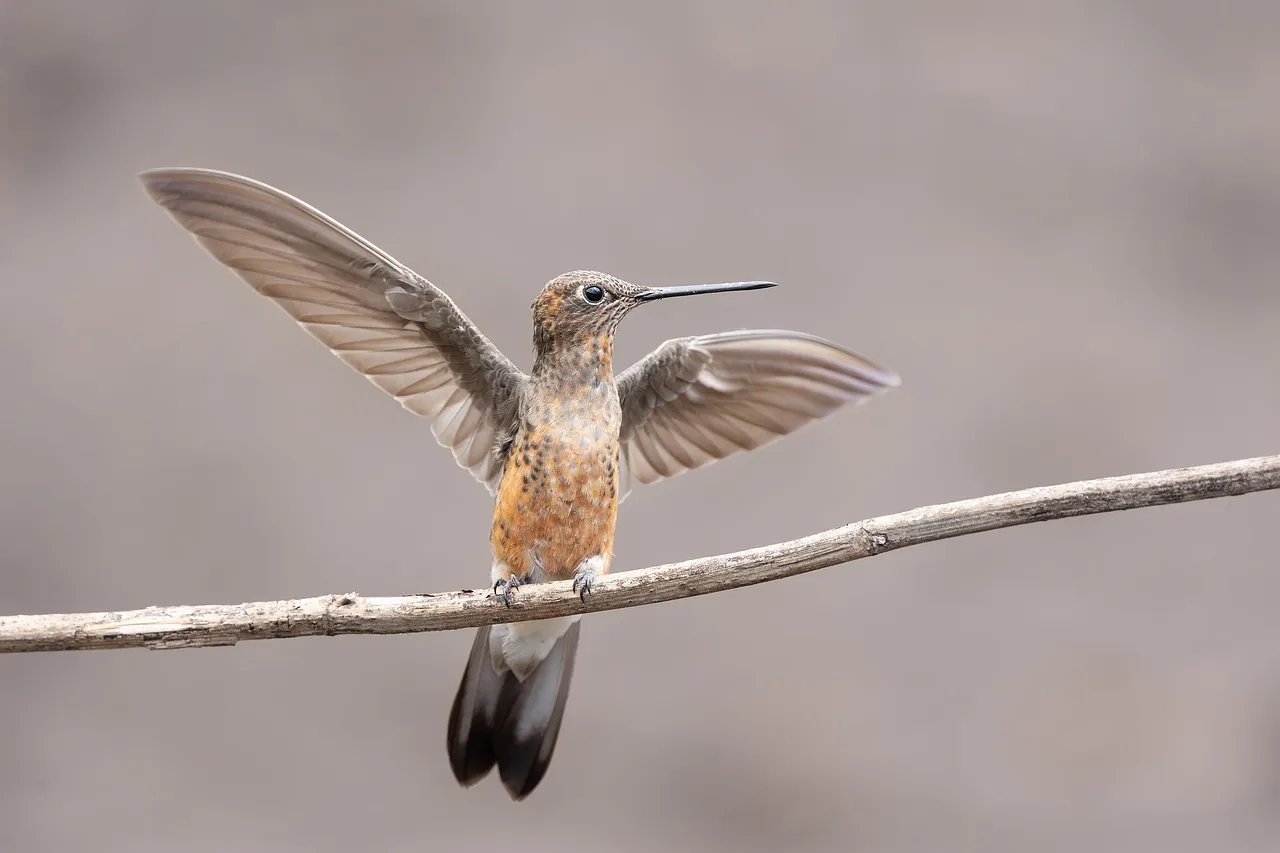
Ask most people how to age a hummingbird and they’ll say, “Look how bright the throat is.” That advice is shallow at best. Experienced observers focus on gorget density – how completely and tightly the iridescent feathers cover the throat and upper chest.
A fully mature male often shows a wall-to-wall carpet of metallic feathers with almost no plain plumage peeking through. Younger males, even impressively bright ones, usually still show gaps.
- Tiny gaps between iridescent feathers
- Plain feathers dominating near the lower throat or sides
- A less solid, less “metal plate” impression overall
This detail is subtle but massive: a smaller, extremely dense gorget can signal an older, fully mature bird, while a large but splotchy one often belongs to a bird still grading into adult plumage. Field guides rarely say this out loud, which is exactly why so many feeder regulars get mis-aged.
#4 – The “Halo” of Overlap: Gorget Feathers Creeping onto the Chest
🔥 Would you like to save this?
We'll email this post to you, so you can come back to it later!
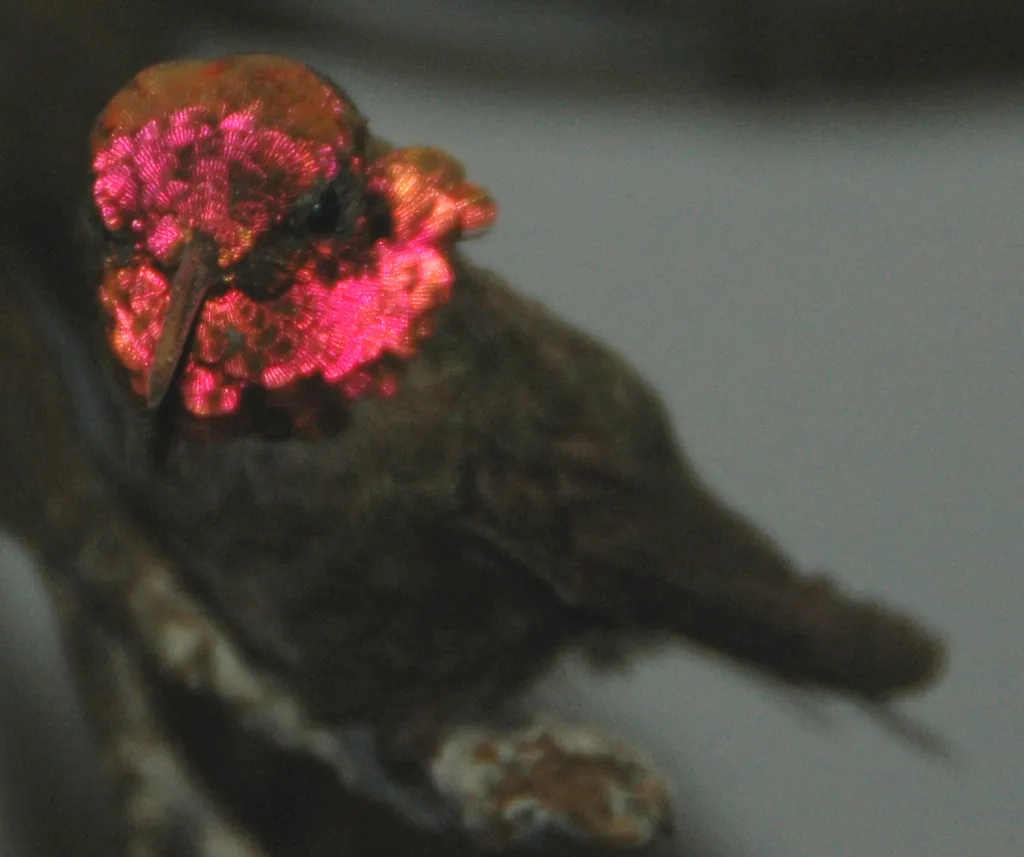
In some species and individuals, age shows up as gorget creep – the metallic feathers gradually spreading down or outward onto the chest as the bird reaches its prime. Younger birds usually keep a tighter, more confined patch strictly on the throat.
As birds age into peak adulthood, the gorget can spill slightly past that anatomical boundary, creating a faint halo of color overlap.
- A thin row of iridescent feathers dipping lower at the center
- Small metallic flecks appearing at the very top of the breast
- A broader lateral spread compared with younger birds
Not every species shows this dramatically, and genetics plays a role too. But when you line up multiple individuals side by side, the ones whose gorgets push past the normal boundary – especially paired with heavy wear – tend to be the older, battle-tested males sitting at the top of the pecking order.
#3 – The Tail Spread Story: Stiff, Confident Fans Versus Hesitant Flares

🔥 Would you like to save this?
We'll email this post to you, so you can come back to it later!
Behavior meets structure here. When a hummingbird flashes its tail during a threat display, a hover, or a sharp turn, the way those feathers spread and hold can betray its age.
Mature birds with fully hardened tails tend to show wide, flat, confident fans – symmetrical spreads that snap open and shut decisively, resisting wind distortion. Very young birds, with softer shafts and less muscle memory, often flare narrower, slightly uneven, and less aggressive spreads.
- Narrower, more “pinched” spreads in juveniles
- Slightly wobbly control during tight maneuvers
- Less aggressive flaring in confrontations
Yes, this crosses into behavior, but the underlying hardware is what makes it possible. Older hummingbirds have learned to weaponize their tails visually and, in some species, acoustically during dives – and slow-motion footage reveals age differences most people never catch in real time.
#2 – Iridescent Stability: How Consistently the Gorget Fires
🔥 Would you like to save this?
We'll email this post to you, so you can come back to it later!
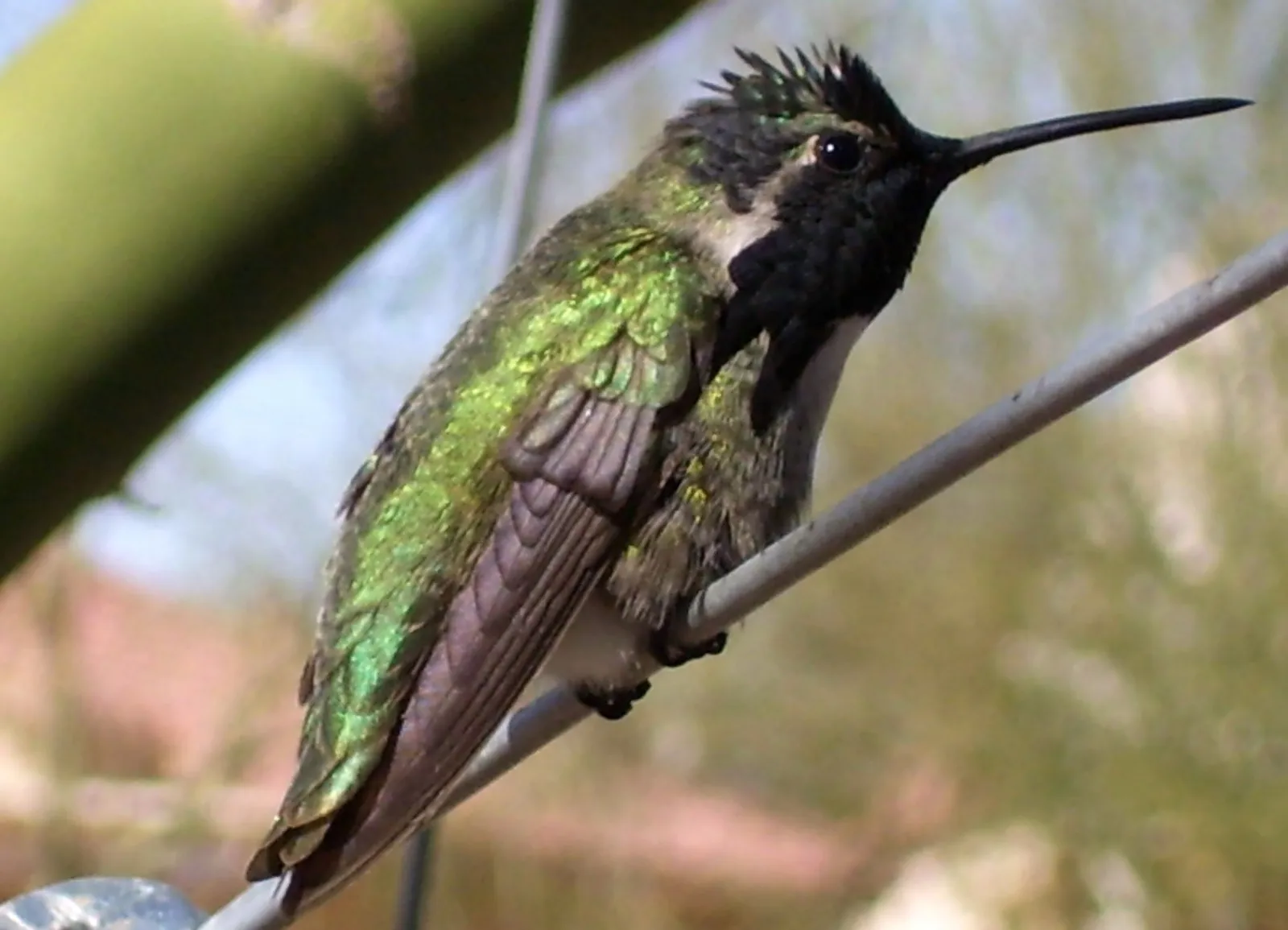
Young birds are chaos. Their gorget impressions swing wildly depending on angle, distance, and light – brilliant for one microsecond, then practically invisible the next.
Older, fully feathered individuals show far more stable, repeatable flashes of color across a wider range of angles, simply because their feather array is denser, better aligned, and more uniform.
- A mature bird’s gorget performs predictably in nearly every frame
- A younger bird’s color blinks in and out erratically
This isn’t about hue at all – it’s about structural consistency. Stable iridescence across many viewing angles points to a mature, well-organized feather field, not a patchwork still under construction. Subtle, but once you start comparing individuals side by side, it’s remarkably reliable.
#1 – The Full Story Combo: Gorget, Tail, and Wear in One Snapshot
🔥 Would you like to save this?
We'll email this post to you, so you can come back to it later!
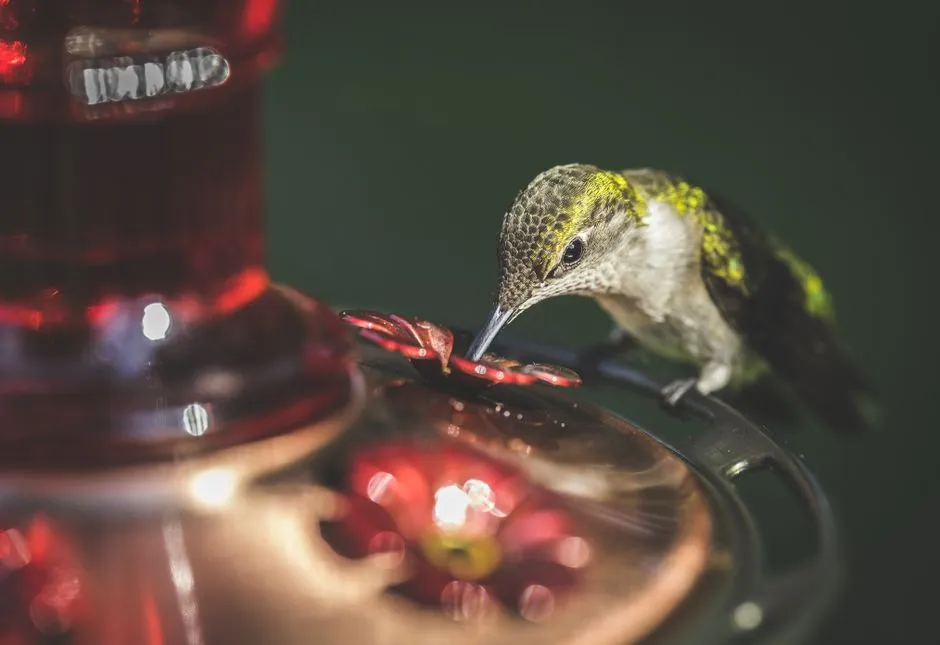
Here’s the uncomfortable truth: no single sign on the gorget or tail can age a hummingbird with total precision. The real experts don’t rely on one trick – they read the entire feather story at once, all at the same time.
Combine gorget density, edge sharpness, and symmetry with tail feather shape, wear, damage, and molt stage, plus the presence or absence of juvenile fringes and overall gloss versus sun-bleach damage, and you can place a bird into a realistic age class – fresh juvenile, first-year transitioning, prime adult, or seasoned veteran.
- Gorget details reveal sexual maturity and feather cycles
- Tail details expose how long the bird has actually been surviving hard flights, fights, and seasons
Most people ask, “Is it pretty?” and stop right there. The real question is, “How used are these feathers, and how complete is this pattern?” Once you start asking that, you begin reading age in a hummingbird’s throat and tail the same way a mechanic reads miles off a set of tires.
The Bottom Line
🔥 Would you like to save this?
We'll email this post to you, so you can come back to it later!
Hummingbird age isn’t magic – it’s mileage written in metal and fiber. The gorget and tail quietly log every season: the fuzzy softness of nest-fresh juveniles, the freckled chaos of teenage throats, the dense, dark under-gorget of mature males, the chipped, kinked, sun-tired tails of survivors that have bulldozed through multiple breeding cycles.
Bright doesn’t always mean young, and dull doesn’t always mean old. Context, density, wear, and pattern matter more than raw sparkle, and honestly, that’s what makes these birds so much more interesting than the postcard version everyone assumes they are.
Most field “ID hacks” are lazy shortcuts, and hummingbirds expose that instantly. You can’t glance and guess – you have to actually read the evidence sitting right there on the feathers. Do that once, and your feeder regulars stop being anonymous flashes of color. They become individuals with visible histories, scars, and stories written right across their throats and tails. Did we miss a sign you’ve spotted on your own hummingbirds? Say so in the comments – and defend it.

- 7 Everyday Habits That Can Make Your Senior Dog Happier - November 5, 2026
- 10 Enigmatic Structures That Continue to Puzzle Scientists Today - November 5, 2026
- 10 Strange Ruins in the Americas That Challenge What We Know About Early History - November 5, 2026