
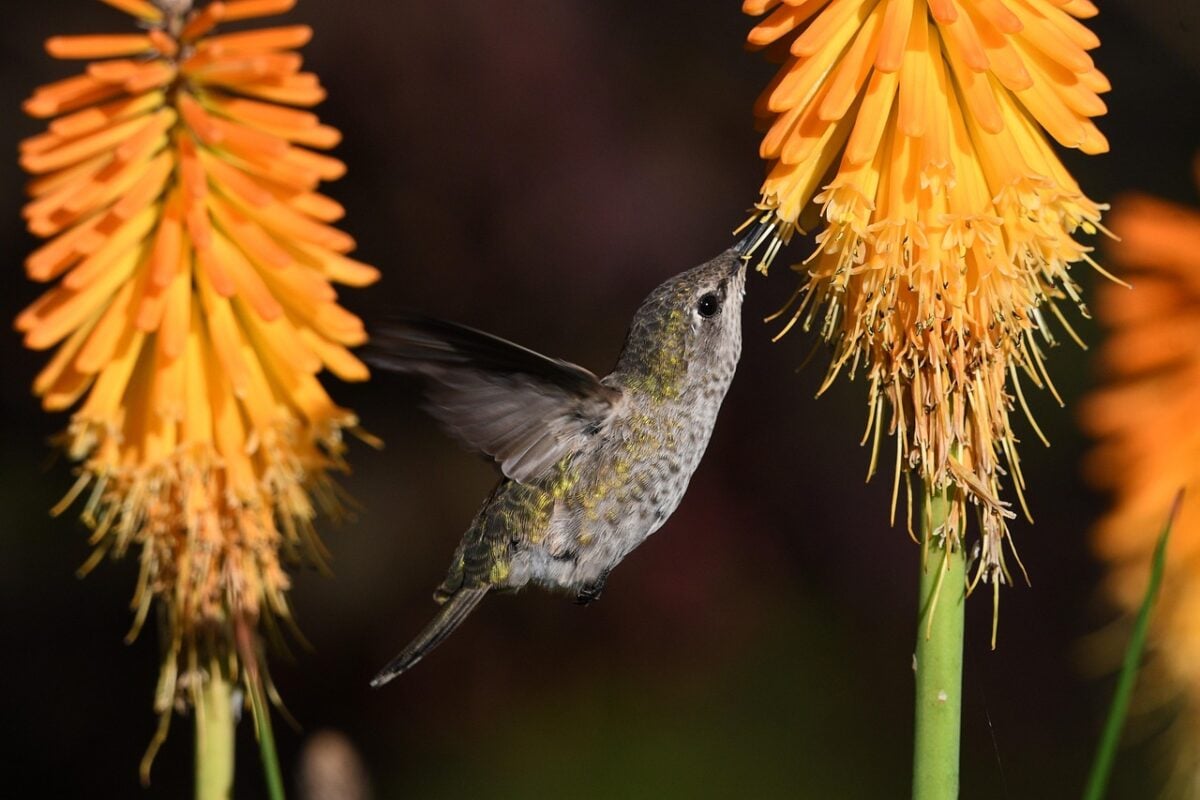
You probably think you know what a hummingbird is doing out there. Zip in, sip some sugar water, zip out, repeat until winter. That’s the story most of us tell ourselves while we’re half-watching from the kitchen window.
Except that’s not remotely what’s happening. Researchers who actually sit and watch these birds for a living describe something closer to a tiny, high-stakes soap opera – territory wars, fake surrenders, memory maps, even quiet truces that look nothing like the chaos you assume you’re seeing. Once you know what to look for in your own yard, you won’t be able to un-see it.
#1 – The “Flower Patrol Route” They Repeat Like Clockwork
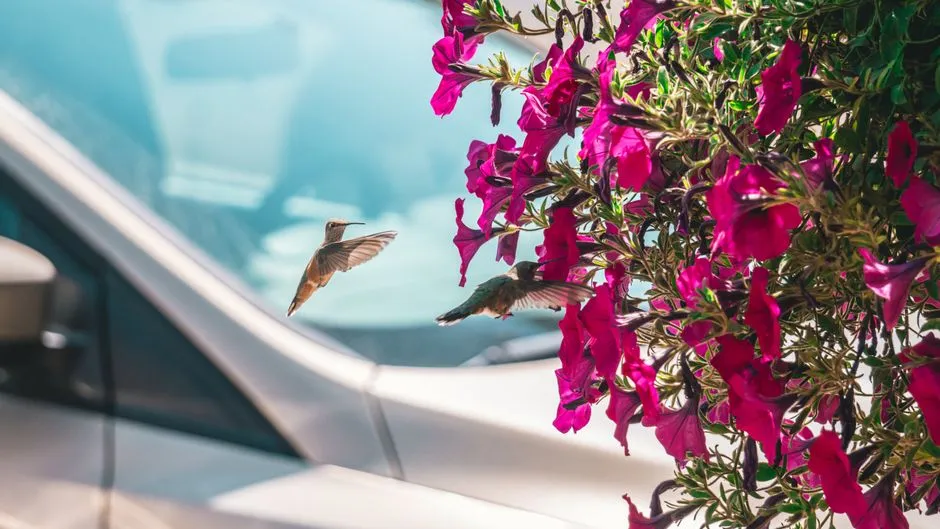
Most people assume hummingbirds bounce around randomly, chasing whatever color catches their eye. Researchers say the opposite is closer to the truth. It’s called “traplining” – a hummingbird will often visit the exact same flowers, in the exact same order, over and over again.
A single bird might hit your red salvia, swing by the fuchsia near the fence, drop in on a neighbor’s feeder, then loop back to your yard again, like it’s running laps on an invisible racetrack. If you actually sit still and time it, you’ll start noticing the same bird showing up at almost the same minute, visit after visit. Most people miss this entirely because they lose interest after about sixty seconds of watching.
#2 – Micro-Territories You Can’t See (But They Defend Like Crazy)
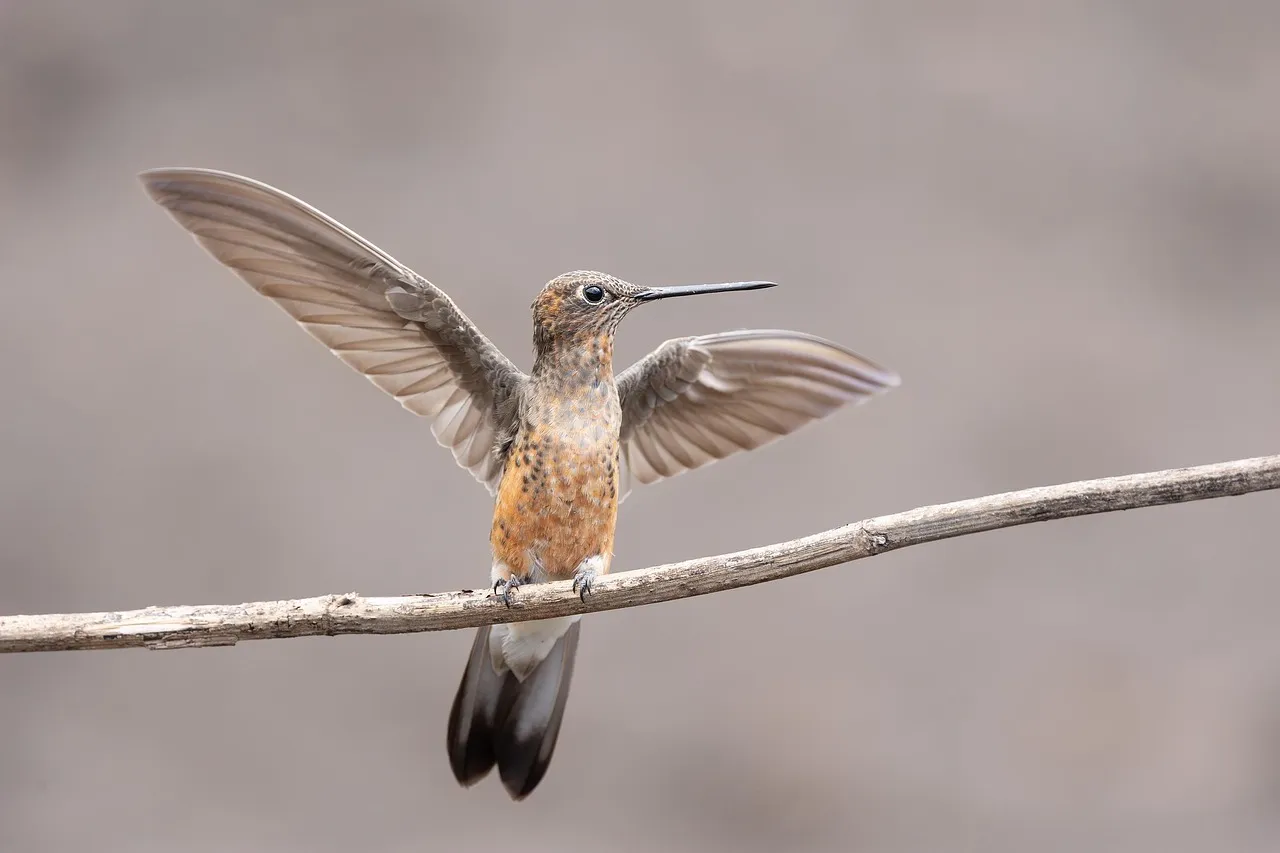
Everyone knows hummingbirds are territorial. What surprises people is the scale. They aren’t just guarding “the yard” in some vague sense – they carve your space into tiny, specific zones: one corner of the feeder, one side of a shrub, a favorite perch hovering just above “their” flowers.
A dominant bird, usually a male but not always, will stake claim to a very exact volume of air and treat any crossing as a declaration of war. Researchers have watched birds chase rivals 50 to 75 feet away from a patch of flowers, burning more energy in the fight than the nectar was ever worth. Watch closely and you’ll notice the same bird uses the same attack angle, from the same launch point, every single time.
#3 – The “Fake Retreat” Attack Move
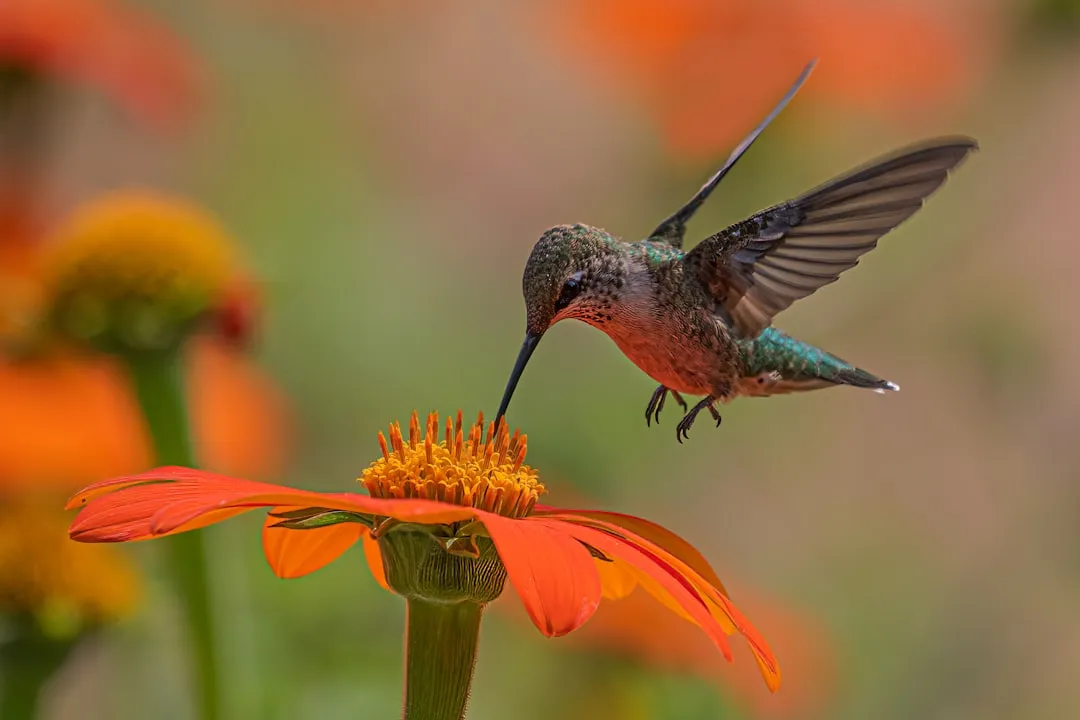
If you’ve ever watched one hummingbird seemingly give up on a feeder, only for a second bird to swoop in and get absolutely blindsided seconds later, you’ve witnessed a move researchers quietly admire: the fake retreat. The first bird didn’t lose interest. It set a trap.
Dominant birds will back off deliberately and perch in plain sight, waiting. The moment a rival relaxes and starts feeding, the “loser” rockets back in from above or behind, using surprise instead of brute force. It’s a smarter play, saving energy instead of wasting it on constant chasing. Next time you see a bird retreat to a perch with a clear view of the feeder, keep watching – that perfectly timed pounce is no accident.
#4 – Their Obsession With the “Perfect Perch”
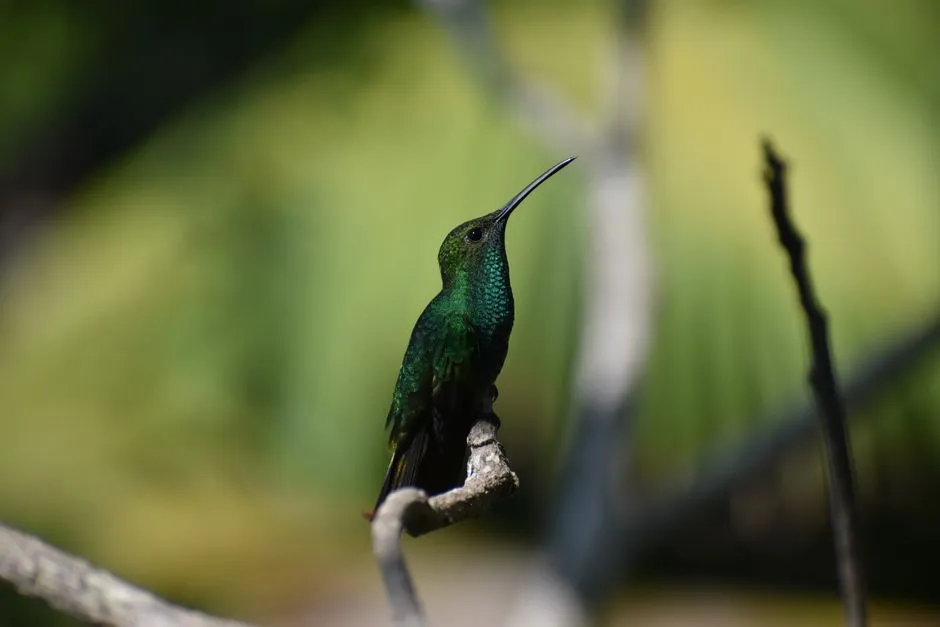
People fixate on flowers and feeders, but serious hummingbird watchers know the real power position is the perch. Most hummingbirds have one or two “thrones” in a yard, and researchers have documented the same bird returning to the exact same twig dozens of times a day.
The ideal perch checks a few specific boxes:
- High enough for a wide, unobstructed view
- Close enough to food sources to reach in seconds
- Exposed enough to allow an instant launch
From there, they’re scanning for rivals, predators like cats and hawks, and even the humans who refill feeders on a predictable schedule. If you’ve ever “tidied up” a scraggly branch and then wondered why the birds vanished, this is probably why – you tore down their command center.
#5 – The Tiny “Chirp Codes” They Use to Talk Trash
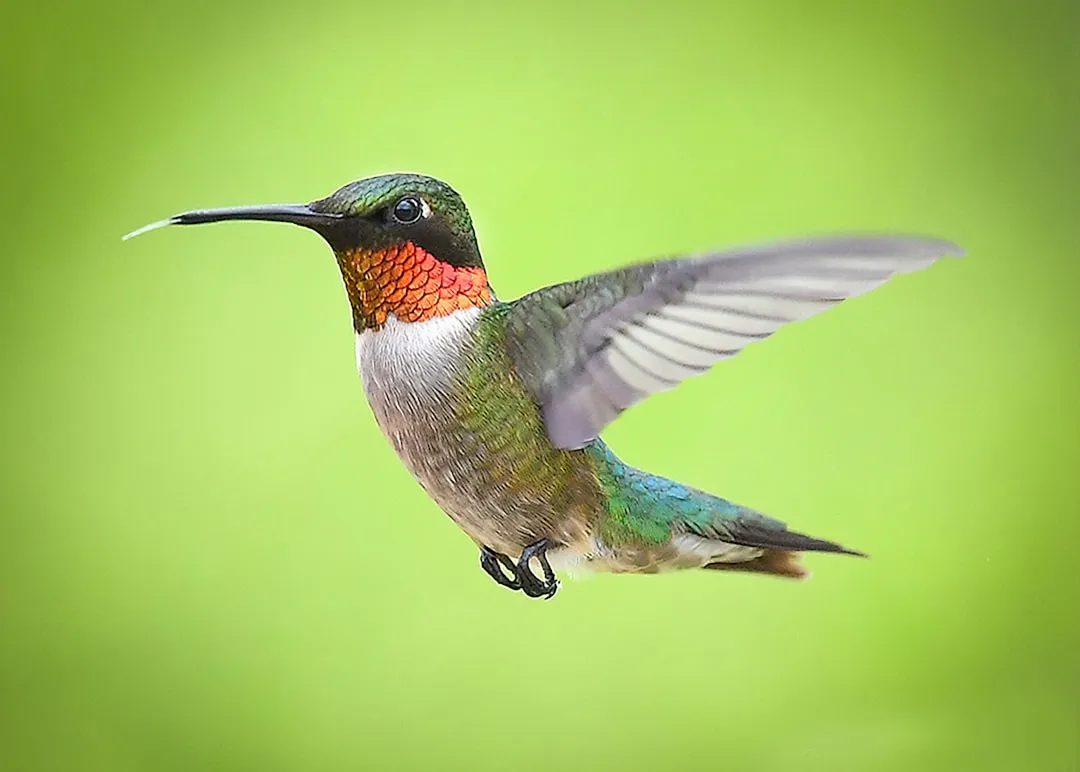
Most people hear hummingbird chirping and assume it’s just noise. Field recordings say otherwise. Some species use subtle shifts in their calls to send genuinely specific social messages – not full language, but far from random.
Aggressive encounters tend to come with sharper, faster “tik-tik-tik” bursts, almost like a warning shot that says, “I see you, don’t push it.” Calmer feeding or courtship sounds are softer and more musical, more like a contact call saying, “still here, still fine.” Listen closely during a chase and you’ll actually hear the tone change mid-flight – that rising, buzzy scolding is a threat display you’ve probably heard for years without realizing what it meant.
#6 – The “Air Brake” Tail-Flare That Doubles as a Threat
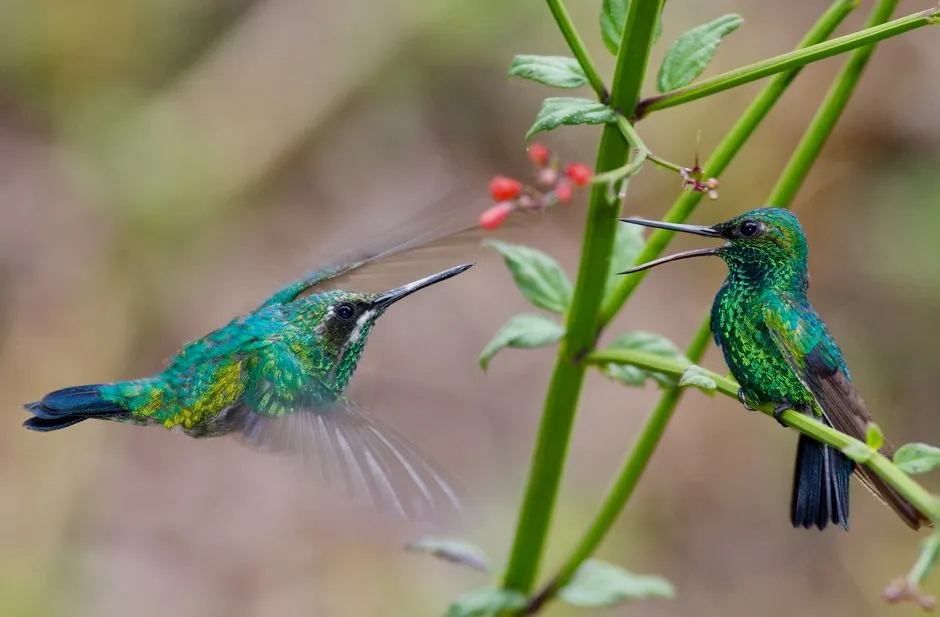
You’ve probably seen a hummingbird suddenly flare its tail like a tiny fan and assumed it was just balancing. Researchers say it’s often doing a lot more work than that. During high-speed chases, hummingbirds spread and twist their tail feathers to catch air and produce sound.
In several species, that flare creates a distinct buzzing or whistling noise, an acoustic bluff that makes a five-inch bird sound bigger and more dangerous than it is. It also functions as a brake, letting them stop on a dime inches from a rival’s face. Next time you see a bird blast in, fan its tail, and freeze mid-air, understand what you’re really looking at: a flashing “back off” sign.
Why It Stands Out
- The sound doesn’t come from the bird’s throat at all – it’s produced purely by air moving through the tail feathers.
- Feather shape varies by species, which changes the pitch, volume, and “style” of the sound produced.
- The same flare that sounds threatening also lets a bird brake almost instantly mid-air.
- It’s one of the only bird behaviors that works simultaneously as a weapon, a warning, and a flight tool.
#7 – Their Ability to Remember Your Schedule
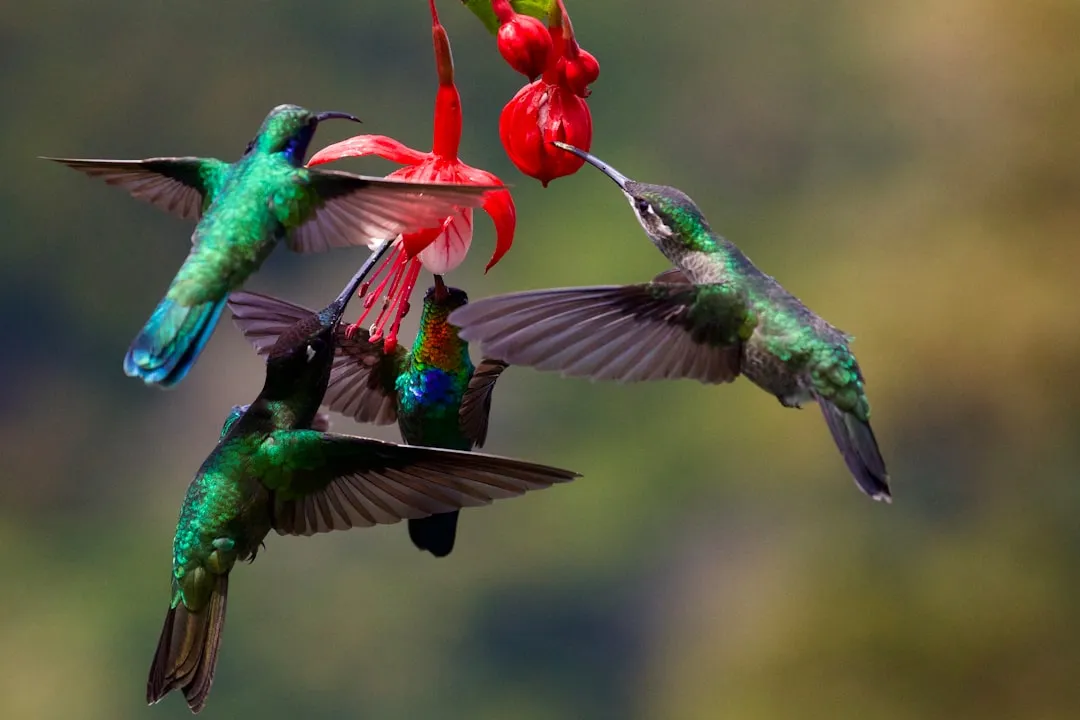
People assume hummingbirds are too frantic to remember much of anything. The truth is nearly the opposite. Studies show they can remember not just where flowers are, but when those flowers – and feeders – refill.
In practice, that means they learn which feeder gets topped off more often, which human shows up with the sugar water, and roughly when it happens. If you always refill at sunrise or sunset, don’t be shocked when your birds seem to “appear” right on cue. Some backyard watchers swear their hummingbirds hover by an empty feeder and stare at the kitchen window like they’re ringing a doorbell – and honestly, the timing memory behind that behavior is real enough to make the comparison fair.
#8 – The “Hover-Glare” They Aim at You
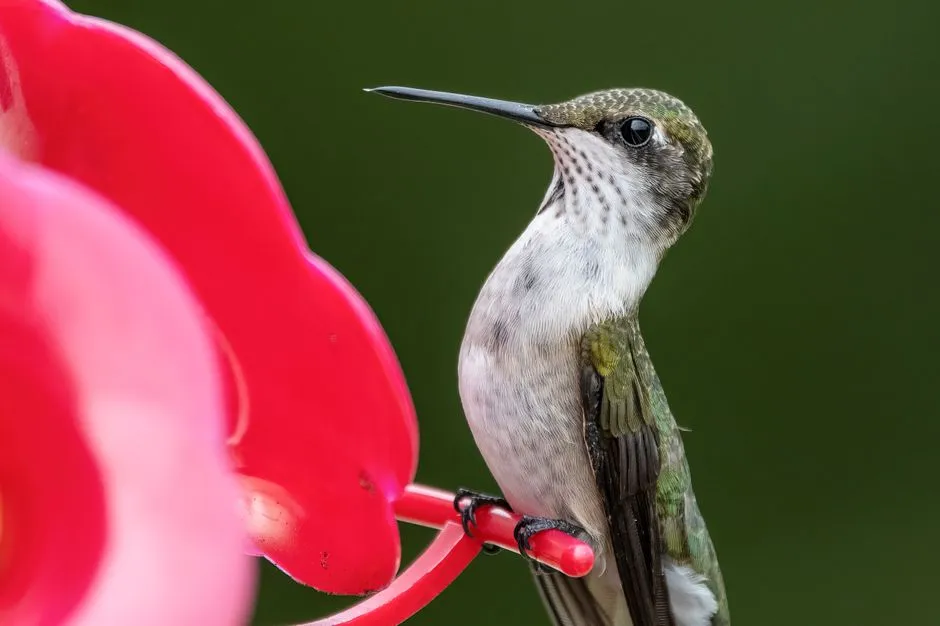
Almost nobody realizes how often hummingbirds are watching them right back. When a bird hovers a few feet from your face and seems to lock eyes with you, it isn’t just being cute – researchers who band and study wild hummingbirds say it’s often an inspection.
This tends to happen when a familiar feeder runs dry, something in the yard has changed, or you’re standing too close to a favorite patch of flowers. Hummingbirds have sharp vision and are constantly updating a mental map of what’s safe and what isn’t in your yard. Move a feeder or step between a bird and its food, and don’t be surprised by a little hovering side-eye while it decides whether to trust you. Most people think they’re being befriended. They’re actually being audited.
#9 – Sneaky “Side Feeder” Thieves Skirting the Rules
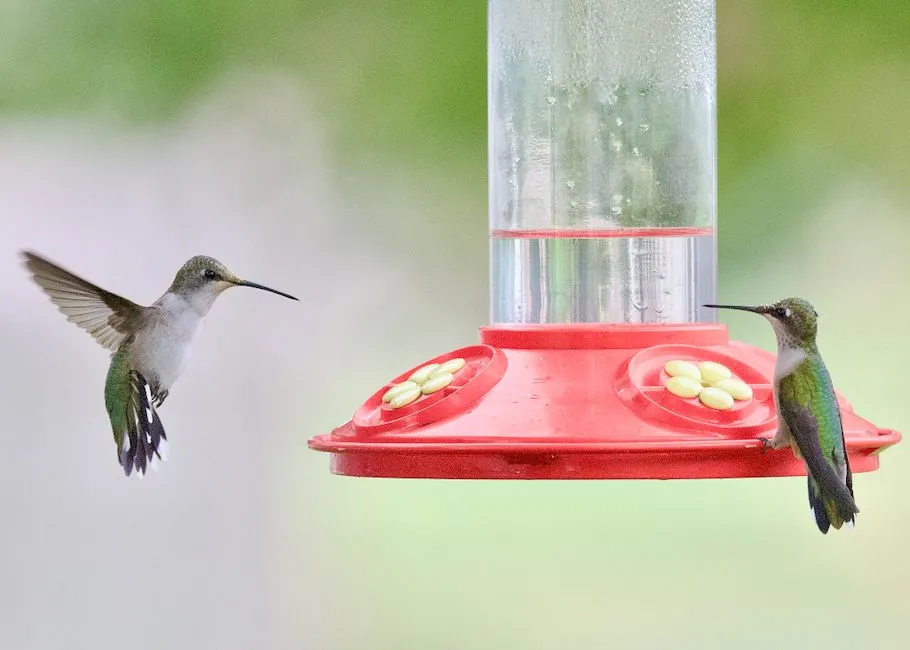
Nearly every yard with more than one hummingbird has a bully and a handful of quiet thieves. What most people miss is exactly how those thieves operate. Subordinate birds often specialize in low, sneaky flight paths that avoid direct confrontation entirely.
They wait for the dominant bird to get distracted chasing someone else, then dart in from underneath or the far side of the feeder for a few lightning-fast sips before bailing. It’s basically a smash-and-grab operation. Watch the angles: the boss bird almost always claims the “front door,” coming in straight or from above, while the thieves hug the foliage and slip in from the side. It looks like pure chaos until you know the pattern, and then it’s obvious every single time.
Quick Compare
- Dominant “Boss” Bird: Attacks head-on or from above, perches in open view, and guards the whole feeder at once.
- Subordinate “Thief” Bird: Uses low, hidden flight paths and darts in from underneath or the side for a few quick sips.
- Shared Trait: Both track the same feeding schedule and time their moves around when the boss bird is busiest elsewhere.
#10 – How They Quietly Test New Flowers for “Worth It” Status
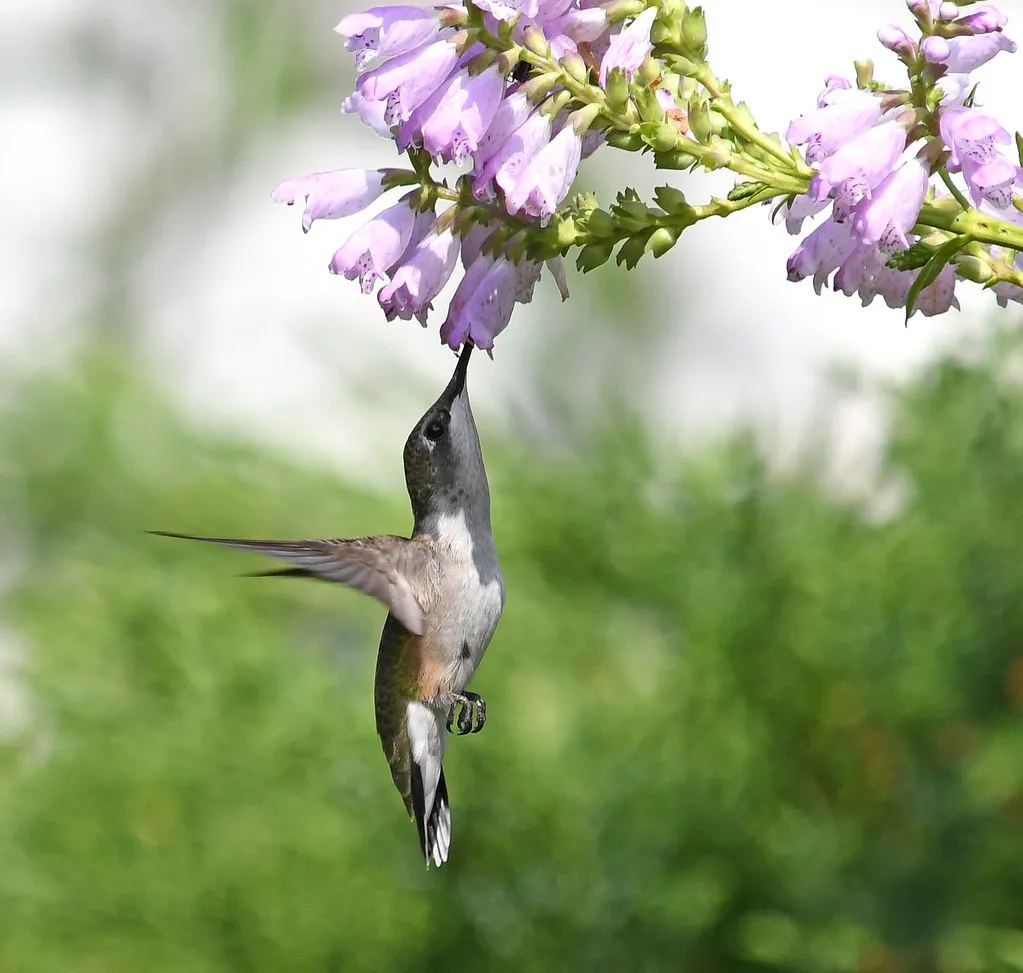
Most people assume a hummingbird sees a red flower and instantly commits. Researchers say there’s actually a whole evaluation phase happening first, one almost nobody clocks. When a bird finds an unfamiliar patch, it often runs quick, shallow probes on a few blossoms, then hovers back to watch and wait.
If the nectar turns out to be rich, the bird returns more methodically and starts folding that patch into its regular route. If it’s weak, or already drained by bees, the whole clump gets ignored on future passes. You’ll sometimes catch this as a bird dipping into one or two flowers, then peeling off without touching the rest of the shrub. That’s not fussiness – it’s a fast cost-benefit calculation about whether this spot deserves a permanent place in its memory.
#11 – Their Willingness to Drink From “Bug Juice” and Sap
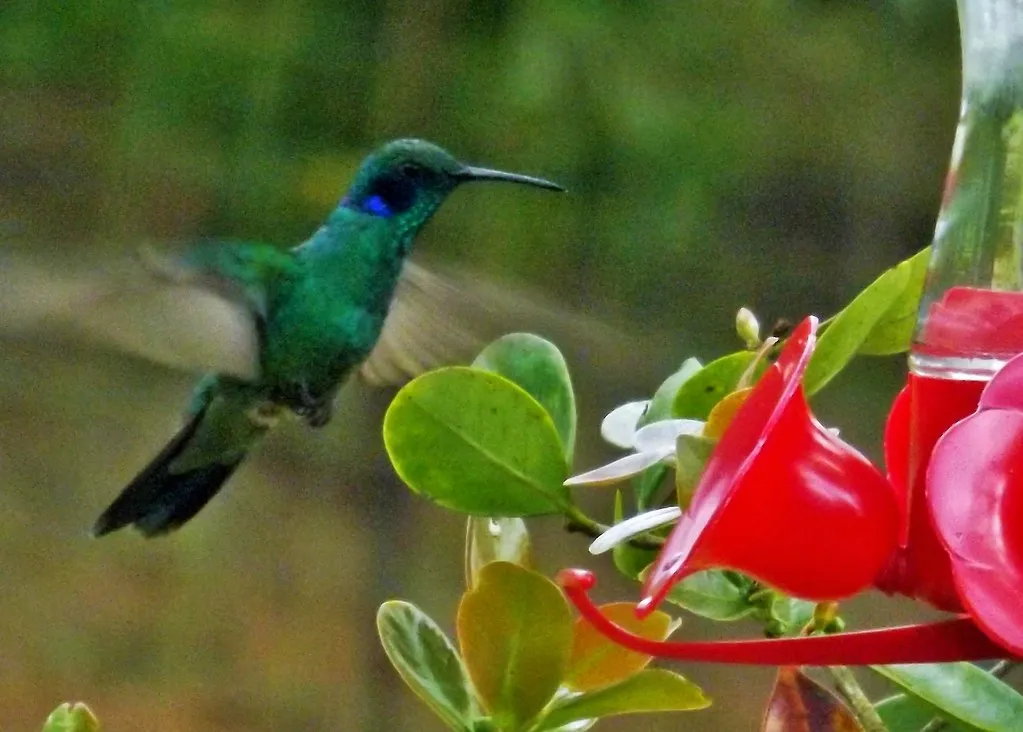
Here’s a fact that shocks people who assume hummingbirds are nectar purists: they’re not, not even close. Researchers have documented them drinking from sap wells drilled by sapsuckers, juice oozing out of overripe fruit, and even spots on flowers where insects have already pierced the tissue.
In early spring, when flowers are scarce, some species lean heavily on sap and the tiny insects trapped inside it for both sugar and protein. So a hummingbird hovering at a tree trunk or checking out a half-rotten piece of fruit in your compost isn’t confused or lost. It’s being resourceful, cashing in on a backup food source most backyard birders never even think to look for.
Worth Knowing
- Sapsucker wells drilled into tree bark are a legitimate backup food source, especially before spring flowers bloom.
- Overripe or rotting fruit attracts fruit flies and gnats, giving hummingbirds a quick protein hit alongside the sugar.
- Tiny insects trapped in nectar or sap supply protein that flowers alone simply can’t offer.
- A hummingbird checking out your compost pile or a sappy tree trunk is foraging smartly, not acting confused.
#12 – Mid-Air Preening Sessions You Mistake for “Just Hovering”
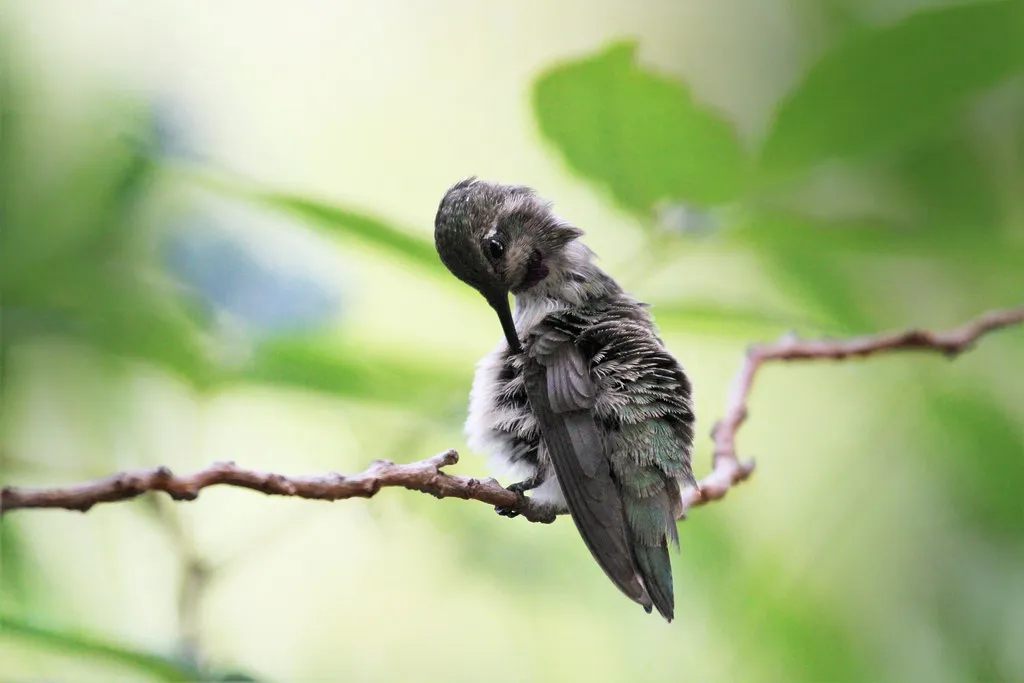
When a hummingbird pauses mid-air near a branch or hangs briefly beneath a leaf, most people assume it’s resting or deciding what to do next. Often, it’s squeezing in a quick grooming session. Their feathers take a real beating at wing speeds that can hit around 50 beats per second, and dirty or misaligned feathers wreck their aerodynamics and dull their color.
Watch closely and you’ll sometimes catch them scratching their head and neck with a foot in a blur of motion, swiping their bill along a wing, or shaking out hard before resuming feeding like nothing happened. These breaks last a second or two at most, easy to miss if you blink at the wrong moment. But for the bird, they’re essential maintenance – pit stops in a race that never really stops.
#13 – The “Fake Flower” Test They Run on Your Decorations
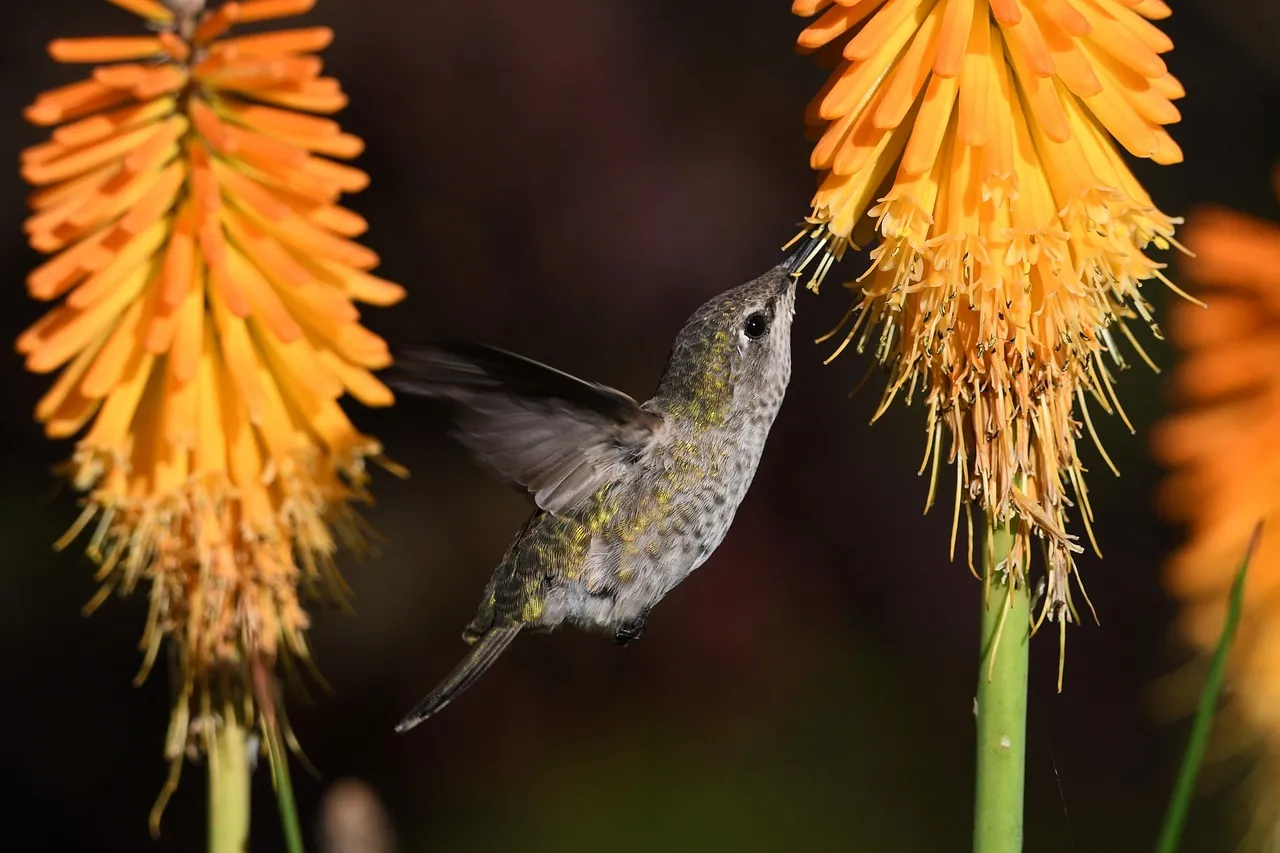
Gardeners love hanging bright decorations and assuming hummingbirds will love them too. Researchers say the birds do notice – just more skeptically than most people expect. Bright reds, oranges, pinks, and tubular shapes all trigger investigation, whether it’s a plastic bloom, a painted wind spinner, or even a piece of clothing.
After a few failed probes for nectar, most birds learn to ignore that specific object completely, even if it still looks perfect to human eyes. In other words, they build their own “this is fake” list and remember it. Put up new yard decor and you might catch a bird investigating it intensely for a day or two, then never touching it again – proof that they’re running fast, pragmatic learning, not just blindly chasing color.
#14 – Their Subtle Day-Night Shift You Probably Blame on “Bad Luck”
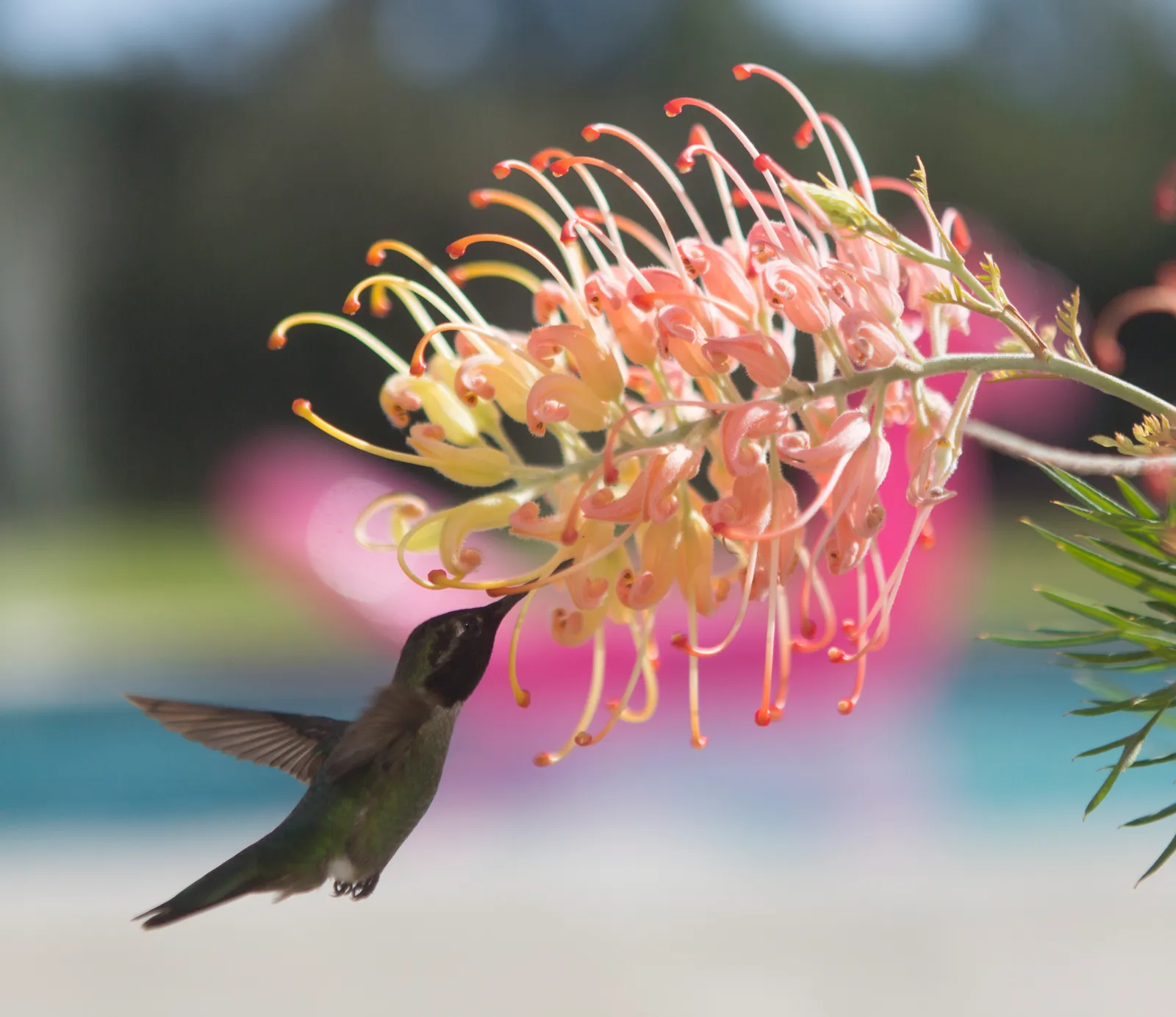
People swear “I never see hummingbirds in the middle of the day” or “they only show up in the evening.” It’s not bad luck, and it’s not your imagination either. Hummingbirds tend to front-load feeding early in the morning and again in late afternoon, when nectar is more abundant and temperatures are cooler.
Midday, especially in hot climates, brings brutal heat and more active predators like hawks, so visible activity often drops off as birds retreat higher into the trees. So if you only ever catch them at breakfast and dinner, you’re not unlucky. You’re simply watching their strategic feeding windows line up with yours – the “missing” hours aren’t empty, they’re just quieter foraging happening somewhere you’re not looking.
#15 – The Nightly “Shutdown Mode” That Looks Like They’ve Died
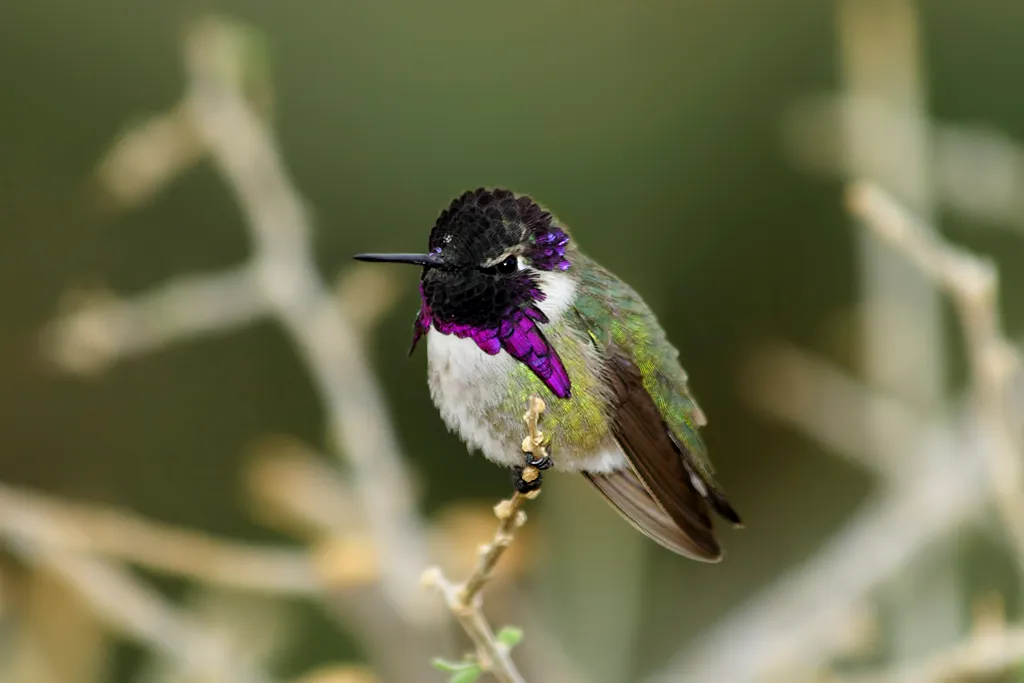
Ask around and you’ll hear some version of this story: someone finds a hummingbird at night, completely motionless, eyes half-closed, and panics that it’s dying. Nine times out of ten, it’s not dying. It’s in torpor.
Torpor is a deep, sleep-like state where body temperature drops dramatically, heart rate and breathing slow way down, and energy use plummets to almost nothing. Because hummingbirds burn calories at an insane rate during the day, torpor is often the only way they survive the night, especially in cooler weather. To an untrained eye, a torpid bird clinging motionless to a branch looks practically dead – but it will fly off at sunrise like nothing ever happened.
Fast Facts
- Body temperature can drop dramatically during torpor compared to normal daytime levels.
- Heart rate slows from several hundred beats per minute down to a small fraction of that while torpid.
- Torpor typically kicks in overnight and ends automatically as the bird warms itself back up around dawn.
- It’s most common in cooler weather, when staying fully active all night would burn through fat reserves too fast to survive.
#16 – The Way Females Quietly Build a World You Never See
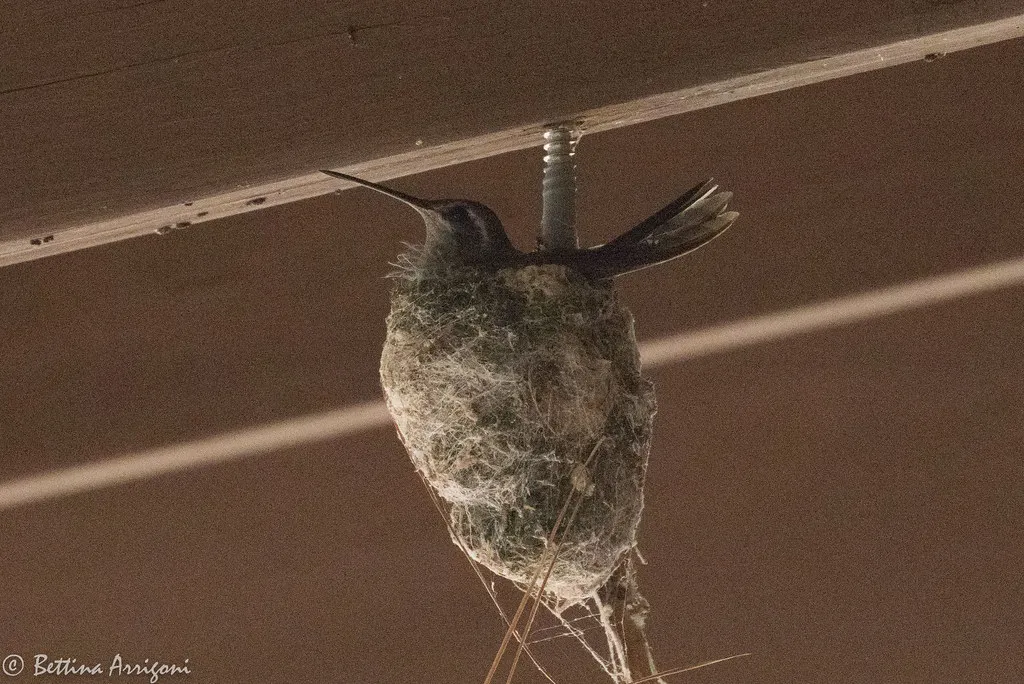
Most backyard viewers only ever notice the flashy males dive-bombing the feeder. The real magic is happening somewhere you’re probably not looking: in an inch-wide nest, built entirely by the female, usually higher up and better camouflaged than anyone realizes.
Female hummingbirds choose branches with just the right bounce to protect eggs from wind, use spider silk to glue the nest together so it can stretch as chicks grow, and disguise the outside with lichen, moss, or flakes of bark. From the ground, it just looks like a random bump on a branch. The hard truth is that plenty of well-meaning people prune these exact branches “for neatness” and never realize they just tore out an entire nursery.
#17 – Food-Sharing Truces You’d Swear Hummingbirds Don’t Make
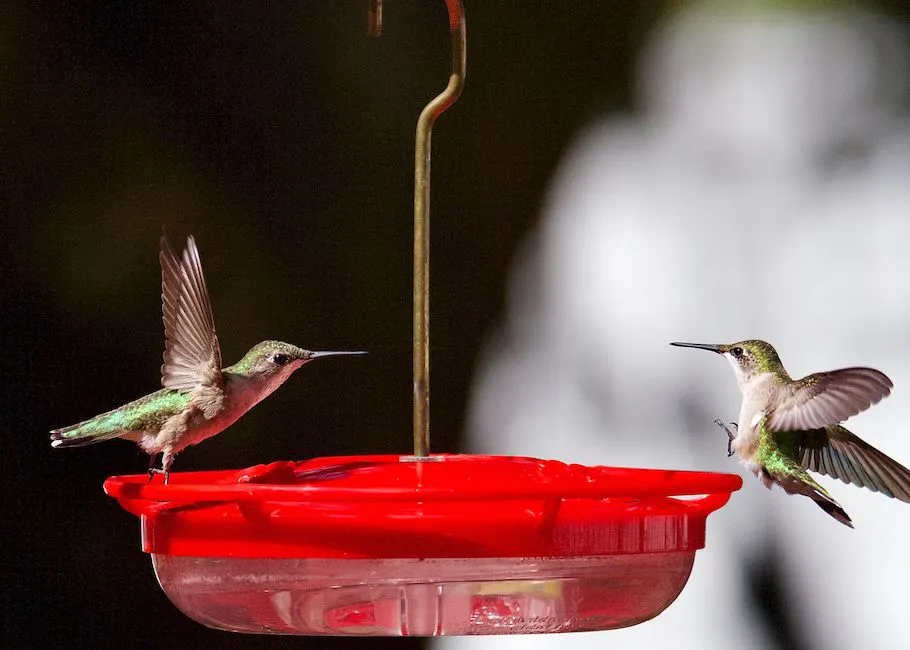
Everyone’s seen hummingbirds fight. Far fewer people ever catch them tolerating each other, but in some yards – especially during migration or peak blooms – brief truces really do happen. Researchers and patient backyard observers have documented two or three birds using different ports on the same feeder at once, or subordinates being “allowed” to feed as long as they stick to one side.
These moments never last long; one wrong move and the boss bird explodes right back into attack mode. But they prove something important: hummingbird aggression isn’t mindless, it’s a constant calculation of whether fighting is even worth the energy. When food is abundant enough, temporary peace wins out. Catching multiple hummingbirds sharing a feeder means you’re watching an unusually honest ceasefire.
#18 – How They Use Other Animals as Security Systems
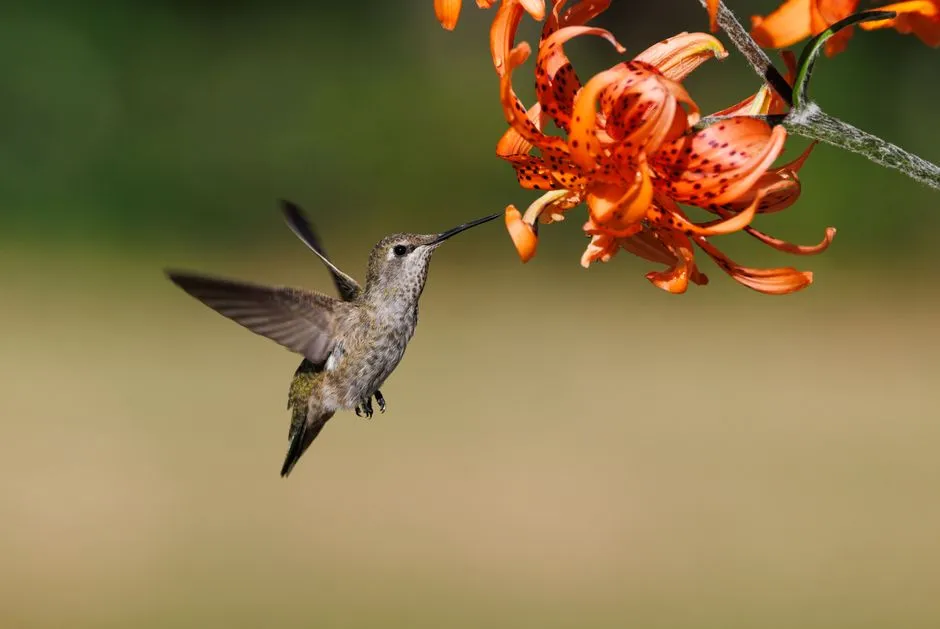
Almost nobody realizes hummingbirds are eavesdropping on the rest of your garden. Researchers have found they pay close attention to alarm calls from jays, chickadees, and other songbirds, along with the general “mood” of the yard.
When the birdsong suddenly stops or turns into frantic scolding, hummingbirds often freeze on a perch, dive into cover, or abandon an exposed flower patch entirely. They’re small, vulnerable, and they know it, so they outsource part of their security to bigger, louder species. It’s the same trick deer use in mixed herds, and it proves these tiny birds are playing a far more sophisticated survival game than most people give them credit for.
#19 – Their Ruthless, Lifesaving Willingness to Abandon Your Yard
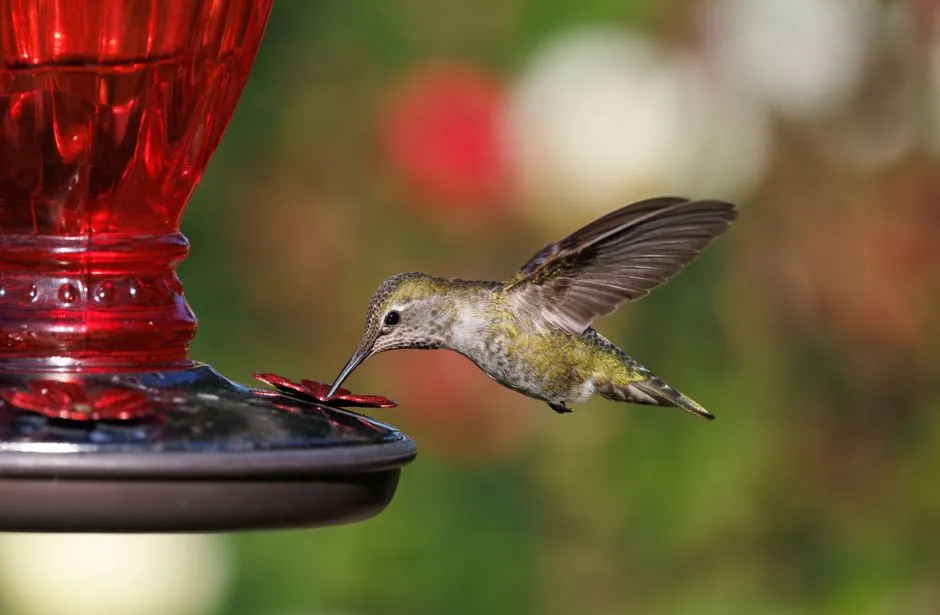
Here’s the one that stings the most, and almost nobody wants to admit it: hummingbirds will absolutely drop your garden from their route the moment it stops paying off. If nectar sources dry up, feeders stay empty, or predators like outdoor cats become a consistent threat, they don’t stick around out of loyalty. They reroute, fast.
To us, it looks like they “disappeared this year.” To them, it’s just cold survival math. This is exactly why some yards explode with hummingbird activity one season and go dead quiet the next, sometimes in the very same neighborhood – if someone nearby added better plants, more reliable feeders, or safer cover, your birds may have simply traded up without a second thought.
At a Glance
- Empty or dirty feeders left too long signal an unreliable food source, and hummingbirds notice fast.
- Losing flowering plants mid-season is often enough to get a yard quietly dropped from the regular route.
- Increased predator activity, especially outdoor cats, can push birds toward a safer yard nearby.
- A neighboring yard with better feeders or plants can pull “your” hummingbirds away almost overnight.
Once you know what to look for, hummingbirds stop being cute background blur and start looking like what they actually are: hyper-intelligent, energy-obsessed strategists running complicated lives right over your lawn chairs. They remember your habits, game out their rivals, test your decorations, and will ditch your yard the instant the math stops working in their favor.
Most people never notice the decoy retreats, the tiny mid-air preening breaks, the hidden nests, or the nighttime torpor that looks like death but isn’t. And honestly, that’s the part that gets me – we’ve spent years calling them simple, when they’re one of the most ruthlessly efficient survivors in the entire backyard. Slow down and actually watch, and your “just a hummingbird” turns into a live case study in getting exactly what you need and never staying anywhere out of sentiment.

- 19 Hummingbird Behaviours Researchers Say Almost Nobody Ever Notices Happening in Their Own Garden - August 18, 2026
- Has the Wildlife in Your Garden Begun to Trust You? 17 Quiet Signs It Has - August 18, 2026
- 18 Dog Breeds That Cope Beautifully With Cold Autumn Mornings and 18 That Genuinely Struggle - August 18, 2026