


Imagine walking through a museum as a kid, staring up at those massive skeletal frames, and thinking you knew exactly what dinosaurs looked like. The truth is, paleontologists have been getting things spectacularly wrong for decades. Thanks to incredible new fossil discoveries and cutting-edge technology, we’re realizing that many of our favorite prehistoric giants looked nothing like the creatures we grew up picturing in movies and textbooks.
From fluffy feathered predators to colorful crested herbivores, the real dinosaur world was far more vibrant and bizarre than anyone could have imagined. These revelations aren’t just reshaping our understanding of ancient life – they’re completely flipping our mental image of what it meant to be a dinosaur. Get ready to have your mind blown by creatures that were stranger, more beautiful, and more alien than anything Hollywood ever dreamed up.
Therizinosaurus: The Gentle Giant with Massive Claws
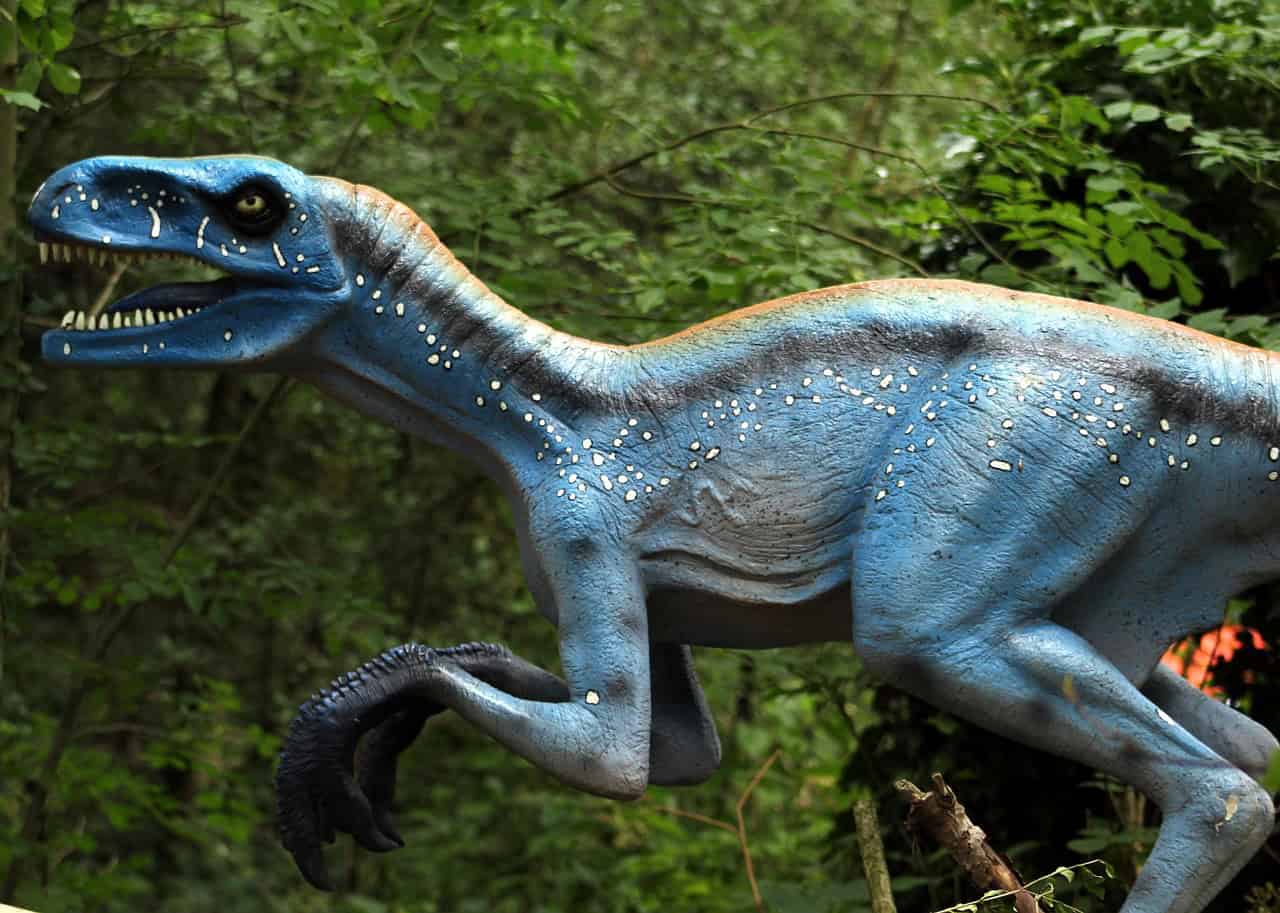
For decades, scientists thought Therizinosaurus was a fearsome predator because of its absolutely enormous claws – some reaching over three feet long. The name literally means “scythe lizard,” and early reconstructions showed this beast as a terrifying meat-eater that could slice through anything. But here’s the shocking twist: this massive dinosaur was actually a peaceful plant-eater.
Recent discoveries revealed that Therizinosaurus used those intimidating claws not for hunting, but for pulling down tree branches to munch on leaves. Standing up to 16 feet tall and weighing around 5 tons, this gentle giant was covered in primitive feathers and looked more like a massive, fluffy bird than the scaly monster we once imagined. The feathers likely helped with temperature regulation and possibly display purposes.
Carnotaurus: The Horned Demon with Tiny Arms
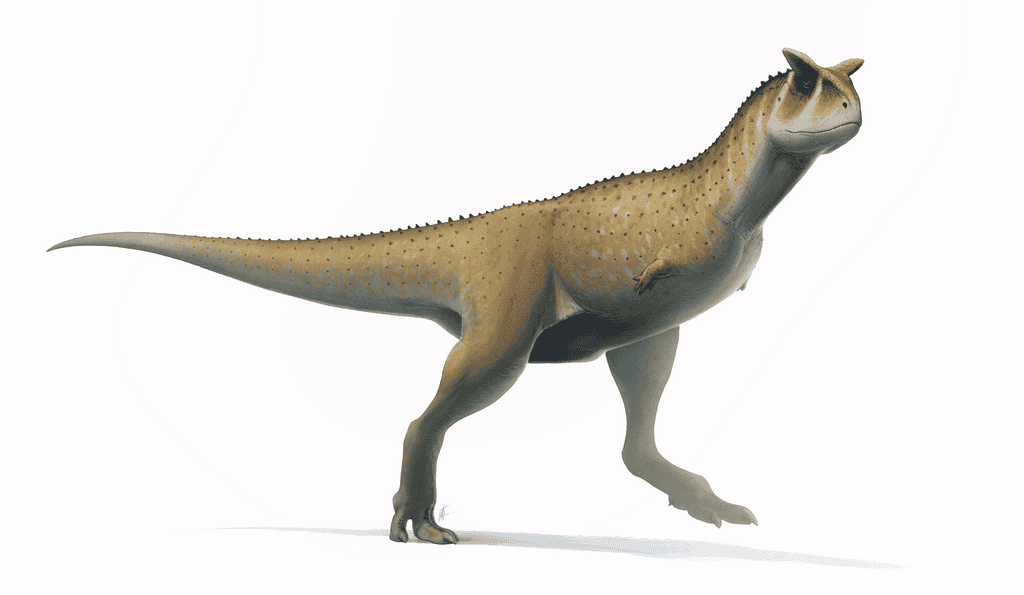
When Carnotaurus was first discovered, paleontologists focused on its distinctive horned skull and powerful legs, painting it as a typical large theropod. Early reconstructions showed it with normal-sized arms and a somewhat generic predator appearance. However, more complete fossil evidence revealed something truly bizarre about this South American hunter.
This “meat-eating bull” actually had the most reduced arms of any large theropod dinosaur – even smaller than T. rex’s famously tiny appendages. Carnotaurus’s arms were so reduced they didn’t even have elbows or wrists, appearing more like stumps than functional limbs. Its skin was also covered in small, bony bumps called osteoderms, giving it a pebbly texture that would have made it look like a living, breathing gargoyle racing across the prehistoric landscape.
Dracorex: The Dragon That Never Grew Up
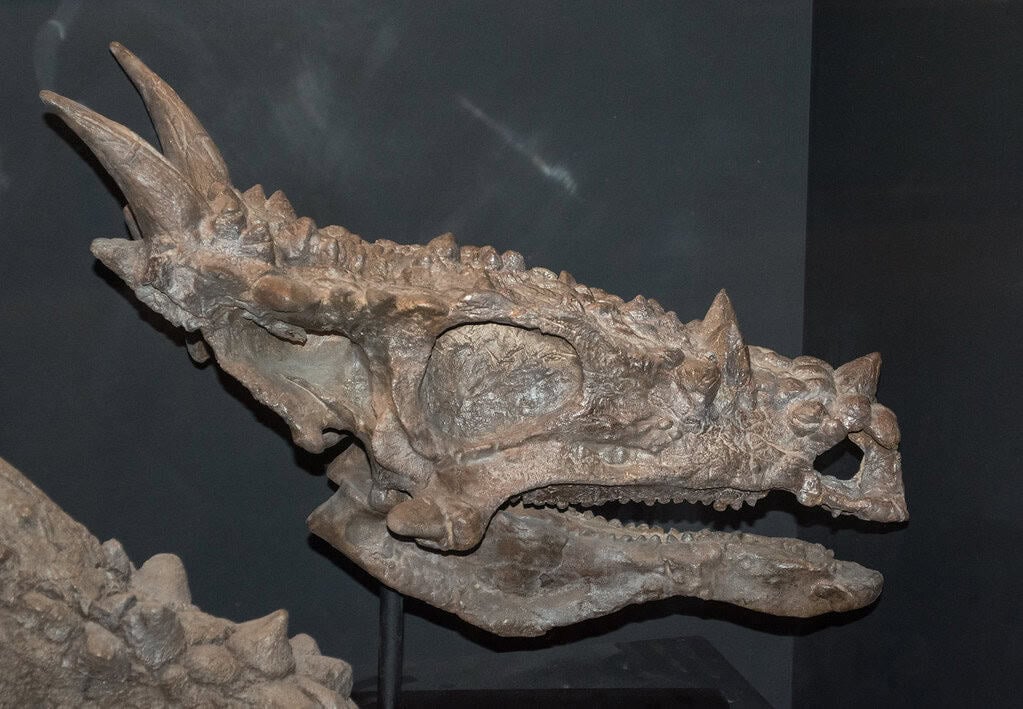
When scientists first found Dracorex hogwartsia (literally “dragon king of Hogwarts”), they thought they’d discovered a completely new species of flat-headed dinosaur. The skull was covered in spikes and horns, making it look like something straight out of a fantasy novel. Museums displayed it as a unique dragon-like creature that roamed the late Cretaceous period.
Plot twist: Dracorex wasn’t actually a separate species at all. Recent research suggests it was simply a juvenile Pachycephalosaurus – one of those famous dome-headed dinosaurs. As these animals aged, their spiky skulls would gradually round out into the characteristic bowling ball-shaped heads we associate with their adult forms. What we thought was a fierce dragon was actually just a teenager going through an awkward phase.
Borealopelta: The Armored Tank with Surprising Colors
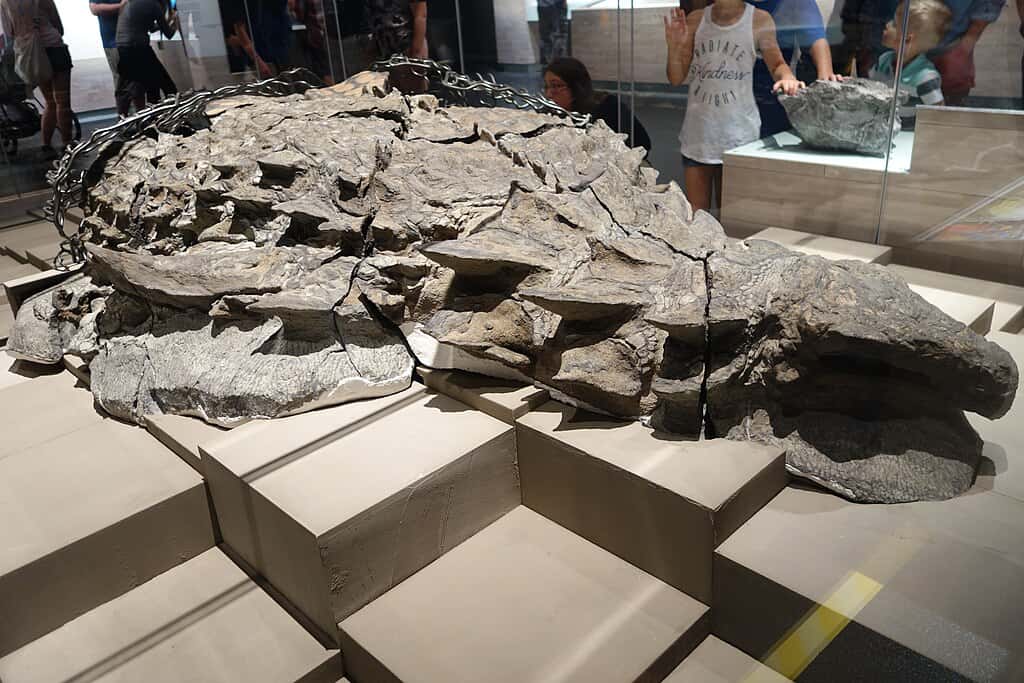
Traditional depictions of armored dinosaurs like Borealopelta showed them as dull, grey-brown creatures that blended into their environments. Scientists assumed these heavily armored herbivores relied purely on their defensive capabilities and didn’t need any fancy coloration. The discovery of an incredibly well-preserved specimen in Canada changed everything we thought we knew about these walking fortresses.
Advanced analysis revealed that Borealopelta was actually a striking reddish-brown color with a lighter-colored belly – a pattern called countershading. This 18-foot-long, 3,000-pound dinosaur was essentially using camouflage despite being built like a tank. The fact that such a heavily armored creature still needed to hide from predators tells us just how dangerous the Cretaceous period really was.
Parasaurolophus: The Musical Dinosaur with a Built-in Trumpet
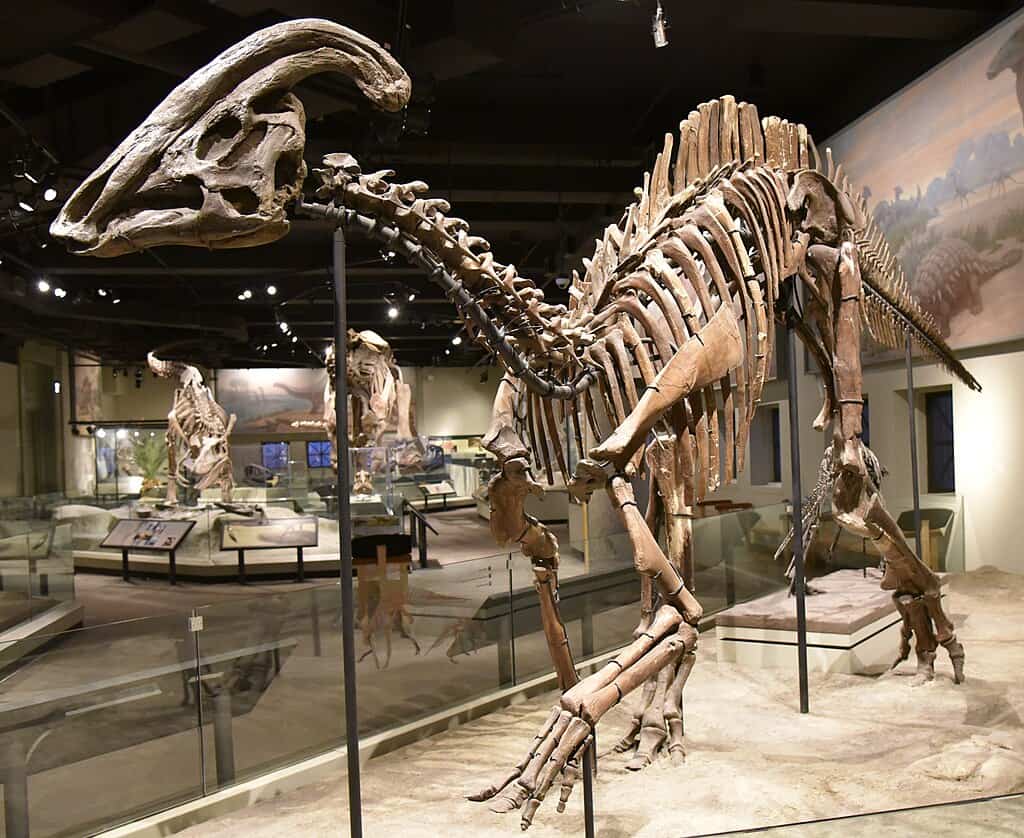
For years, scientists knew Parasaurolophus had a distinctive hollow crest on its head, but they weren’t sure what it was for. Early theories suggested it might have been a snorkel for underwater feeding or simply a display structure. The real purpose of this elaborate headgear turned out to be far more fascinating than anyone imagined.
The crest was actually a sophisticated sound-producing organ – essentially a built-in trumpet. Different species had different crest lengths and shapes, which would have produced different musical notes and tones. Scientists have even recreated the sounds these dinosaurs would have made, revealing a prehistoric world filled with haunting, musical calls echoing across ancient landscapes. Imagine herds of these creatures communicating through elaborate songs rather than simple roars.
Amargasaurus: The Spiky Sauropod That Bucked the Trend
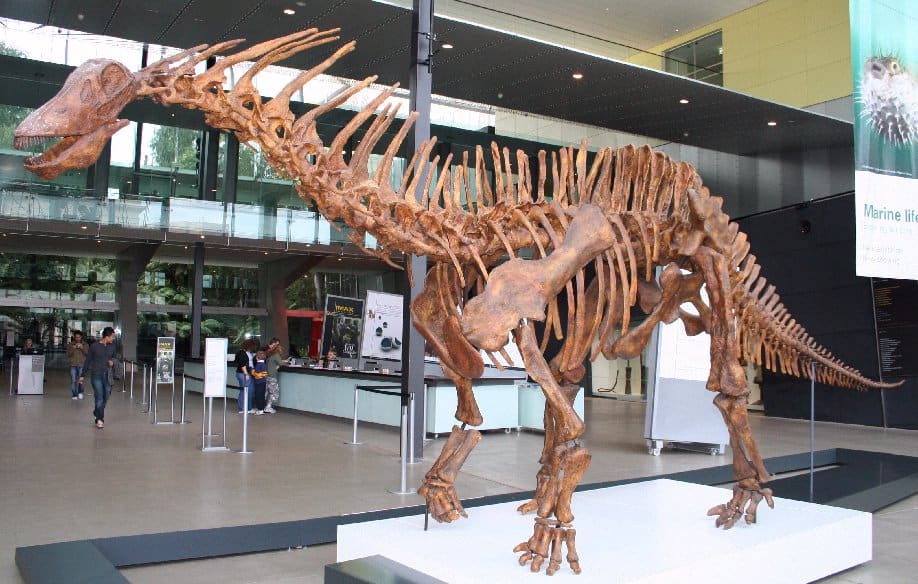
When most people think of long-necked dinosaurs, they picture smooth, gentle giants like Brontosaurus peacefully grazing in herds. Amargasaurus completely shattered this stereotype when it was discovered in Argentina. Instead of the typical smooth neck, this sauropod sported two parallel rows of tall neural spines along its neck and back.
These spines were likely covered with skin to form dramatic sail-like structures, making Amargasaurus look more like a punk rock dinosaur than a gentle herbivore. The sails may have been used for display purposes, temperature regulation, or even sound production. At only 30 feet long, it was also much smaller than many of its sauropod relatives, proving that not all long-necked dinosaurs were gentle giants.
Concavenator: The Humped Predator with Primitive Wings
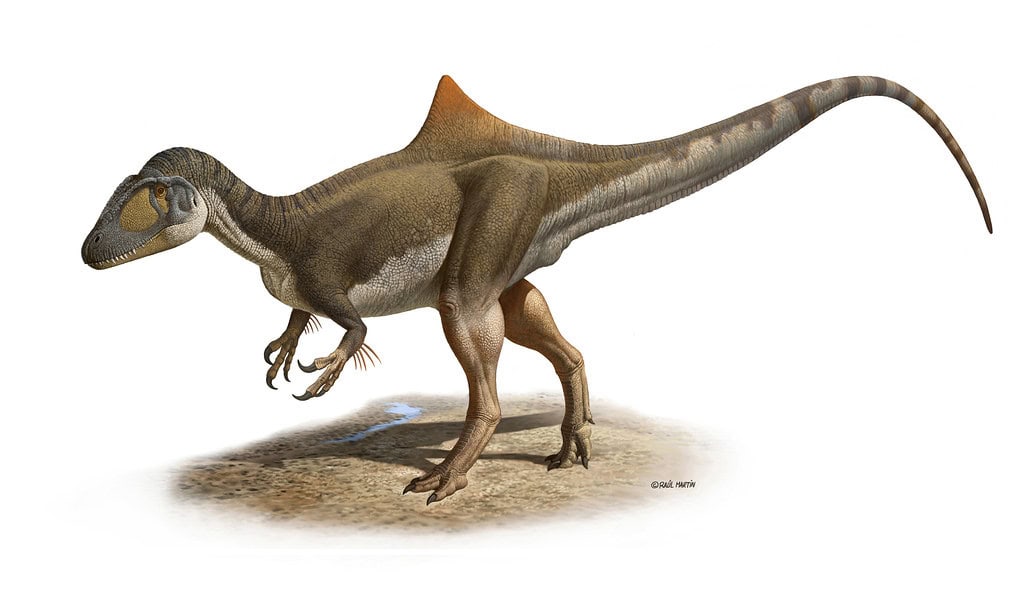
Concavenator corcovatus, whose name means “Cuenca hunter from Cuenca,” initially appeared to be another large theropod dinosaur when discovered in Spain. Early reconstructions showed it as a typical predator with powerful legs and sharp teeth. However, closer examination revealed two extraordinary features that completely changed our understanding of this creature.
First, Concavenator had a distinctive hump on its back, formed by elongated neural spines – earning it the nickname “humpback dinosaur.” Even more surprising, its forearms showed evidence of quill knobs, suggesting it had primitive feathers or quills attached to its arms. This discovery pushed back the timeline for feathered dinosaurs and showed that even large predators were experimenting with primitive flight structures millions of years before birds evolved.
Carnotaurus: The Bull-Horned Speedster
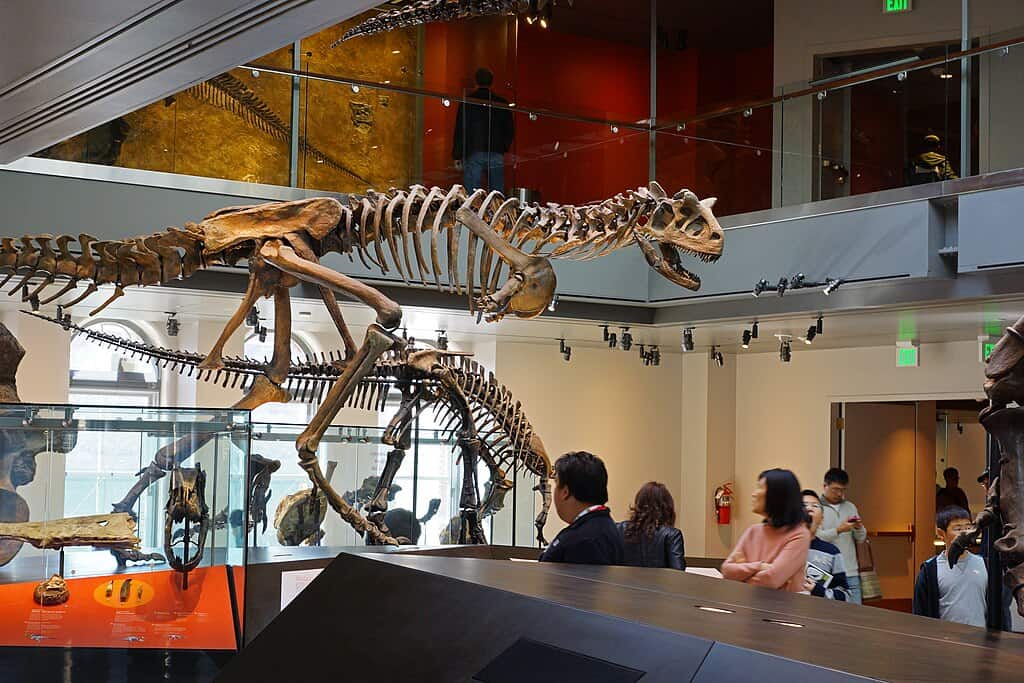
Early depictions of Carnotaurus focused mainly on its distinctive horned skull, often showing it as a slower, more heavily built predator similar to other large theropods. Scientists initially thought the horns were its most unusual feature and didn’t fully appreciate just how specialized this South American hunter really was.
New research revealed that Carnotaurus was actually built for speed – possibly capable of running up to 35 miles per hour. Its legs were incredibly long and powerful, while its body was surprisingly lightweight for such a large predator. The combination of devil-like horns and incredible speed would have made it a truly terrifying sight. Picture a 25-foot-long horned demon sprinting across the landscape faster than a racehorse – that’s the real Carnotaurus.
Deinocheirus: The Mystery Monster with Massive Arms
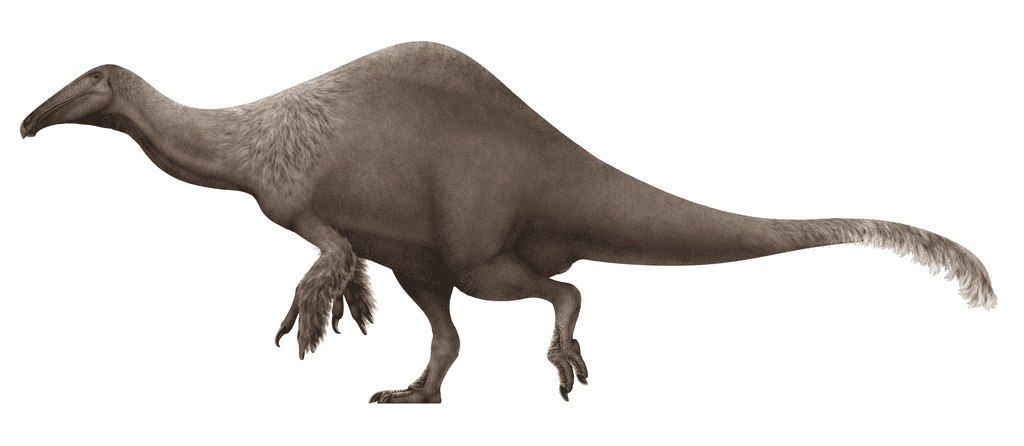
For nearly 50 years, Deinocheirus was one of paleontology’s greatest mysteries. Scientists had only found a pair of enormous arms – each over 8 feet long – and had no idea what kind of creature they belonged to. Early speculation ranged from a giant predator to some kind of massive plant-eater, but the truth remained elusive.
When complete skeletons were finally discovered in Mongolia, Deinocheirus turned out to be unlike anything scientists had imagined. This 36-foot-long dinosaur had a hump on its back, a duck-like bill, and massive claws that it used for digging and gathering plants. Rather than being a fearsome predator, it was actually a bizarre omnivore that looked like a cross between a giant sloth and a duck-billed dinosaur. The name “terrible hand” suddenly seemed quite ironic.
Therizinosaurus: The Gentle Giant’s True Colors
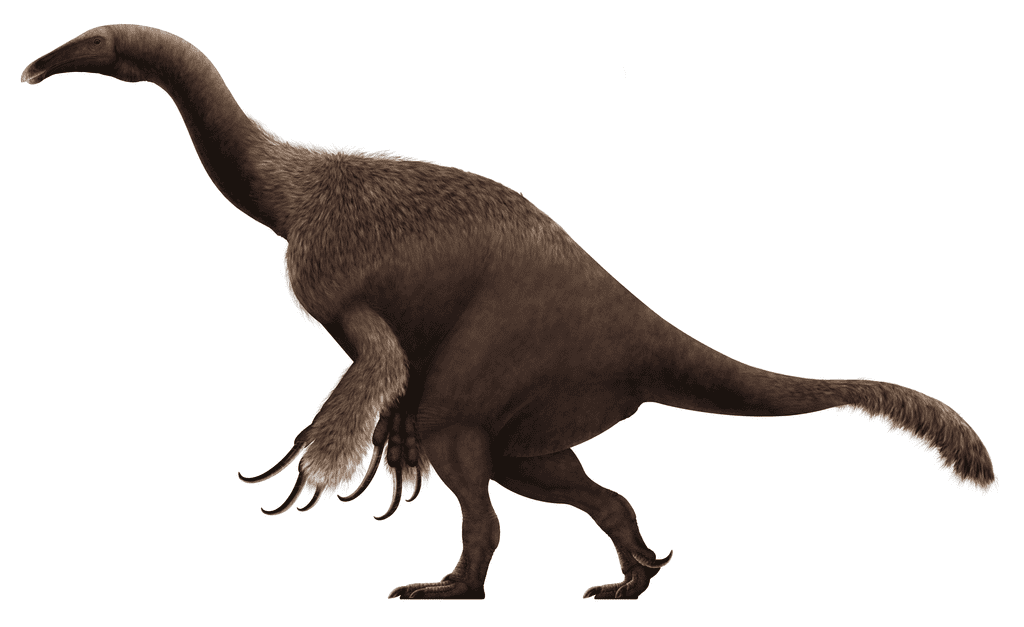
Beyond just their surprising diet, new discoveries about Therizinosaurus have revealed even more shocking details about these misunderstood giants. Advanced computer modeling of their skeletons showed that despite their massive size, they were surprisingly agile and could rear up on their hind legs to reach high branches.
The feathers covering their bodies weren’t just simple fuzz either – they were complex, branching structures similar to modern bird feathers. Some species likely had colorful plumage for display purposes, turning these prehistoric giants into something resembling enormous, clawed peacocks. The contrast between their fearsome appearance and gentle nature makes them one of the most fascinating examples of how wrong our initial assumptions can be.
Spinosaurus: The Semi-Aquatic Crocodile Dragon
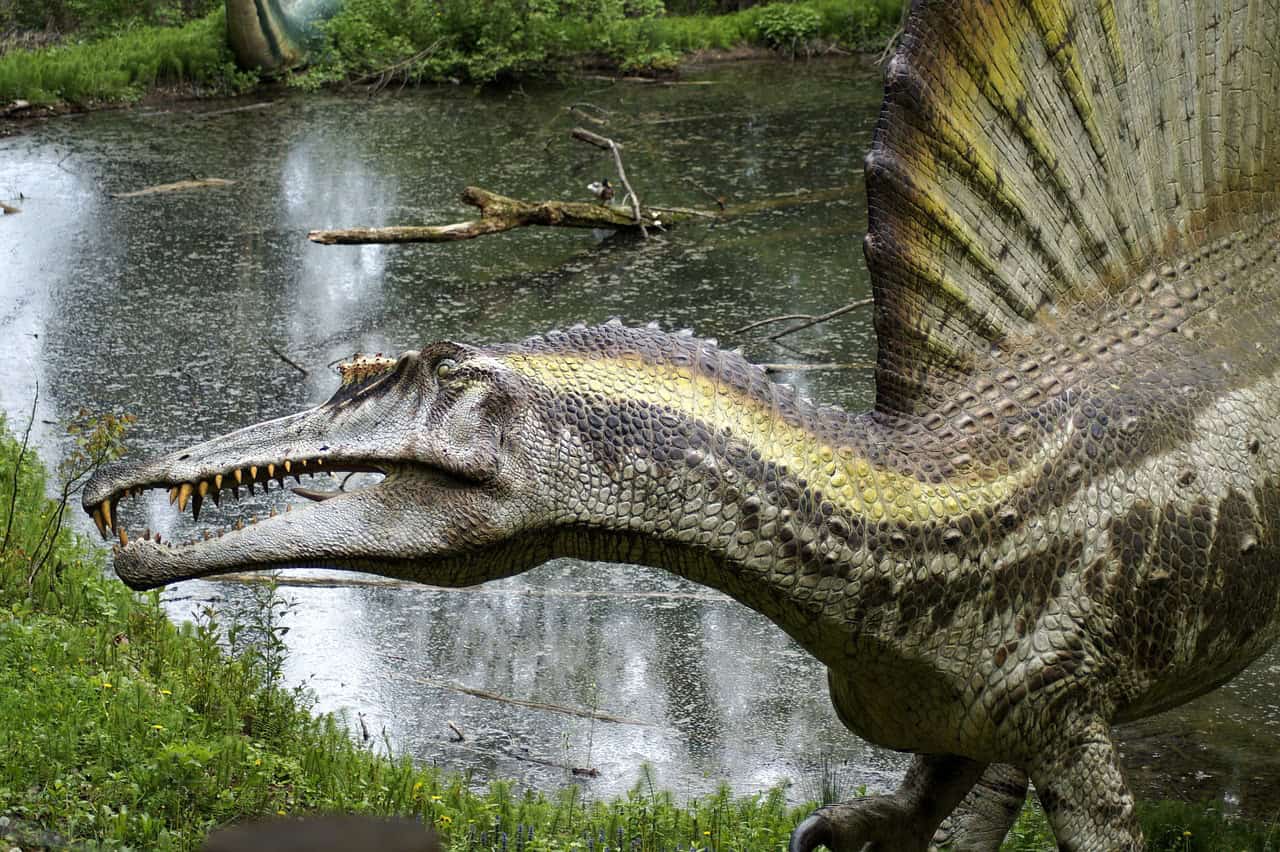
For decades, Spinosaurus was depicted as a land-based predator with a distinctive sail on its back, often shown competing with T. rex for the title of largest predator. Movies and documentaries portrayed it as a typical theropod that just happened to have a back fin. Recent discoveries have completely revolutionized our understanding of this massive predator.
New fossil evidence reveals that Spinosaurus was actually semi-aquatic, spending much of its time in rivers and lakes hunting fish. Its legs were shorter than previously thought, its tail was paddle-shaped for swimming, and its skull was perfectly adapted for catching aquatic prey. Rather than being a land-based monster, Spinosaurus was more like a 50-foot-long crocodile with a sail – a creature perfectly adapted for life in ancient waterways.
Microraptor: The Four-Winged Glider
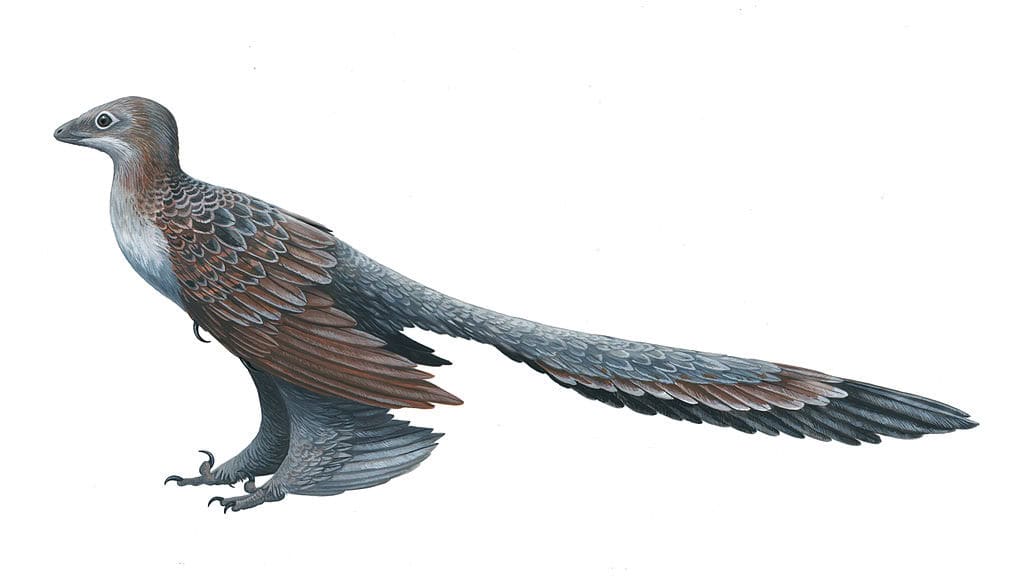
When Microraptor was first discovered, scientists thought they had found a small, feathered dinosaur with wings only on its arms. Early reconstructions showed it as a primitive bird-like creature that could glide from tree to tree. However, more detailed analysis revealed something unprecedented in the dinosaur world.
Microraptor actually had four wings – large flight feathers on both its arms and legs. This crow-sized dinosaur was essentially a biplane, using all four limbs to glide through the forests of ancient China. Its iridescent black feathers would have shimmered in the sunlight as it soared between trees, making it look more like a flying rainbow than a traditional dinosaur. This discovery showed that early flight evolution was far more experimental and diverse than anyone had imagined.
Kulindadromeus: The Fuzzy Ornithopod
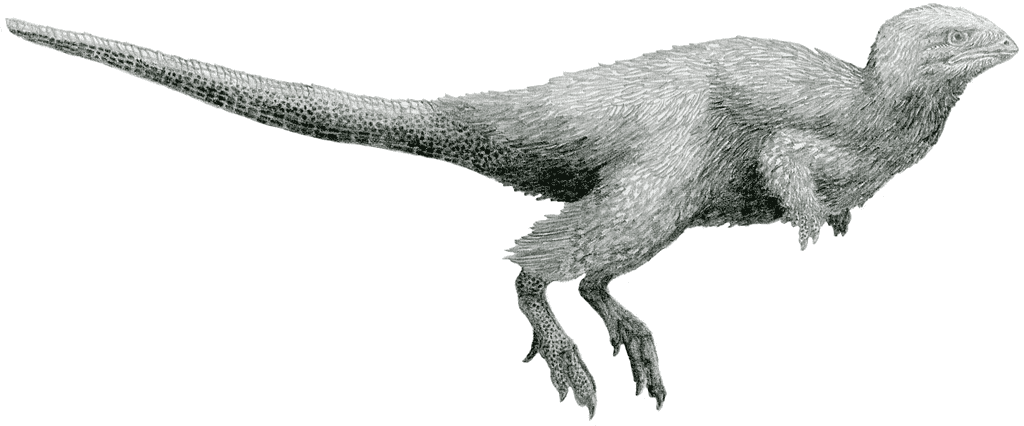
Scientists long believed that feathers were exclusive to theropod dinosaurs and their bird descendants. When Kulindadromeus was discovered in Siberia, it appeared to be a fairly typical small ornithopod – a plant-eating dinosaur with no obvious connection to feathered species. The preserved soft tissues told a completely different story.
This small dinosaur was covered in complex feathers and filaments, proving that feather-like structures evolved much earlier and more widely than previously thought. Kulindadromeus had different types of feathers on different parts of its body – simple filaments on most areas, but complex branching feathers on its arms and legs. The discovery suggests that many dinosaur groups may have been feathered, completely changing our mental image of the prehistoric world.
Amargasaurus: The Punk Rock Sauropod
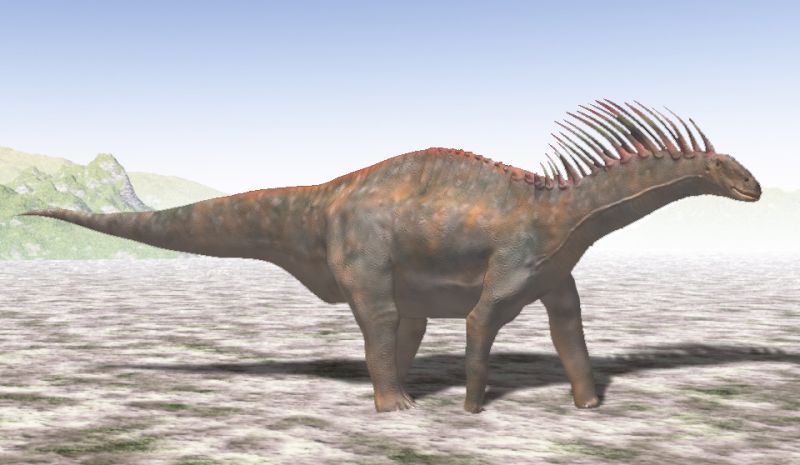
Further analysis of Amargasaurus revealed that its neural spines weren’t just for display – they may have been used for sound production. The sail-like structures could have been vibrated to create low-frequency sounds for long-distance communication, similar to how elephants use infrasound.
The dinosaur’s relatively small size for a sauropod (only 30 feet long) and its elaborate display structures suggest it lived in a very different ecological niche than its giant relatives. Rather than being a gentle giant, Amargasaurus was more like a flashy showoff that used both visual and auditory displays to communicate with its kind. Its spiky appearance and potential sound-making abilities made it the punk rocker of the sauropod world.
Dracorex: The Dragon That Never Was
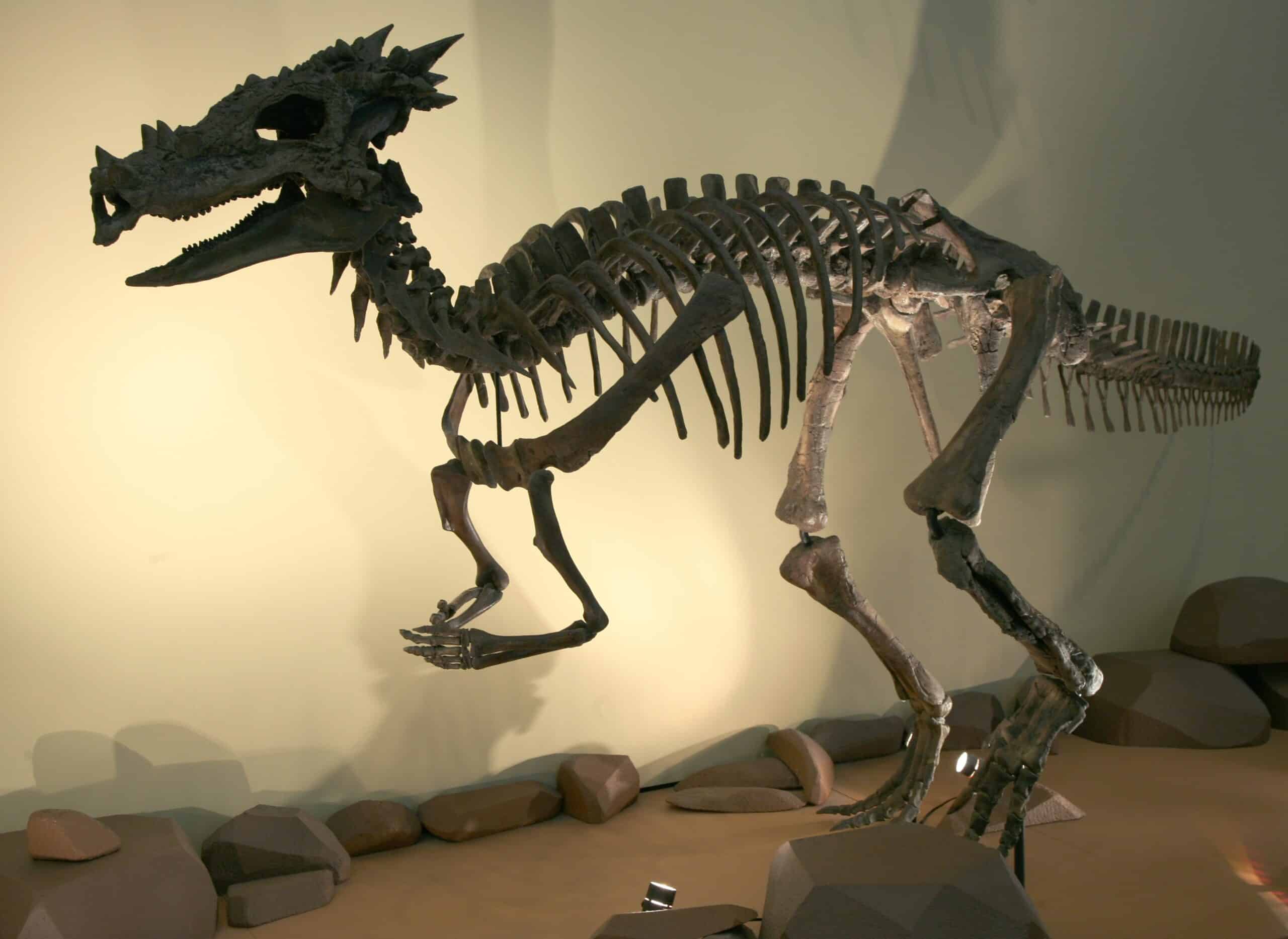
The realization that Dracorex was actually a juvenile Pachycephalosaurus opened up fascinating questions about dinosaur development and growth patterns. The dramatic transformation from a spiky-skulled “dragon” to a dome-headed adult showed that dinosaur juveniles could look completely different from their parents.
This discovery also revealed that paleontologists may have been naming the same species multiple times based on different growth stages. What we thought was dinosaur diversity might actually have been dinosaur development, with young animals looking so different from adults that they were classified as separate species. The “dragon king of Hogwarts” turned out to be a teenager going through a particularly dramatic growth phase.
Concavenator: The Humped Hunter
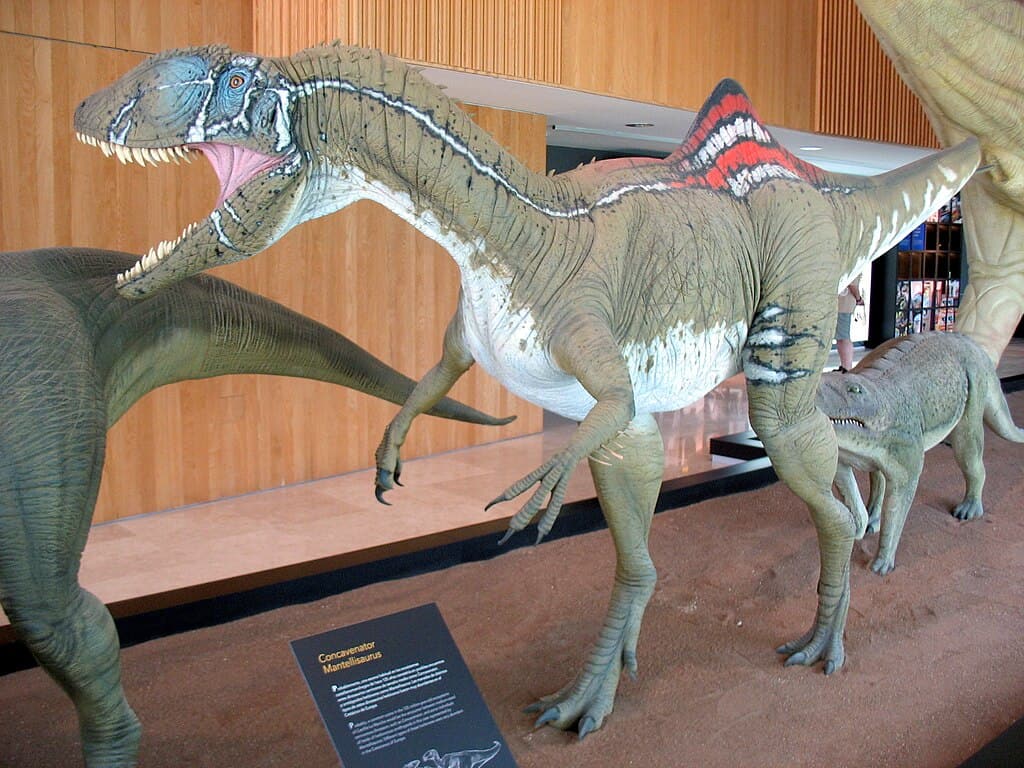
The discovery of quill knobs on Concavenator’s arms suggested that primitive feathers or quills were much more widespread among theropod dinosaurs than previously thought. This Spanish predator bridged the gap between typical scaled dinosaurs and their feathered relatives, showing that the evolution of feathers was a gradual process.
The hump on its back, formed by elongated neural spines, may have supported a display structure or been used for fat storage during lean times. Combined with its primitive wing feathers, Concavenator looked like a creature caught between two evolutionary paths – part traditional dinosaur, part proto-bird. This combination of features made it one of the most transitional dinosaurs ever discovered.
Nigersaurus: The Alien Lawnmower
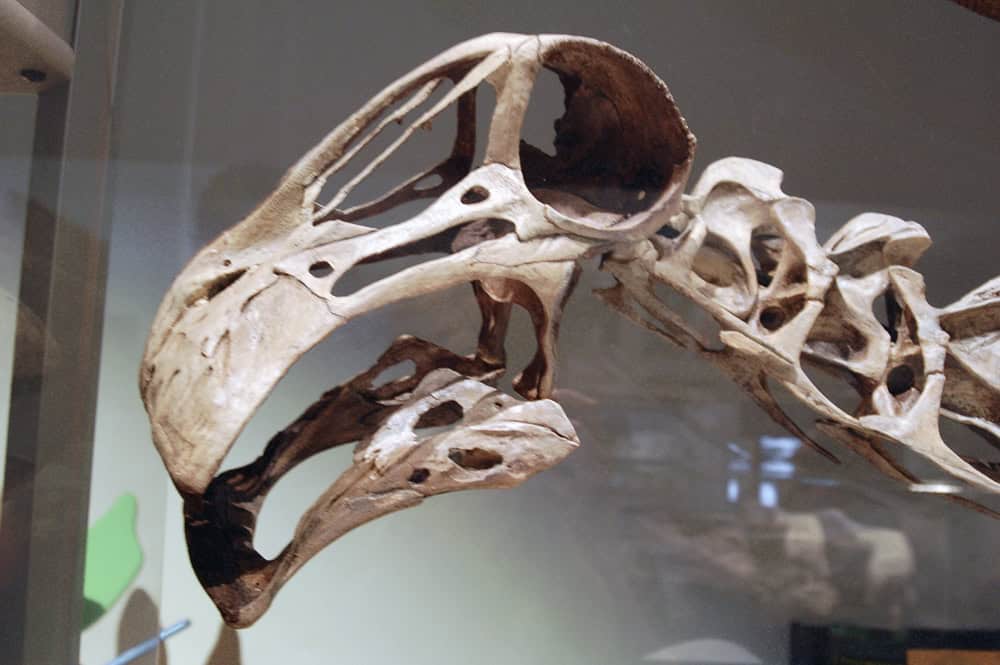
The bizarre feeding apparatus of Nigersaurus was even more alien than initially thought. Its 500+ teeth were arranged in batteries, with new teeth constantly replacing worn ones – similar to sharks but on a much larger scale. The dinosaur would have been grinding through vegetation constantly, wearing down and replacing teeth throughout its life.
Its skull was so delicate and specialized that it could only feed on soft, low-growing plants. The dinosaur’s neck was perfectly adapted for ground-level browsing, and its wide mouth could strip vegetation like a living hedge trimmer. Nigersaurus represents one of the most extreme feeding specializations in dinosaur history, showing that these animals evolved solutions to ecological challenges that seem almost alien to us today.
Conclusion
These remarkable discoveries remind us that the prehistoric world was far more diverse, colorful, and bizarre than we ever imagined. From feathered giants to musical dinosaurs, from four-winged gliders to semi-aquatic predators, these creatures challenge every assumption we’ve made about what dinosaurs looked like and how they lived.
Perhaps most importantly, these revelations show us that science is constantly evolving. Each new fossil discovery has the potential to completely overturn decades of accepted knowledge, proving that there’s still so much we don’t know about the incredible creatures that once ruled our planet. The next time you see a dinosaur in a movie or museum, remember that the real animals were probably far stranger and more wonderful than anything our imaginations could create.
What other prehistoric surprises might be waiting in the rocks beneath our feet? The story of dinosaur discovery is far from over, and the next earth-shattering revelation could be just one fossil away.

- The Animals That Inspired Mythical Creatures in Movies - August 2, 2026
- Why Orcas Teach Their Young to Beach Themselves While Hunting - July 31, 2026
- How Raccoons Use Their Tiny Hands to Explore - July 31, 2026