


The bald eagle, America’s national bird, stands as one of nature’s most impressive predators. With their striking white heads, massive wingspans, and fierce yellow eyes, these raptors aren’t just symbols of freedom—they’re masterful hunters that have perfected their predatory skills over millennia. From their exceptional eyesight to their strategic hunting techniques, bald eagles demonstrate remarkable adaptations that place them at the top of their food chain. This article explores the twenty remarkable hunting behaviors and adaptations that make bald eagles true apex predators in their ecosystems.
20. Exceptional Visual Acuity

Bald eagles possess vision that puts human eyesight to shame. With visual acuity estimated to be 4-8 times stronger than that of humans, they can spot a rabbit from nearly two miles away. This extraordinary vision is due to a higher concentration of cone cells in their retinas and a specialized central fovea that gives them both telescopic and peripheral vision simultaneously. Additionally, bald eagles can see ultraviolet light, allowing them to track urine trails of prey that are invisible to the human eye. This visual superpower enables them to detect the slightest movements from great heights, giving them a crucial advantage when hunting.
19. Strategic High-Altitude Soaring

Bald eagles are masters of energy conservation when hunting. They can soar at altitudes of up to 10,000 feet, riding thermal currents that allow them to stay aloft for hours while expending minimal energy. From these lofty vantage points, they survey vast territories, patiently scanning for any signs of potential prey. Research has shown that adult eagles can maintain this surveillance pattern for up to 8 hours a day during peak hunting seasons. This high-altitude strategy not only provides an expansive view of potential hunting grounds but also makes them nearly invisible to prey below, allowing them to observe without alerting their targets.
18. Lightning-Fast Diving Speeds

When a bald eagle spots prey from above, it executes one of nature’s most impressive hunting maneuvers—the strike dive. Eagles can reach speeds of up to 100 miles per hour during these dives, plummeting toward their target with pinpoint accuracy. To achieve this remarkable feat, they fold their wings back, minimize air resistance, and transform into living projectiles. Their bodies are specially adapted for these high-speed dives, with aerodynamic features that prevent injury upon impact. The speed and precision of these dives often leave prey with little to no chance of escape, making it one of the eagle’s most effective hunting techniques.
17. Powerful Talon Grip

A bald eagle’s talons represent one of the most formidable weapons in the avian world. Equipped with four incredibly strong toes—three facing forward and one backward—each talon ends in a sharp, curved claw that can exert up to 400 pounds of pressure per square inch. This grip strength allows them to seize fish from water surfaces and carry prey weighing up to 4-5 pounds, sometimes even heavier. Their talons also feature specialized scales and spicules (tiny projections) that improve grip on slippery prey like fish. The rear talon, called the hallux, is particularly lethal, often used to pierce vital organs of prey and deliver a quick kill.
16. Mastery of Aquatic Hunting

Fish constitute approximately 60-90% of the bald eagle’s diet, highlighting their specialized skill in aquatic hunting. When hunting over water, bald eagles demonstrate remarkable precision, able to calculate the refraction of light in water to accurately strike fish swimming below the surface. They typically fly about 20-30 feet above the water when fishing, and can snatch fish with minimal body contact with the water, reducing drag and allowing for a quick getaway. Interestingly, studies have found that bald eagles have a success rate of about 1 in 18 attempts when fishing—a higher success rate than many other fishing birds, showcasing their superior adaptation to this hunting niche.
15. Opportunistic Hunting Behaviors

While bald eagles are skilled hunters, they also demonstrate remarkable opportunism that enhances their hunting efficiency. They frequently engage in kleptoparasitism—stealing prey from other predators like osprey or other eagles. This behavior allows them to conserve energy while still securing a meal. Eagles also readily scavenge carrion, particularly during winter months when hunting becomes more challenging. Research in some regions has shown that up to 50% of an eagle’s winter diet may consist of scavenged food. This adaptable feeding strategy helps eagles maintain their energy reserves year-round and demonstrates their cognitive flexibility as hunters.
14. Strategic Use of Hunting Perches

Bald eagles carefully select elevated perches that provide both excellent visibility of hunting grounds and easy launch points for attacks. They typically choose tall trees near water bodies or in open areas where they can survey large territories. From these perches, eagles can spot prey up to 2 miles away on clear days. They often use the same perches repeatedly, creating “hunting territories” they defend against intruders. This perch-hunting technique allows eagles to conserve energy while remaining vigilant, and studies have shown that in some habitats, eagles can catch up to 85% of their prey using this sit-and-wait strategy rather than active flying patrols.
13. Cooperative Hunting Tactics
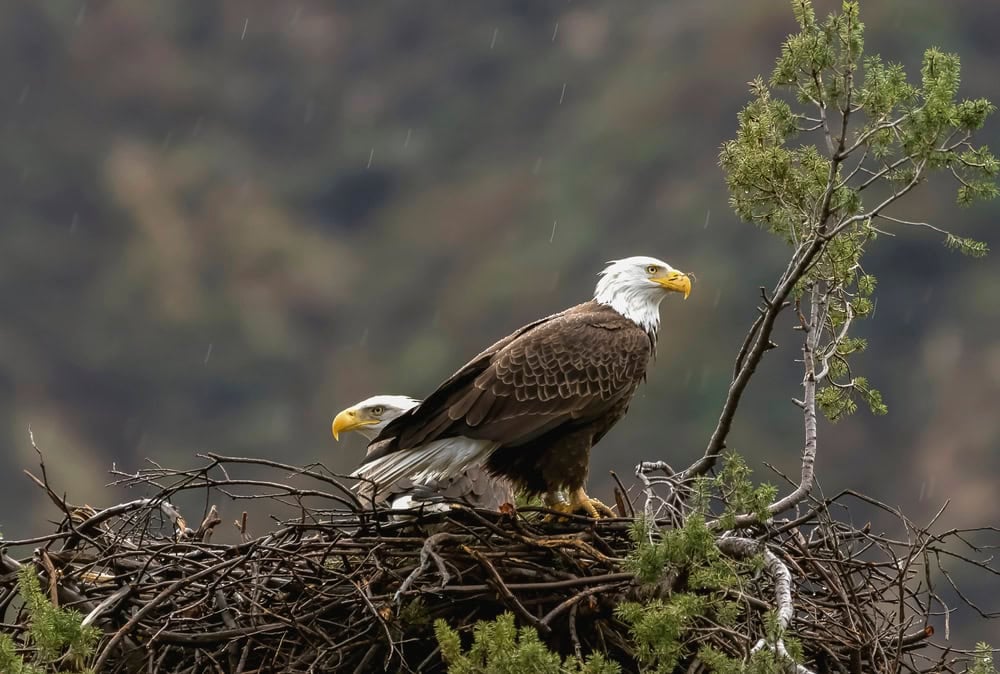
While generally solitary hunters, mated bald eagle pairs sometimes engage in coordinated hunting techniques that demonstrate sophisticated teamwork. One documented strategy involves one eagle deliberately flushing waterfowl into the air while its mate attacks the disoriented prey. In winter, groups of eagles have been observed working together to break ice on frozen lakes to access fish below. These cooperative behaviors aren’t common among raptors and showcase the bald eagle’s intelligence and social complexity. Scientists have documented success rates nearly doubling when eagles hunt cooperatively versus hunting alone, particularly when targeting larger prey like waterfowl.
12. Aerial Combat Proficiency

Bald eagles possess remarkable aerial maneuverability that aids their hunting prowess. Despite their large size, with wingspans reaching up to 7.5 feet, they can execute tight turns, rapid direction changes, and complex aerial maneuvers when pursuing prey. This agility allows them to chase down flying birds, including ducks and geese, in mid-air. Their wing structure, featuring slots between primary feathers, provides precise control during high-speed flight. Additionally, bald eagles can fly at sustained speeds of 35-40 mph when actively pursuing prey, with short bursts reaching up to 75 mph during horizontal flight—abilities that make them formidable aerial predators capable of outmaneuvering most avian prey.
11. Specialized Bill Adaptations

The bald eagle’s powerful hooked beak is perfectly designed for efficient predation. Unlike many birds, their beaks continue growing throughout their lifetime, compensating for wear from tearing prey. The sharp hook at the end allows eagles to tear through tough skin, scales, and flesh with precision. Their beaks contain sensory receptors that help them locate the most nutritious parts of prey. An eagle can exert over 400 pounds per square inch with its beak—enough force to break bones and tear through hides. This specialized tool allows them to quickly dispatch prey and process food efficiently, maximizing their energy intake from each successful hunt.
10. Thermal Regulation During Hunting

Bald eagles have evolved sophisticated thermal regulation that optimizes their hunting performance. Their feathers provide excellent insulation in cold weather, allowing them to hunt over frigid waters where prey may be more accessible due to reduced competition. During hot weather, eagles can adjust blood flow to their unfeathered legs, using them as radiators to dissipate excess heat. They also employ gular fluttering—rapid vibration of throat tissues—to cool down without compromising hunting vigilance. This temperature control allows eagles to hunt effectively in environments ranging from below-freezing Alaskan waters to the subtropical wetlands of Florida, giving them a competitive edge over less adaptable predators.
9. Patient Hunting Strategies

Unlike some predators that rely on frequent attempts to secure prey, bald eagles display remarkable patience in their hunting approach. They can remain motionless on a perch for hours, waiting for the perfect moment to strike. This patience extends to their fishing technique, where they may hover above water for extended periods, waiting for fish to surface. Research has shown that eagles optimize their energy expenditure by making fewer, more calculated hunting attempts rather than numerous speculative ones. This strategic patience translates to a higher success rate per hunting effort, making them more efficient predators that conserve energy for when it matters most.
8. Tactical Weather Exploitation
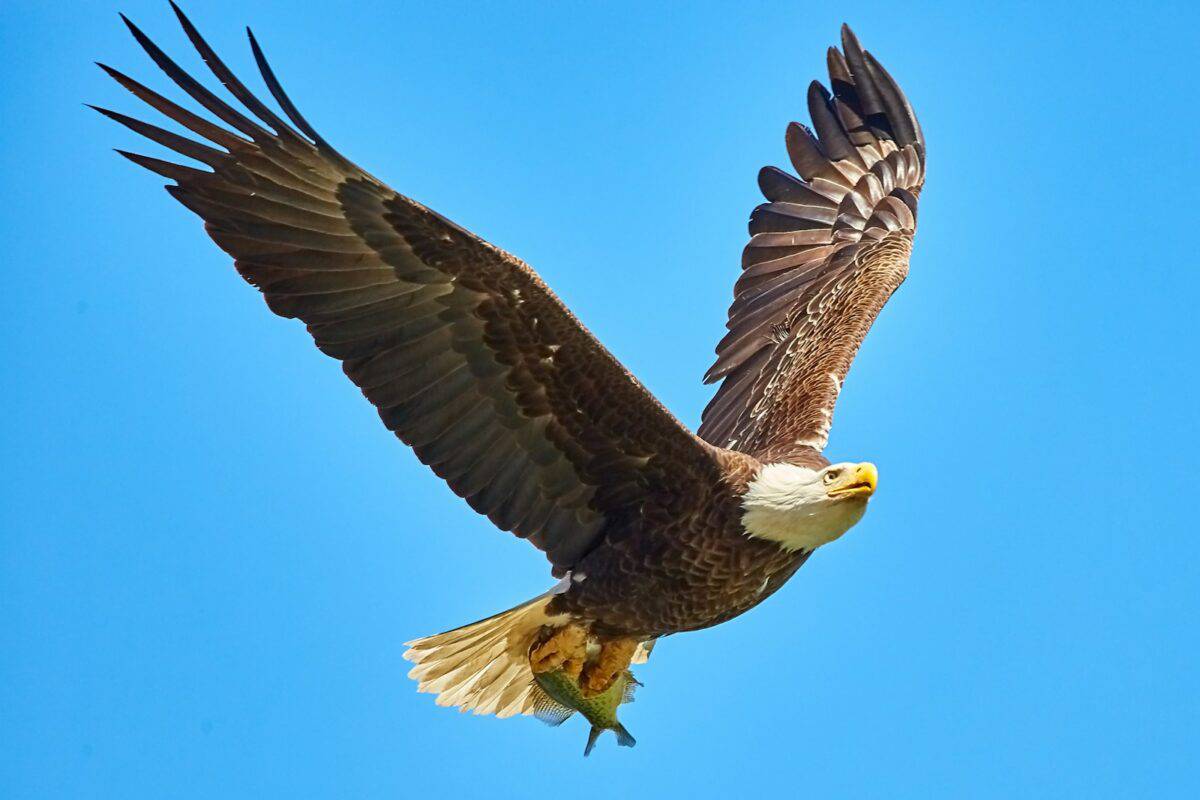
Bald eagles demonstrate remarkable ability to exploit weather conditions to enhance hunting success. During storms, they take advantage of low air pressure systems that force fish closer to water surfaces, making them easier targets. In winter, eagles gather near ice floes and dam outlets where water remains unfrozen, concentrating fish in accessible areas. They also use gusty winds to gain lift with minimal energy expenditure during hunting flights. Studies have documented increased hunting activity during specific weather patterns, suggesting eagles can anticipate how environmental conditions affect prey behavior. This weather intelligence gives them a significant advantage, allowing them to hunt efficiently when prey is most vulnerable.
7. Year-Round Hunting Adaptability

Bald eagles demonstrate exceptional seasonal adaptability in their hunting behaviors. During summer months, they primarily target fish and waterfowl, taking advantage of abundant aquatic prey. As winter approaches and water bodies freeze, eagles seamlessly transition to hunting small mammals, scavenging carrion, and targeting weakened deer or other large mammals struggling in deep snow. This dietary flexibility is supported by physiological adaptations, including a digestive system that can process diverse food sources efficiently. Research has documented seasonal shifts in eagle populations, with birds moving up to several hundred miles to follow optimal hunting conditions, showcasing their ability to adapt hunting territories based on prey availability.
6. Strategic Migration Patterns

While some bald eagle populations remain in fixed territories year-round, others undertake strategic migrations that optimize hunting opportunities. Northern eagles often move southward as waters freeze, following food availability rather than temperature alone. Interestingly, juvenile eagles typically migrate farther than adults, sometimes covering over 1,000 miles to reach prime hunting grounds. These migrations aren’t simply random movements but follow specific flyways that maximize hunting opportunities along the route. Tracking studies have revealed that eagles often stop at traditional hunting hotspots during migration, locations that may have been used by generations of eagles, demonstrating a potential cultural transmission of hunting knowledge.
5. Extraordinary Lifting Capacity

A bald eagle’s ability to lift heavy prey is legendary among birds of prey. While their typical prey weighs 1-3 pounds, eagles have been documented carrying fish weighing up to 12-14 pounds for short distances—remarkable considering adult eagles themselves typically weigh 8-14 pounds. This feat is possible due to their massive flight muscles, which comprise about 25% of their body weight, and their hollow, lightweight bones. When an eagle cannot lift particularly heavy prey, it may drag it across water to shore or partially consume it in place to reduce weight. This lifting capacity allows eagles to exploit food sources inaccessible to most other predators and transport prey to secure locations away from competitors.
4. Hunting Territory Defense
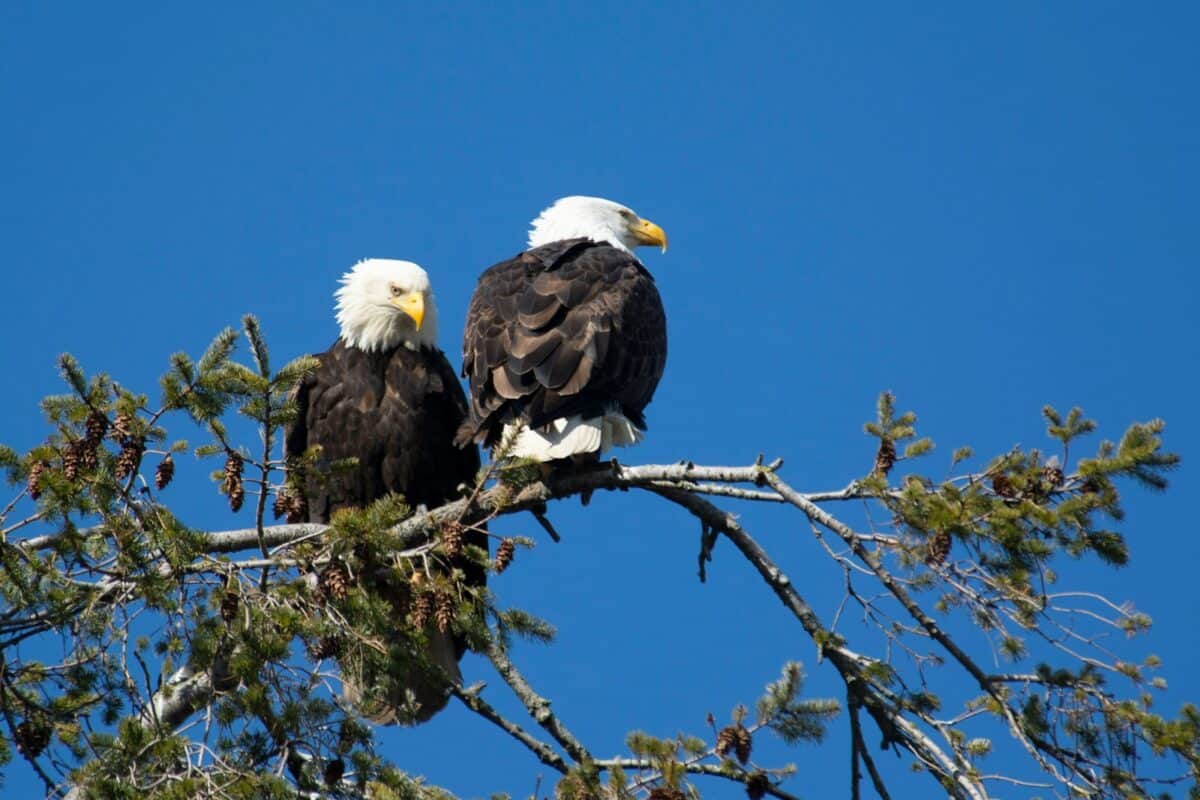
Bald eagles vigorously defend prime hunting territories, which typically encompass 1-2 square miles of habitat centered around productive fishing waters. They mark and patrol these boundaries through spectacular aerial displays, including their famous “cartwheel courtship” maneuver, which doubles as a territorial statement. Eagles recognize individual neighbors and respond more aggressively to strangers entering their hunting grounds. Studies have shown that eagles with established territories have up to 35% higher hunting success rates than transient individuals, highlighting the evolutionary advantage of territory defense. This territorial behavior ensures access to reliable hunting grounds and reduces competition during critical breeding periods.
3. Generational Hunting Knowledge

Young bald eagles undergo an extensive learning period, spending 4-5 years developing the hunting skills that will sustain them throughout their lives. Juvenile eagles initially rely on easier hunting techniques, like scavenging and stealing from other birds, before mastering complex skills like the precision fishing dives of adults. Research indicates that young eagles observe adults and practice hunting techniques repeatedly, with success rates gradually improving over years. This extended learning period, one of the longest among birds, allows for the transmission of sophisticated hunting behaviors across generations. Eagles that fledge in prey-rich environments typically develop superior hunting skills, demonstrating how early experiences shape lifetime hunting proficiency.
2. Exceptional Hearing Abilities

While bald eagles are primarily visual hunters, their hearing plays a crucial supporting role in predatory success. Their ears, though hidden under feathers, can detect sounds from considerable distances, including the splashing of fish breaking the water’s surface. Unlike many birds, eagles can perceive a wide range of frequencies, allowing them to detect both high-pitched distress calls of potential prey and low-frequency sounds like distant wingbeats. Research has shown that eagles can triangulate sound sources with remarkable accuracy, using this ability to locate prey obscured by vegetation or to detect animals moving under snow. This multi-sensory hunting approach gives them an advantage in conditions where visibility alone might be insufficient.
1. Precision Water Entry and Exit

Perhaps one of the most remarkable hunting adaptations of bald eagles is their precision water entry and exit when fishing. Unlike osprey, which plunge entirely into water, bald eagles typically only submerge their talons and lower legs, maintaining wing positioning that allows for immediate takeoff. Their legs feature specialized scales that shed water quickly, and their waterproof outer feathers prevent water absorption that would make flight difficult. High-speed photography has revealed that eagles can adjust their trajectory mid-dive based on the movement of fish, accounting for refraction in water. After contact, they use powerful upward wing strokes to lift themselves and their prey from the water surface—a maneuver requiring immense strength and perfect timing that few other birds can execute successfully.
Conclusion: The Ultimate Avian Predator

The bald eagle represents one of nature’s most perfectly designed hunting machines, combining physical strength, sensory superiority, intelligence, and adaptability in a package that dominates its ecological niche. From their remarkable vision that spots prey miles away to their strategic hunting behaviors that maximize efficiency, each aspect of eagle biology contributes to their success as apex predators. The twenty hunting adaptations outlined here demonstrate why bald eagles have thrived across North America for thousands of years despite facing numerous environmental challenges. As scientists continue studying these magnificent birds, we continually discover new subtleties in their hunting behaviors, revealing even more sophisticated strategies that cement their status as supreme hunters of the skies. This combination of innate abilities and learned behaviors makes the bald eagle not just an American symbol, but a testament to the extraordinary evolutionary refinement of predatory excellence.

As a little kid, I fell in love with nature, wildlife, and animals. Living in the USA, South Africa, Italy, China and Germany gave me the opportunity to discover the world's Wildlife. My favorite animals are Mountain Gorillas, Siberian Tigers, and Great White Sharks.
I'm a certified PADI Open Water Diver, went to Everest Base Camp and Trekked Gorillas in Uganda. I hold a Master of Science in Economics and Finance.
Please send any feedback to feedback@animalsaroundtheglobe.com
- 10 Most Unique Reptiles You will See in the US - July 21, 2026
- 3 Dangerous Invasive Species the USA Must Eradicate - July 21, 2026
- 10 Things That Calm Cats And 4 That Make Them Nervous - July 21, 2026