
Here’s the myth: turn 65, flash your ID at a wildlife refuge, and the gates swing open for free. It doesn’t work that way. The federal Senior Pass actually starts at age 62, and it costs $20 for a year or $80 for life.
The real secret is better than a free ticket. Along refuge trails sit hides, towers and blinds that let you watch animals that would bolt if they saw you walking up. Some cost nothing for anyone, and some open with one card. One tower won’t let you climb without asking for a key, one blind may already have a tenant inside, and the #1 show starts before sunrise.
#25 – Turnbull, Washington: The Refuge That Never Sends a Bill
🔥 Would you like to save this?
We'll email this post to you, so you can come back to it later!
Washington’s Channeled Scablands, a rugged landscape carved by Ice Age floods, hide a refuge with no gate fee.
Entrance to Turnbull is free. It’s federally managed, so a Washington Discover Pass isn’t required. Plenty of visitors arrive with the wrong permit and never needed one.
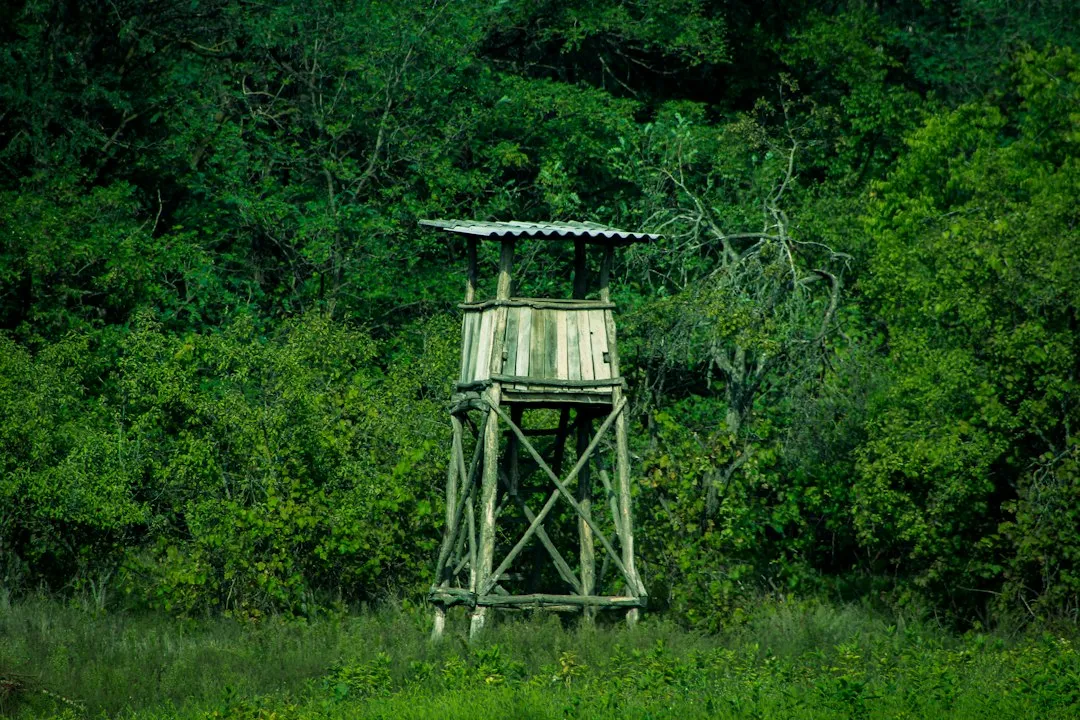
The refuge says observation blinds may be available for a close-up view with minimal disturbance. Its own advice is simpler: use your car as a blind for viewing and photography.
The refuge also asks visitors to log sightings on iNaturalist, so your notes can help staff track wildlife. The free app lets anyone share what they see.
But the next refuge has hides big enough to set up two tripods, and it’s free too…
#24 – Necedah, Wisconsin: Photo Blinds Built for Two Tripods

🔥 Would you like to save this?
We'll email this post to you, so you can come back to it later!
Wisconsin’s Necedah has wooden blinds designed for real photographers.
There is no charge to visit. The year-round photo blinds sit on Lupine Loop and Boghaunter Trail. Each is large enough for two people and two tripods.
The design is clever. Openings come at two heights, with sliding wooden panels, so you can choose your setup. The refuge even warns you to check inside first, because wildlife may have beaten you to the blind.
Quick pointers from the refuge:
- Dawn and dusk are the best times to see wildlife.
- A sightings board at the visitor center shows what others have spotted.
That’s a ground-level view. The next one takes you 100 feet up…
#23 – Agassiz, Minnesota: The 100-Foot Tower With a Catch
🔥 Would you like to save this?
We'll email this post to you, so you can come back to it later!
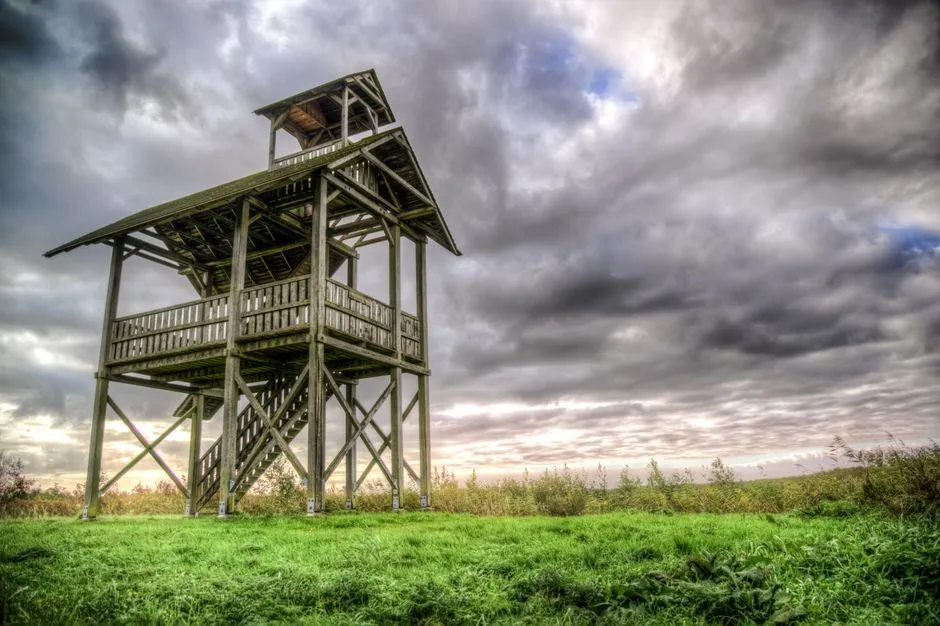
You can climb a 100-foot tower here, but only if you ask for the key.
Agassiz was established in 1937 and covers 61,500 acres of wetland and upland habitat in northwestern Minnesota. Its 26 wetland impoundments range from 30 to 9,000 acres. That’s a lot of water to scan.
Visitors can climb the tower near headquarters. The catch: you pick up the key during office hours, and only in snow-free months.
Then comes the twist. The refuge itself says that using your car as a viewing blind often shows you more wildlife than walking. The tower is great, but the auto tour may beat it, so drive first.
But the next refuge packs a tower, a platform and a blind into a few hundred feet…
#22 – J. Clark Salyer, North Dakota: Three Viewing Options in One Stop
🔥 Would you like to save this?
We'll email this post to you, so you can come back to it later!
North Dakota’s Salyer refuge makes wildlife watching easy, even if you can’t walk far.
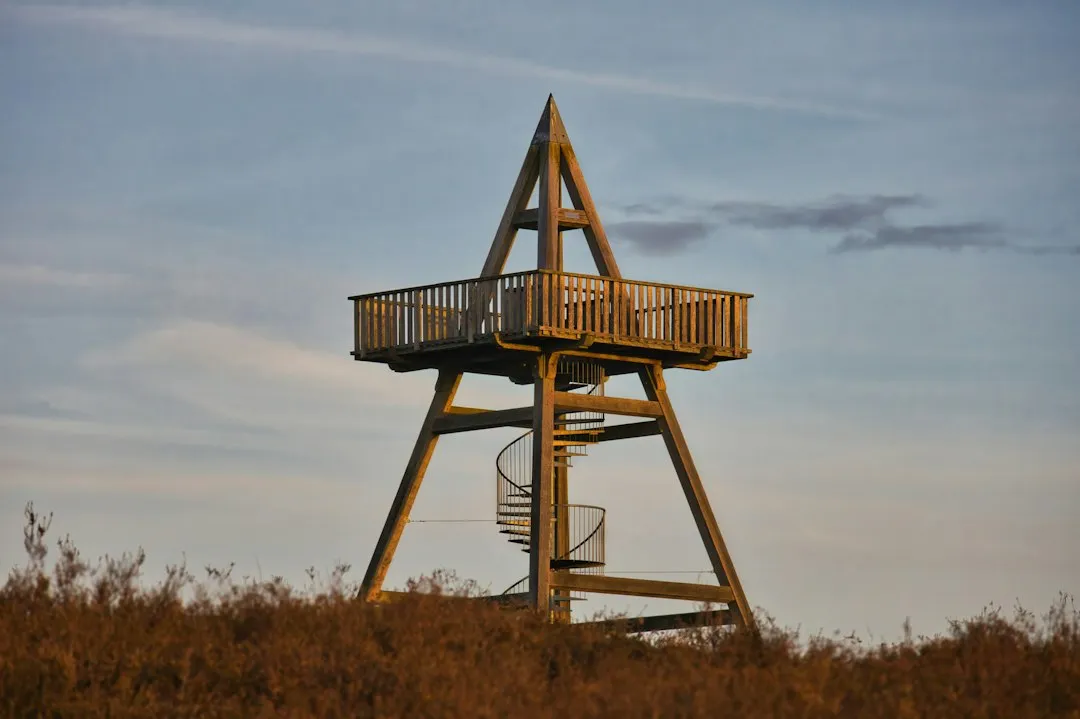
The Wildlife Observation Walk is 0.13 miles long and rated easy. It includes an accessible viewing platform next to the larger tower. That’s about as little effort as wildlife viewing gets.
There’s more. A wildlife observation blind is available during hours of operation, along the dam 326 road. The refuge also offers canoeing, so you can switch from a still hide to the water in one visit. It lists wildlife observation, hiking, canoeing, photography, hunting and fishing.
At a Glance
- The Wildlife Observation Walk is just 0.13 miles and rated easy.
- An accessible viewing platform sits beside the larger tower.
- A wildlife observation blind is open during hours of operation along the dam 326 road.
- Canoeing lets you move from a still hide to open water.
Save time for the end of the day. The refuge recommends catching the sunset over the Souris River from the Wildlife Viewing Platform.
Next up is a refuge with a very different admission story…
#21 – Ridgefield, Washington: The $3 Refuge Where Geese Come First
🔥 Would you like to save this?
We'll email this post to you, so you can come back to it later!
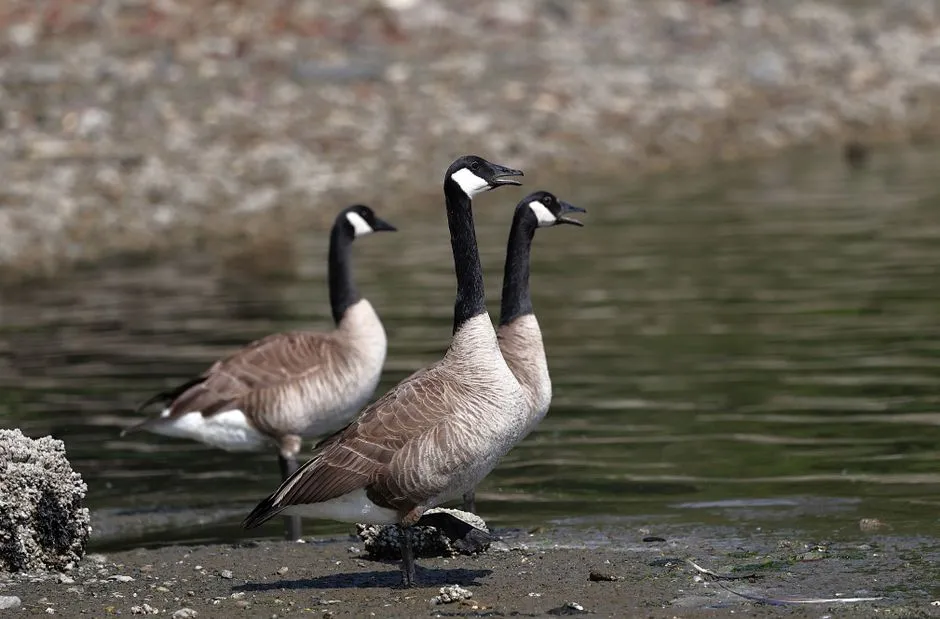
Ridgefield was created for one bird, and it still shows.
The refuge was established in 1965 along the Columbia River to provide wintering habitat for the dusky subspecies of Canada goose. Its 5,300 acres include wetlands, grasslands, riparian corridors and forests.
Entry is $3 per day or $15 for an annual pass. That covers everyone in a privately owned vehicle, or up to four adults on foot. Senior Passes, annual or lifetime, are valid here.
The truth: at $3 a visit, you may spend more on a coffee-shop snack than on getting in. Registering your pass at the entrance waives the fee.
Speaking of small, the next refuge is only 501 acres…
#20 – Handy Brake, Louisiana: A Tiny Refuge Built Around One Tower
🔥 Would you like to save this?
We'll email this post to you, so you can come back to it later!
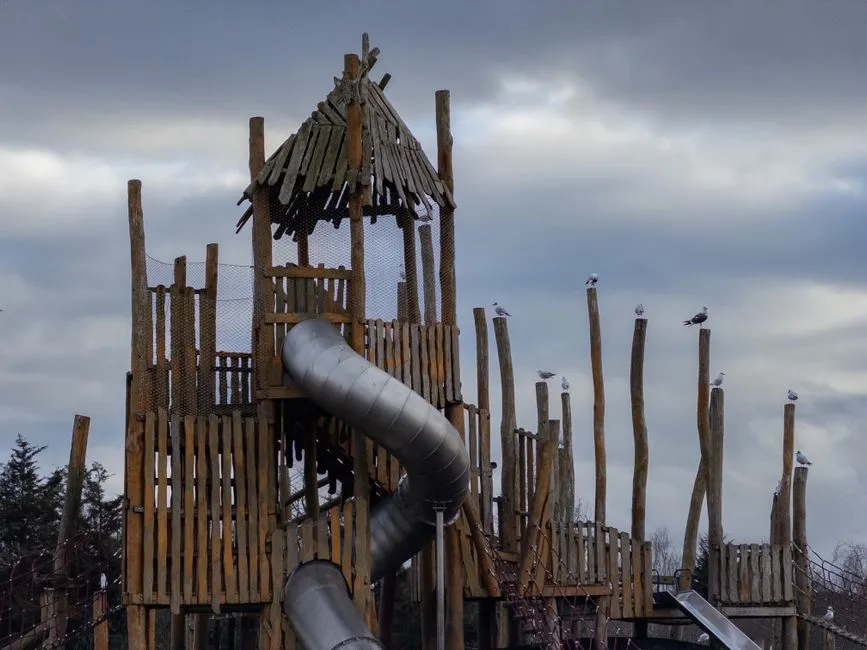
A 501-acre refuge in Louisiana is basically one tower and a lot of waterfowl.
Handy Brake sits in Morehouse Parish, just north of Bastrop. A free lease of 38 acres from International Paper brought it to its current 501 acres.
The land has a history. Fields once cleared for agriculture have been reforested to bottomland hardwoods. Prairie grasses were planted between the water and the observation tower.
Here’s what catches people out: it’s managed as a waterfowl sanctuary, and access is limited to the area right next to the tower. Don’t expect trails or a long hike. The tower is the whole experience, and that’s deliberate.
Next, a desert oasis with a hide that has an actual roof…
#19 – Bitter Lake, New Mexico: A Desert Oasis With an Enclosed Blind
🔥 Would you like to save this?
We'll email this post to you, so you can come back to it later!
In the Chihuahuan Desert, water is the whole show.
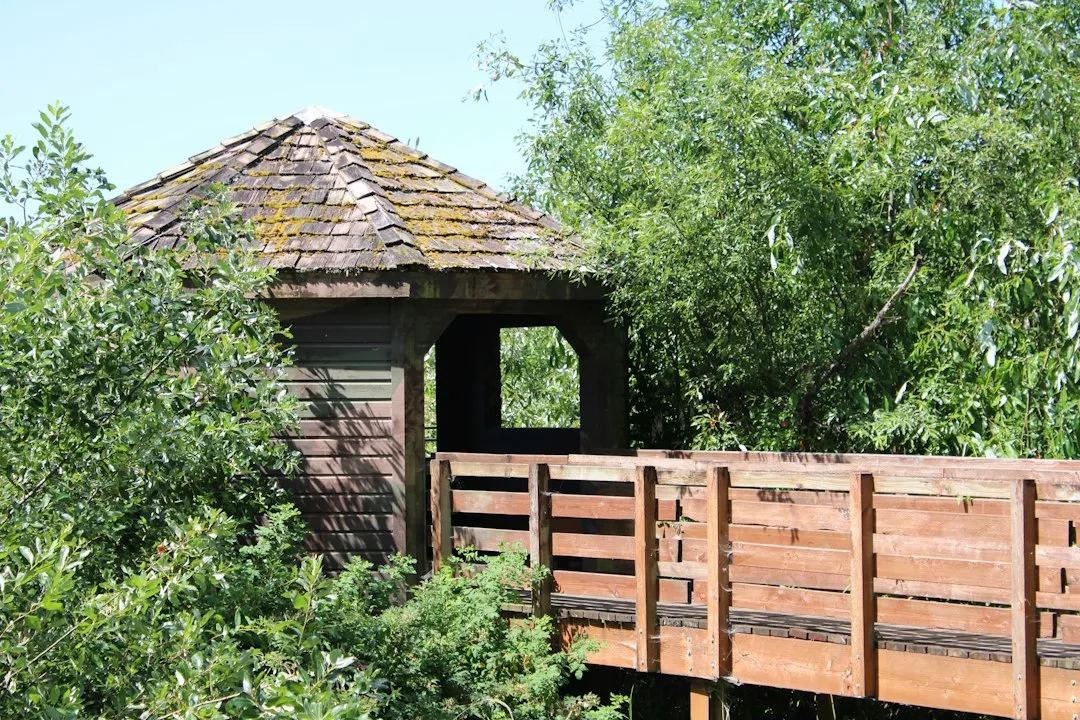
Bitter Lake is an oasis for wildlife that lives there or stops by temporarily. Visitors can take any of five walking trails, including one to an enclosed viewing blind, plus observation decks, a bike trail and the Wildlife Drive.
Don’t come only for birds. Bitter Lake is known for its insects, especially dragonflies. Bring a close-focus pair of binoculars.
The blind is on the refuge’s signed Pajaro Observation Blind route. An enclosed hide is a real advantage in wind and dust.
The next hide faces some of the rarest birds in North America…
#18 – Aransas, Texas: Where a Spotting Scope Does the Work
🔥 Would you like to save this?
We'll email this post to you, so you can come back to it later!
Aransas is one of the few refuges where a scope matters more than binoculars.
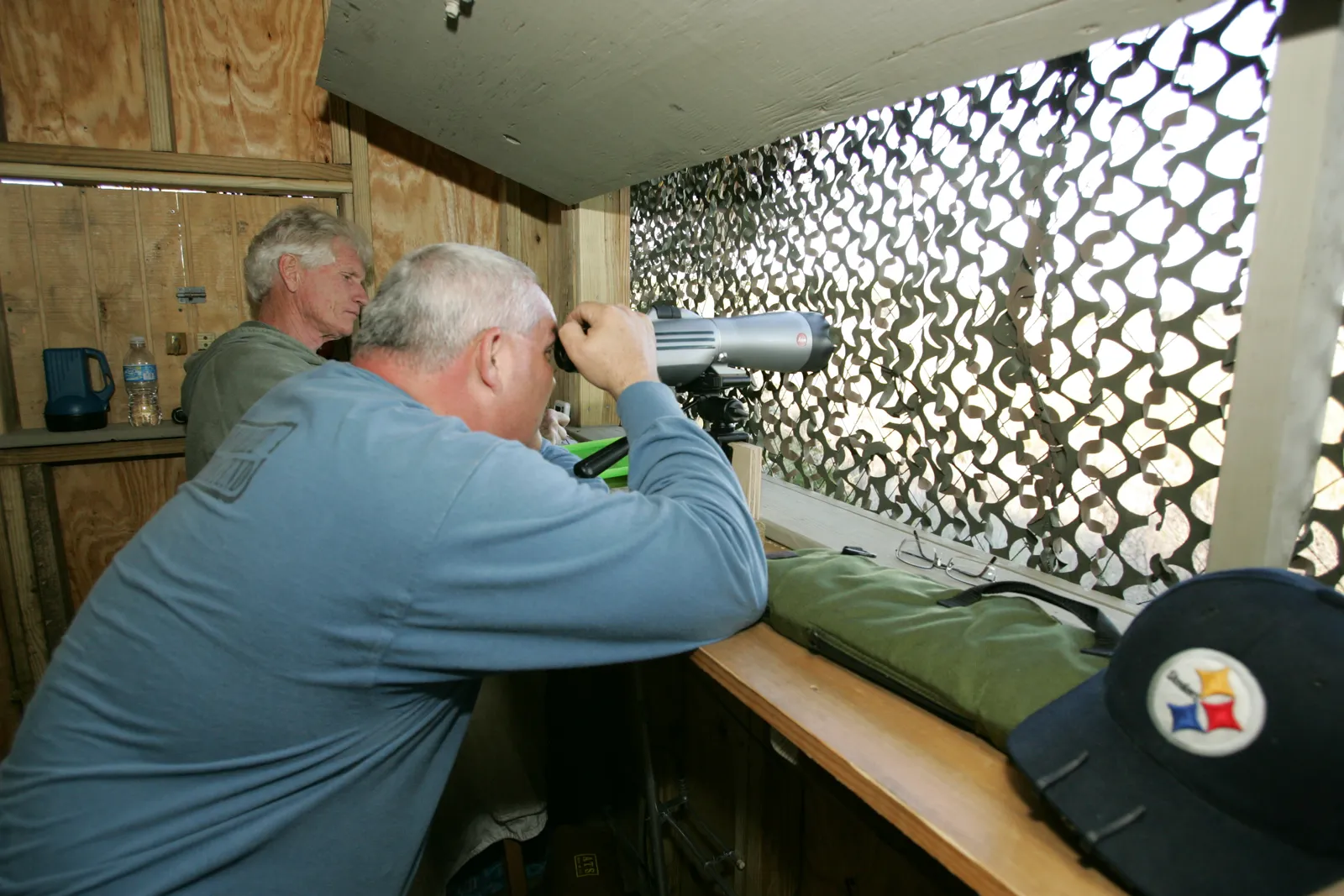
The refuge’s own photo library shows visitors standing inside a blind and using a spotting scope to view birds. That’s the right approach on the Texas coast, where birds feed far out on the flats.
Aransas is best known as the winter home of the only natural wild flock of whooping cranes. The species was reduced to roughly fifteen birds in the early 1940s. Seeing even one is a conservation milestone.
Don’t expect the birds to come to you. Let the scope do the work, and stay behind the blind’s cover.
The next stop has a blind with just three walls…
#17 – Parker River, Massachusetts: The Three-Walled Blind
🔥 Would you like to save this?
We'll email this post to you, so you can come back to it later!
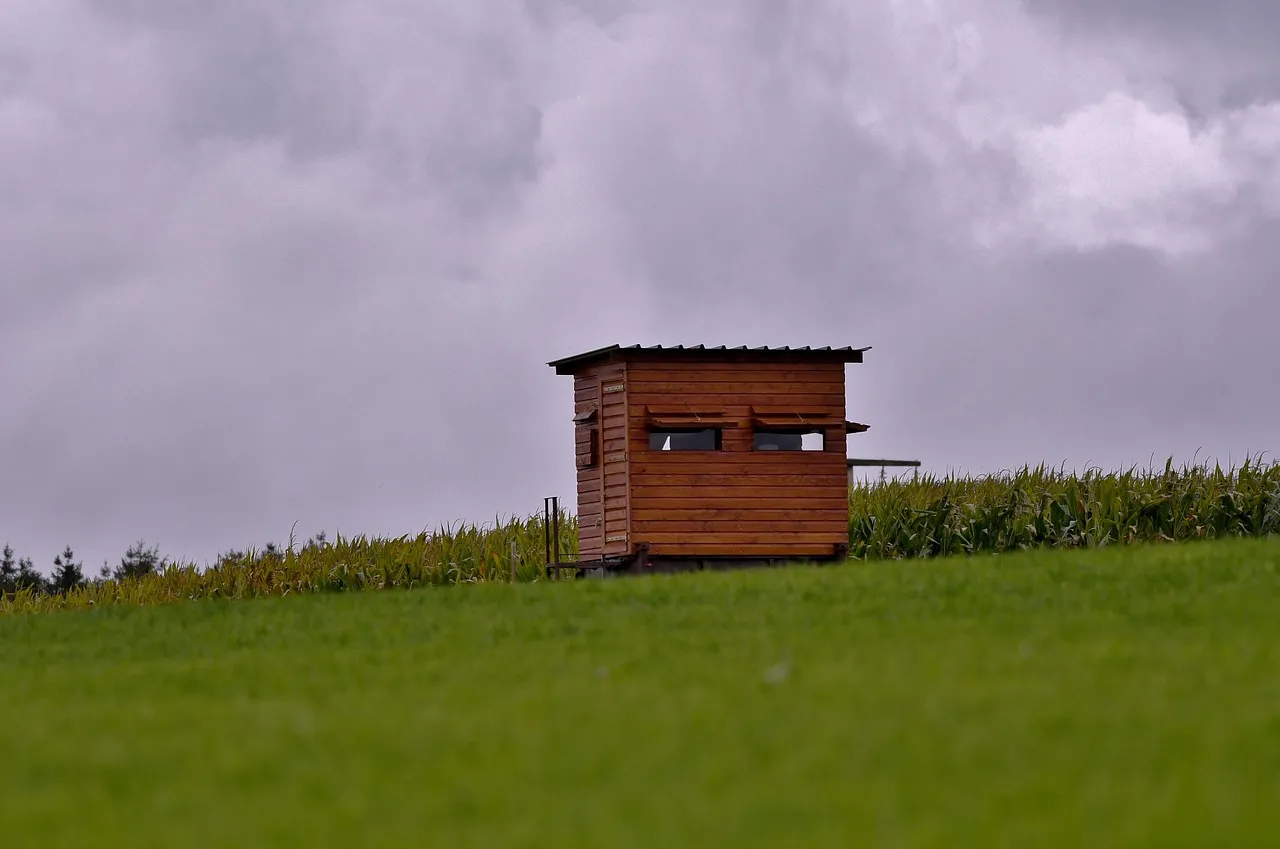
Massachusetts’ Plum Island hides a blind that is mostly open to the air.
A 250-foot trail leads through patchy grassland and shrubs to the Bill Forward Bird Blind, which has three solid sides. There’s also an observation tower at the end of the cross-dike.
Now the money. The refuge is a federal recreation fee area. Its accessibility guide lists a daily fee of $5 per vehicle, or $2 for bicycles and pedestrians.
The twist: entry is free for holders of a Federal Duck Stamp or any of four Interior passes: America the Beautiful, Senior, Military and Access. A refuge-specific annual pass was listed at $20. Check current rates before you go.
The next refuge sits on one of the busiest bird highways in the country…
#16 – Edwin B. Forsythe, New Jersey: 359 Species and a Wildlife Blind
🔥 Would you like to save this?
We'll email this post to you, so you can come back to it later!
New Jersey’s Forsythe is basically a rest stop for migrating birds.
It protects more than 48,000 acres of southern New Jersey coastal habitat. Its place on the Atlantic Flyway makes it an important link in seasonal migration. The refuge’s bird brochure lists 359 species.
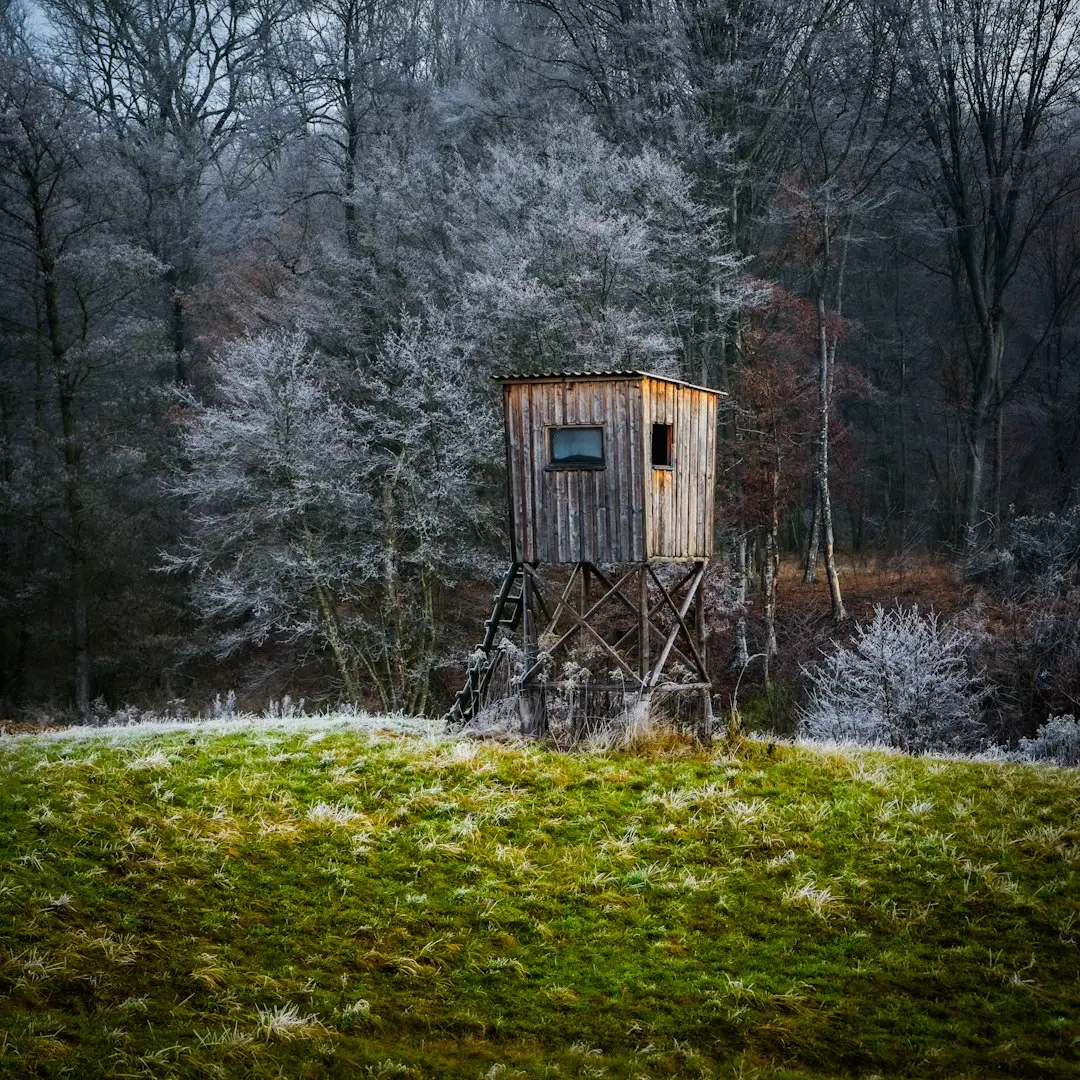
For a hide, try Eno’s Pond. A one-mile self-guided trail leads through pine barrens to observation decks and a wildlife blind. An entrance fee applies on the Wildlife Drive, but Senior Pass holders skip it.
- A pass admits the holder and three adult passengers in one vehicle.
Further south, one refuge has one of the densest eagle populations on the Atlantic coast…
#15 – Blackwater, Maryland: Eagles, a Photo Blind and a Four-Mile Drive
🔥 Would you like to save this?
We'll email this post to you, so you can come back to it later!
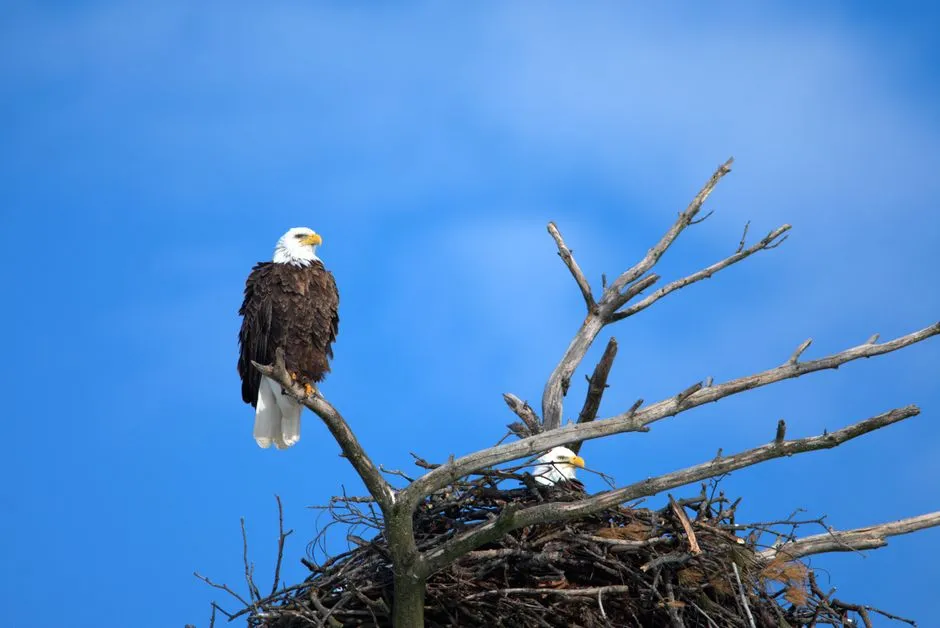
Maryland’s Blackwater is one of the best places on the East Coast to see a bald eagle nest.
It was established in 1933 as a refuge for migratory birds. It supports one of the highest concentrations of nesting bald eagles on the Atlantic coast.
The 4-mile Wildlife Drive features two trails, an elevated observation platform, a photo blind and many pull-offs. A daily or annual pass is needed for the drive.
Surprisingly, all public areas outside the Wildlife Drive, including the Visitor Center, were listed as free of charge. There are over five miles of hiking trails and 17 miles of paddling trails. Confirm current fees on the refuge site.
Next, a refuge where the animal everyone wants to see is a marine mammal…
#14 – Merritt Island, Florida: The Manatee Deck Next to NASA
🔥 Would you like to save this?
We'll email this post to you, so you can come back to it later!
A refuge beside a launch site is one of Florida’s best places for animal viewing.
It covers 140,000 acres and supports more than 1,500 species of plants and animals. The refuge overlays NASA’s property, which kept much of it undeveloped.
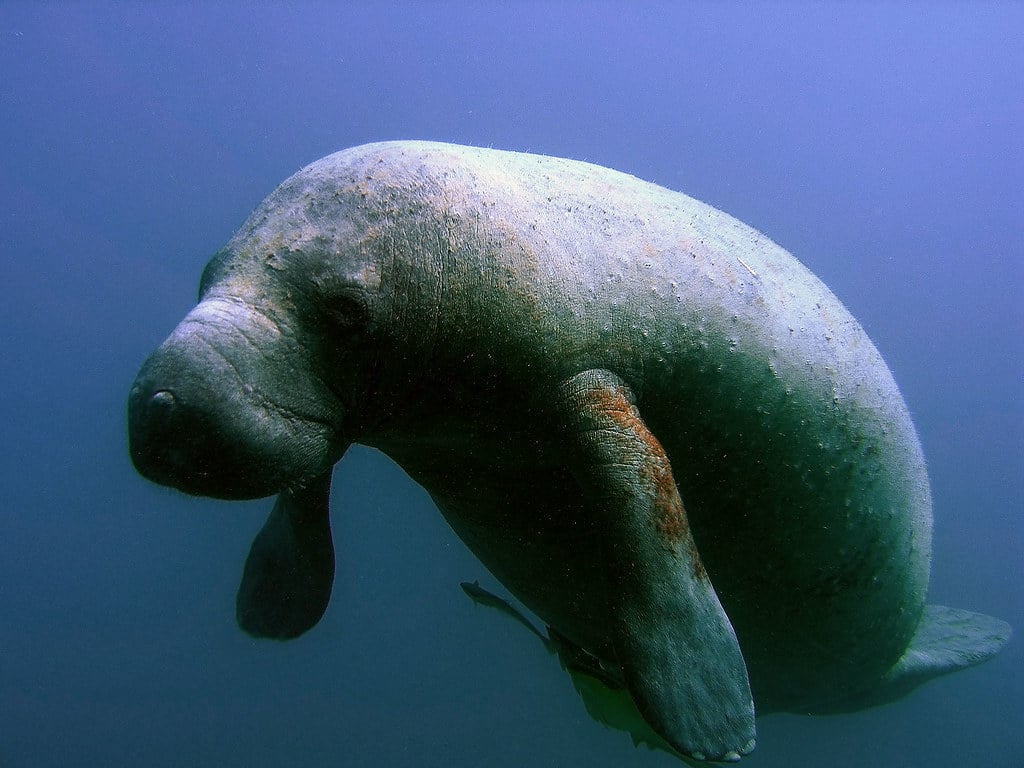
The Manatee Observation Deck sits where manatees frequent warm water and can be seen reliably in spring and summer. The deck is wheelchair accessible.
A Refuge Pass is required for Black Point Wildlife Drive, but you don’t need one with a current signed Duck Stamp or an Interagency Pass.
Not far from there, another Florida refuge is famous for a very different reason…
#13 – J.N. “Ding” Darling, Florida: Timing Beats Everything
🔥 Would you like to save this?
We'll email this post to you, so you can come back to it later!
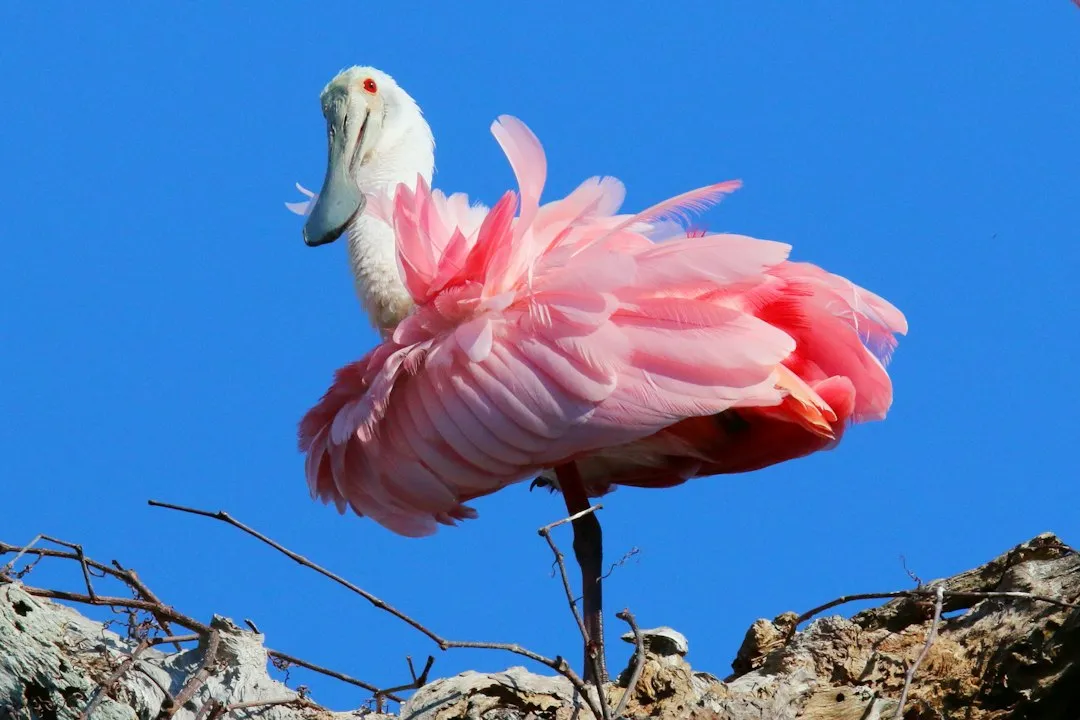
Sanibel Island’s refuge is at its best at an hour most visitors skip.
The refuge is built around a one-way Wildlife Drive through mangrove habitat. Roseate spoonbills and other wading birds feed in the shallows, and birders say low tide is the key moment.
The Wildlife Drive has a weekly closure day. It has historically been Friday, so check the refuge site before you plan.
Here’s the opinion that divides birders: midday is a waste. Arrive at noon with the tide high and the birds resting, and you may be staring at empty water.
Worth Knowing
- The Wildlife Drive is one-way and runs through mangrove habitat.
- Roseate spoonbills and other waders feed in the shallows, especially around low tide.
- The drive closes one day a week, historically Friday.
- A high tide at midday can leave the water looking empty.
Fees apply for the drive, so verify current rates and whether your pass covers it.
The next refuge is famous for horses, but birders say that’s the wrong thing to focus on…
#12 – Chincoteague, Virginia: The Ponies Aren’t the Real Secret
🔥 Would you like to save this?
We'll email this post to you, so you can come back to it later!
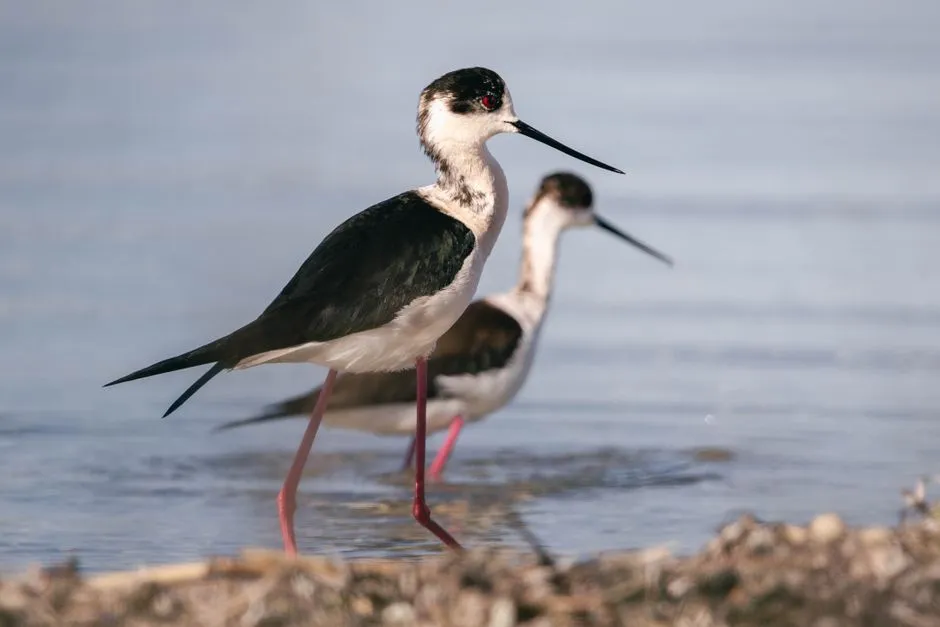
Virginia’s Chincoteague is world-famous for its ponies, but birders say that’s only part of the story.
The refuge is on Assateague Island. The wild ponies are managed by the local volunteer fire company, and the herd has become a huge tourist draw. Most visitors come for them.
Here’s the twist: the refuge was set aside for migratory birds, not horses. Its Wildlife Loop and trails cover marsh, beach and woodland, and winter waterfowl are a highlight.
Most travelers treat the ponies as the main event. Many birders would rather slip away to quieter pools farther along, where the crowds thin out and the birds relax.
The next refuge sits in farm country, and its eagle story is a comeback tale…
#11 – Montezuma, New York: A Finger Lakes Wetland With a Conservation Story
🔥 Would you like to save this?
We'll email this post to you, so you can come back to it later!
New York’s Montezuma sits between Rochester and Syracuse, and it matters more than most people know.
The refuge protects wetlands in the Finger Lakes region, an important stopover for migratory waterfowl in spring and fall. A wildlife drive and observation areas make it easy to watch from the car.
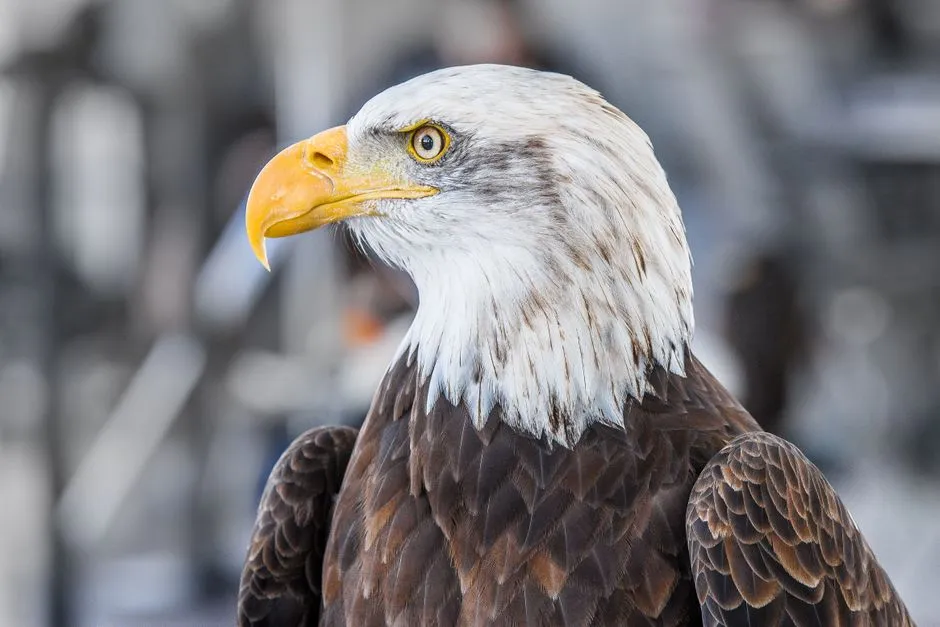
The refuge was part of efforts to bring bald eagles back to New York in the 1970s. That history makes every eagle sighting here feel like a payoff.
Bring a spotting scope and visit in migration season. Check the refuge page for current fees and drive hours, as they vary by season.
The next one is famous for a winter sight that can look like snow on the water…
#10 – Loess Bluffs, Missouri: When the Water Turns White
🔥 Would you like to save this?
We'll email this post to you, so you can come back to it later!
Missouri’s Loess Bluffs can look snow-covered in November, but it’s birds.
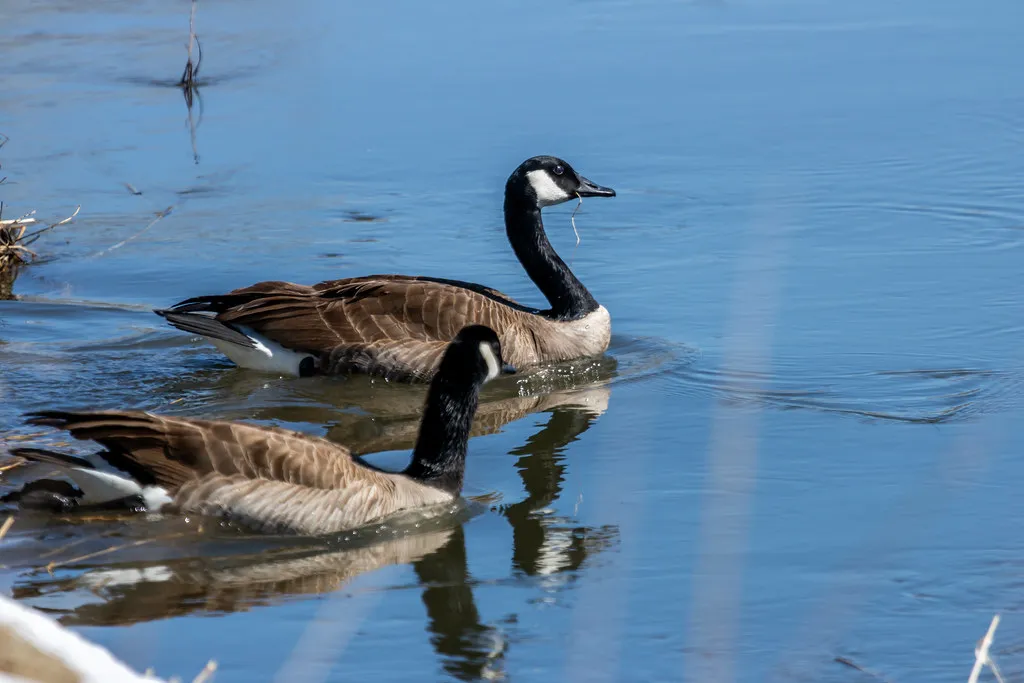
The refuge was once known as Squaw Creek National Wildlife Refuge. It’s still a famous stop for migrating snow geese, and counts at peak can reach several hundred thousand birds.
The same flocks attract wintering bald eagles. The eagles sit near the geese, waiting for the weak or the unlucky.
Its auto-tour route and observation spots let you watch from the car. That’s the best hide for something as skittish as a goose flock.
Fans of big skies and loons should keep reading…
#9 – Seney, Michigan: Loons, Swans and a Seven-Mile Marsh Drive
🔥 Would you like to save this?
We'll email this post to you, so you can come back to it later!
Michigan’s Upper Peninsula hides a marsh refuge that feels like northern Canada.
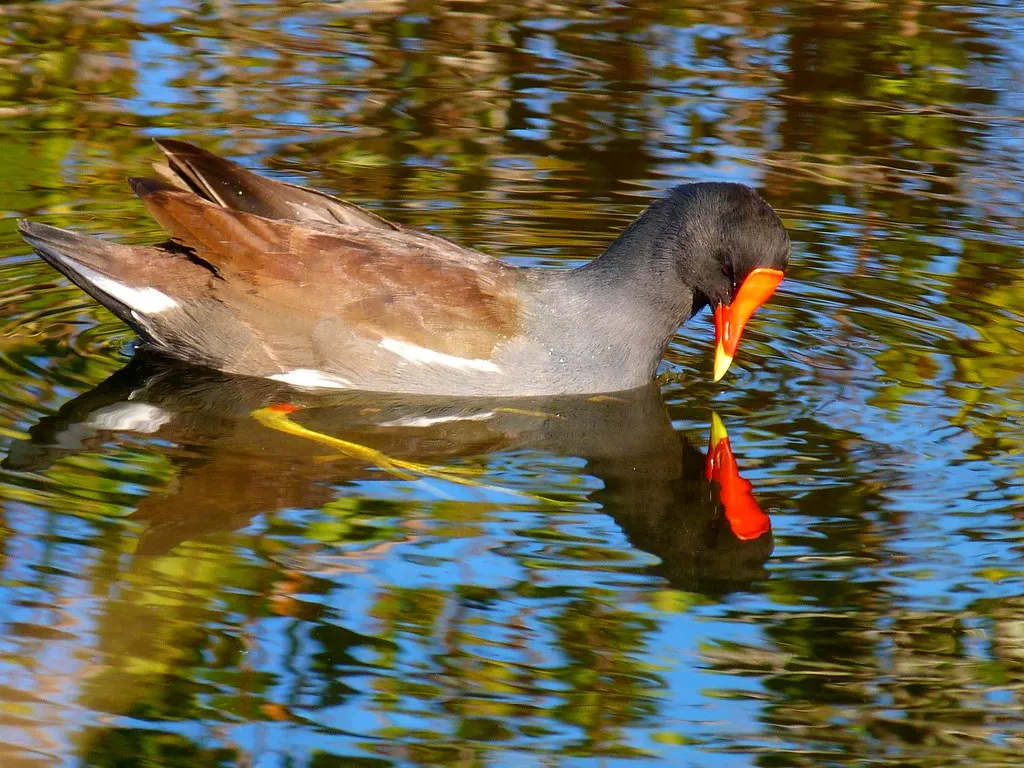
Seney has a one-way Marshland Wildlife Drive that loops past pools. Common loons, trumpeter swans, sandhill cranes and bald eagles are among the birds people come to see.
Here, as at many refuges, your car is the best blind. Wildlife tolerate vehicles far more than people on foot.
Spring and early summer are the standout seasons, when birds are nesting and calling. Mosquitoes and biting flies can be fierce, so a closed car is a real plus.
Confirm current conditions and fees with the refuge before you go.
The next hide ends a boardwalk over a swamp that looks like black tea…
#8 – Okefenokee, Georgia: Alligators From a Boardwalk Tower
🔥 Would you like to save this?
We'll email this post to you, so you can come back to it later!
Georgia’s Okefenokee is one of the largest swamps in North America, and it feels like it.
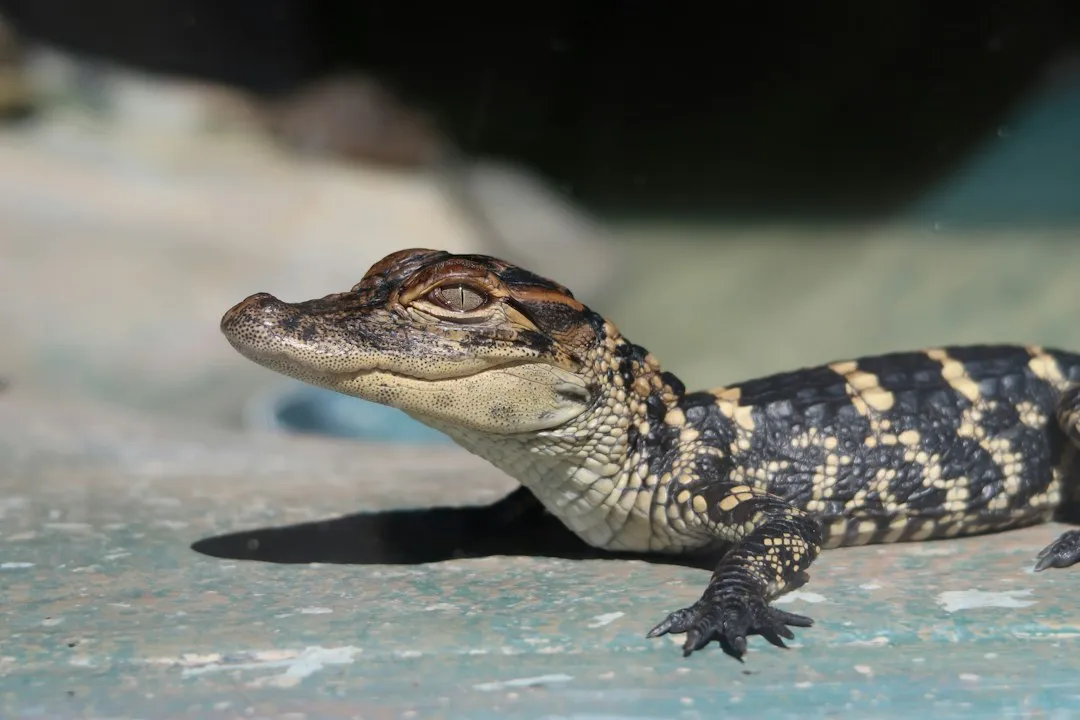
From Chesser Island, a boardwalk leads out over the wetland to an observation tower. Alligators are the headline animal here, and they’re often visible from the boardwalk itself.
The swamp’s tea-colored water isn’t dirty. It’s stained by tannins from decaying plants, and that dark surface acts like a mirror for reflections.
Mornings are best. Alligators bask as the air warms, and birds are most active early.
Next, a refuge that’s home to one of the rarest wolves on Earth…
#7 – Alligator River, North Carolina: Red Wolf Country
🔥 Would you like to save this?
We'll email this post to you, so you can come back to it later!
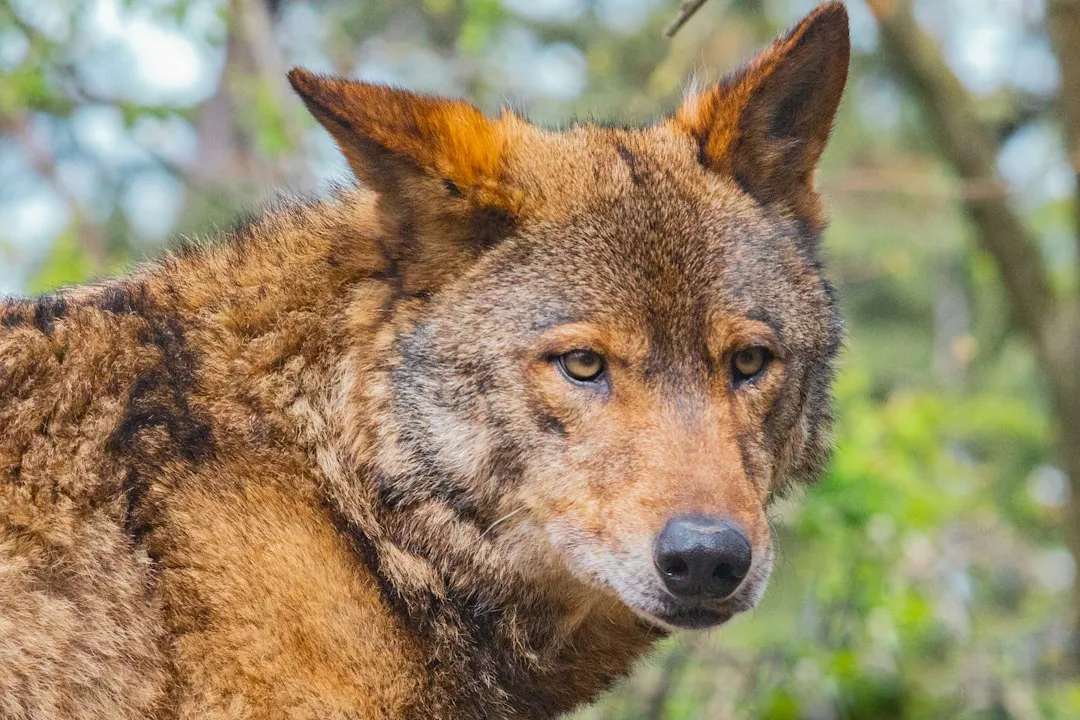
This North Carolina refuge is where red wolves were reintroduced to the wild.
The program started in 1987, and the refuge region became the only wild home for the species. Today only a tiny number remain, so a sighting is extremely unlikely.
Black bears are far easier to see here than wolves. The refuge’s boardwalk trails and roads give you a decent chance of bear sign.
Quick Compare
- Red wolves: reintroduced in 1987, and a sighting is extremely unlikely.
- Black bears: far easier to find, especially along boardwalk trails and roads.
- Best mindset: enjoy the whole habitat and treat a wolf as a bonus.
Don’t go looking for wolves. Go for the whole habitat, and treat any wolf sighting as a bonus. Check the refuge site for current access and any program changes.
The next tower is near Concord, Massachusetts, and sits right above a marsh…
#6 – Great Meadows, Massachusetts: A Tower Above the Impoundments
🔥 Would you like to save this?
We'll email this post to you, so you can come back to it later!
You don’t have to drive far from Boston for a real tower view.
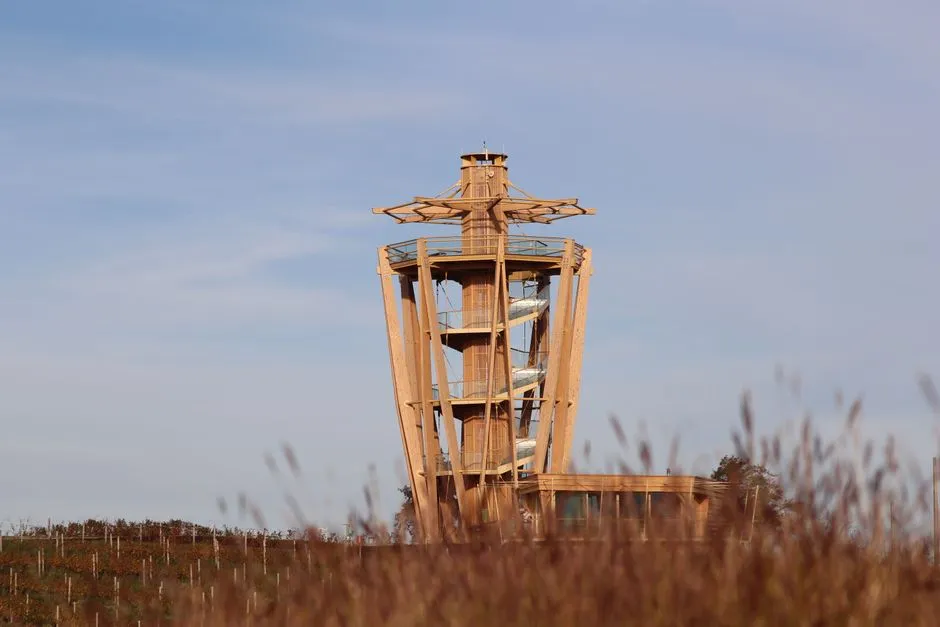
Great Meadows is a Massachusetts refuge along the Concord River. An observation tower overlooks the impoundments, where ducks, herons and turtles use the shallow water.
The area sits on the Atlantic Flyway, and birds use it during migration. Spring and fall bring the best variety.
The next stop has a deer you can’t find anywhere else…
#5 – National Key Deer Refuge, Florida: The Smallest Deer in America
🔥 Would you like to save this?
We'll email this post to you, so you can come back to it later!
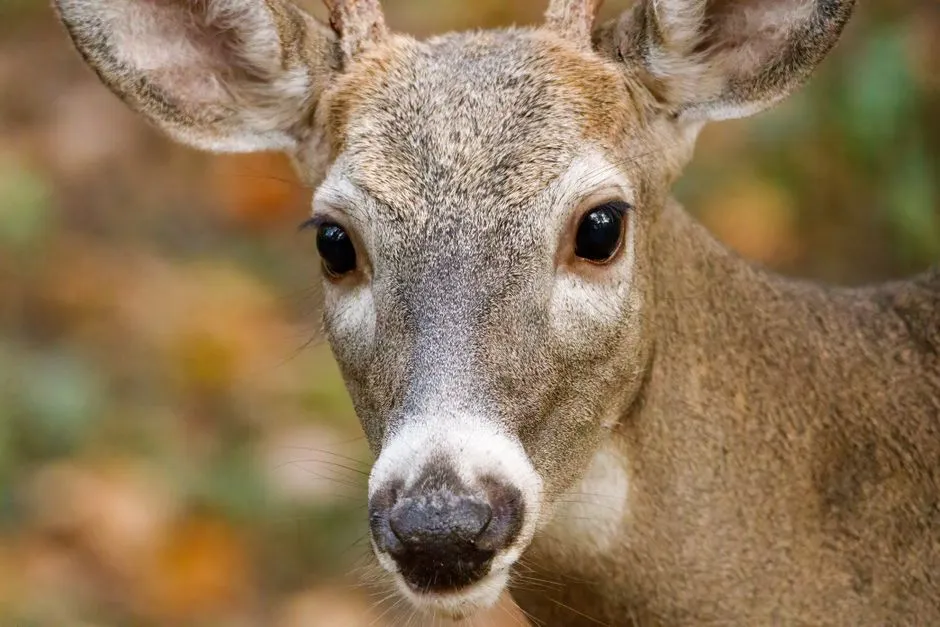
The Florida Keys hide a deer smaller than a large dog.
The Key deer is the smallest subspecies of white-tailed deer. It’s endangered and found in the Keys, with a population under a thousand. The refuge’s Blue Hole has an observation platform where you may spot deer and freshwater life.
Feeding Key deer is illegal. Feeding teaches them to approach cars, and that has contributed to road deaths.
- Keep to the reduced speed limits.
- Visit early or late, when the deer are active.
Out west, a desert refuge has a whole different cast…
#4 – Bear River, Utah: Birds on the Great Salt Lake’s Edge
🔥 Would you like to save this?
We'll email this post to you, so you can come back to it later!
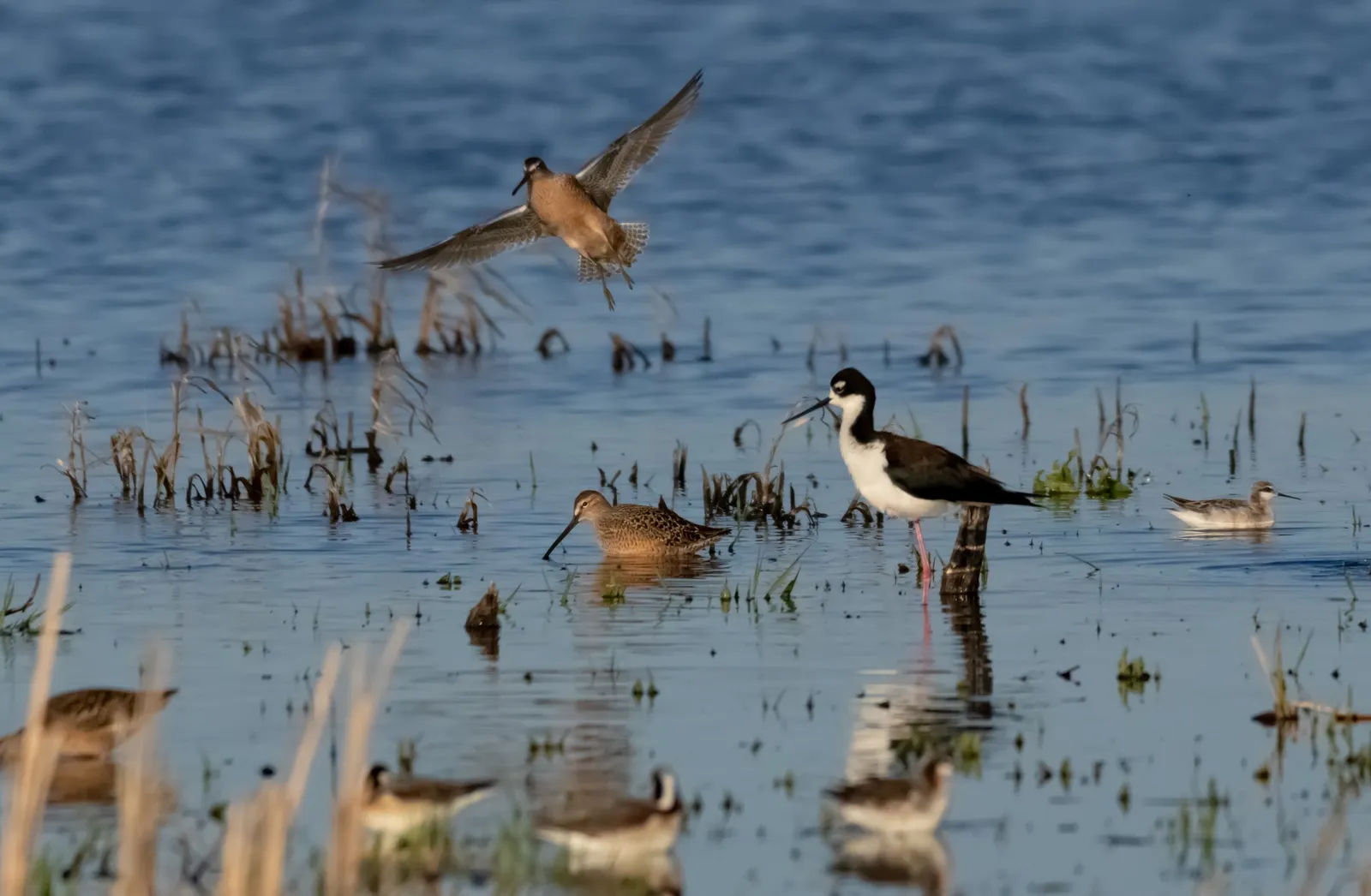
Utah’s Bear River refuge is a shorebird hot spot in the desert.
It sits near Brigham City, where the river meets the Great Salt Lake. A long auto-tour route runs through wetlands, and migration brings huge numbers of waterbirds.
The auto tour is your best “blind” here. Birds in a place like this tend to tolerate vehicles, so you’ll often get closer views from the car than on foot.
Spring and fall are the highlights. Wind can be strong, so bring layers. Check the refuge site for current road conditions and fees.
Next, a California refuge that shows what the Pacific Flyway looks like in winter…
#3 – Sacramento, California: Winter on the Pacific Flyway
🔥 Would you like to save this?
We'll email this post to you, so you can come back to it later!
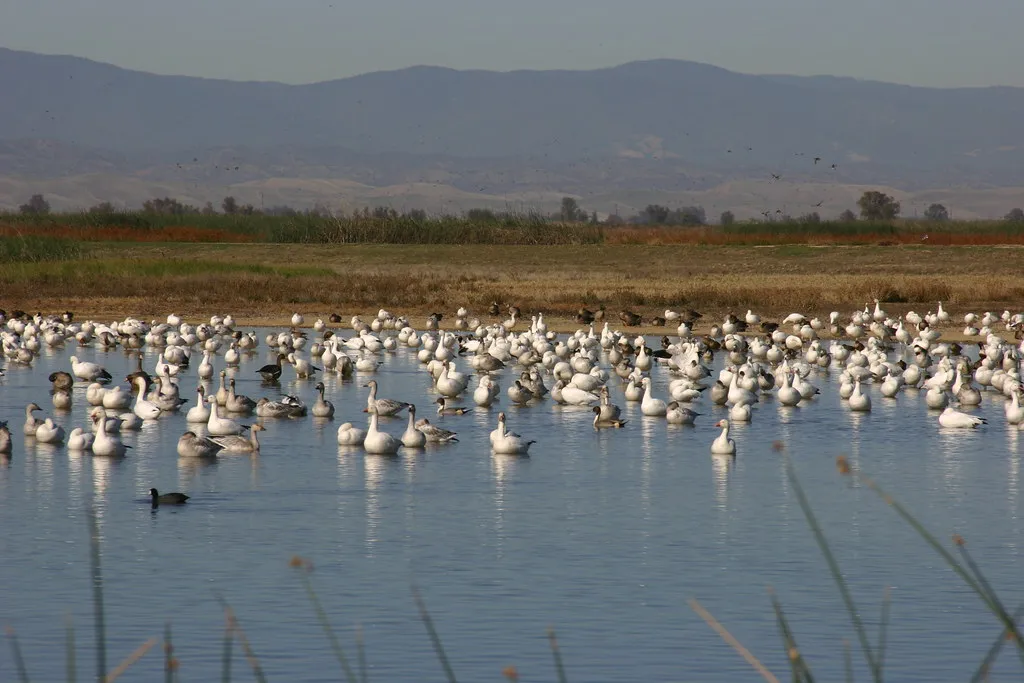
California’s Central Valley is where the Pacific Flyway lands in winter.
Sacramento National Wildlife Refuge, near Willows, has an auto-tour route through seasonal wetlands. Geese, ducks and swans fill the pools from late fall through winter, and raptors hunt over them.
The refuge is managed with water, not walls. Staff flood and drain areas on a schedule that mimics natural cycles for the birds.
The next refuge is on the border, and it hosts birds you won’t see in most of the U.S….
#2 – Santa Ana, Texas: Tropical Birds on the Rio Grande
🔥 Would you like to save this?
We'll email this post to you, so you can come back to it later!
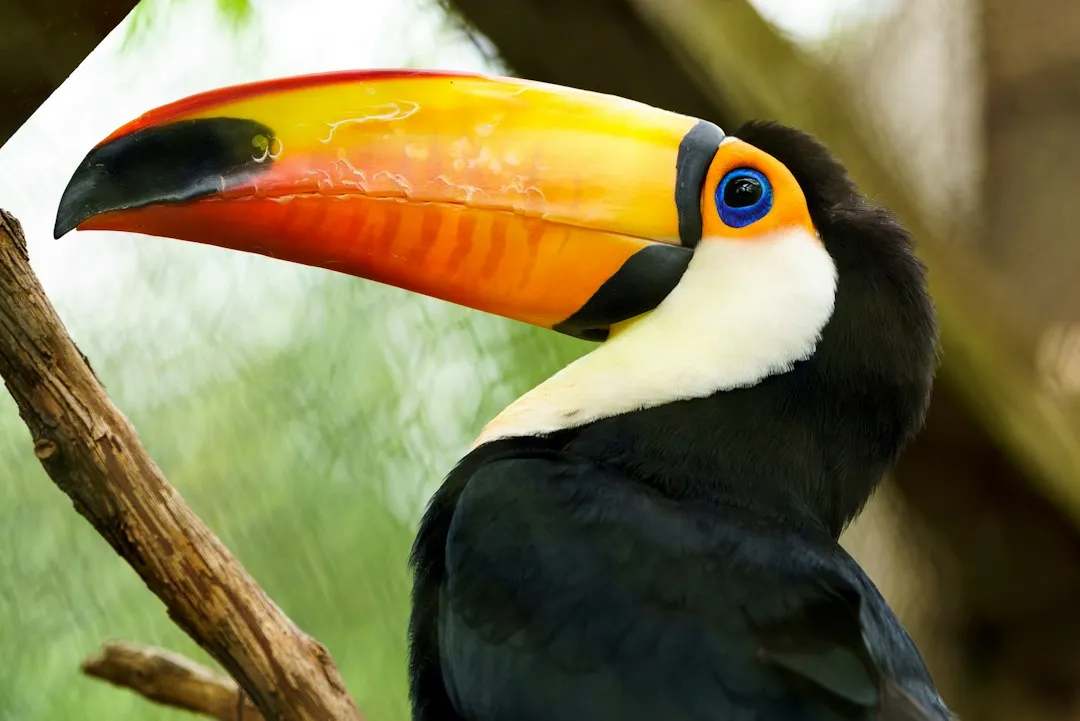
South Texas has a refuge where tropical birds cross into the U.S.
Santa Ana protects some of the last native forest in the Rio Grande Valley. Green jays, plain chachalacas and other Mexican-border specialties draw birders from around the country. A tower gives a canopy-level view.
The Valley is one of the best birding regions in North America. Species that are rare elsewhere are commonplace here.
The best hide of all comes in winter, and the timing is everything…
#1 – Bosque del Apache, New Mexico: The Crane Show That Starts at Dawn
🔥 Would you like to save this?
We'll email this post to you, so you can come back to it later!
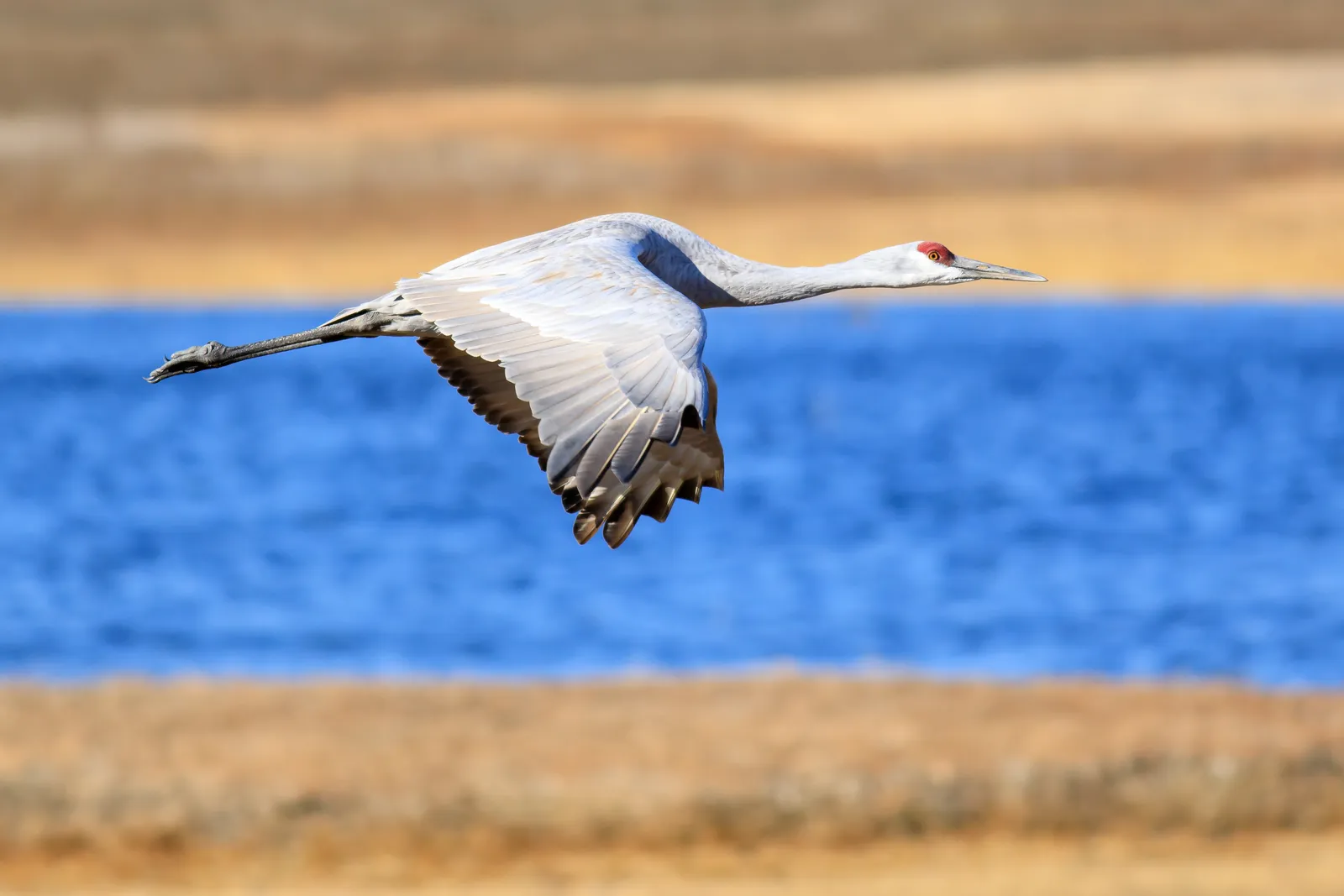
New Mexico’s Bosque del Apache may be the best reason to buy the pass.
The 57,331-acre refuge was established in 1939 as a critical stopover for migrating waterfowl. Tens of thousands of cranes, geese and ducks winter here each year. The route passes marshes, grain fields and seven observation decks.
Timing is everything. The best window is mid-November to late January, within 30 minutes of sunrise and sunset, when birds leave and return to roost. The Marsh Overlook includes viewing windows and an observation blind. At the Flight Deck, lighting is best in the afternoon, with the sun behind you.
Fast Facts
- Size: 57,331 acres, established in 1939.
- Peak season: mid-November to late January.
- Prime hours: within 30 minutes of sunrise and sunset.
- Flight Deck: best afternoon light, with the sun at your back.
- Marsh Overlook: viewing windows plus an observation blind.
Now the cost. The refuge has listed a $5 daily fee per private vehicle and a $15 annual pass. Entry is free with a Federal Recreation Lands Pass, and a $25 Federal Duck Stamp also permits entry.
The “free after 65” idea isn’t quite true. The Senior Pass starts at 62, and it isn’t free. It costs $80 for life or $20 for a year, and it covers entrance and standard day-use fees at more than 2,000 federal sites. Meanwhile, some of the best hides on this list, like Turnbull and Necedah, charge nothing at all.
Our opinion: buy the pass for the fee refuges, not the cheap ones. Parker River, Forsythe, Merritt Island and Bosque are where it pays off. Everywhere else, your best hide is a parked car at sunrise with the engine off.
The animals were never hiding from you. They were just waiting for you to hold still.

- Embracing the Quiet Magic of Adopting a Senior Dog - November 5, 2026
- Scientists May Have Miscalculated Our Global Warming Timeline - November 5, 2026
- Marine Biology Says When Dolphins Suddenly Go Silent in Open Water It's Not Rest – They've Detected a Predator You Cannot See and Their Survival Strategy Reveals How They Read Danger - November 5, 2026