

There’s something magical about the Pacific Northwest. Between the towering old-growth forests, the rugged coastlines, and those perpetually misty mornings, this region creates a world unlike anywhere else. I mean, where else can you stand on a beach and watch birds that nest in trees hundreds of feet tall?
The thing is, when people think of the Pacific Northwest, they usually picture eagles or maybe some robins hopping around their yard. Yet this corner of the world harbors some of the most unusual, rarely seen avian species on the entire continent. We’re talking about birds with nesting habits so strange that scientists couldn’t figure them out for decades. Some of these feathered creatures are so tied to this specific landscape that you simply won’t encounter them anywhere else in quite the same way.
So let’s dive in and discover six truly unique birds that call the Pacific Northwest their one and only home.
Marbled Murrelet: The Tree-Nesting Seabird
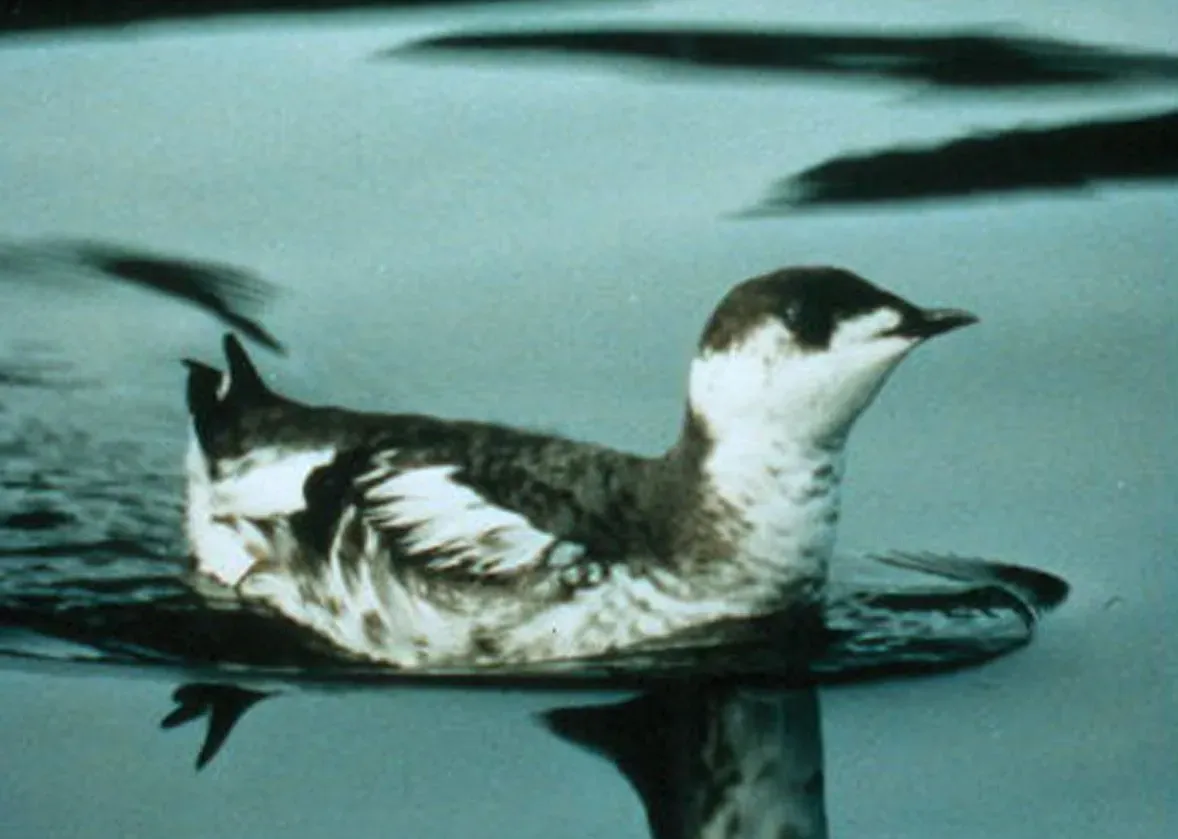
The Marbled Murrelet nests solitarily in coastal old-growth coniferous forests, making nests in trees up to 250 feet high in groves up to thirty miles inland. Think about that for a second. This is a seabird that spends its days diving for fish in the Pacific Ocean, then flies miles inland to sleep on a mossy branch high in an ancient tree.
It wasn’t until 1974 that the first Marbled Murrelet nest was discovered, and as of the late 1980s, only ten nests had ever been seen worldwide. That’s how secretive these little guys are. The bird itself sports marbled brown and blue patterns on its plumage, which helps it blend into the dappled light of the forest canopy.
Honestly, the Marbled Murrelet feels like nature’s way of breaking all the rules. Why would a seabird nest so far from the ocean? Yet here it is, thriving in the misty forests of Washington, Oregon, and British Columbia, defying our expectations of what seabirds should do.
Tufted Puffin: The Parrot of the Sea
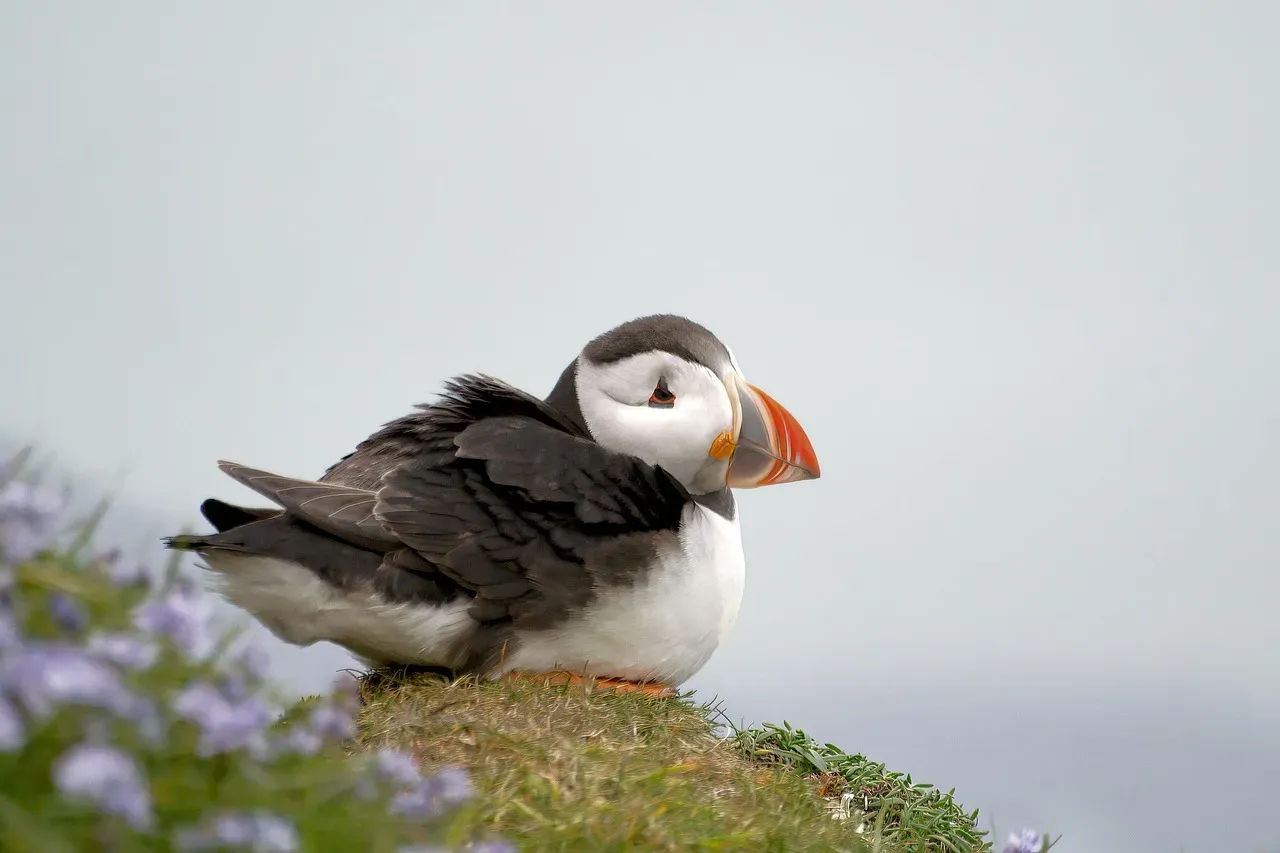
The Tufted Puffin easily wins the title of most-wanted bird to see among nature enthusiasts visiting the coast of Oregon, and these charismatic birds return annually to a few nesting islands on the coast. With their bright orange beaks and those distinctive golden tufts that sweep back from their heads during breeding season, they look almost cartoonish.
These birds are about as Pacific Northwest as it gets. They dig burrows into coastal islands and headlands, creating underground nests where they raise their single chick each year. Watching them fly is quite the experience too – their chunky bodies and rapid wingbeats make them look like they’re working way too hard to stay airborne.
The thing about Tufted Puffins is they’re becoming harder to spot as their populations decline. Climate change and shifting fish populations are making life difficult for these iconic seabirds. Still, if you’re patient and visit places like Cannon Beach or Cape Meares in Oregon during summer, you might just catch a glimpse of these remarkable birds bobbing on the waves or returning to their cliffside burrows.
Northern Spotted Owl: The Old-Growth Guardian
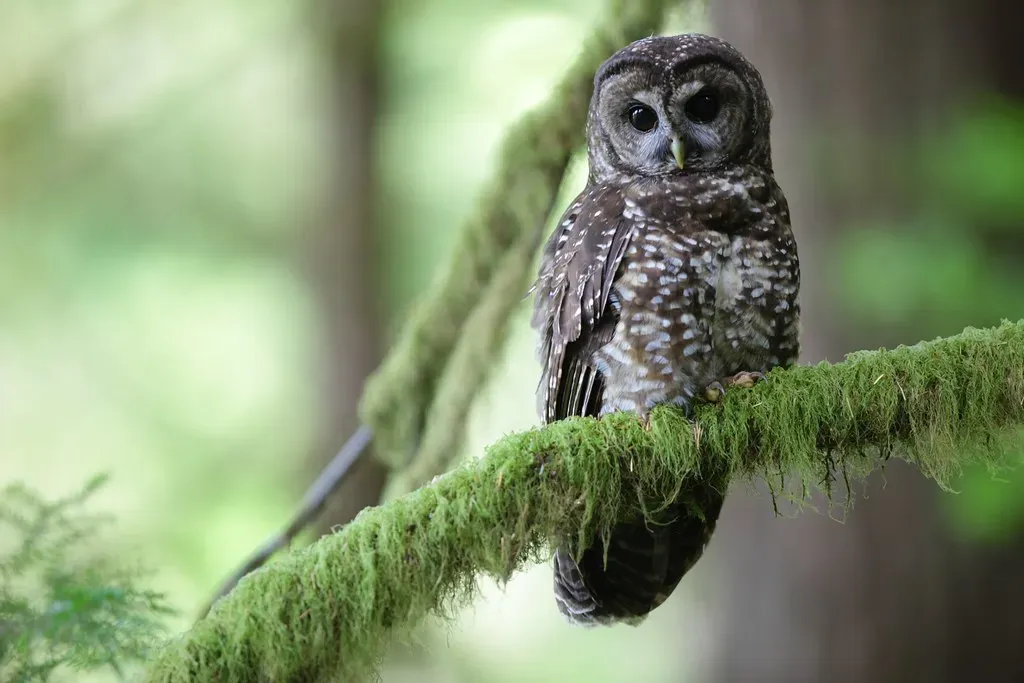
The Northern Spotted Owl is medium-sized with dark brown feathers and extensive white spots, and they’re docile and don’t migrate, loving old-growth forests. These owls became famous in the 1990s when they were at the center of heated debates about logging and forest conservation.
Unlike many owls, Spotted Owls are surprisingly calm around humans. They have large, dark eyes and a gentle demeanor that makes them seem almost wise. You’ll find them in Western Oregon, Washington, Northwestern California, and southwestern British Columbia. The problem is, they need those ancient forests – the ones with huge trees, complex canopy layers, and plenty of flying squirrels to hunt.
Here’s the thing that gets me: these owls are so specific in their habitat needs that when we cut down old-growth forests, we’re not just removing trees. We’re eliminating entire ecosystems that took centuries to develop. The Northern Spotted Owl serves as a living reminder that some species simply can’t adapt when we change their world too quickly.
Chestnut-backed Chickadee: The Coastal Forest Charmer
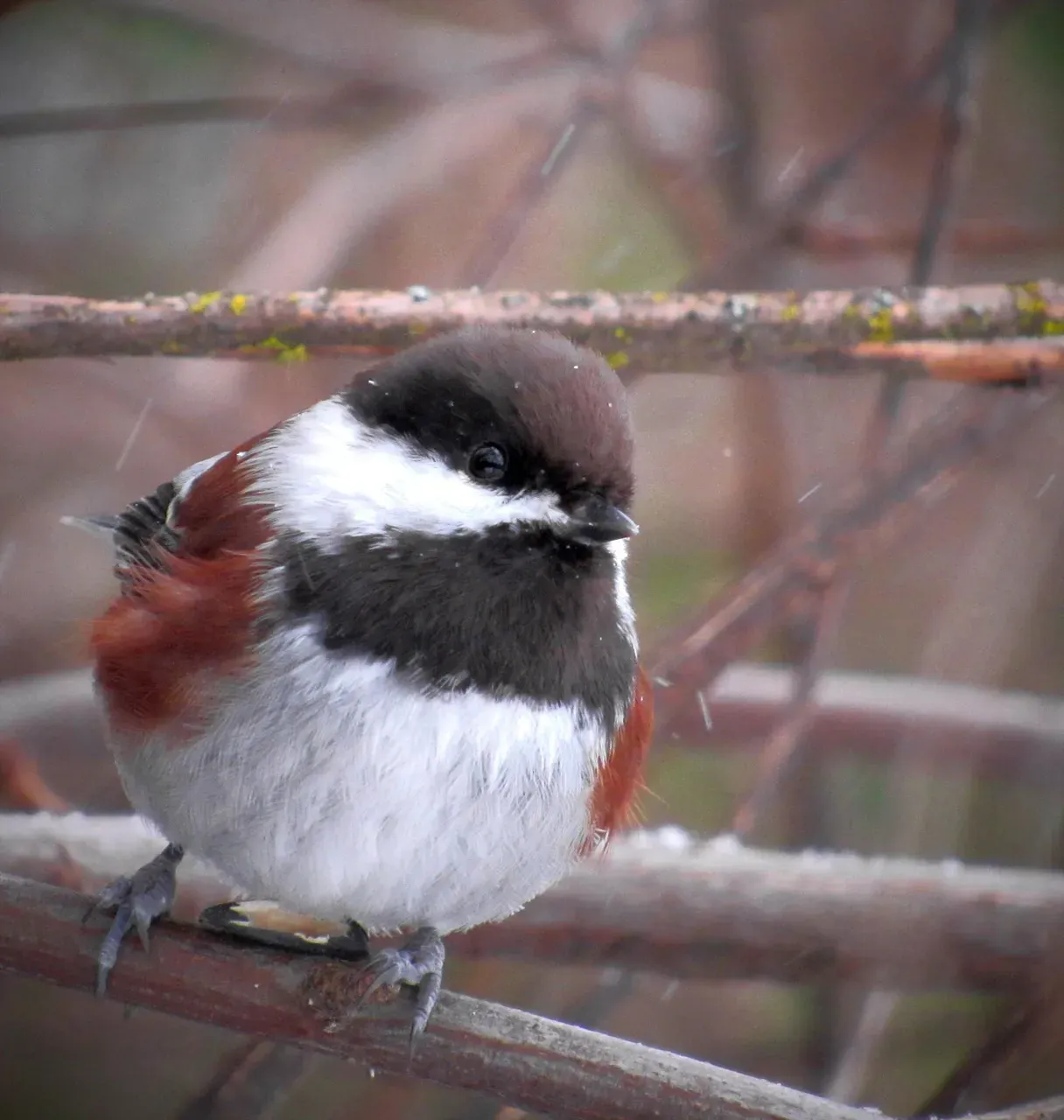
The Chestnut-backed chickadee is found in the Pacific Northwest region of America and Canada, occupying a large range starting from southern Alaska to southwestern California. Now, chickadees might not sound exotic, yet this particular species is special.
They have a distinctive appearance with a black cap and bib on their head, white cheeks, and a gray back, with the chestnut color of their belly and flanks giving them their name. Unlike their Black-capped cousins that you’ll find across North America, Chestnut-backed Chickadees stick close to the humid, moss-draped forests of the Pacific coast.
These tiny birds don’t migrate seasonally, which means if you live in the Pacific Northwest, they’re year-round neighbors. You can spot them flitting through coniferous forests and even suburban gardens, their high-pitched calls echoing through the trees. They’re proof that you don’t need to travel to remote wilderness to see unique Pacific Northwest birds – sometimes they come right to your backyard.
Leach’s Storm-Petrel: The Ocean Wanderer
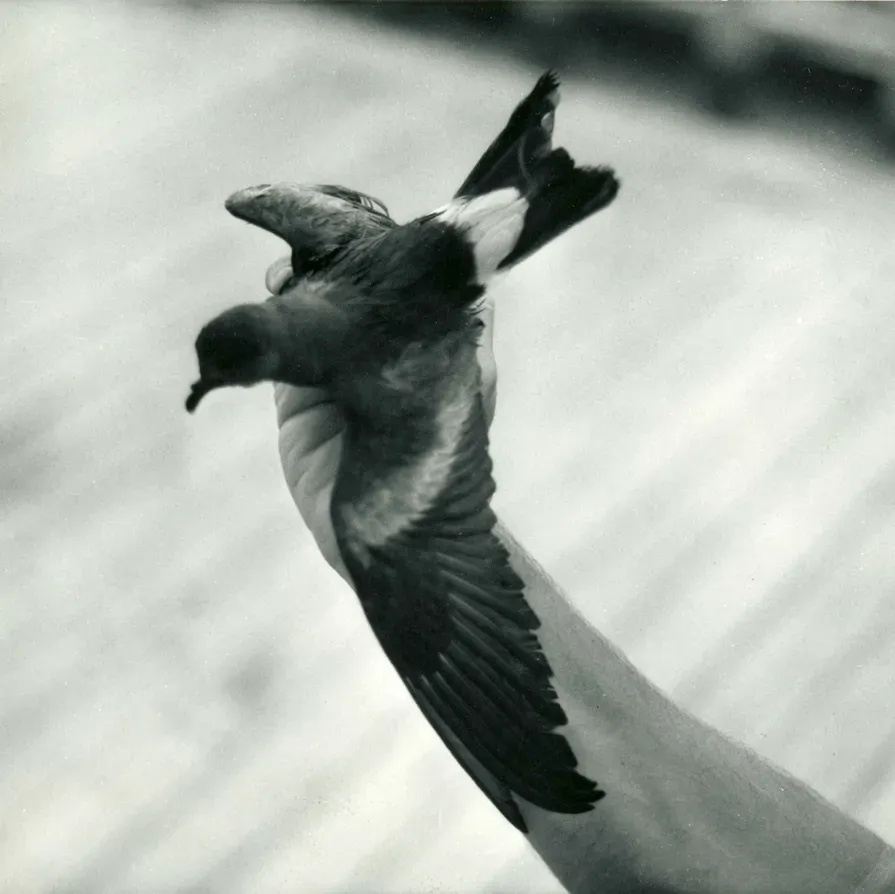
Leach’s Storm-petrel is a roughly robin-sized, narrow-winged pelagic bird rarely seen near shore outside of breeding season, with fifteen offshore rocks within Oregon Islands serving as breeding sites for this colonial, burrow-nesting species. These birds spend most of their lives far out at sea, only coming to land under the cover of darkness to feed their chicks.
The smallest pelagic breeding seabird in Oregon, Leach’s Storm-petrels will fly more than 100 miles offshore to feed on shrimp, fish and squid, returning at night to regurgitate food for their chicks using a well-developed sense of smell to locate individual burrows amidst the colony. Imagine navigating through complete darkness to find your specific burrow among thousands, using only your nose. It’s remarkable.
Most people will never see a Leach’s Storm-Petrel because they’re so rarely close to shore. You’d need to take a boat far offshore during the day, or visit one of the remote breeding islands at night. They’re like little ghosts of the ocean, essential to the ecosystem yet almost invisible to human eyes.
Cassin’s Auklet: The Blue-Legged Burrower
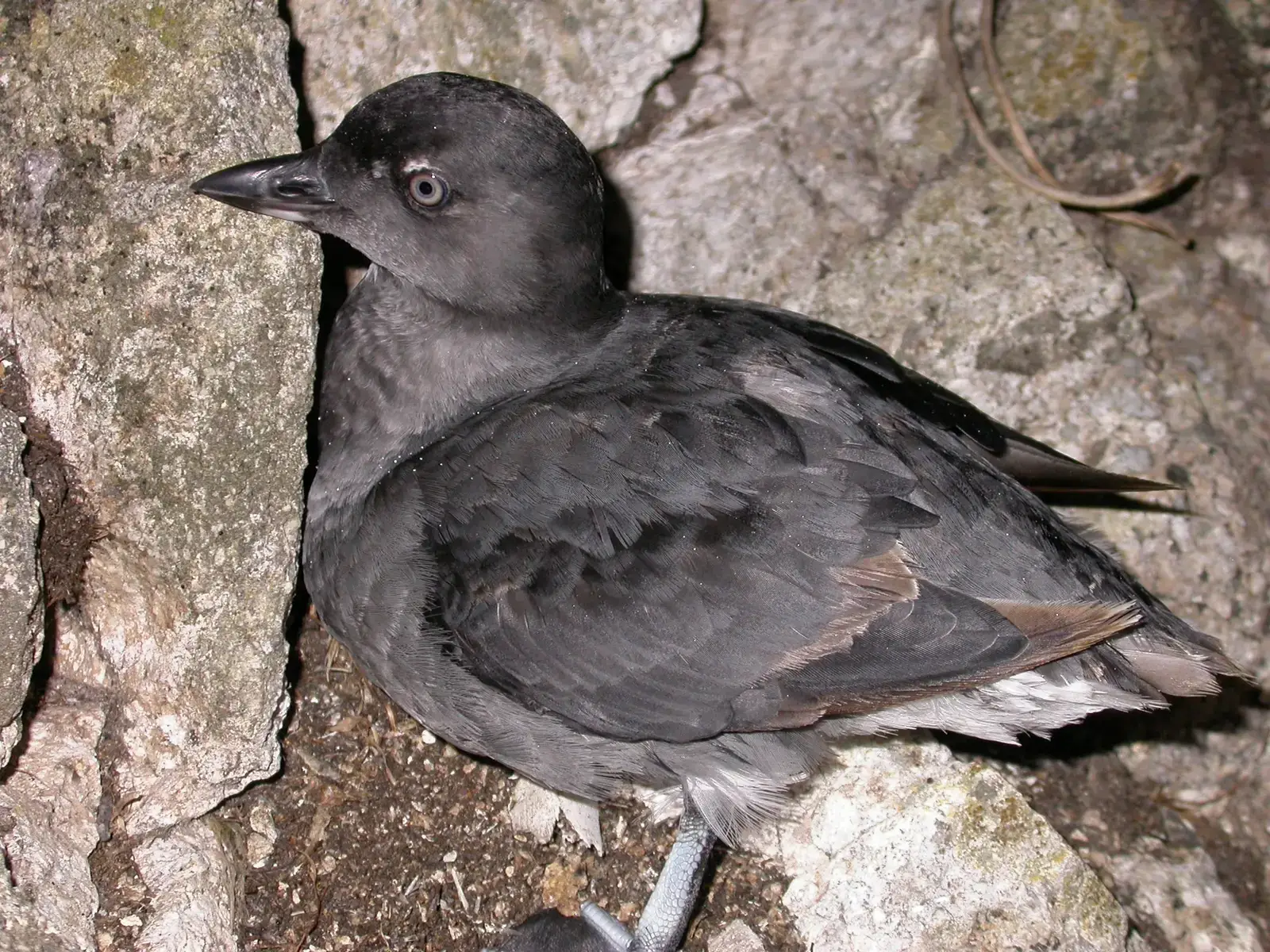
This small, chunky, blue-legged auklet is the only known Northern Hemisphere seabird that can raise two broods in a season, and they spend winter at open sea. That’s quite an accomplishment for such a small bird – managing to successfully raise two families in one breeding season takes serious dedication.
Despite being the most common alcid seen off the Oregon coast, not many Cassin’s Auklets breed there, with less than a dozen sites and fewer than 1,000 nesting birds. Like several other Pacific Northwest seabirds, they dig burrows for their nests, sometimes tunneling two to six feet into the earth of remote coastal islands.
These unassuming gray birds don’t have the flashy appearance of puffins or the dramatic nesting habits of murrelets. Yet their ability to successfully double-brood makes them unique among Northern Hemisphere seabirds. They quietly go about their business far offshore, diving for small fish and zooplankton, essential links in the ocean food web that most of us never think about.
Conclusion
The Pacific Northwest isn’t just a beautiful place to live or visit. It’s a sanctuary for birds that have adapted to life in ways found nowhere else on Earth. From seabirds that nest in treetops to owls that depend on forests older than our great-grandparents, these six species represent something irreplaceable.
What strikes me most is how interconnected it all is. These birds need specific forests, particular islands, certain ocean conditions. When we protect the Pacific Northwest’s unique landscapes, we’re not just saving trees or coastline – we’re preserving entire ways of life that evolved over millions of years.
Next time you’re hiking through a foggy forest or standing on a windswept beach in Oregon or Washington, look up. Listen. You might just spot one of these incredible birds that calls only this corner of the world home. What’s your favorite Pacific Northwest bird? Have you been lucky enough to see any of these rare species in the wild?
