
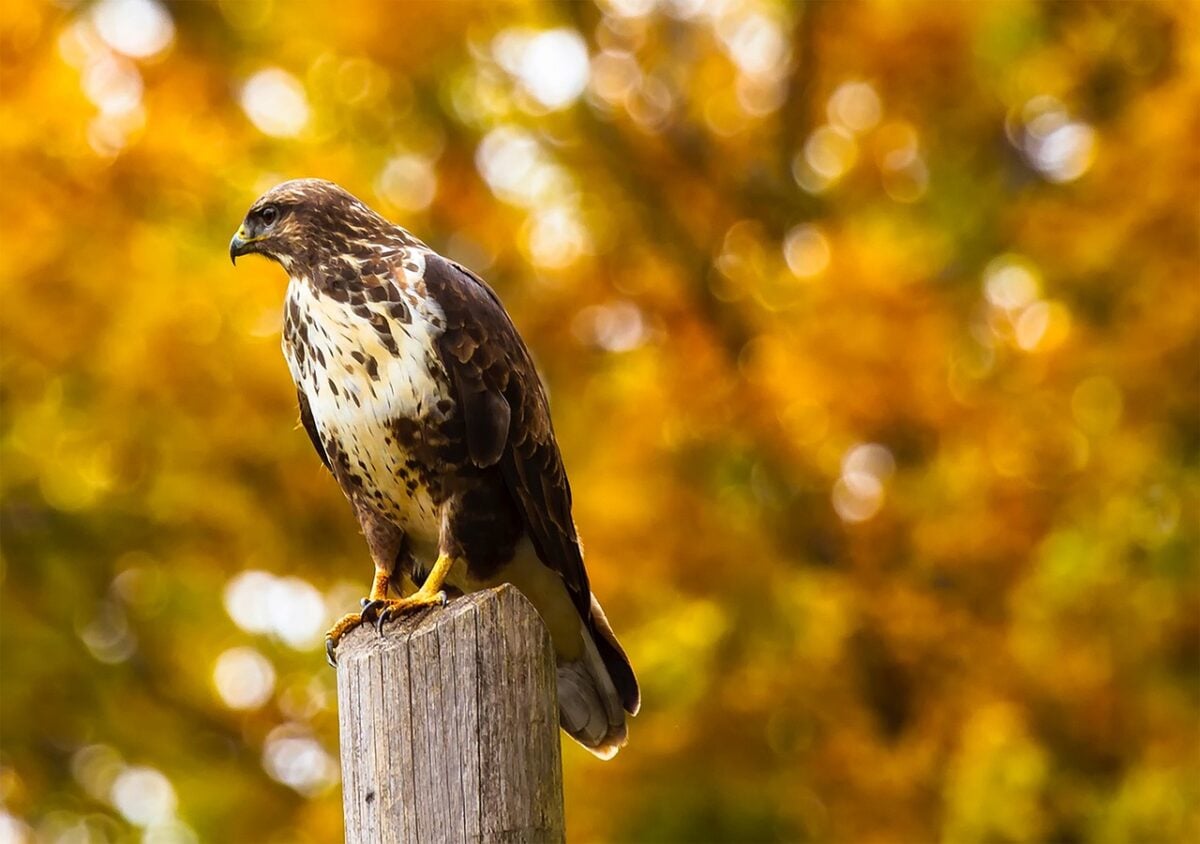
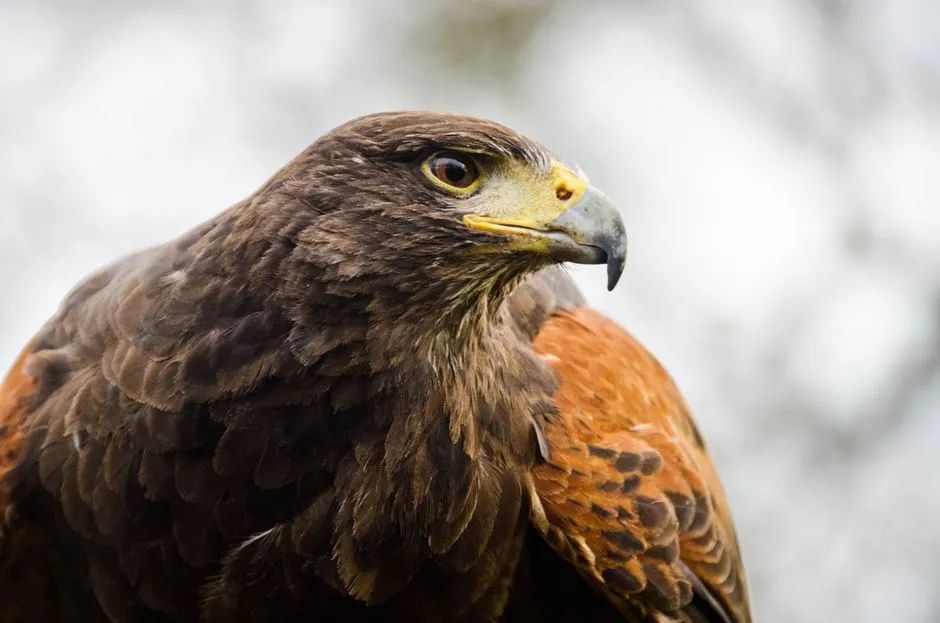
For seven straight days, that hawk was practically part of your fence line. Same branch, same silhouette, same stare-down with your backyard squirrels every morning at sunrise. You started talking about it like a neighbor. Then, on day eight, it was just… gone. No goodbye flyover, no gradual fade-out. Just an empty perch and a weird little ache you didn’t expect to feel over a bird.
Here’s the part that surprises most people: that disappearance almost never means the hawk got bored, offended, or “moved on” in any emotional sense we’d recognize. Raptor biologists, wildlife rehabbers, and banders who track these birds for a living see the same handful of triggers over and over. Some are about food. Some are about fear. One of them is downright brutal. By the end of this, you’ll never look at an empty fence post the same way again.
#7 – The Food Supply Quietly Crashed
🔥 Would you like to save this?
We'll email this post to you, so you can come back to it later!
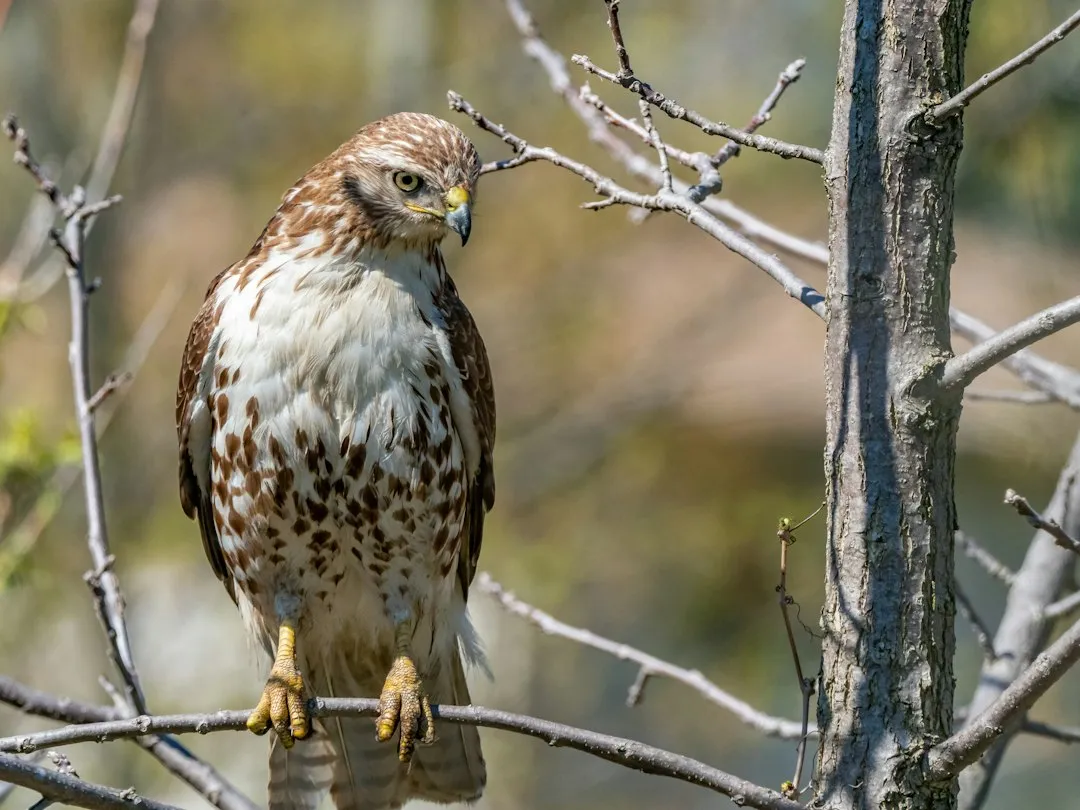
A hawk doesn’t fall in love with a perch. It falls in love with the hunting angle that perch gives it. For a week, that branch may have been overlooking a buffet: careless squirrels, distracted songbirds, or mice running the same narrow path at dusk like clockwork.
Then the pattern shifts, often so subtly a human wouldn’t catch it, and the perch goes from gold mine to ghost town almost overnight. Predators are brutally practical creatures. If the return on time invested drops, they leave. A red-tailed hawk that once nailed two voles a day from that fence post might suddenly go three evenings without a single strike.
Fast Facts
- Red-tailed hawks eat up to 11% of their body weight in food daily, which is why hunting success can’t slip for long.
- Their eyesight is estimated at two to four times greater than that of a human, letting them clock the faintest twitch in tall grass.
- A large share of the diet leans on small rodents, such as mice, voles, and rabbits, prey that can shift location fast.
- Favorite hunting perches used by red-tailed hawks average roughly 12.3 m off the ground, tall enough for a wide, unobstructed view below.
At that point, staying loyal to the spot becomes a liability. Wild hawks need frequent successful hunts just to maintain body weight and condition. A few bad days in a row can genuinely turn life-threatening, especially once the weather turns cold and calories burn faster than they can be replaced.
Sometimes the “crash” isn’t extinction at all, it’s redistribution. A field mowed last week may have pushed rodents into the open, making them easy pickings from a nearby tree. Once the grass grows back, those same rodents feed and move under cover again, and the hawk has to hunt somewhere new. Bird feeders being filled or emptied can do the exact same thing. What looked like a favorite perch was really just a front-row seat to a temporary hotspot. Once the hotspot cools, the hawk cuts its losses without a second thought.
#6 – The Perch Became a Predator Magnet
🔥 Would you like to save this?
We'll email this post to you, so you can come back to it later!
Here’s the part most people don’t want to hear: your favorite backyard hawk is also prey. Larger raptors, eagles, great horned owls, even bigger hawks, will absolutely attack and kill smaller hawks, especially juveniles. If that “perfect” perch starts drawing the wrong kind of attention, the bird will bolt faster than any change in weather or scenery could ever explain.
A single close call with a larger predator can permanently poison a perch in a hawk’s memory. There are a few common ways this plays out:
- A great horned owl discovers the same branch as a nighttime roost
- A larger hawk starts patrolling a nearby tree line
- A repeated aerial chase leaves the smaller hawk spooked about that whole sector
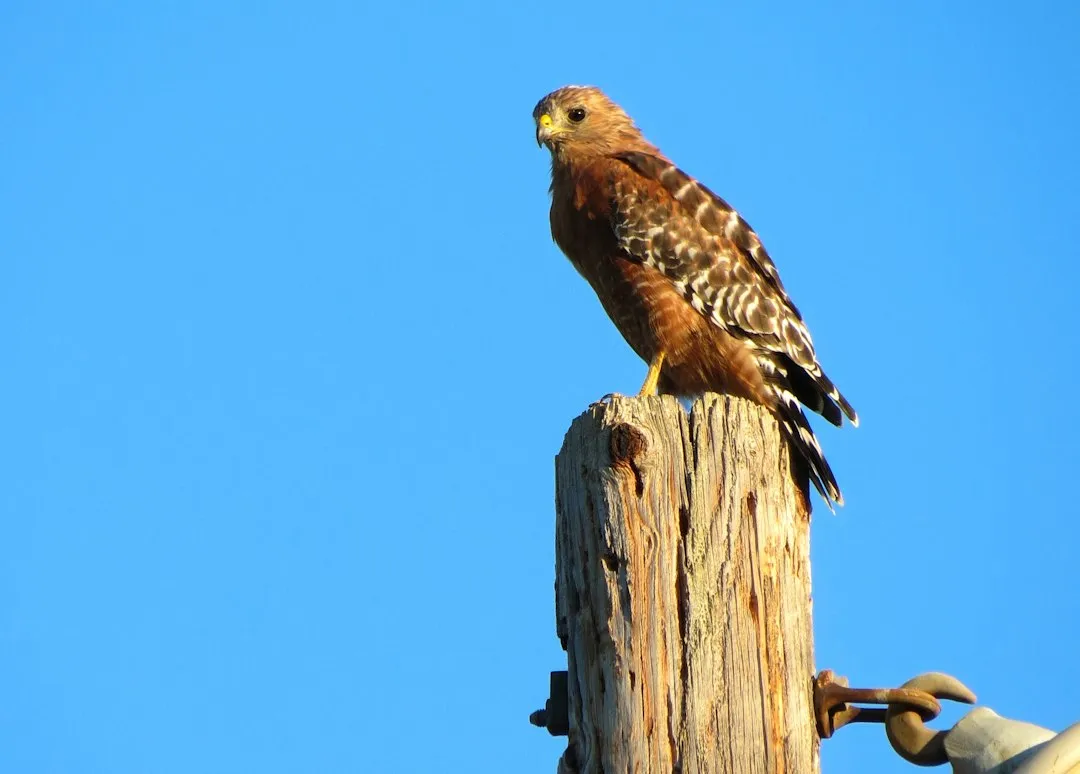
Hawks have sharp spatial memory. They don’t just remember danger in general, they remember exactly where it happened. If a juvenile red-shouldered hawk gets ambushed twice along the same tree line, that entire stretch can go permanently off-limits in its mind. To us, it looks like the bird mysteriously stopped using the utility pole it loved. To the hawk, that pole now sits inside a mental red zone it refuses to cross.
Humans can make this worse without realizing it. An especially active bird-feeding setup draws small hawks in for the songbirds, and big raptors in for everything, including the small hawks. That concentration of predators raises conflict risk fast. A hawk that once had the yard mostly to itself may suddenly be dodging owls, crows, or even eagles at dusk. Once a perch means near-death moments instead of easy meals, loyalty is gone for good. Self-preservation always beats nostalgia in a wild raptor’s brain, no matter how settled it seemed a week earlier.
#5 – Human Activity Quietly Crossed a Line
🔥 Would you like to save this?
We'll email this post to you, so you can come back to it later!
Most homeowners underestimate how much small changes in their own routine can push a hawk off a perch it’s used all week. At first, your yard might have felt relatively calm: low foot traffic, occasional noise, predictable patterns. That’s exactly what a hunting hawk wants.
Then something shifts, and it’s rarely dramatic:
- You start letting the dog out more regularly at dawn
- Kids are home for summer, using the yard all day
- A new construction project starts nearby, with saws and shouting
Hawks tolerate some disturbance, especially species that already live close to people. But there’s a threshold. Once the bird’s mental math flips from “mostly energy spent watching prey” to “mostly energy spent scanning for sudden threats,” the perch stops being worth the hassle.
Here’s what most people get wrong: it’s rarely one big scare. It’s death by a thousand cuts, repeated small flushes that force the hawk to take off again and again. Every unnecessary takeoff burns energy it can’t get back. If a branch now means ten spooked flights a day instead of two, it’s no longer profitable real estate. Even visual changes matter. A new umbrella, a trampoline, shiny decor flashing in the sun, all of it changes the silhouette and soundscape of the area. Rehabbers note that raptors are acutely tuned to sudden new shapes and movements. So if your hawk suddenly ghosted the yard after a week of faithful visits, don’t just blame migration. Ask what you, your neighbors, or your pets started doing differently.
#4 – The Wind Stopped Working in Its Favor
🔥 Would you like to save this?
We'll email this post to you, so you can come back to it later!
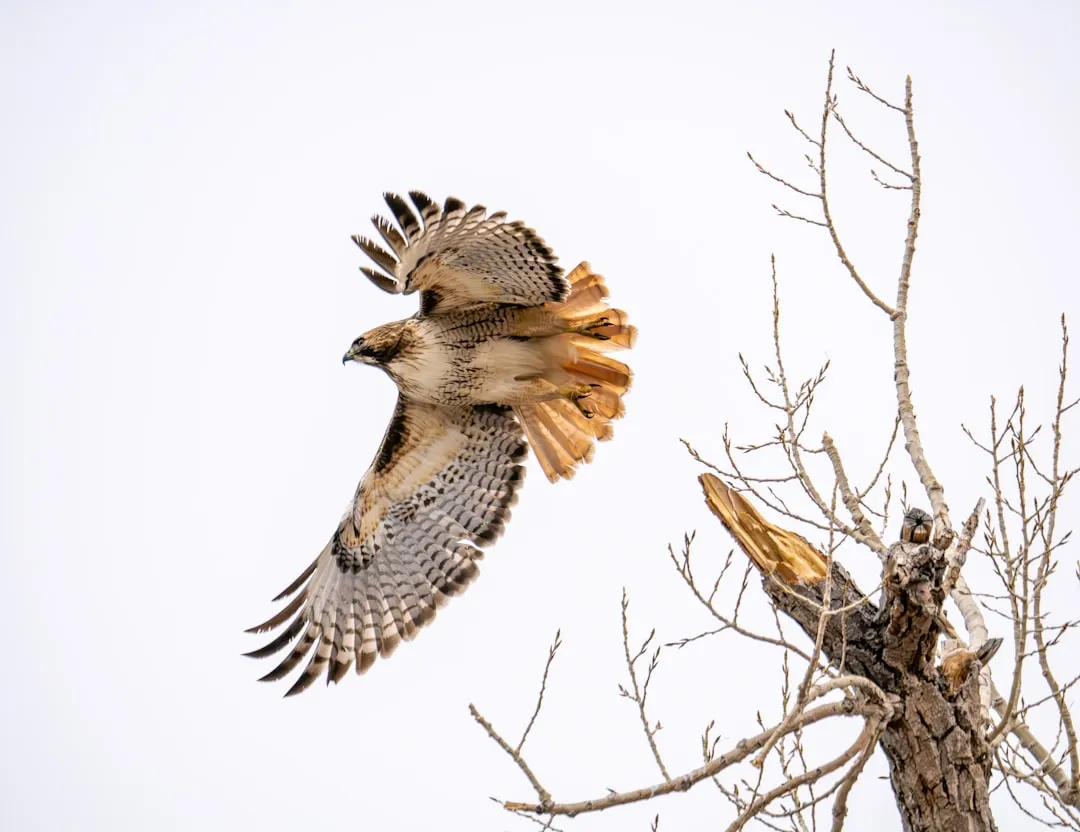
People love to romanticize a hawk perched stoically on the same branch, as if it’s posing for photos. In reality, that bird is constantly running calculations on air conditions most of us never notice.
For a week, the wind might have been just right, a steady breeze blowing from the open field toward the perch. That kind of setup is doing a lot of quiet work:
- Carrying scent and sound of prey up to the hawk
- Giving the bird a clean glide path for stooping on targets
- Providing lift so it can launch with almost no wasted energy
Then a front moves through, the dominant wind direction shifts, and suddenly that branch sits on the wrong side of everything. A perch that once gave an effortless launch and an excellent sound funnel can become an awkward, dead-air angle overnight. Raptors are aerodynamic opportunists, hunting for updrafts off slopes and buildings, thermals rising from sun-warmed ground, and wind corridors that help them stay aloft while scanning.
Worth Knowing
- Despite the classic image of a soaring silhouette, Red-tailed Hawks are primarily perch-hunters, and only infrequently hunt from soaring flight.
- Many hawks will sit tight through cold or still air, then climb a thermal updraft into the sky once conditions warm up.
- Elevated perch sites appear to be a necessary component of suitable hunting habitat, not just a comfortable place to rest.
If those features stop lining up with a perch, the bird doesn’t cling to it out of habit. It simply relocates to wherever the wind does more of the work for it. For soaring species especially, a perch is really just a starting platform for a daily flight circuit built around predictable thermals. Change the thermal map, and the entire circuit shifts with it. Casual observers assume the bird is there to “watch the chickens” or enjoy the view. In truth, it’s engineering its whole day around invisible currents of air, and when that infrastructure moves, so does the hawk.
#3 – Territorial Lines Shifted, and It Lost the Argument
🔥 Would you like to save this?
We'll email this post to you, so you can come back to it later!
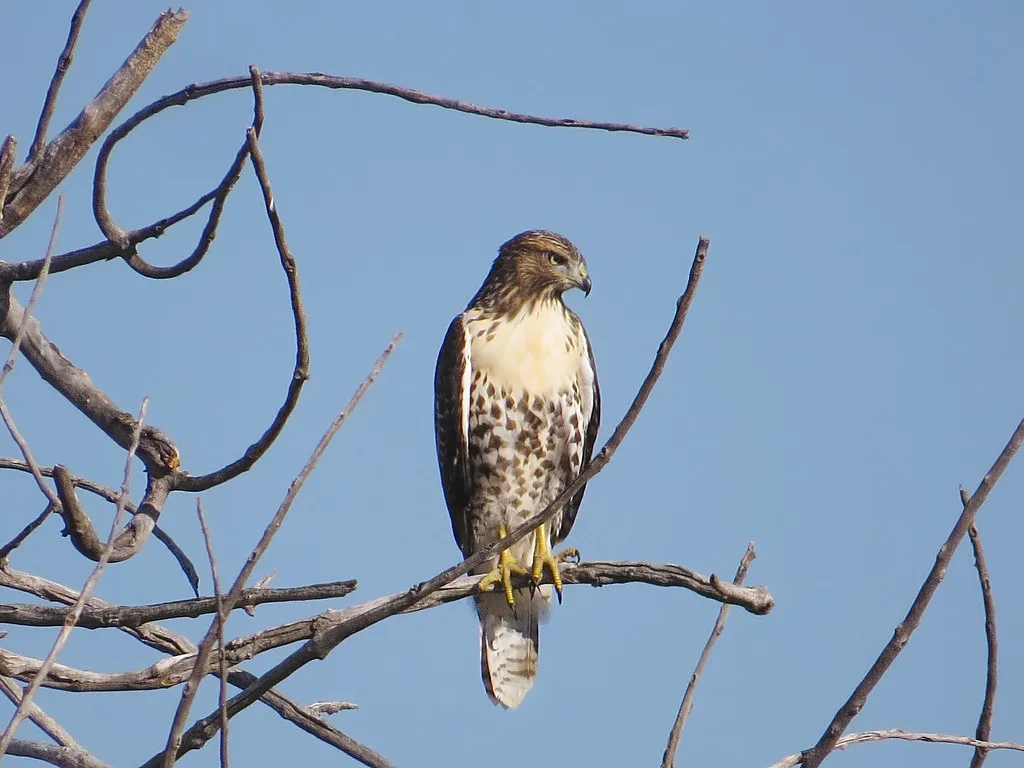
You’re not just watching a bird on a branch. You’re watching a player in a constant turf war that never really stops. For a week, that hawk may have been testing the edges of its territory, or even squatting slightly in a neighbor’s zone. That’s especially common with younger birds still figuring out where the boundaries actually are.
Then the real owner of that airspace decides enough is enough. Hawk-on-hawk aggression is real, loud, and sometimes bloody:
- Dive-bombing and talon-grappling midair
- Repeated chase-offs at dawn or dusk
- Loud, insistent vocal displays signaling ownership
If the resident bird is bigger, older, or simply more experienced, the newcomer doesn’t get a vote. Once it loses a few consecutive skirmishes, it often retreats entirely from the contested area, including any perches it had started to favor.
This is one of the most misunderstood reasons a “regular” hawk suddenly vanishes. People assume it liked them and then abandoned them. In reality, you were watching a failed territory bid play out in slow motion, right in your own backyard. After a loss like that, the bird faces a hard choice: keep risking injury in a fight it’s not winning, or shift its core area by half a mile or more. It might still pass overhead occasionally, but that once-beloved perch now firmly belongs to someone else.
#2 – The Perch Itself Stopped Being Safe or Comfortable
🔥 Would you like to save this?
We'll email this post to you, so you can come back to it later!
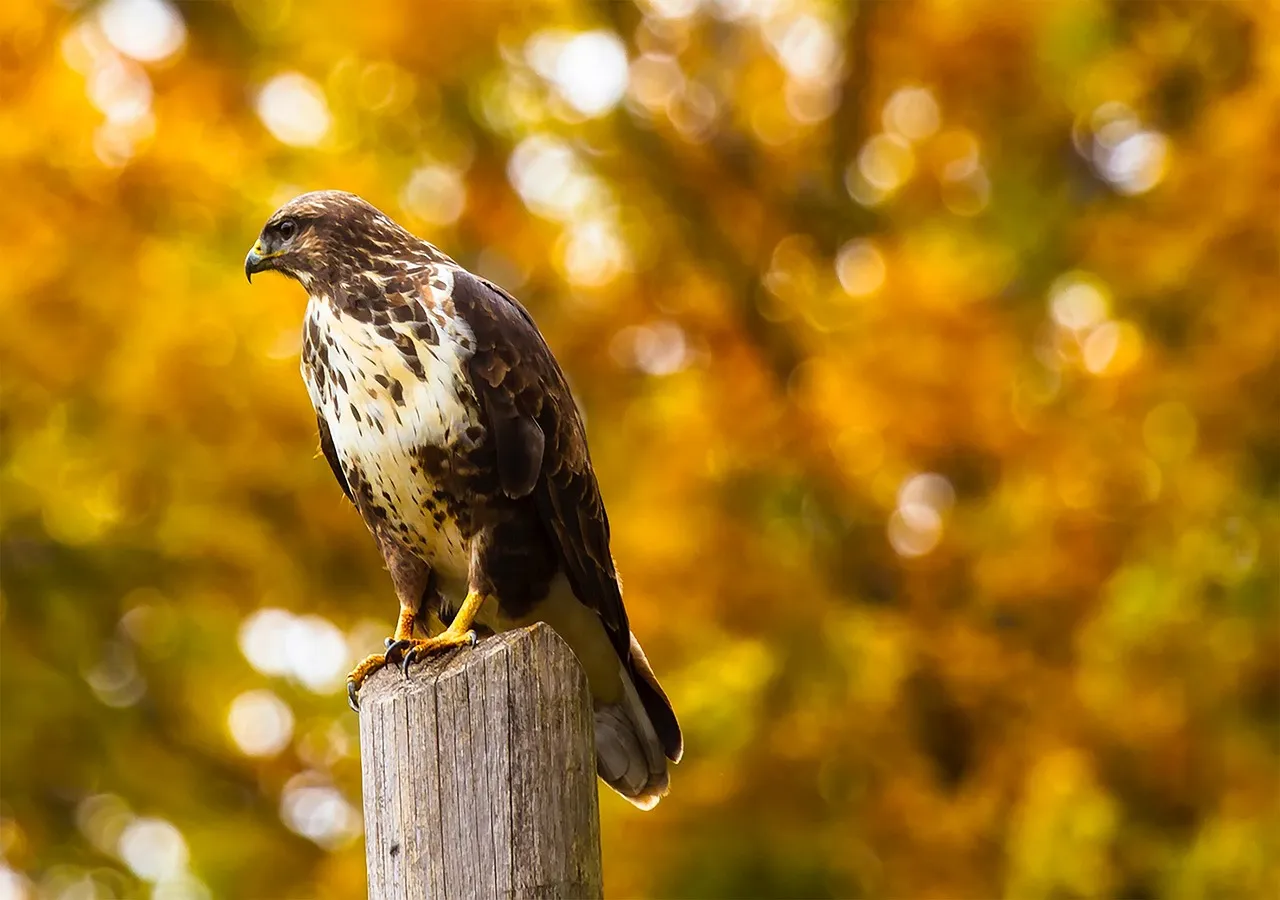
Here’s the gritty detail almost nobody talks about: perches wear out, physically and biologically, just like anything else exposed to weather and use. For a week, that fence post or branch may have had exactly the right thickness and angle. Then things change:
- Bark flakes off, making footing slick
- The wood cracks or flexes too much in the wind
- Rain and droppings build up into a slimy, unstable surface
Raptors depend on solid grip for both resting and launching. A misjudged takeoff can lead to real wing or leg injuries, especially if the bird slips at the exact moment it commits to a jump. If a hawk keeps feeling its talons sliding, or the branch swaying under its weight, it quietly downgrades that spot in its internal ranking.
There’s also a hygiene angle most people never consider. Over a week of heavy use, a perch can accumulate feces that harbor bacteria and parasites, leftover prey scraps that attract ants and flies, or sticky sap and residue from the tree itself. Hawks aren’t neat freaks, but they’re not oblivious either. Repeated low-level irritation, biting insects, constant itch, can nudge a bird away from a spot it once favored.
Human changes can push things over the edge too. Stapling a metal sign to a utility pole, stringing new wires, or adding anti-pigeon spikes can subtly alter how safe a perch feels. Even removing a nearby branch that served as a natural “brake” for landing can change the whole calculation. To us, the perch looks identical in photos. To the hawk’s body and instincts, it no longer feels like stable, low-risk ground, so it upgrades somewhere else without looking back.
#1 – The Hawk’s Life Stage or Strategy Flipped Overnight
🔥 Would you like to save this?
We'll email this post to you, so you can come back to it later!
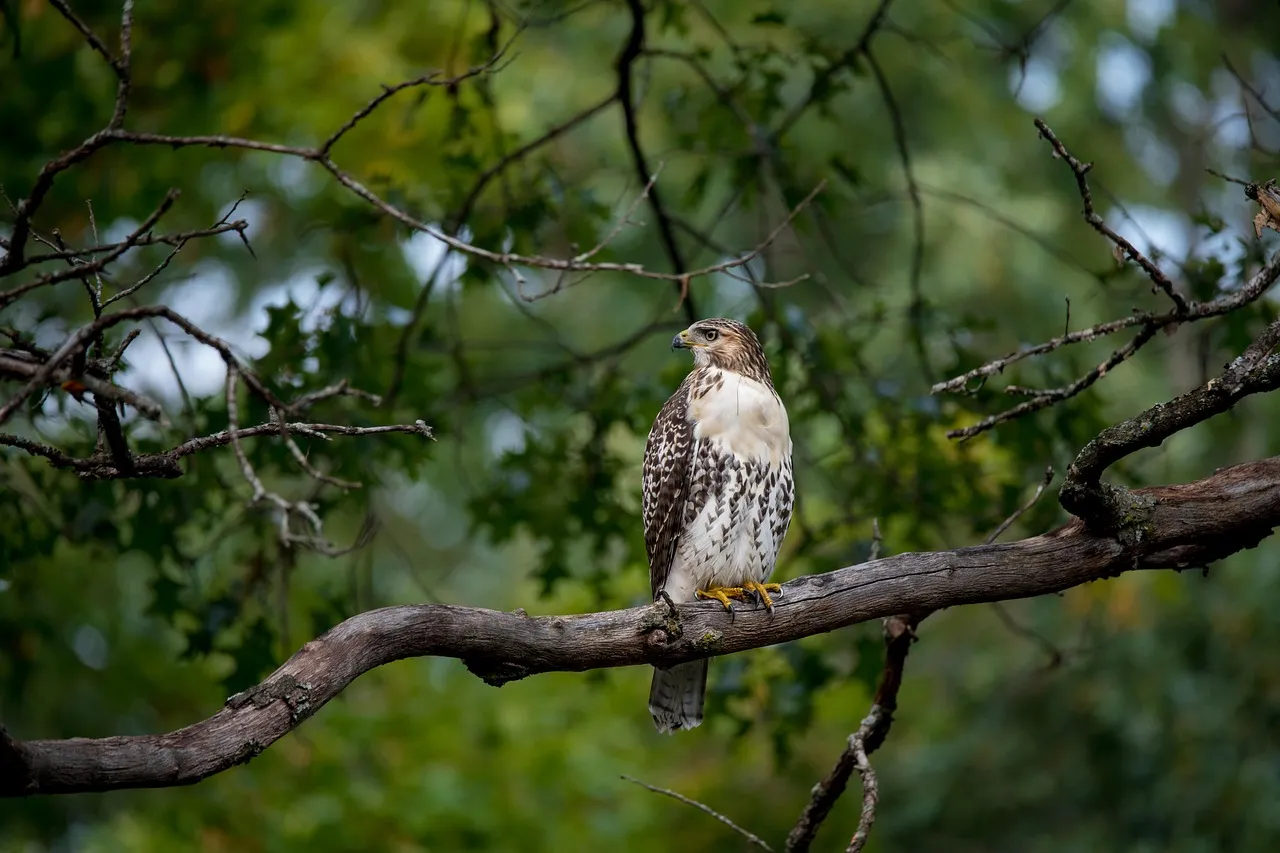
This is the reason that quietly explains more “mystery disappearances” than all the others combined. Hawks don’t just sit on a perch, they move through seasons of life and strategy, and a spot that made perfect sense during one phase can become completely irrelevant in the next.
A few major transitions trigger sudden, total change:
- Juvenile to competent hunter: Young hawks often linger in “easy” spots with visible prey and low competition. Once their skills and confidence grow, they trade convenience perches for locations built around longer flight circuits and sharper tactics.
- Pre-breeding to breeding season: When hormones spike, priority shifts hard toward finding or defending a nesting territory. A once-beloved hunting perch can be abandoned overnight if it doesn’t align with the new nest zone.
- Post-fledge family stage: Adults feeding fledglings will often relocate to perches that offer safety for clumsy young birds, even if those spots aren’t the most efficient for hunting.
Then there’s migration, partial migration, and dispersal. Some hawks are year-round residents. Others move regionally with the seasons. A bird that perched calmly in your yard for a prey-rich week might simply have been in pure refueling mode, then suddenly needed to push hundreds of miles north or south.
In every one of these stages, the bird is re-optimizing its entire daily energy budget from scratch. Yesterday’s perfect perch becomes today’s pointless detour. We’re the ones emotionally attached to that branch. The hawk is attached to whatever maximizes survival in that exact moment, and that cold, adaptive logic is exactly why it can use a perch faithfully all week, then abandon it without so much as a farewell circle overhead.
The Bottom Line
🔥 Would you like to save this?
We'll email this post to you, so you can come back to it later!
When a hawk abandons a perch it used all week, it isn’t being fickle, offended, or “done” with you. It’s running a constant survival algorithm, updating in real time with every gust of wind, every failed hunt, every territorial squawk from a rival.
At a Glance: All 7 Triggers
- #7 Food supply shifts or disappears
- #6 A bigger predator moves into range
- #5 Human activity crosses a comfort threshold
- #4 Wind and thermals stop cooperating
- #3 A territorial rival wins the argument
- #2 The perch itself gets unsafe or unsanitary
- #1 Life stage or strategy flips overnight
When food patterns shift, predators close in, human noise ramps up, winds change, territory lines harden, the perch degrades, or its own life stage flips priorities, the hawk treats that once-perfect branch as a sunk cost and moves on without hesitation.
That’s not betrayal. It’s biological realism, and honestly, it’s a little humbling. The uncomfortable truth is that we’re bit players in that calculation. Your yard, your tree, your fence post, those are just props in a much bigger story about energy, risk, and evolution playing out whether we’re watching or not.
If you miss “your” hawk, that’s a sign you were paying attention, and that’s worth something. But it’s also a reminder that wild raptors don’t owe us continuity or closure. My honest take? We’d all enjoy these birds more, not less, if we stopped expecting loyalty from something built entirely for survival. The hawk isn’t ghosting you. It’s just doing exactly what kept its ancestors alive for millions of years, and that’s a far more interesting story than a simple goodbye.

- What Egyptian God Are You According to Your Zodiac Sign - November 5, 2026
- Embracing the Quiet Magic of Adopting a Senior Dog - November 5, 2026
- Scientists May Have Miscalculated Our Global Warming Timeline - November 5, 2026