


Imagine a bird that once filled the Texas coastline with a million strong chorus, its haunting booming calls drifting across six million acres of golden prairie. Now picture that same species clinging to survival with just a few dozen individuals left in the wild at its lowest point. That contrast is both heartbreaking and somehow riveting. It forces you to stop and ask: how did this happen, and is there still hope?
The Attwater’s Prairie Chicken is not just a conservation story. It is one of the most dramatic tales of loss, resilience, and human determination in American natural history. From its extraordinary mating dance to its razor thin grip on existence, every fact about this bird manages to be surprising. Let’s dive in.
It May Be the Most Endangered Bird in All of North America
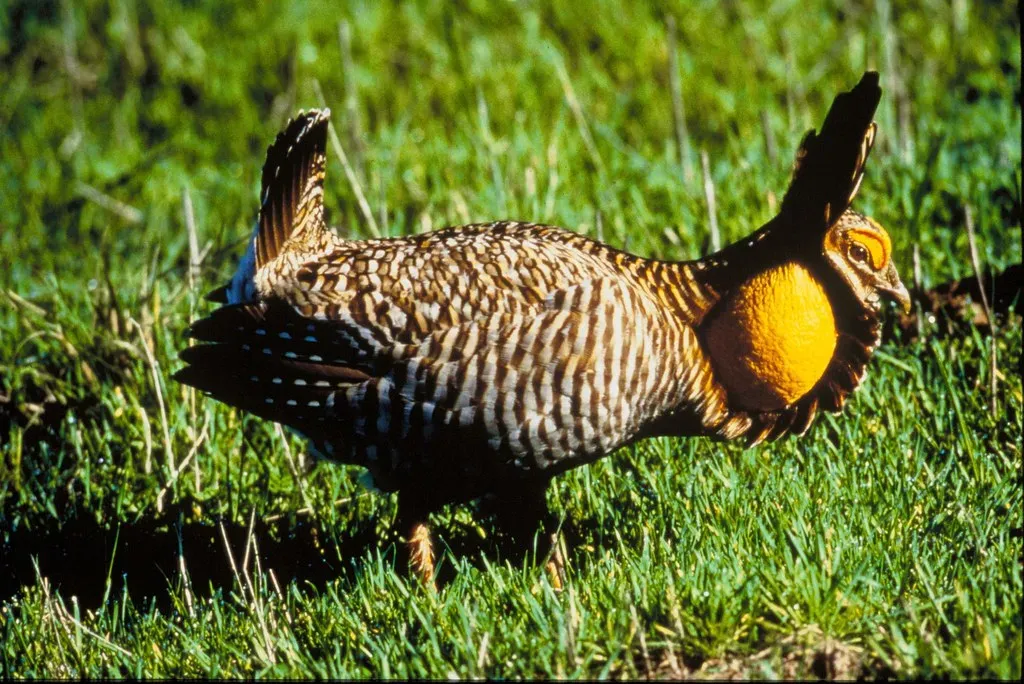
Here’s the thing about the Attwater’s Prairie Chicken – even among endangered birds, it stands apart. It is possibly the most endangered bird in North America, with even whooping cranes, a notoriously endangered waterfowl, having more wild numbers than prairie chickens. That is a jaw-dropping benchmark when you think about it.
In 1900, up to one million Attwater’s Prairie Chickens inhabited the coastal grasslands. In the span of a little over 30 years, habitat loss reduced wild numbers from nearly one million to less than 9,000, and by 2003, numbers were down to less than 50.
Today, the Attwater’s Prairie Chicken is found in only two Texas counties, Colorado County and Goliad County, and remains one of the most endangered birds in North America. Think about that. A bird that once blanketed the entire Gulf Coast now survives in just two tiny pockets of Texas. Honestly, the scale of that collapse is almost unimaginable.
The Males Perform One of Nature’s Most Spectacular Mating Dances
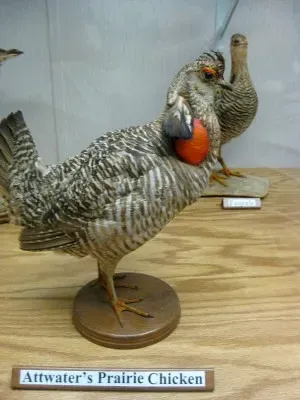
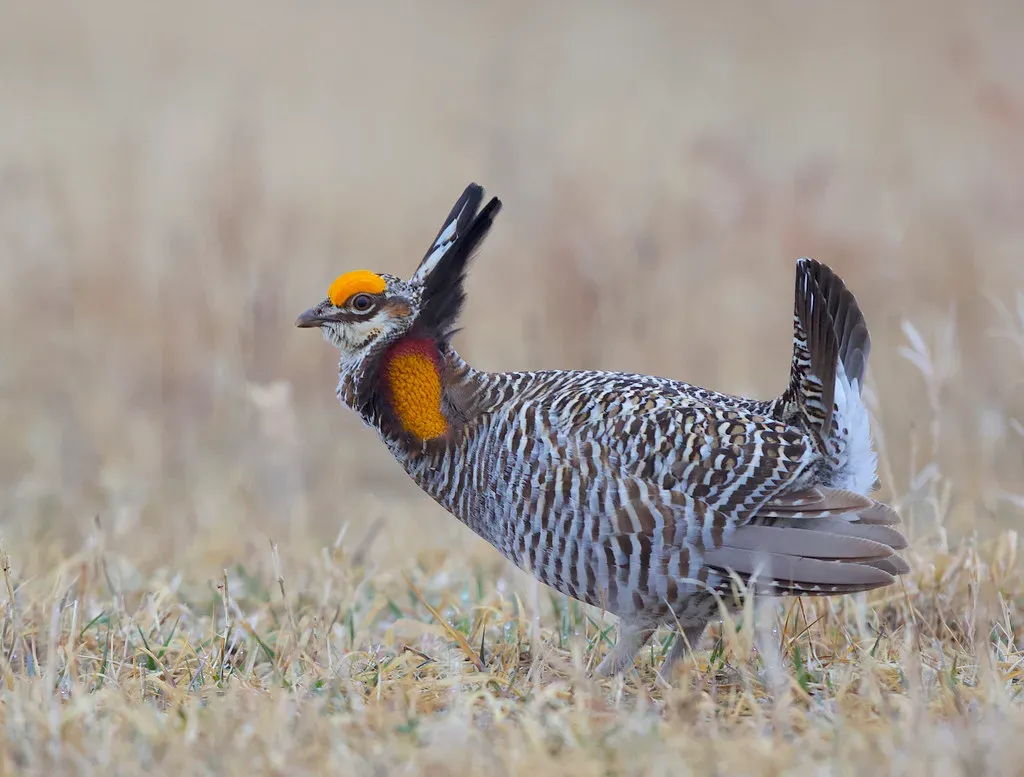
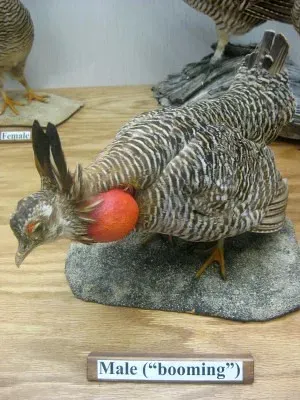
Each spring, the male birds inflate canary-yellow air sacs on either side of their necks, then bob up and down, stamp the ground, and emit loud booming noises, all in an attempt to woo females. It looks like something between a tiny nightclub performer and a wildly enthusiastic football fan. I find it both hilarious and genuinely moving.
During mating season, males make a “booming” sound, amplified by inflating the air sacs on their necks, that can be heard half a mile away. The mating display can be seen from January through mid-May, peaking in mid-March, when the birds gather in small groups on short grass, bare ground, or hilly areas to choose a mate. This area is called a lek or “booming ground.”
It is an impressive display for a two-pound bird, so much so that people travel from as far away as Australia each year to see it. That alone tells you everything you need to know about just how extraordinary this performance really is. Nature’s own spectacular theater, staged on a Texas grassland.
Its Habitat Has Been Almost Completely Destroyed
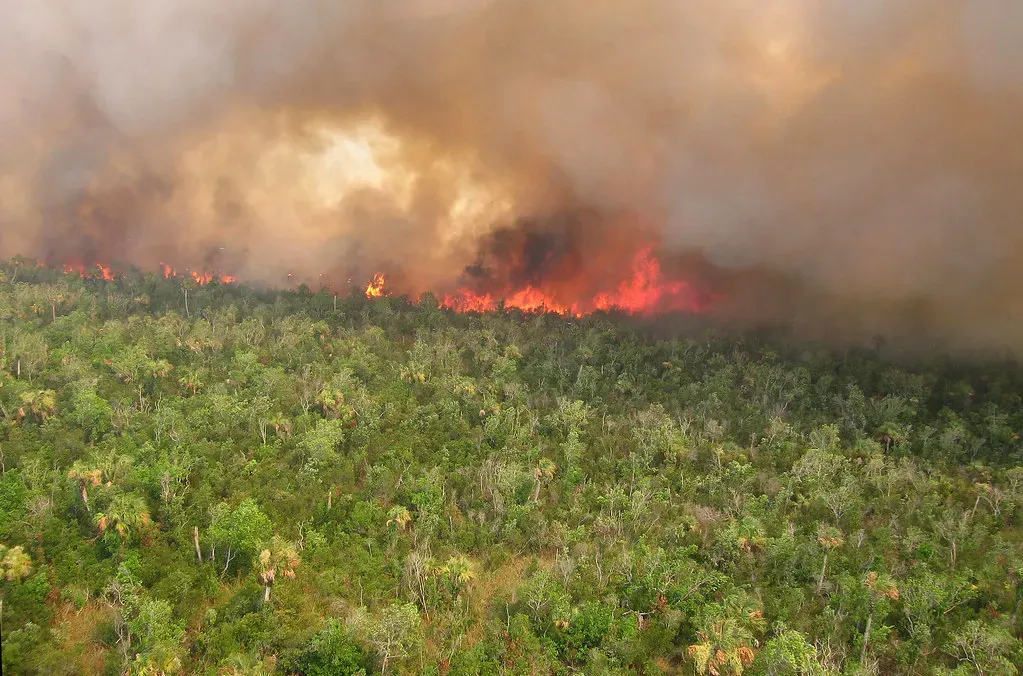
Less than one percent of the estimated six million acres of Gulf coastal prairie habitat remains today, making it one of the most endangered ecosystems in North America. Let that sink in for a second. Less than one percent. That is the equivalent of an entire country being reduced to a single city block.
Starting in the mid-1800s, colonizers turned virgin prairie into plantations and ranches, and then, a century later, developers turned those working lands into suburbs. The coastal prairie habitat was lost rapidly to conversion into croplands, urbanization, industrial expansion, conversion into improved pastures, invasive plant species, and brush encroachment due to fire suppression.
One of the major factors contributing to the habitat loss was the widespread planting, beginning in the early 1900s, of Chinese tallow trees to establish a soapmaking industry. Since that time, this tree has proven to be an aggressive invader of the coastal grasslands, displacing the diverse native plant assemblage with dense near-monospecific stands. It is a stark reminder that seemingly small human decisions can cascade into ecological catastrophe over generations.
Tiny Fire Ants Played a Surprising Role in Their Decline
You might expect the villains in this story to be big things – bulldozers, hurricanes, factories. Yet one of the most damaging threats turned out to be an ant you could crush under your fingernail. Ever since their introduction to Texas in the 1950s, red imported fire ants have been detrimental to native insect populations. A decreased number of native insects meant a decrease in food for young chicks, which lowered chick survival considerably and added to the Attwater’s Prairie Chicken’s decline.
A breakthrough was finally realized when researchers documented that red imported fire ants were likely derailing prairie-chicken recovery efforts by reducing native insects required as food for newly hatched prairie-chicken chicks. Work done through the Houston Zoo recovery program helped identify threats to native wildlife and habitat, such as the impact of red imported fire ants on native species of flora and fauna.
It is hard to say for sure, but this discovery may have been one of the single most important turning points in understanding why every other conservation effort kept falling short. Sometimes the smallest enemy causes the biggest damage. A lesson worth remembering far beyond this one bird.
Hurricane Harvey Nearly Wiped Them Out Completely
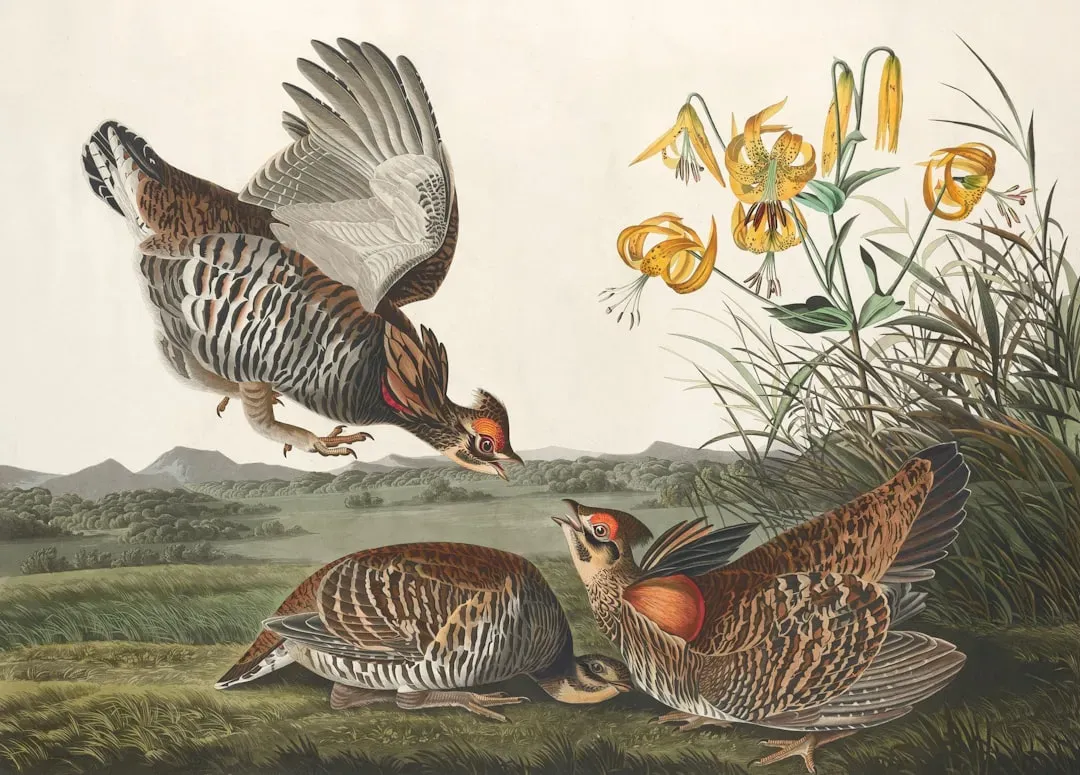
Weather has always been a danger for the Attwater’s Prairie Chicken, but Hurricane Harvey in 2017 brought the species to the very edge of oblivion. In 2016 and 2017, flooding from spring rains and Hurricane Harvey destroyed an entire generation of Attwater’s eggs and drowned over 30 birds. After this, their wild population dwindled to only a little over 10 birds.
Hurricane Harvey was particularly disastrous, likely killing at least 32 birds, with only five females found during the post-hurricane survey of the area. In the spring of 2018, the estimated wild population was just 12. Twelve. The entire wild population of a species, down to a number you could fit inside a single room.
With their numbers so low, weather events are far more catastrophic, and every Attwater’s Prairie Chicken lost to a predator makes a huge difference. When the population was healthy with one million birds, they could withstand normal occurrences like droughts, floods, and hurricanes. The bird population might take a hit, but it could bounce back. Now, a single storm season can undo years of painstaking conservation work.
A Remarkable Coalition Is Fighting to Save It
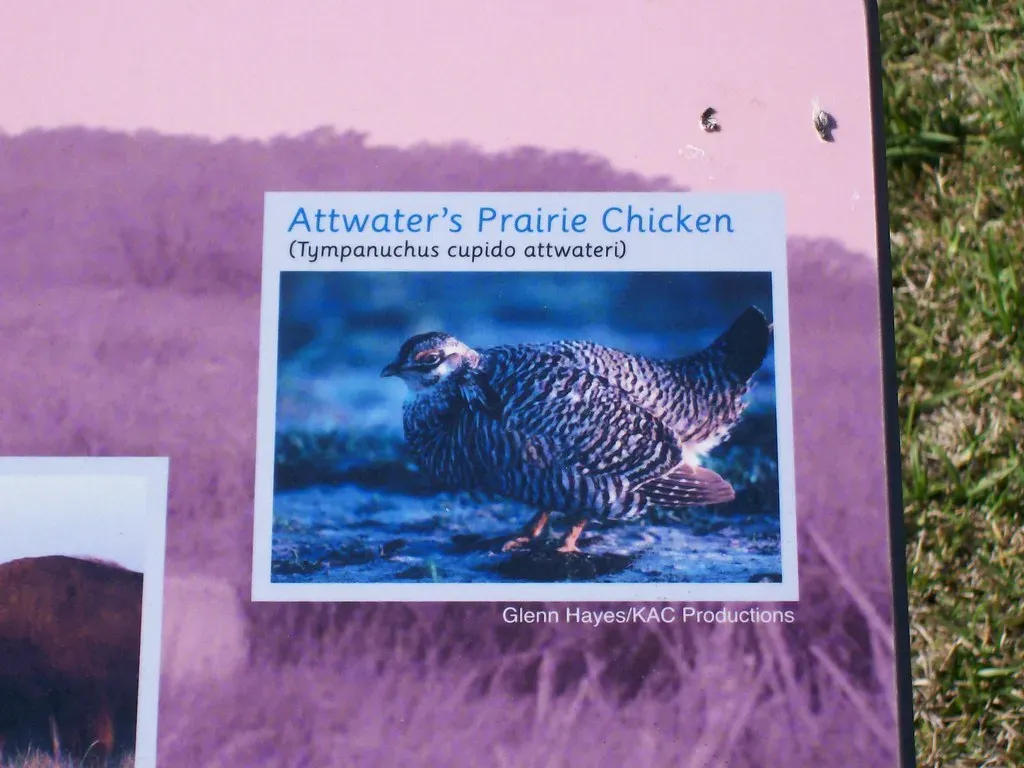
In 1992, a captive breeding program was initiated by Fossil Rim Wildlife Center. Today, Fossil Rim, the Houston Zoo, Caldwell Zoo in Tyler, and the Sutton Avian Research Center are successfully raising Attwater’s Prairie Chickens for release into the wild. It is a genuinely inspiring example of what cooperation across organizations can achieve when the stakes are this high.
The Attwater Prairie Chicken National Wildlife Refuge was established in 1968, the only National Wildlife Refuge that was created specifically to help save a species. On the refuge, more than 10,000 acres of native coastal prairie are sustained through the use of prescribed fire, managed grazing, brush control, and by planting native prairie seeds on former farmland.
In 2024, they became part of a Saving Animals From Extinction (S.A.F.E.) program, which will help concentrate conservation efforts. The ultimate recovery goal for this imperiled bird is to restore and maintain a genetically viable, stable, self-sustaining population of at least 6,000 breeding adults annually over a 10-year period. That is an enormous target, but given how far this species has already come back from the brink, it no longer feels completely impossible.
It Earned Its Own Postage Stamp – and a Place in Pop Culture
In 2023, the Attwater’s Prairie Chicken was featured on a United States Postal Service Forever stamp as part of the Endangered Species set, based on a photograph from Joel Sartore’s Photo Ark. It is a small but meaningful gesture of national recognition for a bird that most Americans have never heard of, let alone seen.
Though not referring to the subspecies by name, the NBC sitcom The Monkees (1966-68) saw Dallas-born Michael Nesmith repeat the call to “save the Texas prairie chicken” in multiple second-season episodes, becoming a notable catchphrase for the character. Even back in the 1960s, the plight of this bird was already working its way into the cultural conversation.
Some of the traditional dances of the North American Plains Indians are based on this booming display. The bird carries a long and layered cultural significance that stretches back centuries before anyone ever wrote down the words “endangered species.” Its story belongs to this land in a deep and fundamental way.
Conclusion: A Bird That Refuses to Disappear
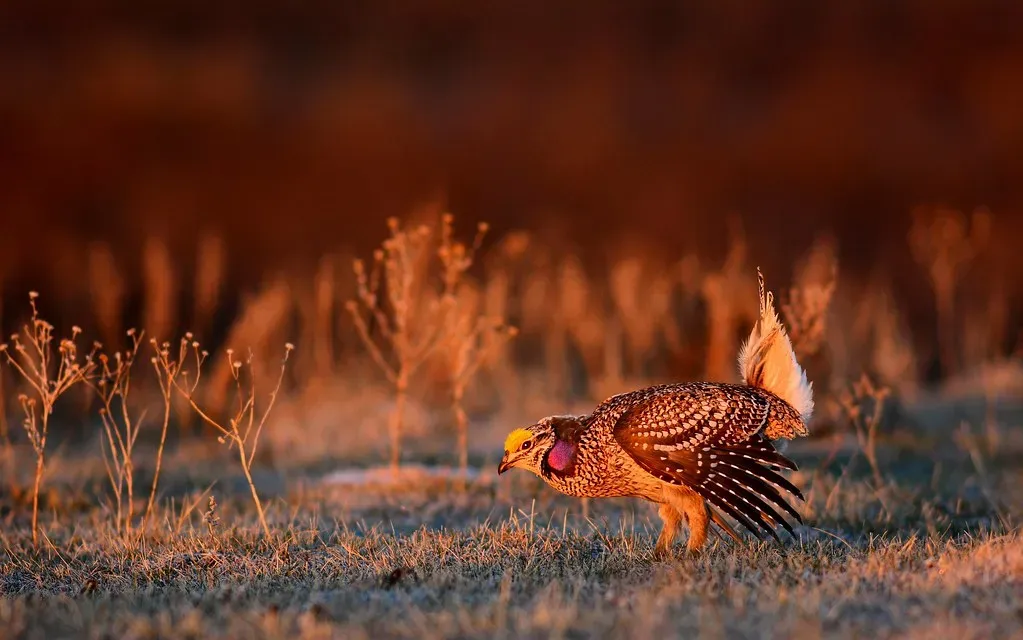
The Attwater’s Prairie Chicken’s story is equal parts tragedy and tenacity. From a million birds filling the Texas coastline to barely a dozen survivors after a devastating hurricane, this small grouse has teetered on the very edge of extinction more than once. The remarkable recovery from an all-time population low following Harvey, to a population level not seen in almost 30 years, is a testament to the strength of the recovery program and to the resiliency of the Attwater’s Prairie Chicken itself. This rebound demonstrates that these birds still possess the potential for the sort of population growth needed to make recovery possible.
Let’s be real. The road ahead is still long and full of danger. But the fact that this bird still dances and booms across the Texas coast at all is something close to a miracle. It is a living argument for why conservation efforts – however slow, however costly – are always worth the fight.
Would you have guessed that one of America’s most endangered birds lives just an hour outside of Houston? What do you think needs to happen next to give it a fighting chance? Tell us in the comments.

Tara enjoys writing about marine animals like whales, sharks, dolphins and nudibranchs.
Please send any feedback to feedback@animalsaroundtheglobe.com
- 10 Animals That Mourn and Grieve - July 21, 2026
- Did You Know That Alligators Can Survive Being Frozen? - July 20, 2026
- 45 Incredible Migrations of North American Wildlife - July 20, 2026