
Cats have spent thousands of years being both predator and prey, and that double existence has sharpened their senses into something that still quietly astonishes researchers. They notice shifts in the environment that we miss entirely – tiny vibrations, faint chemical changes in the air, subtle alterations in sound or light. Most of the time, a curious glance or a flicked ear is all you’ll see. Other times, though, the signals run deeper.
If you share your home with a cat, you’ve probably watched them react to something completely invisible to you – freezing mid-step, staring at an empty corner, or bolting from a room without any obvious reason. These moments aren’t always quirky feline theater. Some of them are genuine attempts at communication. Knowing the difference between normal cat oddness and a real warning signal could matter more than you’d think.
#1: Intense, Fixed Staring at a Specific Spot
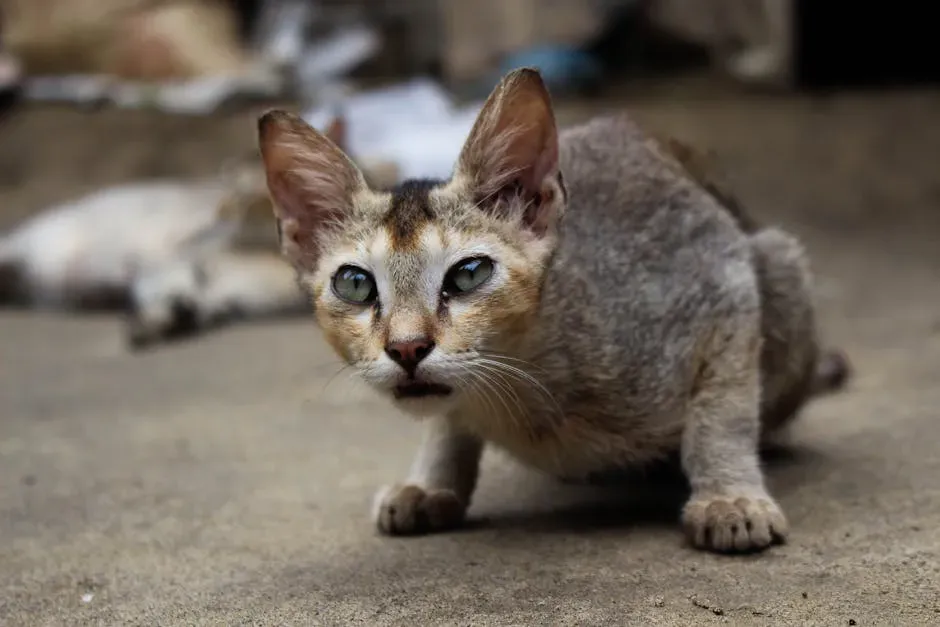
There’s casual cat staring – the slow-blinking, half-lidded gaze they direct at you from across the couch – and then there’s something else entirely. When a cat’s eyes go wide and fixed, the body tenses, whiskers either push forward or pull flat, and that stare locks onto a point, it’s not a relaxed expression. It can signal stress, threat, or subtle aggression, and may be a warning that your cat feels something is wrong.
When that steady stare is paired with other unusual behaviors, it could be your cat’s way of signaling that something isn’t quite right. Watch for dilated pupils, frequent hiding, restlessness, or unusual vocalizations. These symptoms combined with intense or prolonged staring may suggest your cat is experiencing discomfort, fear, or even pain. Cats have far sharper hearing than we do, and they can detect sounds – rustling behind a wall, a faint hiss from a pipe – that are genuinely beyond our range.
#2: Sudden Unexplained Hiding
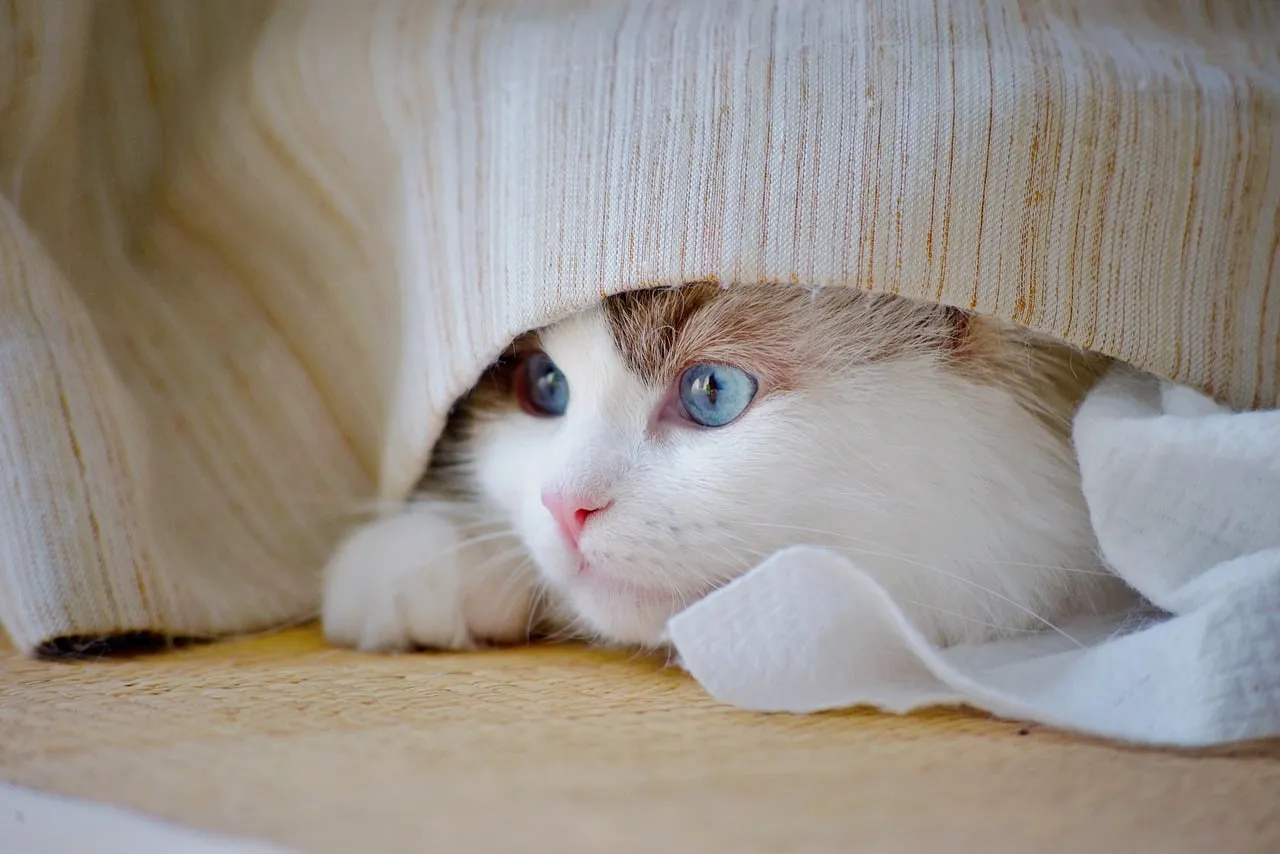
A cat that retreats under the bed mid-afternoon for no visible reason is worth paying attention to. Cat anxiety happens when a cat anticipates danger, even if no real threat is present. This stress response can lead to physical symptoms like a faster heart rate or trembling, along with behaviors such as hiding, vocalizing, or destructive actions.
Instead of confrontation, many cats prefer to observe the unknown from a distance. Hiding under furniture, behind curtains, or inside boxes gives them a safe vantage point to assess a threat. This response is particularly common in shy or newly adopted cats. When a cat that normally follows you around the house suddenly vanishes into the deepest, darkest corner for no discernible reason, especially if it’s a new behavior rather than a habit, it’s worth checking what changed in or around your home that day.
#3: Growling, Hissing, or Yowling at Nothing Visible
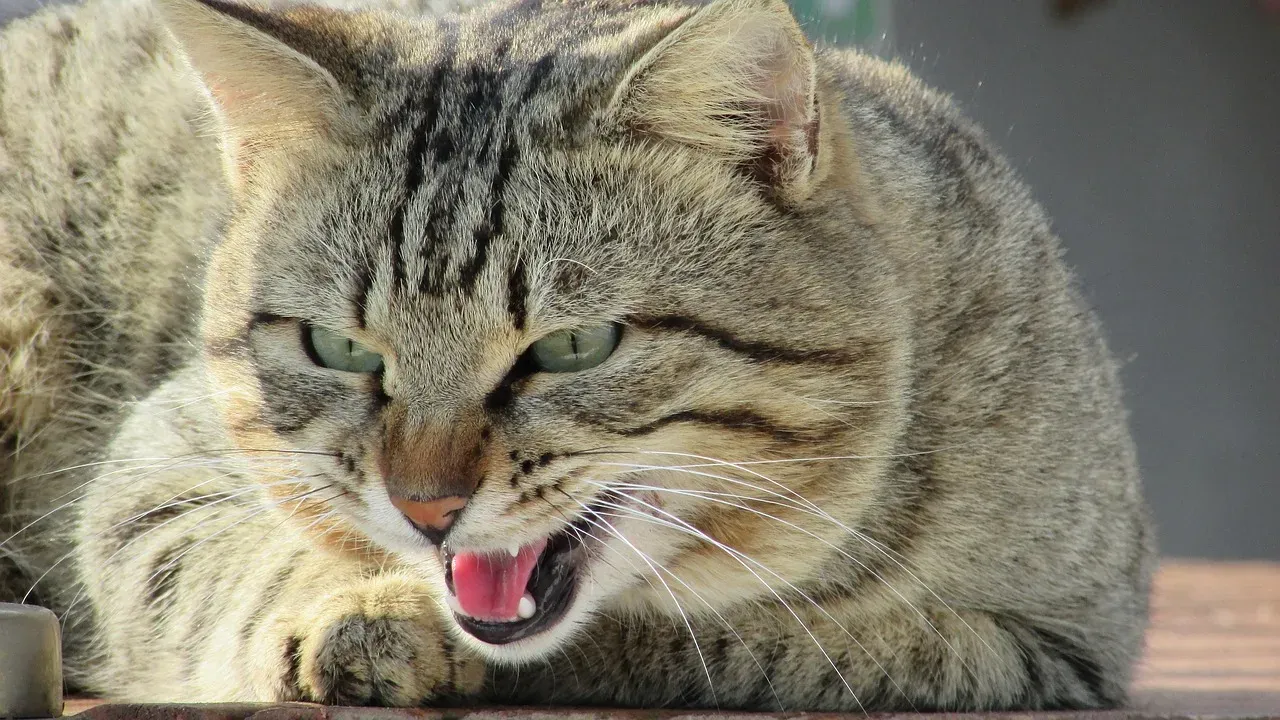
A growl is a low, rumbling sound used to warn or scare off a threat. It can be directed toward humans, other cats, or animals. Growling is an indication that a cat feels threatened, frightened, or is about to become aggressive. This sound often increases as the cat’s fear grows. Hissing typically follows close behind.
When a cat wants you to understand that they’re feeling threatened, they may go through a series of vocalizations, increasing in intensity as their discomfort increases. A growling cat is warning you to back off. Hissing indicates that a cat is feeling threatened and may be getting ready to fight or flee. If your cat is directing these sounds at something you cannot see or hear, it’s reasonable to investigate – another animal inside a wall, an unfamiliar scent drifting in, or a sound frequency outside the human audible range could all be real triggers.
#4: Puffed-Up Tail and Arched Back
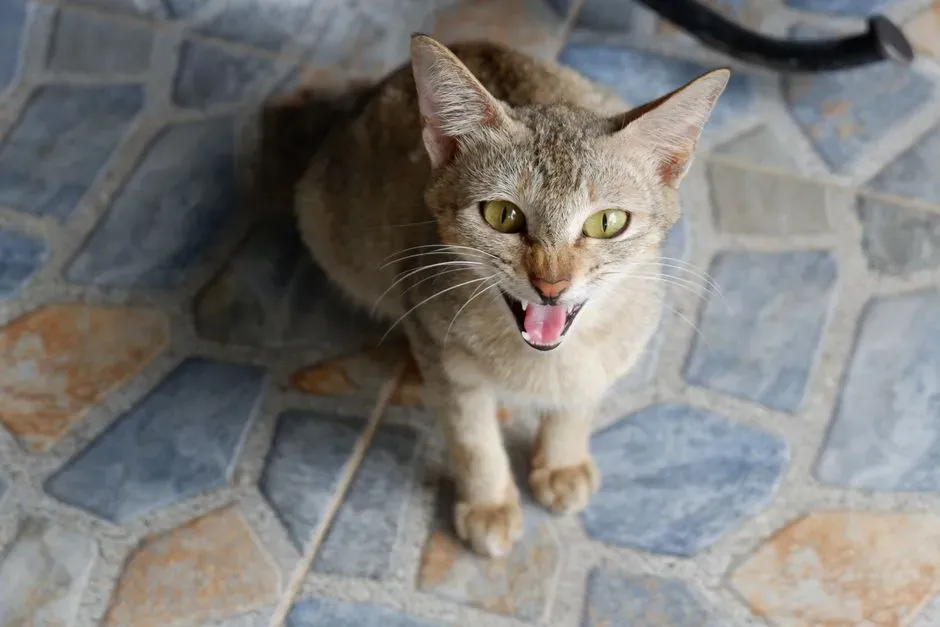
Few feline signals are as dramatically clear as the classic Halloween-cat posture. A sudden puff of fur and an arched spine are some of the most iconic cat responses to a perceived threat. This dramatic display is not aggression – it’s defense. By making themselves appear larger, cats aim to ward off danger without engaging in physical confrontation.
Hair or fur standing on end is caused by a release of specific hormone signals from the cat’s nervous system in response to stress or the triggering of the fight-or-flight reaction. These signals cause the tiny muscles in the cat’s tail to contract and lift the fur away from the skin. It can extend to the muscles along the spine, causing the hair to stand erect there and create a ridge of fur. This isn’t a theatrical flourish. It’s an involuntary physical response, which means the threat your cat perceives is real enough to trigger their nervous system before their brain has fully processed what’s happening.
#5: Frantic Restlessness and Pacing Before Seismic Events
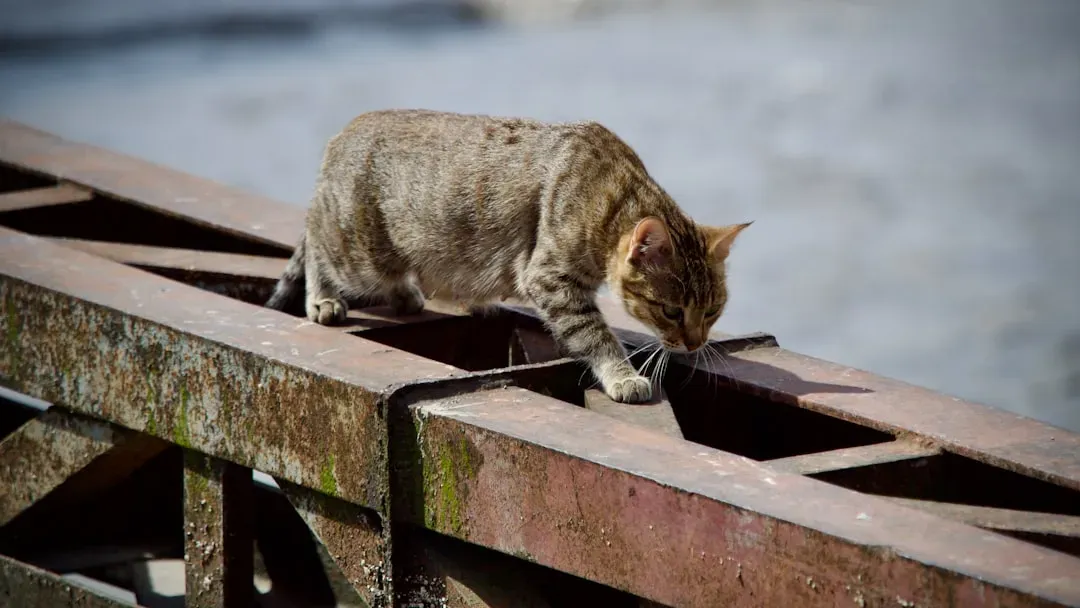
This is one of the most documented and yet still debated behaviors on this list. Many cat owners report their cats acting strangely just before an earthquake hits. Some cats race around frantically, while others hide. Scientists don’t agree on whether cats can predict earthquakes well in advance, but research suggests they can sense them up to 15 seconds before they occur.
The likely explanation involves physical senses rather than anything supernatural. The delicate skin of feline toe pads is packed with nerve endings, making them extra sensitive to textures, movements, and vibrations. Feline whiskers are attached to sensitive nerves, allowing them to pick up on the tiniest of vibrations. Cats have sharper senses than humans and can detect tiny vibrations we can’t feel or hear. Earthquakes start with fast, subtle P-waves, which we don’t notice, followed by stronger shaking S-waves. Unlike us, cats can likely sense the initial P-waves, which is why they often act anxious before an earthquake hits, or at least before we notice it’s there.
#6: Unusual Clinginess or Desperate Attempts to Get Your Attention
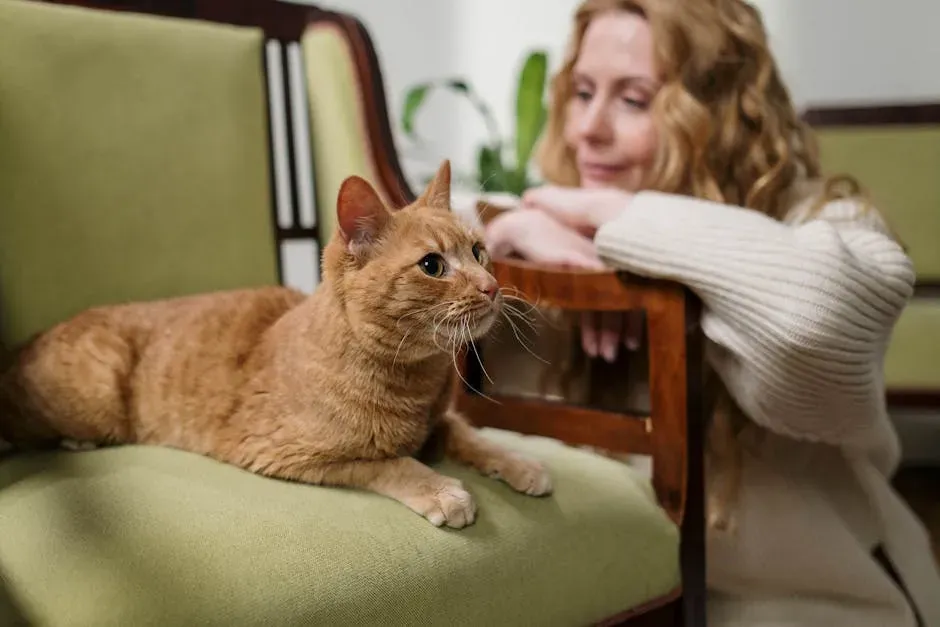
Most cats appreciate their independence. So when a normally reserved cat suddenly refuses to leave your side, follows you from room to room, paws at you repeatedly, or vocalizes with unusual urgency, it’s worth taking seriously. The most common reports of unusual animal behavior before seismic events were of cats being restless and wanting to be near their owner. This pattern of seeking human contact when something feels wrong appears to be fairly consistent across different types of threat.
Cats have a keen sense of smell and acute awareness of their environment, which means they might notice things we don’t. Odd behavior like pacing or sitting by the door could have various explanations – while it could be nothing serious, it might also indicate something environmental, such as a gas leak or another issue needing attention. A cat urgently nudging you toward the door, or pawing at you while looking toward a specific room, deserves more than a casual dismissal.
#7: Sudden Behavioral Change Around Gas Appliances or Specific Areas
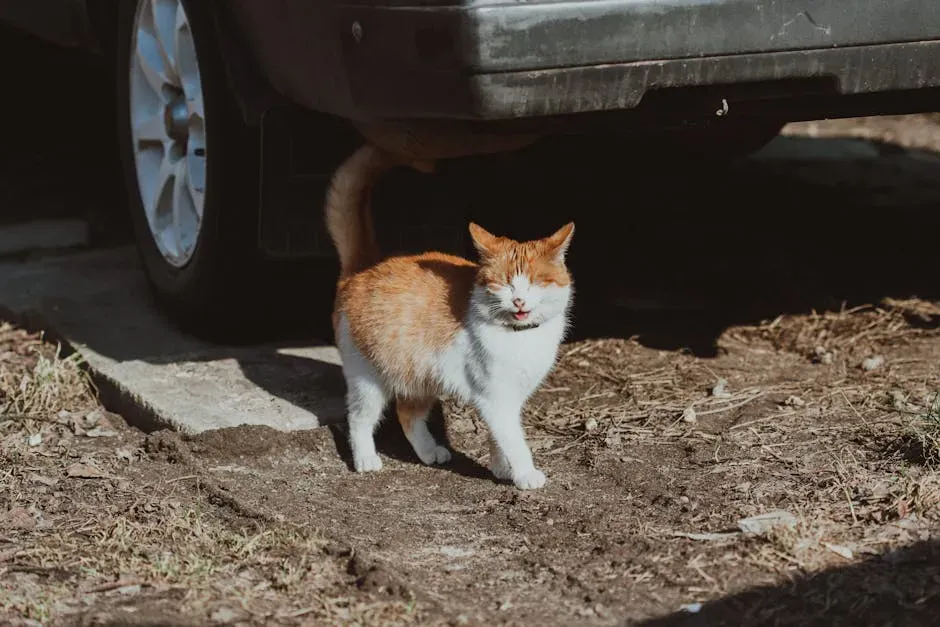
Cats cannot smell carbon monoxide – that is a myth worth dispelling clearly. Cats cannot smell or otherwise detect carbon monoxide. This gas is completely odorless. Therefore, there is no way for your feline to detect it despite their stronger noses. However, cats have a higher metabolic rate than humans, as well as a higher respiratory rate. This means that the odds of a cat showing signs of carbon monoxide poisoning before a human does are very high.
Natural gas leaks are a different matter. Cats can smell a gas leak. The smell we associate with a gas leak is added to the gas source so that we can detect the presence of the gas. In essence, the smell is purposely added as a safety precaution. A cat’s sense of smell is more acute than a human’s, and as such, it’s safe to assume that they can smell a gas leak. Pets are often the first to feel the impacts of a natural gas leak. If your pet is showing unusual signs of vomiting, excessive sleeping or drowsiness, erratic or violent behavior, or is generally acting out of character, these may be signs of potential poisoning and a gas leak in your home. Any abrupt change in how your cat behaves around a specific appliance or room should not be brushed off.
#8: Tail Thrashing Combined with Pinned Ears and a Stiffened Body
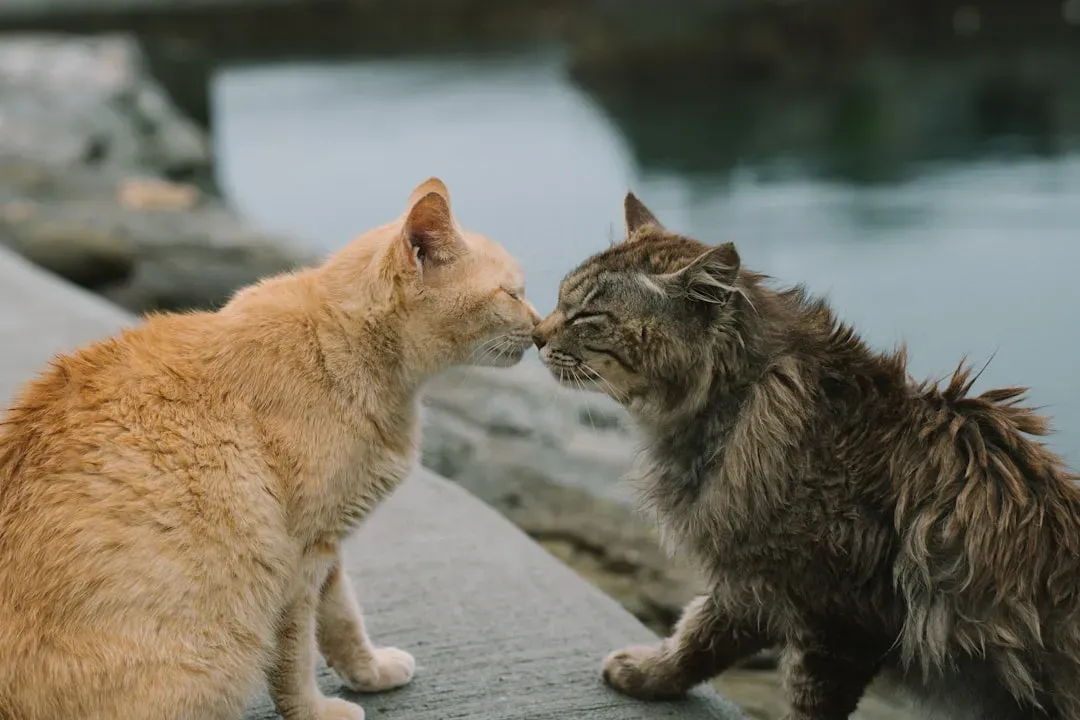
The tail is one of the most readable parts of a cat’s body language. A flicking or twitching tail is a sign of agitation. The cat is on high alert or is upset, and is not receptive to interaction. But when tail movement combines with other physical signals, the message becomes much more urgent. A cat’s tail can be a clear indicator of its mood. A relaxed and upright tail usually signifies contentment. However, a twitching or thrashing tail can indicate agitation or impending aggression.
A tense, fixed stare with flattened ears, a swishing tail, and possibly hissing is a sign of aggression or a warning. When your cat freezes with ears flat, tail lashing low and fast, and their weight shifted back onto their haunches, they are communicating a genuine threat assessment. Behind animal behavior lies millions of years of natural selection. In the wild, a mistake could cost one’s life. Those who failed to respond to the earliest, almost imperceptible signs of danger – a faint vibration, a strange smell, or a sudden shift in the wind – simply did not survive. Your cat is running the same ancient software, and when the full-body alarm fires at once, there’s usually a reason.
What to Do When Your Cat Sends a Warning
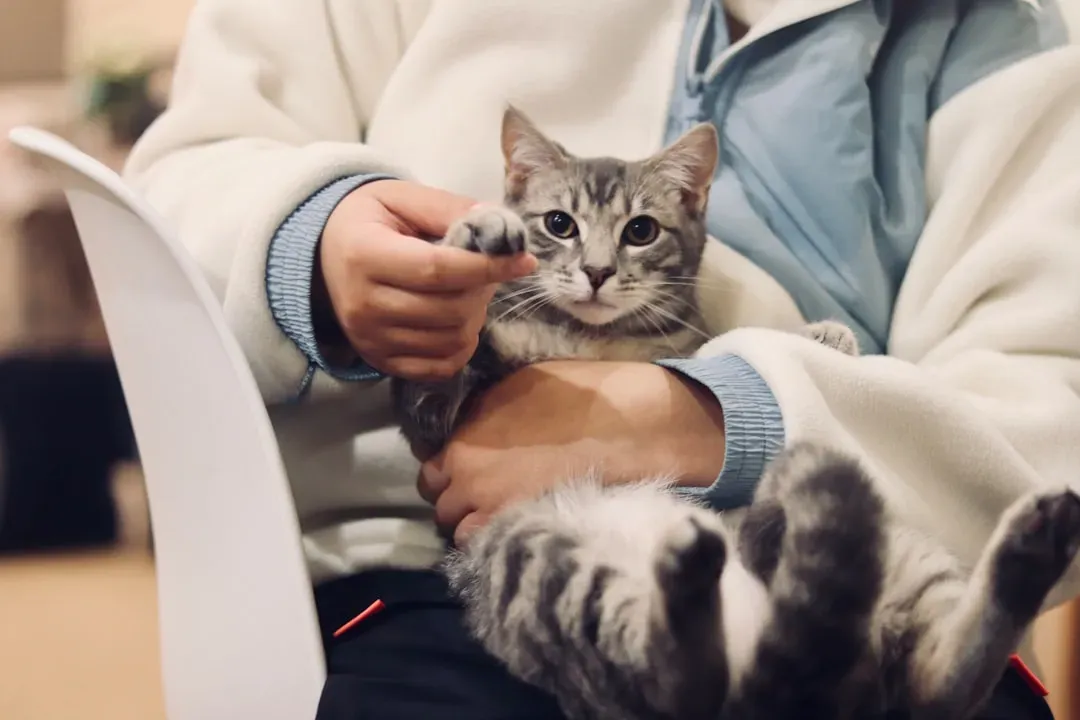
Cats are creatures of habit, which means a behavior change is likely to be noticed by their owner fairly quickly. Unfortunately, cats are stoic animals that go to great lengths to hide illness; therefore, a noticeable behavior change can indicate that a disease has progressed to an advanced stage. For this reason, cat owners must know their cat’s regular routine and behavior so that any deviation from their norm is quickly addressed.
A general rule of thumb is that any change in a cat’s vocalization – the frequency, intensity, duration, or pitch – warrants a visit to the veterinarian to evaluate for pain, illness, or anxiety. The same principle applies to behavior more broadly. Any change in your cat’s behavior warrants a trip to the veterinarian. The quicker the issue is addressed, the better the prognosis is likely to be if the behavior change is the result of a medical issue. Make an appointment with your veterinarian if your cat’s new behavior persists longer than 24 hours.
Cats don’t perform alarm signals for attention. They don’t have a concept of drama for its own sake. When your cat’s behavior shifts sharply and suddenly, something in their environment has shifted too. Whether it’s a threat outside the window, a change inside the walls, or a physical problem within their own body, they’re telling you something in the clearest language they have. Learning to listen is one of the more useful things you can do as a cat owner – and occasionally, it might be more important than you’ll ever fully know.

- How Did Reindeer Become a Symbol of Christmas? - July 19, 2026
- 10 Facts About The Endangered Jaguarundi - July 19, 2026
- Why Labrador Retrievers Remain a Southern Favorite in Georgia and the Carolinas - July 19, 2026