
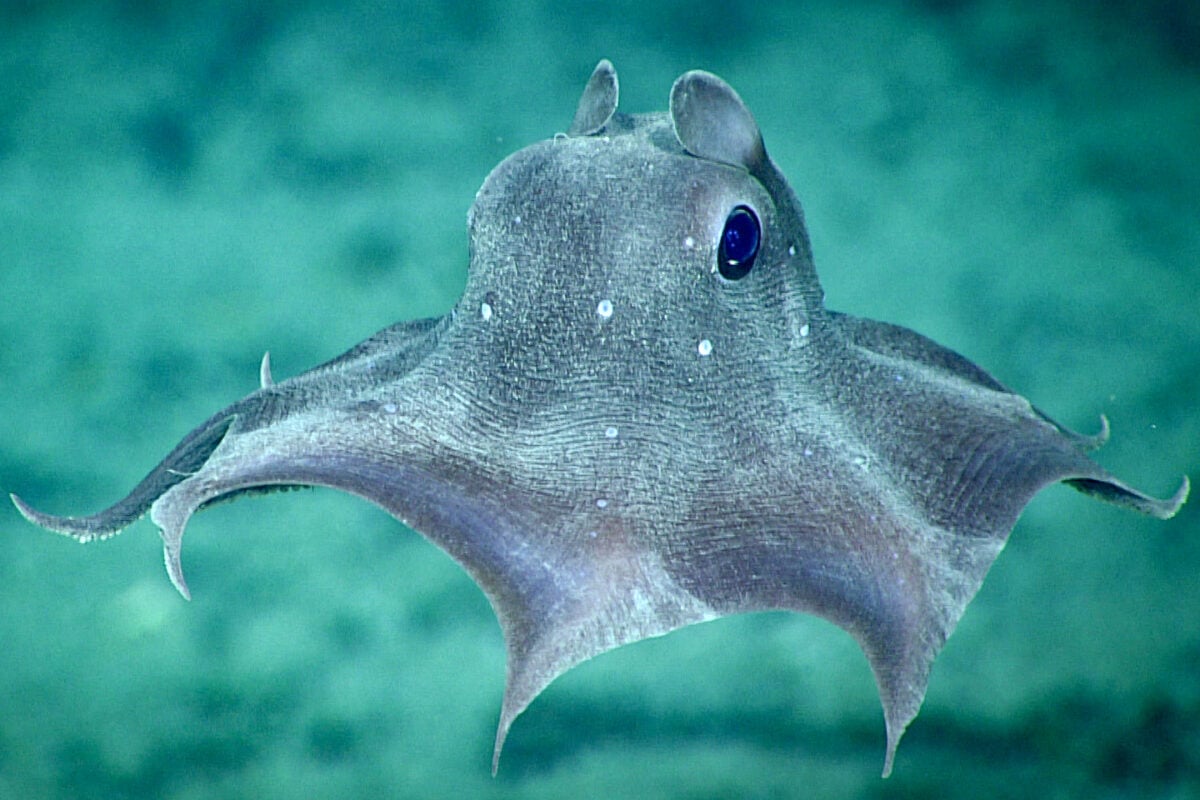
Picture a creature the size of a grapefruit, or sometimes a bit larger, drifting through water that’s barely above freezing and utterly dark. It has no ink to squirt, no shell to hide in, and almost nothing around it to eat. Yet it’s doing just fine.
The dumbo octopus lives where most animals wouldn’t last a minute, and it does so with a body that looks almost too gentle for the job. Scientists still don’t know everything about it, which is part of the appeal. What they do know says a lot about how life adapts when the margin for error is thin.
A Name Borrowed From a Famous Elephant
🔥 Would you like to save this?
We'll email this post to you, so you can come back to it later!
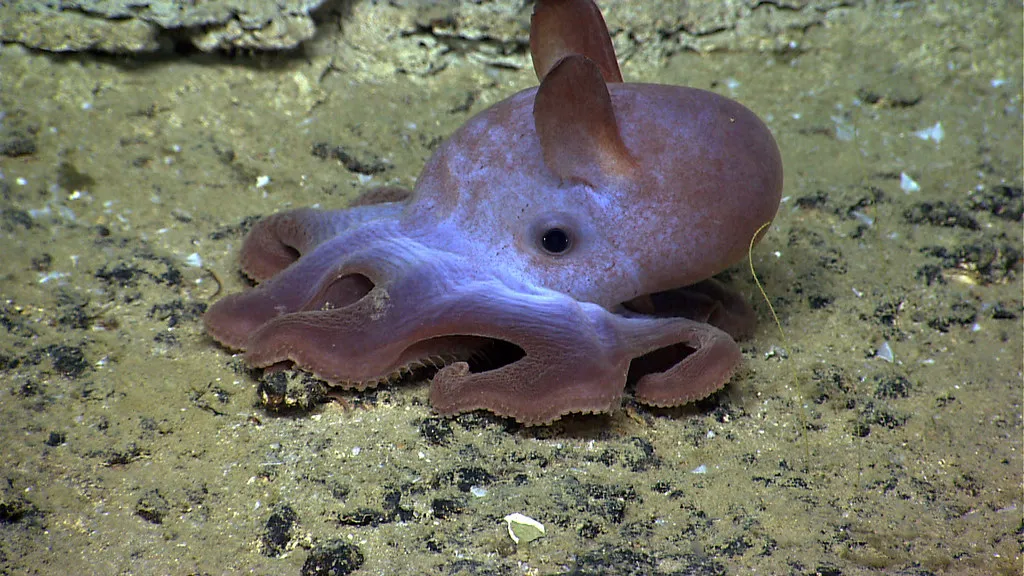
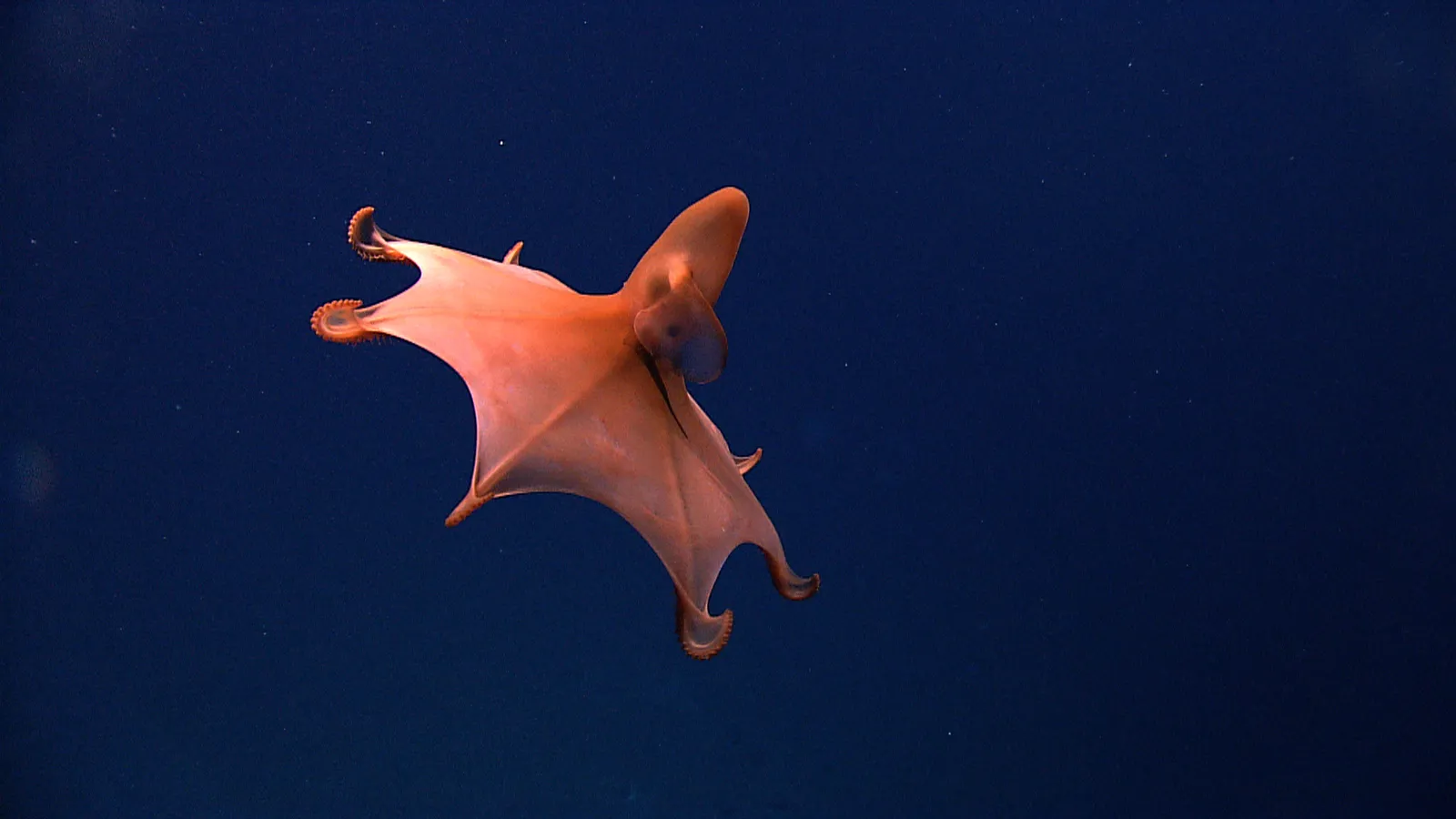
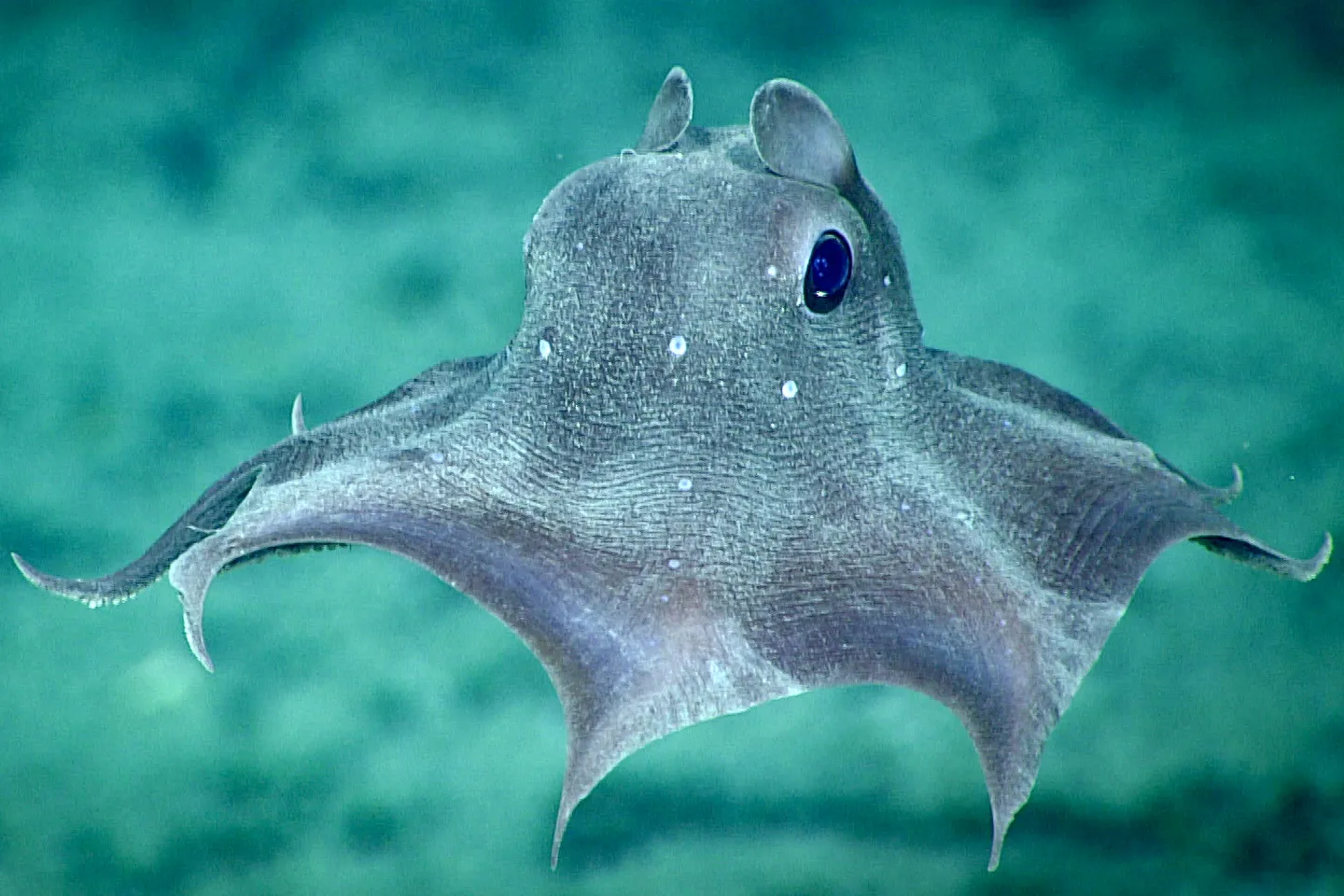
Dumbo octopuses belong to the genus Grimpoteuthis, a group of cirrate octopuses that includes more than a dozen recognized species. The nickname comes from the two large fins on top of the body, which look a lot like the ears of Disney’s flying elephant.
Those fins aren’t just a cute feature. They’re central to how the animal moves and, by extension, how it makes a living. The fun name hides some seriously specialized anatomy.
They Live Astonishingly Deep

🔥 Would you like to save this?
We'll email this post to you, so you can come back to it later!
Most dumbo octopuses are found several thousand meters below the surface, in the zone where sunlight never reaches. In 2020, researchers filmed one near the bottom of the Java Trench in the Indian Ocean at close to seven kilometers down. That sighting was reported as the deepest ever recorded for any octopus.
Living there means coping with crushing pressure and cold that never lets up. Still, the animals seem comfortable, gliding just above the seafloor as if the conditions were ordinary. For them, they are.
Ear Like Fins Do the Everyday Work
🔥 Would you like to save this?
We'll email this post to you, so you can come back to it later!
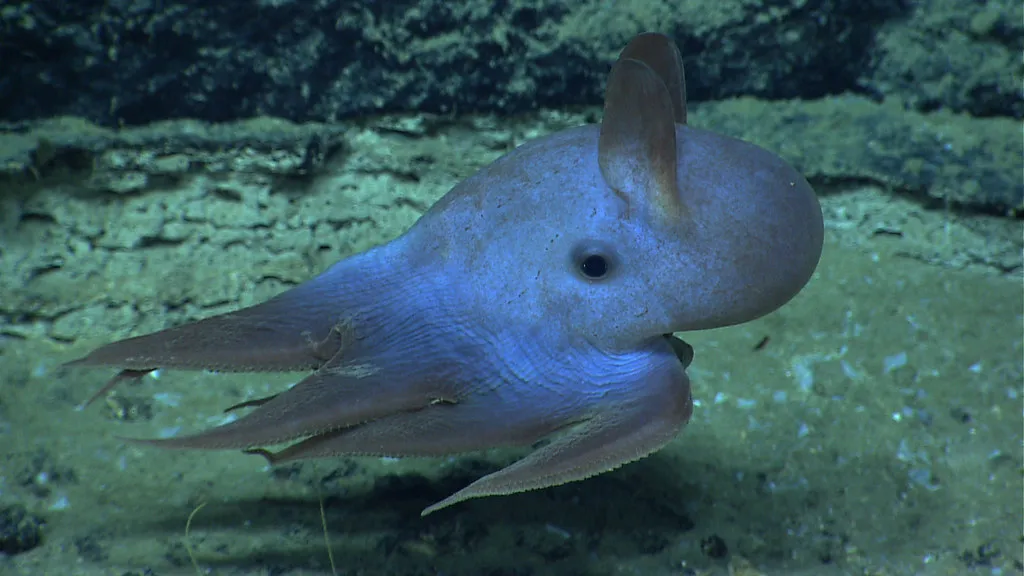
Instead of jetting around like many shallow water octopuses, dumbos mostly flap their fins to hover and cruise. It’s a slow, steady, energy saving way to travel, which matters a lot when meals are scarce. They also use the webbing between their arms, opening and closing it a bit like an umbrella to add thrust.
When something threatens them, they can switch gears. A burst of water from the siphon gives them a quick escape, though it costs more energy than the relaxed fin stroke. Think of it as a calm cruise setting with an emergency boost in reserve.
A Soft, Gelatinous Body Handles the Pressure
🔥 Would you like to save this?
We'll email this post to you, so you can come back to it later!
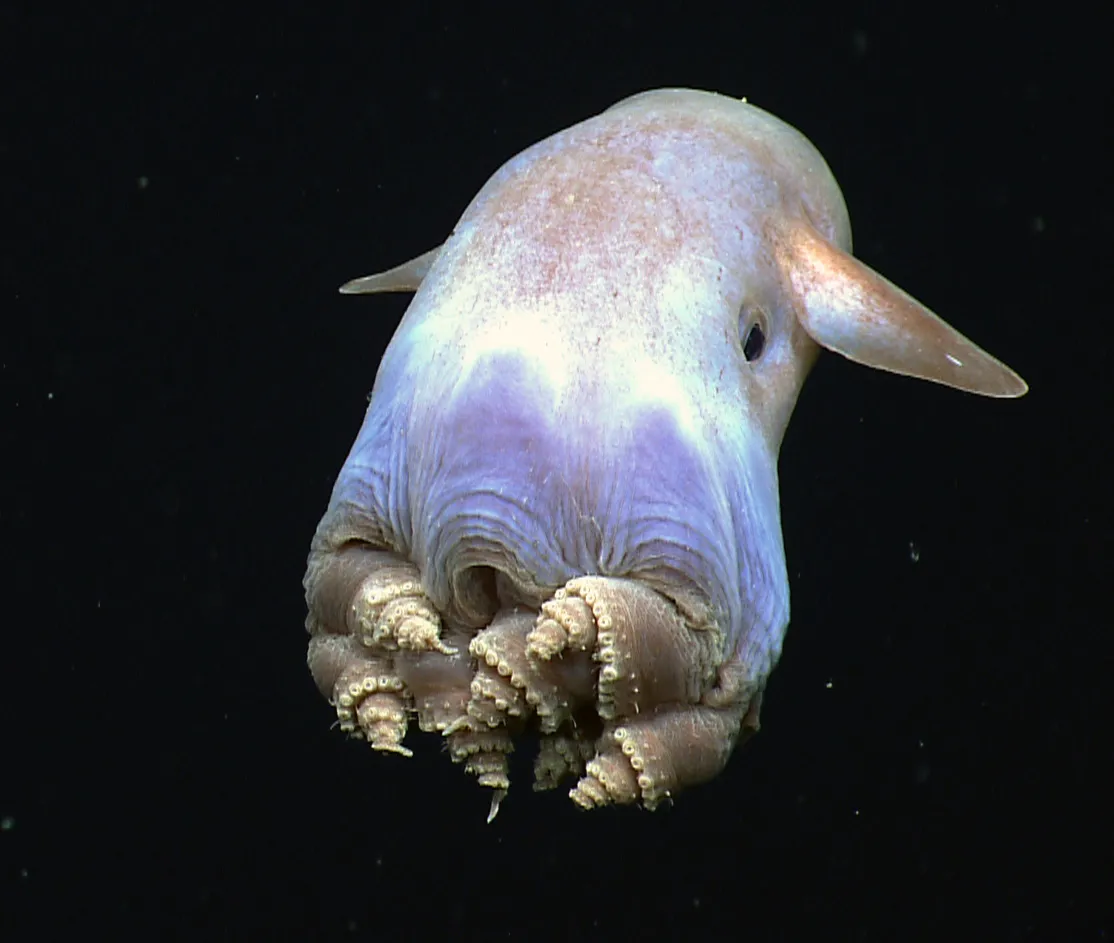
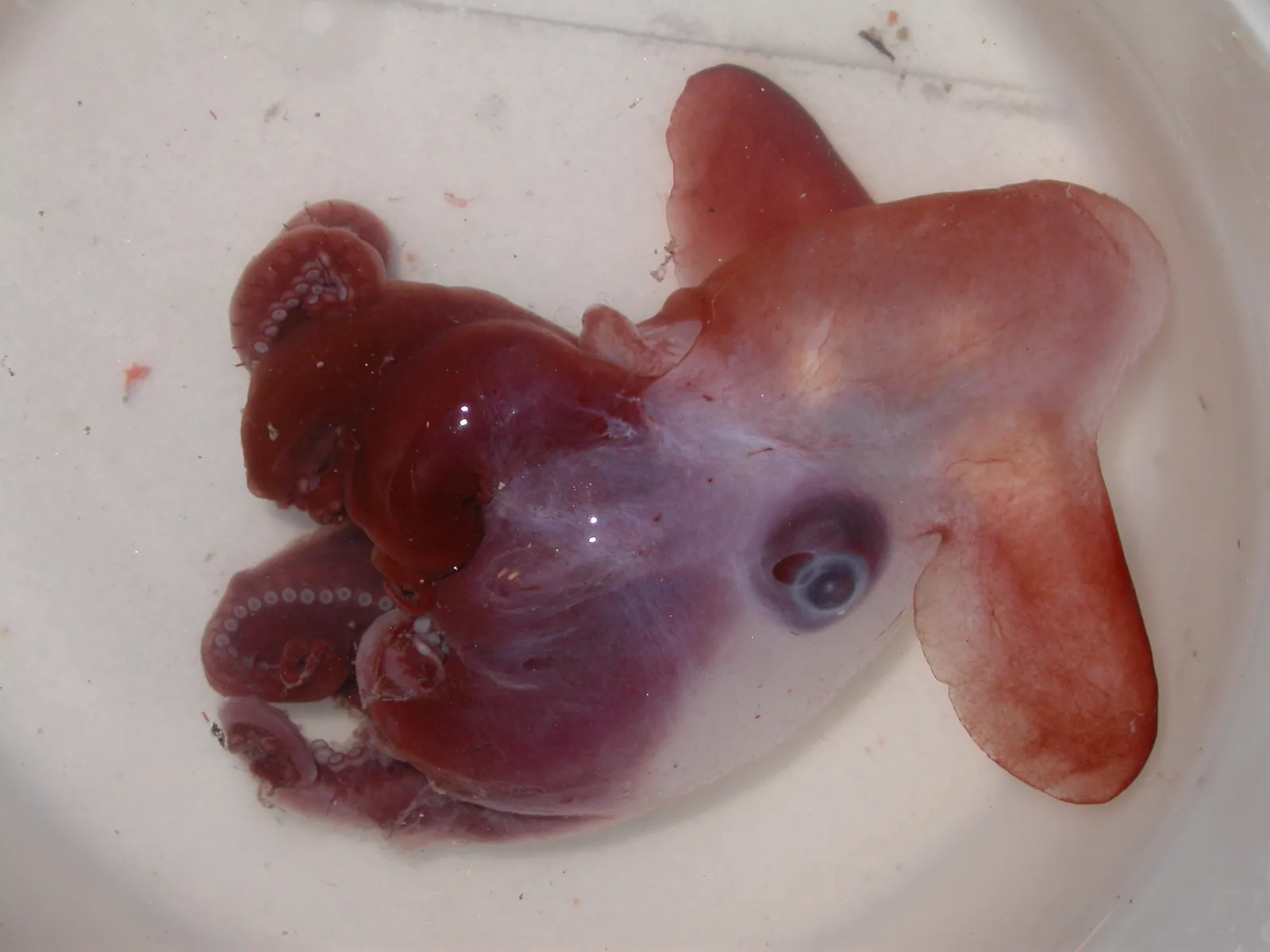
Dumbo octopuses are soft and slightly jelly like, without a hard shell or air filled spaces that pressure could crush. A body made mostly of water and flexible tissue simply doesn’t have much to collapse. This is a common theme among deep sea animals, and it works well here.
They also lack the ink sac that many other octopuses use as a defensive trick. In pitch darkness a cloud of ink wouldn’t do much anyway. Dropping a feature that no longer pays its way is a quiet kind of efficiency.
Small Eyes for a Very Dark World
🔥 Would you like to save this?
We'll email this post to you, so you can come back to it later!
Down in the deep, vision plays a limited role. Dumbo octopuses have eyes, but they’re thought to be fairly basic compared with the sharp, camera like eyes of shallow water species. Researchers generally believe the eyes help detect faint light or movement, such as bioluminescent flashes, rather than produce detailed images.
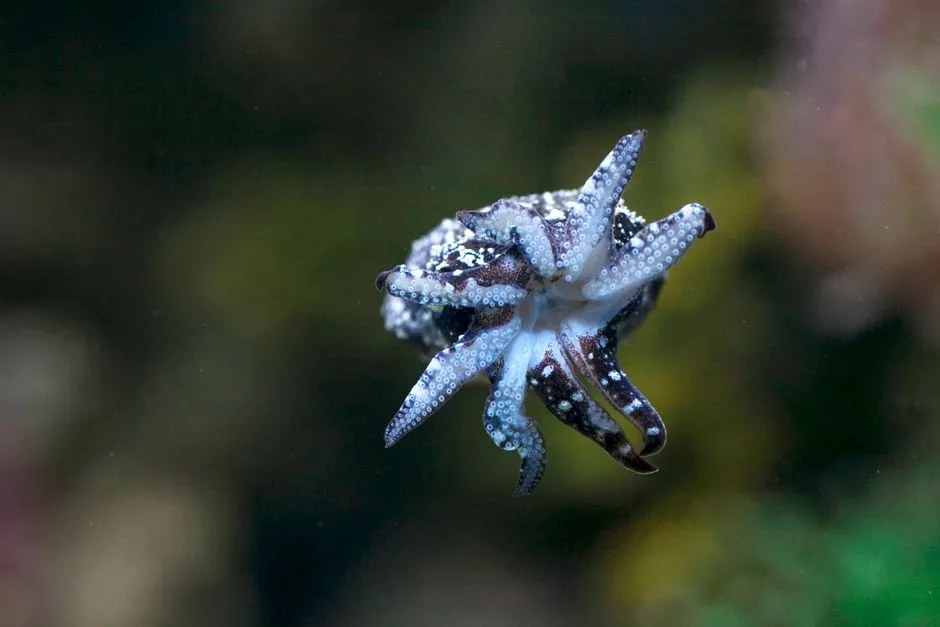
Because of that, other senses likely carry more weight. Their arms are lined with suckers and thin sensory filaments called cirri, which probably help them feel their surroundings. The details of how they use these are still being studied, so it’s best to treat the exact function with some caution.
They Swallow Their Meals Whole

🔥 Would you like to save this?
We'll email this post to you, so you can come back to it later!
Dumbo octopuses hunt small animals living on or near the seafloor, such as copepods, isopods, amphipods, and worms. Unlike many octopuses, which bite prey and tear it apart, they tend to swallow food whole. That habit has been noted in studies of the stomach contents of collected specimens.
It suits a lifestyle where every opportunity counts. When food is sparse, you don’t waste time on elaborate handling. You grab what you can and move on.
Reproduction Isn’t Tied to the Seasons
🔥 Would you like to save this?
We'll email this post to you, so you can come back to it later!
In the deep sea there’s no spring or summer to trigger breeding, and dumbo octopuses seem to reflect that. Females appear to carry eggs at different stages of development at the same time, which suggests they can lay eggs over a long stretch rather than in one tight season. The eggs are typically attached to hard surfaces on the seafloor.
Young hatch looking like tiny versions of the adults, ready to fend for themselves. Exact lifespans remain uncertain, since these animals are hard to observe over time. What’s clear is that a flexible breeding schedule fits an environment where conditions barely change.
They’re Rarely Seen, Which Limits What We Know
🔥 Would you like to save this?
We'll email this post to you, so you can come back to it later!
Reaching their habitat takes remotely operated vehicles, deep diving submersibles, and a lot of money. Because of that, much of what we know comes from brief video encounters and a small number of preserved specimens. Every new sighting can add a surprising detail, from behavior to depth range.
That means some claims about their lives should stay tentative. Scientists are still piecing together how long they live, how they find mates, and how widely each species is spread. The honest answer to many questions is that the research is ongoing.
Final Thoughts
🔥 Would you like to save this?
We'll email this post to you, so you can come back to it later!
I find the dumbo octopus more convincing than almost any flashy deep sea monster. It doesn’t survive with teeth, armor, or speed. It survives by being soft, slow, frugal, and perfectly matched to a place most of us will never see.
There’s something refreshing in that. In a world that often rewards the loudest approach, this little flapping animal makes a strong case for quiet efficiency. And if it still has secrets after all this time, I’d say that’s a reason to keep exploring, not a reason to look away.

- 7 Everyday Habits That Can Make Your Senior Dog Happier - November 5, 2026
- 10 Enigmatic Structures That Continue to Puzzle Scientists Today - November 5, 2026
- 10 Strange Ruins in the Americas That Challenge What We Know About Early History - November 5, 2026