

Standing silent against the Giza sands, the Great Sphinx has puzzled visitors for centuries. That colossal figure with the lion’s body and human face still refuses to surrender all its secrets, even after countless archaeological digs and surveys. Let’s be real, we’ve been staring at it for thousands of years, yet we’re still scratching our heads over fundamental questions.
The monument measures roughly 240 feet long and towers 66 feet high. Its face gazes east, greeting the sun each morning like it’s been programmed to do so since antiquity. Yet beneath that weathered limestone exterior lies a tangled web of mysteries that continue to spark fierce debates among scientists, historians, and alternative researchers alike.
So let’s dive into eight of the most fascinating enigmas surrounding this ancient guardian. Be prepared, some of these might challenge what you thought you knew about ancient Egypt.
The Peculiar Vertical Erosion Patterns
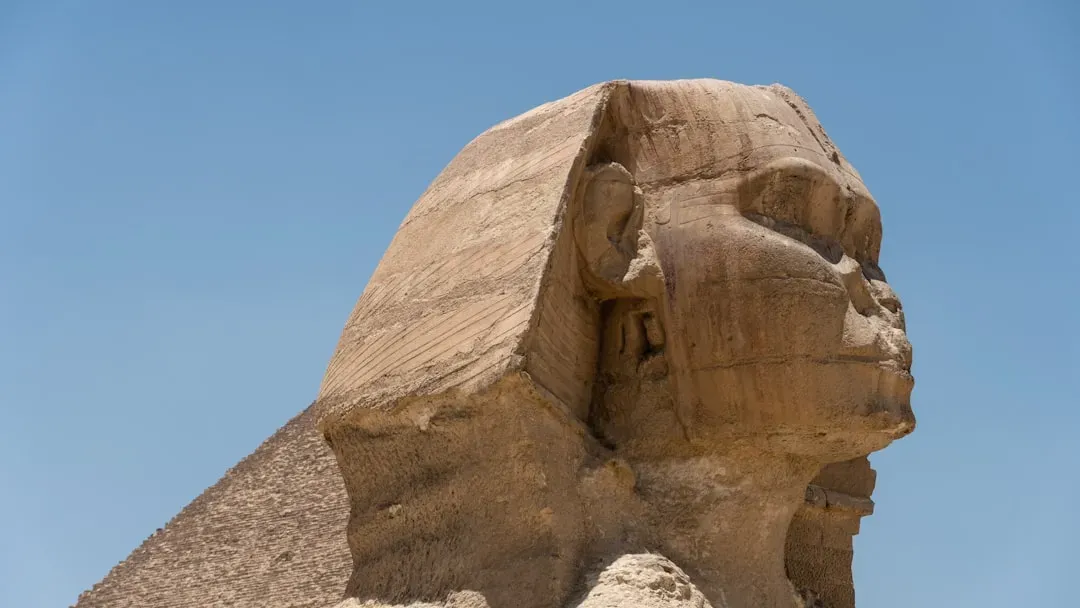
The body of the Sphinx and walls of the Sphinx Enclosure feature heavy erosional features that could only have been caused by rainfall and water runoff, according to some researchers. Here’s where things get interesting. Wind erosion forms distinctive horizontal bands, whereas the water erosion features are clearly vertical.
The surrounding Giza Plateau is now a desert, arid for the past 5,000 years. Other structures from the same supposed period show only wind and sand damage. The deep vertical fissures and undulating patterns seen on the Sphinx walls are strikingly different from nearby monuments.
Seismic studies measuring subsurface weathering showed extraordinary depth, suggesting the core-body of the Sphinx must date back to 5000 BCE or earlier. That’s thousands of years before traditional Egyptology says it was carved. The erosion heaviest on upper sections rather than the base where flooding would concentrate presents another puzzle.
This isn’t just idle speculation. The erosion reaches depths of three to six feet below the surface in places. If you’ve ever seen limestone worn by wind versus water, you’d know they look completely different.
Think about it like this: imagine leaving a rock in a stream versus a sandstorm. The results wouldn’t even be comparable.
Disputed Age and Construction Timeline
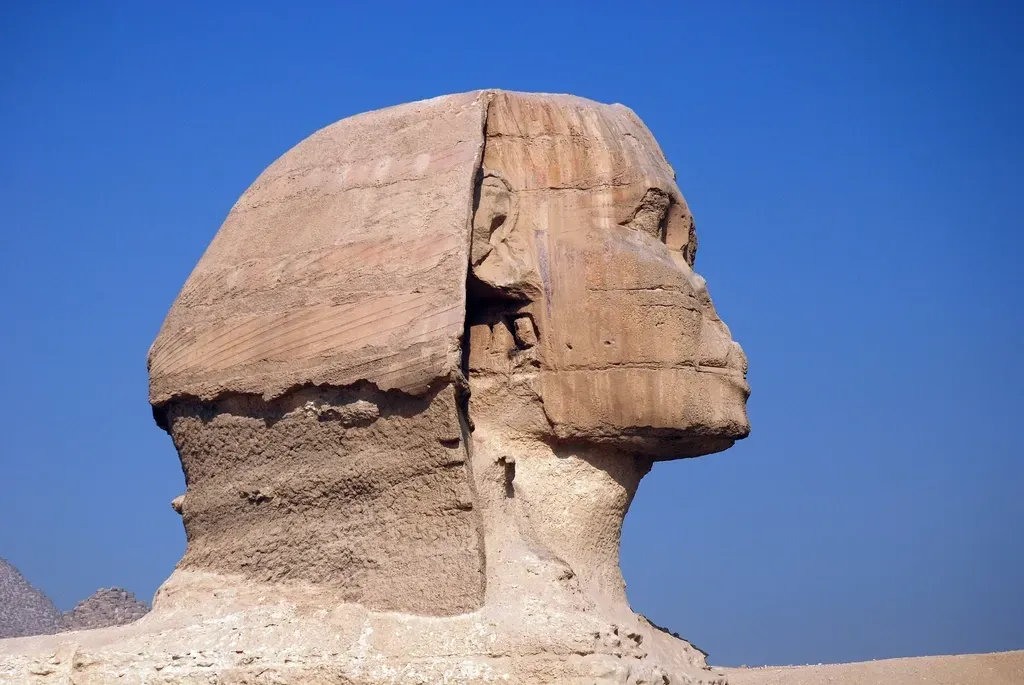
According to standard Egyptological thinking, the Great Sphinx was carved from limestone bedrock on the orders of Old Kingdom Pharaoh Khafre around 2500 BCE. Yet there’s not a single inscription anywhere proving this. No hieroglyphic records definitively link Khafre to the Sphinx’s construction, which seems odd for such a massive undertaking.
Some researchers concluded the oldest portions must date back to an earlier period, at least 5000 BCE, possibly to the end of the last ice age around 10,000 BCE. The climate back then would’ve been dramatically different. Wetter, greener, with sufficient rainfall to cause the observed erosion patterns.
Mainstream Egyptologists reject these claims vehemently. They point out there’s zero archaeological evidence of a civilization capable of such engineering feats before the pharaohs. Still, the geological evidence creates uncomfortable questions that can’t simply be dismissed.
The debate rages on. Ukrainian geologists have even suggested dates as extreme as 800,000 years old based on wave erosion patterns. Most scientists consider that absurd, but the core question remains valid.
The Network of Hidden Tunnels and Shafts
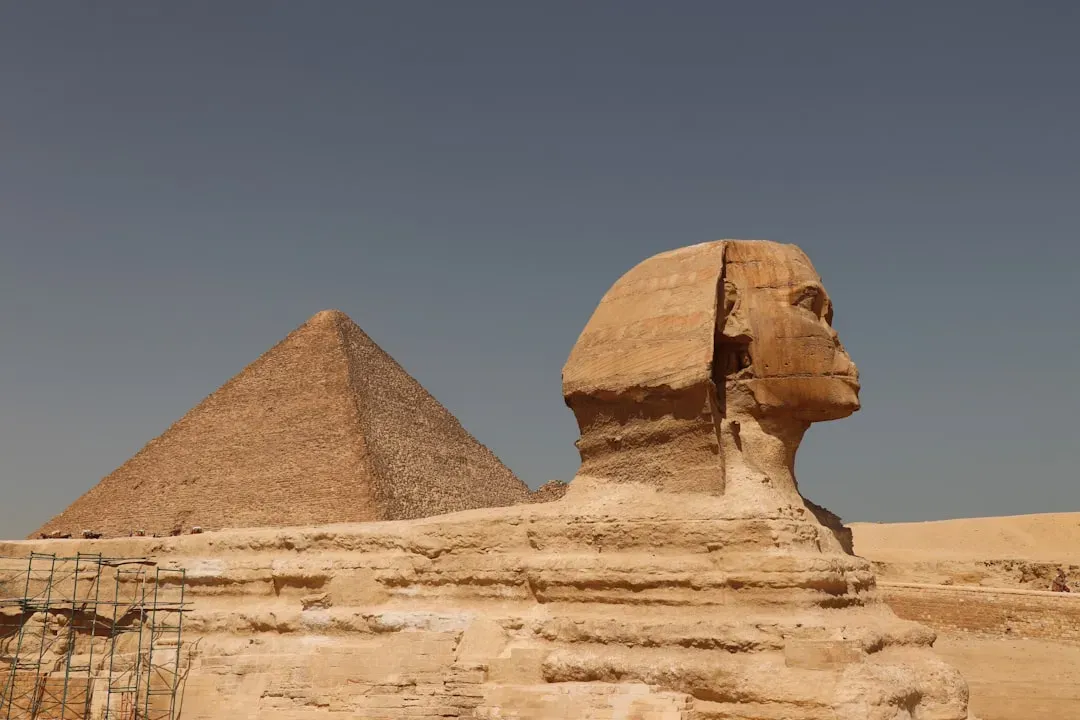
A number of shafts or tunnels are known to exist within or below the body of Great Sphinx at Giza, some of known origin but others not, created over thousands of years by people re-carving the Sphinx, treasure hunters and others. At least three major passageways have been documented. One sits on the Sphinx’s back near the head, another at ground level near the hip.
Documented examples include a shaft on the Sphinx’s back, another near the tail, and possible voids beneath the paws and body. The famous Perring’s Hole was drilled in 1837 by Howard Vyse, reaching 27 feet deep before the drill became stuck. An approximately 6 feet deep shaft exists on top of the Sphinx’s head, hypothesized to have been used to affix a headdress or crown.
Japanese researchers in 1987 used electromagnetic surveys and discovered grooves extending beneath the body. North of the Sphinx, they found similar grooves indicating the possibility of tunnels leading directly beneath the monument, and hollow cavities located in front of the Sphinx’s paws. What were these for?
The sheer number of anomalies detected by modern ground-penetrating radar suggests we’ve only scratched the surface. Literally.
The Mystery of the Missing Nose
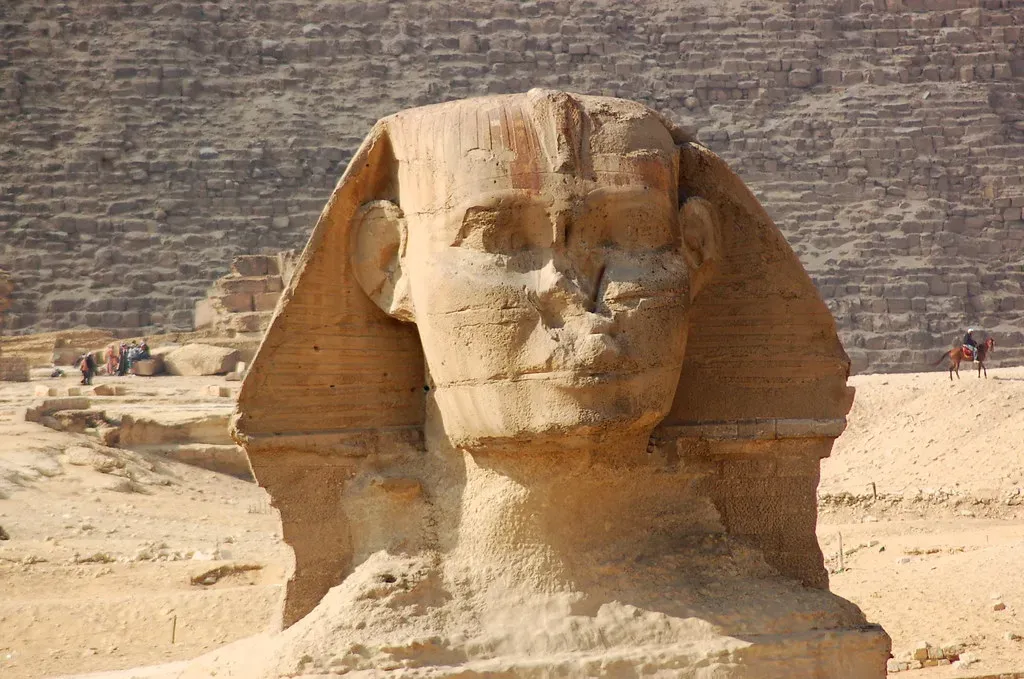
That famously absent nose has spawned countless theories. The most popular story is the Sphinx’s nose was destroyed by cannonballs fired by Napoleon Bonaparte’s army, but that’s completely false. Drawings made by Frederic Louis Norden in 1737 show the Sphinx’s nose missing, over 60 years before Napoleon’s arrival.
Writing in the early 15th century, Arab historian al-Maqrīzī attributed the loss of the nose to Muhammad Sa’im al-Dahr, a Sufi Muslim, in 1378. According to al-Maqrīzī, Sa’im al-Dahr saw local peasants making offerings to the Sphinx in hope of increasing their harvest and defaced the Sphinx in an act of iconoclasm.
Archaeologist Mark Lehner performed a study and concluded its nose was intentionally broken with instruments sometime between the 3rd and 10th centuries AD. Physical evidence supports deliberate vandalism. Examination shows marks made by long rods or chisels hammered into the face, then the nose was pried off.
The 1-metre wide nose has still never been found. Somewhere in the Egyptian sands lies one of history’s most recognizable facial features, lost to time and religious fervor.
The Disproportionate Head Debate
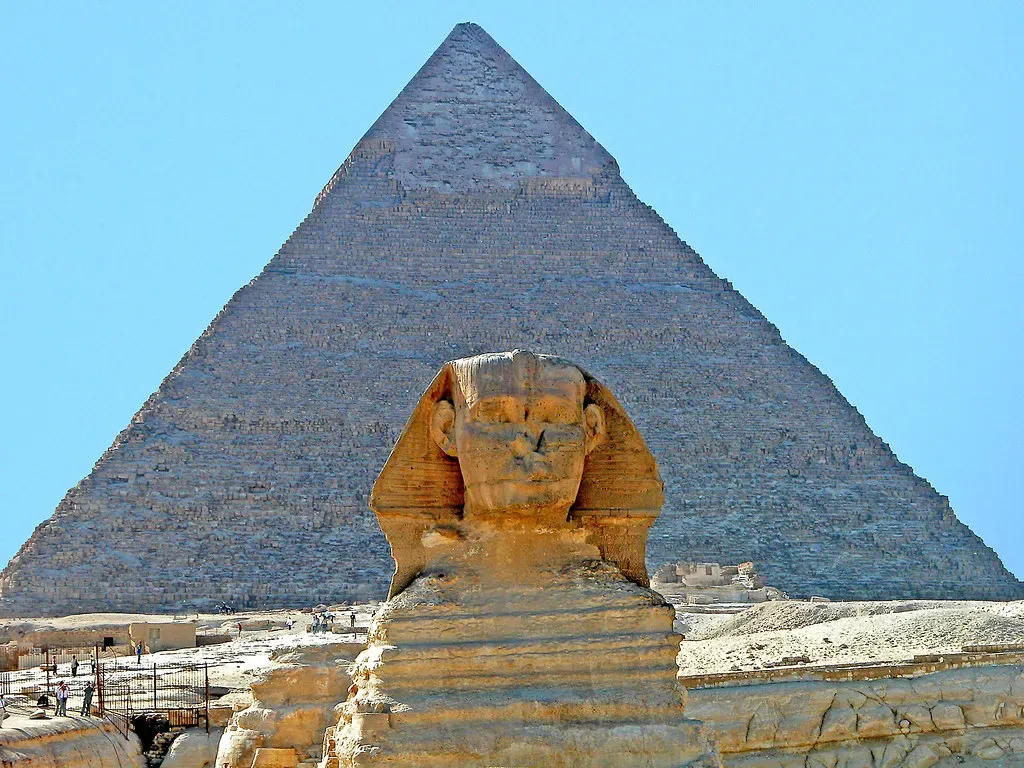
Look at the Sphinx closely and you’ll notice something off. The head seems weirdly small compared to the massive body. Historical architect Dr. Jonathan Foyle stated the head and body were massively out of proportion, suggesting the Sphinx originally had an entirely different head, possibly that of a lion.
One main oddity is that the head is out of proportion to its body, possibly re-carved several times by subsequent pharaohs since the first visage was created. To early Egyptians, the lion symbolized immense power. A full lion statue would’ve made more symbolic sense as a guardian.
Some theorists propose the original lion head eroded severely and was recarved into a pharaoh’s face during a later dynasty. This would explain both the size mismatch and why the head shows less weathering than the body. The softer limestone of the body deteriorated faster, while the harder rock of the head held up better.
Whether the recarving was due to natural erosion or political ego remains hotly contested. Ancient pharaohs routinely appropriated earlier monuments, so the practice wasn’t uncommon.
Perhaps we’re not even looking at the original sculpture anymore.
Whose Face Graces the Monument
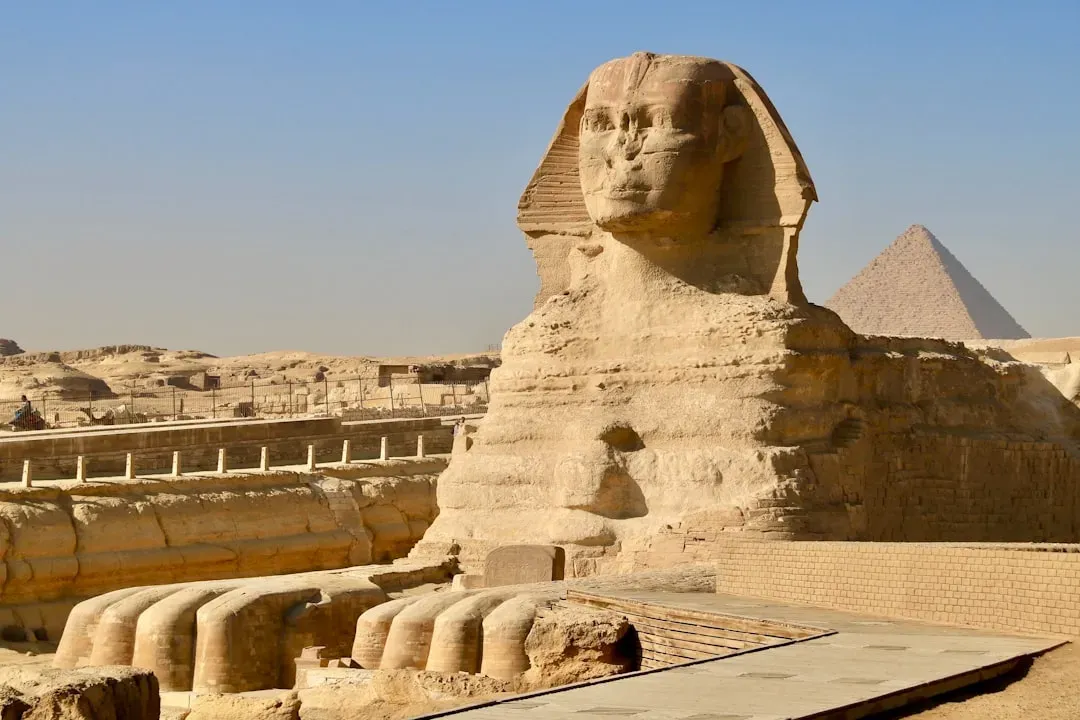
Scholars and Egyptologists believe the face was carved to represent either pharaoh Khufu or one of his sons, pharaohs Djedefre and Khafre, but a consensus has not been reached. Most favor Khafre based on proximity to his pyramid complex and a limestone statue discovered nearby bearing facial similarities.
In 1996, a New York detective and expert in identification concluded the visage of the Great Sphinx did not match known representations of Chephren’s face, maintaining greater resemblance to Chephren’s elder brother Djedefre. Forensic analysis threw serious doubt on the Khafre attribution.
Author Robert Temple postulated the Sphinx was originally a statue of the jackal god Anubis, its face recarved in the likeness of a Middle Kingdom pharaoh, Amenemhet II. Others suggest it represents the sun god Ra or wasn’t meant to depict any specific individual at all.
The truth is we’re comparing idealized ancient artworks against each other. In ancient Egypt, inscriptions provided the essential identity rather than physical similarity, and figures were generalized without individual characteristics except in certain outstanding works.
Without the original builder’s inscription, we’re essentially playing a guessing game with a 4,500-year-old face.
The Elusive Hall of Records
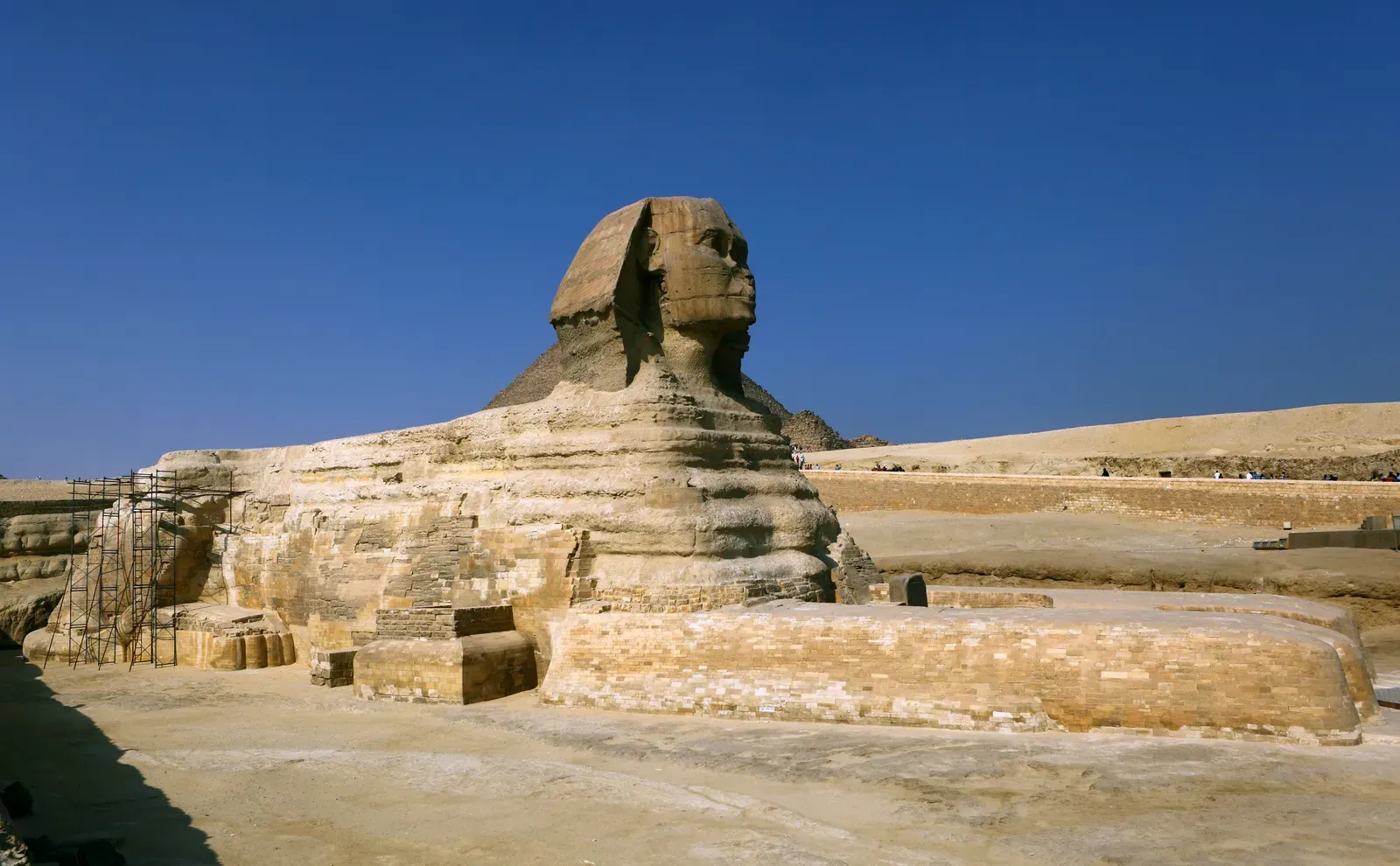
The Hall of Records is a purported ancient library claimed to exist underground near the Great Sphinx, a concept that originated with Edgar Cayce, an American who claimed to be clairvoyant, who said in the 1930s that refugees from Atlantis built it to preserve their knowledge. Wild as it sounds, this idea has driven serious investigations.
Cayce stated this hall lay somewhere between the sphinx and the Nile River, with an entrance near the sphinx’s right paw. In 1978, the ARE cooperated with SRI International using ground-penetrating radar showing possible anomalies near the paws, though test drilling revealed only natural fissures in the rock.
Geophysicist Thomas Dobecki argued that seismography showed a possibly man-made chamber under the sphinx’s right paw. Later investigations were permitted in 1998, but when drilling revealed only natural cavities, Egyptian authorities denied further exploration.
The concept captivates public imagination precisely because it can neither be proven nor disproven without destructive investigation. Egyptian authorities understandably resist drilling holes through one of humanity’s greatest monuments based on psychic visions. Yet the anomalies detected remain unexplained.
Astronomical Alignments and Solar Symbolism
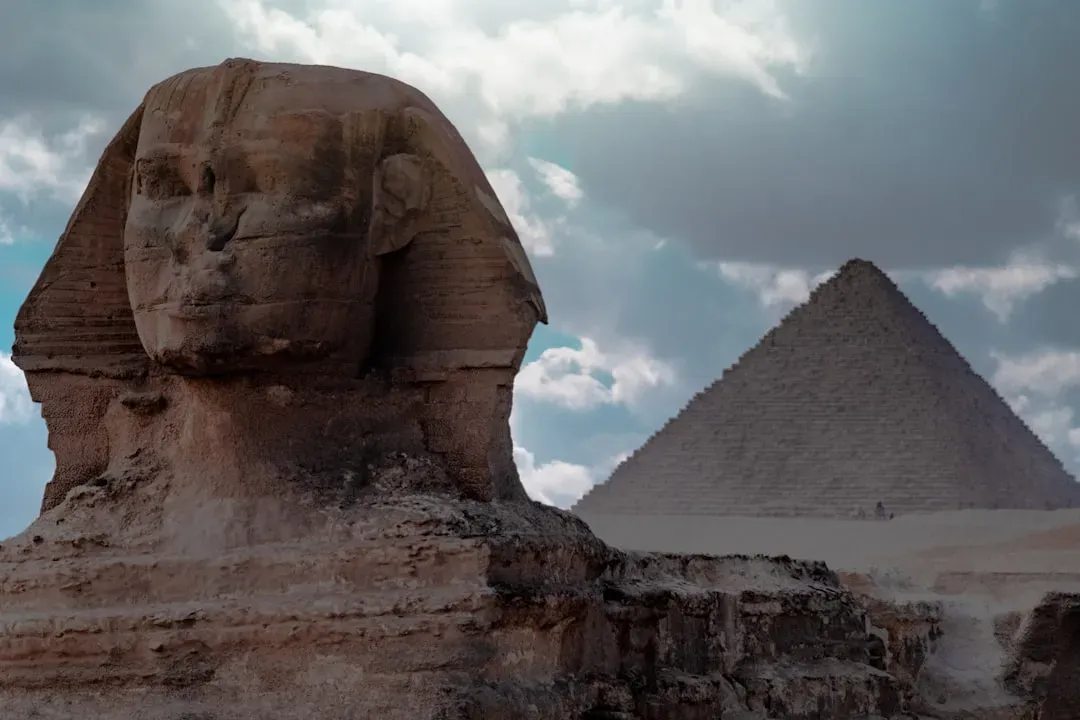
In accordance with the ancient Egyptian solar cult, the Sphinx faces east towards the rising sun. This orientation wasn’t random. Ancient Egyptians worshipped solar deities and structured their monuments around celestial observations. The Orion correlation theory posits the Sphinx was built and aligned to face the constellation of Leo during the vernal equinox around 10,500 BC, though the theory is considered pseudoarchaeology since no textual, factual, or archaeological evidence supports it.
The translation of the Egyptian term for sphinx means “living image of Atum.” Atum was both the god of creation and the setting sun. Perhaps the monument connected deceased pharaohs with the sun god, serving as a spiritual conduit between earthly rulers and divine powers.
In the New Kingdom, the Sphinx was revered as the solar deity Hor-em-akhet, meaning “Horus of the Horizon,” and pharaoh Thutmose IV specifically refers to it as such in his Dream Stele. Later Egyptian rulers clearly viewed it through a solar lens, even if that wasn’t the original purpose.
The celestial connection adds another layer to the mystery. Was the monument built as an equinox marker? A temple to sun worship? Or something else entirely that we’ve lost to the mists of time?
The Great Sphinx continues to guard its secrets jealously. After thousands of years of human curiosity, technological investigation, and scholarly debate, fundamental questions remain unanswered. How old is it really? Who built it? What was its true purpose? Modern science has given us tantalizing clues, yet the monument refuses to fully cooperate. Perhaps that’s fitting. Some mysteries deserve to endure, reminding us that even in our age of satellites and supercomputers, the ancient world still has lessons to teach us about humility. What do you think the Sphinx is really hiding? The answer might be stranger than any of us imagine.

- 15 Animals and Wildlife that Start with G - August 7, 2026
- How Can Crating A Dog Too Much Backfire? - August 7, 2026
- Why Do Some Animal Species Thrive in the Harshest Environments on Earth? - August 7, 2026