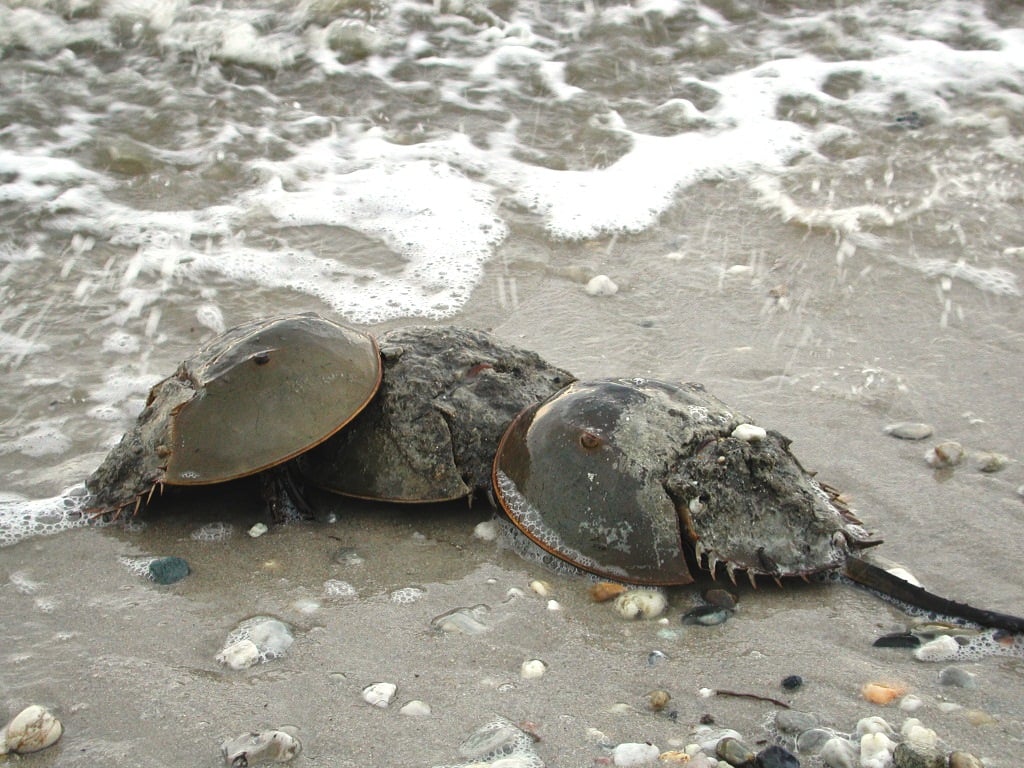
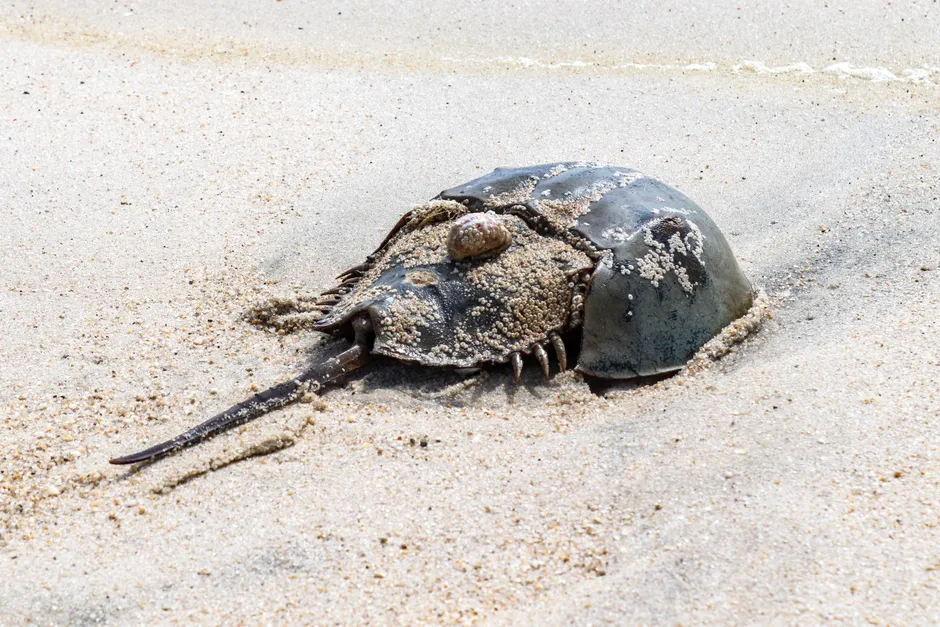
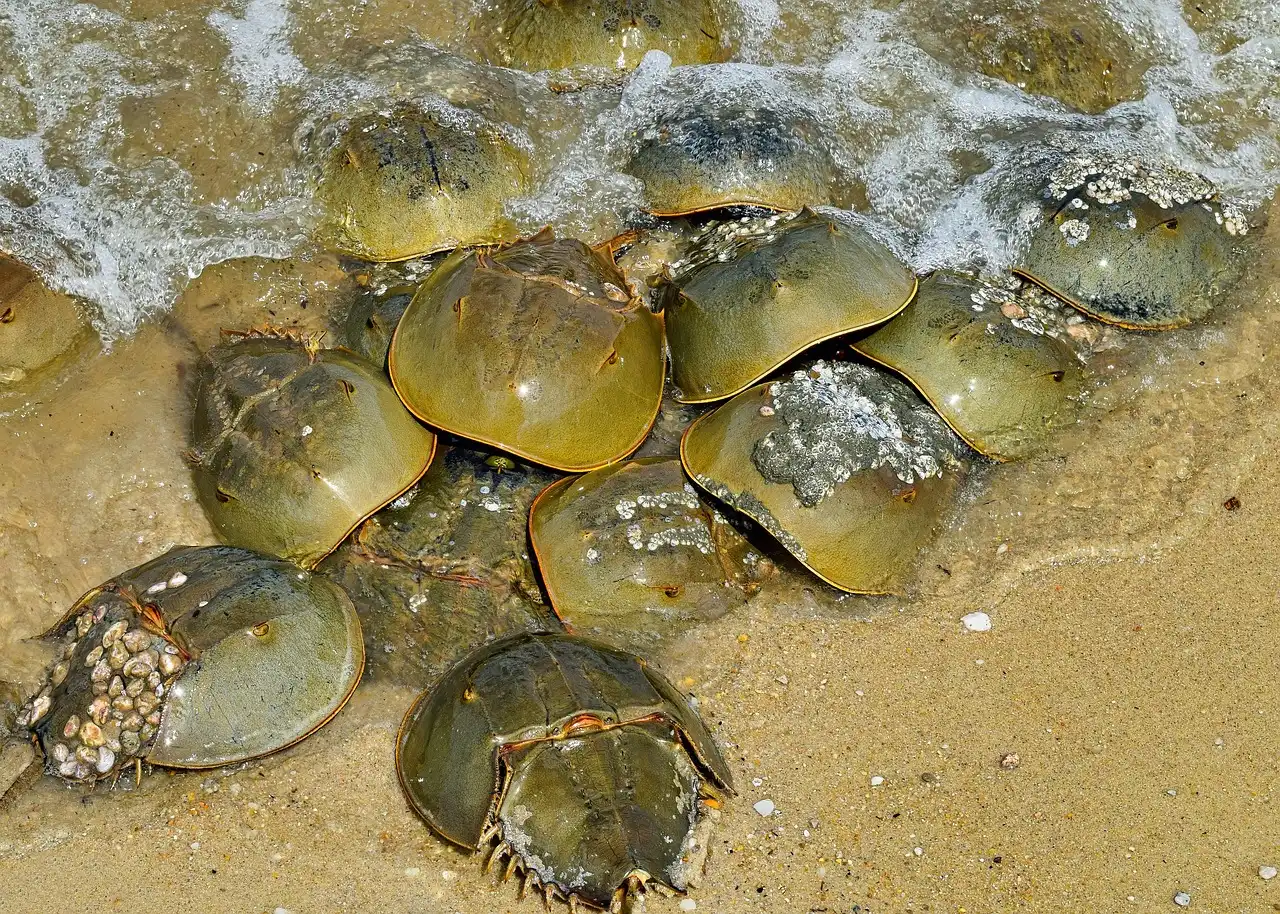
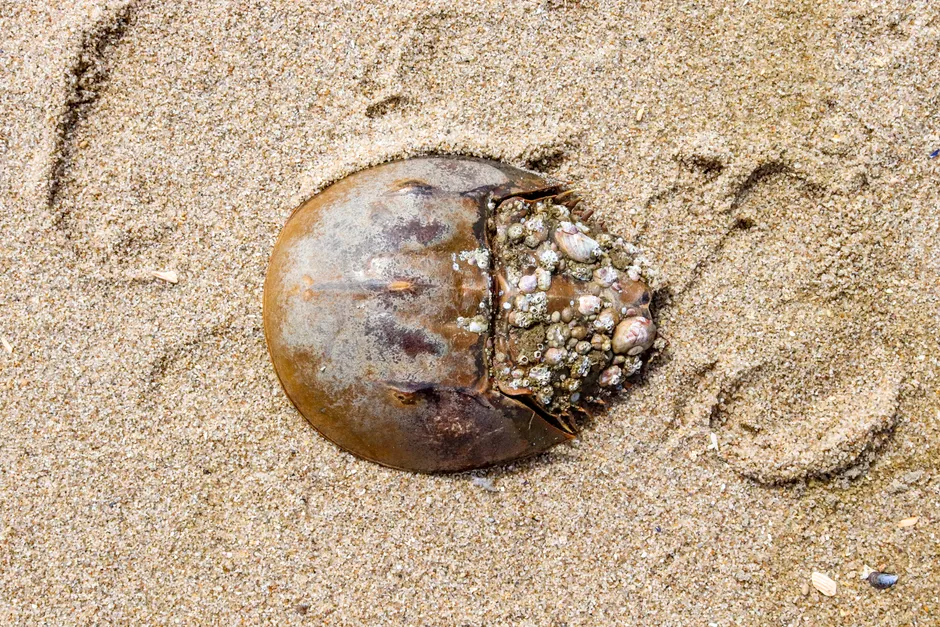
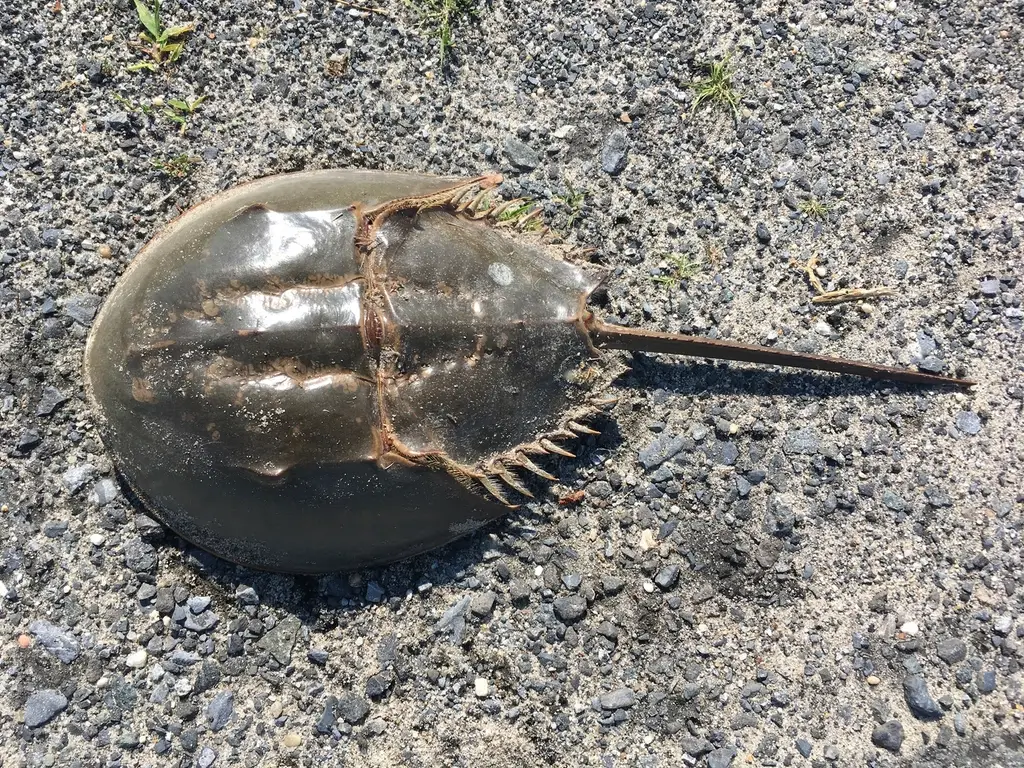
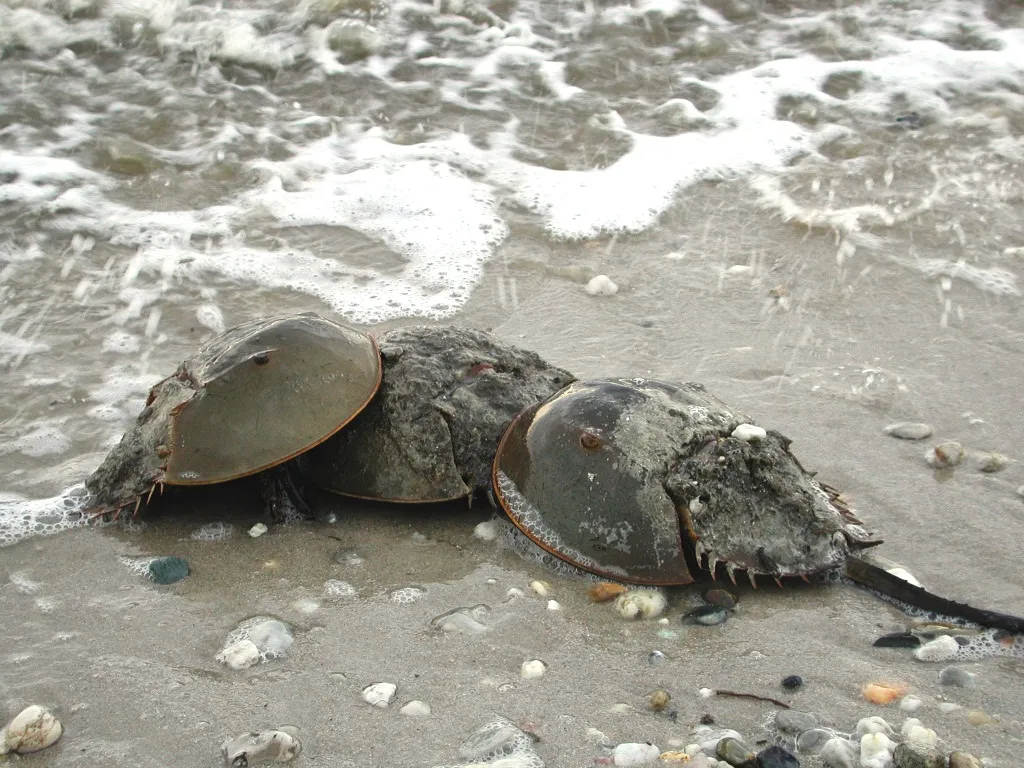
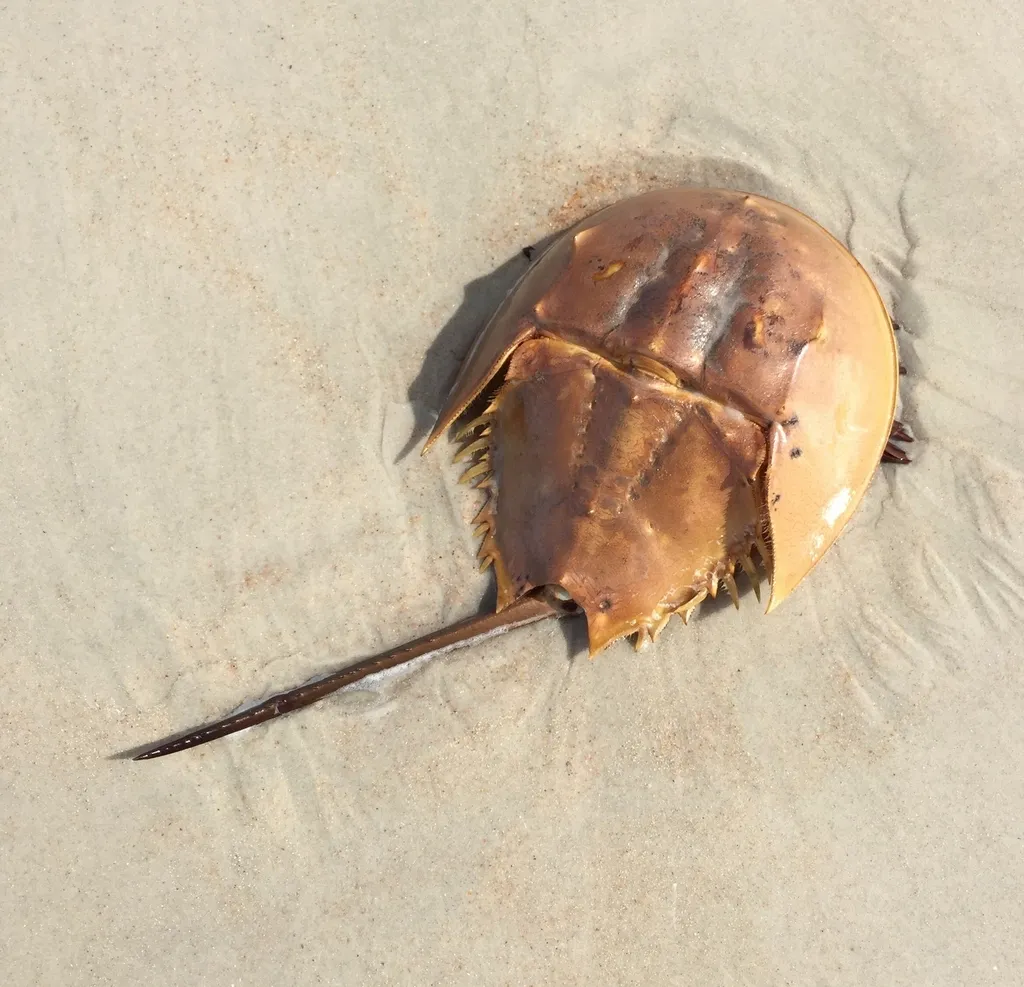
Every spring, something strange and wonderful happens along stretches of the American coastline that most beachgoers never notice. Under the glow of a full or new moon, an animal that predates the dinosaurs by hundreds of millions of years hauls itself out of the surf by the thousands, sometimes the tens of thousands, to lay eggs in the sand. It is not glamorous. It is not loud. But biologists, birdwatchers, and coastal volunteers treat it like a sacred event, because so much of the Atlantic seaboard’s ecology quietly depends on it.
Not every state sees this phenomenon the same way. Some coastlines host a handful of scattered nesting sites, while others turn into something closer to a horseshoe crab convention. Here is a closer look at the eight states where this ancient ritual plays out on the most beaches, and why the numbers vary so dramatically from one shoreline to the next.
Delaware and New Jersey: The epicenter of Delaware Bay spawning
Delaware and New Jersey: The epicenter of Delaware Bay spawning (Image Credits: Pexels)
No conversation about horseshoe crabs gets far without landing on Delaware Bay, and for good reason. Delaware Bay has the largest concentration of spawning horseshoe crabs anywhere in the world, and the bay’s geography, shallow, sandy, and sheltered, makes it close to perfect nesting habitat. Prime spawning beaches within the Delaware Bay consist of sand beaches between Maurice River and the Cape May Canal in New Jersey, and between Bowers Beach and Lewes in Delaware.
The two states essentially share one continuous spawning ground, which is why researchers monitor them together rather than separately. Every May and June, during the evening full and new moon high tides, volunteers count horseshoe crabs at 23 beaches along the shores of the Delaware Bay in both Delaware and New Jersey. That collaborative survey traces back decades. In 1990, the Delaware Bay Horseshoe Crab Spawning Survey was created by volunteers to gather data on the numbers of male and female horseshoe crabs spawning on Delaware Bay beaches. Within the bay, one stretch stands out even among the standouts, since the greatest concentration of horseshoe crabs typically occurs in the middle reaches of the Delaware Bay from Slaughter Beach to Kitts Hummock.
Maryland: Chesapeake Bay’s quiet powerhouse
Maryland: Chesapeake Bay’s quiet powerhouse (Image Credits: Pixabay)
Maryland rarely gets the same spotlight as its neighbors, but its spawning habitat is far more extensive than most people realize. Prime spawning habitat is widely distributed throughout Maryland’s Chesapeake and coastal bays, including tributaries, and in the Chesapeake Bay, spawning habitat generally extends to the mouth of the Chester River, but can occur farther north during years of above normal salinity levels. That’s a long way of saying the crabs aren’t shy about exploring the whole bay system when conditions allow it.
On the coastal side, the state runs a dedicated monitoring effort near Ocean City that has become a model for citizen science. During peak spawning nights in June, teams set up transects on beaches such as Skimmer Island and sections of Assateague, methodically counting crabs within defined areas to estimate total numbers on the spawning grounds. This work ties directly into interstate management, since as part of Maryland’s agreement with the ASMFC, state biologists monitor horseshoe crab spawning activity with the annual spawning survey in the Ocean City inlet area. It’s steady, unglamorous fieldwork, but it has kept Maryland’s population numbers on solid footing.
Virginia: Where the Chesapeake meets the open Atlantic
Virginia: Where the Chesapeake meets the open Atlantic (Image Credits: Pexels)
Virginia’s spawning grounds stretch across two very different environments, the sheltered lower Chesapeake and the more exposed barrier island beaches facing the Atlantic. That diversity of habitat is part of why the state’s population has proven resilient even during years when other regional stocks struggled. Regulators have long treated Virginia as part of the same management unit as its northern neighbors, and Maryland, Delaware, and Virginia implemented male-only quotas and banned the taking of females after harvest pressure in the 1990s hit the broader Delaware Bay stock hard.
Scientific monitoring here runs deep too. Researchers rely on a long-running academic survey, since the VT Trawl = Virginia Polytechnic Institute and State University Trawl Survey feeds directly into the regional stock assessments used to set harvest policy. Virginia also participates in the biomedical side of the horseshoe crab economy, as the state is among Massachusetts, Rhode Island, New Jersey, Maryland, Virginia, and South Carolina where crabs are collected for pharmaceutical testing before being released back into the ocean. It’s a reminder that these beaches aren’t just ecological assets, they’re economically valuable too.
South Carolina: Spawning grounds from Charleston to Hilton Head
South Carolina: Spawning grounds from Charleston to Hilton Head (Image Credits: Rawpixel)
South Carolina tends to surprise people who assume horseshoe crabs are strictly a mid-Atlantic phenomenon. The state’s beaches host a substantial and well-documented spawning population, with activity recorded from the Charleston area down to Hilton Head’s Calibogue Sound. Federal biologists group the state into its own distinct population unit, noting that the Southeast includes embayments in South Carolina and Georgia, with the Georgia population extending into northern Florida.
State wildlife officials run volunteer-driven surveys during the spring spawning window, gathering small research groups on beaches like Edisto to tag and release crabs as part of ongoing population studies. These efforts matter for more than just crab numbers, since the eggs laid on South Carolina’s beaches feed migrating shorebirds making their way up the Atlantic flyway. It’s a smaller stage than Delaware Bay, but a genuinely important one for the southeastern stock as a whole.
Florida: The only state with year-round spawning
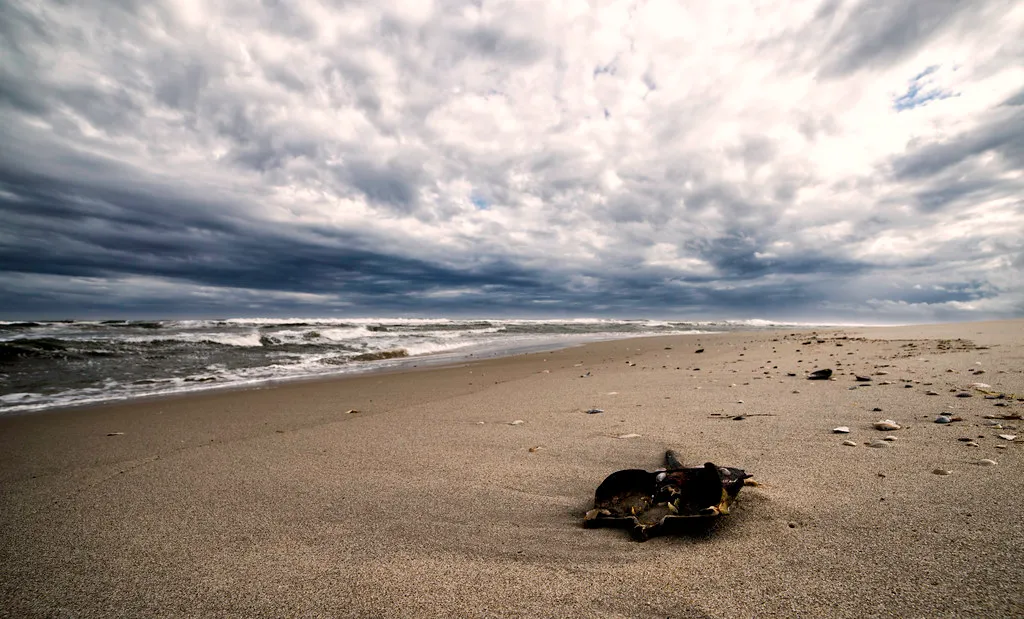
Florida: The only state with year-round spawning (robposse, Flickr, CC BY 2.0)
Florida breaks the seasonal pattern that defines horseshoe crab behavior almost everywhere else on this list. While mid-Atlantic crabs cram their entire reproductive cycle into a couple of months, horseshoe crabs can nest year-round in Florida, with peak spawning occurring in the spring and fall. That extended window means the state’s beaches see spawning activity on a rolling basis rather than a single dramatic surge.
Florida’s population also sits at the southern edge of the species’ range, distinct enough that biologists classify it separately from the Georgia and South Carolina stock. Horseshoe crab populations range from the Gulf of Maine to Florida, with the species range extending into the Gulf of America from Florida west into Louisiana and south to the Yucatán Peninsula. Wildlife researchers there lean heavily on public reporting to track nesting, since currently, with the help of the public, biologists at the Fish and Wildlife Research Institute are documenting nesting sites of horseshoe crabs throughout the state.
New York: A struggling but persistent population
New York: A struggling but persistent population (James Loesch, Flickr, CC BY 2.0)
New York’s story is a bit more complicated, and honestly a bit less encouraging than the others on this list. The state still has genuine spawning beaches, particularly around New York City’s harbor, where Plumb Beach and North Channel Beach are important horseshoe crab spawning sites in New York State, and on Plumb Beach, nearly 3,000 horseshoe crabs converge on the surf every year between late May and mid June to lay eggs. That’s a meaningful number for a single beach tucked inside one of the busiest urban coastlines in the country.
The bigger picture, though, is less rosy. Recent regional stock assessments describe the situation plainly, noting that the New England stock is considered stable, while the population in the New York region is poor. Some individual survey nights reflect that scarcity directly, since some coastal areas, in Massachusetts and New York, for instance, may yield as few as 20 crabs in a night, a stark contrast to the tens of thousands counted on a good night in Delaware Bay. It’s a useful reminder that “spawning beaches” doesn’t always mean thriving populations.
Massachusetts: Cape Cod’s scattered sandy coves
Massachusetts: Cape Cod’s scattered sandy coves (PhilaSilva, Flickr, CC BY 2.0)
Massachusetts takes a different approach to counting its horseshoe crab beaches, spreading survey effort across a wide and varied coastline rather than concentrating on one bay. The state’s official program covers a lot of ground, since annual volunteer-based spawning beach surveys take place at beaches along the South Coast, Cape Cod, and the islands, with sixteen beaches from the South Shore, Cape, and islands monitored each season. That’s a genuinely high number of distinct spawning sites for one state to track.
Density varies enormously from beach to beach, which makes Massachusetts an interesting case study in how patchy this species’ distribution can be. The highest densities of crabs in Massachusetts can be found on the south side of Cape Cod, or the east facing embayments of the outer Cape, such as Pleasant Bay and Nauset Harbor. Some survey nights produce big numbers too, since the most crabs seen in one survey is nearly 3,000, but there are other surveys where you may not see any crabs at all. That unpredictability is part of what makes the Massachusetts data so valuable to researchers tracking long-term trends.
The bigger picture worth remembering
The bigger picture worth remembering (Image Credits: Rawpixel)
Looking at these eight states side by side, one thing becomes hard to ignore: Delaware Bay isn’t just the biggest player, it’s in a different league entirely, and honestly, that concentration of risk should worry us more than it seems to. If something ever went wrong there, whether from disease, habitat loss, or another harvest miscalculation like the one that gutted populations in the 1990s, the ripple effects would hit red knots and other shorebirds across an entire hemisphere, not just one bay.
What gives me some optimism is that the recovery story is real and measurable, not just wishful thinking. Regional assessments now describe the Delaware Bay stock as good, the Southeast as good, and New England as stable, proof that coordinated harvest limits and citizen science surveys actually work when states commit to them long term. New York’s poor status is the exception that proves the rule, a quiet warning that conservation gains are never permanent and always reversible if attention lapses. These beaches deserve more everyday recognition than they get, not because the crabs are charismatic, but because so much else in coastal ecosystems is quietly built on their backs.
Did you find this helpful? Share it with a friend who’d love it too!
Gargi is an MA in History and a B.Ed graduate from India, with a deep passion for animals and wildlife awareness. As an article writer and editor at Animals Around The Globe, she combines her love for storytelling with her dedication to educating readers about animals, conservation, and responsible pet care. A devoted dog lover, Gargi enjoys creating engaging and informative content that inspires compassion and awareness toward the natural world.