

You probably think your home is a safe, peaceful sanctuary for your dog. A warm bed, regular meals, lots of love. What could possibly go wrong? Well, here’s the thing – the very sounds filling your home every single day might be quietly terrorizing your furry best friend, and the worst part is that most of us have absolutely no idea.
Sudden, loud noises are one of the most common triggers for fearful behaviors in dogs, and many companion dogs suffer from noise sensitivity. We tend to think of thunderstorms and fireworks as the classic culprits, but the real story is far more surprising. The sounds causing your dog silent distress might be coming from your kitchen, your laundry room, or right there on the kitchen counter. Let’s dive in.
Why Dogs Hear a World We Simply Cannot

Before we get into the specific sounds, it’s worth understanding why dogs are so much more vulnerable to noise-triggered anxiety than we are. It’s not weakness – it’s biology, plain and simple.
Most adults hear sounds up to 20,000 Hertz. Dogs, however, hear sounds that reach frequencies as high as 47,000 to 65,000 Hertz. That’s not just a marginal difference. That’s an entirely different auditory world, like the difference between watching a movie in standard definition versus experiencing it in full IMAX surround sound – every single beep, hiss, and hum massively amplified.
A dog’s hearing at high frequencies is more sensitive than humans’, not to mention the amplification by the pinna, making these sounds potentially painfully loud. So when your dog flinches at the microwave, they’re not being dramatic. They might genuinely be in pain.
The Vacuum Cleaner: Public Enemy Number One
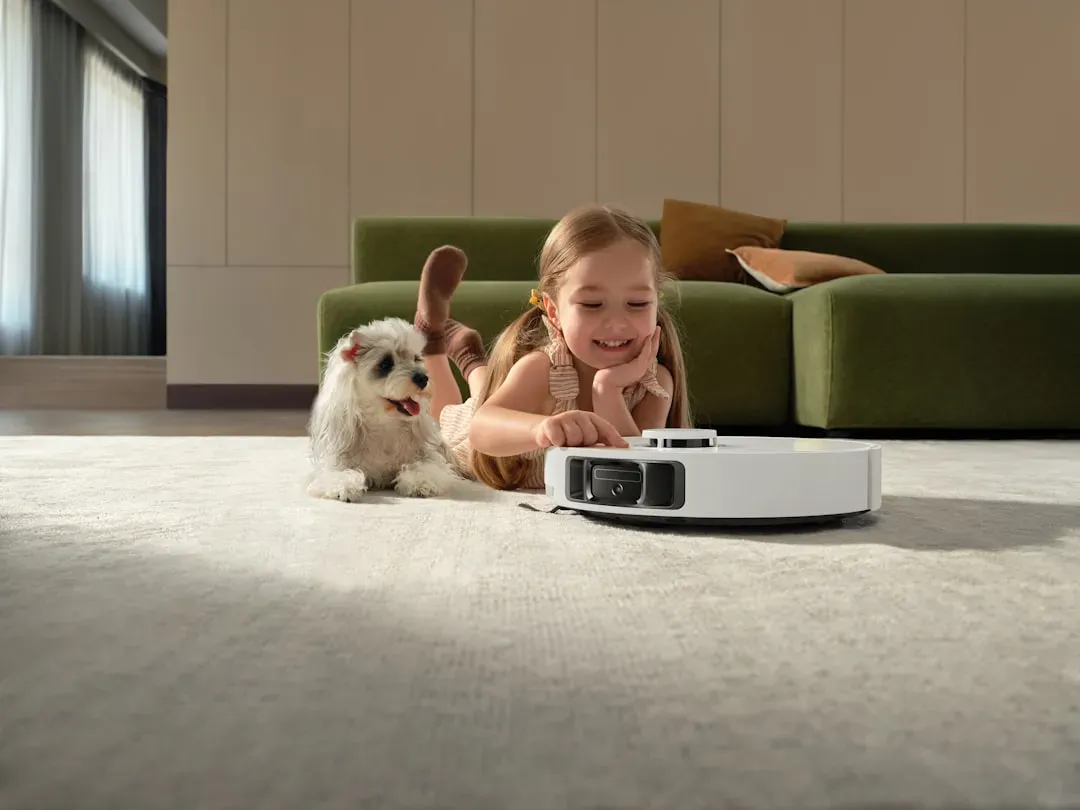
If there’s one household sound almost every dog owner can relate to, it’s this one. The moment that vacuum cleaner roars to life, your dog is either bolting out of the room or barking like the house is under siege.
The sound of a vacuum cleaner is one of the most stressful noises for dogs. This household appliance is not only loud but also creates vibrations that dogs can feel. The sudden start and stop of the vacuum adds to their fear. It’s a triple threat, really. Noise, vibration, and unpredictability all rolled into one.
Household appliances such as vacuum cleaners, hairdryers, and even blenders can cause anxiety in noise-sensitive dogs. These sounds are not only loud but also often involve a level of vibration that can be unsettling for dogs. Honestly, I think we’ve all laughed at our dog’s dramatic retreat from a Roomba at some point. It’s less funny when you realize genuine terror is behind it.
The Smoke Detector: That Tiny Chirp Is a Big Problem

This one surprised me, and it might surprise you too. It’s not the full blaring alarm that causes the most distress. It’s that small, intermittent low-battery chirp.
Research found that high-frequency, intermittent noises such as the battery warning of a smoke detector are more likely to cause a dog anxiety, rather than low-frequency, continuous noise. Think about that for a moment. A beep so subtle you might sleep through it is enough to send your dog into a spiral of fear.
Because dogs have a wider range of hearing, some noises could also be potentially painful to a dog’s ears, such as very loud or high-frequency sounds. The smoke detector’s chirp sits right in that high-frequency sweet spot that hits dogs hardest. Minimizing exposure may be as simple as changing batteries more frequently in smoke detectors or removing a dog from a room where loud noises might occur.
The Microwave Beep: A Seemingly Harmless Kitchen Criminal
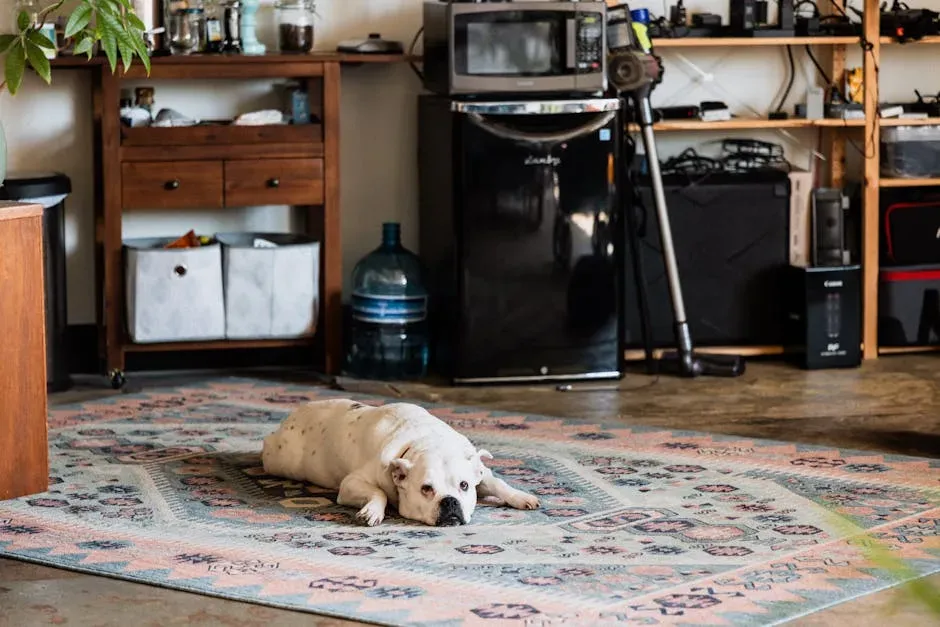
You heat up your leftovers, the microwave beeps three times, and you don’t think twice. Your dog, however, might be thinking about nothing else.
Microwave beeping noises might seem harmless to us, but they can be quite stressful for dogs. The beeps are sharp and sudden, catching them off guard. Over time, these repetitive sounds can increase anxiety. When you factor in how often most of us use a microwave throughout the day, the cumulative effect on a sensitive dog is really worth considering.
The unpredictability is the real enemy here. Your dog has no way of knowing when those beeps are coming, which keeps them in a low-grade state of alertness all day long. It’s like the sonic equivalent of someone randomly jumping out from around a corner. Every single time. All day.
The Washing Machine and Dishwasher: The Rumbling Monsters

These two deserve to be mentioned together because they share something important in common: they’re loud, they run for long stretches of time, and they combine both mechanical rumbling with sudden spin cycles or drainage noises that come out of nowhere.
Researchers discovered high frequency beeping and low frequency continuous sounds, such as alarm clocks, plumbing, smoke detectors, cell phone noises, washing machines, and dishwashers, can stress dogs out. The washing machine in particular is almost like a ticking time bomb for anxious dogs. It hums quietly, and then suddenly launches into a high-speed spin that rattles the floor.
Thunderstorms, fireworks, construction noise, or even everyday household sounds can trigger intense fear or anxiety in dogs and cats. For some pets, this response goes beyond temporary unease and develops into noise aversion, a condition that can worsen over time without intervention. Left unaddressed, what starts as mild discomfort can spiral into something much more serious.
Television and Loud Speakers: When Entertainment Becomes Distress

We live in a world of smart TVs, Bluetooth speakers, and surround sound systems. For us, that means a great movie night. For noise-sensitive dogs, it can mean an unexpected ordeal.
Noise aversion, also known as noise phobia, is a condition where pets exhibit an intense fear or anxiety response to loud or unexpected noises. Common triggers include thunderstorms, fireworks, gunshots, and everyday household sounds such as vacuum cleaners or alarm clocks. The reactions can range from mild discomfort to severe panic attacks, which can be distressing for the pet and their owner.
Sudden action movie explosions, screeching tires, or even an unexpected burst of music can be genuinely shocking to a dog resting nearby. Think of it this way: if someone suddenly cranked the volume to maximum while you were dozing on the couch, you’d jump out of your skin too.
The Hair Dryer: High Pitched, High Stakes

The hair dryer is one of those sounds that dogs seem to either completely ignore or absolutely hate, with very little in between. If your dog belongs to the second camp, there’s a clear scientific reason behind it.
Responses were significantly stronger to sounds characterized as high frequency intermittent than to sounds characterized as low frequency continuous. Hair dryers sit firmly in that high-frequency category, producing a constant, high-pitched whine that is far louder and more piercing to a dog’s ears than it ever sounds to ours.
A dog experiencing a phobia episode is panicking, so they’ll pace, pant, tremble, and hypersalivate. Frightened dogs may cower, ears flat against their skulls, eyes wide, muscles tensed and tails tucked. So if your dog slinks away every time you dry your hair, take it seriously rather than brushing it off.
Ultrasonic Pest Repellents: The Silent Terror You Can’t Hear

This one is genuinely shocking, and it’s probably the most insidious sound on this entire list. Because here’s the thing – you literally cannot hear it at all.
After much questioning, it was discovered that owners had installed a sonic pest repellant device in the home a few months before. Upon turning off the device, the dog immediately began to relax and returned to normal behavior over the next few days. These owners were very dedicated to the welfare of their dog, but they could not hear the device; the dog, on the other hand, was highly bothered by it.
It’s a chilling thought. An entire household sound source causing daily distress to a dog, completely invisible to the humans living there. Most triggering are high frequency intermittent sounds such as smoke detector beeps and ultrasonic pest repellants than low frequency continuous sounds such as vacuum cleaners. If your dog suddenly seems anxious at home for no obvious reason, checking for ultrasonic devices is genuinely worth doing.
Alarm Clocks and Phone Notifications: The Modern Noise Nightmare

We live surrounded by beeping, chiming, buzzing technology. Every notification, every alarm, every incoming call produces a sharp, sudden, high-frequency sound that punctuates our day constantly. We barely notice them anymore. Our dogs, however, absolutely do.
Common noises coming from a vacuum, a smoke detector, or even a microwave can trigger a dog’s anxiety. Specifically, high-frequency, intermittent noises like loud beeps and chimes coming from a smoke detector are more likely to cause stress for a dog than a low-frequency, continuous noise. Phone notifications follow this exact same pattern.
Single, traumatic experiences or repeated exposure to frightening stimuli can cause reactions ranging from mild fear to extreme phobic reactions. Mild fear responses may include panting, pacing, and attempts to hide, whereas phobic responses may include panic, extreme agitation, attempts to escape, and destructive behavior. It’s hard to say for sure exactly when a dog’s mild annoyance tips over into genuine anxiety, which is why catching it early matters so much.
What You Can Actually Do About It
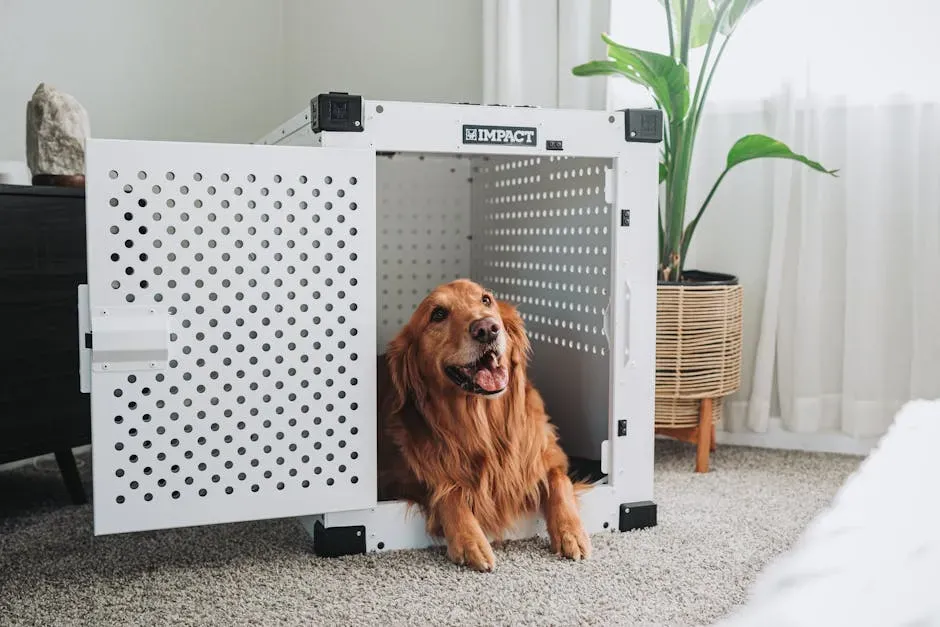
Here’s the genuinely reassuring part: you are not helpless. Small changes in how you manage your home environment can make a real difference to a noise-sensitive dog.
Gradual desensitization to loud sounds can be effective in reducing your pet’s noise aversion. This behavioral modification technique involves exposing your pet to recordings of frightening sounds at a low volume and gradually increasing the volume over time while rewarding calm behavior.
Providing your dog with a safe place to go – whether it’s a crate, closet, or under the bed – makes their go-to spot as insulated and welcoming as possible. Offer a calm space and train the dog to relax and go to their safe spot. Sometimes the simplest interventions work best. A quiet corner with a familiar blanket can do wonders.
The majority of humans responded to their dogs’ behaviors with amusement, and welfare concerns were rarely expressed. The data supports that some owners are underestimating fearfulness in their dogs in response to household noises, and responding inappropriately to dogs’ expressions of fear and anxiety. Better education is required for dog owners to accurately interpret canine body language, to both safeguard dogs’ welfare and minimize the development of anxiety-related behavior problems.
Conclusion: Your Home Is Louder Than You Think

It’s a strange kind of humbling, isn’t it? We design our homes for human comfort and barely stop to think about how those same spaces sound to the animals who share them with us. Noise aversions are quite common, with an estimated one third of the canine population affected. That’s a significant number of dogs quietly suffering through sounds we take completely for granted.
The good news is that awareness is the first step. Now that you know what to look for – the tucked tail, the flattened ears, the sudden retreat – you’ll start seeing the world through your dog’s ears. A little empathy, a few small changes, and maybe some fresh smoke detector batteries go a long, long way.
The AKC Canine Health Foundation warns that the more often a dog is exposed to frightening noise, the more intense their phobic response will be. So the time to act is now, not later.
Your dog can’t tell you they’re scared. They’re counting on you to notice. Did you ever suspect the everyday sounds in your home were causing your dog this much distress? Drop your thoughts in the comments below.

- 6 Common Animal Behaviors That Are Often Misunderstood by Humans - July 18, 2026
- American Crocodiles Are Expanding Their Range in Florida’s Warm Waters - July 18, 2026
- 9 Common Myths About Wild Animals That Are Simply Not True - July 18, 2026