

Most people have never seen a ringtail, even people who have spent years hiking the canyons where it lives. It comes out after dark, moves quietly, and prefers crevices to open ground. That’s a big part of why it stays so little known.
Yet the animal’s body is built for exactly the kind of vertical terrain that stops most mammals cold. The details behind that skill are a mix of anatomy, behavior and habitat, and some of them are surprising.
It Isn’t a Cat or a Raccoon, Exactly

🔥 Would you like to save this?
We'll email this post to you, so you can come back to it later!
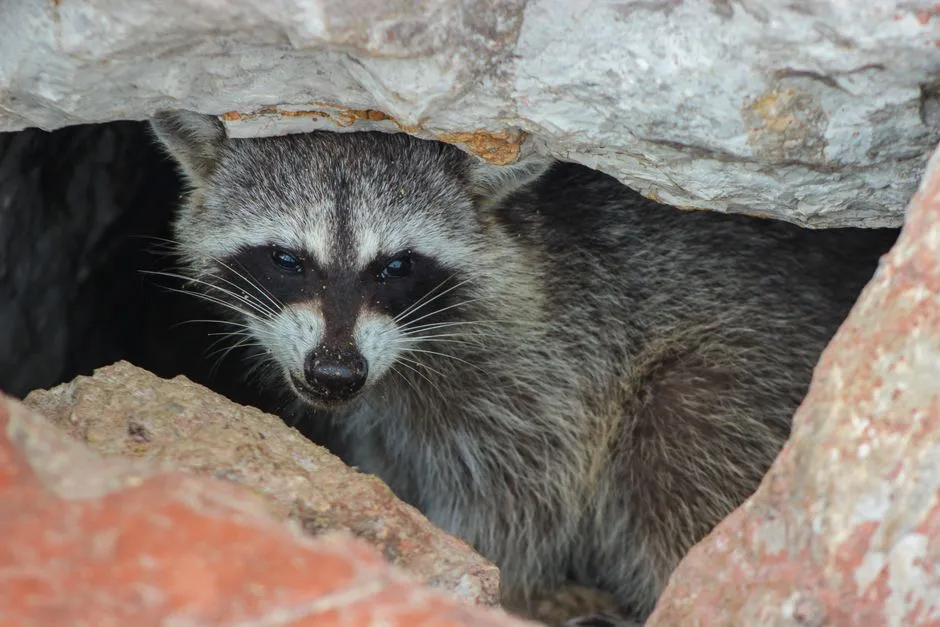
The ringtail is often called a ringtail cat, and it’s also known as a miner’s cat. Neither name is accurate. It belongs to the raccoon family, Procyonidae, and its scientific name is Bassariscus astutus.
The cat label likely came from its lithe build and its habit of catching rodents. Early settlers and miners reportedly kept them around for that purpose. Knowing its real family helps explain its curious hands and its nimble, inquisitive way of moving.
Its Range Stretches Across the Arid West
🔥 Would you like to save this?
We'll email this post to you, so you can come back to it later!
Ringtails live across much of the southwestern United States and into Mexico. They turn up in desert canyons, rocky foothills, and some wooded areas, especially where there are cliffs, boulder piles or other broken terrain.
Rocky ground is the common thread. Those features give the animal shelter, hunting ground and escape routes. It’s a species shaped by landscapes full of ledges and cracks.
A Long, Banded Tail Acts as a Balancing Tool

🔥 Would you like to save this?
We'll email this post to you, so you can come back to it later!
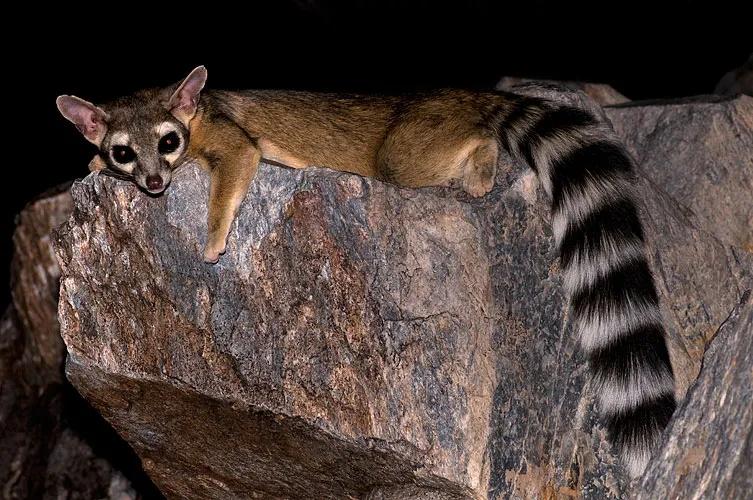
The tail is the animal’s signature, and it’s about as long as the body itself. It’s bushy and marked with alternating dark and pale rings. Those rings give the species its name.
Beyond looks, the tail works as a counterweight. When a ringtail runs along a narrow ledge or bounds between rocks, the tail helps it keep its balance. Think of a tightrope walker’s pole, though built in and always in use.
Flexible Ankles Let It Climb Down Headfirst

🔥 Would you like to save this?
We'll email this post to you, so you can come back to it later!
One of the ringtail’s best tricks is its ankle. The hind feet can rotate far enough that the animal can descend a steep surface headfirst. Many mammals can’t do this and have to back down tail first, which is slower and less stable.
This flexibility gives the ringtail more control on sheer rock and tree trunks. It lets the claws keep gripping in the right direction as the animal heads downward. It’s a small joint adaptation with a large payoff on cliffs.
It Can Squeeze Through Remarkably Tight Gaps

🔥 Would you like to save this?
We'll email this post to you, so you can come back to it later!
The ringtail has a slim body and a flexible frame. That lets it slip into narrow fissures and move through gaps that would block bulkier animals.
This is useful for more than travel. Tight crevices make good daytime dens, and they offer some protection from predators. A body that bends and compresses turns cracks in the rock into a kind of private highway.
Wall Bracing Is Part of the Technique

🔥 Would you like to save this?
We'll email this post to you, so you can come back to it later!
In narrow passages, ringtails are known to climb by pressing their feet and body against opposing surfaces. It’s similar to how a person might shimmy up a chimney between two walls. The method works well in slot-like spaces.
They can also use ricocheting jumps from one wall to another when moving through tight spots. Combined with their grip and balance, this gives them options that a single climbing style couldn’t. Variety is part of what makes them look so effortless.
Large Eyes Help in the Dark

🔥 Would you like to save this?
We'll email this post to you, so you can come back to it later!
Ringtails are nocturnal, and their big dark eyes reflect that. Good night vision matters when you’re judging distances between ledges in low light. A misjudged jump on a cliff can be costly.
Their large ears and sensitive whiskers likely help too, though the eyes are the most obvious feature. Together these senses support a life that happens mostly between dusk and dawn. It’s also why so few people ever catch sight of one.
The Diet Is Varied and Opportunistic

🔥 Would you like to save this?
We'll email this post to you, so you can come back to it later!
Ringtails are omnivores. They eat small mammals, birds, reptiles and insects, along with fruits, berries and other plant foods. What they eat shifts with the season and what’s available.
That flexibility suits harsh, dry country where food can be unpredictable. Climbing ability expands their options, since it gives them access to nests, fruiting plants and prey hiding in rocky nooks. Agility and appetite work together here.
Secrecy Is a Survival Strategy

🔥 Would you like to save this?
We'll email this post to you, so you can come back to it later!
The ringtail is solitary for most of the year and mostly active at night. It rests in hidden spots, such as rock crevices, hollow trees or old structures. Together, these habits make it very hard to observe.
Because it’s so elusive, many details of its life are less studied than those of better known mammals. That’s worth keeping in mind whenever someone claims to know everything about it. What’s clear is that its secrecy and its climbing skill come from the same lifestyle.
Why the Ringtail Deserves More Attention
🔥 Would you like to save this?
We'll email this post to you, so you can come back to it later!
I think the ringtail is one of the most underrated animals in North America. It has the grace of a climber, the senses of a night hunter and a tail that looks designed by an artist. Yet it gets a fraction of the attention that bears, coyotes or even raccoons receive.
Its story shows how much of nature’s engineering hides in plain sight, tucked into cracks and ledges. If you ever hike canyon country at night, slow down and look at the rocks. You probably won’t see one, but knowing it might be watching is half the fun.

- Embracing the Quiet Magic of Adopting a Senior Dog - November 5, 2026
- Scientists May Have Miscalculated Our Global Warming Timeline - November 5, 2026
- Marine Biology Says When Dolphins Suddenly Go Silent in Open Water It's Not Rest – They've Detected a Predator You Cannot See and Their Survival Strategy Reveals How They Read Danger - November 5, 2026