

You live with a cat. You feed it, love it, and probably talk to it more than you’d admit. Yet, somehow, this creature still manages to baffle you on a daily basis. One minute it’s purring on your lap like the world’s softest engine, and the next it’s staring at a blank wall at 2 AM like it’s watching a horror film only it can see.
Cats are genuinely one of the most mysterious animals humans have ever chosen to share a home with. Since domestication has been a relatively recent development for cats, some things cats once did to survive may have no adaptive value now that they are adored members of the modern-day household. Still, those ancient instincts don’t just disappear. They linger, transform, and show up in all sorts of unexpected and fascinating ways. Let’s dive into nine of them.
1. The Slow Blink: A Feline “I Love You”
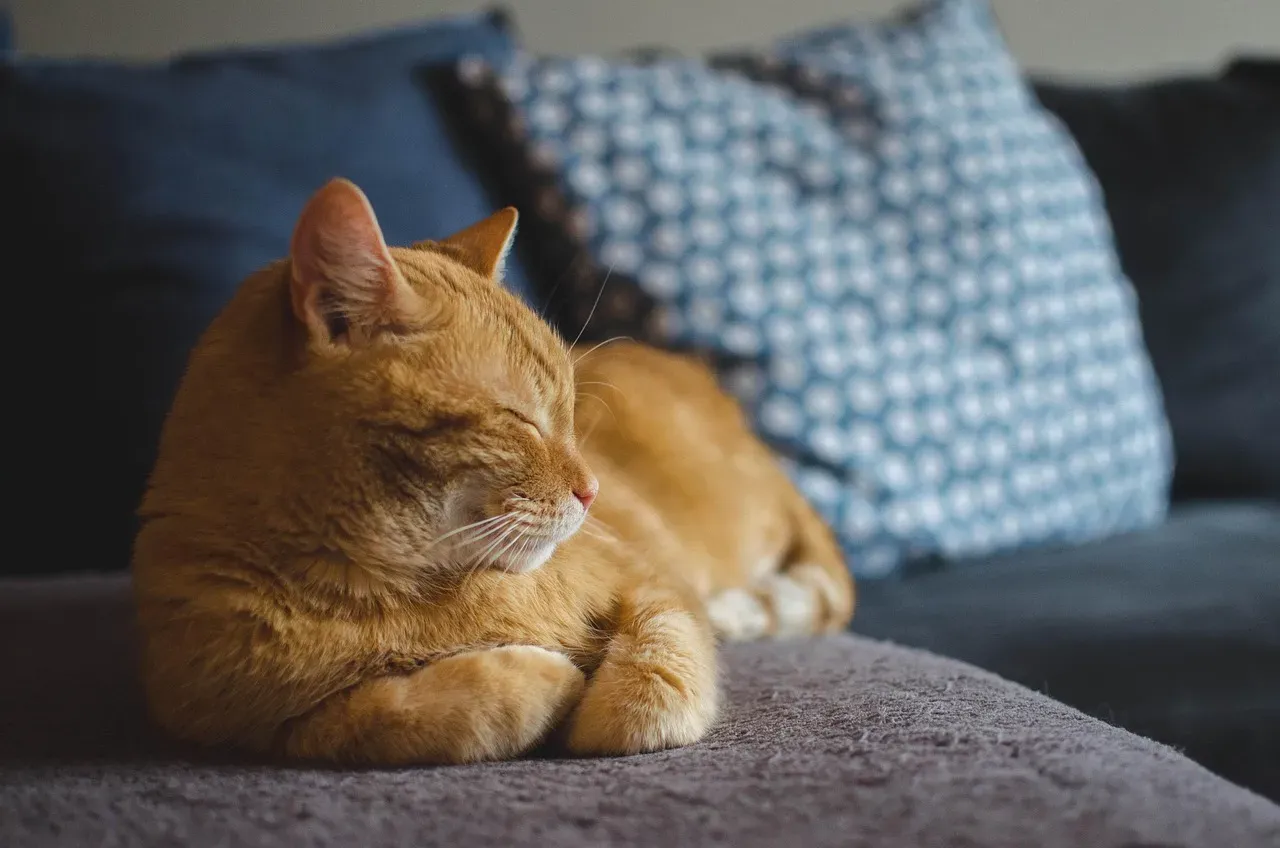
Here’s something that genuinely surprised me when I first learned about it. That lazy, half-closed blink your cat throws your way from across the room? It isn’t boredom. It’s basically a declaration of love.
Cats blink slowly as a form of nonverbal communication, often interpreted as a sign of trust and affection toward humans or other animals. When you think about it from a predator’s perspective, it makes complete sense. When your cat looks at you and slow blinks, they are relaxing their guard, and just like when they roll onto their backs and show their bellies in your presence, they are making themselves vulnerable, knowing that they are safe with you.
The science actually backs this up beautifully. Research revealed that cat half-blinks and eye narrowing occurred more frequently in response to owners’ slow blink stimuli toward their cats, and in a second experiment, cats had a higher propensity to approach an experimenter’s outstretched hand after a slow blink interaction.
Research published in The Journal of Physiology notes that cat slow blinking differs from the velocity of a typical cat blink, and this observation is noteworthy because it shows that slow blinking is not a reflexive movement – it’s an intentional behavior. So next time your cat does it, try blinking slowly back. You just might be having your very first real conversation.
2. Kneading: They Think You’re Mom
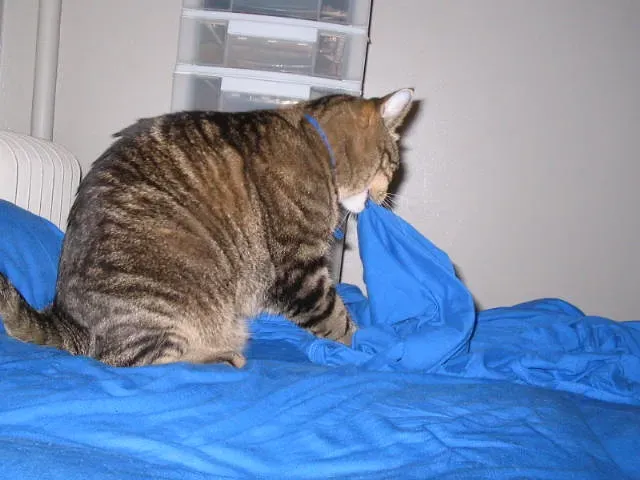
If you’ve ever had a cat press its paws rhythmically into your stomach like it’s trying to make bread dough, you’ve experienced one of the most endearing and slightly painful expressions of feline love. This behavior is so common it has a nickname: “making biscuits.”
This kneading behavior stems from the movements they made when they were nursing kittens, stimulating milk production in the mammary glands. This motion may be self-soothing for your cat, and making biscuits also “marks” you by releasing pheromones from their paw’s sweat glands, likely meaning that your cat feels very comfortable in your presence.
Here’s the really wild part. Kneading is believed to release dopamine in cats, which can be a reason they return to this habit again and again. Think of it like a cat’s version of comfort food. Pure instinct-driven pleasure.
In the wild, cats knead tall grass or leaves to create a soft, safe sleeping area. Even indoors, this nesting impulse remains, prompting cats to “fluff” their resting spots before settling down. So really, when your cat kneads your lap, you’re simultaneously acting as their mother, their territory marker, and their luxury mattress. Honestly, what an honor.
3. The Zoomies: Midnight Madness Explained
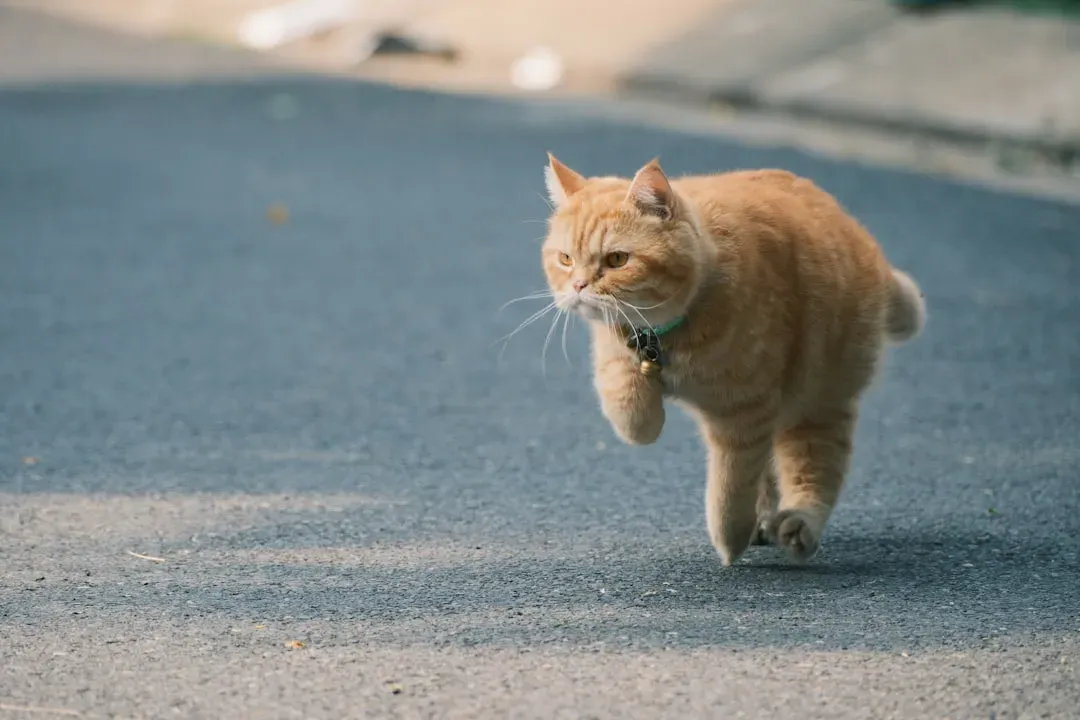
You know the feeling. It’s 1 AM. The house is quiet. Then suddenly it sounds like a small horse is sprinting laps around your living room at full speed. Your cat has the zoomies, and no, it hasn’t lost its mind.
If you’ve ever been awakened in the middle of the night by your cat racing through the house at top speed, bouncing off furniture and walls in what seems like a sudden bout of madness, you’ve experienced the “zoomies,” technically called Frenetic Random Activity Periods, or FRAPs, which are completely normal and serve an important purpose.
Cats are crepuscular by nature, meaning they’re most active at dawn and dusk. Their wild ancestors would hunt during these times, and your domesticated feline friend still carries these instinctual patterns. In other words, your cat’s body is essentially hardwired to hunt, and when it can’t, it burns off that bottled-up energy in one spectacular explosion of chaos.
Cats sleep twelve to sixteen hours a day, with their main burst of energy arriving in the nighttime hours, because their wild ancestors would do most of their hunting at night. If the midnight zoomies are disrupting your sleep, try giving your cat a proper play session in the evening. Tire them out before you tire yourself out.
4. Chattering at Birds: The “Kill Bite” Theory
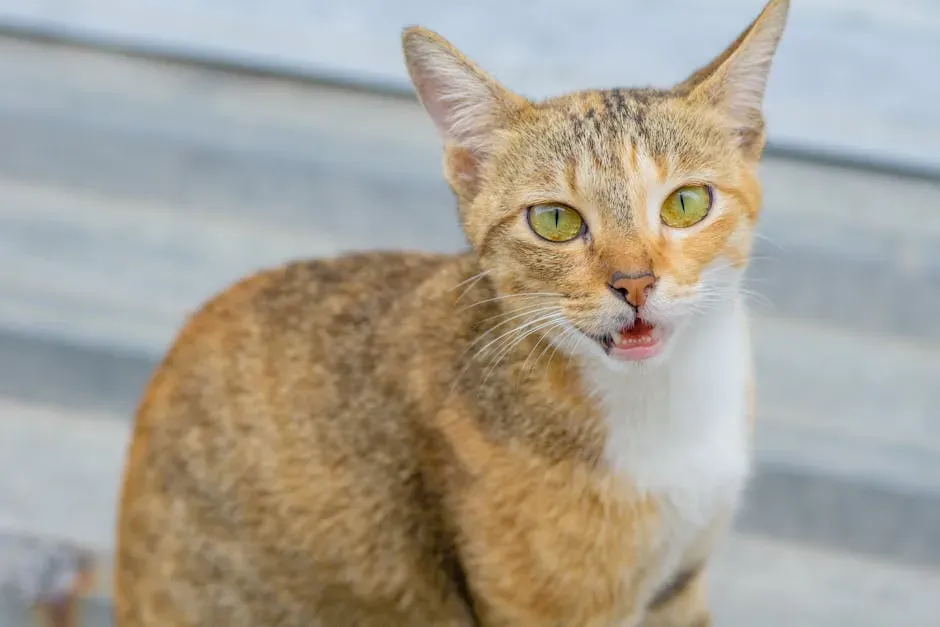
Most cat owners have seen this one. Your cat is perched at the window, locked in on a bird outside, and suddenly starts making this bizarre staccato chattering sound, jaw vibrating like something out of a cartoon.
You may have witnessed your cat sitting at the window, intensely focused on birds or squirrels outside, making an unusual chattering or chittering sound while their jaw rapidly vibrates. This distinctive vocalization, often accompanied by tail twitching and wide eyes, has fascinated cat behaviorists for years.
The explanation is more fascinating than you’d expect. More recent research points to what is called the “kill bite” hypothesis. The chattering motion mimics the rapid jaw movements a cat would use to deliver a fatal neck bite to prey. I know it sounds intense for such a fluffy little creature, but it’s true.
Some researchers have observed wild cats, like jaguars, making similar sounds to mimic prey animals and lure them closer. Your domestic cat’s chattering might be a vestigial expression of this hunting strategy. While house cats rarely need to hunt for survival, these instinctual behaviors remain intact. Next time your cat chatters at a pigeon, know that somewhere deep inside lives a tiny jaguar.
5. Headbutting You: Ownership Papers, Filed
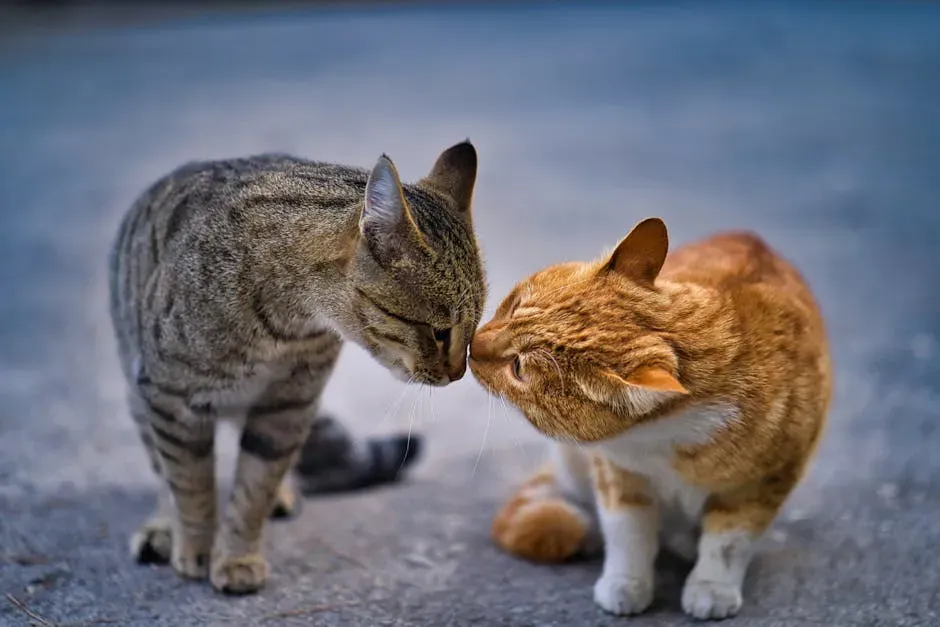
Your cat walks up, presses its forehead firmly against your leg or face, and just holds it there for a moment. Sweet, right? Absolutely. Also: your cat has just legally claimed you as property.
Cats rub the side of their face against you or bump their head into you to say hello, also known as “bunting.” Think of this as a fist bump from your kitty. Rubbing their muzzle and whiskers deposits the feline facial pheromone onto you or whatever else they’re rubbing, helping to mark the object as safe and familiar, and may signify ownership by the cat – so yes, your cat may think they own you.
Let’s be real, there’s something deeply charming about that. When your cat bops you with their head, they’re saying “I love you!” and they’re also letting everyone know that you belong to them, with pheromones in their cheek areas marking you as their possession.
It’s like your cat is filing paperwork you never agreed to sign. The headbutt is affection, communication, and a territorial flag all rolled into one surprisingly gentle gesture. If your cat does this to you often, consider yourself deeply loved, and thoroughly owned.
6. The Belly Trap: A Classic Feline Deception
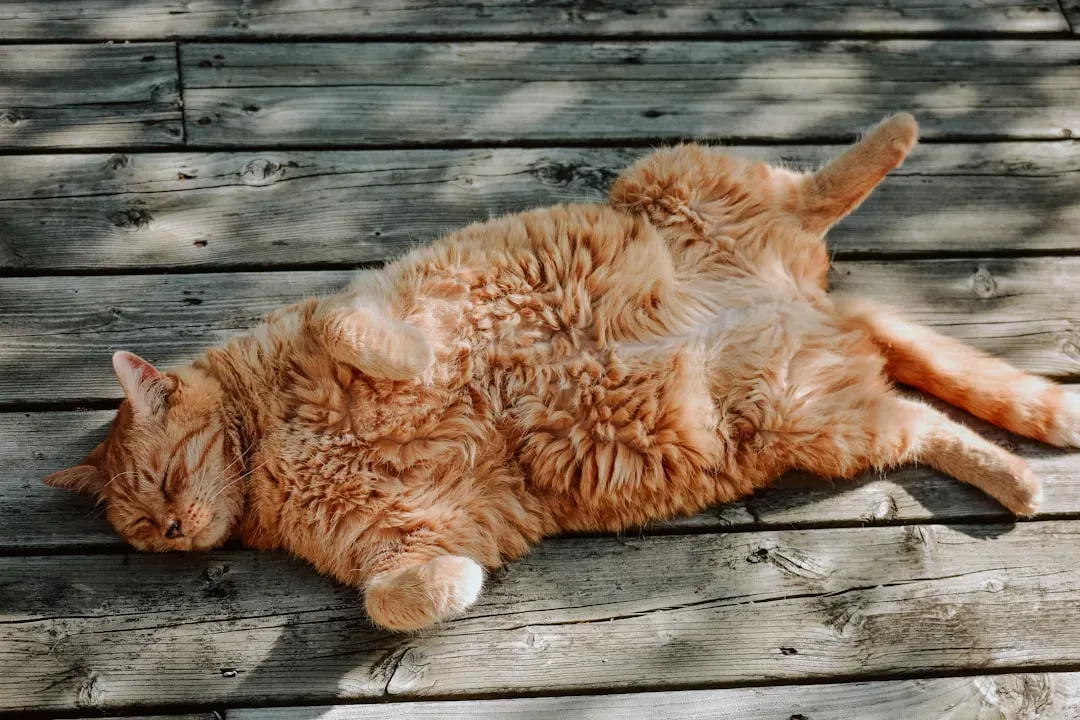
Here’s a scenario almost every cat owner knows by heart. Your cat rolls over, stretches out luxuriously, and reveals that gloriously fluffy belly. You reach down to pet it. Suddenly, claws and teeth.
If you’ve ever encountered a cat who rolls over on their back and shows you their belly, only to roll away immediately when you try to pet it, there’s a logical reason for this. Cats sometimes will show you their belly as a way to display that they trust you or as a way to invite you to play, but this doesn’t necessarily mean they want a belly rub – it might just be more of a signal of love than an invitation to come closer.
Rolling on their back is a sign of love and trust. The abdomen is one of a cat’s most vulnerable areas, so when your cat shows you their belly, they are telling you that they know they can trust you. The stomach region is packed with sensitive nerves, and for an animal wired to protect itself, exposing it takes genuine courage.
Think of it like someone showing you their diary without expecting you to actually read it. The gesture is the point, not the invitation. The cat is saying “I trust you this much.” The claws that follow if you touch it are the punctuation mark at the end of that sentence.
7. Bringing You Dead Gifts: Love, Feline Style
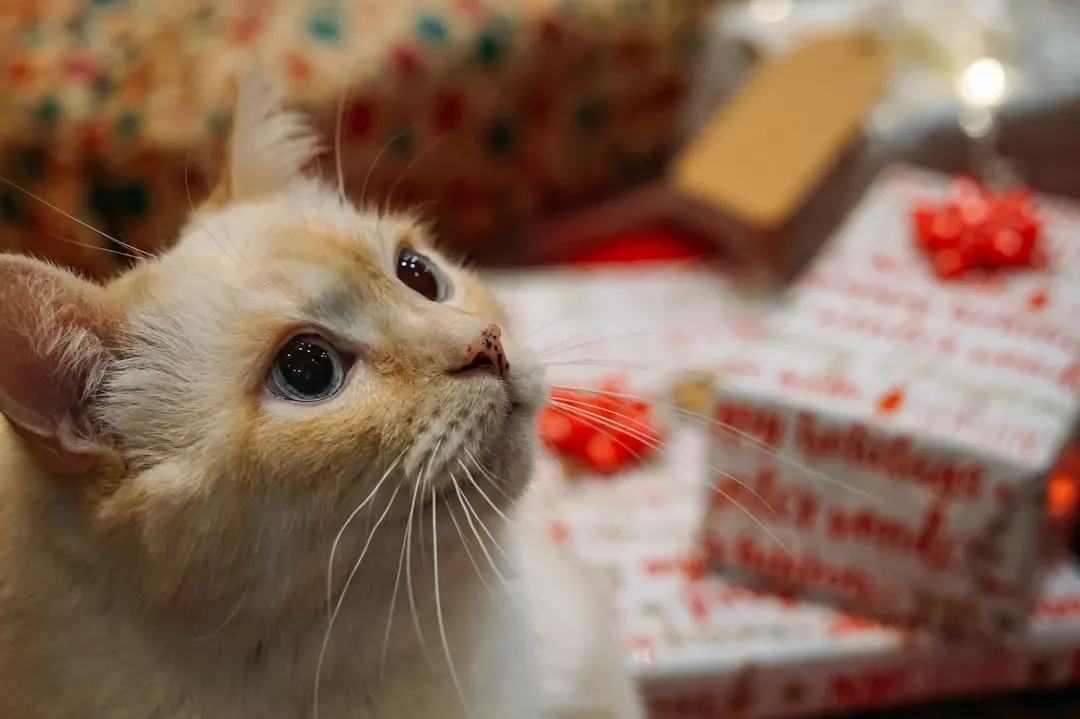
Few things test the bond between a cat and its human quite like waking up to find a deceased mouse on the doorstep. Or worse, on your pillow. It’s horrifying to most of us. To your cat, it is the highest compliment imaginable.
In feral cat colonies, mother cats bring prey to their kittens to teach them hunting skills and provide nourishment. When your domestic cat brings you “presents,” they’re treating you as part of their family group – either as a kitten they need to feed or as another cat they’re trying to teach how to hunt.
Female cats are more likely to bring gifts than males, supporting the maternal teaching theory. While these offerings might not align with human gift preferences, they represent your cat’s natural way of contributing to the household.
Honestly, when you reframe it that way, it’s almost touching. Your cat, with its tiny hunter’s heart, is looking at you and thinking: “This one can’t hunt. I must provide.” Don’t scold them for it. While you should feel honored your cat wanted to share their spoils with you, avoid making a big deal about it and certainly don’t praise them or you could end up with more gifts.
8. Hiding in Boxes and Tiny Spaces: The Security Blanket Instinct
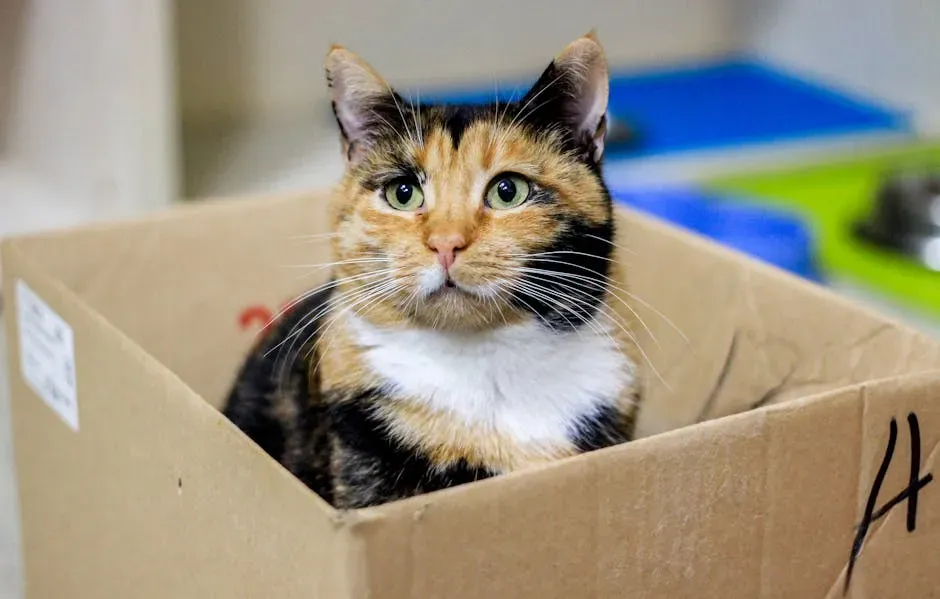
You spend money on a beautiful plush cat bed. Maybe it even has a little cushioned roof. Your cat ignores it completely and instead squeezes itself into a shoebox that arrived yesterday. This is not ingratitude. This is survival wiring.
Cats love to slip into small spaces like boxes, dresser drawers, bathroom cabinets, or closet corners where they feel cozy and secure. They may even prefer these places to a comfy pet bed, and this behavior can be traced back to their wildcat ancestors who would sleep safely hidden away to help avoid predators.
Small spaces make your cat feel safe and secure. It’s actually a very elegant system. In the wild, a concealed space means you can see out without being seen. You can rest without being ambushed. The shoebox is not a box. The shoebox is a fortress.
It’s a bit like how humans feel better sleeping in a smaller bedroom or under heavy blankets. We all have our own version of the shoebox, if you think about it. Your cat just has no shame about committing to theirs.
9. Purring: Not Just About Happiness
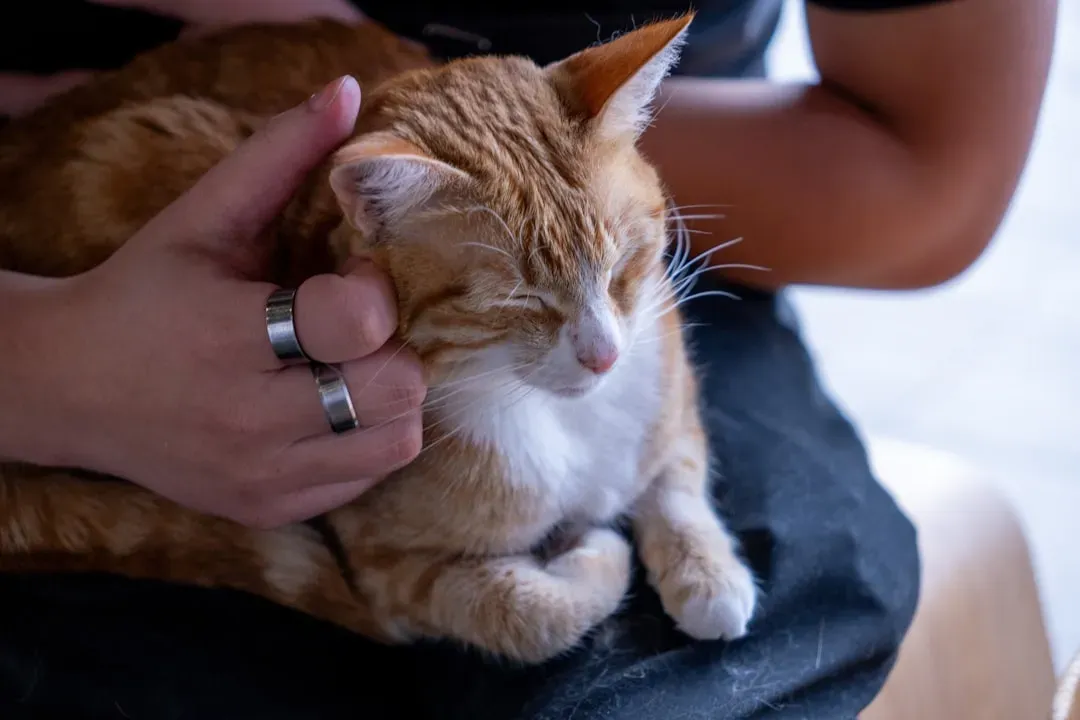
If there’s one cat behavior that everyone thinks they understand, it’s purring. Cat is happy, cat purrs. Simple, right? Actually, not even close.
Purring is generally considered to be a universal signifier of kitty bliss, but this is not necessarily the case. Typically, purring indicates a cat is deeply content, drowsy, and happy. However, cats can also purr when they are sick or in pain as a way of asking for help, and purring can also be a cry for attention.
The physical mechanism behind a purr is genuinely remarkable. It starts in the brain, which sends a message to the laryngeal muscles to twitch at a rate of 25 to 150 vibrations a second, and the vocal cords separate as the cat inhales and exhales, an operation that occurs between the larynx and the diaphragm.
Perhaps most fascinating, the frequency of a cat’s purr promotes tissue regeneration and bone growth. This may explain why cats recover from injuries faster than many other animals and why they purr when injured. So purring is essentially self-medication. A cat in pain will purr to help its own body heal. That is extraordinary.
One theory suggests that the vibrations from purring may help to self-soothe and relax the cat further. Purring can be a way for them to regulate their nervous system and calm down after a stressful event or encounter. The next time your cat purrs, pay attention to the full picture – the body language, the context, the surroundings. It could be saying far more than just “I’m happy.”
Your Cat Is a Lot More Interesting Than You Realized
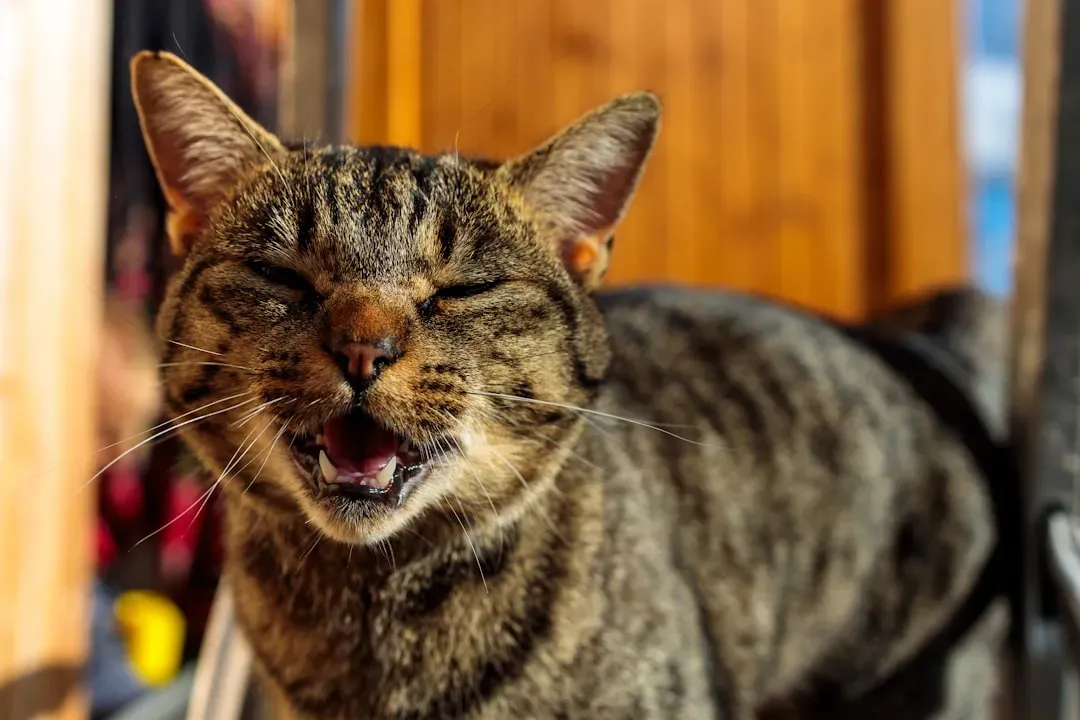
After everything above, one thing becomes very clear: we’ve been massively underestimating cats. They communicate in blinks and headbutts, they self-heal through vibration, they bring you prey because they love you, and they’ve been quietly marking you as their territory this entire time. Wild.
Rather than dismissing these actions as mere oddities, recognizing their significance reveals just how complex and expressive cats truly are. By learning to decode their subtle signals and instinctual habits, we not only become more attuned to their needs but also deepen our appreciation for their unique personalities.
The beauty of living with a cat is that even after years together, there are still layers left to uncover. They are ancient predators wrapped in soft fur, sharing your sofa, operating by rules that predate your entire civilization. That slow blink from across the room? That’s thousands of years of evolution whispering: “I trust you.”
Which of these behaviors has your cat surprised you with the most? Drop it in the comments – cat people always have the best stories.

- 15 Little-Known Facts About DNA That Control More Than You Think - August 10, 2026
- 10 Things Cats Never Forget About Their Owners - August 10, 2026
- 8 Ways Cats Show They're Worried About You - August 10, 2026