

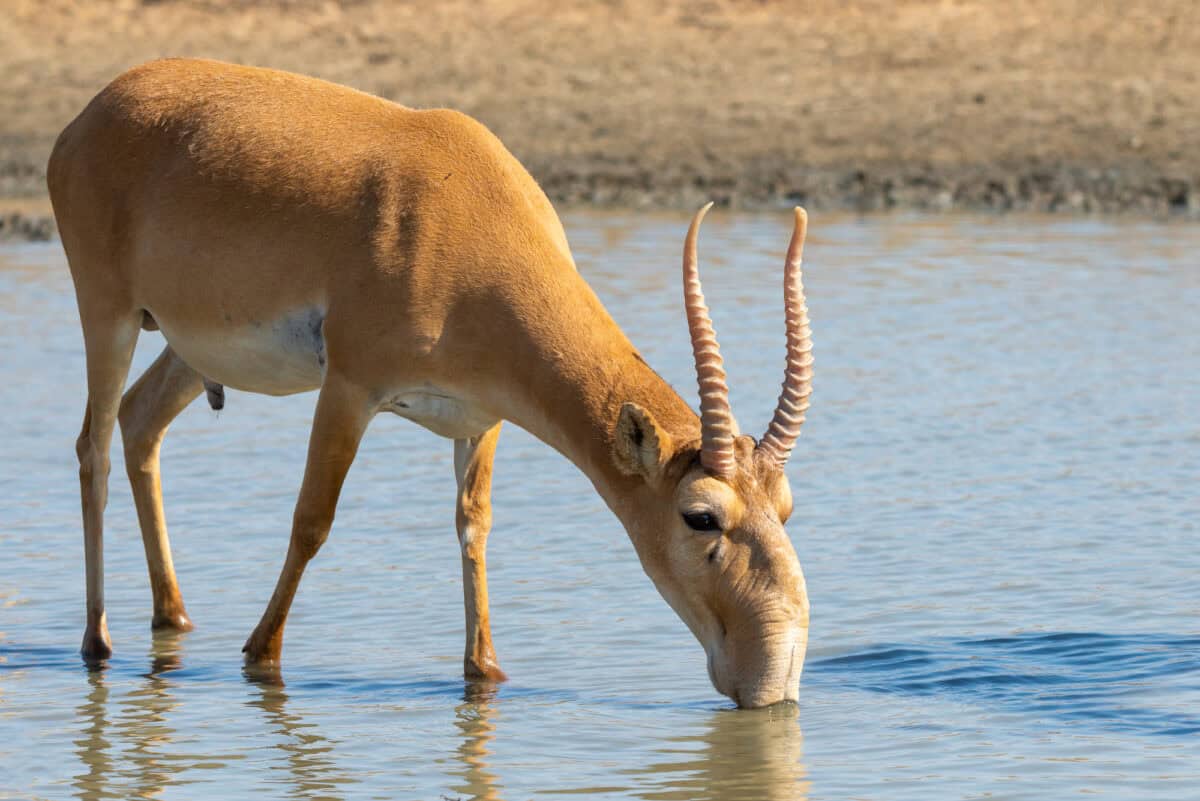
The saiga antelope, known for its distinctive appearance, stands out particularly because of its unusual, oversized nose. At first glance, this peculiar feature might seem like a mere evolutionary quirk, but it serves a critical and sophisticated function in the animal’s survival. Native primarily to the arid regions of Central Asia, the saiga antelope has adapted ingeniously to its harsh environment, and its nose plays an essential role in this adaptation.
Adaptation to Harsh Environments

Extreme temperatures and minimal vegetation characterize the arid steppes and semi-deserts where the saiga antelope roams. During the summer, the air becomes oppressively hot and dusty, while in the winter, temperatures plummet and become icy cold. To cope with these conditions, the saiga’s nose acts as a powerful air conditioning and filtration system.
The Saiga’s Nose as an Air Filter

The saiga’s nose is a marvel of natural engineering. Its large, bulbous shape is teeming with convoluted internal structures. These nasal passages are lined with mucous membranes that trap dust and other particulates, effectively filtering the air before it reaches the lungs. This adaptation is crucial for the saiga’s survival, particularly during the dusty summer months, where breathing unfiltered air could lead to respiratory issues.
Thermal Regulation and Moisture Conservation

In addition to filtering, the saiga’s nose plays a vital role in regulating temperature and conserving moisture. During scorching summer heat, the extensive surface area inside the nose helps dissipate heat, cooling the air before it enters the rest of the respiratory system. Conversely, in frigid winter conditions, the saiga’s nose warms the cold air breathed in, helping to maintain a stable body temperature and reduce the shock to the lungs.
The structure also helps conserve moisture. Given the limited water availability in their habitat, preserving internal moisture is vital for the saiga’s health. The nose helps retain moisture by condensing exhaled water vapor, minimizing water loss, which is especially crucial during dry spells.
An Evolutionary Masterpiece
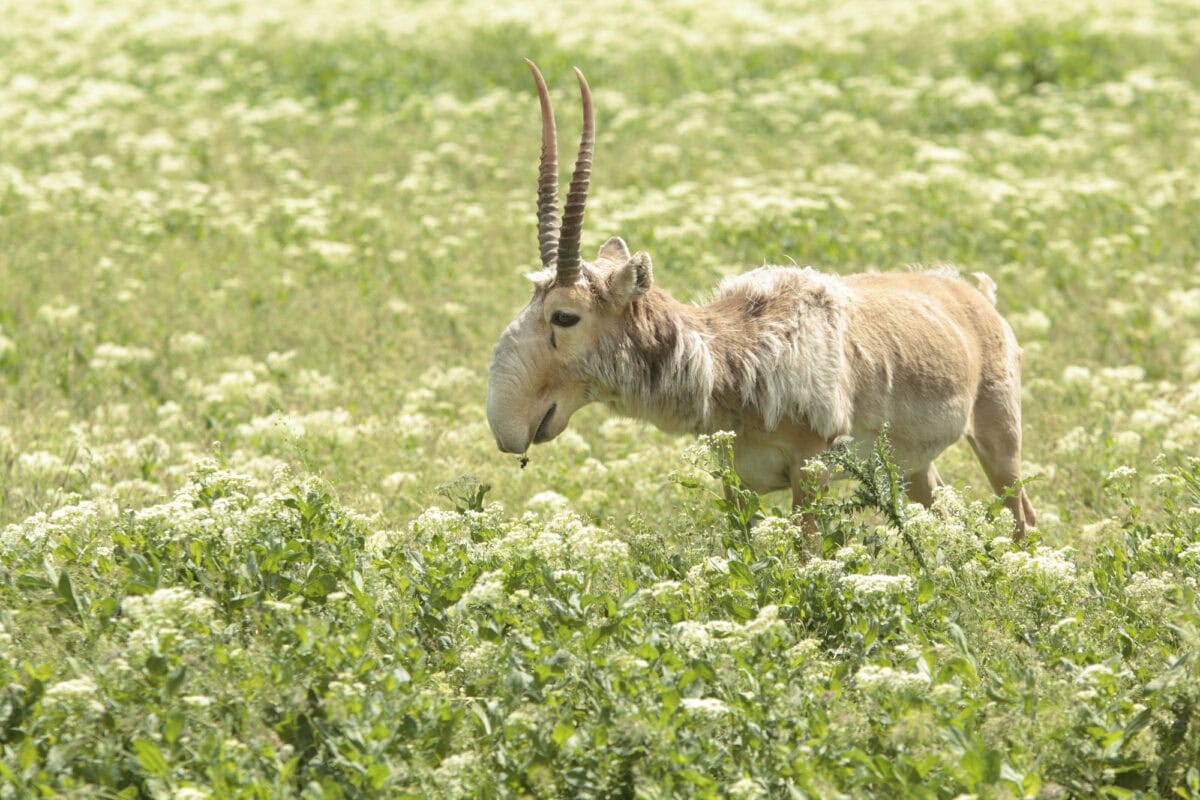
The evolution of the saiga antelope’s nose is a testament to the power of natural selection, driving adaptations that enable species to thrive in some of the planet’s most challenging environments. This remarkable adaptation underscores a broader narrative within the animal kingdom: the diverse and ingenious ways life evolves to ensure survival.
Conservation Challenges

Despite its evolutionary success, the saiga antelope faces severe threats to its survival, primarily from human activities. Habitat loss, poaching, and climate change have led to a dramatic decline in saiga populations over recent decades. Conservation efforts are crucial to preserving this unique species and its fascinating adaptations.
The conservation of the saiga antelope is not just about saving a species but also about maintaining ecological balance and protecting a part of our natural heritage. Efforts from conservation organizations and governments are needed to ensure that future generations can continue to marvel at this extraordinary creature and its uniquely adapted nose—a true wonder of nature’s ingenuity.

As a little kid, I fell in love with nature, wildlife, and animals. Living in the USA, South Africa, Italy, China and Germany gave me the opportunity to discover the world's Wildlife. My favorite animals are Mountain Gorillas, Siberian Tigers, and Great White Sharks.
I'm a certified PADI Open Water Diver, went to Everest Base Camp and Trekked Gorillas in Uganda. I hold a Master of Science in Economics and Finance.
Please send any feedback to feedback@animalsaroundtheglobe.com
- 10 Most Unique Reptiles You will See in the US - July 21, 2026
- 3 Dangerous Invasive Species the USA Must Eradicate - July 21, 2026
- 10 Things That Calm Cats And 4 That Make Them Nervous - July 21, 2026