

Across the vast savannas and dense forests where elephants roam, researchers have documented a remarkable phenomenon: elephants display a profound interest in the remains of their dead. This behavior, once considered merely anecdotal, has now been extensively studied and appears to be a deliberate, emotionally driven practice rather than simple curiosity.
Elephants will go out of their way to visit the sites where their herd members have died, sometimes traveling significant distances specifically to interact with these remains. This article explores the fascinating, sometimes heartbreaking ways elephants engage with death, and what this might tell us about their cognitive abilities, emotional lives, and social structures.
The Discovery of Elephant Mourning Behavior
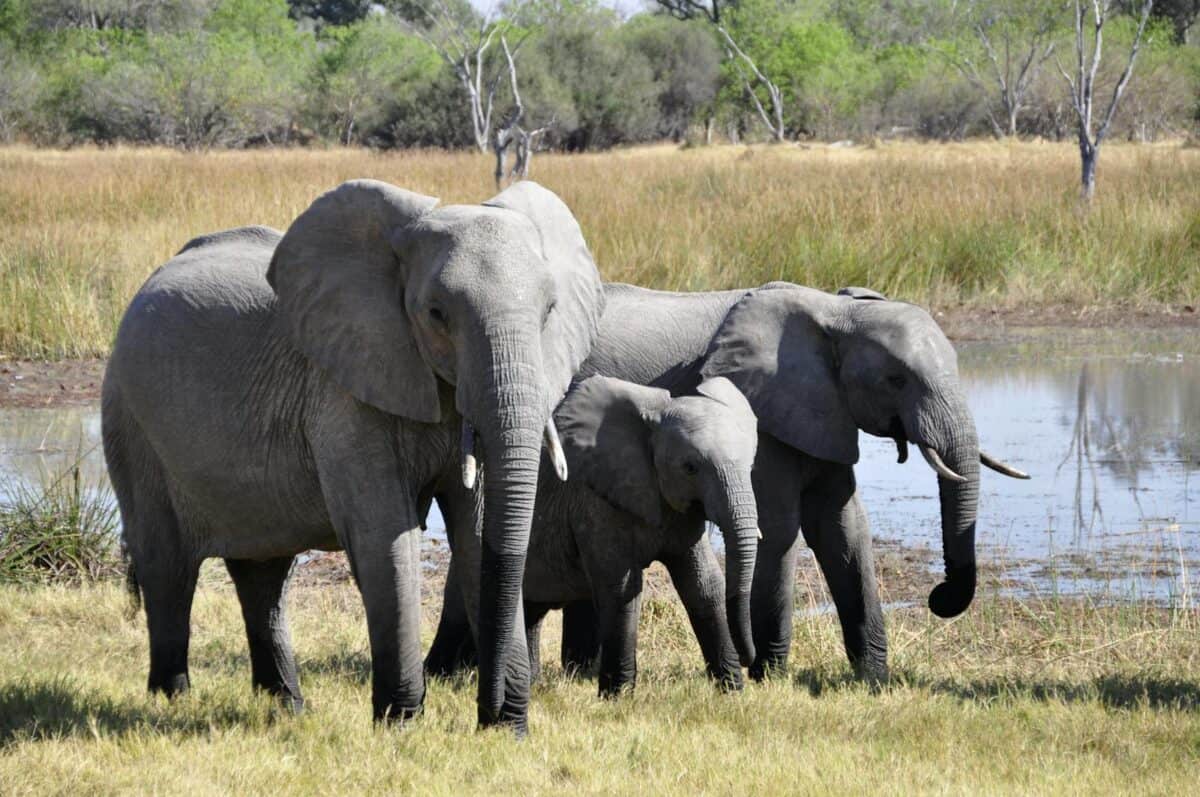
The first scientific documentation of elephants’ interest in their dead dates back to the 1960s when researchers began observing wild elephants in Africa. Iain Douglas-Hamilton, a pioneering elephant researcher, noted how elephants would gather around deceased herd members, touching the remains with their trunks and feet, sometimes covering the bodies with branches and dirt.
What particularly fascinated scientists was that elephants didn’t show the same level of interest in the remains of other animal species – their attention seemed specifically directed toward elephant remains. Over the decades, as field observation techniques improved and more researchers dedicated time to studying wild elephant behavior, a pattern emerged showing that this wasn’t random behavior but something much more complex and potentially meaningful.
Recognition of Elephant Remains

Perhaps one of the most striking aspects of elephants’ interactions with their dead is their ability to recognize elephant remains even years after death, when only bones remain. Studies conducted in Amboseli National Park in Kenya have shown that elephants can distinguish elephant bones from those of other large mammals. When presented with various animal bones, elephants consistently showed more interest in elephant remains, spending more time investigating them, touching them with their trunks, and sometimes even carrying small bones away.
This specific recognition suggests that elephants don’t merely react to the presence of any dead animal but have a particular connection to their own kind. Some researchers believe elephants can even recognize the remains of specific individuals they knew in life, though this remains difficult to prove conclusively.
Family Bonds Beyond Death

Elephants live in tight-knit family groups led by a matriarch, typically the oldest female, and these social bonds appear to extend beyond death. Family members show particular interest in the remains of their own relatives compared to unknown elephants. Researchers from the Amboseli Trust for Elephants have documented family groups returning repeatedly to the death sites of matriarchs, sometimes for years after the death occurred.
During these visits, they often fall silent and engage in what appears to be methodical examination of the remains. These return visits suggest that family relationships continue to hold meaning for elephants even after a member has died, and that elephants may maintain some form of memory or awareness of their dead relatives. This behavior is most pronounced when the deceased was a central figure in the group, such as a matriarch or a calf.
The Elephant Graveyard Myth and Reality

Popular culture has long perpetuated the myth of the “elephant graveyard” – a mystical place where elephants supposedly go to die. While this specific concept is largely fictional, the reality of elephant behavior around death is perhaps even more fascinating. Elephants don’t purposely seek out a common location to die, but they do create what scientists now call “accumulation sites” – places where multiple elephant deaths have occurred over time, often around water sources during droughts.
These sites can contain numerous elephant remains, and living elephants often visit these areas. The misconception of a ritualized graveyard likely stems from early observers witnessing elephants gathering around these accumulation sites, interacting with the bones, and displaying what appeared to be mournful behavior. Though not the mythical graveyard of legend, these sites do hold special significance for elephant communities.
Ritualistic Behaviors Around Remains
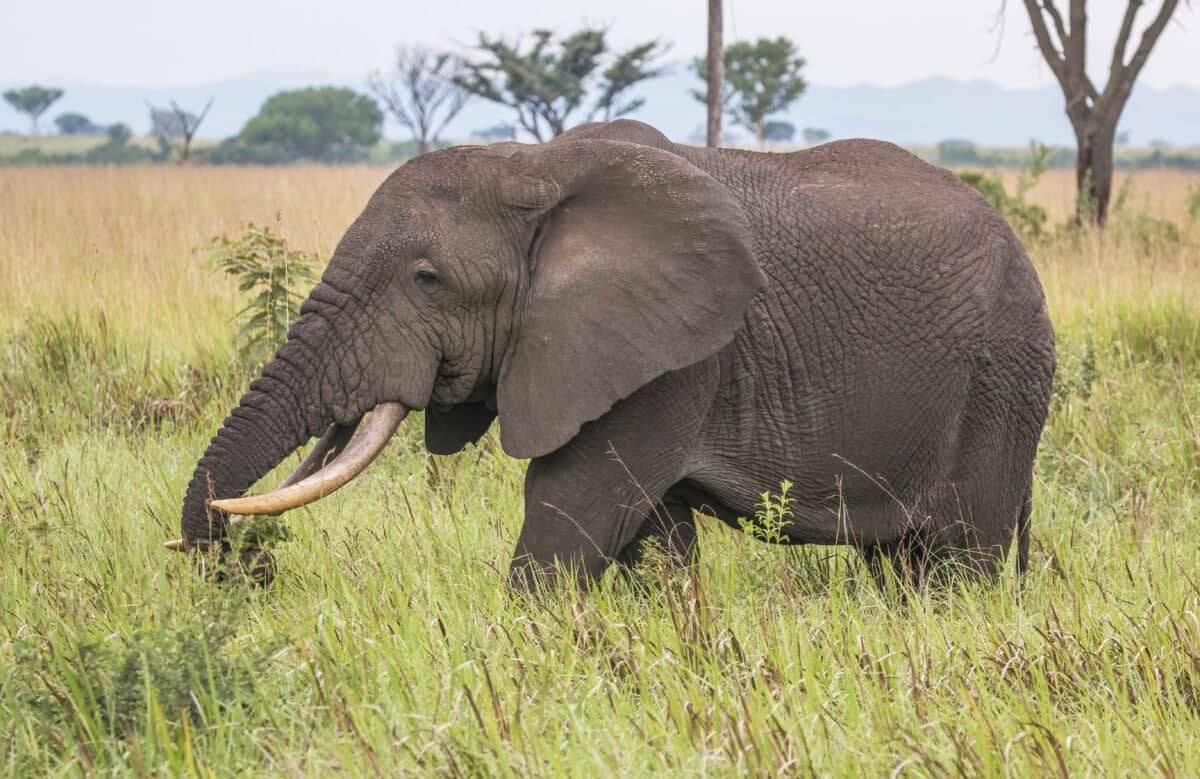
When elephants encounter the remains of their own kind, they engage in behaviors that appear ritualistic. They will often gather in silence around the body or bones, sometimes forming a circle. Using their trunks, they gently touch and examine the remains, occasionally lifting smaller bones and passing them between family members.
In some cases, elephants have been observed covering dead bodies with branches, leaves, and dirt in what resembles a primitive form of burial. They sometimes stand guard over a body for days, only leaving when forced to find food or water. During these encounters, elephants often produce low-frequency rumbles that aren’t commonly heard in other contexts. These consistently observed patterns of behavior suggest something beyond random curiosity – a structured, social response to death that has evolved within elephant societies.
Scientific Evidence of Grief in Elephants

While scientists are cautious about attributing human emotions to animals, the evidence for elephant grief has become increasingly compelling. Neurological studies show that elephants possess the neural structures associated with complex emotions in humans. They have large, highly developed limbic systems – the part of the brain responsible for processing emotions.
Elephants also have von Economo neurons, specialized brain cells previously thought to exist only in humans, great apes, and cetaceans, which are associated with empathy, social awareness, and self-recognition. Behaviorally, elephants display physical signs consistent with distress when encountering dead herd members: temporal gland secretions, unusual vocalizations, and sometimes apparent depression following a death. These physiological and behavioral responses, combined with their consistent return to remains, strongly suggest that elephants experience some form of grief comparable, though not identical, to human mourning.
Learning from Death: Knowledge Transfer

One practical explanation for why elephants return to the bones of their dead involves knowledge acquisition and transfer. Elephants are highly intelligent animals with remarkable memory capabilities. By examining the remains of deceased herd members, particularly in cases of unusual deaths, elephants may be gathering information about potential threats. Young elephants often observe these interactions closely, suggesting a possible educational component.
During droughts, older elephants have been observed leading their herds to sites of previous elephant deaths, potentially to access water sources that helped the deceased survive previous dry periods. This behavior indicates that death sites may serve as important geographical markers containing survival information passed down through generations. While this explanation is more practical than emotional, it doesn’t preclude the possibility that both functions operate simultaneously.
Comparison with Other Species’ Death Responses

The elephant’s response to death is exceptional but not entirely unique in the animal kingdom. Primates, particularly chimpanzees and gorillas, have been observed carrying dead infants for days or weeks, suggesting a form of grief. Dolphins have been documented supporting their dead on the surface of water, apparently reluctant to let them sink.
Ravens hold what appear to be “funerals,” gathering around dead ravens and calling to others. However, elephants stand out in their long-term engagement with remains. While most animals’ interest wanes once decomposition advances, elephants continue to return to bones years later. They also show interest in remains of elephants they may never have met in life, suggesting a species-wide recognition that transcends personal relationships. This broader, more sustained response to death sets elephants apart even among highly intelligent social species.
Cultural Transmission of Death Rituals

Evidence suggests that elephants’ responses to death may be culturally transmitted rather than purely instinctive. Different elephant populations show variations in their specific death-related behaviors, with some groups engaging in more elaborate interactions with remains than others. Young elephants observe these practices and appear to learn from older herd members how to “properly” respond to a death. In some observed cases, juvenile elephants initially show less interest in remains until guided by adults to participate in the examination process.
This variation and apparent learning component suggests that death responses in elephants have a cultural element – behaviors passed down through social learning rather than being entirely genetically determined. Such cultural transmission of behavior is relatively rare in the animal kingdom and points to the sophisticated social structure of elephant societies.
Conservation Implications of Mourning Behavior

Understanding elephants’ responses to death has important implications for conservation efforts. When elephants witness poaching or culling operations, the psychological impact appears to extend beyond the immediate loss of herd members. Studies in areas with high poaching rates show increased stress hormones in surviving elephants and disrupted social structures. Young elephants who witness the violent deaths of family members, particularly matriarchs, can develop symptoms similar to post-traumatic stress disorder in humans.
Conservation strategies now increasingly consider these psychological factors, recognizing that simply maintaining population numbers isn’t sufficient if the social fabric of elephant society is damaged. Some reserves now implement protocols to minimize elephant exposure to culling operations when population control is deemed necessary, and anti-poaching efforts emphasize protecting family integrity, not just individual elephants.
Ethical Considerations for Humans

The discovery of complex death responses in elephants raises profound ethical questions about how humans interact with these animals. If elephants do indeed experience grief and maintain emotional connections to their dead, what responsibilities do humans have regarding activities that cause elephant deaths or disrupt their mourning? Ivory trade continues to threaten elephant populations, with poaching separating families and potentially leaving psychological scars on survivors.
Even well-intentioned human interventions, such as relocating problem elephants or managing populations in protected areas, may need reconsideration in light of our evolving understanding of elephant psychology. Some conservationists now argue that elephants deserve a special moral status based on their cognitive and emotional capacities, similar to the ethical protections increasingly granted to great apes and cetaceans. At minimum, recognizing elephants’ responses to death compels humans to approach conservation with greater sensitivity to their social and emotional needs.
What Elephant Mourning Teaches Us About Ourselves

The study of elephant death rituals offers a profound mirror for examining our own human relationships with mortality. For centuries, humans have considered mourning rituals and awareness of death to be uniquely human traits that separated us from other animals. Discovering these behaviors in elephants challenges that assumption and suggests that the roots of such responses may be evolutionarily ancient. Some anthropologists propose that the common ancestors of humans and elephants, despite diverging some 105 million years ago, may have possessed the neurological foundations for social awareness that later independently evolved into mourning behaviors in both lineages.
Others suggest that similar social structures – long-lived, highly cooperative societies with deep familial bonds – created parallel evolutionary pressures that produced similar emotional responses to death. Either way, elephant mourning reminds us that the capacity for grief may be more fundamental to social existence than we previously understood, and that human mourning practices, though culturally elaborate, share basic elements with those of other highly social species.
Conclusion: The Profound Connection Between Life and Death

The way elephants return to and interact with the bones of their dead reveals a profound dimension of their social and emotional lives that continues to astonish researchers. Their capacity to recognize remains, engage in consistent ritualistic behaviors, and maintain long-term connections to deceased herd members suggests a level of death awareness previously thought to exist only in humans.
While we must be careful not to simply project human emotions onto elephants, the evidence increasingly supports that their response to death represents a genuine form of mourning adapted to their specific ecological and social context. As research continues, we gain not only a deeper understanding of elephant psychology but also a broader perspective on the evolutionary roots of grief itself. Perhaps most importantly, recognizing the depth of elephants’ response to death compels us to approach their conservation with greater empathy and respect for the complex societies these remarkable animals have developed over millions of years.

- The Perfect Pet for Each Zodiac Sign - July 7, 2026
- The Wild Animal That Embodies Your Zodiac Sign’s Spirit - July 6, 2026
- 7 Steps to Planting Admirably Beautiful Bluebonnets - July 6, 2026